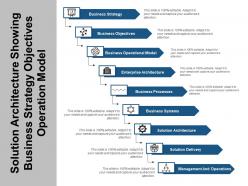
Solution architecture showing business strategy objectives operation model

Rating:
90%
Solution architecture showing business strategy objectives operation model
Slide 1 of 5
Favourites Favourites

Try Before you Buy Download Free Sample Product

Audience Impress Your
Audience
Editable 100%
Editable
Time Save Hours
of Time
The Biggest Sale is ending soon in
0
0
:
0
0
:
0
0
Rating:
90%
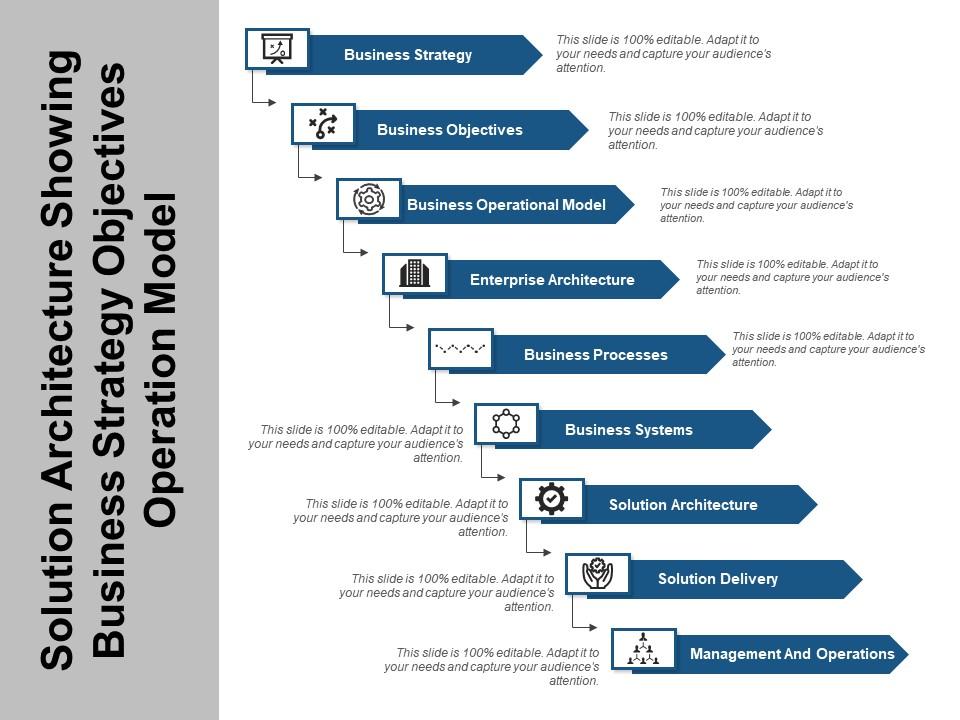
Presenting this set of slides with name - Solution Architecture Showing Business Strategy Objectives Operation Model. This is a nine stage process. The stages in this process are Systems Architecture, Solution Architecture, Software Architecture.

FAQs for Solution architecture showing business strategy

Key components of solution architecture include business requirements analysis, technical infrastructure design, integration frameworks, security protocols, and performance optimization strategies. These components work together by aligning business objectives with technical capabilities, ensuring scalable system integration, and delivering robust security measures, with many organizations finding that comprehensive solution architecture ultimately reduces implementation costs while enhancing operational efficiency.

Solution architecture focuses on designing specific systems or applications to address particular business problems, while enterprise architecture provides the overarching framework for an organization's entire technology landscape. Solution architects work within the boundaries set by enterprise architects, creating detailed technical designs for individual projects like CRM implementations or payment systems, while enterprise architects establish governance, standards, and strategic technology roadmaps that guide multiple solution efforts across departments.

Solution architecture guides software development by defining system structure, technology choices, integration patterns, and scalability frameworks before coding begins. It streamlines development phases through clear technical blueprints, risk mitigation strategies, and stakeholder alignment, with many organizations finding that robust architectural planning reduces development costs, accelerates delivery timelines, and ensures scalable solutions.

Effective communication enhances solution architecture design by ensuring stakeholder alignment, clarifying requirements, and facilitating collaborative decision-making throughout the development process. Through regular workshops, documentation reviews, and cross-functional meetings, architects can minimize costly revisions, accelerate implementation timelines, and deliver solutions that truly meet business needs, ultimately reducing project risks while enhancing organizational buy-in.

Common solution architecture challenges include unclear requirements, stakeholder alignment issues, technology integration complexities, scalability concerns, and budget constraints. These obstacles can significantly impact project timelines and outcomes, with many organizations finding that early stakeholder engagement, iterative design processes, and robust documentation help streamline development while minimizing costly revisions and ensuring strategic alignment.

Ensuring scalability in solution architecture involves implementing modular design patterns, leveraging cloud-native technologies, establishing automated resource provisioning, and creating robust monitoring systems. These approaches enable organizations to handle increasing workloads seamlessly, with many enterprises finding that microservices architectures and containerization deliver enhanced flexibility, reduced bottlenecks, and ultimately sustainable growth across their operations.

**INPUT**: What tools and methodologies are recommended for creating solution architectures? **OUTPUT**: Recommended tools include enterprise architecture platforms like TOGAF, modeling software such as ArchiMate, cloud design tools, integration platforms, and collaborative documentation systems. These methodologies streamline architecture development by enabling visual modeling, stakeholder alignment, and iterative design processes, with many organizations finding that structured approaches ultimately deliver faster implementation timelines and enhanced system integration across complex business environments.

Security best practices in solution architecture include implementing zero-trust frameworks, multi-layered authentication, data encryption protocols, regular vulnerability assessments, and secure API gateways. These approaches streamline protection by establishing defense-in-depth strategies, automated threat detection, and compliance monitoring, with financial services and healthcare organizations finding that integrated security architectures ultimately deliver enhanced customer trust and regulatory compliance.

Metrics for evaluating solution architecture effectiveness include performance benchmarks, scalability measures, cost efficiency ratios, system reliability scores, and user satisfaction ratings. These assessments enable organizations to measure response times, resource utilization, and operational efficiency across implementation phases, with many enterprises finding that comprehensive monitoring ultimately delivers improved system performance and strategic competitive advantage.

Cloud computing trends significantly influence modern solution architecture through serverless computing, microservices adoption, multi-cloud strategies, and container orchestration platforms like Kubernetes. These trends enable architects to design scalable, resilient systems that reduce infrastructure costs, accelerate deployment cycles, and enhance operational flexibility, with many organizations finding competitive advantage through cloud-native approaches.

Microservices architecture presents both scalability advantages and complexity challenges, enabling independent deployment, technology diversity, fault isolation, and enhanced team autonomy while requiring sophisticated service orchestration and monitoring. Organizations in banking, e-commerce, and healthcare find that microservices streamline development cycles and system maintenance, ultimately delivering greater operational flexibility and faster feature deployment despite increased infrastructure overhead.

User experience considerations fundamentally influence solution architecture through interface design choices, performance optimization requirements, accessibility standards, and cross-platform compatibility needs. These UX-driven decisions guide architects in selecting technologies, designing data flows, and structuring systems that deliver intuitive navigation, faster load times, and seamless interactions, ultimately enabling organizations to enhance customer satisfaction and competitive positioning.

Documentation enables solution architects to maintain system consistency, facilitate knowledge transfer, ensure regulatory compliance, and support scaling decisions across complex enterprise environments. Through comprehensive architectural records, organizations streamline troubleshooting processes, accelerate onboarding timelines, and minimize operational risks, with many finding that well-documented architectures ultimately deliver faster deployment cycles and enhanced team collaboration.

Aligning solution architecture with business goals requires establishing clear requirements mapping, stakeholder engagement, strategic planning frameworks, and continuous governance processes. Through collaborative workshops and iterative design reviews, organizations streamline decision-making, enhance operational efficiency, and minimize technical debt, with many enterprises finding that this alignment delivers faster time-to-market and sustainable competitive advantage.

Solution architects should monitor artificial intelligence and machine learning, edge computing, serverless architectures, containerization technologies, and blockchain implementations for future-ready designs. These technologies enhance system scalability, reduce operational costs, and improve performance across industries, with financial services and healthcare organizations finding that strategic integration delivers competitive advantage and operational efficiency.

Ratings and Reviews

90% of 100
Review Form
Write a review
Most Relevant Reviews
  1. 80%

    by David Snyder

    Visually stunning presentation, love the content.
  2. 100%

    by O'Neill Reyes

    Commendable slides with attractive designs. Extremely pleased with the fact that they are easy to modify. Great work!

2 Item(s)

per page: