


Stakeholders engagement example of ppt presentation




Try Before you Buy Download Free Sample Product
 Impress Your
 Audience
 100%
100% Editable
 Save Hours
 of Time


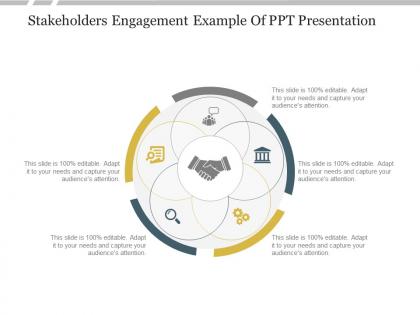
Use this Stakeholders Engagement Example Of PPT Presentation template to guide your audience on how to manage the stakeholders of the organization. The slide will help you in encouraging the overall involvement of various shareholders and individuals who are responsible for making all the major decisions for an organization. This stakeholders engagement PowerPoint layout is suitable for the company owners, HR executives, business analysts. Also, consultants and educators can use these informative PPT slides and provide in-depth knowledge of the subject to their audience. Explain the steps involved for engaging various shareholders or provide its entire spectrum with the assistance of this interactive PPT slide. Make them familiar with an engagement action plan and elucidate every other detail related to this subject in no time. A user can take the help of the stakeholders' engagement strategy presentation slide to illustrate that it is the key part of corporate social responsibility. The stakeholder's engagement plan slide is perfect to highlight that an organization engages its stakeholders in dialogue to figure out what social or environmental issues matter most to them.
People who downloaded this PowerPoint presentation also viewed the following :
Stakeholders engagement example of ppt presentation with all 5 slides:
Create a good growth environment with our Stakeholders Engagement Example Of Ppt Presentation. Give folks the chance to flourish.
FAQs for Stakeholders engagement example
Honestly, most people overthink this stuff. Start by figuring out who actually matters to your project - like, who has real influence or will be affected? Skip the obvious suspects everyone lists and think harder. Then just talk to them regularly, whatever way works - could be surveys, coffee chats, whatever. The trick is making it feel like an actual conversation, not you broadcasting updates at them. I've seen so many people mess this up by forgetting to close the loop - if someone gives feedback, show them how it changed things (or why it didn't). Pick your top 3 groups first though, don't try to engage everyone at once.
Okay so first thing - grab a whiteboard and just dump everyone who touches your project. Internal teams, users, executives, vendors, maybe regulators if you're in that world. Then do the influence vs interest thing: high influence + high interest = your VIPs who need everything. High influence but low interest? Keep them happy but don't spam them. Low influence + high interest want updates constantly. Honestly, putting it in a simple matrix saved my sanity last time I did this. Makes the whole mess way easier to handle instead of just winging it.
Oh man, communication is literally everything when it comes to stakeholder stuff. Like, I can't stress this enough - most projects crash and burn because people treat it like some boring task they have to check off. You've gotta make it a real conversation. Share updates consistently, ask what they think, then actually DO something with their feedback. Otherwise they'll just tune you out. Map out who needs to know what and when - then stick to it religiously (I learned this the hard way lol). The whole thing falls apart if stakeholders feel like you're just talking at them instead of listening.
Honestly, tech makes stakeholder stuff so much easier. Digital surveys and virtual meetings let you reach way more people than the old-school approaches. Tools like Miro or Slack are great for letting everyone throw in ideas and stay updated. You can actually see what's working with data analytics instead of just winging it. Social media helps you catch feedback from people you'd probably miss otherwise - which is huge. My advice? Don't go crazy trying to implement everything at once. Just pick one tool that fixes your biggest headache and try it with a small group first.
Honestly, the biggest pain points are gonna be conflicting priorities and terrible communication - like people just going MIA when you need them most. Stakeholders resist change (shocker) and everyone's got opinions but different levels of actual influence. Resource constraints don't help either, and tight deadlines make everything worse. Oh, and people are super engaged at kickoff then vanish right when their input matters. Here's what actually works: map your stakeholders from day one. Set expectations early and be specific about it. Regular check-ins are clutch for keeping people aligned - otherwise you're herding cats.
Track participation rates and how fast people respond to your stuff. Quality of feedback matters more than quantity though - are they actually contributing or just going through the motions? Honestly, the real insights come from casual chats after official meetings end. Response times, meeting attendance, whether people reach out with their own ideas. I'd also watch if relationships are getting stronger or weaker over time. Don't overthink it - pick 3 or 4 metrics that actually matter for what you're trying to accomplish.
Hey! So for gathering feedback, I'd definitely start with surveys if you need data from tons of people. One-on-one interviews are where the magic happens though - way better insights. Focus groups can be amazing too, though honestly they're hit or miss depending on the group dynamic. Coffee chats work surprisingly well for the informal stuff. Workshops are solid when you want people collaborating together. Oh, and those quick pulse checks? Super underrated. Really just depends on your audience and what info you're actually after. Start with whatever won't make your stakeholders want to run away screaming.
So the trick is meeting people on their turf, not yours. Email works for some folks, but others need face-to-face time. Younger people? They're usually down for digital stuff. Don't schedule meetings at 2pm if you want working parents there - that's just common sense. Oh, and translate materials if your community needs it. Create spaces where people actually feel safe being honest. Here's the big one though: circle back with the quiet people afterward. Those one-on-one convos? That's where the real gold is hiding.
Honestly, just be straight with people from day one. Don't sugarcoat timelines or hide potential roadblocks - getting blindsided later pisses everyone off. Actually listen when stakeholders talk (those fake feedback sessions are the worst). Keep their confidential stuff locked down obviously. Oh and make sure you're hearing from everyone, not just whoever yells loudest in meetings. I learned this the hard way but it's basically golden rule stuff - treat them how you'd want to be treated if you were in their shoes. Sounds simple but you'd be surprised how often people mess this up.
First thing - figure out what each person actually wants from your project vs what you're planning to deliver. The gaps are usually pretty obvious once you lay it out. Have real conversations about what's doable. I can't tell you how many projects I've watched crash because someone oversold what they could do! Get everyone on the same page about what success looks like and write that stuff down. Nobody remembers verbal agreements the same way. Check in regularly so you can fix things before they blow up. Oh, and be upfront about trade-offs from the start - saves so much drama later.
Your stakeholders are basically your early warning system - they'll catch risks you'd totally miss. Customers might flag quality issues before they blow up. Suppliers can warn you about shortages coming down the pipeline. The trick is being proactive about it instead of waiting for stuff to hit the fan. Set up regular check-ins with your key people and literally ask what's worrying them. I know it sounds stupidly simple, but most teams skip this step when they're swamped. Different perspectives = spotting problems early. Way better than scrambling later when everything's on fire.
Honestly, ditch those massive text reports - nobody reads them anyway. Charts and dashboards are your best friend here. Your stakeholders can actually see what's happening with trends and metrics instead of trying to decode paragraphs of data. There's some stat about people processing visuals like 60x faster than text, which sounds made up but totally makes sense when you think about it. Interactive stuff works great too because people love clicking around to find what matters to them. I'd start basic with simple charts and work up from there.
Honestly, it's all about being real with them and staying consistent. Don't just hit people up when you need something - that's the fastest way to burn bridges. Check in regularly, share stuff that actually matters to them, celebrate when they win. Listen to what they're worried about instead of just waiting for your turn to talk. I learned this the hard way tbh. Set up some basic system to track who you've talked to and when, then actually follow through on what you promise. The whole point is making them feel like you're on the same team, not just managing them.
Oh man, this is so true - culture changes everything when dealing with stakeholders. Like, Germans appreciate when you cut straight to business, but try that in Japan? Total disaster. You've gotta build relationships first there. Different cultures handle hierarchy differently too. Some want formal processes, others are way more relaxed. And don't get me started on time - showing up late might be normal in some places but offensive elsewhere. Honestly, I always research who I'm working with beforehand now. Communication styles vary wildly - direct vs beating around the bush, you know? Saved me from so many awkward situations.
So there's some solid examples out there. London's 2012 Olympics did citizen panels plus hundreds of community meetings to tackle displacement worries. NYC's High Line is actually brilliant - they flipped community resistance into total buy-in by getting residents involved in design from the start. Airbnb learned this lesson the expensive way and now does major outreach before launching in new cities. Oh, and here's what really matters: you gotta start these conversations early. Don't wait until people are already pissed off to begin engaging with stakeholders.
-
Thanks for all your great templates they have saved me lots of time and accelerate my presentations. Great product, keep them up!
-
Great product with highly impressive and engaging designs.