Step By Step Technology Implementation Developing The Proof Of Concept POC
Try Before you Buy Download Free Sample Product
Audience
Editable
of Time
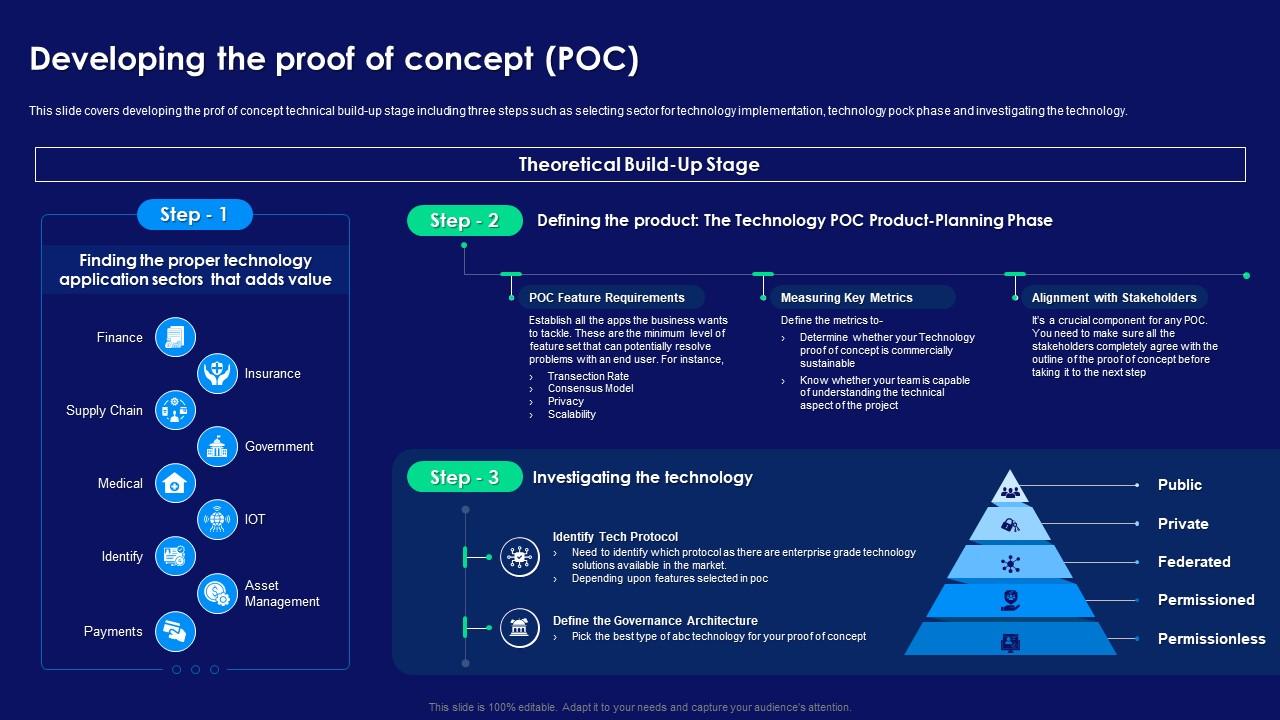
This slide covers developing the prof of concept technical build-up stage including three steps such as selecting sector for technology implementation, technology pock phase and investigating the technology.
People who downloaded this PowerPoint presentation also viewed the following :
Step By Step Technology Implementation Developing The Proof Of Concept POC with all 9 slides:
Use our Step By Step Technology Implementation Developing The Proof Of Concept POC to effectively help you save your valuable time. They are readymade to fit into any presentation structure.
FAQs for Step By Step Technology Implementation Developing The Proof
Cost and scalability are the big ones, obviously. But honestly? The fancy features trap gets everyone - you'll pay for stuff you never touch. Way more important is whether your team will actually use it without complaining every day. Does it play nice with what you already have? Implementation can be a nightmare if you're not careful. Oh, and definitely don't skip the security stuff if you're dealing with anything sensitive. Just do a trial run first though - seriously, I can't stress this enough. You'll thank me later when you avoid a total disaster.
Start by mapping out what tech you actually have - systems, tools, the whole mess across every department. What's working? What makes everyone want to scream? (Looking at you, ancient CRM system.) Survey your team about daily headaches and bottlenecks they deal with. Also check their comfort level with new tech - some people adapt fast, others... not so much. Compare your setup to competitors if you can swing it. Honestly, a simple spreadsheet works fine for tracking all this stuff. Just get everything documented so you know where you stand before making changes.
Honestly? Change management can make or break everything. I've seen amazing tech completely flop because nobody prepped the team. People absolutely hate workflow surprises - they'll resist hard if you spring changes on them. Start communicating super early. Get key people involved in planning. Train properly and actually listen to their concerns. Oh, and here's what most people mess up - budget like 30% of your timeline just for change management stuff. Don't just tack it on at the end. The fanciest system won't matter if your team won't use it.
Honestly, you've gotta get your people bought in from the start - no surprises. Find a few team members who'll actually get excited about it and let them become your unofficial trainers. Half the battle is explaining WHY you're doing this, not just what the new system does. And seriously, invest in proper training sessions, not those useless 20-minute walkthroughs that nobody retains. I'd start small with maybe 3-4 people, let them mess around with it and give feedback. Once you work out the inevitable bugs, then roll it out wider. People hate change but they hate feeling clueless even more.
Track both the techy stuff and business impact - uptime, speed, error rates, plus ROI and whether you actually hit your goals. User feedback beats fancy dashboard numbers every time though. Also watch how fast people adopt the new system and get comfortable with it. Honestly, time-to-value is huge but everyone forgets about it. Set up monthly reviews for the first six months, then switch to quarterly. Don't get too caught up in productivity metrics right away since there's usually a learning curve first.
Dude, it's crazy how different industries handle new tech. Healthcare crawls because lives are at stake - they test everything to death first. Tech companies? Total opposite. They just ship stuff and fix it later. Manufacturing gets paranoid about downtime since every minute offline costs a fortune, so they obsess over how new tech plays with old systems. Banks are weirdly in between - they want cool new features but regulations keep them from moving too fast. Honestly, you can't just copy what Amazon does and expect it to work in healthcare. Match your industry's vibe instead.
Honestly, most projects fail because of three main things: crappy planning, zero user training, and trying to bite off way more than you can chew. Get a solid roadmap first - I can't tell you how many times I've watched teams crash and burn because they had no clue what they were getting into. Train your users properly, not just some half-assed 20-minute demo. Roll things out in phases instead of going full nuclear option day one. Oh, and communicate like crazy with stakeholders so nobody freaks out later. My take? Start small, test everything twice, have a backup plan ready.
Definitely do a risk assessment first - figure out what could blow up in your face, security-wise or just general chaos. Start with a pilot group instead of going all-in (trust me on this one lol). Training is huge, people hate change so you'll need solid support. Document everything as you go because when stuff breaks - and it will - you'll want those notes. Oh, and always have a rollback plan ready. Honestly, half the battle is just expecting problems before they happen. Test small, plan for the worst-case scenario, then you're golden.
Look, people hate change - that's just reality. You can't dump new tech on everyone and walk away expecting miracles. Your team needs real ongoing training to feel confident using it. I've watched so many rollouts crash and burn because companies get cheap with support afterward. Budget for like 3-6 months of heavy-duty help post-launch, seriously. Regular training sessions catch the weird questions that pop up once people actually start using the system daily. Plus having solid support stops little problems from snowballing into major headaches that kill adoption.
Map your tech stuff straight to business goals first - none of this "let's try it because it's cool" nonsense. Ask yourself: does this actually help us make money or cut costs? I've watched so many teams chase shiny objects and waste tons of cash. Get your department heads involved from day one - they know what problems actually need solving vs what sounds good in meetings. Set up metrics that clearly show ROI tied to real outcomes. Customer growth, operational savings, whatever matters to your bottom line. Otherwise you're just burning budget on fancy tools nobody will use.
Dude, cloud stuff is honestly a game changer for getting things up and running fast. You don't have to mess around with buying servers or any of that infrastructure nonsense - just sign up and start configuring. Days instead of months, which is wild when you think about it. The vendor takes care of maintenance and updates automatically, so your team can actually focus on using the tech instead of constantly fixing it. I'd definitely try a small pilot project first though. You'll see pretty quickly how much faster everything moves compared to the old way of doing things.
Set up feedback channels from day one - surveys, focus groups, regular check-ins with different user groups. Over-communicate here because people hate feeling ignored during big changes. Don't wait until the end for feedback loops. Quick pulse surveys work great for general vibes, then do deeper interviews with your power users since they'll catch problems fast. The real trick? Actually close the loop - tell people what you heard and what you're doing about it. Oh, and start collecting feedback before you even launch the first phase. Trust me on this one.
First thing - map out all the data moving between your old system and the new one. Trust me on this. APIs are your friend here, way better than connecting databases directly. Don't try to flip everything at once either, do it in phases. I've seen that go sideways too many times. You'll want rollback plans ready because stuff WILL break at 2am on a Friday. Get your users involved in testing early - they'll catch things you missed. Oh, and document as you go, not after. Both systems need to play nice together during the switchover.
Smart sensors are game-changers for tracking water use and emissions - the data will blow your mind honestly. You can automate energy management and optimize supply chains to slash waste. AI predicts when equipment's about to fail, so no more wasteful breakdowns. Digital workflows kill paper waste, and cloud systems shrink your server footprint. I'd start with energy monitoring since the cost savings are immediate and obvious. Once you see those numbers drop, you'll want to expand everywhere else. The real-time tracking aspect is probably my favorite part though.
So AI and machine learning are automating way more of the rollout stuff now. You've got these low-code platforms that let you deploy things super fast without needing a CS degree. Cloud setups are getting modular - honestly makes scaling so much easier than it used to be. Edge computing's pushing everything closer to users, and everything needs to work with APIs now (which is annoying but makes sense). The biggest change? Companies ditched those massive rollouts for continuous deployment instead. Way smarter approach. Oh, and start making your processes more feedback-driven - users will tell you what's broken faster than any testing team.
-
I loved the hassle-free signup process. A few minutes and, I had this giant collection of beautiful designs.
-
Loved the collection. Editing the presentation was seamless with their templates.Â