Strategic Advisory And Consulting Services Company Profile Powerpoint Presentation Slides CP CD V

Rating:
90%
Strategic Advisory And Consulting Services Company Profile Powerpoint Presentation Slides CP CD V
Slide 1 of 49

or

Favourites Favourites

Try Before you Buy Download Free Sample Product

Audience Impress Your
Audience
Editable 100%
Editable
Time Save Hours
of Time
The Biggest Sale is ending soon in
0
0
:
0
0
:
0
0
Rating:
90%
Enthrall your audience with this Strategic Advisory And Consulting Services Company Profile Powerpoint Presentation Slides CP CD V. Increase your presentation threshold by deploying this well-crafted template. It acts as a great communication tool due to its well-researched content. It also contains stylized icons, graphics, visuals etc, which make it an immediate attention-grabber. Comprising forty one slides, this complete deck is all you need to get noticed. All the slides and their content can be altered to suit your unique business setting. Not only that, other components and graphics can also be modified to add personal touches to this prefabricated set.

People who downloaded this PowerPoint presentation also viewed the following :

Content of this Powerpoint Presentation

Slide 1: This slide introduces Strategic Advisory and Consulting Services Company Profile. State Your Company Name and begin.
Slide 2: This slide shows a Table of Contents for the presentation.
Slide 3: This slide represents the executive summary of the consulting form.
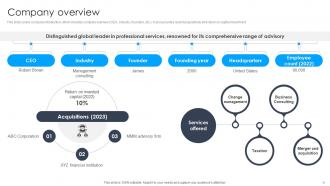
Slide 4: This slide covers company introduction, which includes company overview (CEO, industry, founders, etc.).
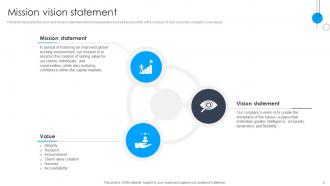
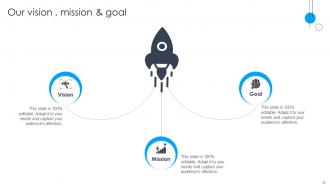
Slide 5: This slide presents the vision and mission statement which showcases the desired future position of the company.
Slide 6: This slide caters to services offered by the consulting company to its clients.
Slide 7: This slide elucidates USP (Unique Selling Proposition) for the consulting business.
Slide 8: This slide contains business model canvas.
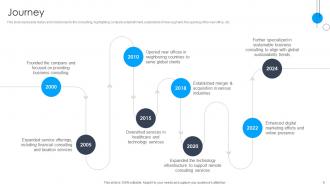
Slide 9: This slide puts history and milestones for the consulting.
Slide 10: This slide marks global presence of the company, which covers major geographical areas such as Americas, Europe, Middle East, India, & Africa (EMEIA) and Asia-Pacific.
Slide 11: This slide demonstrates industries served by the company.
Slide 12: This slide displays key partners associated with the company.
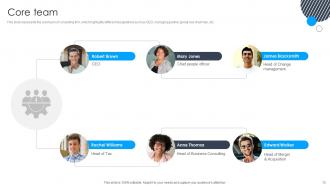
Slide 13: This slide denotes the core team of consulting firm, which highlights different designations such as CEO, managing partner global vice chairman, etc.
Slide 14: This slide represents shareholding structure for the consulting company.
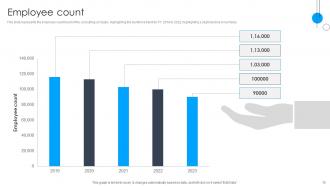
Slide 15: This slide highlights the employee count trend of the consulting company.
Slide 16: This slide caters to key competitors of the consulting company in global market spilt by operating segment.
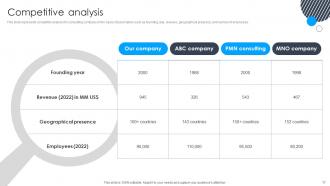
Slide 17: This slide contains competitor analysis for consulting company.
Slide 18: This slide elucidates a financial summary for the consulting firm.
Slide 19: This slide represents the profit and loss statement highlights for consulting company.
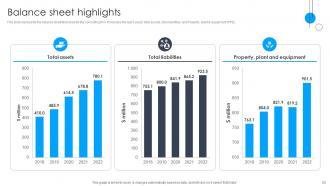
Slide 20: This slide presents the balance sheet financials for the consulting firm.
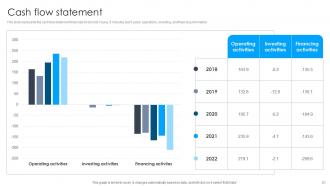
Slide 21: This slide contains the cash flow statement financials for Ernst & Young. It includes last 5 years’ operations, investing, and financing information.
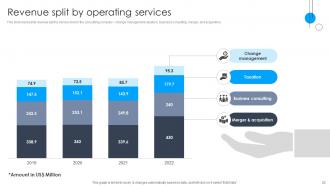
Slide 22: This slide caters to revenue split by service line for the consulting company – change management, taxation, business consulting, merger, and acquisition.
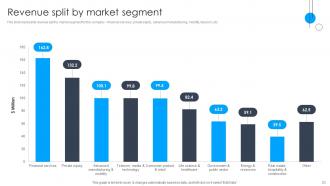
Slide 23: This slide consists revenue split by market segment for the company – financial services, private equity, advanced manufacturing, mobility, telecom, etc.
Slide 24: This slide marks the marketing strategy for brand promotion– segmentation, targeting, positioning, marketing campaign and social media.
Slide 25: This slide puts the expansion strategy for the consulting firm, highlighting career advancement, skill enhancement, and environmental stewardship.
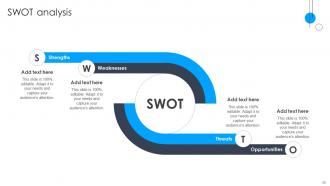
Slide 26: This slide entails SWOT analysis highlighting strengths of the company. It includes global reach, mergers & collaborations, and a formidable workforce.
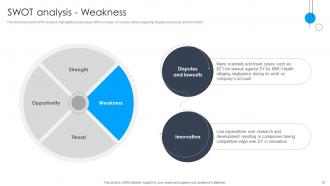
Slide 27: This slide represents SWOT analysis highlighting weaknesses of the company. It includes details regarding disputes & lawsuits, and innovation.
Slide 28: This slide presents SWOT analysis highlighting opportunities of the company.
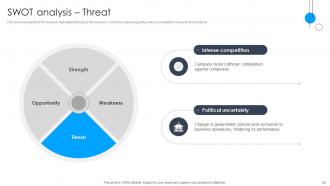
Slide 29: This slide denotes SWOT analysis highlighting threats to the company.
Slide 30: This slide marks sustainability goals for the consulting firm.
Slide 31: This slide represents sustainability goals for the consulting company– highlighting objectives, initiatives, and final outcome for the strategies implemented.
Slide 32: This is a Contact Us slide. Add your Email Address, Contact, Social Media Handles, and Address.
Slide 33: This slide shows all the icons included in the presentation.
Slide 34: This slide is titled Additional Slides for moving forward.
Slide 35: This slide is Our Target slide. State your targets here.
Slide 36: This slide is a Timeline slide. Show data related to time intervals here.
Slide 37: This slide shows Post-It Notes. Post your important notes here.
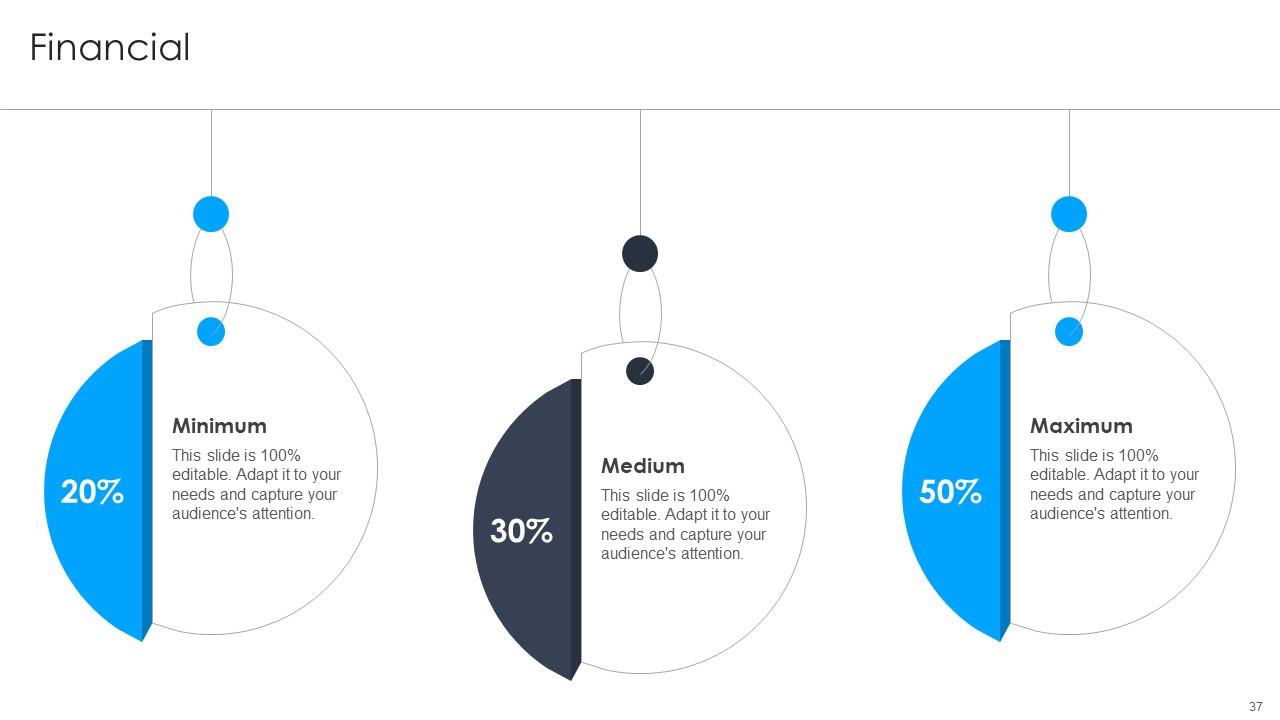
Slide 38: This slide contains a Puzzle with related icons and text.
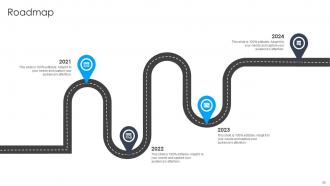
Slide 39: This slide presents a Roadmap with additional text boxes.
Slide 40: This slide is a thank-you slide with address, contact numbers, and email address.

FAQs for Strategic Advisory And Consulting Services Company Profile Powerpoint Presentation Slides

Look for someone with real industry chops who actually gets your space - not just some generalist. They should back up their advice with solid data, not just gut feelings. Find someone who vibes with how your team works because culture fit matters way more than people think. Honestly, half these consultants are all fancy frameworks with zero execution experience. You want someone who can break down complicated stuff without making you feel stupid. Oh, and they should have wins with companies like yours. Basically find someone who feels like a trusted mentor, not just another invoice to pay.

So here's what I'd do - figure out your success metrics before anything kicks off. Revenue goals, KPIs, whatever makes sense for your situation. Don't just track the numbers though. The soft stuff matters too, like how much faster decisions get made or if teams actually work better together. Those improvements are usually worth more than the hard data but good luck measuring them, right? Check in regularly during the project instead of waiting until it's over. Oh, and seriously - document where you're starting from. Trust me, six months later when someone's questioning what you actually accomplished, you'll need that baseline to show the real impact.

Look, you can't just walk into meetings with hunches anymore. Data analytics gives you the proof you need - shows market trends, customer patterns, where you're bleeding money operationally. It's literally what separates real strategy from throwing darts blindfolded (which I've seen way too many companies do). The trick is asking smart questions first, then letting those insights guide your recommendations. Don't just hunt for numbers that support what you already decided. That's backwards and honestly pretty obvious to anyone paying attention.

Good advisors dig deep into what your leadership actually wants long-term - not the BS written in some forgotten strategy doc. They map every suggestion back to those real goals. Honestly, the obsessive ones are worth it because they'll call you out when short-term stuff threatens your bigger picture. During discovery, make sure they document these vision checkpoints so you can hold their feet to the fire later. Oh, and they should be constantly checking that nothing's wandering off track. It's kinda annoying but super valuable.

Honestly, digital transformation is still the biggest thing - everyone's scrambling with AI stuff and data strategy. ESG compliance is eating up budgets too since companies are panicking about sustainability reporting. The whole market volatility situation has been crazy, like watching businesses flip their entire strategy overnight. Oh and the talent shortage thing is forcing major workforce overhauls. I'd definitely focus your services around those four areas since that's where the money's actually flowing right now. Companies are basically throwing cash at anyone who can solve these headaches.

Find someone who's actually dealt with your specific mess before - industry know-how beats generic advice every time. The good ones will grill you with hard questions right off the bat instead of blowing smoke. Definitely call their former clients (not just the references they give you, if possible). Chemistry's huge since you'll be spilling all your business secrets. Honestly, I'd test them out with something small first. You can tell pretty quick if they actually get it or they're just good at buzzword bingo. Don't jump into a massive contract until you're sure they're not idiots.

Dude, client buy-in is always the killer. You can create this amazing strategy but if leadership won't actually commit or explain it properly to their people, you're screwed. Change resistance is brutal too - I swear people would rather stick with broken systems than try something new. Also scope creep will drive you nuts since they always want to add more stuff halfway through. Oh, and build change management right into the project from the start. Set super clear boundaries upfront or you'll be dealing with chaos later.

Dude, cultural stuff will absolutely make or break you in advisory work. Germans want you super direct and efficient - no fluff. But try that same approach with a Latin American client and you'll bomb because they're all about building relationships first. I learned this the hard way once, actually. Your whole game has to shift - how you run meetings, present data, even your timeline expectations. Some cultures love blunt feedback while others need you to be way more subtle about suggestions. Best move? Talk to local contacts beforehand and ask what actually works in their environment. Trust me on this one.

Honestly, just be super upfront about expectations from day one. Ask them straight up how they like to communicate - some people are all about Slack, others want those formal weekly reports (ugh). Shared dashboards are clutch for keeping everyone on the same page. Quick check-ins save your ass later, trust me - catches problems before they blow up. Document everything after meetings or stuff just disappears into the void. Oh, and ask what success actually looks like to them right at the start. Sounds basic but you'd be surprised how many people skip that conversation.

Honestly, tech has changed everything for strategic advisors. Data analysis that used to take weeks? Now it's done in hours. Clients don't want quarterly reports anymore - they expect real-time insights, which is both awesome and exhausting. AI handles all the boring number-crunching (seriously, what a relief), so you can actually focus on strategy and building relationships. Video calls opened up clients worldwide, plus collaboration tools make remote teams work smoothly. I mean, my cousin still refuses to use half these platforms and wonders why his consulting firm is struggling. Bottom line - adapt or watch competitors zoom past you.

Dude, client confidentiality is everything - never leak info between clients, even the "harmless" stuff. Upfront disclosure about conflicts of interest is huge, especially with competitors or if you've got skin in the game financially. This gets ugly quick if you mess up. Your advice should actually help them, not just pad your wallet (I've seen consultants totally blow this). Don't oversell what you can deliver either - be real about limitations. Oh, and set those boundaries early or clients will walk all over you. Trust me on that one.

Good advisors basically do both at once - they'll spot quick wins that actually help your long-term goals instead of hurting them. It's like fixing your house while you're still living there, you know? You grab the immediate revenue boosts or cost cuts that make your foundation stronger, not weaker. The trick is making sure those quick moves point in the same direction as your bigger strategy. Honestly, the best ones will show you a timeline where your short-term stuff feeds right into the major goals. No sacrificing future success for a quick buck.

Honestly, benchmarks are amazing for this stuff - you just compare your client's numbers against top performers in their space. Look at their metrics, how they operate, market position, all that. Find ones that actually make sense though - same industry size and market conditions matter way more than people think. I'd probably start with like 3-5 categories that match what they actually care about strategically. Then you can show them exactly where they're falling behind or killing it. It's wild how many consultants skip this step. You'll build way stronger recommendations when you've got real data backing up those performance gaps.

So they usually kick things off by figuring out where you're at right now - your market spot, what's working, what isn't. You'll spend a ton of time defining your vision and goals together. Honestly, this part gets pretty brutal with all the stakeholder interviews and number crunching. After that comes building your actual game plan and timeline for rolling stuff out. They'll also set up ways to track progress and measure success. Most wrap up around 8-12 weeks with a big presentation to your leadership team, plus they'll hand off an execution plan. Oh, and definitely have your financials and org chart ready from day one - it'll save you headaches later.

Look, treat those advisor recs like a roadmap, not some fantasy wishlist. Pick what you can actually handle with your current resources - trust me, trying to do everything at once is where good plans go to die. Get a solid team together where people actually own specific pieces (none of this "we're all responsible" nonsense). Leadership needs to be genuinely bought in, not just nodding along in meetings. Set real milestones. Check progress monthly. The biggest thing? Don't force some perfect-world solution into your messy reality - adapt it to what actually works for your company's culture and constraints. Build in accountability from the start.

Ratings and Reviews

90% of 100
Review Form
Write a review
Most Relevant Reviews
  1. 100%

    by Darnell Tucker

    The templates are handy and I can personalize them as per my needs. Glad to be your subscriber!
  2. 80%

    by Denis Rose

    Wow, never been this impressed with any online service provider. Really appreciate the customer support all along from the navigation to purchasing the right products.

2 Item(s)

per page: