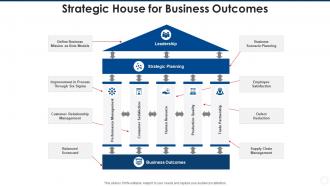
Strategic house for business outcomes
Try Before you Buy Download Free Sample Product
Audience
Editable
of Time
Our Strategic House For Business Outcomes are topically designed to provide an attractive backdrop to any subject. Use them to look like a presentation pro.
People who downloaded this PowerPoint presentation also viewed the following :
Strategic house for business outcomes with all 9 slides:
Use our Strategic House For Business Outcomes to effectively help you save your valuable time. They are readymade to fit into any presentation structure.
FAQs for Strategic house
Honestly, most companies mess this up because they skip the basics. First thing - make sure your vision is crystal clear and people actually get it, not just nod along in meetings. Communication has to flow both directions too. I've watched so many good strategies die because leadership thought sending one email was enough lol. Your metrics matter huge here - if you're rewarding people for stuff that goes against the strategy, you're screwed. Regular check-ins help catch problems early. Oh, and get buy-in from managers at every level, not just the C-suite. Start by figuring out your worst alignment gaps first.
So I'd look at whether teams are actually hitting the same targets - check project alignment and how resources get split up between departments. Employee surveys work great for this stuff, especially asking if people understand how their daily work fits the big picture. Decision speed matters too. If there's tons of back-and-forth, alignment probably sucks. Honestly, most companies overcomplicate this - just pick 2-3 simple metrics you'll actually check every quarter instead of building some crazy dashboard that'll collect dust.
Honestly, your leaders make or break this whole thing. They're the ones setting direction and keeping people focused on what actually matters. The hard part? You can't just announce the strategy once and call it done. People get caught up in their daily chaos and forget the bigger picture - I've seen it happen so many times. Your leadership team needs to be on the same page first, then keep hammering the message consistently. Otherwise you'll end up with another forgotten slide deck. Strong leaders who communicate clearly and make the tough priority calls - that's what separates companies that execute from those that don't.
Honestly, just get everyone using the same tools - Slack, Teams, whatever works for your company. Dashboards are a game changer because people can actually see how their work fits into the bigger picture. I've watched companies completely turn around once they moved to shared project management software (though it took a few months of complaining first, lol). The trick is finding something that gets teams talking to each other instead of hiding in their own corners. Start simple: pick one tool where every department has to post their quarterly goals publicly. You'll be surprised how much that alone changes things.
Honestly, it's mostly communication that screws everything up. Different departments start chasing completely different goals because nobody's on the same page about what actually matters. Middle managers hear one thing from leadership but tell their teams something else entirely - happens all the time. Budget fights are brutal too since everyone thinks their project is "strategic." Office politics obviously make it worse (surprise surprise). Most places also suck at tracking whether their initiatives actually connect to the big picture. My advice? Get leadership to be super clear upfront, then do regular check-ins so you can catch teams when they inevitably start wandering off course.
Honestly, most companies mess this up by tracking everything instead of what matters. Pick 3-5 metrics that actually show if your strategy's working - like if growth is your thing, track retention rates instead of some vague "customer satisfaction" score. Make sure your team gets WHY you're measuring each thing, not just the numbers. I've seen way too many fancy dashboards that look great but tell you absolutely nothing about whether you're actually winning. Oh, and definitely cascade those key metrics down through your teams so everyone's pulling in the same direction.
Honestly, start with one weekly 30-minute meeting focused on actual priorities, not just random updates. Most companies mess this up by making it way too complicated. Get different people rotating as liaisons between departments - you don't want the same voices every time. Set up shared docs so everyone can see what's happening and who's waiting on what. Oh, and throw in quick Slack check-ins during the week for smaller stuff. Keep it frequent but light. The trick is not overwhelming people with meetings while actually staying aligned on what matters.
Look, people actually give a shit about their jobs when the culture matches what you're trying to achieve as a company. Think about it - if everyone's pulling in the same direction, employees can see how their daily grind connects to something bigger. But here's where most places screw up: they'll preach innovation while simultaneously obsessing over cutting every penny. Mixed messages much? Your team just checks out mentally. When things actually align though? People get it. They feel like their work matters and stay motivated because they're part of something real. Quick fix - audit whether your culture actually backs up your strategy or if you're just talking.
Block out time next quarter for a proper review session - that's your starting point. Check if your projects actually connect to your main goals every few months. Regular chats with stakeholders catch problems early, honestly those conversations save me so much headache later. Simple dashboards with key numbers work great for spotting issues before they blow up. When priorities change (and they will), dig into the reasoning behind it. Everyone stays on the same page that way. Oh, and don't overthink the dashboard thing - basic metrics beat fancy charts every time.
Honestly, startups need to ditch the whole annual planning thing - check in weekly or monthly instead. Your strategy's gonna change constantly as you figure out what actually works (spoiler: it's never your first guess). Bigger companies can do the formal top-down alignment stuff because they've got proven strategies to execute. The real difference? Startups should align around learning fast and pivoting when needed. Established companies align around executing what they already know works. First step though - be brutally honest about which stage you're actually in. Most people fool themselves here.
Strategic alignment is honestly a game-changer for competitive advantage. Everyone rows in the same direction toward shared goals instead of doing their own thing. Your teams, resources, and decisions all back the same strategy, so you move way faster than competitors who are all over the place. Think laser vs flashlight - focused energy beats scattered every time. Aligned companies also pivot quicker when markets shift because people get the reasoning behind changes. Oh, and definitely map your current projects against your strategy first. You'll probably find some random stuff that doesn't belong.
Honestly, strategic alignment is actually your best friend for innovation. Think about it - when your team knows what the company really cares about, they can put their creative energy into stuff that'll actually get funded and supported. It's way better than brainstorming random cool ideas that leadership will just ignore later. Your innovation projects need to connect back to those bigger business goals. Otherwise you're just spinning your wheels. Having clear priorities is like getting a good creative brief - it doesn't limit you, it helps you focus on solutions that matter. Leadership gets way more excited about backing projects when they can see the connection to strategy. Makes the whole process smoother tbh.
You really can't nail strategic alignment without getting stakeholders involved - it's pretty much impossible. Getting them in the planning process early means they actually understand why you're making certain calls. They feel like they own part of the outcome too. Honestly, they'll probably spot things you completely missed that make your whole strategy stronger. Just don't make it some fake consultation thing where you're going through the motions. Map out your key people first and set up regular check-ins throughout planning. Oh and make sure you're hitting different departments and levels - not just the usual suspects.
Honestly, training sessions are perfect for getting everyone aligned on your big goals. Start by showing how daily tasks actually connect to the bigger picture - like how those customer service numbers directly impact revenue. Cross-functional workshops work great too since teams often don't realize how their work affects other departments. I swear, most people completely miss these connections otherwise! The trick is making strategy feel real, not some abstract concept floating around. Try opening your next session with "here's exactly why this matters to what we're trying to achieve" and you'll see people actually pay attention.
Build feedback loops into your regular planning - surveys, customer calls, support ticket analysis, whatever works. Then actually bring that stuff into strategy meetings. I've watched teams do complete 180s when they figured out customers cared about totally different things than expected. Don't just collect feedback though, you need to map it back to your actual goals. Create some basic framework that turns customer complaints into real initiatives. Oh, and make customer input a permanent agenda item - not something you remember last minute when you're already halfway through planning.
-
I discovered this website through a google search, the services matched my needs perfectly and the pricing was very reasonable. I was thrilled with the product and the customer service. I will definitely use their slides again for my presentations and recommend them to other colleagues.