


Strategic Marketing Guide For Restaurant Promotion Powerpoint Presentation Slides




Try Before you Buy Download Free Sample Product
 Impress Your
 Audience
 100%
100% Editable
 Save Hours
 of Time


Restaurant promotion involves using online and offline marketing activities to increase awareness and improve credibility among the target audience. This PPT Strategic Marketing Guide for Restaurant Promotion can help in encouraging new customers to visit restaurants and increase revenue from existing visitors by executing promotional campaigns. It initially showcases key statistics and benefits associated with restaurant marketing and promotion. This presentation also displays a timeline that can help to plan and manage digital and offline marketing campaigns. It also shows the ideal content type to distribute and a calendar to manage the content on different channels. This PPT also showcases online marketing strategies to distribute the content which are social media marketing, email marketing, website promotion, SMS campaigns, and paid advertisements. It also showcases various offline restaurant promotion activities that are flyers, magazine advertisements, billboards, and television commercials. It also highlights the budget to be allocated for running restaurant marketing campaigns. In the end, this presentation displays dashboards that can help to evaluate the effectiveness of promotional campaigns and track the revenue of the restaurant. Download it now.
People who downloaded this PowerPoint presentation also viewed the following :
Content of this Powerpoint Presentation
Slide 1: This slide displays the title Strategic Marketing Guide for Restaurant Promotion.
Slide 2: This slide displays the title Agenda for strategic marketing guide for restaurant promotion
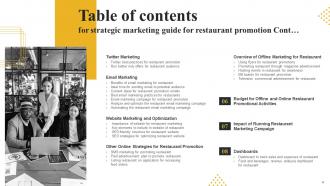
Slide 3: This slide exhibit table of content.
Slide 4: This slide exhibit table of content.
Slide 5: This slide exhibit table of content- Current Scenario Assessment.
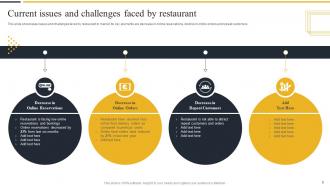
Slide 6: This slide showcases issues and challenges faced by restaurant in market.
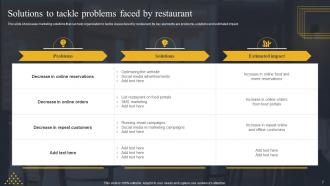
Slide 7: This slide showcases marketing solutions that can help organization to tackle issues faced by restaurant.
Slide 8: This slide exhibit table of content- Overview of Restaurant Marketing
Slide 9: These slide showcases key statistics of restaurant marketing that can help to evaluate the market overview.
Slide 10: This slide showcases advantages of promoting restaurant through offline and online marketing channels.
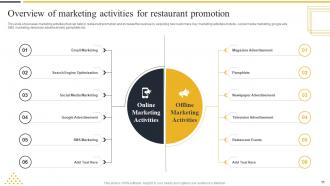
Slide 11: This slide showcases marketing activities that can help in restaurant promotion and increase the revenue by acquiring new customers.
Slide 12: This slide exhibit table of content- Timeline for Restaurant Marketing and Promotion
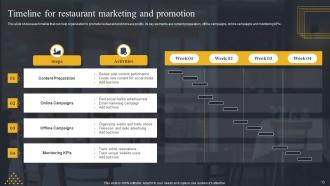
Slide 13: This slide showcases timeline that can help organization to promote restaurant and increase profits.
Slide 14: This slide exhibit table of content- Content Planning and Preparation.
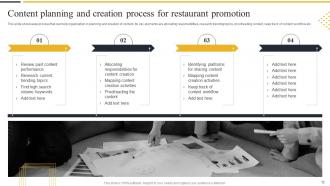
Slide 15: This slide showcases process that can help organization in planning and creation of content.
Slide 16: This slides showcases different type of content that can be posted on social media and website for increasing awareness about restaurant.
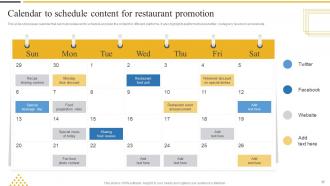
Slide 17: This slide showcases calendar that can help restaurant to schedule and plan the content for different platforms.
Slide 18: This slide exhibit table of content- Restaurant Marketing Channels
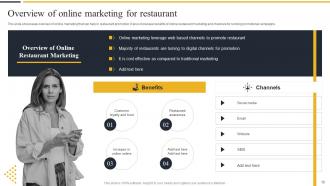
Slide 19: This slide showcases overview of online marketing that can help in restaurant promotion.
Slide 20: This slide exhibit table of content- Social media marketing.
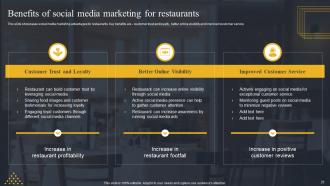
Slide 21: This slide showcases social media marketing advantages for restaurants.
Slide 22: This slides posting schedule and frequency to post content on different social media channels.
Slide 23: This slide exhibit table of content- Instagram marketing.
Slide 24: This slide showcases strategies that can help in restaurant promotion on Instagram.
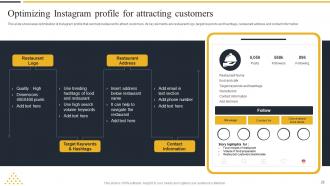
Slide 25: This slide showcases optimization of Instagram profile that can help restaurant to attract customers.
Slide 26: This slide showcases different type of paid Instagram ads which can be used in restaurant promotions.
Slide 27: This slide exhibit table of content- Facebook marketing.
Slide 28: This slide showcases strategies that can be implemented on Facebook for promoting restaurant.
Slide 29: This slide showcases different type of contests that can be run on Facebook for promoting restaurant.
Slide 30: This slide showcases customer testimonials that can be shared on Facebook for building online trust and loyalty.
Slide 31: This slide showcases optimization of Facebook profile that can help restaurant to attract customers.
Slide 32: This slide exhibit table of content- YouTube marketing
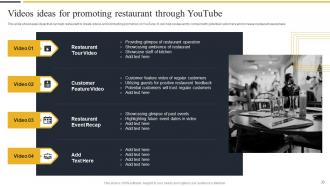
Slide 33: This slide showcases ideas that can help restaurant to create videos and conducting promotion on YouTube.
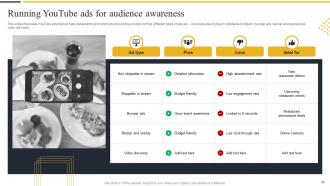
Slide 34: This slide showcases YouTube ads that can help restaurant to promote food and services in video format.
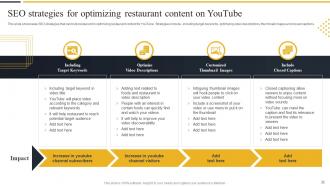
Slide 35: This slide showcases SEO strategies that can help restaurant in optimizing restaurant content for YouTube.
Slide 36: This slide exhibit table of content- Twitter marketing.
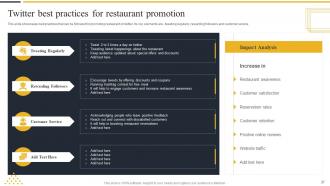
Slide 37: This slide showcases best practices that can be followed for promoting restaurant on twitter.
Slide 38: This slide showcases twitter only offer that can help restaurant to attract the potential audience.
Slide 39: This slide exhibit table of content- Email Marketing.
Slide 40: This slide showcases email marketing benefits for restaurant.
Slide 41: This slide showcases ideal time to send emails for restaurant promotion.
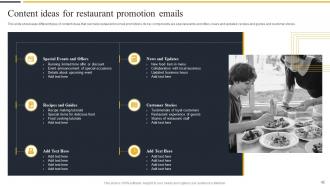
Slide 42: This slide showcases different types of content ideas that can help restaurant in email promotions.
Slide 43: This slide showcases best practices that can help to promote restaurant services and food through email.
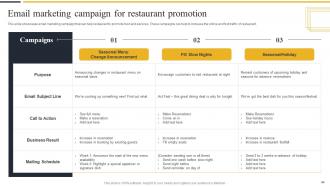
Slide 44: This slide showcases email marketing campaign that can help restaurant to promote food and services.
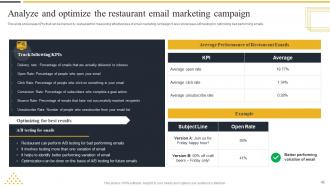
Slide 45: This slide showcases KPIs that can be tracked by restaurant for measuring effectiveness of email marketing campaign.
Slide 46: This slide showcases types of email marketing automation that can help restaurant to attract customers.
Slide 47: This slide exhibit table of content- Website marketing and optimization.
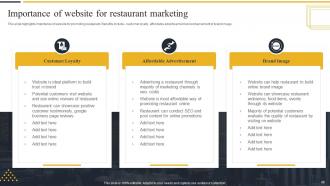
Slide 48: This slide highlights importance of website for promoting restaurant.
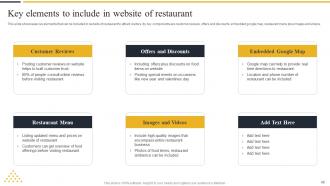
Slide 49: This slide showcases key elements that can be included in website of restaurant to attract visitors.
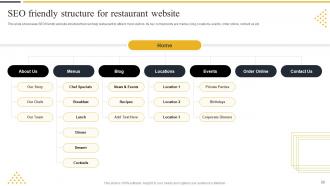
Slide 50: This slide showcases SEO friendly website structure that can help restaurant to attract more visitors.
Slide 51: This slide showcases SEO strategies that can help restaurant to optimize the website for attracting visitors.
Slide 52: This slide exhibit table of content- Other online strategies for restaurant promotion.
Slide 53: This slide showcases SMS marketing that can help in restaurant promotion and drive traffic to website.
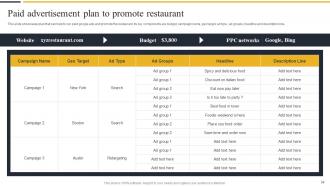
Slide 54: This slide showcases plan that can help to run paid google ads and promote the restaurant.
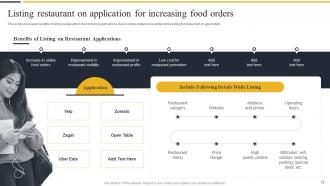
Slide 55: This slide showcases benefits of listing restaurant on food ordering applications.
Slide 56: This slide exhibit table of content- Overview of offline marketing for restaurant.
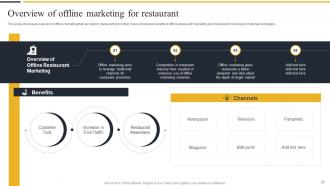
Slide 57: This slide showcases overview of offline marketing that can help in restaurant promotion.
Slide 58: This slide exhibit table of content- Overview of offline marketing for restaurant.
Slide 59: This slide showcases ways to use flyers that can help in promotion of restaurant.
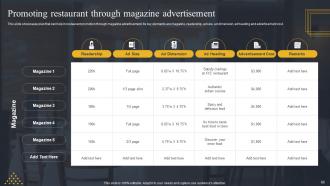
Slide 60: This slide showcases plan that can help in restaurant promotion through magazine advertisement.
Slide 61: This slide showcases different events that can be hosted by restaurant for local audience awareness.
Slide 62: This slide showcases billboards that can help restaurant in conducting offline marketing.
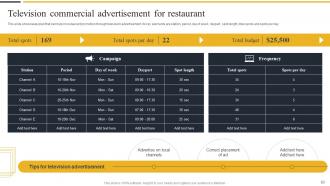
Slide 63: This slide showcases plan that can help in restaurant promotion through television advertisement.
Slide 64: This slide exhibit table of content- Budget for Offline And Online Restaurant Promotional Activities.
Slide 65: This slide showcases budget to be allocated for restaurant offline and online marketing activities.
Slide 66: This slide exhibit table of content- Impact of Running Restaurant Marketing Campaign
Slide 67: This slide showcases impact of running offline and online marketing campaigns on performance of restaurant.
Slide 68: This slide exhibit table of content- Dashboards
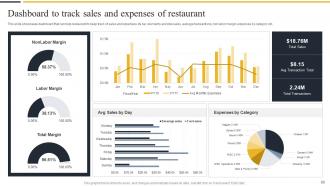
Slide 69: This slide showcases dashboard that can help restaurant to keep track of sales and expenses.
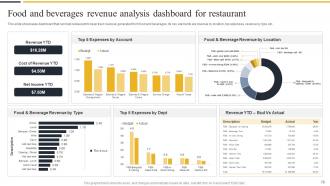
Slide 70: This slide showcases dashboard that can help restaurant to keep track revenue generated from food and beverages.
Slide 71: This is the icons slide.
Slide 72: This slide presents title for additional slides.
Slide 73: This slide display Clustered column for two products.
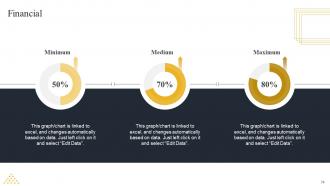
Slide 74: This slide display Financial.
Slide 75: This slide display Line chart for two products.
Slide 76: This slide shows details of team members like name, designation, etc.
Slide 77: This slide presents your company's vision, mission and goals.
Slide 78: This slide depicts posts for past experiences of clients.
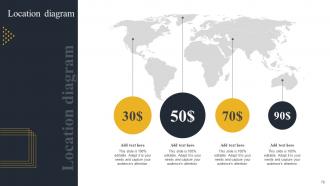
Slide 79: This slide display Location diagram.
Slide 80: This slide display Venn diagram.
Slide 81: This slide display 30 60 90 Days plan.
Slide 82: This slide dislay SWOT analysis.
Slide 83: This slide display Comparison.
Slide 84: This slide exhibit Idea generation.
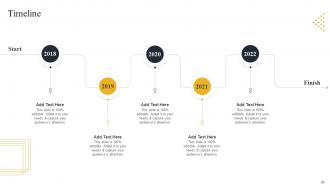
Slide 85: This slide exhibits yearly timeline of company.
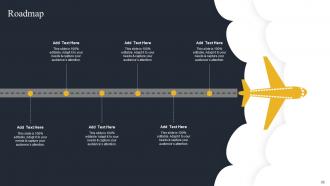
Slide 86: This slide shows roadmap of company.
Slide 87: This is thank you slide & contains contact details of company like office address, phone no., etc.
Strategic Marketing Guide For Restaurant Promotion Powerpoint Presentation Slides with all 92 slides:
Use our Strategic Marketing Guide For Restaurant Promotion Powerpoint Presentation Slides to effectively help you save your valuable time. They are readymade to fit into any presentation structure.





































FAQs for Strategic Marketing Guide For Restaurant Promotion
Okay so you need five main things for a decent marketing plan. First figure out exactly who you're targeting - like really narrow it down. Then do competitive analysis (most people totally blow this off but it's super helpful). Your positioning strategy comes next - basically how you're different and why people should care. Set some actual measurable goals too, not just "increase sales." Oh and obviously plan out your channels and campaigns with realistic budgets. I always tell people to start with the target audience stuff first since everything else builds off that. Once you know who they are and what problems they have, the rest gets way easier.
So instead of trying to talk to everyone at once, you break down your audience into specific groups. Each group has different problems and buying habits, right? This way you can speak directly to what actually matters to them. Honestly, it's way more effective than generic messaging that nobody really connects with. Your conversion rates will be better because people feel like you "get" them. Budget-wise, you can put more money toward the segments that actually make you profit and pull back from the ones that don't. I'd start with maybe 2-3 segments and test different approaches.
Honestly, customer personas are like your marketing GPS - without them you're just throwing stuff at the wall hoping something sticks. They help you actually talk TO people instead of AT them, you know? I'd start by interviewing real customers because what they tell you will blow your mind compared to whatever you thought you knew. Use those insights to shape your messaging, pick the right channels, even influence product decisions. It's crazy how many businesses skip this step then act shocked when nothing lands. Oh, and make them detailed - vague personas are basically useless.
Honestly, data analytics just cuts through all the BS guesswork in marketing. You'll actually know which campaigns work instead of throwing money at whatever feels right. Track where your best customers come from, see what messaging hits different, spot trends before they blow up. The magic happens when you connect all your data sources - suddenly the whole customer journey makes sense. I'd say start with one campaign and follow it from start to finish. You'll probably kick yourself seeing where you could've done better, but that's the point, right?
Look, a unique value proposition is just figuring out why people should pick you instead of the other guy. Without it? You're basically invisible in whatever market you're in. Think about what you actually do better - maybe it's speed, quality, or you fix something nobody else even touches. Has to matter to your customers though, not just sound good to you. I'd start by writing down what genuinely sets you apart, then honestly ask if people care about that stuff. Most businesses skip this step and wonder why they're struggling to stand out.
Dude, this tech stuff is completely changing marketing right now. AI helps you personalize campaigns like crazy and actually predict what customers will do. Then there's AR/VR making these wild immersive experiences - though honestly, some of it feels gimmicky still. Voice search is messing with SEO too, and automation handles lead nurturing plus social media posting. Real-time data is probably the biggest win though. You can shift strategies on the fly instead of waiting weeks to see what worked. My advice? Don't try adopting everything at once or you'll go insane. Pick maybe two technologies that actually fit what you're trying to accomplish first.
Honestly, just connect your marketing stuff directly to whatever the company's trying to achieve. Like if they're pushing into new markets, focus your campaigns on brand awareness there. Set up shared KPIs so everyone's tracking the same metrics - otherwise you'll be speaking different languages. Those cross-department meetings are kind of a pain but they actually help (shocking, I know). Keep your messaging consistent with company values. Marketing needs to be seen as strategic, not just the "make it look pretty" team. Oh, and do quarterly check-ins to make sure you're still aligned.
So competitive analysis is basically stalking your competitors for business intel - and yeah, it's as useful as it sounds sketchy. You'll find gaps where they're dropping the ball, which becomes your opening. Plus you get to see their pricing, messaging, what channels they're pushing hardest. I probably waste too much time scrolling through their social feeds, but honestly? Gold mine. Their product launches, customer complaints, marketing fails - it's all right there. Use that stuff to position yourself differently and grab the customers they're ignoring.
Honestly, I'd track both the quick wins and the long-term stuff. Click-through rates and social shares show if people actually care right away. Website traffic's good too. Then you've got your conversion metrics - leads, sales from the campaign, customer acquisition costs (this one's super telling). ROI matters but takes forever to really show up properly. Brand awareness is trickier - reach, impressions, how people talk about you online. Oh, and definitely set up some kind of weekly dashboard. Makes it way easier to catch problems early instead of realizing two months later that everything tanked.
Your content needs to work with everything else you're doing, not against it. Map different pieces to where people are in their journey - awareness stuff up top, educational middle content, case studies when they're ready to buy. Honestly, I'm so glad we're past the "just pump out blog posts" era. Coordinate it with your paid ads and SEO work. Your sales team should be using this content too. The messaging has to match across everything though - that's crucial. Think of content as the thing that makes your other channels actually work. Oh, and keep it consistent everywhere people might see you.
Honestly, the messaging consistency thing will drive you crazy - having different people run social vs email vs ads means everyone's saying stuff differently. Tracking how customers move between platforms is a total mess too. You end up spreading your budget super thin instead of getting good at one thing first. Oh and don't get me started on how Instagram changes its algorithm like every month. I'd pick maybe 2-3 channels max and actually nail those before adding more. Way better than being mediocre everywhere, trust me.
Dude, global marketing is wild - something that crushes it in the US can completely flop in Japan. Colors are a perfect example... red means luck in China but screams "danger" everywhere else (whoops). You've gotta rethink everything: your ads, pricing, even how you sell stuff based on what locals actually care about. Translation isn't just words either - it's jokes, family stuff, business customs, all of it. Honestly, just hire local marketing people or cultural experts before you launch. They'll save you from looking like an idiot and losing tons of money.
Honestly, branding is like the glue that holds all your marketing stuff together. Without it, you might see some quick wins, but nothing really builds on itself - which is super frustrating when you're trying to grow. A strong brand helps people recognize you everywhere, whether it's your Instagram or email campaigns or whatever. I always tell people to nail down their voice and visual stuff first. Then use that as your guide for everything else. It sounds boring, but trust me - it's what turns that random person who saw your ad into someone who buys from you multiple times. Your brand basically becomes the connection between all those touchpoints.
Dude, customer feedback is like having a crystal ball for your marketing. Seriously - it shows you what's actually landing vs what you *think* is working. I've watched campaigns completely flip because someone read a bunch of pissed-off customer emails and realized they'd been targeting totally wrong. Dig through reviews, surveys, support tickets - look for patterns. Maybe your messaging sucks, or you're advertising on platforms nobody uses. Oh, and don't just collect it and forget about it. Sort feedback into themes each month, then tweak your strategy for next quarter based on what you're seeing.
Honestly, just stick to three main things: don't lie in your ads, respect people's privacy, and think about who you're targeting. Back up whatever claims you make - no BS promises you can't deliver on. Get real consent before collecting data, not those sneaky opt-ins everyone hates. And seriously, avoid going after vulnerable people like kids or folks already struggling financially. Those predatory loan ads targeting people with bad credit? Yeah, don't be that guy. Quick test: would you be cool with your customers knowing your exact tactics? If that makes you squirm, probably time to change course.
-
Easily Editable.
-
“Easy to use. I always wanted to have a quick search for products and SlideTeam has helped me have it.”