Success And Challenges Three Steps
Try Before you Buy Download Free Sample Product
Audience
Editable
of Time
Nous nous sommes consacrés au développement des Success And Challenges Three Steps de la plus haute qualité disponibles aujourd'hui. Nos produits sont conçus pour que vos présentations fonctionnent au mieux.
Caractéristiques de ces diapositives de présentation PowerPoint :
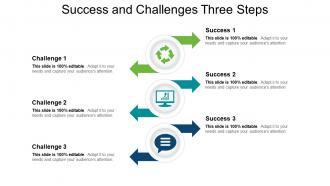
Présentation du succès et des défis en trois étapes. C'est un succès et défie trois étapes. Il s'agit d'un processus en trois étapes. Les étapes de ce processus sont le succès et les défis, les réalisations et les défis, le succès et les obstacles.
People who downloaded this PowerPoint presentation also viewed the following :
Succès et défis Trois étapes avec les 5 diapositives :
Affichez votre joie avec nos succès et défis en trois étapes. Indiquez votre bonheur face à leur réussite.
FAQs for Success and
Look, I think real success is just making steady progress on stuff that actually matters to you - not chasing whatever everyone else thinks you should want. The most successful people I've met? They're obsessed with learning and getting better, not just collecting promotions. Yeah, achievements are nice, but honestly they're kind of empty if they don't align with what fulfills you personally. Figure out where you want to grow. Then just take small actions consistently - that compound effect is everything. Oh, and make sure you're creating value for others too, not just yourself.
Honestly, I'd track stuff like whether your work actually aligns with what you care about and if you're building decent relationships. Are you learning skills that matter to you? I was obsessed with salary increases for way too long - kept getting raises but felt absolutely miserable. Check your energy levels throughout the week. How much control do you have over your day? Sometimes meaningful impact is just helping one person or solving problems you genuinely find interesting. Oh, and try jotting down quick weekly notes about what felt good versus what completely drained you.
Look, resilience is what keeps you going when everything goes sideways. And trust me, things will go sideways. Most people just can't handle the inevitable failures and quit way too early. I've watched so many talented friends do this - it's honestly frustrating to see. Think of setbacks as feedback, not final judgments on your abilities. Your failures are just telling you what doesn't work yet. Start treating obstacles like they're giving you useful data instead of proof you should give up. Bouncing back gets easier with practice, so might as well start now.
Oh man, this is so true from what I've seen. Like in the US we're all about personal wins and making your mark, you know? But my friends from more family-oriented cultures? They care way more about bringing honor to their parents than climbing some corporate ladder. It's wild how different failure hits too - some see it as good learning (total startup mentality) while others feel like they've embarrassed their whole extended family. Risk-taking's another weird one. What seems like smart ambition to me might look totally reckless to my coworker. Honestly, best thing is just asking people what success actually means to them instead of guessing.
Oh man, the big ones are definitely fear of failure, imposter syndrome, and perfectionism. Fear of failure keeps you from taking any real risks. Imposter syndrome? That's when you feel like you're just pretending to know what you're doing - even when you totally do. Perfectionism sounds good on paper but honestly it just stops you from starting anything because nothing feels "good enough." I swear perfectionism is the worst one because it tricks you into thinking you're being productive. Most of this stuff comes from old experiences or pressure about how success is "supposed" to look. Just notice when these thoughts show up and remind yourself of what you've actually accomplished.
Here's the thing - mentors have already screwed up so you don't have to. They'll call out your blind spots and push back on your ideas in ways that actually help. Honestly, just having someone who gets it makes a huge difference when you're stressed out. Good mentors don't spoon-feed answers either. They ask questions that make you think through problems yourself. Oh, and the networking thing is real - they know people you'd never meet otherwise. Figure out what you're struggling with first, then find someone who's been there and survived it.
First thing - get crystal clear on what success actually means for your team. Otherwise you're all just spinning your wheels. Celebrate the small wins publicly too, seriously, recognition is like crack for motivation. People need to feel safe taking risks without getting their heads chopped off when things go sideways. I've watched so many places kill innovation by freaking out over every little mistake. Oh, and invest in growing your people - mentoring, training, whatever. The biggest thing though? Walk the walk. If you say one thing but do another, trust goes out the window fast.
Honestly, networking is like having a cheat code for problems. Hit a wall at work? Someone in your network has probably been there. They'll give you advice, connect you with the right people, or suggest solutions you never would've found on your own. People actually love helping when they know you - weird but true. Doesn't matter if you're in tech, healthcare, whatever. More connections = more brains to pick from. Oh, and start small - just text one person this week who might have answers to whatever you're stuck on right now.
Dude, three things always trip people up. First is perfectionism - I'm so guilty of this too, like spending forever tweaking tiny details instead of actually moving forward. Then there's just terrible time management where you're constantly putting out fires instead of focusing on what matters. And honestly? Not asking for help is probably the worst one. I've watched people (including myself) waste literal weeks being stubborn when someone could've helped in five minutes. Try setting "good enough" standards for the small stuff, block out time for your big priorities, and just swallow your pride when you're stuck.
Look, tech can either supercharge what you're doing or completely derail you. The good stuff? Automation saves tons of time, communication tools keep you connected, and you've got endless resources at your fingertips. But man, keeping up with every update gets old fast. Where it gets tricky is all the distractions and info overload - plus you don't want to rely too heavily on something that could crash when you need it most. I'd say pick your tools carefully and do a cleanup every few months. Ditch whatever's not actually moving the needle forward.
So there's three big things you'll want to nail down. First is emotional intelligence - staying cool when everything's on fire and reading how your team's actually feeling. Adaptability matters too because plans will fall apart, trust me. But honestly? The communication piece is what kills most leaders. They go silent right when everyone's freaking out and needs answers. Also worth getting good at scenario planning so you're not always in crisis mode. Thing is, you can't just flip a switch and become emotionally intelligent during chaos - practice this stuff when things are calm. Maybe start by being more upfront about challenges in your next team meeting.
Look, I've started thinking about failure totally differently - it's basically just collecting data about what doesn't work. And honestly? Sometimes that's more useful than knowing what does work. Every time something goes wrong, you're uncovering blind spots and building up your resilience. Plus failures have this weird way of pushing you toward opportunities you never would've found otherwise. Here's what actually helps though: after any setback, jot down three specific things you learned and how you'll do it differently next time. Way better than just wallowing in it.
Dude, work-life balance totally changed everything for me. I used to think grinding 80-hour weeks was the only way, but honestly? You just burn out and make terrible decisions when you're exhausted all the time. Taking breaks actually makes you more creative - weird but true. Having hobbies and friends outside work gives you fresh perspectives that help professionally too. Like, some of my best ideas come when I'm not even trying to think about work stuff. The whole "balance slows you down" thing is backwards. You'll be way sharper when you're not running on fumes constantly.
Honestly, realistic goals are like a safety net - they stop you from getting so overwhelmed that you just quit. Small wins build momentum way better than chasing some impossible dream. Trust me, I crashed and burned with ridiculously ambitious quarterly goals last year (still recovering from that mess lol). Breaking big stuff into smaller chunks makes everything feel less scary. You can actually plan for problems instead of just crossing your fingers. Plus you get to celebrate little victories along the way, which feels amazing. Just ask yourself what you can genuinely pull off with what you've got right now.
Honestly, success can mess with your relationships big time if you don't watch out. Some people start acting weird around you - either wanting stuff or getting all intimidated by what you've achieved. That "lonely at the top" thing? Yeah, it's actually true (unfortunately). Your mental health takes a beating too with all the extra pressure and sky-high expectations everyone suddenly has. Oh, and good luck getting real feedback anymore - everyone just tells you what they think you want to hear. The trick is staying the same person you were before. Don't change how you treat people, and be honest about wanting genuine friendships, not fake ones.
-
Professional and unique presentations.
-
Top Quality presentations that are easily editable.