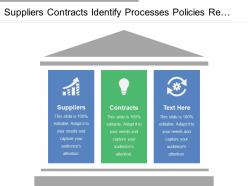
Suppliers contracts identify processes policies re designed evaluate staff
Try Before you Buy Download Free Sample Product
Audience
Editable
of Time
Deliver instructive advice with our Suppliers Contracts Identify Processes Policies Re Designed Evaluate Staff. Convey information that improves conditions.
People who downloaded this PowerPoint presentation also viewed the following :
Suppliers contracts identify processes policies re designed evaluate staff with all 5 slides:
Our Suppliers Contracts Identify Processes Policies Re Designed Evaluate Staff will drive folks to buy your goods. They enable you to hawk them effectively.
FAQs for Suppliers contracts identify processes policies re
Key elements include detailed scope of work, pricing structures, performance metrics, delivery timelines, quality standards, compliance requirements, and termination clauses. These components streamline vendor relationships by establishing clear expectations, minimizing disputes, and ensuring regulatory adherence, with many organizations finding that comprehensive contracts ultimately reduce costs and enhance operational efficiency.
Technology streamlines supplier contract management through automated contract creation, digital signature platforms, centralized document repositories, real-time compliance monitoring, and AI-powered risk assessment tools. These solutions enable organizations to reduce contract cycle times, minimize manual errors, and enhance vendor relationship oversight, with many procurement teams finding that automated workflows deliver faster approvals and improved contract visibility across their supply chains.
Common pitfalls include inadequate due diligence, unclear performance metrics, insufficient risk allocation clauses, weak termination provisions, and overlooking compliance requirements. These oversights can lead to cost overruns, service disruptions, and legal vulnerabilities, with many organizations finding that thorough contract structuring ultimately delivers stronger supplier relationships and enhanced operational control.
Performance metrics significantly impact supplier contract management by enabling data-driven decision making, identifying underperforming vendors, and facilitating proactive relationship management through measurable benchmarks. These metrics streamline contract renewals, negotiations, and vendor evaluations, with many procurement teams finding that systematic performance tracking ultimately delivers improved service quality, cost optimization, and stronger supplier partnerships.
Effective supplier relationship management strategies include regular performance reviews, collaborative planning sessions, transparent communication channels, joint problem-solving initiatives, and strategic partnership development. These approaches streamline operations by building trust, ensuring quality consistency, and creating mutual accountability, with many organizations finding that strong supplier relationships ultimately deliver cost reductions, faster innovation cycles, and enhanced competitive advantage in increasingly complex supply chains.
Organizations ensure regulatory compliance in supplier contracts through comprehensive due diligence processes, mandatory compliance clauses, and continuous monitoring systems that track adherence to industry standards. Through automated compliance tracking and regular audits, companies in sectors like healthcare, financial services, and manufacturing can identify potential violations early, streamline risk management, and maintain regulatory standards, ultimately protecting against penalties while strengthening supplier relationships.
Risk management serves as the foundation of supplier contract management, involving continuous assessment of financial stability, compliance requirements, performance metrics, delivery capabilities, and regulatory adherence. Through proactive risk identification and mitigation strategies, organizations streamline vendor relationships while minimizing disruptions, ultimately delivering enhanced operational resilience and competitive advantage in increasingly complex supply chains.
Businesses can leverage data analytics to optimize supplier contract outcomes by analyzing spend patterns, performance metrics, contract compliance rates, and market benchmarks to identify cost-saving opportunities and risk factors. Through predictive analytics, organizations streamline contract negotiations, enhance supplier relationship management, and automate renewal processes, with many companies finding that data-driven insights deliver improved terms and competitive advantage.
Best practices for revising and renewing supplier contracts include conducting comprehensive performance evaluations, benchmarking current pricing against market rates, reviewing compliance with original terms, updating specifications for changing business needs, and negotiating enhanced service levels. These approaches streamline contract optimization by identifying cost-saving opportunities, strengthening supplier relationships, and incorporating new regulatory requirements, ultimately delivering improved operational efficiency and reduced procurement risks.
Effective communication improves supplier contract management by establishing clear expectations, facilitating proactive issue resolution, and ensuring alignment on deliverables, timelines, and performance metrics. Through regular check-ins and transparent dialogue, organizations streamline contract negotiations, minimize disputes, and strengthen vendor relationships, ultimately delivering better outcomes and enhanced operational efficiency across their supply chains.
Global sourcing significantly complicates supplier contract management through diverse legal frameworks, currency fluctuations, cultural differences, time zone challenges, and varying compliance requirements across jurisdictions. However, it also enables cost optimization, risk diversification, and access to specialized capabilities, with many multinational organizations finding that strategic contract standardization and digital management platforms ultimately deliver competitive advantages and operational efficiency.
Cultural differences significantly impact supplier contract negotiations through varying communication styles, decision-making processes, relationship-building expectations, and legal frameworks across international markets. These variations influence negotiation timelines, contract terms, and partnership approaches, with many global organizations finding that cultural awareness and localized negotiation strategies ultimately enhance supplier relationships, reduce misunderstandings, and deliver more sustainable international partnerships.
**INPUT**: What methods can be employed to evaluate supplier performance against contract terms? **OUTPUT**: Supplier performance evaluation methods include key performance indicators (KPIs), scorecards, regular audits, delivery tracking systems, and quality assessments against agreed benchmarks. These approaches enable organizations to monitor compliance, cost efficiency, and service levels systematically, with many companies finding that automated tracking tools streamline evaluations while strengthening supplier relationships and contract outcomes.
Contract management software enhances supplier relationship dynamics by centralizing communication, automating renewal notifications, and providing real-time performance analytics. These digital platforms streamline negotiations, ensure compliance transparency, and facilitate proactive issue resolution, with many procurement teams finding that automated workflows and shared dashboards ultimately strengthen partnerships while reducing administrative overhead.
Legal implications of supplier contract breaches include financial penalties, termination rights, liability for damages, performance guarantees, and potential litigation costs. These contractual protections enable organizations to maintain operational continuity, recover losses, and enforce compliance standards, with many companies finding that well-structured agreements ultimately deliver stronger supplier relationships and reduced business risk.
-
Appreciate the research and its presentable format.
-
Informative design.