


Introdução ao gerenciamento da cadeia de suprimentos Slides de apresentação em PowerPoint
Você está planejando criar um PPT profissional sobre o conceito de introdução ao gerenciamento da cadeia de suprimentos? Não se preocupe! SlideTeam criou slides de apresentação em PowerPoint de introdução ao gerenciamento da cadeia de suprimentos predefinidos. Usando esta apresentação PPT da visão geral do gerenciamento da cadeia de suprimentos, você pode destacar o processo de fornecimento de bens e serviços aos clientes e fabricantes. Esta apresentação de gerenciamento da cadeia de demanda PPT inclui um modelo sobre os assuntos relevantes, como introdução, componentes da cadeia de abastecimento, linha do tempo da empresa, vantagens de gerenciamento da cadeia de abastecimento, SCM, objetivos de gerenciamento da cadeia de abastecimento, bifurcação SCM, gerenciamento e logística da cadeia de abastecimento e controle de SCM torre. Usando estes slides do PowerPoint de gerenciamento de relacionamento com fornecedores, você pode descrever a ideia de gerenciamento de relacionamento com o cliente, gerenciamento de serviço ao cliente, estilo de gerenciamento de demanda, atendimento de pedidos, gerenciamento de fluxo de fabricação, gerenciamento de relacionamento com fornecedor, desenvolvimento de produto, gerenciamento de devoluções, planejamento de produção, gerenciamento de operação, gestão da qualidade e planejamento de recursos empresariais. Use esta apresentação do PowerPoint; você pode lançar luz sobre as tarefas da cadeia de suprimentos. Portanto, não perca tempo, baixe esta apresentação PPT da descrição da introdução ao gerenciamento da cadeia de suprimentos. Aumente os egos deflacionados com nossos slides de apresentação em PowerPoint de introdução ao gerenciamento da cadeia de suprimentos. Dê a eles motivos para estarem cheios de confiança novamente.






















You must be logged in to download this presentation.


Do you want to remove this product from your favourites?
Recursos destes slides de apresentação em PowerPoint:
Apresentando slides de apresentação em PowerPoint de introdução ao gerenciamento da cadeia de suprimentos. Esta apresentação cobre 34 modelos de PowerPoint preparados profissionalmente, todos sendo 100 por cento alteráveis no PowerPoint. O tamanho e o tipo das fontes de conteúdo, as cores e o fundo dos slides PPT são alteráveis. Os slides da apresentação podem ser baixados na proporção de aspecto de exibição ampla (16: 9) e exibição padrão (4: 3). Os modelos de slides são totalmente compatíveis com o Google Slides e outros programas online. Você pode salvar os modelos PPT em qualquer um dos formatos, como JPG ou PDF. Personalize os slides do PowerPoint inserindo um nome comercial, direitos autorais, marca comercial ou logotipo. Suporte de produto premium é fornecido.

People who downloaded this PowerPoint presentation also viewed the following :
Conteúdo desta apresentação em PowerPoint
Slide 1 : Este slide apresenta a introdução ao gerenciamento da cadeia de suprimentos. Indique o subtítulo aqui e comece.
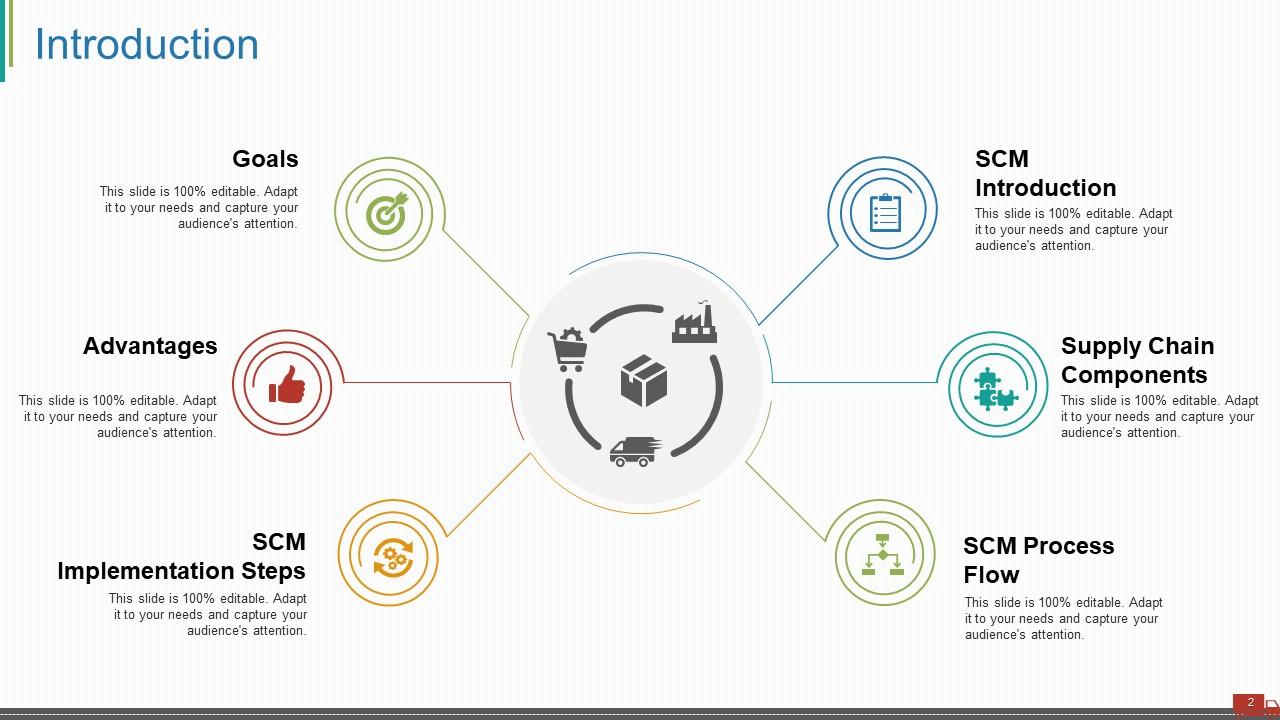
Slide 2 : Este slide mostra a introdução com esses seis parâmetros - Fluxo do Processo SCM, Introdução ao SCM, Componentes da Cadeia de Suprimentos, SCM, Etapas de Implementação, Vantagens, Metas.
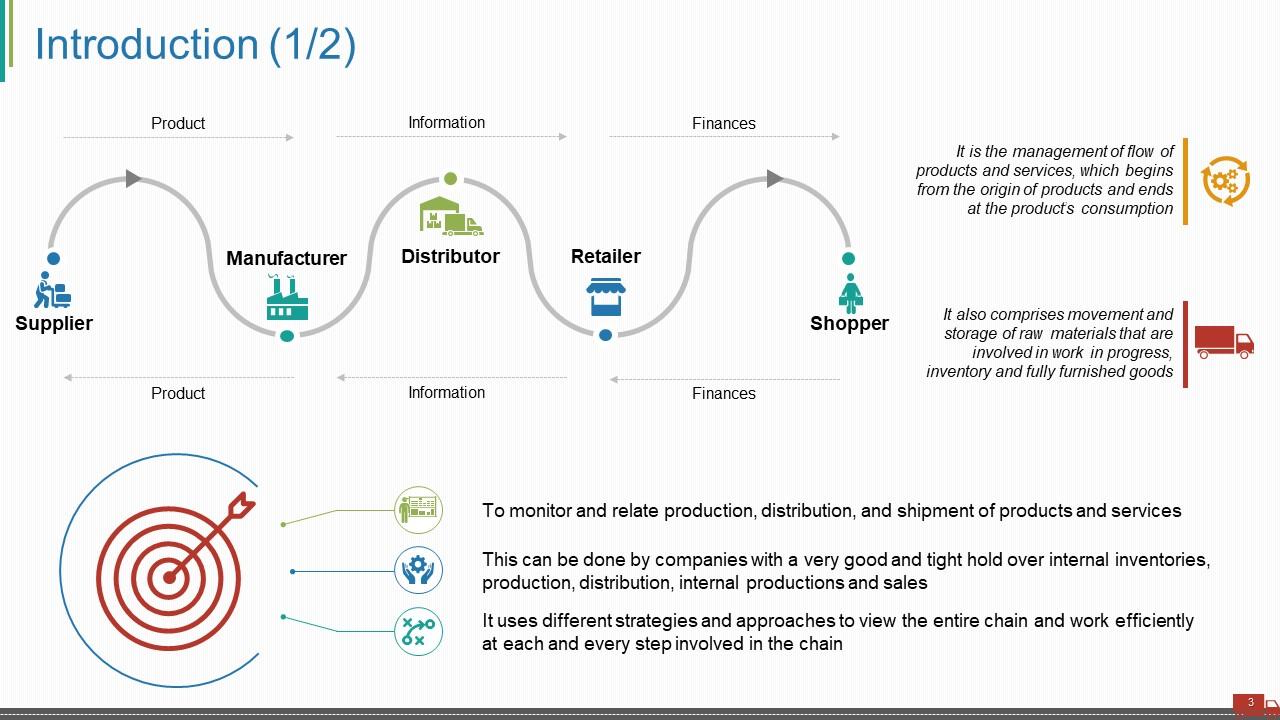
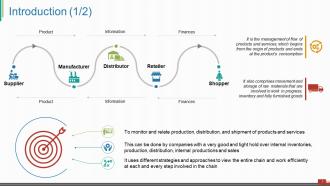
Slide 3 : Este slide apresenta a introdução (1/2) que mostra ainda alguns pontos.
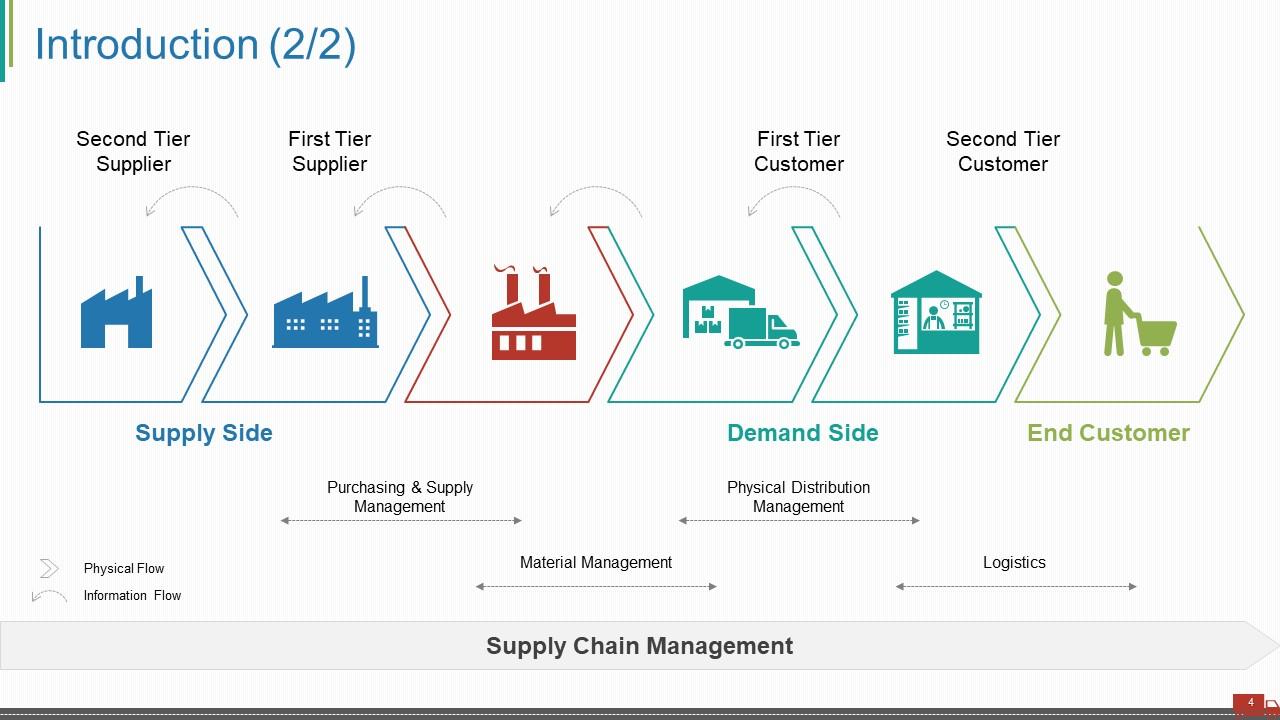
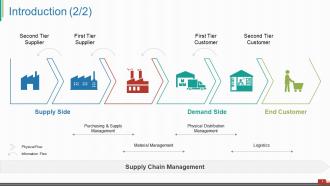
Slide 4 : Este slide mostra a introdução (2/2). Você pode usar os estágios e adicionar conforme desejar.
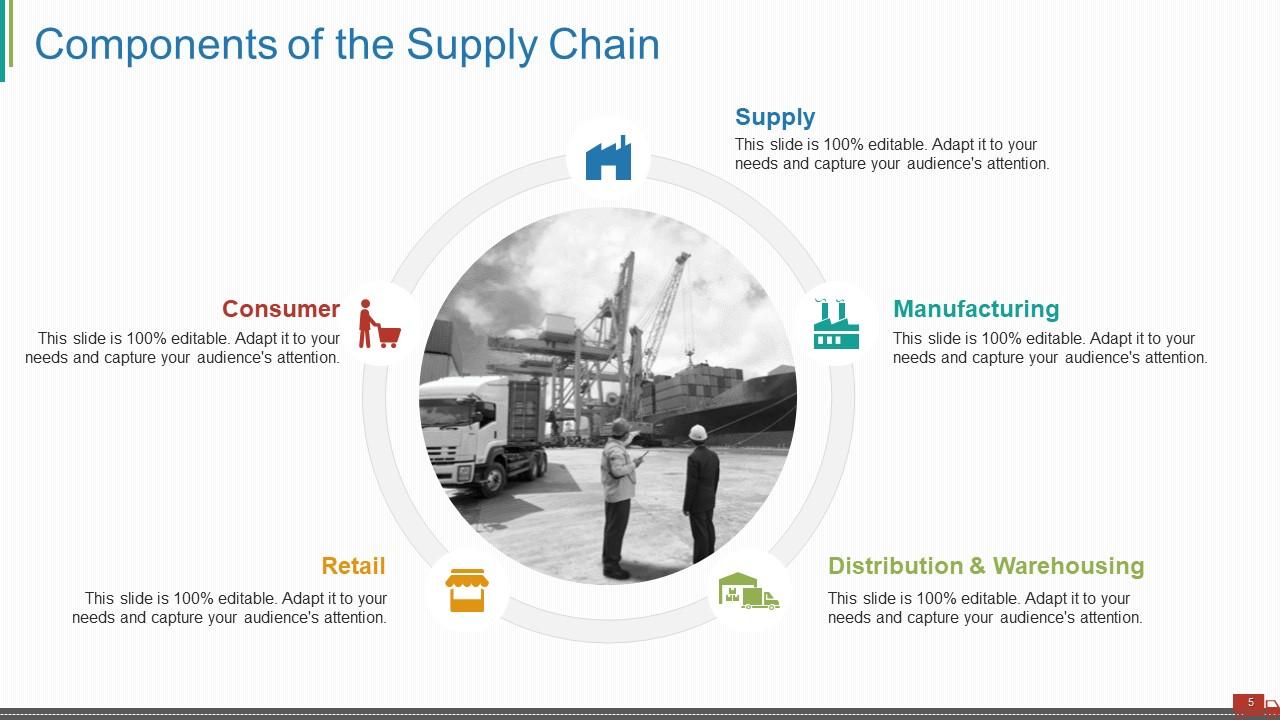
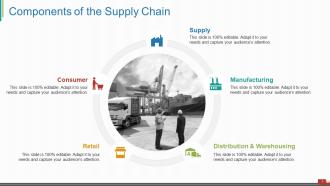
Slide 5 : Este slide Componentes da Cadeia de Abastecimento com estes cinco estágios - Abastecimento, Manufatura, Distribuição e Armazenamento, Varejo, Consumidor.
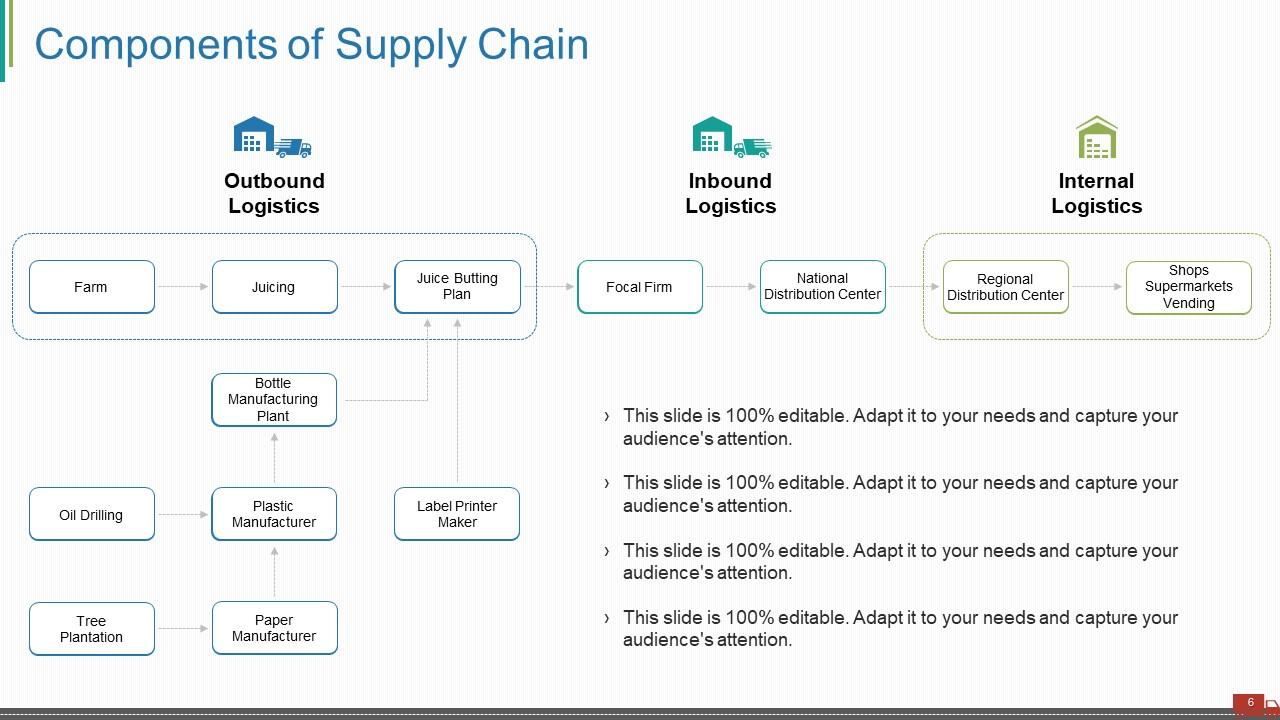
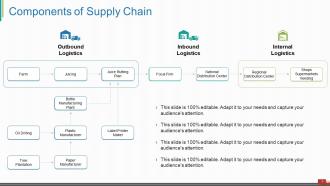
Slide 6 : Este slide mostra os Componentes da Cadeia de Suprimentos.
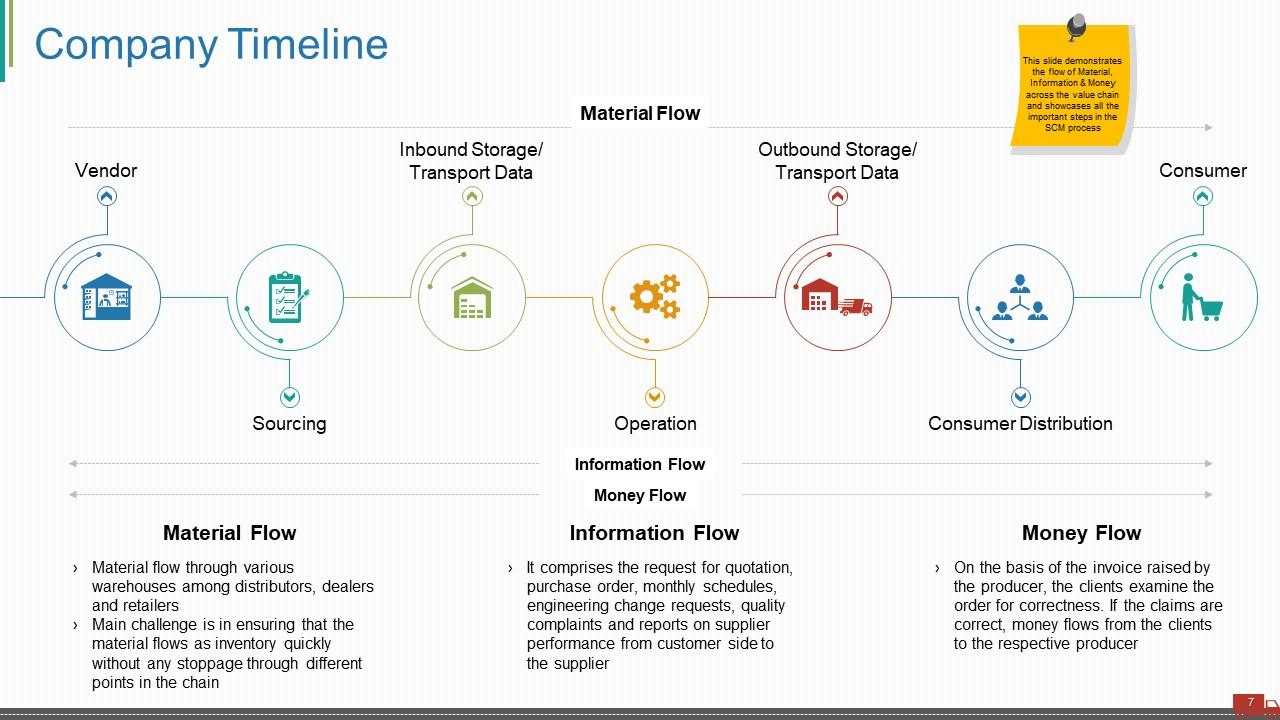
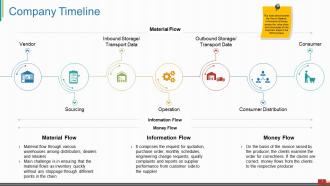
Slide 7 : Este slide apresenta a linha do tempo da empresa. Este slide demonstra o fluxo de material, informações e dinheiro em toda a cadeia de valor e mostra todas as etapas importantes no processo de SCM.
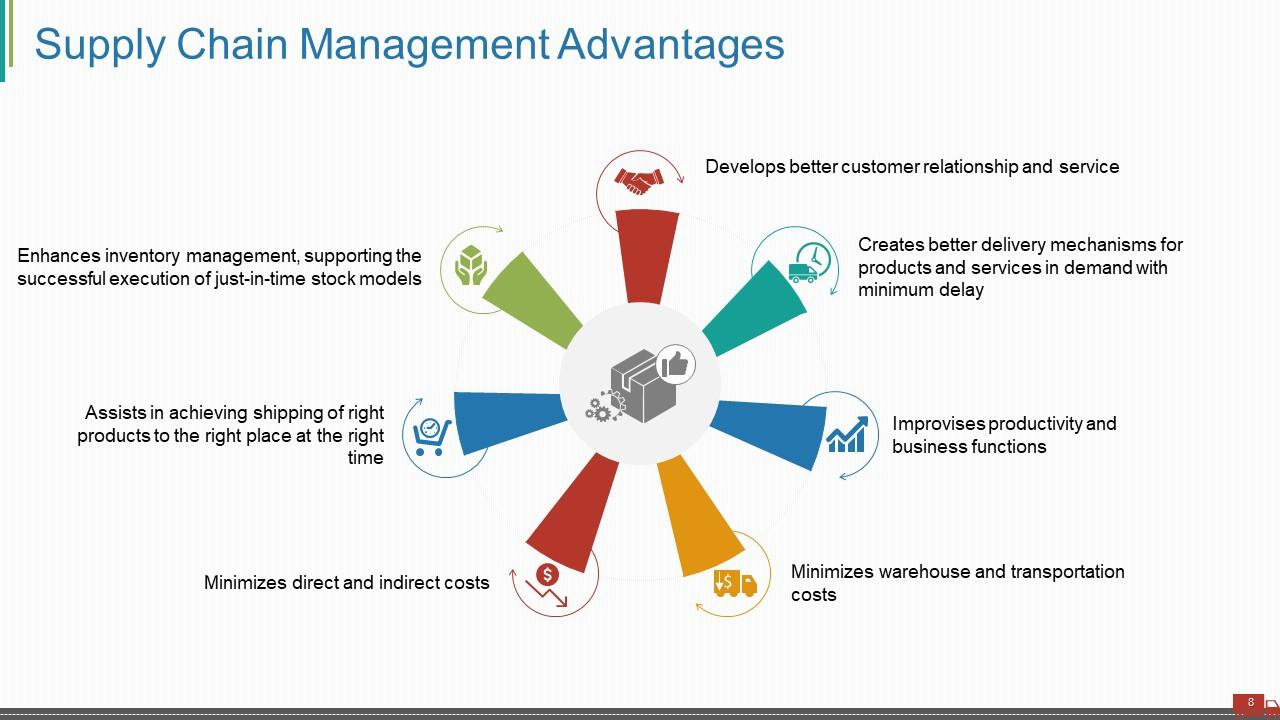
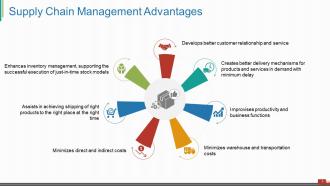
Slide 8 : Este slide mostra as vantagens do gerenciamento da cadeia de suprimentos.
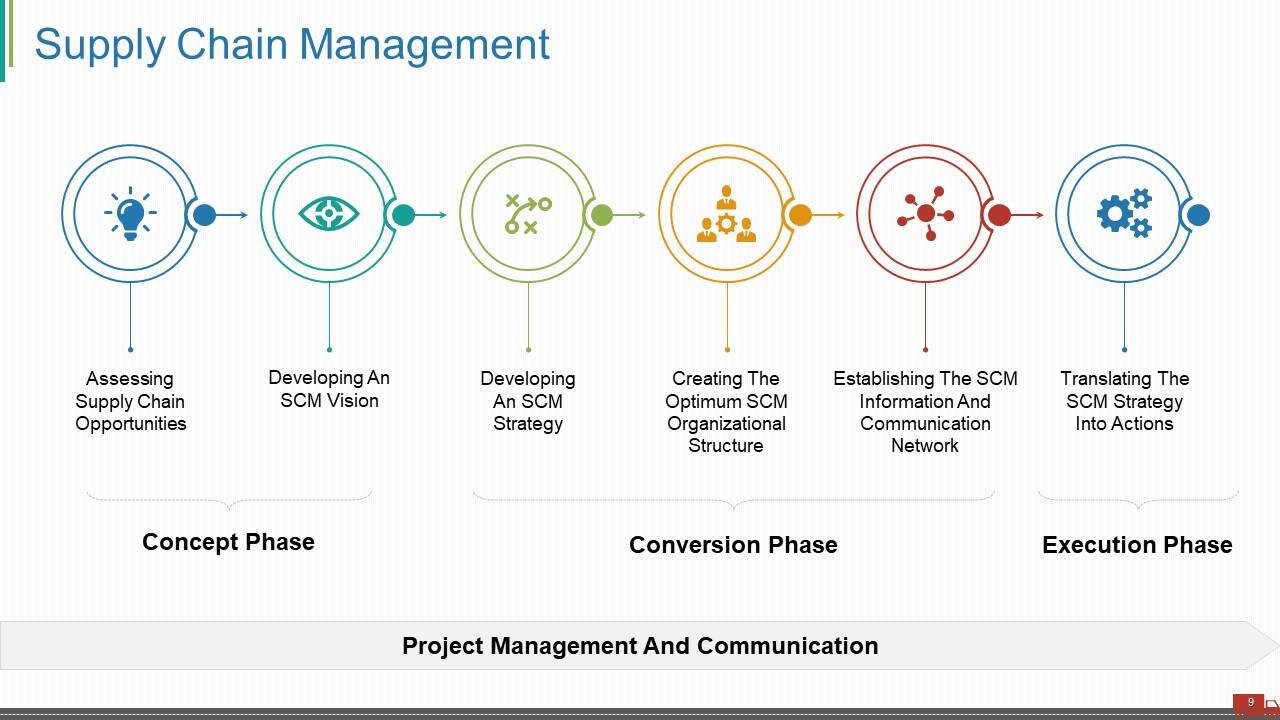
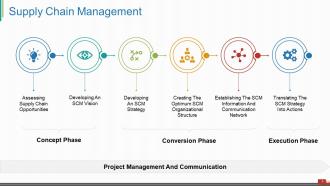
Slide 9 : Este slide apresenta o Gerenciamento da Cadeia de Suprimentos, que apresenta ainda mais o Gerenciamento e a Comunicação de Projetos.
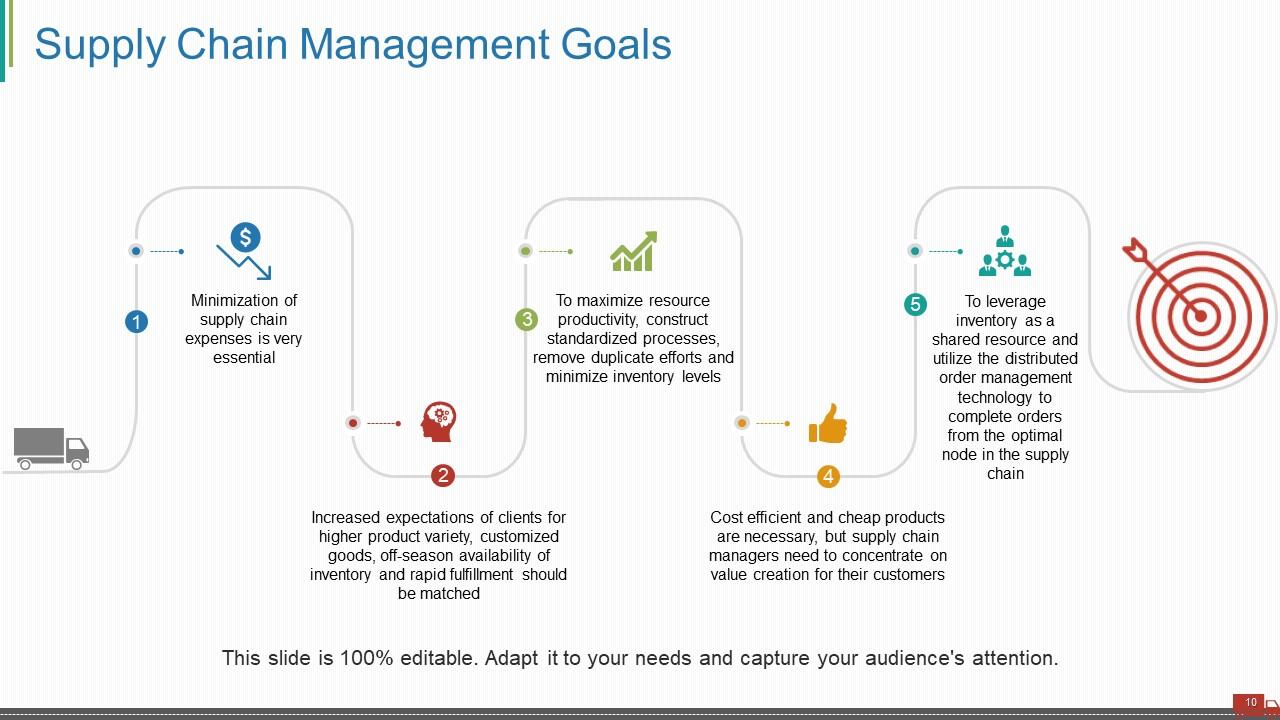
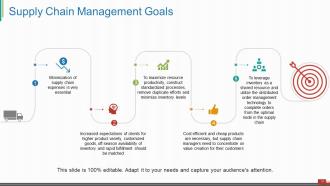
Slide 10 : Este slide mostra as metas de gerenciamento da cadeia de suprimentos.
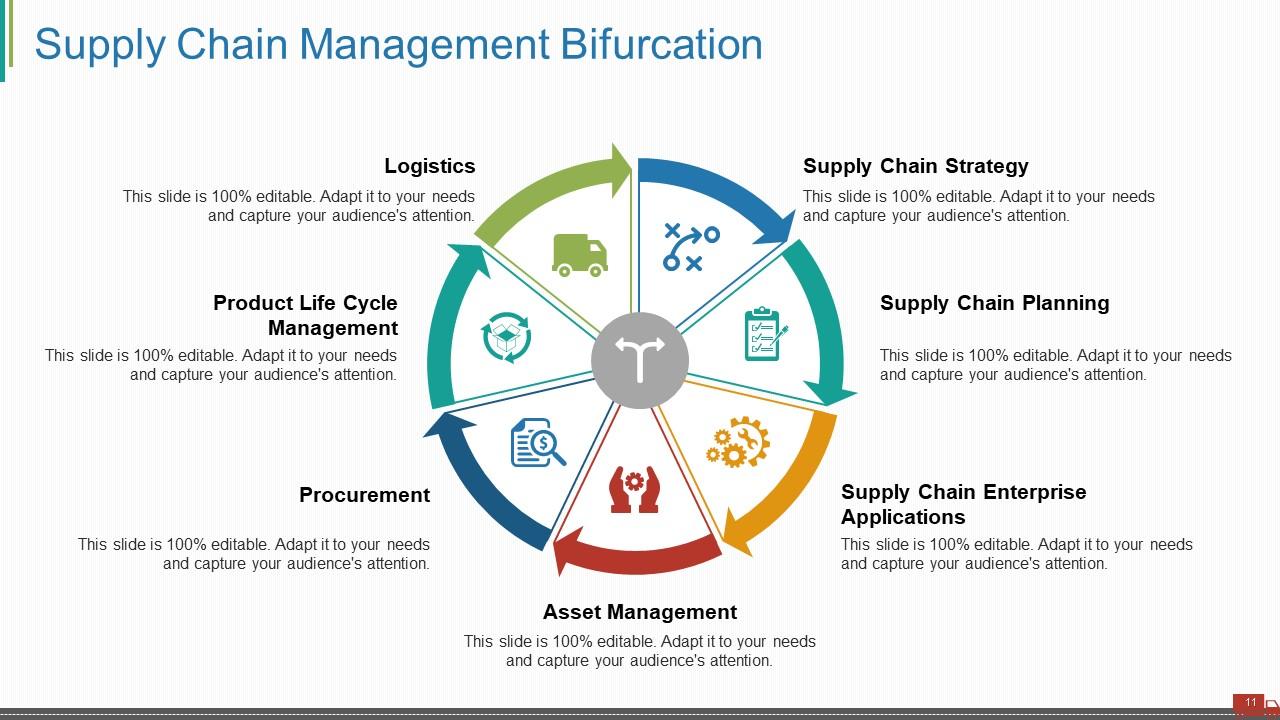
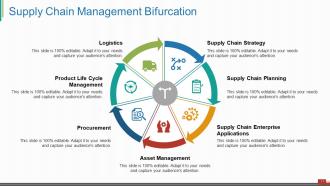
Slide 11 : Este slide apresenta a Bifurcação do Gerenciamento da Cadeia de Suprimentos com esses parâmetros - Estratégia da Cadeia de Suprimentos, Planejamento da Cadeia de Suprimentos, Aplicativos Corporativos da Cadeia de Suprimentos, Gerenciamento de Ativos, Aquisições, Gerenciamento do Ciclo de Vida do Produto, Logística1.
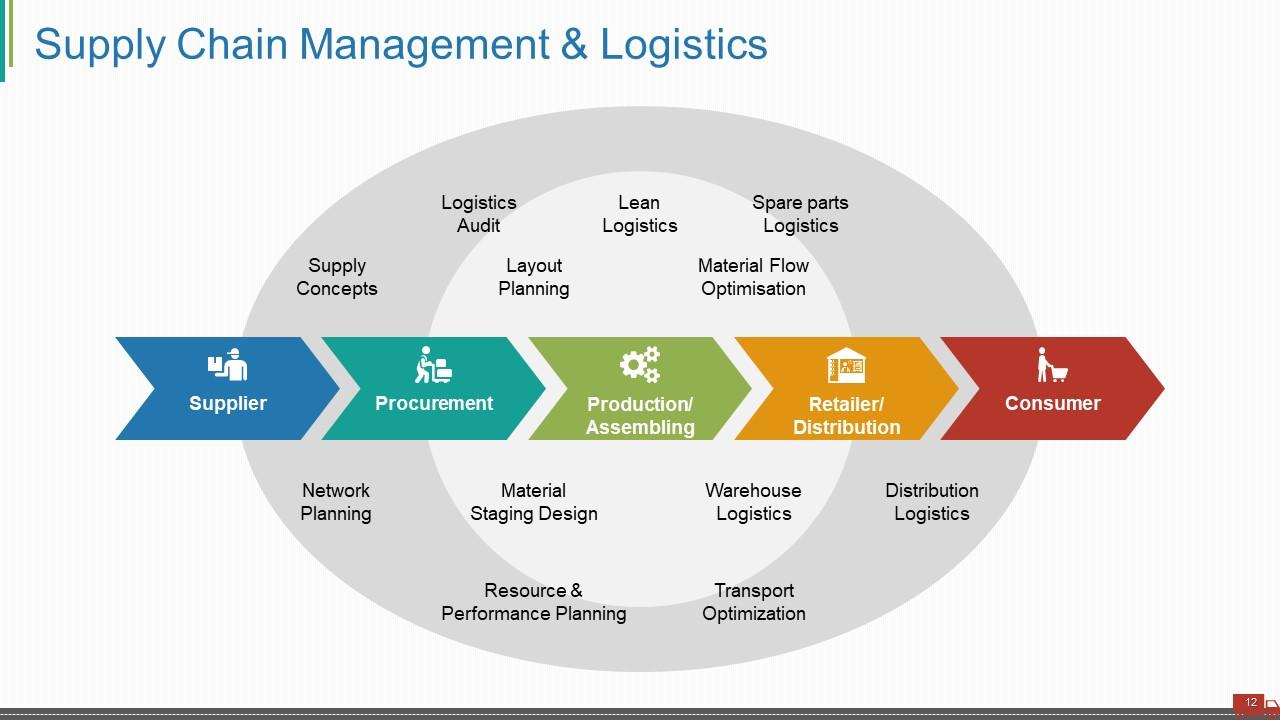
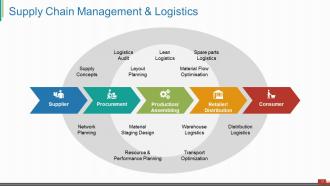
Slide 12 : Este slide mostra a Gestão da Cadeia de Suprimentos e Planejamento de Layout Logístico, Logística Enxuta, Otimização do Fluxo de Materiais, Design de Estágio de Materiais, Logística de Armazém, Conceitos de Suprimentos, Auditoria Logística, Logística de Peças Sobressalentes, Planejamento de Rede, Logística de Distribuição, Otimização de Transporte, Recursos e Desempenho Planejamento, Aquisição, Produção / Montagem, Fornecedor, Varejista / Distribuição, Consumidor.
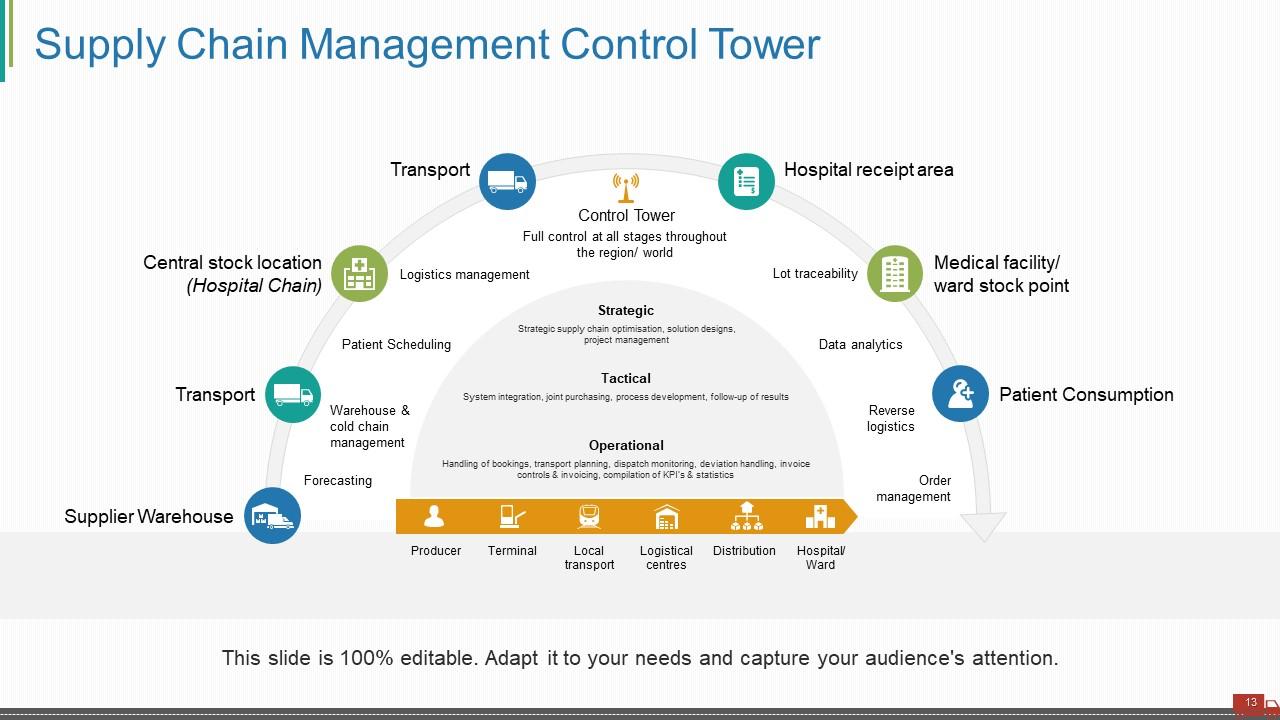
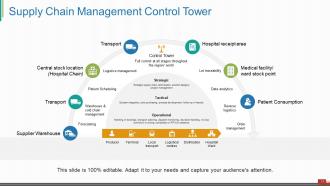
Slide 13 : Este slide mostra a Torre de Controle da Gestão da Cadeia de Suprimentos.
Slide 14 : Este slide é uma imagem de uma pausa para o café.
Slide 15 : Este slide avança para Tabelas e gráficos.
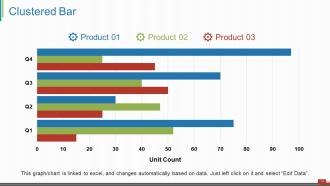
Slide 16 : Este slide apresenta a barra agrupada. Você pode comparar o produto usando-o.
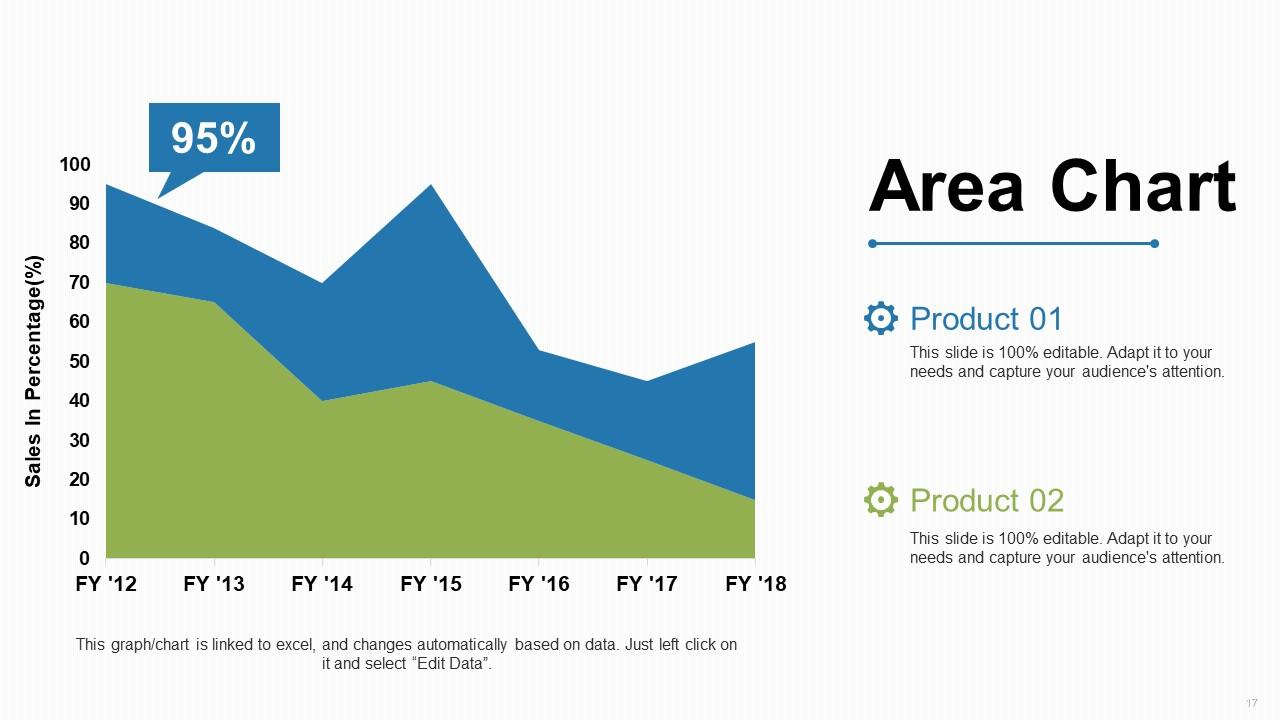
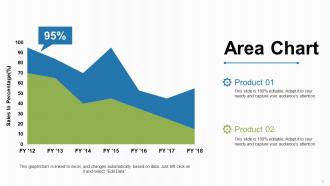
Slide 17 : Este é um slide de Gráfico de Área para comparação de produto / entidade.
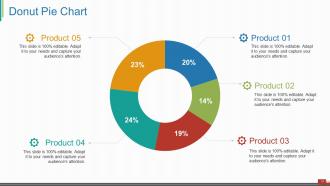
Slide 18 : Este slide mostra o gráfico de pizza de rosca que pode ser usado para comer produtos.
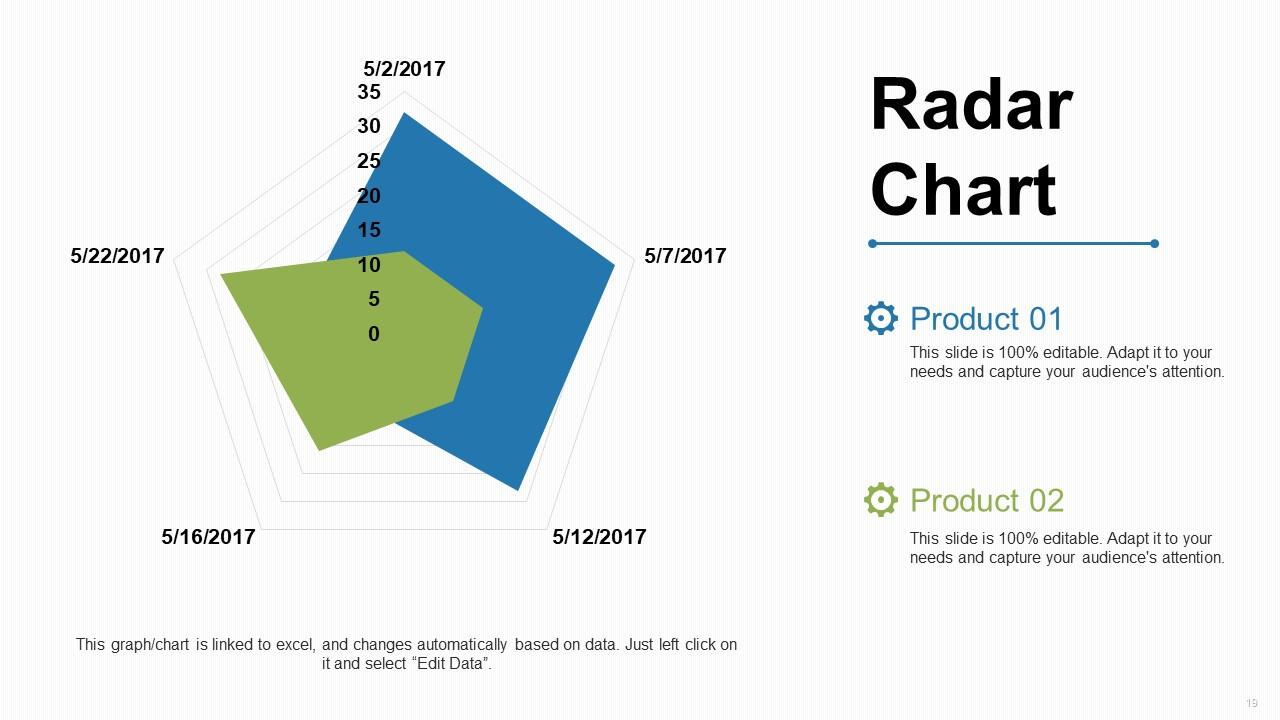
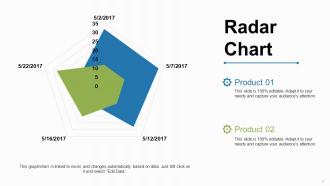
Slide 19 : Este é um slide Gráfico de radar para comparação de produto / entidade.
Slide 20 : Este slide é intitulado Slides adicionais para avançar.
Slide 21 : Este é um slide de Visão, Missão e Metas. Declare-os aqui.
Slide 22 : Este é um slide da Nossa Equipe com nome, imagem e caixas de texto para colocar as informações necessárias.
Slide 23 : Este é um slide Sobre nós, mostrando Nossa Empresa, Cliente de Valor e Serviços Premium como exemplos.
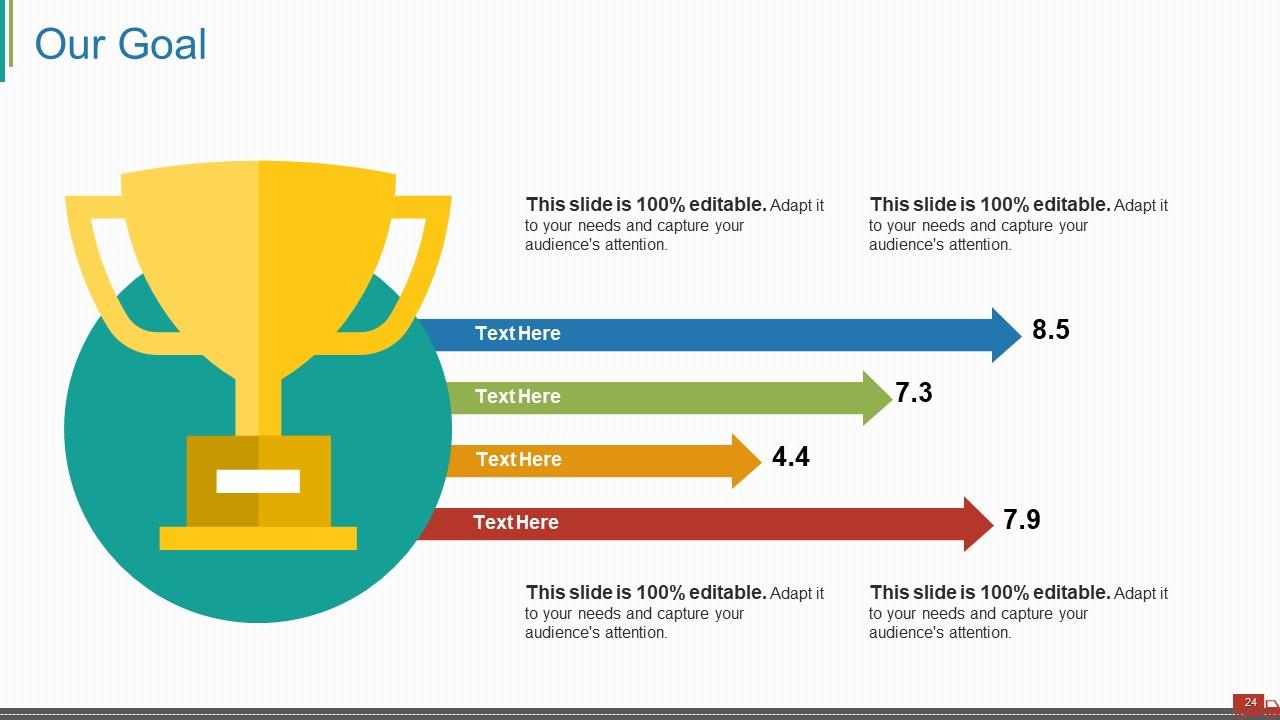
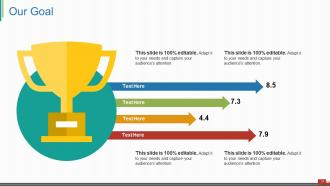
Slide 24 : Este é um slide Nosso Objetivo. Declare-os aqui.
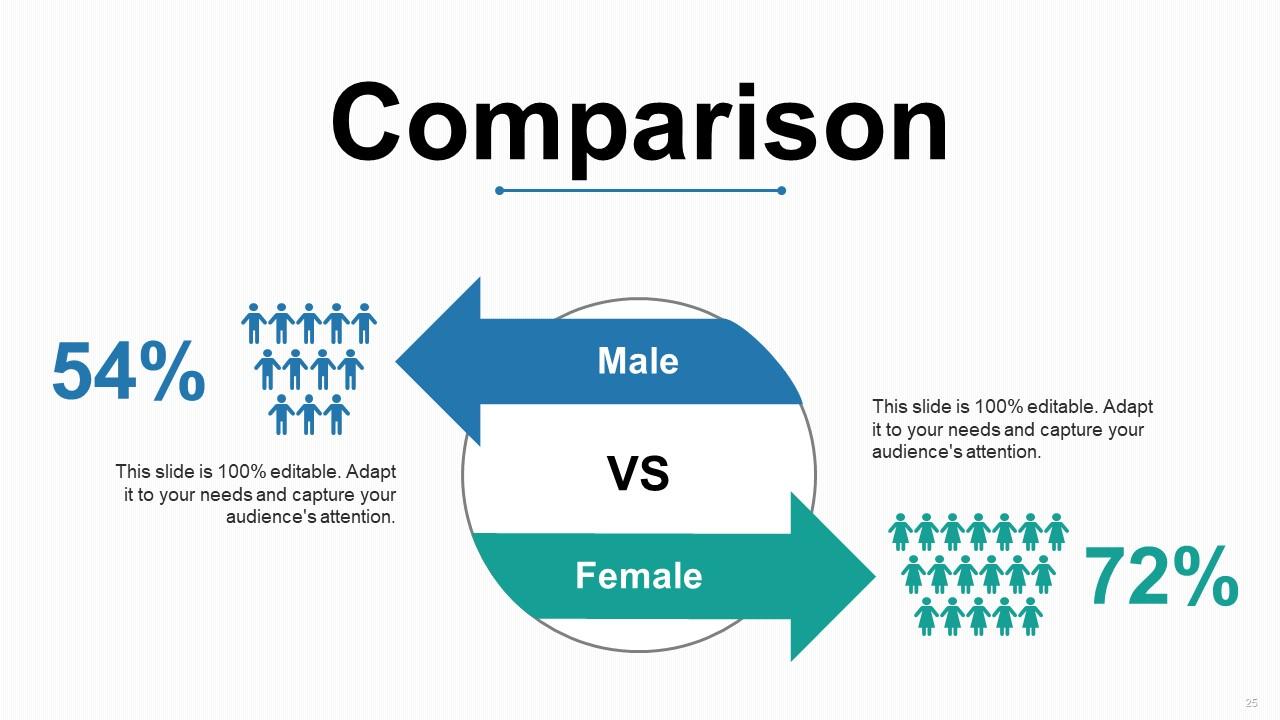
Slide 25 : Este slide mostra a comparação de fatores positivos versus fatores negativos com imagens de polegar para cima e polegar para baixo.
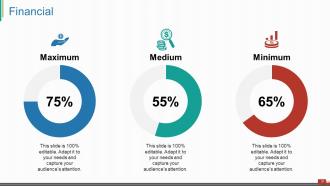
Slide 26 : Este é um slide de Pontuação Financeira para mostrar os aspectos financeiros aqui.
Slide 27 : Este é um slide de cotações para transmitir mensagens, crenças, etc.
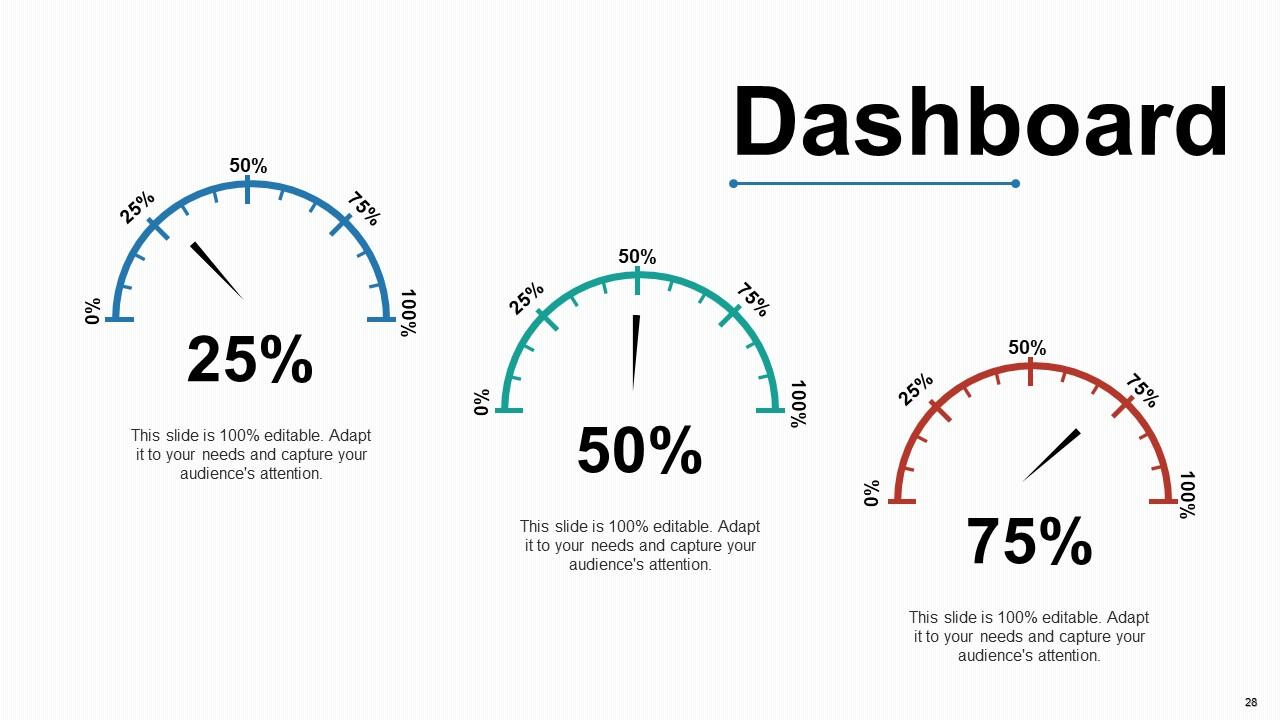
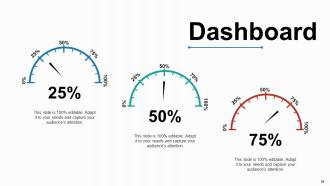
Slide 28 : Este é um slide do Painel para mostrar - Sistema Estratégico, Sucesso, Processo de Metas, Revisão de Vendas, Estudo de Comunicação.
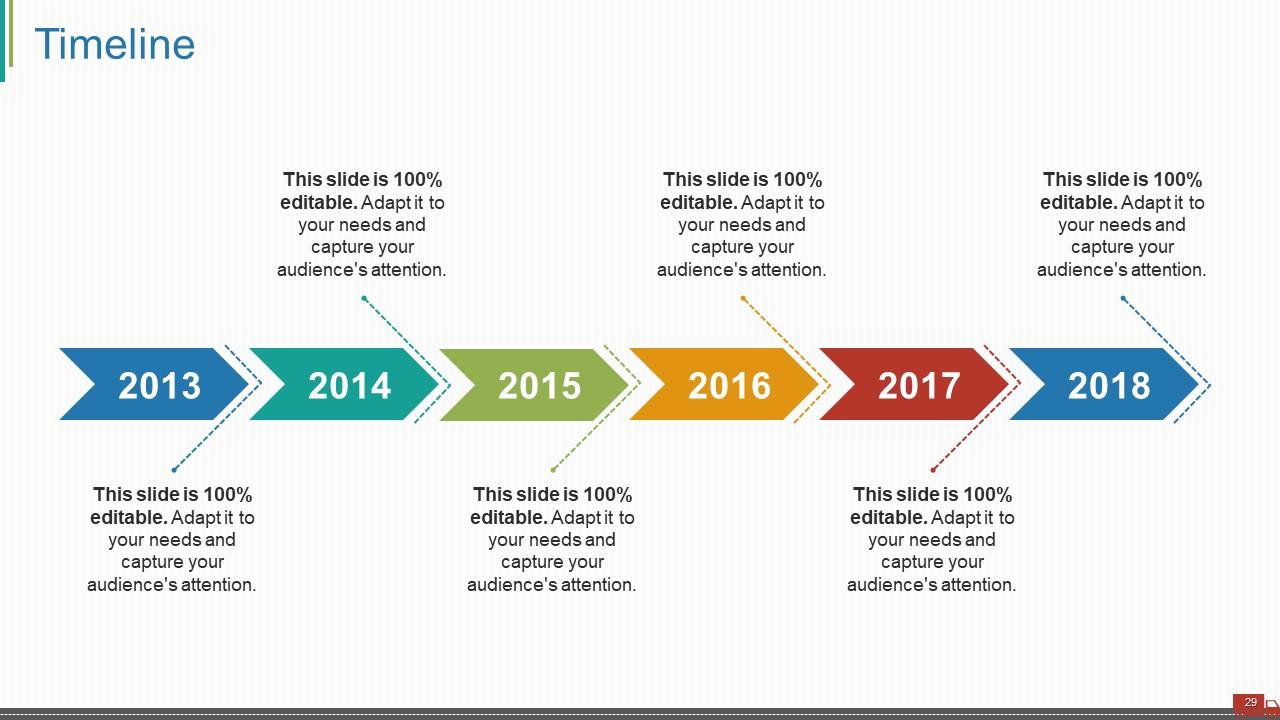
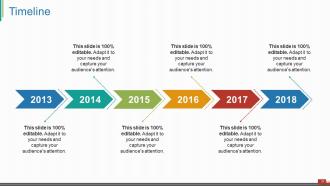
Slide 29 : Este é um slide de Cronogramas para mostrar - Plano, Orçamento, Cronograma, Revisão.
Slide 30 : Este slide mostra a imagem alvo com caixas de texto.
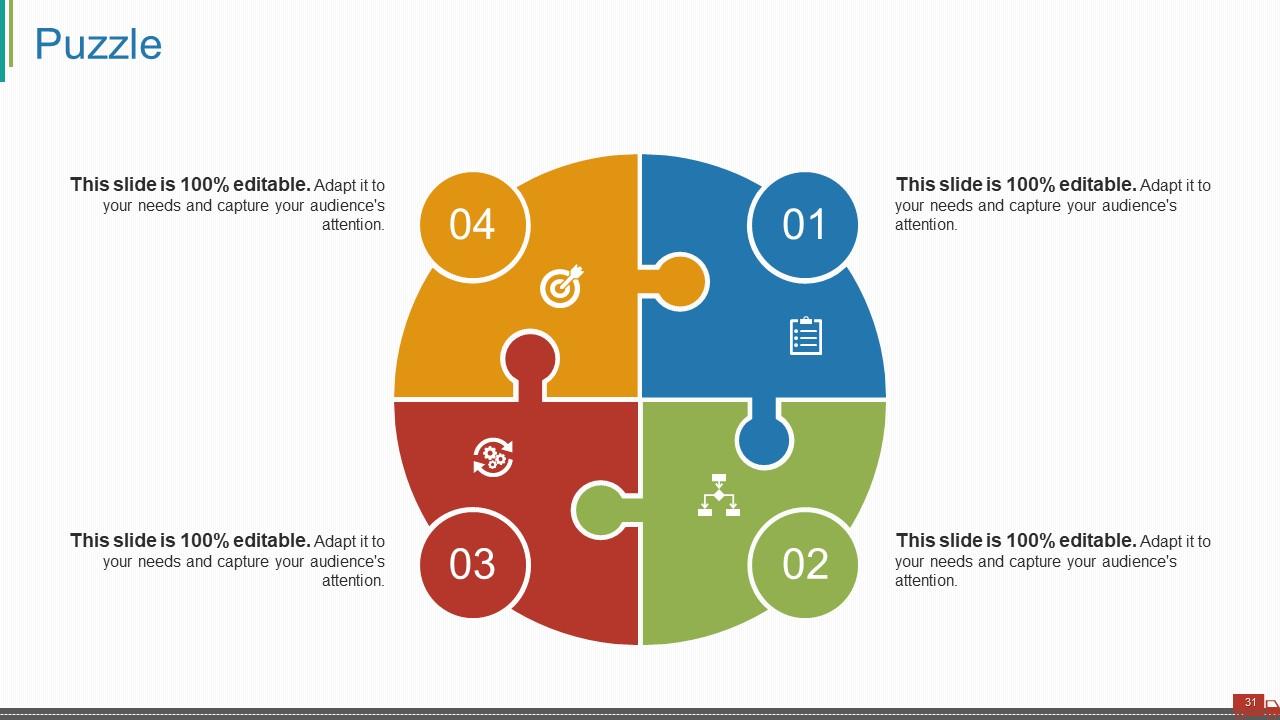
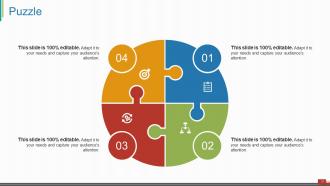
Slide 31 : Este é um slide de imagem de quebra-cabeça para mostrar informações, especificações, etc.
Slide 32 : Este slide mostra um mapa mental para representar entidades.
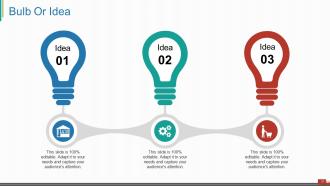
Slide 33 : Este slide mostra uma imagem de bulbo ou ideia.
Slide 34 : Esta é uma imagem de slide de agradecimento com endereço, e-mail e número de contato.
Introdução ao gerenciamento da cadeia de suprimentos Slides de apresentação em PowerPoint com todos os 34 slides:
Conquiste o público com nossos slides de apresentação em PowerPoint de introdução ao gerenciamento da cadeia de suprimentos. Eles se curvarão diante de sua excelência.
-
Very well designed and informative templates.
-
Unique design & color.
