SWOT Analysis For Sales Territory Management Plan

Rating:
80%
SWOT Analysis For Sales Territory Management Plan
Slide 1 of 9
Favourites Favourites

Try Before you Buy Download Free Sample Product

Audience Impress Your
Audience
Editable 100%
Editable
Time Save Hours
of Time
The Biggest Sale is ending soon in
0
0
:
0
0
:
0
0
Rating:
80%
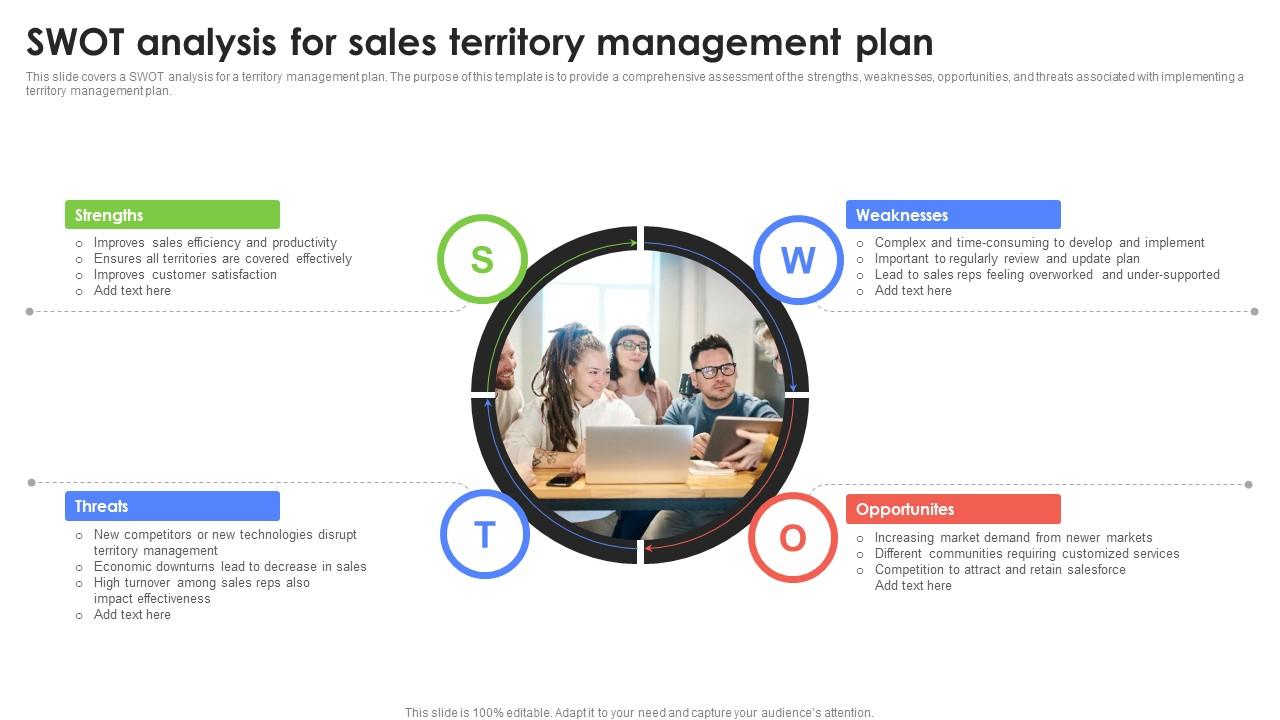
This slide covers a SWOT analysis for a territory management plan. The purpose of this template is to provide a comprehensive assessment of the strengths, weaknesses, opportunities, and threats associated with implementing a territory management plan. Introducing our premium set of slides with name SWOT Analysis For Sales Territory Management Plan. Ellicudate the four stages and present information using this PPT slide. This is a completely adaptable PowerPoint template design that can be used to interpret topics like Strengths, Threats, Opportunities, Weaknesses. So download instantly and tailor it with your information.

FAQs for SWOT Analysis For Sales

So SWOT has four parts - Strengths and Weaknesses are stuff you control internally, while Opportunities and Threats are external market things you can't really change. But here's the thing that most people miss: you can't just make four separate lists and call it a day. Look for where your strengths line up with opportunities - that's your sweet spot for growth. Also figure out how those same strengths might protect you from threats. Then tackle any weaknesses that could block you from grabbing good opportunities. It's kind of like chess honestly. Start with honest assessment of each area, then find those connections.

So SWOT analysis is basically about matching what you're good at with gaps in the market that competitors miss. You'll find customer groups nobody's serving or markets that are totally untapped. The opportunities section is honestly the best part - it shows external stuff like new tech trends or regulation changes you can jump on. Sometimes just writing everything down helps you connect dots you never saw before (happens to me all the time). The trick is pairing your strengths with real opportunities out there. Creates a growth plan that actually makes sense for what you can do well.

You're totally missing the point if you don't get outside perspectives for your SWOT. Customers see weaknesses you'd never notice internally. They might not even care about your "biggest strengths" either, which is kinda humbling. Suppliers and partners will spot threats coming that you're completely blind to - I've seen this mess up so many analyses. Most teams just sit in a room and brainstorm, but you've got to actually survey people first. Even talking to competitors can be gold if you can swing it. Don't make it an echo chamber.

Think of SWOT as getting your bearings before you dive into planning. I always start there because honestly, most people skip this step and wonder why their strategy falls flat. First, figure out what you're genuinely good at - those are your strengths to build on. Then be real about your weak spots (ouch, but necessary). Look for market opportunities that actually make sense for your situation. And threats? Yeah, those curveballs that could mess everything up. Once you've got that mapped out, you can set goals that aren't completely unrealistic and spend your resources where they'll actually matter. Trust me, do this before your next planning session.

Honestly, the biggest mistake I see is teams being super vague - like saying "good reputation" without any backup details. Don't just focus on internal stuff while ignoring what's actually happening in your market. Also, don't rush through weaknesses in five minutes! That's pointless. Make sure one person doesn't dominate the whole conversation - you need different perspectives from various departments. Be brutally honest about your weaknesses and threats. Sugar-coating is useless here. Block out at least 2-3 hours and bring actual data to support your points. Trust me, it'll make a huge difference.

Think of your strengths like tools to fix weak spots. Got solid leadership but terrible communication? Have your best leaders coach others on speaking up. Sometimes the connection isn't obvious - maybe you're flush with cash, so hire outside experts for skill gaps. Or your awesome culture makes people actually want to join training programs (shocking, I know). Map each weakness against what you're already good at. Ask yourself: "How could this thing I rock at help with that mess over there?" Start with your strongest asset. See what problems it can realistically solve first.

Honestly, start with whatever financial data you already have - revenue growth, profit margins, that kind of stuff. Customer satisfaction scores are super helpful too, plus social media sentiment (people roast brands online with zero filter, so it's pretty revealing). Competitor analysis and industry reports cover the external threats/opportunities side. Employee surveys matter more than most people think - your team knows where the real problems are. Oh, and Net Promoter Score if you track it. Don't overthink it though. Grab what's accessible first, then figure out what you're missing.

Honestly, most people say once a year but that feels kinda outdated now. I'd go with quarterly check-ins since everything changes so damn fast. If you're in a crazy volatile industry or rolling out new stuff, maybe bump it up to every 3-6 months. Also do quick updates when big things happen - like new competitors or the economy going sideways. Oh, and don't overthink it too much at first. Start with quarterly reviews and see how it feels. You can always adjust from there based on what makes sense for your situation.

Yeah, SWOT totally works for nonprofits! You'll just think differently about each section. Your strengths might be things like volunteer networks or community trust. Weaknesses could be funding constraints or staff burnout - that's super common. Look for opportunities in new grants or potential partnerships. Threats? Donor fatigue is real, plus regulatory changes can mess things up. I actually think nonprofit SWOTs are more interesting than corporate ones because the mission stuff makes it way more complex. Oh, and definitely get your board involved since you're answerable to more people than just investors.

SWOT analysis gets tricky because culture totally changes what you see as good or bad. Like, some cultures think hierarchical leadership is awesome while others hate it - same exact thing, opposite reactions. Your team's background affects how they view risks and communication too. Oh, and don't forget geographic differences matter a ton. I'd honestly get people from your actual target markets to weigh in on the results. Otherwise you're just seeing everything through one cultural lens, which isn't super helpful when you're trying to expand globally.

For SWOT presentations, stick with the classic 2x2 grid - it just works. Four clean quadrants with your strengths, weaknesses, opportunities, and threats. Circular diagrams are cool too if you're tired of the boxy look. Icons and colors definitely help each section stand out. But seriously, don't go overboard with fancy animations - I've sat through way too many presentations where people got distracted by spinning text instead of listening to the actual insights. Make sure it's readable from the back row. Oh, and use the same colors for each SWOT element throughout your whole deck so people can follow along easier.

Honestly, digital tools completely changed how I do SWOT analysis. Miro and Mural are game-changers for team collaboration - everyone can jump in at once instead of those weird quiet moments where nobody talks. AI tools will crunch through competitor data way faster than you ever could manually (saves me like 3+ hours every time). Survey platforms help you collect input from tons of people. Plus visualization software makes everything look professional when you're presenting to the bosses. Oh, and pro tip - just start with a basic online whiteboard next time. You'll be shocked how much more people actually participate.

Think of SWOT as your starting point for figuring out what could bite you later. The weaknesses and threats? Those become your biggest risk concerns. Your strengths show what you've got in your toolkit to deal with problems when they pop up. Plus the opportunities section sometimes reveals risks you might want to take on for growth - though honestly, that part gets overlooked a lot. Do your SWOT analysis first, then build your risk plan around what you found. It's way easier than trying to guess what might go wrong without that foundation.

Honestly, SWOT analysis is like getting the inside scoop on your own business. It shows you what you're actually good at so you can play to those strengths instead of wasting money on stuff that won't work. Say you've got killer social media engagement - well, that's where you'd put your budget, not boring traditional ads. The whole point is figuring out your weak spots before they bite you, plus spotting opportunities your competitors might miss. I mean, it's basically giving you a game plan for where to spend your marketing dollars. Once you know what's working and what isn't, prioritizing becomes way easier.

Honestly, getting a team together for this makes such a huge difference. Different people catch things you'd never think of - like someone from finance sees cost implications while marketing spots brand opportunities. The discussions are where the magic happens though, people start connecting dots between strengths and opportunities that look totally separate on paper. Plus everyone's way more likely to support the final recommendations since they helped build them. Just don't go crazy with team size - I'd say 5-7 people tops or it gets messy fast. Nobody wants to sit through a 12-person meeting where everyone talks over each other.

Ratings and Reviews

80% of 100
Review Form
Write a review
Most Relevant Reviews
  1. 80%

    by Dennis Stone

    A fantastic collection of templates. I'll likely use this as my go-to resource for future templates and support.
  2. 80%

    by Connie Simmons

    SlideTeam is a great place for PPT templates. They have many templates on a single topic. It has made my life a lot easier.

2 Item(s)

per page: