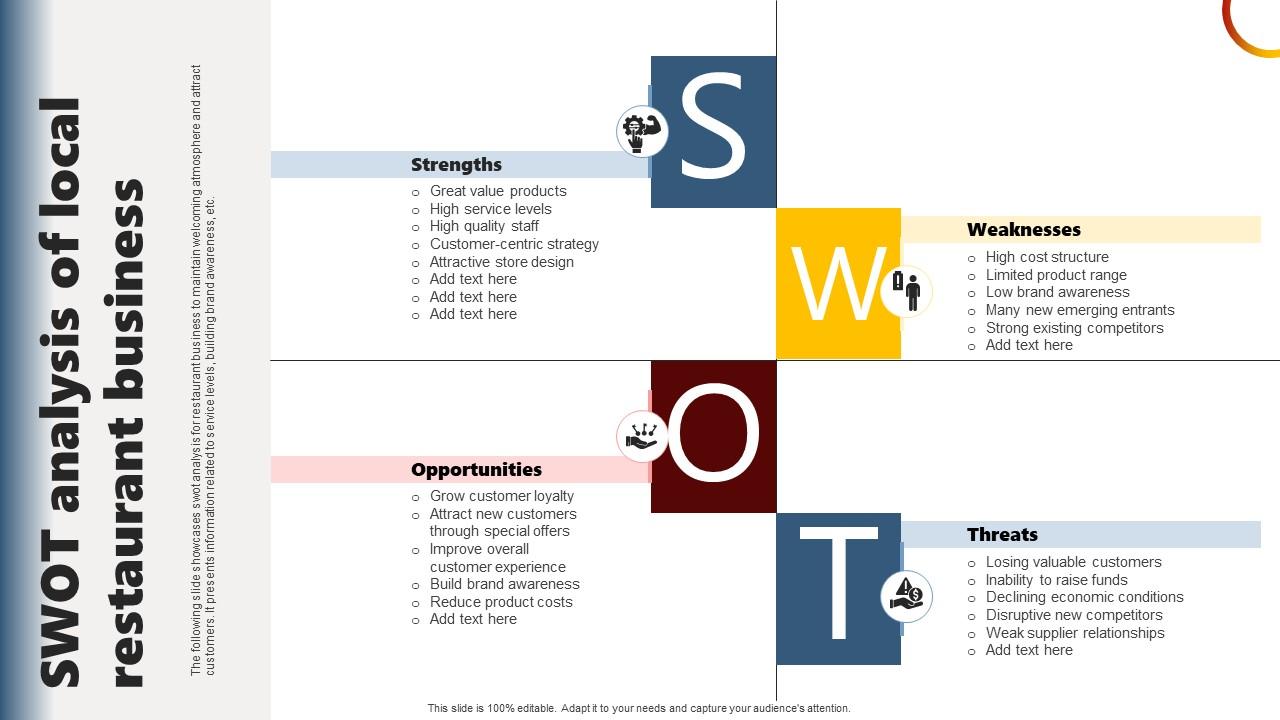
SWOT Analysis Of Local Restaurant Business
Try Before you Buy Download Free Sample Product
Audience
Editable
of Time
The following slide showcases swot analysis for restaurant business to maintain welcoming atmosphere and attract customers. It presents information related to service levels, building brand awareness, etc.
People who downloaded this PowerPoint presentation also viewed the following :
SWOT Analysis Of Local Restaurant Business with all 6 slides:
Use our SWOT Analysis Of Local Restaurant Business to effectively help you save your valuable time. They are readymade to fit into any presentation structure.
FAQs for SWOT Analysis Of
So SWOT breaks down into four parts: Strengths and Weaknesses (stuff inside your control), plus Opportunities and Threats (external factors). The real trick isn't just making lists though. You want to connect them - like how can your strengths help you grab opportunities? Or what weaknesses leave you exposed to threats? Most people stop at the boring box-filling stage, but that's where it gets interesting. I always prioritize which combinations actually matter for what you're dealing with right now. Then turn those insights into actual next steps you'll follow through on.
Look at what you're crushing compared to your competitors - could be customer service, product quality, whatever. Your team knows this stuff better than anyone, so ask them what makes you different. Check your numbers too. Where are you consistently beating targets or outperforming? I'd also think about your resources - special tech, amazing staff, solid relationships. Company culture matters more than people realize. The trick is getting specific about it instead of just saying "we're great at everything." Then you can actually use these strengths to grow.
Honestly? First step is admitting what's broken - no sugarcoating. Got a team that can't handle digital stuff? Training or new hires, simple as that. Bad processes need a complete redo, not band-aids. I remember this one company that had terrible customer service (like, people were actually angry) but they fixed it and totally turned things around. Here's the thing though - don't try tackling everything at once or you'll burn out. Pick your biggest weakness, put someone in charge of it, and check progress monthly. Treat it like a project, not some shameful secret.
Look for market trends first - new customer needs, demographic shifts, untapped segments. Check out your competitors too. Where are they weak? What gaps exist? Regulatory changes can open doors you didn't see before. Same with new tech developments. Industry reports are actually super useful for this kind of digging - way more than people think. Don't overlook potential partnerships or distribution channels you haven't tried yet. Economic shifts might create openings too. Honestly, just make a simple checklist and work through each area methodically. You'd be surprised how many obvious opportunities are just sitting there waiting.
Look, threats are basically all the external stuff that could mess up your business plans. New competitors jumping in, regulations changing overnight, the economy tanking - you know, fun stuff like that. What you gotta do is spot these risks early and build your defenses around them. I'm talking contingency plans, backup strategies, maybe diversifying how you make money. Think of it as productive paranoia, honestly. Instead of just worrying about what could go wrong, you're actually preparing for it. Build those threat responses right into your planning process so you're ready when (not if) something hits.
SWOT analysis is basically your reality check before spending marketing money. Map out strengths, weaknesses, opportunities, and threats - then you'll know where to actually focus. Say you've got crazy loyal customers (strength) and notice everyone's obsessed with TikTok right now (opportunity). That's where your budget should go, not trying to fix every single problem at once. Think of it like a roadmap showing you the shortcuts plus all the dead ends. Honestly, it beats throwing money at random campaigns and hoping something sticks. Focus on what'll actually make a difference.
Don't be vague - nobody needs "good customer service" as a strength. Get specific! Focus on what actually moves the needle for your goals instead of listing every random thing you can think of. I've watched so many people spiral into analysis paralysis with these things. Oh, and don't forget the outside world exists - market forces matter just as much as your internal stuff. Your opportunities should be realistic, and threats need to be actual threats, not just minor annoyances. Once you're done, grab 2-3 items from each section to work on. Otherwise you'll have this gorgeous analysis sitting there doing nothing.
Dude, it's mainly about what you actually know vs. what you're guessing at. Startups are basically throwing assumptions at the wall - "we THINK our weakness is cash flow, but maybe this market gap is huge?" You're validating hunches constantly. Established companies? They've got real data and can dig into actual patterns. Startup SWOTs change like every month (honestly exhausting), while bigger companies can stick with theirs for way longer. Oh, and if you're doing this for a startup - keep it super simple. Don't overcomplicate it.
Honestly, mix up who's doing your SWOT analysis - don't just stick to leadership. Sales people know customer complaints inside out, finance catches spending issues others miss. I've watched teams where only execs weigh in and it's always too focused inward. Get people to push back on each other's ideas, especially weaknesses since nobody likes admitting those. Start with anonymous feedback so junior staff actually speak up. Then hash it out together. Oh, and assign someone to argue against each point - sounds annoying but it makes you think harder and spots stuff you'd totally miss otherwise.
I'd say every 6-12 months is the standard, but that can change fast depending on your industry. Like if you're in tech or something that moves quickly, maybe quarterly makes more sense. When COVID hit, companies waiting a whole year to update their analysis were screwed - their info was totally outdated. Just set up regular calendar reminders, but also be ready to jump on it when big stuff happens. New competitors pop up, customer behavior shifts, internal changes at your company. The whole point is keeping it fresh so you're not making decisions based on old data.
Yeah, SWOT totally works for nonprofits! Just think about it differently. Strengths could be your amazing volunteers, community connections, or someone who's killer at writing grants. For weaknesses - probably funding issues, tiny staff, or that ancient computer system you're still using. New grant opportunities, potential partnerships, or unmet community needs all count as opportunities. Threats? Budget cuts, other nonprofits competing for the same donors, policy changes that mess with your work. Honestly, nonprofits might need this analysis more than regular businesses since every dollar counts. Get your board, staff, and main volunteers involved - they'll see things you don't.
Honestly, just grab a template first - Canva and Lucidchart have decent SWOT ones you can fill out quickly. If your whole team needs to brainstorm together, Miro's pretty solid for that collaborative stuff. Microsoft has basic templates in PowerPoint too, though they're kinda boring. You can also snag free ones from Template.net if you're being cheap about it (which, fair). I'd say start simple with any template to get your ideas down first. Then if you need everyone's input, switch to something like Miro where people can actually work together without losing their minds.
Digital transformation completely flips your SWOT on its head. Weaknesses can become strengths if you nail the automation part. But here's the thing - you'll suddenly face competition from random startups that barely existed last year. Data analytics opens up crazy new opportunities though. Your old competitive advantages? They might actually hurt you now if you don't keep up. I've seen companies think they had solid strategies, then six months later everything's different. You really need to constantly update your SWOT analysis during these digital projects because the landscape shifts so fast it's honestly kind of exhausting.
Apple almost went bankrupt in the 90s but used SWOT to figure out their design edge was actually their biggest asset. Starbucks realized they'd expanded way too fast and were saturating their own market - so they closed a bunch of stores and got back to basics. Southwest took being small (which seemed bad) and made it work by doing direct flights instead of trying to compete with the big hub airlines. Oh, and Netflix did this too when they ditched DVDs for streaming. The real magic happens when you're honest about what sucks - that's usually where you find the good stuff.
Oh man, culture totally messes with SWOT analysis in ways people don't realize. Your team's background colors how they see everything - what's a strength here might look weak somewhere else. Direct communication style? Americans love it, but try that in Japan and you'll crash and burn. Plus you'll miss opportunities in markets you don't understand culturally. I watched one team completely whiff on this last year. Get different perspectives on your SWOT team and actually talk about your assumptions. If you're going global, honestly just run separate analyses for each region.
-
Wow, never been this impressed with any online service provider. Really appreciate the customer support all along from the navigation to purchasing the right products.
-
I'm happy to discover your PowerPoint presentations and templates. They met my expectations precisely. Very innovative!