Integración de sistemas Ppt Graphics
Try Before you Buy Download Free Sample Product
Audience
Editable
of Time
Nuestra integración de sistemas Ppt Graphics cree en la buena estética. Tenga la seguridad de que sus diseños son elegantes.
Características de estas diapositivas de presentación de PowerPoint:
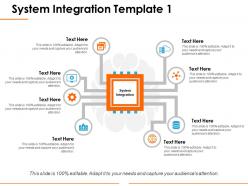
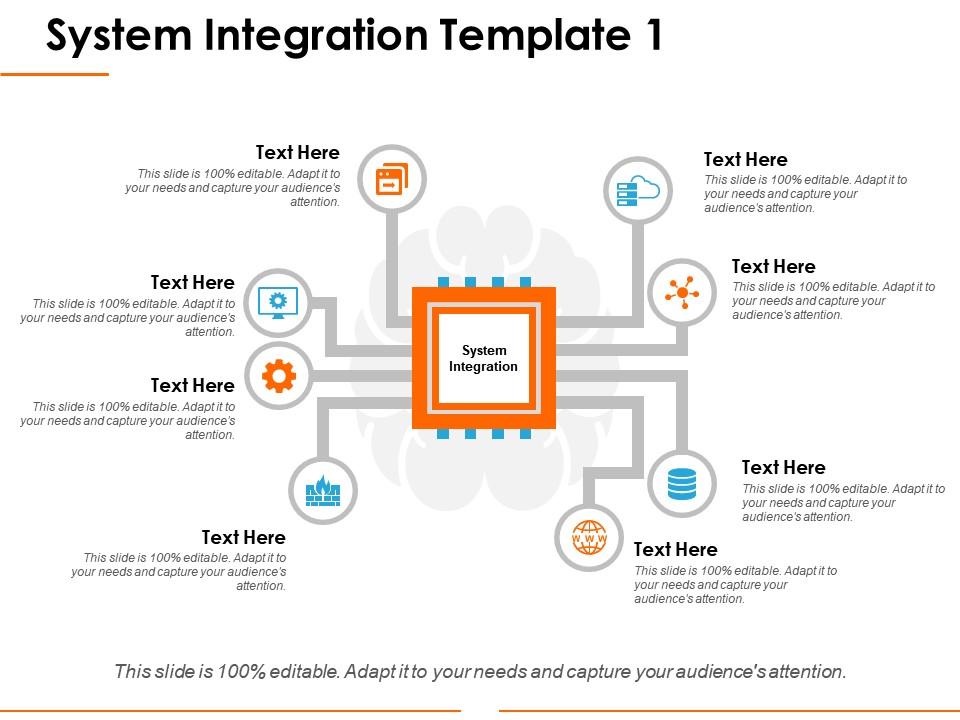
Presentando este conjunto de diapositivas con el nombre - System Integration Ppt Graphics. Este es un proceso de ocho etapas. Las etapas de este proceso son Integración del sistema empresarial, Marketing, Estrategia, Iconos.
People who downloaded this PowerPoint presentation also viewed the following :
Gráficos Ppt de integración del sistema con las 5 diapositivas:
Cuando usted considera la importancia que tienen las presentaciones en cualquier negocio exitoso, entonces comprenderá por qué es importante tener una presentación poderosa. Nuestros gráficos Ppt de integración del sistema están ahí para ayudarlo a producir presentaciones poderosas.
FAQs for System
Ugh, data compatibility is the absolute worst - nothing ever talks to each other properly. Plus those ancient legacy systems are basically digital dinosaurs that hate change. Scope creep will sneak up on you too, guaranteed. Timeline pressure is constant, budgets get tight, and good luck getting different teams to actually talk to each other. Oh, and security issues pop up everywhere once you start connecting stuff that used to be separate. Honestly though, if you map your data flows upfront and nail down the scope early, you'll save yourself tons of headaches. Always pad your testing time - trust me on this one.
Start with auditing what you've got connected right now - grab a whiteboard because this gets messy quick! Map out your APIs, integrations, and how data flows between systems. Check which ones are actually performing well versus the ones constantly breaking down. Does your team have the skills to handle this stuff, or are you totally at the mercy of outside vendors? That's huge. Find the gaps where systems should be talking but aren't. I honestly think most companies have way more integration debt than they realize. Once you see the full picture, you can figure out what needs fixing ASAP versus what can wait.
Think of middleware like a really good translator at the UN - it helps all your different systems actually understand each other instead of just shouting past each other. It handles the boring stuff like data formatting, message routing, security checks. Without it, you'd have to build custom connections between every single system pair (honestly sounds like a nightmare). The money you save alone makes it worth it. Oh, and it deals with all those random errors that pop up too. I'd take a look at where your systems are currently trying to talk to each other and see if middleware could clean things up.
Think of APIs as universal translators for your software - they let different systems chat without you building weird custom bridges every time. Way better than those brittle point-to-point connections that explode when someone updates their system. They automatically handle all the annoying stuff like authentication and data formatting, which honestly saves you so much headache down the road. Short sentences work too. Before you start coding anything from scratch, map out what data actually needs to move around, then hunt for existing APIs first. Trust me, you'll thank yourself later when everything just works.
Honestly, validation is everything here - check formats, completeness, use checksums to catch corruption. Map out clear rules between your systems and test everything in staging first (learned that one the hard way). Log absolutely everything because you'll need those breadcrumbs when stuff breaks. And it will break, so have rollback procedures ready. I'd start by looking at your current data flows - find the sketchy integration points and add extra validation there. Oh, and staging environments are a lifesaver for testing transformations before they go live.
So cloud stuff basically changes everything about integration. Gone are those messy point-to-point connections - now you're dealing with APIs and microservices instead. The old "do everything at once" method? Dead. You can build things piece by piece now, which is honestly way less stressful. Cloud platforms give you ready-made connectors too, but there's a tradeoff - you'll hit network delays and new security headaches. Oh, and scaling individual parts is actually possible now. Start with just one cloud service first though. Trust me, don't jump into full hybrid architecture right away.
So definitely prioritize data protection and auth when connecting systems. Encrypt everything - data moving between systems and stored data too, especially with cloud stuff. API keys and OAuth are your friends here (seriously, dealing with breaches is a nightmare you want to avoid). Set up proper access controls so each system only gets what it needs to function. Network segmentation is clutch if possible. Oh, and always treat those integration points like they're the most vulnerable parts of your setup - because they usually are. Honestly sounds obvious but people skip this step way too often.
So agile basically saves you from integration hell by chopping things into bite-sized pieces. You tackle integration bit by bit through sprints instead of doing some massive "let's hope this works" moment at the end - trust me, those never go well. Catching bugs early beats discovering them when you're already stressed and behind schedule. Daily standups are actually useful here because people will mention when they're stuck on something. Oh, and definitely go after your scariest integration points first while you still have time to fix whatever breaks.
Track the tech stuff first - data accuracy, uptime, API speed, error rates. That tells you if everything's actually working together. Business metrics matter just as much though: time saved, less manual work, faster processes, cost cuts. User adoption is huge too because honestly, perfect integration means nothing if your team hates using it. Oh, and don't go crazy measuring everything at once. Pick 3-4 metrics that actually align with what you're trying to accomplish with this integration. Way easier to focus on what really matters.
Think of system integration as building bridges between your software. Your CRM talks to inventory, which talks to accounting - no more copying data by hand. A sale comes in? Boom, inventory updates, invoice gets created, customer record refreshes automatically. Honestly, it's a game changer once you see it work. Map out where your team wastes time manually moving stuff between systems first. Those spots are gold mines for automation. The whole point is cutting out those annoying steps where someone has to babysit data transfers.
First thing - figure out what systems actually need to connect and how much data you're dealing with. Real-time or can it wait? Then look at tools that match your team's skills and budget. Honestly, some of these platforms cost a fortune but they're ridiculously powerful. Others are cheap but you'll hit walls fast. Don't forget about scalability and support - trust me, you'll need help when things break. Oh, and vendor lock-in is real. My move? Pick 2-3 options and run a small pilot project. You'll know pretty quick which one clicks with your workflow.
Honestly, stakeholder communication can totally make or break your integration project. Keep everyone on the same page about requirements and timelines - otherwise you'll get stuck with systems that don't actually fix what they're supposed to. Regular check-ins are a lifesaver, trust me on this one. Create some kind of shared doc where people can see progress and call out problems before they get messy. Oh, and don't forget these folks usually control the system access you'll need anyway. Start this stuff from day one.
Cross-functional training is huge - your teams need to actually get how different systems connect. APIs, data mapping, integration platforms - yeah it gets messy quick. Also build up change management skills because these projects always mess with people's workflows. Start with smaller pilots so folks can figure things out without major pressure. Oh and set up good communication between IT, business users, and vendors from day one. Seriously, I've seen the office politics destroy these things way faster than any technical problems ever could.
Honestly, AI and ML are crushing it right now - they can predict when stuff's gonna break and configure connections automatically. Pretty wild. API-first design is finally becoming standard (thank god), and Kubernetes is completely changing how we deploy integrated systems. Low-code platforms are interesting too since they let business folks build workflows without bugging IT constantly. Though I still think some technical oversight helps. If you're stuck on old middleware, start dabbling in these areas. The learning curve isn't terrible, and you'll be way ahead once this stuff becomes mandatory.
Look, when your systems actually talk to each other, customers stop hitting those stupid roadblocks. No more repeating their info five times or waiting while someone manually copies data around. Everything just connects - order history, what they like, support stuff, all of it. Honestly, people expect this now, it's not 2015 anymore. You'll get way faster responses and actual personalized service instead of that "hold on, let me transfer you" nonsense. Start by looking at your customer journey though. Find where those integration gaps are screwing things up the most.
-
Very well designed and informative templates.
-
Great quality slides in rapid time.