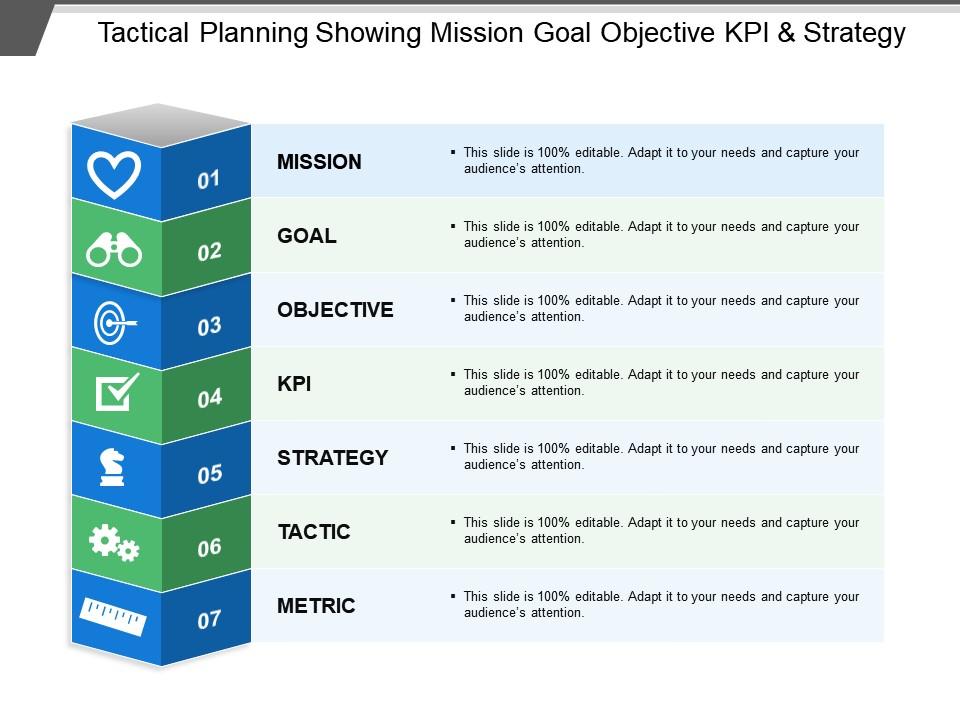
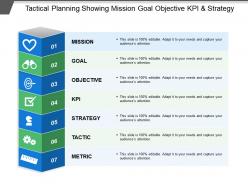
Tactical planning showing mission goal objective kpi and strategy

Rating:
80%
Tactical planning showing mission goal objective kpi and strategy
Slide 1 of 5

or

Favourites Favourites

Try Before you Buy Download Free Sample Product

Audience Impress Your
Audience
Editable 100%
Editable
Time Save Hours
of Time
The Biggest Sale is ending soon in
0
0
:
0
0
:
0
0
Rating:
80%
Presenting this set of slides with name - Tactical Planning Showing Mission Goal Objective Kpi And Strategy. This is a seven stage process. The stages in this process are Tactical Planning, Tactical Strategy, Tactical Goals.

FAQs for Tactical planning showing mission goal objective

Key components of an effective tactical plan include specific objectives, resource allocation strategies, detailed timelines, performance metrics, and risk mitigation measures. These elements work together by translating strategic goals into actionable steps, enabling clear accountability through measurable outcomes, and providing flexibility to adapt to changing market conditions, ultimately delivering operational efficiency and competitive advantage.

Tactical planning focuses on short-term implementation and specific actions to achieve strategic objectives, while strategic planning establishes long-term vision and overarching goals. Strategic planning typically spans 3-5 years with broad organizational direction, whereas tactical planning operates within 6-18 months, with departments like marketing and operations finding that tactical plans translate strategic vision into measurable, actionable steps.

Data analysis serves as the foundation of tactical planning by providing insights into market trends, performance metrics, resource allocation patterns, and competitive positioning. Through advanced analytics and reporting tools, organizations can identify operational bottlenecks, optimize resource deployment, and measure tactical effectiveness, with many businesses finding that data-driven tactical decisions deliver significantly improved outcomes and competitive advantage.

Businesses ensure alignment between tactical and strategic goals through regular cross-functional planning sessions, establishing clear KPIs that connect short-term actions to long-term objectives, and implementing quarterly review processes. Organizations like manufacturing companies and financial services find that cascading strategic priorities into departmental tactical plans, while maintaining consistent communication channels between leadership levels, ultimately delivers operational coherence and accelerated goal achievement.

Common tactical planning pitfalls include inadequate resource assessment, poor timeline estimation, insufficient stakeholder alignment, lack of contingency planning, and weak progress monitoring systems. Organizations avoid these challenges by conducting thorough resource audits, building realistic schedules with buffer time, ensuring cross-departmental communication, and implementing regular review cycles, ultimately delivering more successful project outcomes and operational efficiency.

Tactical plans should be reviewed quarterly and updated as needed, with many organizations conducting monthly check-ins to assess progress against objectives and market conditions. This regular cadence enables teams to respond swiftly to operational challenges, resource shifts, and competitive changes, while maintaining alignment with strategic goals and ultimately delivering improved agility and sustained performance.

Tactical plan success can be measured through key performance indicators (KPIs), milestone tracking, budget variance analysis, timeline adherence assessment, and stakeholder feedback collection. These measurement techniques enable organizations to monitor progress systematically, identify deviations early, and make data-driven adjustments, with many companies finding that regular performance reviews ultimately deliver enhanced operational efficiency and strategic alignment.

Cross-functional teams enhance tactical planning by bringing diverse expertise, breaking down departmental silos, and ensuring comprehensive perspective integration across all business functions. These collaborative approaches streamline decision-making, accelerate implementation timelines, and minimize resource conflicts, with many organizations finding that diverse team input delivers more robust strategies, improved buy-in, and ultimately stronger competitive advantage.

Effective tactical planning tools include Gantt chart software like Microsoft Project, collaborative platforms such as Asana and Monday.com, strategic planning solutions like Cascade Strategy, and analytics tools including Tableau for performance tracking. These platforms streamline project coordination, resource allocation, and timeline management, with many organizations finding that integrated dashboards enhance team alignment and accelerate plan execution across departments.

Incorporating stakeholder feedback into tactical planning involves conducting structured consultation sessions, implementing feedback analysis systems, and establishing regular review checkpoints throughout the planning cycle. Through collaborative workshops and digital feedback platforms, organizations streamline input collection, prioritize actionable insights, and adjust tactical approaches accordingly, ultimately delivering more aligned strategies and enhanced stakeholder buy-in across departments.

Successful tactical plans include Walmart's supply chain optimization, Amazon's same-day delivery implementation, McDonald's digital ordering systems, Toyota's lean manufacturing processes, and Starbucks' mobile payment integration. These strategies streamline operations by reducing costs, accelerating service delivery, and enhancing customer experiences, with many organizations finding that focused tactical execution delivers measurable competitive advantages within months.

Companies balance short-term tactical actions with long-term objectives by establishing clear strategic frameworks, regularly reviewing progress against milestones, and ensuring tactical decisions support overarching goals. Through integrated planning processes, organizations can pivot quickly while maintaining strategic direction, with many finding that quarterly reviews and cross-functional alignment enable both immediate results and sustained competitive advantage.

Organizational culture significantly impacts tactical planning effectiveness by influencing communication patterns, decision-making speed, risk tolerance, and employee engagement levels. Companies with collaborative, adaptable cultures often see faster plan implementation and better cross-departmental coordination, while rigid cultures may struggle with agility, ultimately affecting competitive responsiveness and operational efficiency.

Businesses can effectively communicate tactical plans through regular team meetings, visual project dashboards, detailed documentation, structured feedback sessions, and clear role assignments. These approaches streamline information flow by ensuring transparency, enabling real-time updates, and fostering collaboration, with many organizations finding that consistent communication ultimately delivers improved execution and enhanced team alignment.

Best practices for resource allocation in tactical planning include priority-based budgeting, cross-functional team alignment, flexible resource pools, performance-based distribution, and regular reallocation reviews. These approaches streamline operations by matching resources to strategic objectives, enabling rapid response to market changes, and maximizing operational efficiency, with many organizations finding that dynamic allocation delivers competitive advantage and measurable ROI improvements.

Ratings and Reviews

80% of 100
Review Form
Write a review
Most Relevant Reviews
  1. 80%

    by Dewey Stephens

    Amazing product with appealing content and design.
  2. 80%

    by Damien Murray

    Qualitative and comprehensive slides.

2 Item(s)

per page: