Talentmanagement Powerpoint-Präsentationsfolien

Slide 1 of 24
Favourites Favourites

Try Before you Buy Download Free Sample Product

Audience Impress Your
Audience
Editable 100%
Editable
Time Save Hours
of Time
The Biggest Sale is ending soon in
0
0
:
0
0
:
0
0

Merkmale dieser PowerPoint-Präsentationsfolien:

Präsentieren, Talentmanagement PowerPoint-Präsentationsfolien. Enthält ein exklusives und gründlich recherchiertes 24-Folien-Set mit Anpassungsservices. Ändern Sie die Größe jeder Form und bearbeiten Sie die Farben der Stufen. Enthält einen vollständigen Satz hochauflösender PPT-Folien für das geschäftsbezogene Konzept des Talentmanagements. Der Inhalt ist relevant und flexibel. Es kann effizient in das JPG- und PDF-Format konvertiert werden und ist im 4:3-Standard und in der Vollbildversion 16:9 verfügbar. Diese PPT-Folien können mit nur einem Klick sofort heruntergeladen werden und sind mit Google-Folien kompatibel.

Inhalt dieser Powerpoint-Präsentation


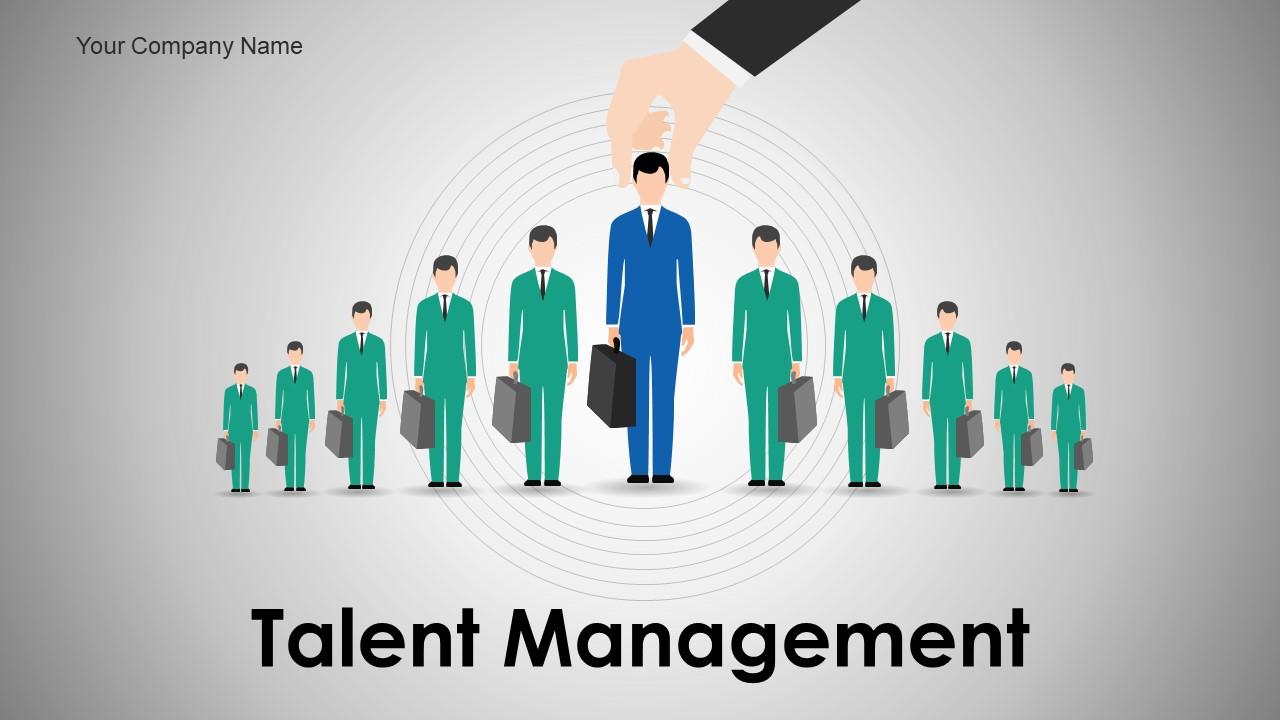
Folie 1 : Diese Folie stellt das Talentmanagement vor. Geben Sie Ihren Firmennamen an und beginnen Sie.
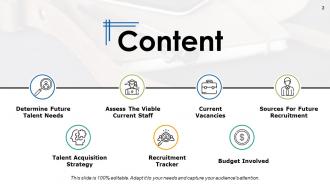
Folie 2 : Diese Folie zeigt den Inhalt. Seine Bestandteile sind: Beurteilen des lebensfähigen aktuellen Personals, aktuelle Stellenangebote, Quellen für zukünftige Rekrutierungen, Talentakquise-Strategie, Rekrutierungs-Tracker, beteiligtes Budget, Bestimmung des zukünftigen Talentbedarfs.
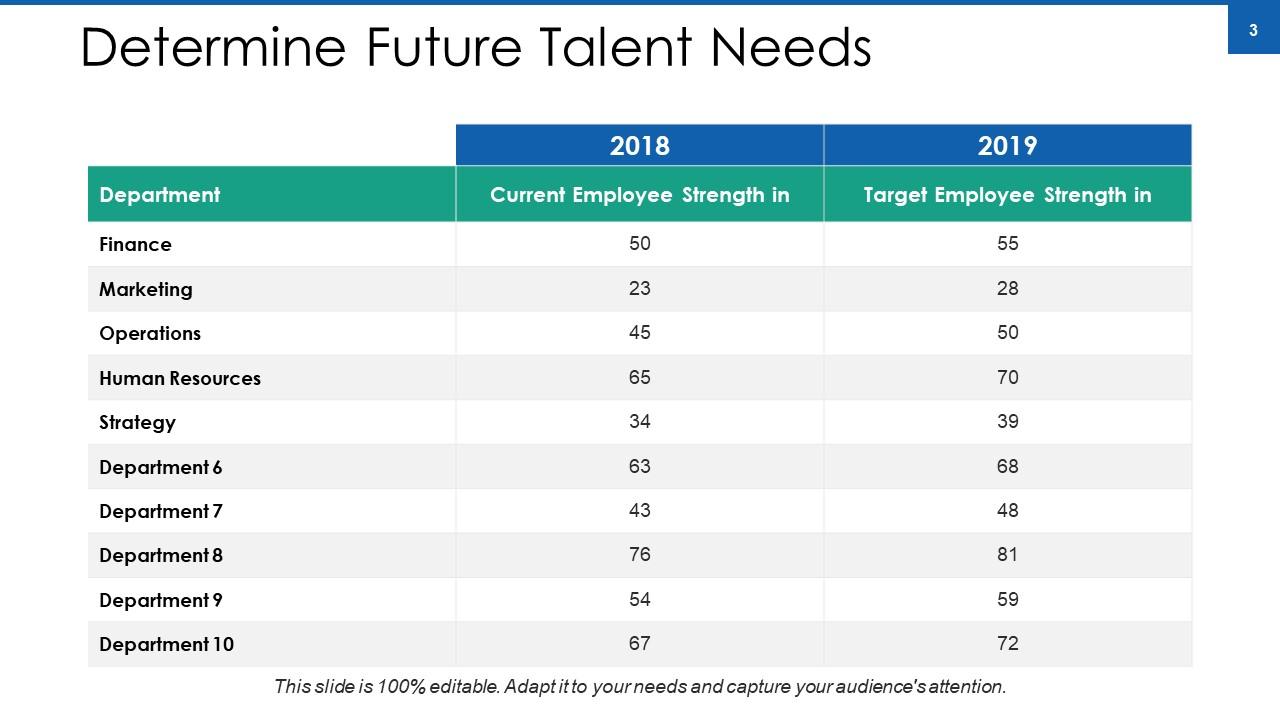
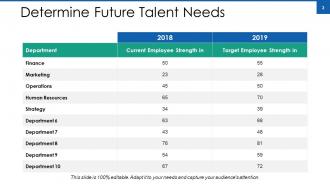
Folie 3 : Diese Folie zeigt eine Tabelle, die Sie verwenden können, um den zukünftigen Talentbedarf zu bestimmen. Fügen Sie dieser Tabelle Zweijahresdaten hinzu und verwenden Sie sie entsprechend.
Folie 4 : Diese Folie trägt den Titel Bewerten Sie das lebensfähige aktuelle Personal mit Bildern.
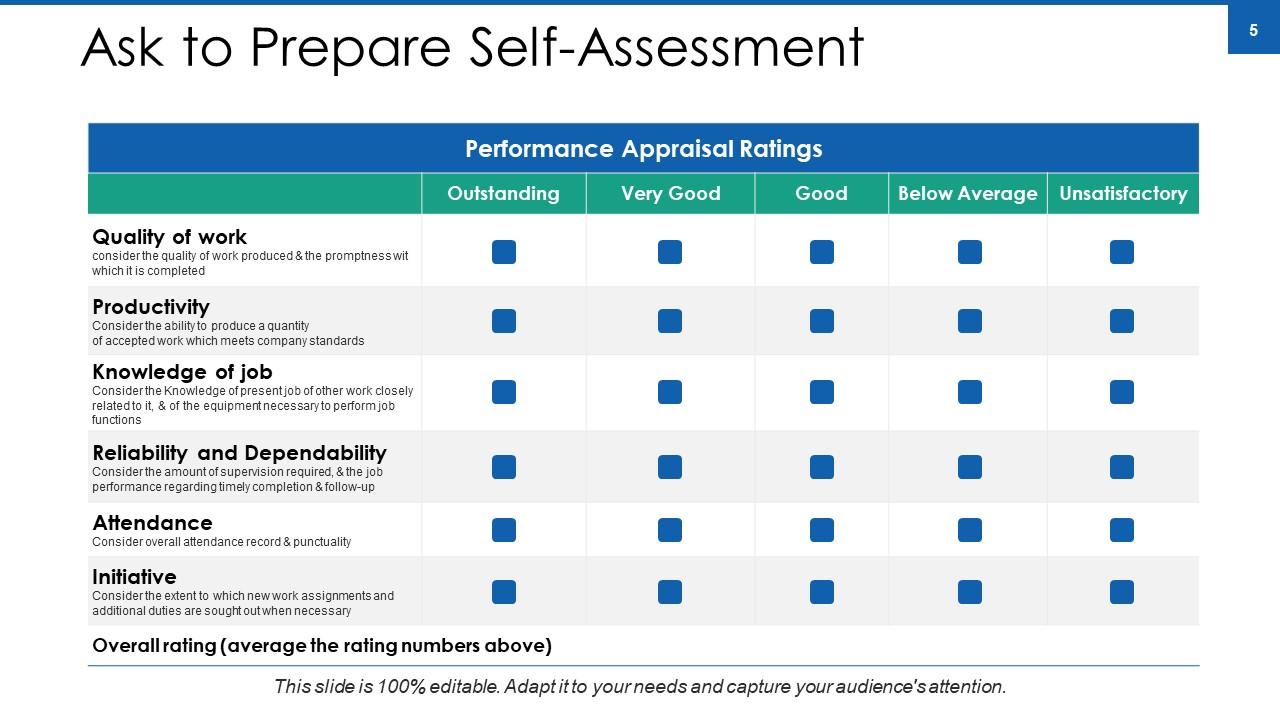
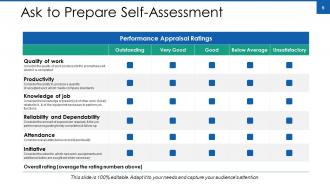
Folie 5 : Dies ist eine Folie zur Vorbereitung der Selbstbewertung, die Leistungsbewertungsbewertungen zeigt.
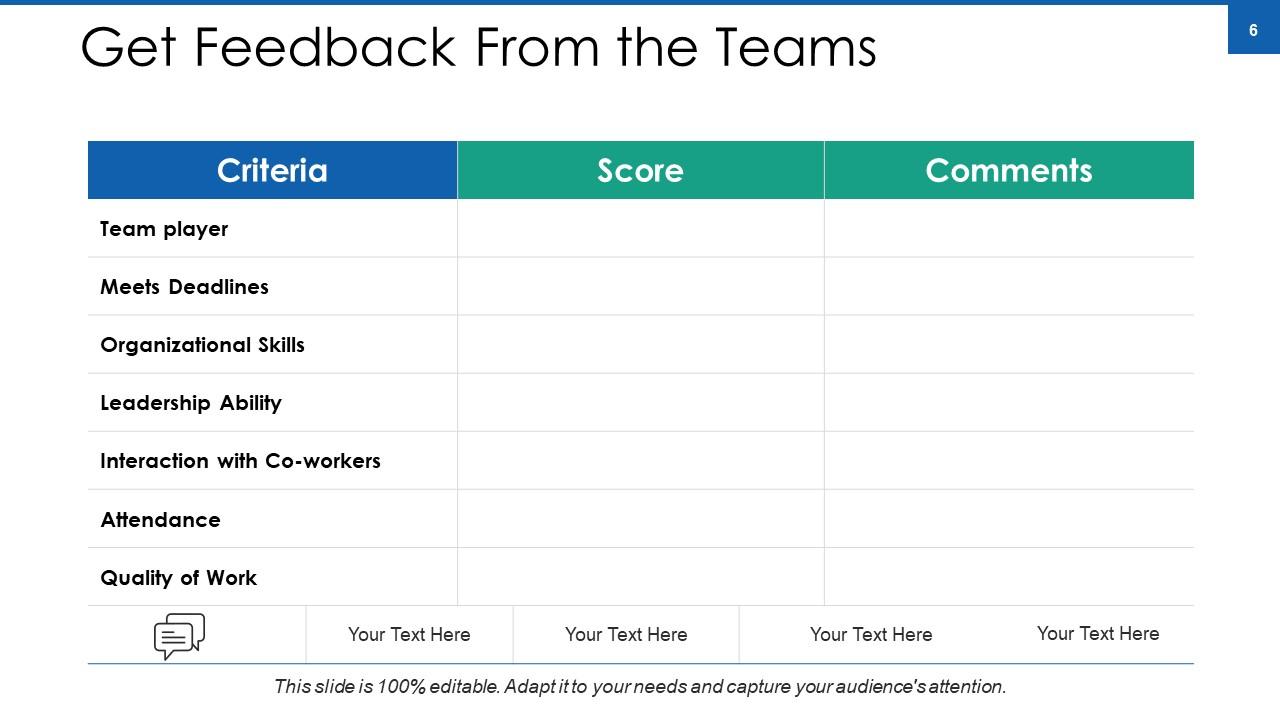
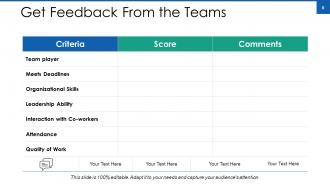
Folie 6 : Diese Folie zeigt eine Tabelle mit dem Titel Feedback von den Teams erhalten, in der Sie Kriterien, Punkte und Kommentare hinzufügen können.
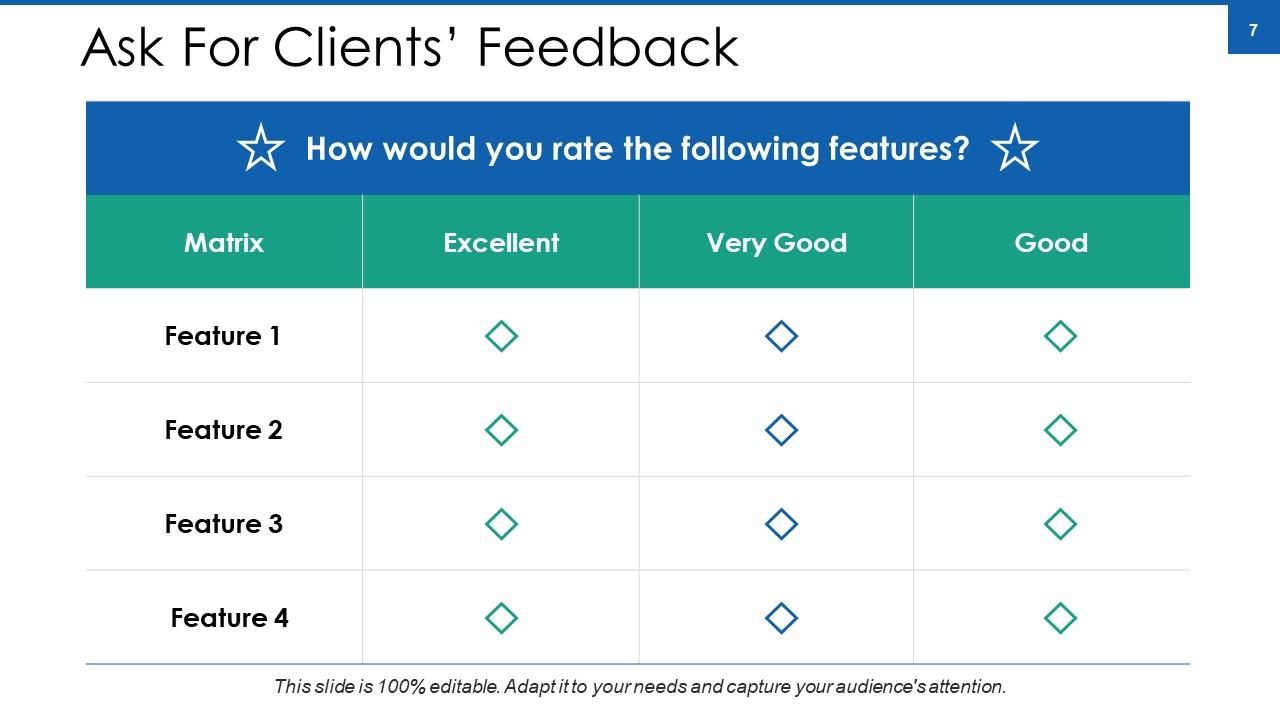
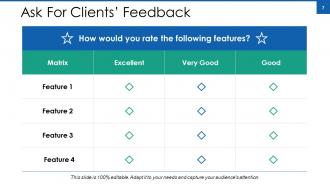
Folie 7 : Dies ist die Folie „Fragen Sie nach Kundenfeedback“, die Matrix in den Kategorien „ausgezeichnet“, „sehr gut“ und „gut“ zeigt.
Folie 8 : Diese Folie zeigt die aktuellen Stellenangebote in der Organisation. Sie können ggf. eigene Stellenangebote hinzufügen.
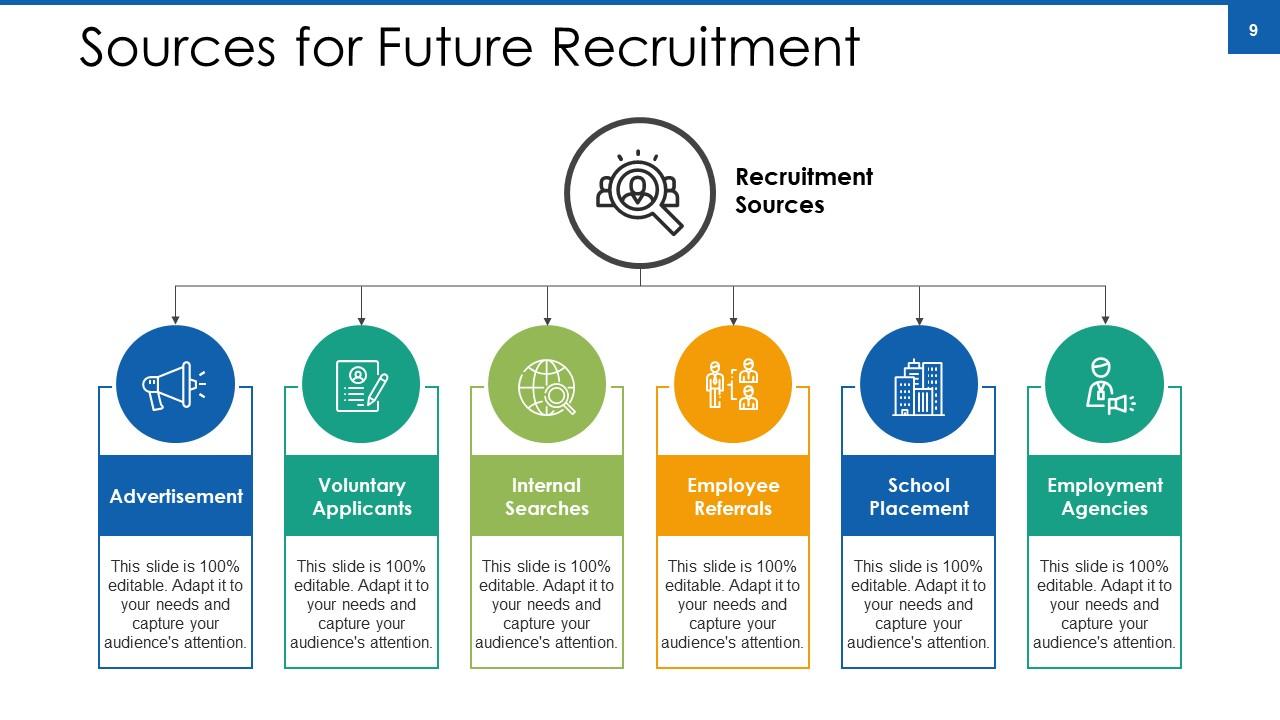
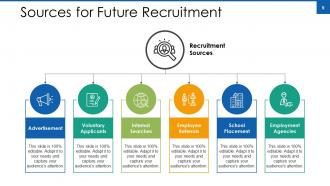
Folie 9 : Diese Folie zeigt Quellen für zukünftige Rekrutierungen wie Werbung, freiwillige Bewerber, interne Suchen, Schulvermittlung, Mitarbeiterempfehlungen, Arbeitsagenturen.
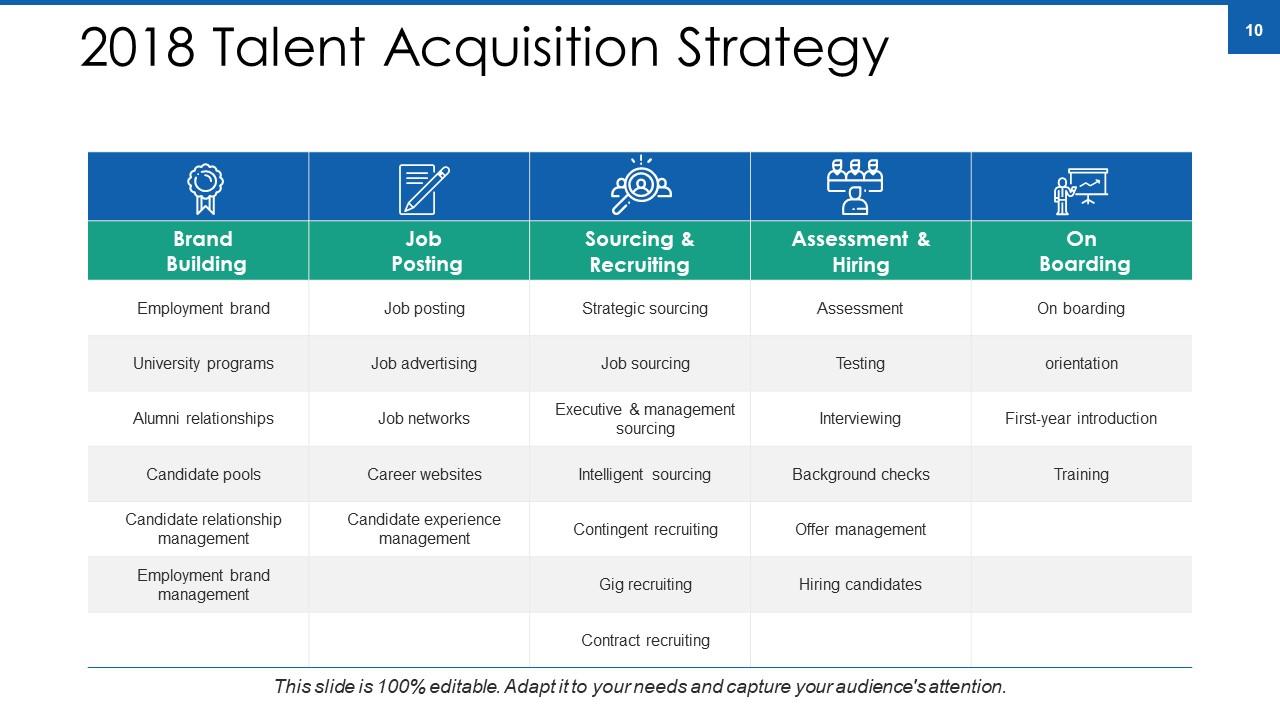
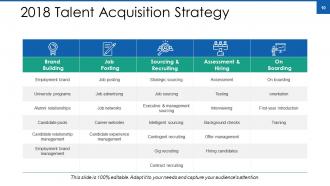
Folie 10 : Diese Folie zeigt die Tabelle zur Talentakquise-Strategie 2018 mit den folgenden Unterüberschriften – Markenaufbau, Stellenausschreibung, Beschaffung und Rekrutierung, Beurteilung und Einstellung, Onboarding.
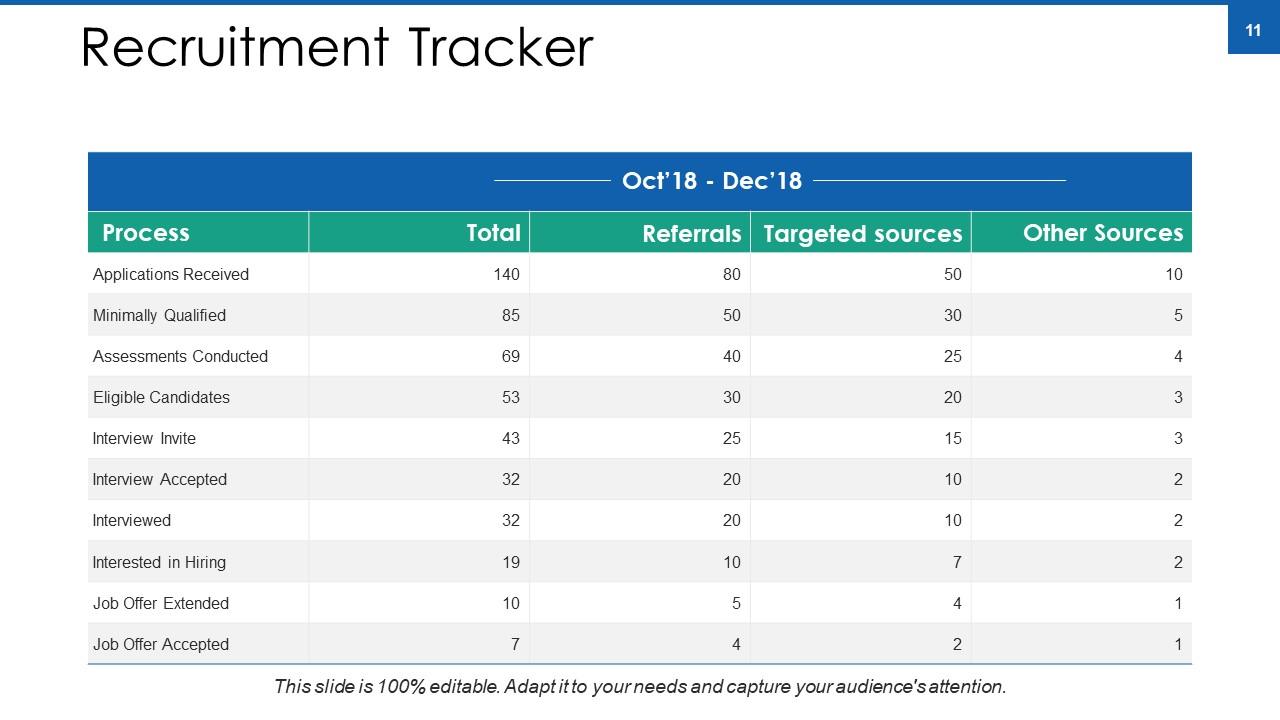
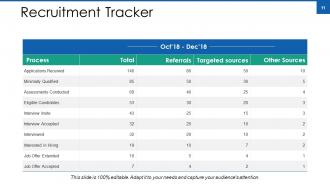
Folie 11 : Diese Folie zeigt den Recruitment-Tracker. Sie können die Daten für die Anforderungs- oder Einstellungsprozesse ergänzen.
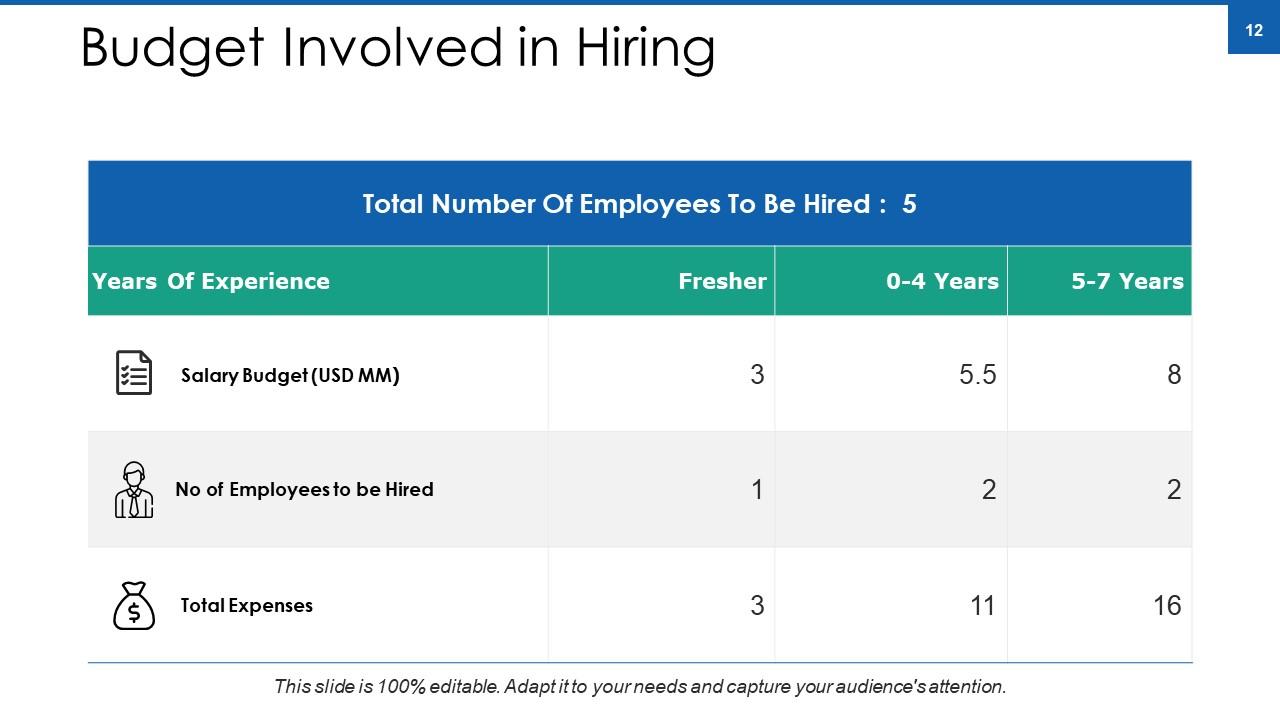
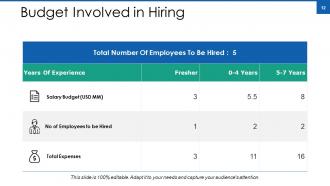
Folie 12 : Diese Folie zeigt das Budget für die Einstellung, das Sie nach Bedarf ändern können.
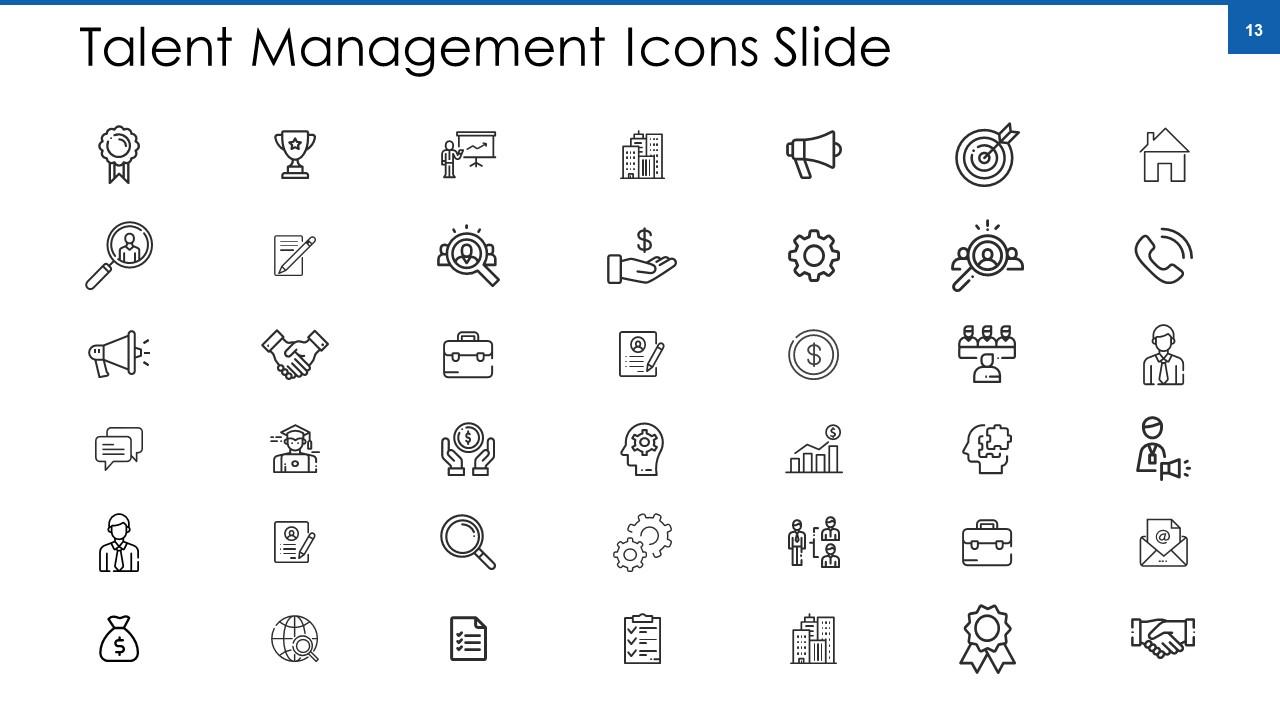
Folie 13 : Diese Folie zeigt Talentmanagement-Symbole.
Folie 14 : Diese Folie trägt den Titel „Zusätzliche Folien“, um vorwärts zu gehen.
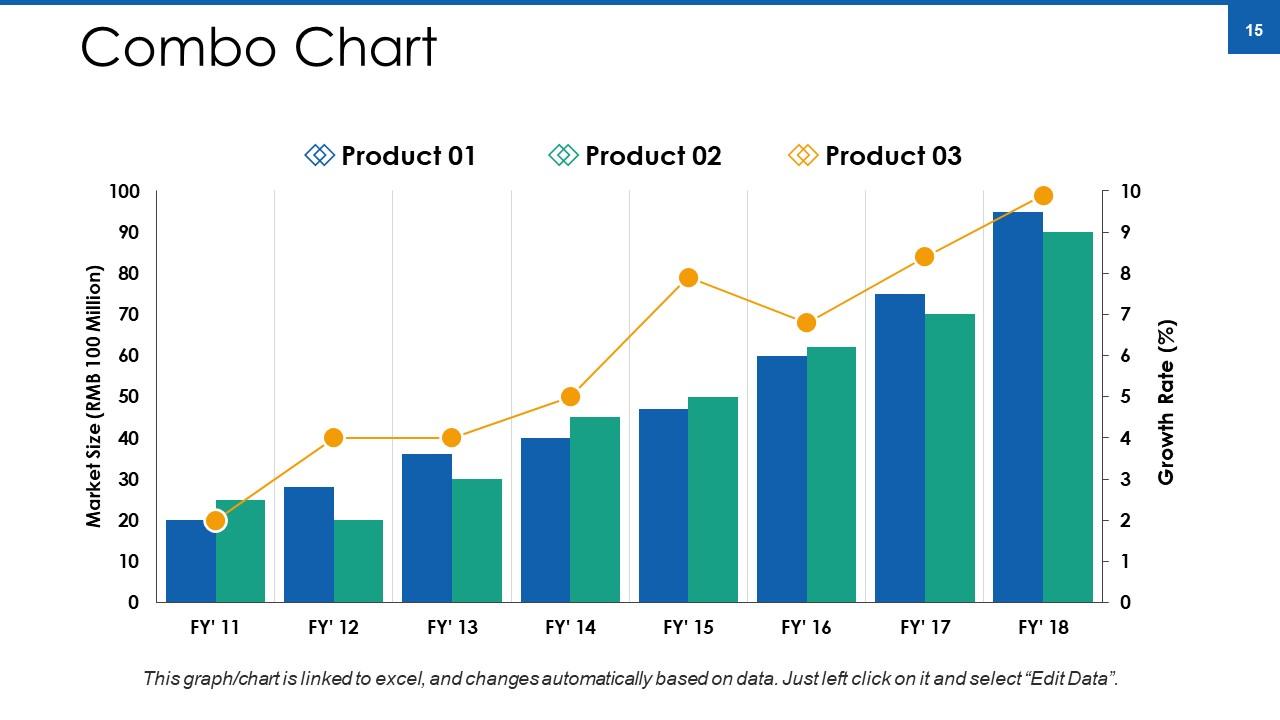
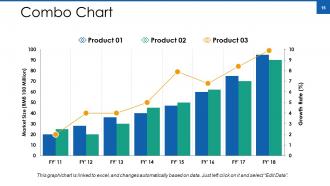
Folie 15 : Diese Folie zeigt ein Kombinationsdiagramm mit drei Produktvergleichen.
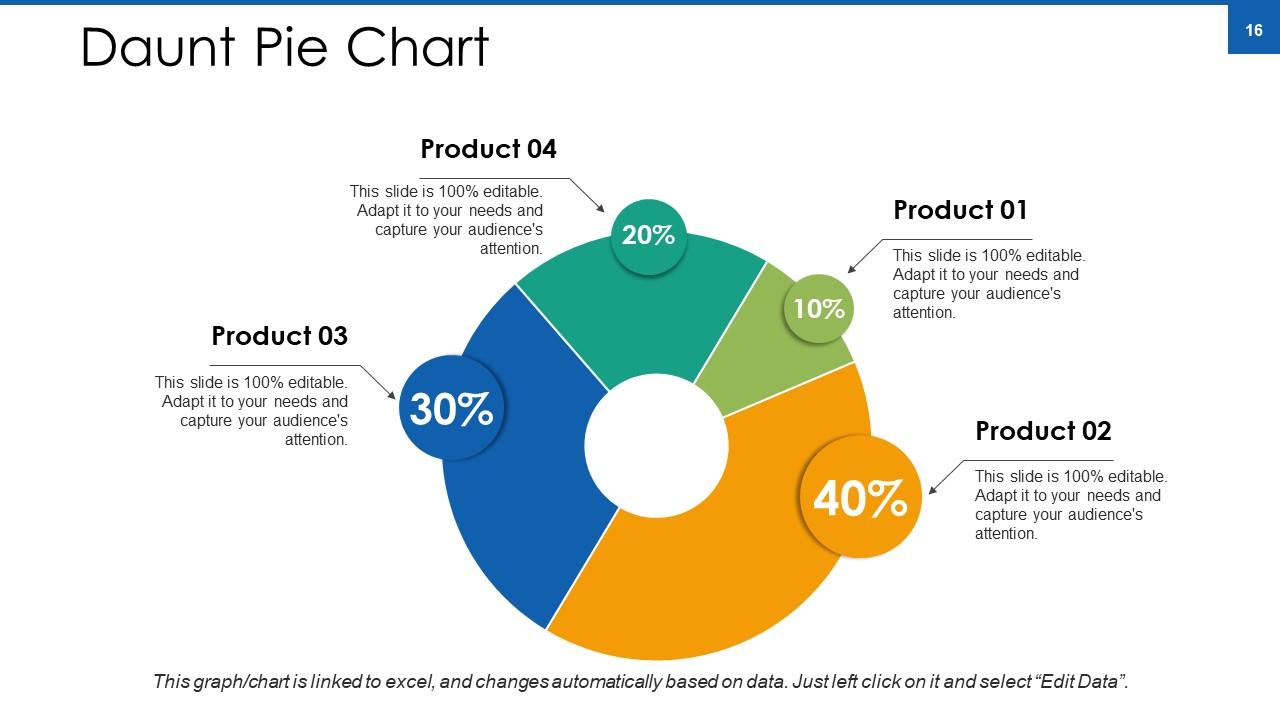
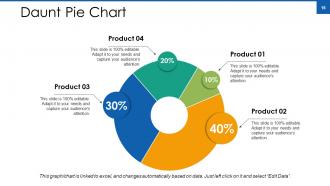
Folie 16 : Diese Folie präsentiert Donut-Kreisdiagramm mit drei Produktvergleichen.
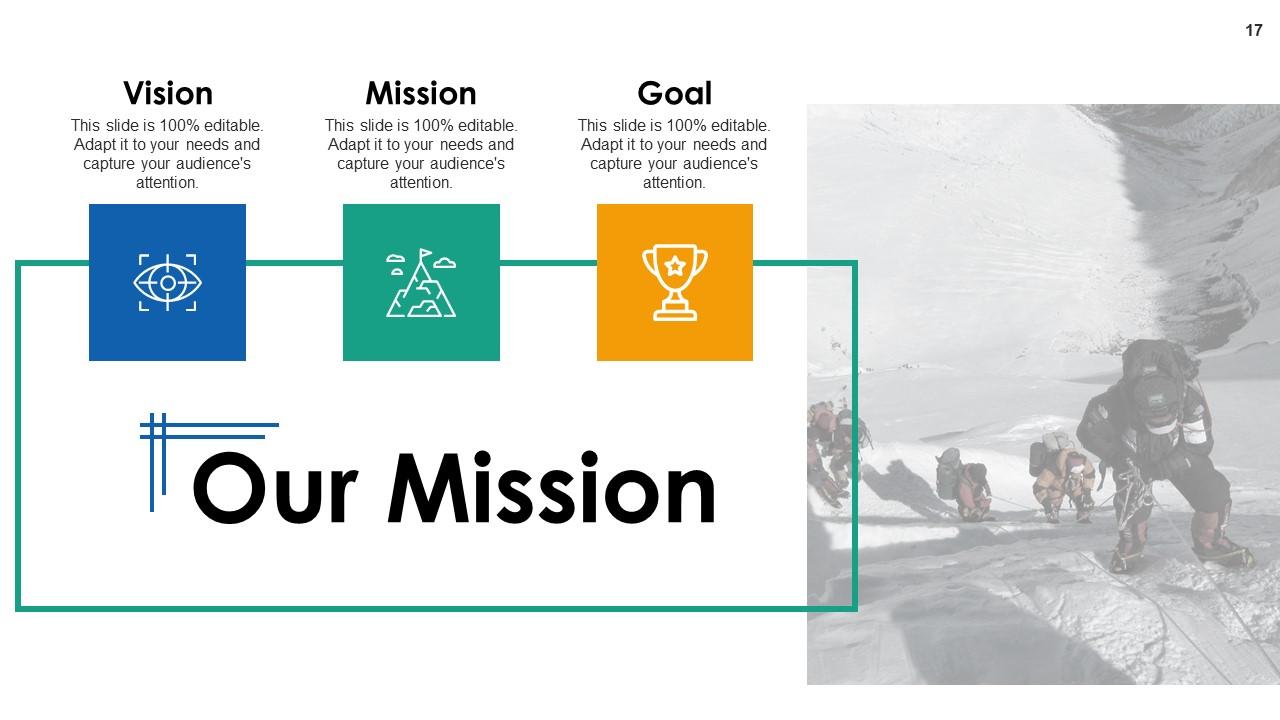
Folie 17 : Dies ist unsere Missionsfolie mit Textfeldern zum Anzeigen von Informationen.
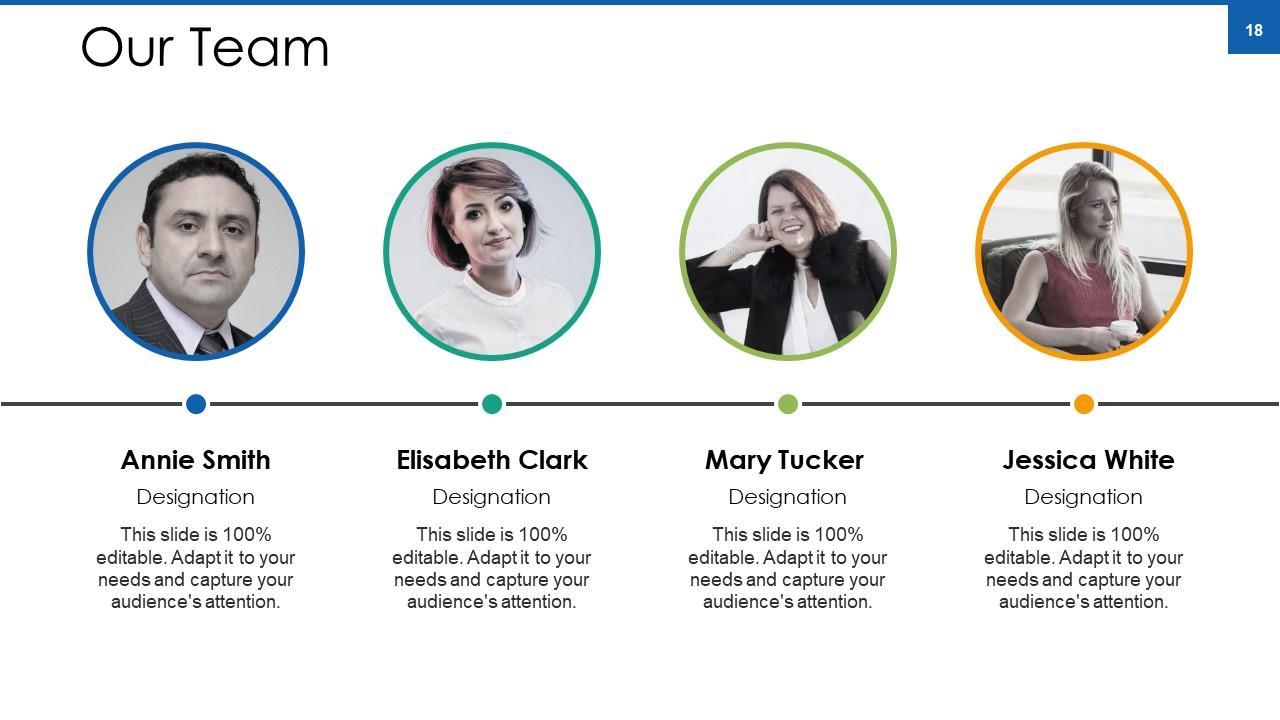
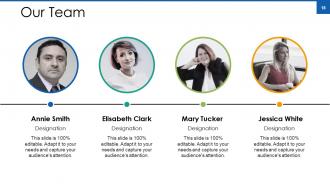
Folie 18 : Dies ist die Folie unseres Teams mit Namen und Bezeichnung.
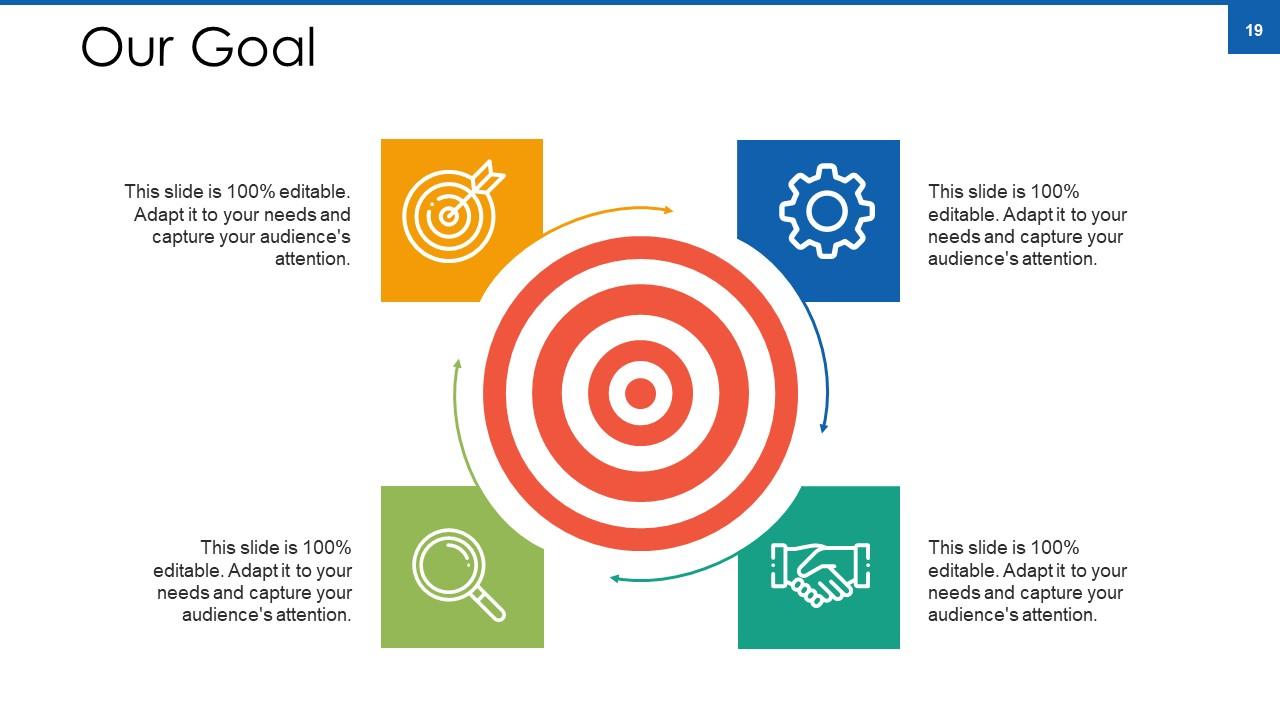
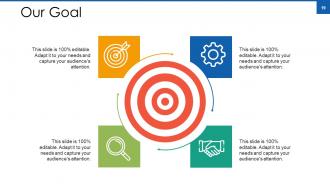
Folie 19 : Dies ist die Folie „Unser Ziel“. Nennen Sie hier Ihre wichtigen Ziele.
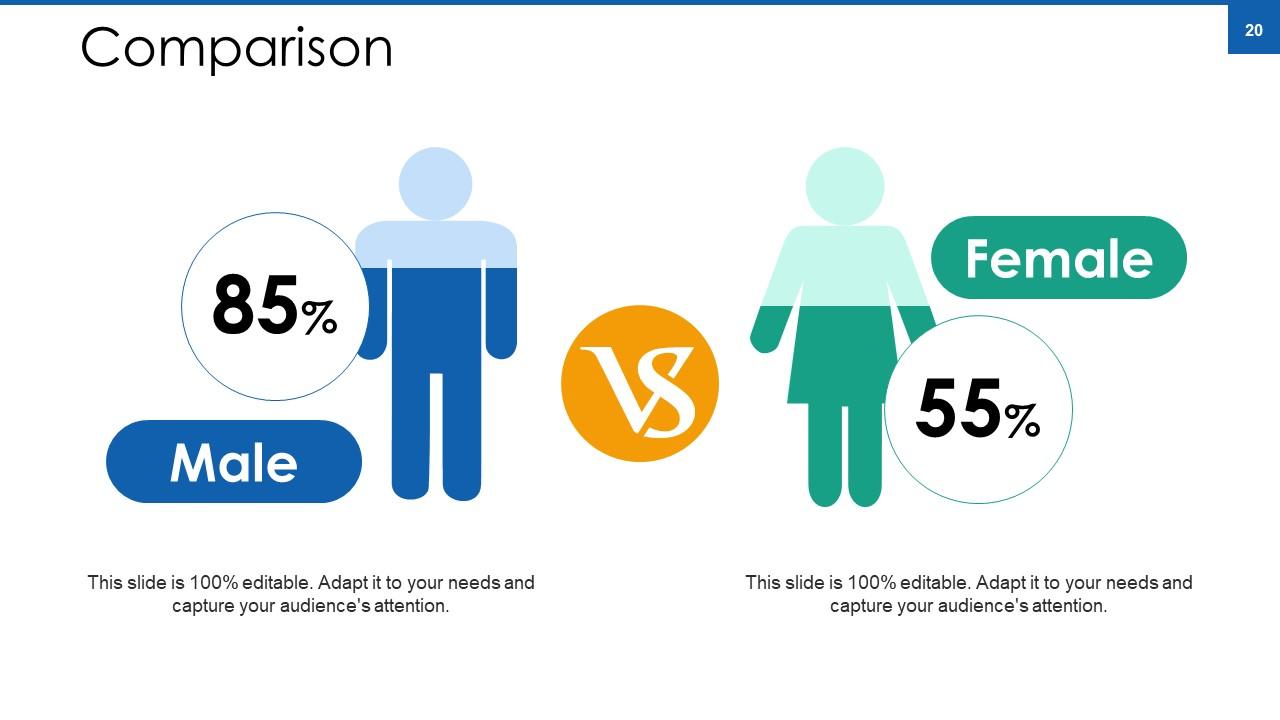
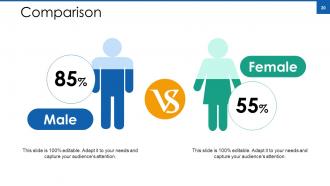
Folie 20 : Dies ist eine Vergleichsfolie zum Vergleich zwischen Waren, Einheiten usw.
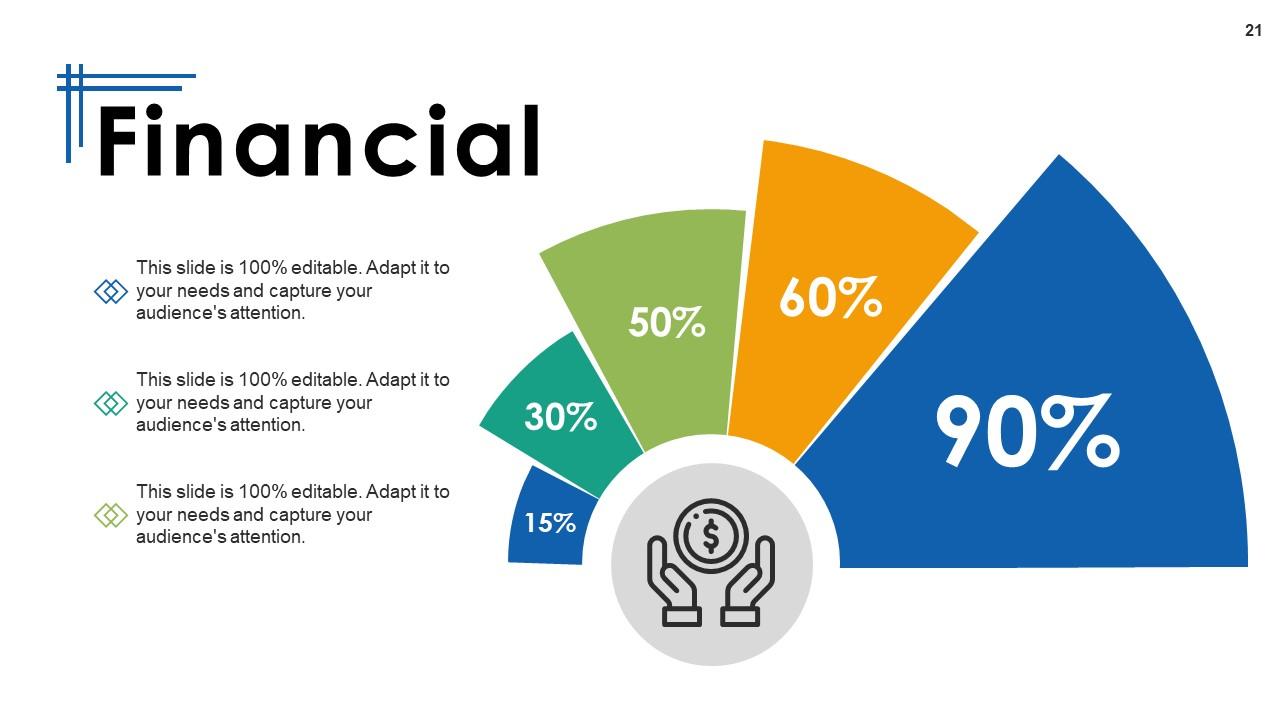
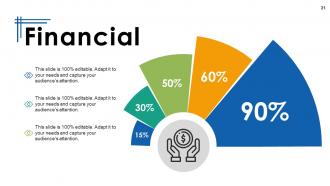
Folie 21 : Dies ist eine Finanzfolie. Zeigen Sie hier Ihre Finanzinformationen.
Folie 22 : Dies ist eine Glühbirnen- oder Ideenfolie, um eine neue Idee zu präsentieren oder Spezifikationen, Informationen usw. hervorzuheben.
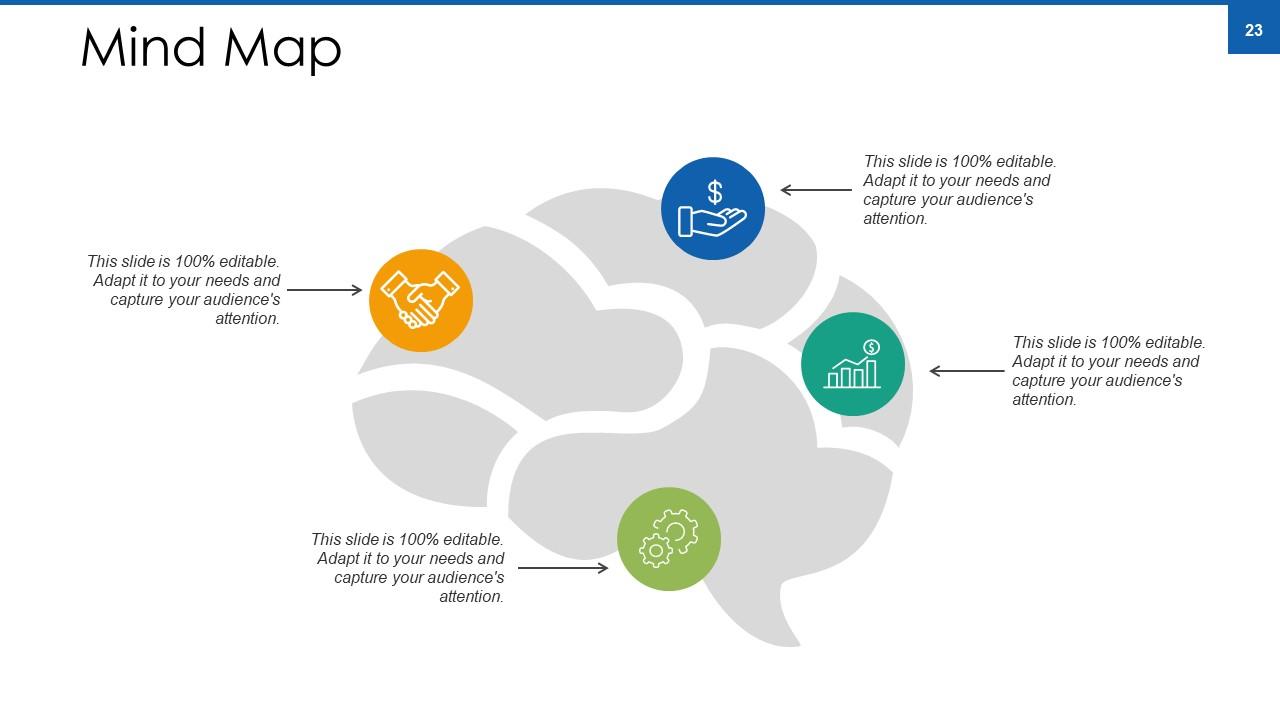
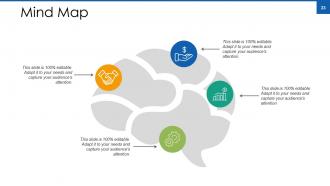
Folie 23 : Diese Folie zeigt Mind Map zur Darstellung von Entitäten.
Folie 24 : Dies ist eine Dankesfolie mit Adresse, Kontaktnummern und E-Mail-Adresse.

FAQs for Talent Management

So you'll need four main things: getting good people in, training them up, actually keeping them around, and having backups ready for important positions. Performance management connects everything - feedback, goals, career paths, all that stuff. Honestly, losing talent is such a nightmare that retention should be your top priority. The real challenge? Making sure these areas talk to each other instead of doing their own thing. I'd start by looking at what you've got now in each area, then figure out where the biggest holes are. Those gaps are probably bleeding talent without you realizing it.

Look at performance data first, but don't get stuck on just current numbers. Watch who adapts fast when things change and actually cares about understanding other departments - that curiosity matters more than you'd think. Give them stretch projects and cross-functional stuff to see how they handle different challenges. One-on-ones are huge here. Ask about their goals and notice who's already thinking bigger picture about the business. Mentoring programs help, plus get them face time with leadership through presentations or special projects. Build a clear development path so they'll stick around.

Okay so employee engagement is literally the backbone of everything else. Your people will actually stay longer when they're engaged - no more constant hiring nightmares. They perform better too. Plus engaged employees become your unofficial recruiters, which is honestly genius because they bring in people who actually fit. I'd say measure it through regular surveys or just casual one-on-ones. But here's the thing - you've gotta actually do something with that feedback instead of letting it collect dust. The ROI becomes super obvious once you see it working. Growth happens naturally because people want to take on new challenges when they're invested.

Honestly, tech can totally transform how you handle hiring and managing people. AI recruiting tools will blast through resume screening in seconds instead of you spending hours on it. Performance platforms track everything year-round, which is actually pretty useful. Your training gets way less boring too - learning management systems beat the hell out of those awful PowerPoint marathons we've all suffered through. Plus analytics can flag when someone's about to quit before they do. Just don't go crazy buying a million different tools that don't talk to each other. Pick whatever's driving you most insane right now and start there.

So I'd focus on retention rates and engagement scores first - those two usually predict everything else. Turnover numbers, time-to-fill positions, internal promotions, survey results. Performance reviews are decent but honestly depend on whether your managers are actually good at evaluating people. Revenue per employee shows business impact if leadership cares about that stuff. Training ROI too. Don't go crazy measuring everything though. Pick maybe 3-4 that actually matter for your specific situation. I always start with retention and engagement since they're like the canary in the coal mine for other problems.

Talk to leadership constantly about what they're actually trying to accomplish this year. Expanding into Asia? Hire for those markets and skills. Budget cuts? Focus on keeping your best people and training up who you've got instead of hiring externally. I swear, HR teams do this weird thing where they just... operate separately from the business strategy? Makes no sense. Map out what talent stuff you're doing right now against company goals - bet you'll find some obvious mismatches. The whole thing comes down to translating business priorities into actual hiring and development moves.

Honestly, pay them well and mean it when you talk about promotions. Growth opportunities can't just be empty promises. Work-life balance is huge right now - everyone's exhausted. Have real one-on-ones where you actually listen instead of going through the motions. Recognition matters, but skip the fake corporate stuff. Here's the thing though - bad managers kill everything. People don't quit jobs, they quit their boss. Survey your best people first and ask what'd make them stick around. That'll tell you way more than any HR handbook.

Okay so D&I has to be part of everything now - recruiting, hiring, how you develop people, retention, all of it. You're actively looking for diverse candidates and getting rid of bias in interviews. Plus creating fair opportunities for everyone to move up. Look, I know it sounds like corporate BS sometimes, but diverse teams actually crush it performance-wise. You'll lose amazing talent if you ignore this stuff. My advice? Audit what you're doing now for bias first, then set real diversity targets for each step. It's become pretty non-negotiable honestly.

Managing remote teams is honestly such a pain sometimes. You miss all those random hallway chats where you'd actually figure out who's doing well or falling behind. Body language? Forget about it. Junior people get screwed the most because they can't just absorb knowledge by watching experienced teammates work nearby. Onboarding new hires feels awkward too - like you're all just floating in digital space. My advice? Get super deliberate about one-on-ones. Set up proper mentoring programs since the organic stuff won't happen. Maybe create some virtual hangout spaces? I know it sounds forced but honestly anything beats the current alternative of everyone being isolated islands.

So here's what actually works - don't treat mentorship like some separate HR initiative. Build it right into your career development stuff. Pair your top people with rising stars. Use it to get new hires up to speed faster (saves tons of time honestly). The trick is making it structured enough that you can track results but not so rigid that people bail. Most companies mess this up by overthinking it. Start with maybe 10-15 people, see what clicks, then expand from there. Oh and definitely tie it to your retention goals - makes the business case way easier.

Dude, your employer brand is everything when it comes to hiring. Think about it - candidates totally stalk your company online before applying. If you've got a solid reputation, the good people will actually want to work there instead of just needing any job. Word spreads fast too, so employees start referring their buddies. It's honestly like dating (weird comparison but whatever) - nobody wants to join a place with a sketchy vibe. The cool part? Once you build that up, recruiting gets way easier because quality candidates come to you. Way better than constantly hunting people down.

Start with figuring out your critical roles and who's got real potential. Then map out development paths for each key position - like who could actually step up and what skills they're missing. Most companies are terrible at this, honestly. They wait until someone quits and then panic. Cross-training is huge, plus mentoring and giving people challenging projects so they're not totally green when promoted. Oh, and don't make it a once-a-year thing you check off a list. It's gotta be ongoing or you'll be back to square one.

Honestly, you've got to start before they even walk in the door. Send them equipment and welcome stuff ahead of time - nobody wants to spend day one filling out forms while their laptop gets set up. Map out their first 90 days with regular check-ins, and pair them with someone who isn't their boss for casual questions. Give them real work in week one, not just HR paperwork (trust me on this). The buddy system thing sounds cheesy but it actually works really well. Schedule that 30-day sit-down early - I've watched good people bail because they felt lost and nobody bothered to ask how things were going.

Honestly, continuous feedback is a game changer - way better than those awful annual reviews everyone dreads. You're basically having real conversations with your team about what's working and what isn't, instead of saving everything up for one awkward meeting. People actually retain the feedback when it's fresh! I'd start with quick weekly check-ins, maybe 15-20 minutes. Focus on specific stuff they did, not generic "good job" comments. Catches problems early too. Your team develops way faster this way, and they'll feel like you actually care about helping them grow instead of just checking boxes.

Honestly, start with performance reviews and those 360 feedback things - they'll show you where people are actually struggling. Skills assessments work too, mapping what people can do vs what they need to do. But here's the thing - just ask your employees directly through surveys. They usually know their weak spots better than anyone else does. Also check your training records and see where projects keep getting stuck (that's always telling). Don't rely on just one method though. A simple skills inventory survey is probably your best starting point - quick and dirty but gives you something real to work with.

Ratings and Reviews

0% of 100
Review Form
Write a review
Most Relevant Reviews

No Reviews