


Diapositives de présentation PowerPoint sur la cartographie des talents
Creusez les détails à travers nos diapositives de présentation PowerPoint sur la cartographie des talents. Développez votre équipe en utilisant nos decks complets. Présentation de vos vingt-quatre conceptions PPT intimes pour répondre à vos exigences. Utilisez cet ensemble PowerPoint de haute qualité pour étudier, planifier, documenter ou gérer un programme commercial dans divers domaines qui incluent des services de recrutement et d'embauche de personnel. Des graphiques bien adaptés et un contenu axé sur le sujet vous permettent d'informer sur les besoins futurs en talents, d'évaluer le personnel actuel viable, les postes vacants actuels, les sources de recrutement futur, la stratégie d'acquisition de talents, le suivi du recrutement et le budget impliqué. Comprenant des icônes et des images associées qui sont en rapport avec le sujet concerné, vous permettant d'intégrer vos données et de changer les schémas de couleurs sont quelques fonctionnalités qui sont couvertes dans nos services de personnalisation. Des feuilles de comparaison, des graphiques et des tableaux sont inclus ici pour une compréhension précise du sujet. Livrez grand avec nos diapositives de présentation PowerPoint de cartographie des talents. Vos capacités augmenteront certainement.
























-

- Google Slides is a new FREE Presentation software from Google.
- All our content is 100% compatible with Google Slides.
- Just download our designs, and upload them to Google Slides and they will work automatically.
- Amaze your audience with SlideTeam and Google Slides.
-

Want Changes to This PPT Slide? Check out our Presentation Design Services
-

- WideScreen Aspect ratio is becoming a very popular format. When you download this product, the downloaded ZIP will contain this product in both standard and widescreen format.
-

- Some older products that we have may only be in standard format, but they can easily be converted to widescreen.
- To do this, please open the SlideTeam product in Powerpoint, and go to
- Design ( On the top bar) -> Page Setup -> and select "On-screen Show (16:9)” in the drop down for "Slides Sized for".
- The slide or theme will change to widescreen, and all graphics will adjust automatically. You can similarly convert our content to any other desired screen aspect ratio.
Compatible With Google Slides

Get This In WideScreen
You must be logged in to download this presentation.


Do you want to remove this product from your favourites?
Caractéristiques de ces diapositives de présentation PowerPoint :
Présentation, cartographie des talents des diapositives de présentation PowerPoint. Vous fournir un ensemble de vingt-quatre conceptions PPT intimes pour répondre à vos besoins. Composé de suffisamment de diapositives de haute résolution. Il peut être facilement converti au format PDF et JPG. Des graphiques séduisants pour l'illustration et des figures fascinantes pour illustrer les concepts. Rentable pour les étudiants, les professionnels, les entreprises et les chercheurs. Options de formatage. Contenu authentique avec des données flexibles. Arrière-plan flexible avec couleur, police et mise en page. Cliquez simplement sur l'image et explorez vos connaissances.

People who downloaded this PowerPoint presentation also viewed the following :
Contenu de cette présentation Powerpoint
Diapositive 1 : Cette diapositive présente la cartographie des talents. Indiquez le nom de votre entreprise et commencez.
Diapositive 2 : Cette diapositive montre le contenu. Ses éléments constitutifs sont : évaluer le personnel actuel viable, les postes vacants actuels, les sources de recrutement futur, la stratégie d'acquisition de talents, le suivi du recrutement, le budget impliqué, déterminer les besoins futurs en talents.
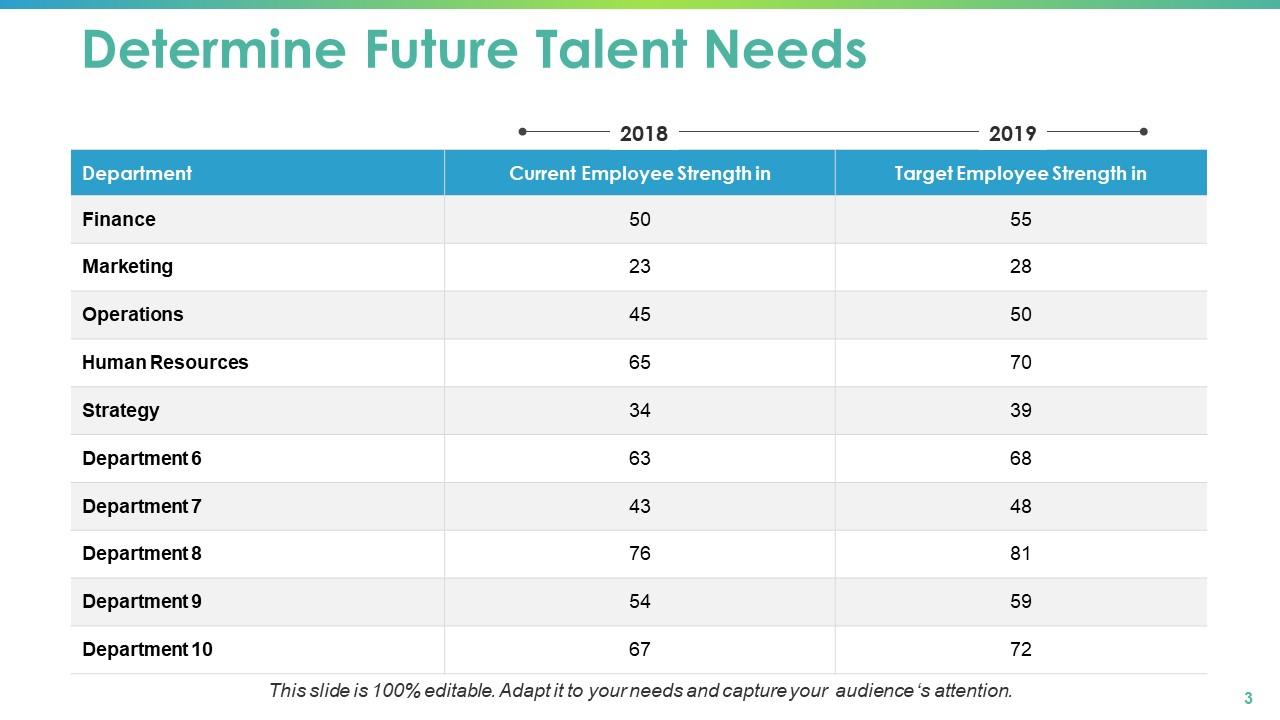
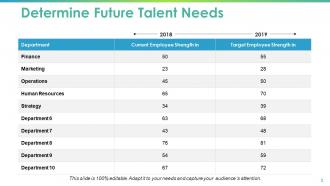
Diapositive 3 : Cette diapositive montre un tableau que vous pouvez utiliser pour déterminer les besoins futurs en talents. Ajoutez des données sur deux ans dans ce tableau et utilisez-les en conséquence.
Diapositive 4 : Cette diapositive est intitulée Évaluer le personnel actuel viable avec des images.
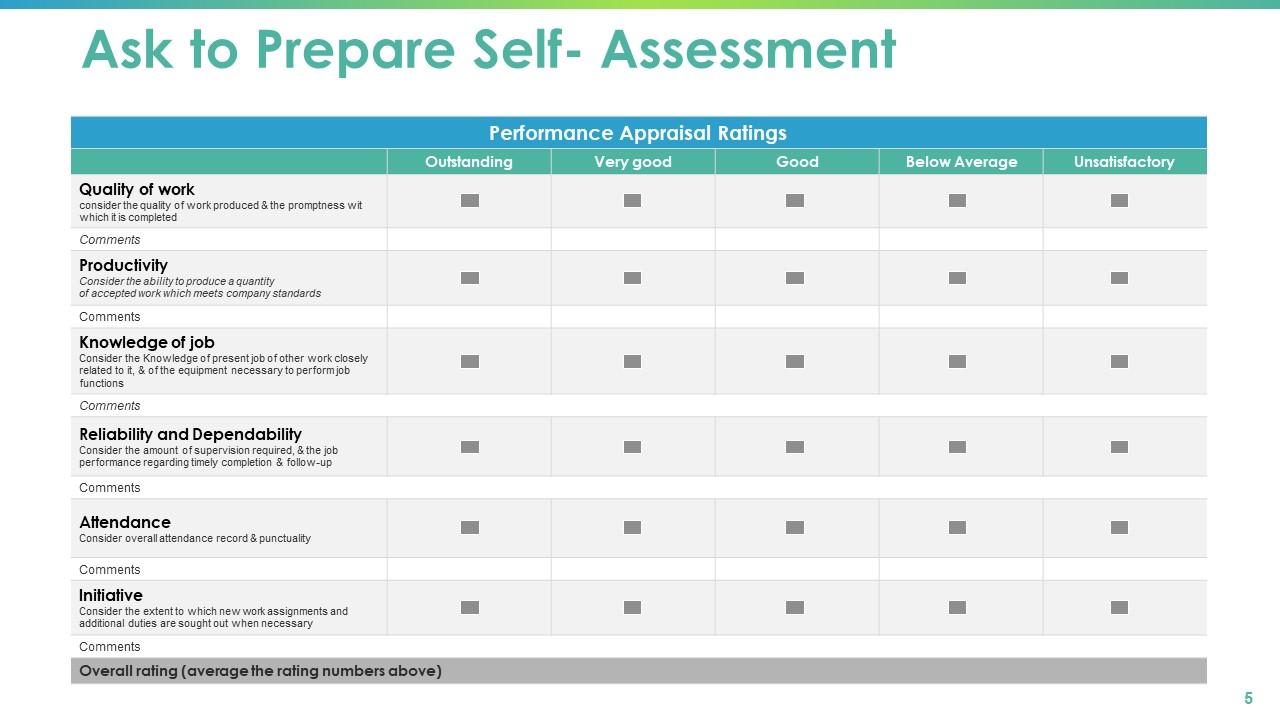
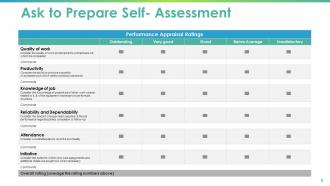
Diapositive 5 : Il s'agit de la diapositive Demander à préparer l'auto-évaluation montrant les notes d'évaluation des performances.
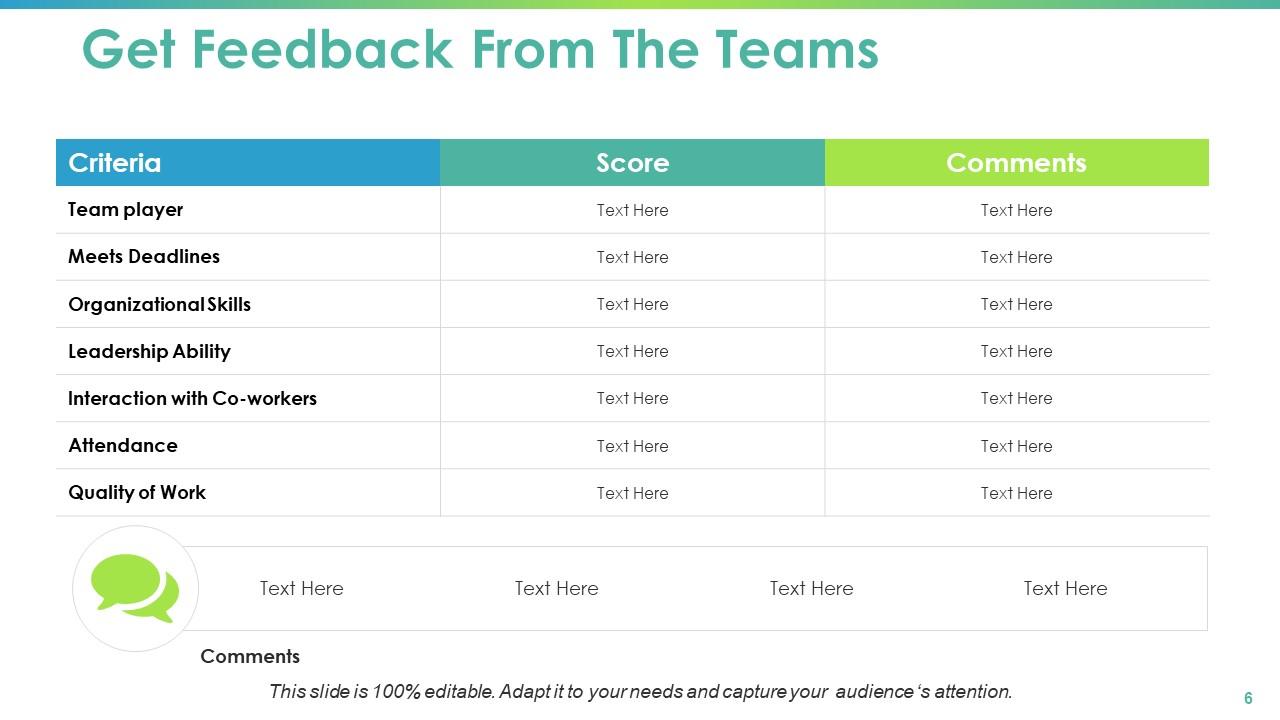
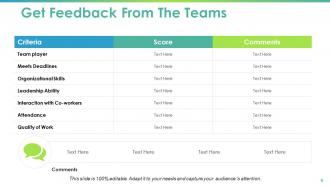
Diapositive 6 : Cette diapositive présente un tableau intitulé Obtenir des commentaires des équipes dans lequel vous pouvez ajouter des critères, des notes et des commentaires.
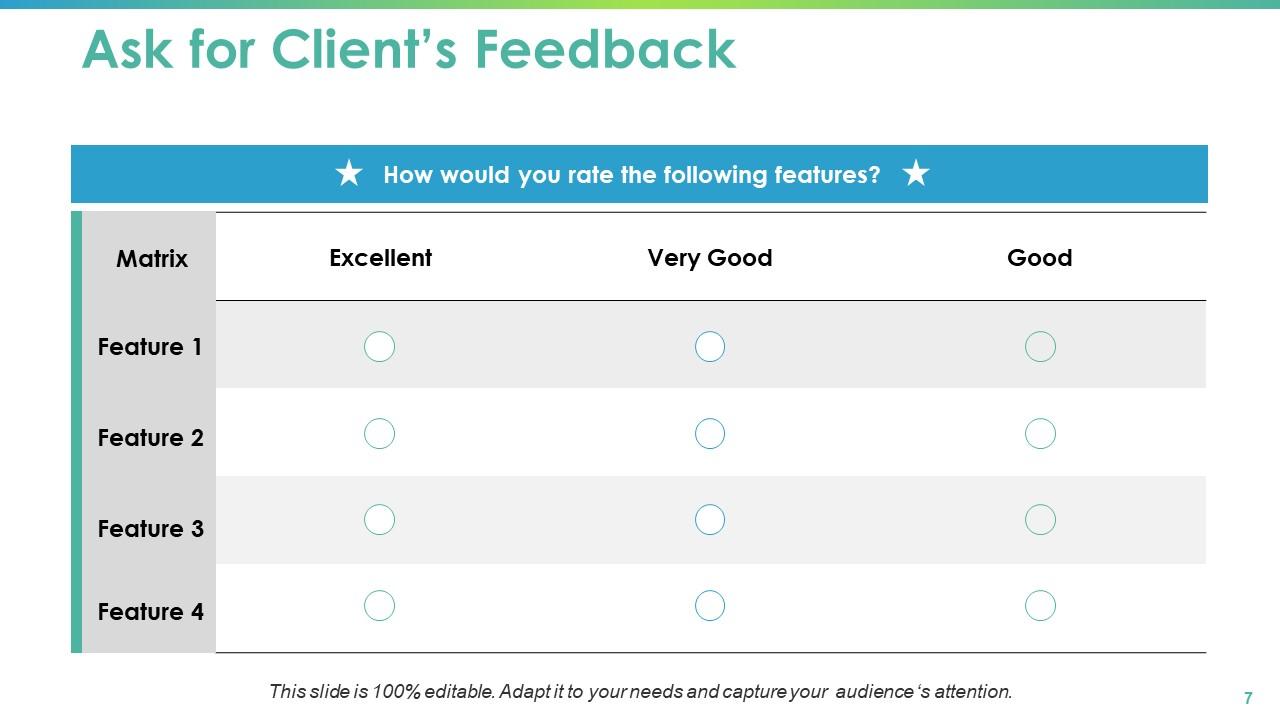
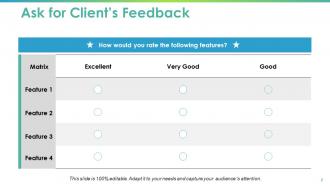
Diapositive 7 : Il s'agit de la diapositive de Demande de commentaires des clients montrant la matrice en termes d'excellent, très bon et bon.
Diapositive 8 : Cette diapositive montre les postes vacants actuels dans l'organisation. Vous pouvez ajouter vos propres postes vacants, le cas échéant.
Diapositive 9 : Cette diapositive montre les sources de recrutement futur telles que la publicité, les candidats volontaires, les recherches internes, le placement scolaire, les recommandations d'employés, les agences de placement.
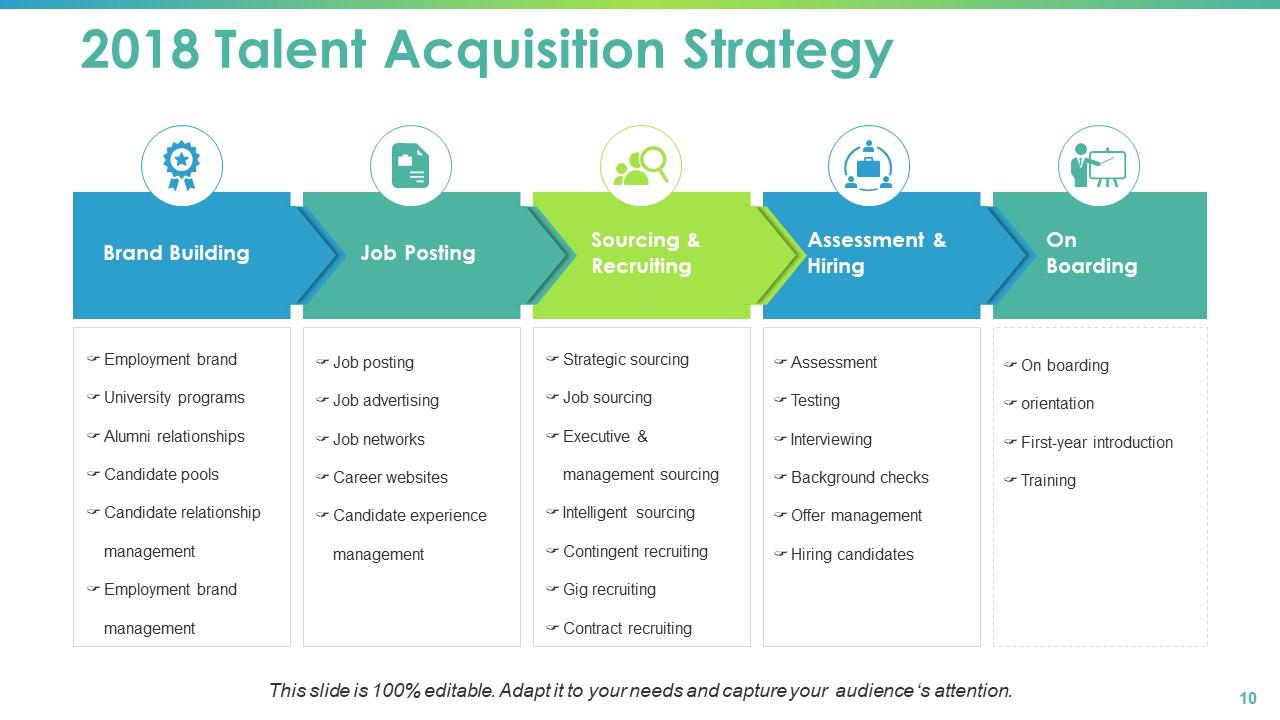
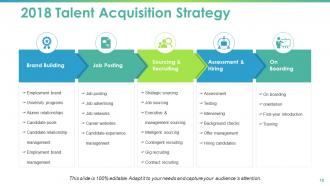
Diapositive 10 : Cette diapositive montre le tableau de la stratégie d'acquisition de talents 2018 avec les sous-titres suivants : création de marque, publication d'offres d'emploi, recherche et recrutement, évaluation et embauche, intégration.
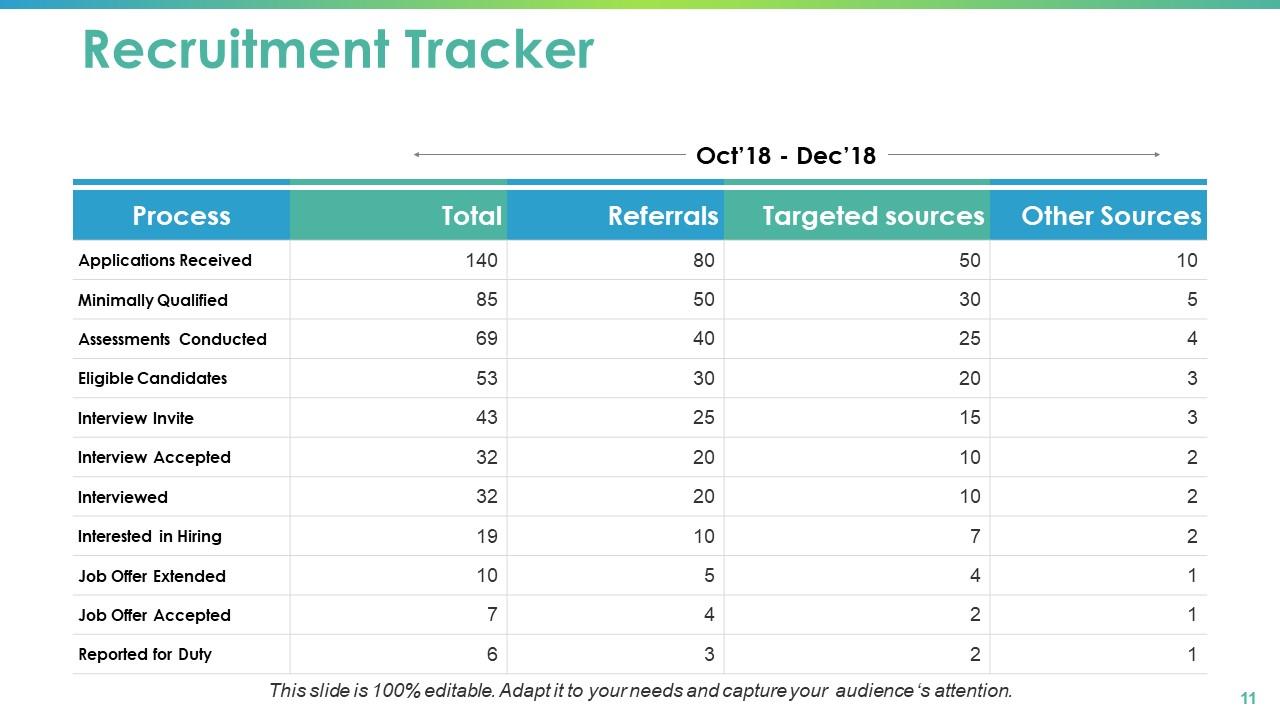
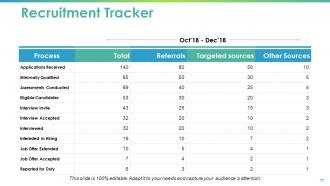
Diapositive 11 : Cette diapositive montre Recruitment Tracker. Vous pouvez ajouter les données pour le besoin ou les processus d'embauche.
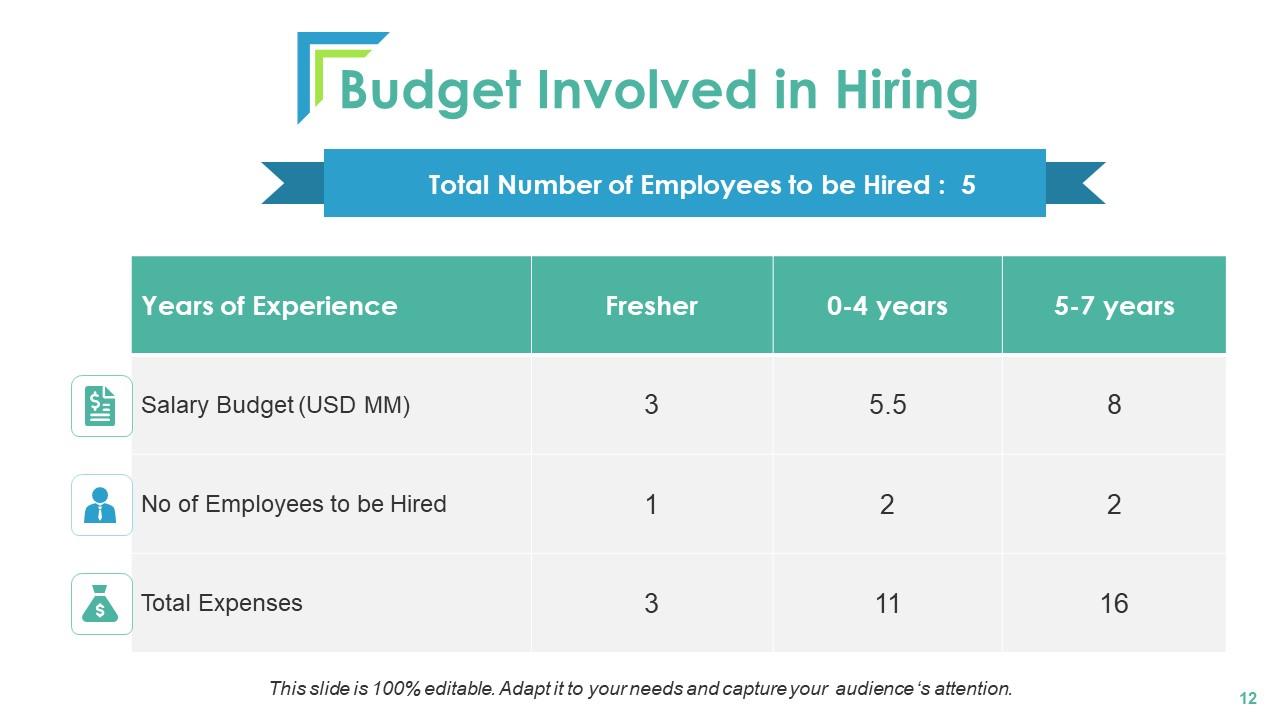
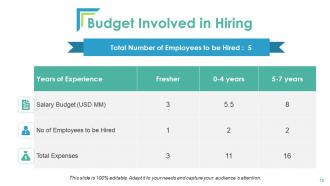
Diapositive 12 : Cette diapositive montre le budget impliqué dans l'embauche que vous pouvez modifier selon vos besoins.
Diapositive 13 : Cette diapositive montre les icônes de cartographie des talents.
Diapositive 14 : Cette diapositive est intitulée Diapositives supplémentaires pour aller de l'avant.
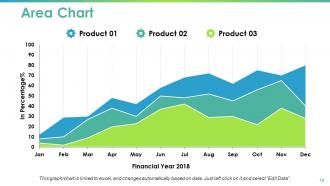
Diapositive 15 : Cette diapositive montre un graphique en aires avec une comparaison de trois produits.
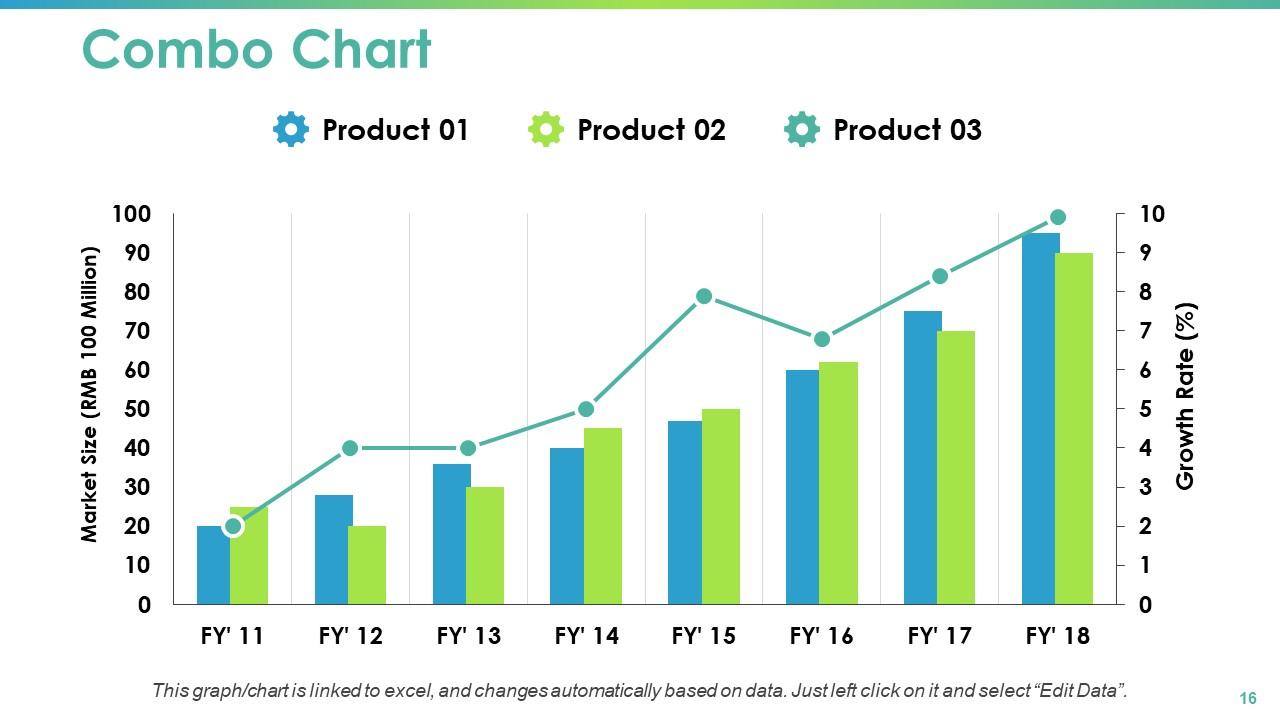
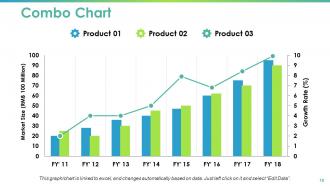
Diapositive 16 : Cette diapositive présente un graphique combiné avec une comparaison de trois produits.
Diapositive 17 : Ceci est notre diapositive de mission avec des zones de texte pour afficher des informations.
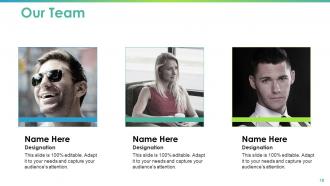
Diapositive 18 : Ceci est la diapositive Notre équipe avec les noms et la désignation.
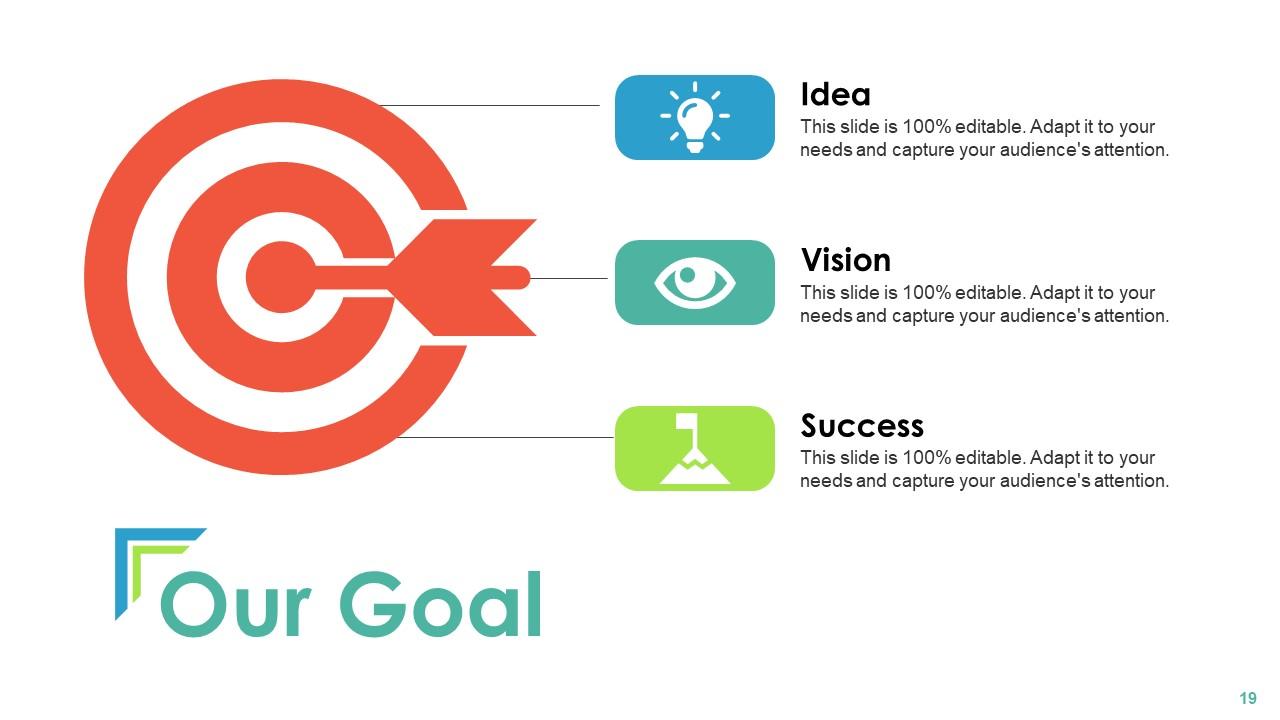
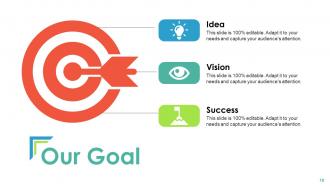
Diapositive 19 : Ceci est la diapositive Notre objectif. Énoncez vos objectifs importants ici.
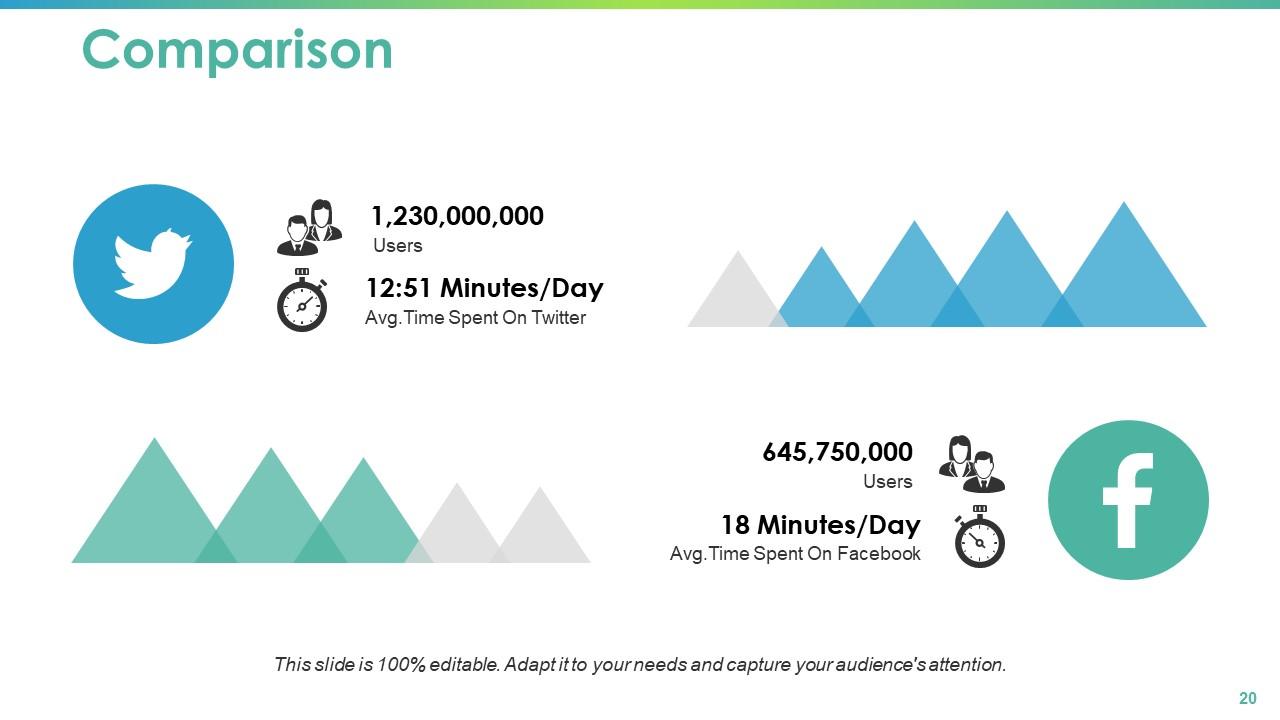
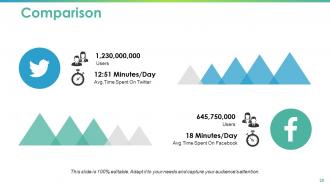
Diapositive 20 : Il s'agit d'une diapositive de comparaison pour indiquer la comparaison entre les produits, les entités, etc.
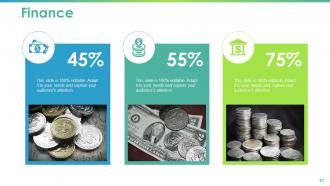
Diapositive 21 : Ceci est une diapositive financière. Montrez vos trucs liés aux finances ici.
Diapositive 22 : Cette diapositive montre Mind Map pour représenter des entités.
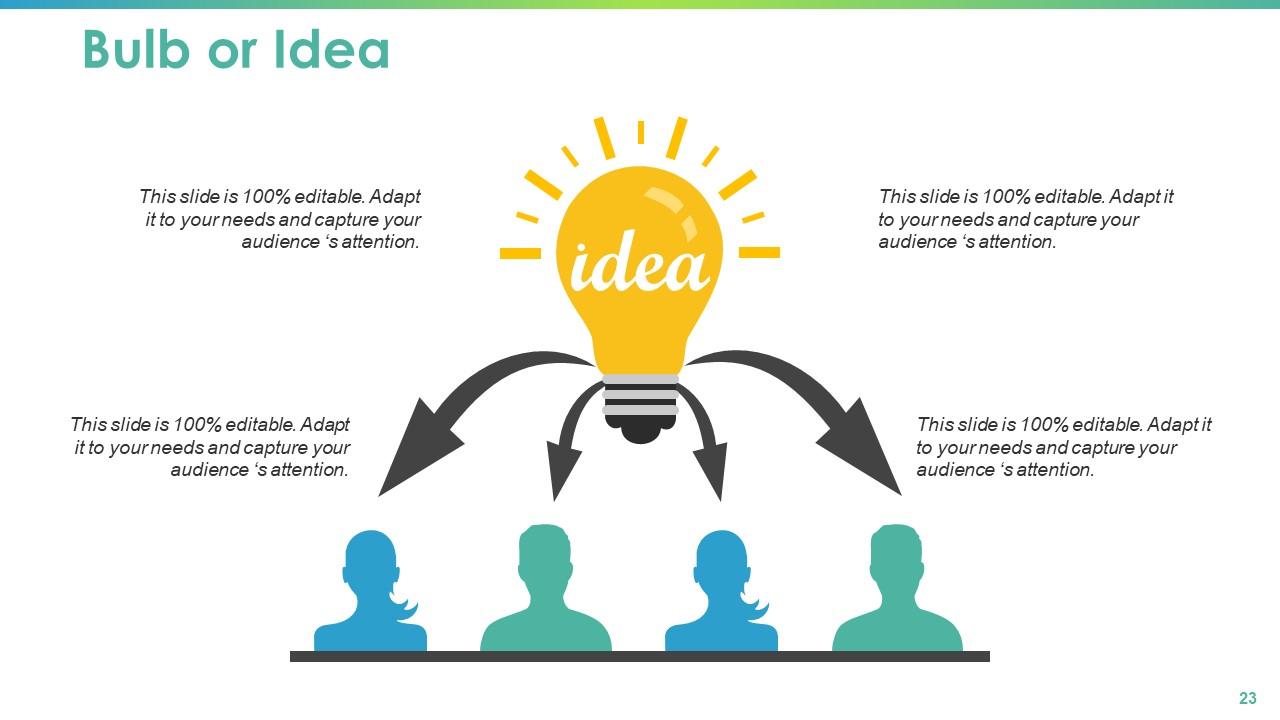
Diapositive 23 : Il s'agit d'une diapositive Bulb ou Idea pour énoncer une nouvelle idée ou mettre en évidence des spécifications, des informations, etc.
Diapositive 24 : Ceci est une diapositive de remerciement avec adresse, numéros de contact et adresse e-mail.
Diapositives de présentation PowerPoint sur la cartographie des talents avec les 24 diapositives :
Ayez le contrôle total de chaque action avec nos diapositives de présentation PowerPoint de cartographie des talents. Vous n'aurez jamais le cœur dans la bouche.
No Reviews
