

The Incremental Approach Powerpoint Presentation Slides





Try Before you Buy Download Free Sample Product
 Impress Your
 Audience
 100%
100% Editable
 Save Hours
 of Time


Prepare small and short-term strategies to reach the goal within the desired framework using our The Incremental Approach PowerPoint Presentation Slides. Analyze the current situation of the company on a monthly basis, provide a glimpse of the day-to-day problems, determine the need for logical incrementalism, and conduct a gap analysis with the help of the iterative approach PPT layout. The time-sensitive PPT presentation conveys steps to Quinn’s bottom-up approach for achieving the company goals, by taking smaller steps and decisions. These logical incrementalism PowerPoint graphics help businesses to earn new customers, increase sales and employee satisfaction. Make a comparison between the historical and forecasted revenue with the graph given in this strategic analysis PPT slideshow. After the application of the approach, the company should develop business performance measurement metrics as included in this Powerpoint template showing a glimpse of revenue, current accounts payable vs. receivables, gross profit margin, and revenue vs. expenses, sales region performance, monthly sales growth, targeted sales growth, and accumulated revenue.
People who downloaded this PowerPoint presentation also viewed the following :
Content of this Powerpoint Presentation
Slide 1: This title slide introduces The Incremental Approach. Add the name of your company here.
Slide 2: This slide presents the Objectives for Logical Incrementalism. This includes Reach the goal within the desired time frame and Preparing small and short-term strategies to achieve targets.
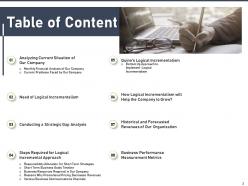
Slide 3: This slide contains the Table of Content. It includes Analyzing the Current Situation of Our Company, the Need for Logical Incrementalism, Conducting a Strategic Gap Analysis, Steps Required for Logical Incremental Approach, Quinn’s Logical Incrementalism, How Logical Incrementalism will Help the Company to Grow? Historical and Forecasted Revenues of Our Organization, and Business Performance Measurement Metrics.
Slide 4: This is a table of content slide showing Analyzing Current Situation of Our Company. It includes: Monthly Financial Analysis of Our Company and Current Problems Faced by Our Company.
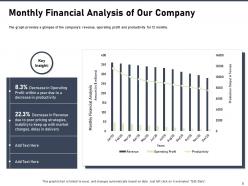
Slide 5: This slide presents the Monthly Financial Analysis of Our Company. The graph provides a glimpse of the company’s revenue, operating profit, and productivity for 12 months.
Slide 6: This slide presents the Current Problems Faced by Our Company. It provides a glimpse of the day-to-day problems faced by the company such as business processes, short-term goals, business uncertainty, etc. due to long-term planning.
Slide 7: This is a table of content slide showing the Need for Logical Incrementalism.
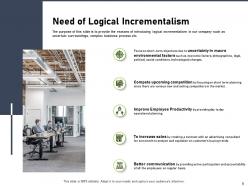
Slide 8: This slide presents the Need for Logical Incrementalism. It provides the reasons for introducing logical incrementalism in our company such as uncertain surroundings, complex business processes, etc.
Slide 9: This is a table of content slide showing Conducting a Strategic Gap Analysis.
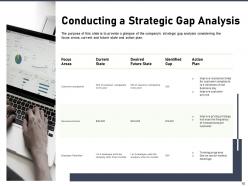
Slide 10: This slide presents Conducting a Strategic Gap Analysis. It provides a glimpse of the company’s strategic gap analysis considering the focus areas, current and future state, and action plan.
Slide 11: This is a table of content slide showing the Steps Required for the Logical Incremental Approach. This includes: Responsibility Allocation for Short Term Strategies, Short Term Business Goals Timeline, Business Resources Required in Our Company, Reasons Why Promotional Pricing Decreases Revenues, and Various Business Communications Channels.
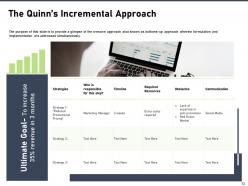
Slide 12: This slide presents Quinn’s Incremental Approach. It provides a glimpse of the crescive approach also known as bottom-up approach wherein formulation and implementation are addressed simultaneously.
Slide 13: This slide presents the Responsibility Allocation for Achieving Short Term Goals. It provides a glimpse of the RACI model which is used for clarifying and defining roles and responsibilities in cross-functional or departmental projects and processes.
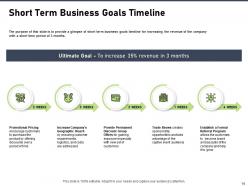
Slide 14: This slide presents the Short Term Business Goals Timeline. It provides a glimpse of the short-term business goals timeline for increasing the revenue of the company with a short time period of 3 months.
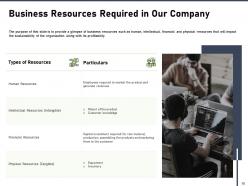
Slide 15: This slide presents the Business Resources Required in Our Company. It provides a glimpse of business resources such as human, intellectual, financial, and physical resources that will impact the sustainability of the organization along with its profitability.
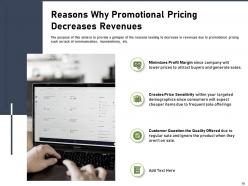
Slide 16: This slide presents the Reasons Why Promotional Pricing Decreases Revenues. It provides a glimpse of the reasons leading to a decrease in revenues due to promotional pricing such as lack of communication, inconsistency, etc.
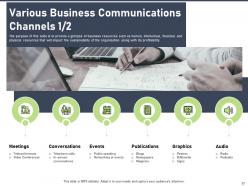
Slide 17: This slide presents part 1 of 2 of Various Business Communications Channels. It provides a glimpse of business resources such as human, intellectual, financial, and physical resources that will impact the sustainability of the organization along with its profitability.
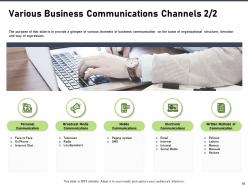
Slide 18: This slide presents part 2 of 2 of Various Business Communications Channels. It provides a glimpse of various channels of business communication on the basis of organizational structure, direction, and way of expression.
Slide 19: This is a table of content slide showing Quinn’s Logical Incrementalism which includes the Bottom-Up Approach to Implement Logical Incrementalism.
Slide 20: This slide presents the Bottom-Up Approach to Implement Logical Incrementalism. It provides a glimpse of the bottom-up approach of logical incrementalism to attain an organization’s goals by taking smaller steps and smaller decisions.
Slide 21: This is a table of content slide showing How Logical Incrementalism will Help the Company to Grow?
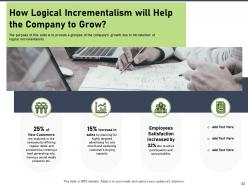
Slide 22: This slide presents How Logical Incrementalism will Help the Company to Grow? It provides a glimpse of the company’s growth due to the introduction of logical incrementalism.
Slide 23: This is a table of content slide showing the Historical and Forecasted Revenues of Our Organization.
Slide 24: This slide presents the Historical and Forecasted Revenues of Our Organization. This graph provides a glimpse of the historical and forecasted revenue of the organization showing the increasing trend after implementing the logical incrementalism in the organization.
Slide 25: This is a table of content slide showing the Business Performance Measurement Metrics.
Slide 26: This slide presents part 1 of 2 of Business Performance Measurement Metrics. It provides a glimpse about the business marketing performance measurement metrics after the logical incrementalism approach.
Slide 27: This slide presents part 2 of 2 of Business Performance Measurement Metrics. It provides a glimpse about the business marketing performance measurement metrics after the logical incrementalism approach.
Slide 28: This is The Incremental Approach Icons Slide.
Slide 29: This slide introduces the Additional Slides.
Slide 30: This slide is a Logical Incrementalism Roadmap template to showcase the stages of a project, for example.
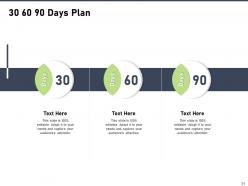
Slide 31: This is a slide with a 30 60 90 Days Plan to set goals for these important intervals.
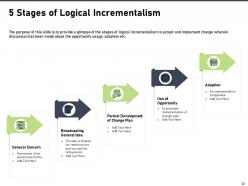
Slide 32: This slide presents the 5 Stages of Logical Incrementalism. It provides a glimpse of the stages of logical incrementalism to accept and implement change wherein discussion has been made about the opportunity usage, adaption, etc.
Slide 33: This slide presents Strategy Implementation and Management Process. It provides a glimpse about the strategic management process wherein a philosophical approach to business is discussed.
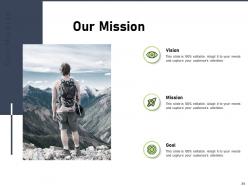
Slide 34: This slide provides the Mission for the entire company. This includes the vision, the mission, and the goal.
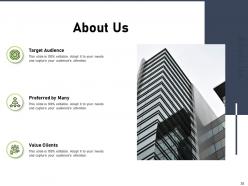
Slide 35: This slide contains the information about the company aka the ‘About Us’ section. This includes the Value Clients, the Target Audience, and Preferred by Many.
Slide 36: This is a Thank You slide where details such as the address, contact number, email address are added.
The Incremental Approach Powerpoint Presentation Slides with all 36 slides:
Use our The Incremental Approach Powerpoint Presentation Slides to effectively help you save your valuable time. They are readymade to fit into any presentation structure.


















FAQs for The Incremental Approach
So basically, instead of doing your whole project at once, you break it into small pieces and ship them one at a time. Way better than waterfall where you're stuck doing everything in order - honestly that approach drives me crazy because you're flying blind for months. With incremental stuff, people can actually see what you're building and give feedback early. Like building a house room by room instead of doing foundation, then framing, then everything else in sequence. I'd start with 2-4 week chunks if you're gonna try it. Works pretty well once you get the hang of it.
Dude, incremental work is a game changer when markets go crazy. You're not stuck with some massive plan that becomes useless overnight. Break stuff into small pieces instead. Test something, learn from it, then adjust - all in like 2-3 weeks max. Way better than building for months only to find out nobody wants it. Plus you get real feedback constantly about what customers actually need and what competitors are doing. Honestly feels more like you're having an actual conversation with your market instead of just guessing. Try splitting your next project into 2-week chunks and watch how much faster you can pivot when things change.
Honestly, you'll ship stuff way faster and catch bugs before they become nightmares. Instead of waiting months for some massive release, you're delivering actual value bit by bit - which feels so much better for everyone. Your team stays pumped because they see real progress, and stakeholders can give feedback on working features instead of theoretical wireframes. Also, debugging small chunks is infinitely easier than untangling some giant mess later. Requirements change all the time anyway, so this way you can pivot without wanting to cry. Just focus on your core features first and iterate from there.
Dude, breaking projects into smaller pieces is honestly a game changer. People actually stay interested when they can see real progress every couple weeks instead of waiting forever for some massive reveal. Short attention spans are real – I've seen so many projects lose momentum because stakeholders just checked out mentally. Plus you get feedback that's actually useful while there's still time to pivot. They can test stuff, play around with it, tell you if you're totally off track. Each little win builds more trust too. Seriously, try chunking your next project up and watch how much more everyone cares about what's happening.
Dude, you absolutely need feedback after every piece you ship. Otherwise you'll spend months building something nobody wants - been there, done that. Get real users to actually try what you built, then let their reactions drive your next move. Way better than guessing what they need upfront (spoiler: we're always wrong). Quick pivots based on actual feedback beats hoping you nailed it from day one. Each round helps you catch problems early and figure out what to build next. Don't just sit around waiting for feedback though - go hunt it down.
Before jumping in, nail down what success looks like for each step - completion rates, user feedback, whatever makes sense. Just make sure your metrics actually matter (I've watched teams high-five over totally pointless milestones lol). Quick check-ins after each increment work great. Review what got done vs. what you planned, plus any roadblocks. Keep success criteria dead simple and visible so everyone knows what "finished" means. Oh, and track immediate wins AND obstacles - both tell you where you're headed.
Honestly, the worst part is how slow it feels - leadership's breathing down your neck wanting big results while you're making tiny tweaks. Your team gets antsy watching competitors do flashy stuff while you're over here taking baby steps. Coordinating all these little changes across departments? Total nightmare. Stuff slips through the cracks constantly, and don't even get me started on scope creep - suddenly your "small increment" balloons into this massive thing. Oh, and people forget to celebrate the wins because they seem so minor. Set those milestones early though, makes a huge difference keeping everyone motivated.
Yeah, totally! Physical products can work incrementally too - just think of it like software versions. Build your MVP first, get it out there fast, then improve based on what people actually tell you. Tesla's honestly genius at this - they ship cars then keep updating the software. Even regular car companies do yearly updates now instead of waiting forever for total redesigns. What I'd do is map out your realistic v1.0 first, then work backwards. Break everything into smaller pieces you can test as you go. Way less risky than betting everything on one massive launch.
Dude, incremental stuff works great in tons of places. Software companies are obsessed with it - agile sprints, continuous deployment, all that. Manufacturing too, especially Toyota with their lean approach. Healthcare uses baby steps when rolling out new protocols so they don't break everything. Oh, and financial services + retail have crushed it with digital transformations. Makes sense though - these are all complex systems where going big and fast usually backfires. Instead of waiting for some perfect solution, just start small with what you've got and keep tweaking.
So incremental is like Agile's whole thing, honestly. You're shipping small pieces of working software instead of disappearing for months and crossing your fingers. Each chunk gives stakeholders something real to play with and react to. Way less scary than waterfall where you'd build everything upfront and pray it's what they wanted. The trick is making sure each piece actually matters - don't just build random features. Focus on whatever adds the most value in your next sprint, maybe 2 weeks out, then keep building from there. It's so much saner than trying to plan everything upfront.
Yeah, definitely! Incremental development actually plays super well with most other approaches. Agile is probably the most obvious combo - your increments just become sprint deliverables. But honestly, I've seen it work with pretty much everything. You can layer design thinking on top, throw in some continuous integration practices... whatever fits your team's vibe. The incremental stuff becomes like your foundation, then you just add other methods as needed. I'd say pick whatever strategy tackles your biggest headache right now and weave it into your existing workflow. Works way better than trying to overhaul everything at once.
Jira's solid for incremental stuff - handles sprints and changes really well. Monday.com or Asana work too if you want something simpler. But honestly? I've watched so many teams get stuck choosing the "perfect" tool when a basic Kanban board would've been fine. You just need something that breaks work into chunks and shows progress visually. Oh, and lets you pivot fast when things change - which they will. My advice is start basic. You can always get fancier once you figure out what actually works for your team.
So basically it makes your team into this constant feedback loop - everyone's always talking, reviewing stuff, and pivoting together instead of hiding in their corners. Yeah, it feels chaotic at first with all the stakeholder check-ins, but you end up catching problems way earlier when they're not expensive nightmares to fix. Plus your team gets really good at making quick decisions instead of gambling everything on one massive launch. Honestly, the daily standups can be annoying but they work. I'd start with shorter sprints and see how it goes.
Set up weekly check-ins with your stakeholders - trust me, people lose track fast with this incremental stuff. Document what you delivered each phase and explain how it connects to the big picture. Don't just share the wins, be upfront about blockers too. I'd definitely use visuals like roadmaps or quick demos since these small changes can feel pretty abstract otherwise. Oh, and explain your reasoning behind decisions - that's what people really want to know. Better to over-communicate than have everyone confused about where you're headed.
Track the obvious stuff first - cost savings, revenue bumps, efficiency improvements. But honestly, don't ignore the squishy benefits that are harder to pin down with exact numbers. Get your baseline measurements before you start changing anything, then measure again after. The annoying part? Figuring out what actually came from your project vs. everything else happening around the same time. I'd say document what you can reasonably connect to your work and put conservative dollar amounts on it. Don't overthink it though - just compare those benefits against what the project cost you. Check in on these numbers regularly instead of doing some one-time measurement.
-
Informative design.
-
Enough space for editing and adding your own content.
-
Attractive design and informative presentation.
-
Innovative and Colorful designs.
-
Excellent Designs.
-
Informative presentations that are easily editable.
-
Thanks for all your great templates they have saved me lots of time and accelerate my presentations. Great product, keep them up!
-
Easily Understandable slides.
-
Good research work and creative work done on every template.
-
Awesome presentation, really professional and easy to edit.
-
Page:
- You're currently reading page 1
- Page 2
-
