


Powerpoint-Präsentationsfolien für LKW-Geschäftspläne
Der Geschäftsplan-Track führt Sie durch die richtigen fundierten Vermutungen für jeden Bereich Ihres Unternehmens. Holen Sie sich unsere aufschlussreiche Vorlage für den Geschäftsplan für LKW-Transporte. Es enthält detaillierte Informationen zu Branchenstatistiken, Wachstumstreibern, Markttrends, wichtigen Beschränkungen und lukrativen Möglichkeiten. Unser Frachttransportmarkt umfasst Abschnitte für Unternehmensdetails, Zielmarkt, Unternehmenszusammenfassung, angebotene Produkte und Dienstleistungen, Mission und Vision, Meilensteine und so weiter. Darüber hinaus zeigt es einen Abschnitt zur Branchenanalyse, der eingehende Untersuchungen zum Lkw-Markt umfasst. Darüber hinaus zeigt unser LKW-Anhänger-PPT wichtige Themen wie Porters Framework, Go-to-Marketing-Strategie und Wettbewerbslandschaft. Darüber hinaus umfasst es einen Abschnitt mit einer finanziellen Zusammenfassung, einschließlich eines Umsatzmodells, der wirtschaftlichen Auswirkungen, einer Gewinn- und Verlustrechnung, einer Break-Even-Analyse usw. Laden Sie diese zu 100 Prozent bearbeitbare Präsentation herunter und erhalten Sie Zugriff auf unser hoch recherchiertes und geschickt gestaltetes Produkt.


















-

- Google Slides is a new FREE Presentation software from Google.
- All our content is 100% compatible with Google Slides.
- Just download our designs, and upload them to Google Slides and they will work automatically.
- Amaze your audience with SlideTeam and Google Slides.
-

Want Changes to This PPT Slide? Check out our Presentation Design Services
-

- WideScreen Aspect ratio is becoming a very popular format. When you download this product, the downloaded ZIP will contain this product in both standard and widescreen format.
-

- Some older products that we have may only be in standard format, but they can easily be converted to widescreen.
- To do this, please open the SlideTeam product in Powerpoint, and go to
- Design ( On the top bar) -> Page Setup -> and select "On-screen Show (16:9)” in the drop down for "Slides Sized for".
- The slide or theme will change to widescreen, and all graphics will adjust automatically. You can similarly convert our content to any other desired screen aspect ratio.
Compatible With Google Slides

Get This In WideScreen
You must be logged in to download this presentation.


Do you want to remove this product from your favourites?
Merkmale dieser PowerPoint-Präsentationsfolien :
Sie können überleben und durch den Verdrängungswettbewerb segeln, wenn Sie die richtigen Fähigkeiten und Produkte zur Hand haben. Wenn ein Geschäftsplan auf Ihrer bevorstehenden Agenda steht, ist es nicht ratsam, ohne unsere gut gestalteten Powerpoint-Präsentationsfolien für LKW-Geschäftspläne fortzufahren. Unser Businessplan-Worddokument schwört auf Detailtiefe und beantwortet damit jede Frage, die Sie oder Ihr Publikum zu jedem Zeitpunkt stellen kann. Hinzu kommen die vielfältigen Vorteile, die unser Word-Dokument bietet. Dieses Dokument, das aus hochauflösenden Grafiken besteht, stört nicht, wenn es auf einen Breitbildschirm projiziert wird. Da dieser vorgefertigte Geschäftsplan vorgefertigt und vollständig bearbeitbar ist, spart er den Präsentatoren viel Zeit und Mühe, die sonst mit der Erstellung des Geschäftsplans von Grund auf verschwendet werden. Wir stellen Ihnen unsere Businessplan-Word-Dokumente unter Berücksichtigung des Wettbewerbsvorteils zur Verfügung. Greifen Sie jetzt zu uns.

People who downloaded this PowerPoint presentation also viewed the following :
Inhalt dieser Powerpoint-Präsentation
Folie 1 : Diese Folie stellt den Trucking Business Plan vor. Beginnen Sie mit der Angabe Ihres Firmennamens.
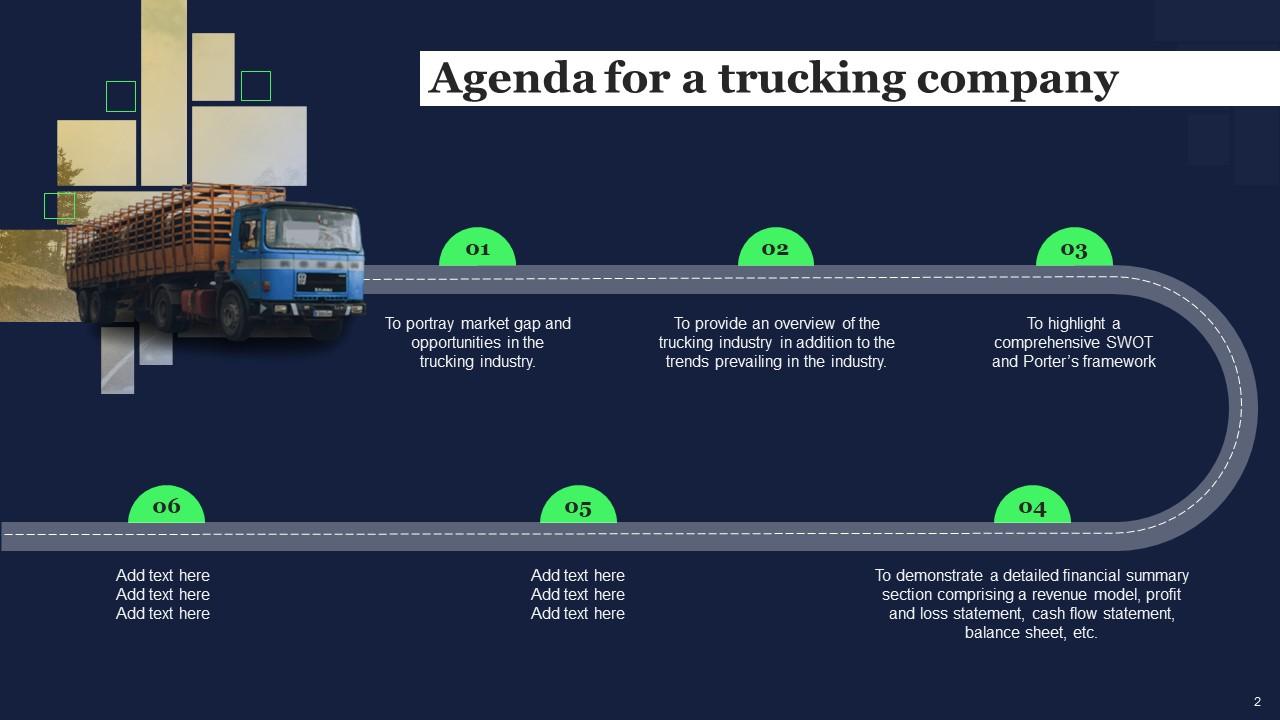
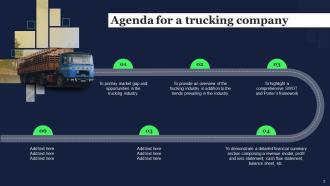
Folie 2 : Diese Folie zeigt die Agenda der Präsentation.
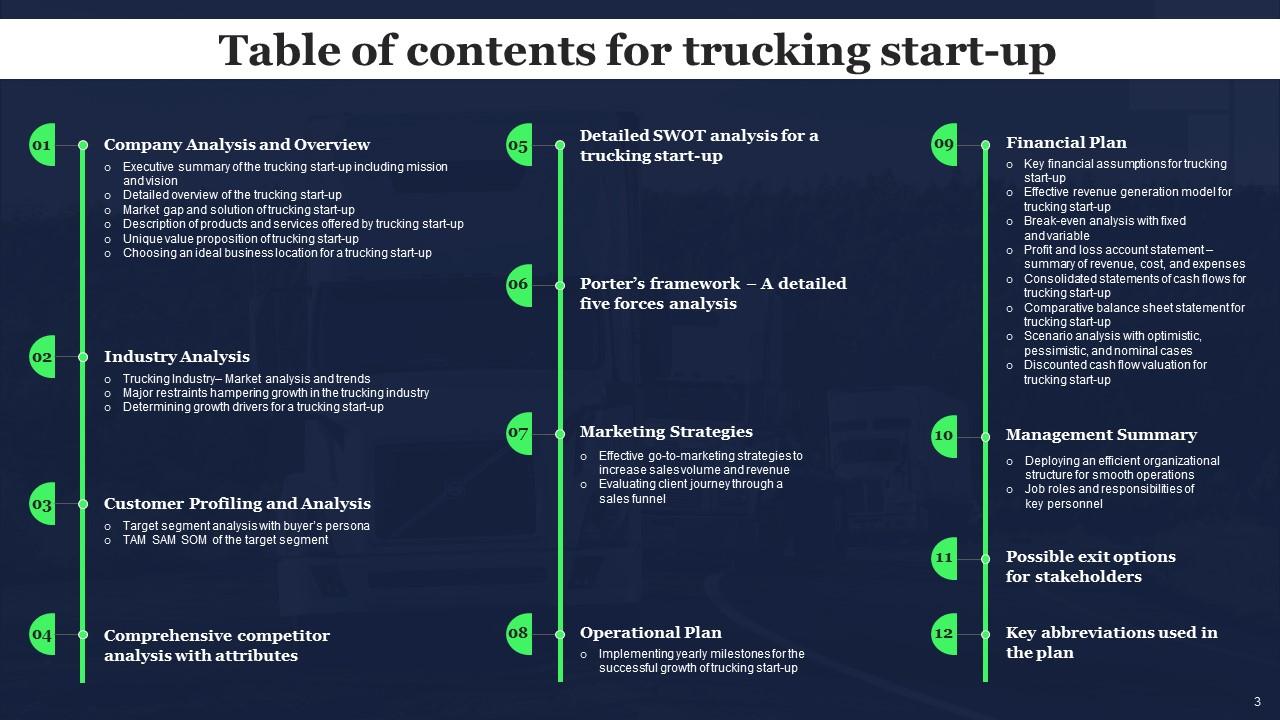
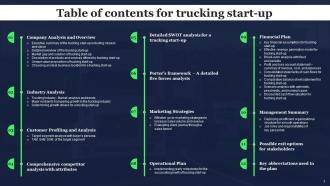
Folie 3 : Diese Folie enthält das Inhaltsverzeichnis.
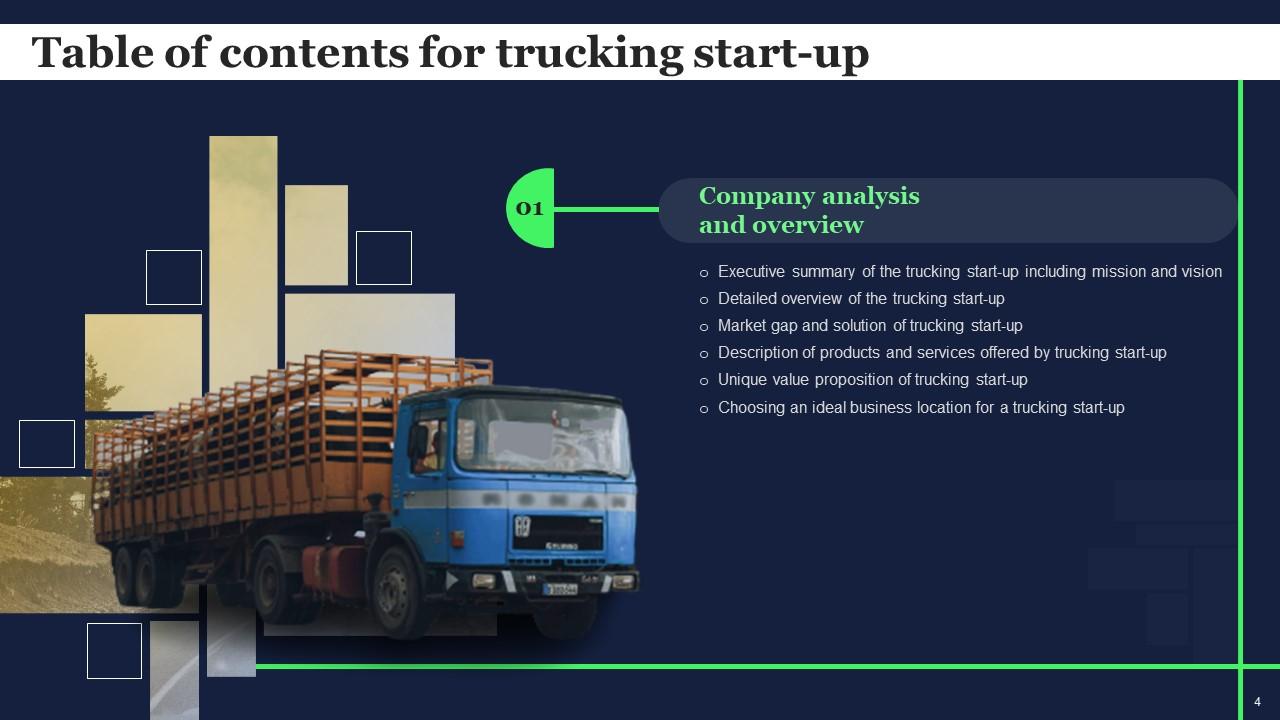
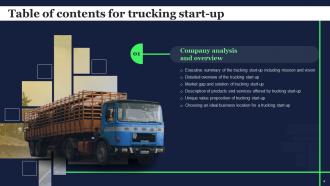
Folie 4 : Diese Folie hebt den Titel für die weiter zu behandelnden Themen hervor.
Folie 5 : Diese Folie zeigt die Zusammenfassung des Trucking-Startups einschließlich Mission und Vision.
Folie 6 : Diese Folie zeigt den detaillierten Überblick über das Trucking-Start-up.
Folie 7 : Diese Folie zeigt die Marktlücke und die Lösung eines Lkw-Startups.
Folie 8 : Diese Folie erläutert die Beschreibung der Produkte und Dienstleistungen, die von Start-ups im Bereich Spedition angeboten werden.
Folie 9 : Diese Folie spricht über das einzigartige Wertversprechen von Trucking-Startups.
Folie 10 : Diese Folie befasst sich mit der Wahl eines idealen Geschäftsstandorts.
Folie 11 : Diese Folie erläutert die Überschrift für die als nächstes zu besprechenden Komponenten.
Folie 12 : Der Zweck dieser Folie ist es, zusätzlich zu ihren Markttrends eine gründliche Bewertung der Lkw-Branche vorzunehmen.
Folie 13 : Diese Folie wird verwendet, um zusätzlich zu ihren Markttrends eine gründliche Bewertung der Lkw-Branche durchzuführen.
Folie 14 : Diese Folie führt zusätzlich zu ihren Markttrends eine gründliche Bewertung der Lkw-Branche durch.
Folie 15 : Diese Folie erläutert die wichtigsten Hemmnisse, die das Wachstum in der Lkw-Branche behindern.
Folie 16 : Diese Folie konzentriert sich auf die Bestimmung von Wachstumstreibern für ein Start-up im Bereich Lkw.
Folie 17 : Diese Folie zeigt den Titel für die Themen, die in der folgenden Vorlage behandelt werden sollen.
Folie 18 : Diese Folie zeigt die Zielsegmentanalyse mit der Persona des Käufers.
Folie 19 : Diese Folie setzt die Zielsegmentanalyse mit der Persona des Käufers fort.
Folie 20 : Diese Folie hebt die TAM SAM SOM des Zielsegments hervor.
Folie 21 : Diese Folie zeigt die Überschrift für die als nächstes zu diskutierenden Inhalte.
Folie 22 : Diese Folie gibt einen Einblick in die umfassende Wettbewerbsanalyse mit Attributen.
Folie 23 : Diese Folie zeigt die Umfassende Wettbewerbsanalyse mit Attributen.
Folie 24 : Diese Folie erwähnt den Titel für die Ideen, die in der kommenden Vorlage behandelt werden sollen.
Folie 25 : Diese Folie behandelt die detaillierte SWOT-Analyse für ein Speditions-Startup.
Folie 26 : Diese Folie enthält die Überschrift für die weiter zu diskutierenden Ideen.
Folie 27 : Die Folie beleuchtet das Porter-Framework und seine Auswirkungen auf die LKW-Branche.
Folie 28 : Diese Folie zeigt den Titel für die Komponenten, die in der folgenden Vorlage behandelt werden sollen.
Folie 29 : Diese Folie befasst sich mit effektiven Go-to-Marketing-Strategien zur Steigerung von Verkaufsvolumen und Umsatz.
Folie 30 : Diese Folie konzentriert sich auf effektive Go-to-Marketing-Strategien zur Steigerung von Verkaufsvolumen und Umsatz.
Folie 31 : Dies ist eine weitere Folie, die die effektiven Go-to-Marketing-Strategien fortsetzt, um Verkaufsvolumen und Umsatz zu steigern.
Folie 32 : Auf dieser Folie geht es um die Bewertung der Kundenreise durch einen Verkaufstrichter.
Folie 33 : Diese Folie erläutert die Überschrift für die weiter zu diskutierenden Themen.
Folie 34 : Diese Folie betont die Implementierung jährlicher Meilensteine für ein erfolgreiches Wachstum des Start-ups.
Folie 35 : Diese Folie zeigt den Titel für die Themen, die in der folgenden Vorlage behandelt werden sollen.
Folie 36 : Diese Folie gibt einen Einblick in wichtige finanzielle Annahmen, die bei der Gründung des Unternehmens getroffen werden müssen.
Folie 37 : Diese Folie zeigt das effektive Erlösmodell des Trucking-Start-ups.
Folie 38 : Diese Folie hebt die Break-Even-Analyse des Unternehmens hervor.
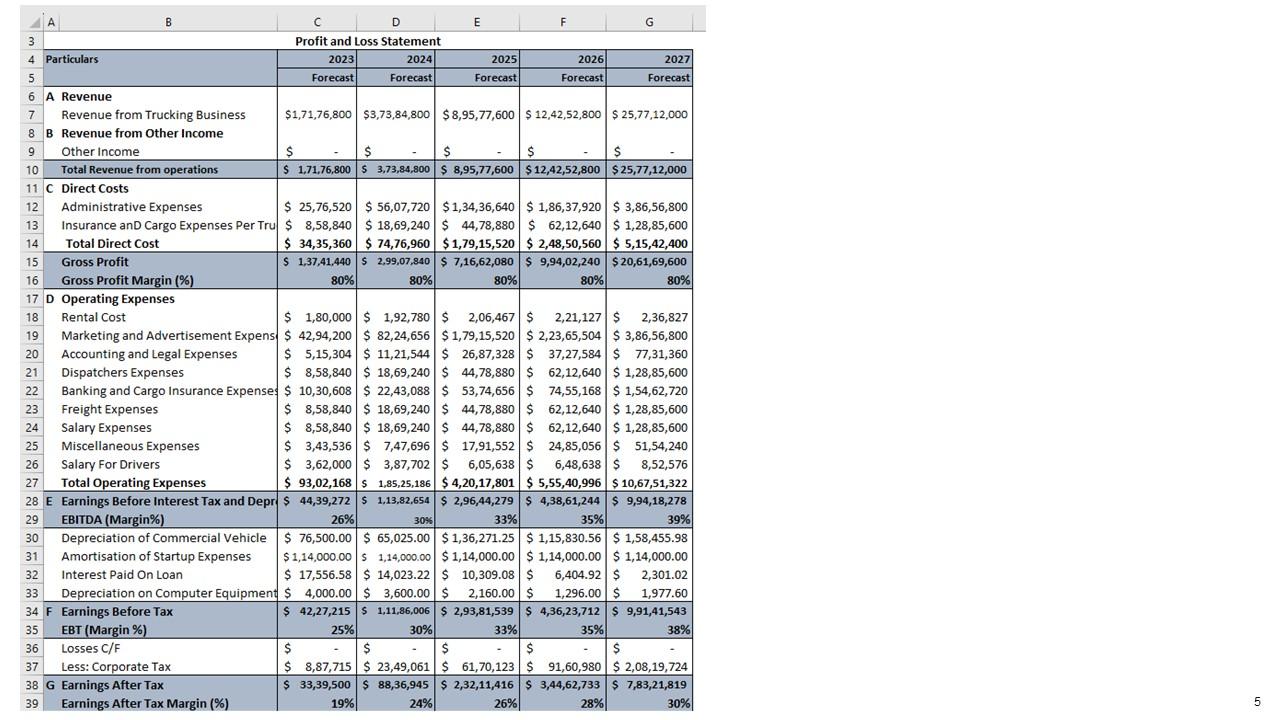
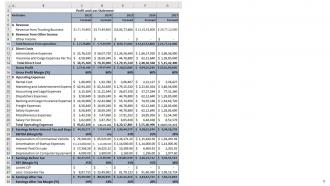
Folie 39 : Diese Folie gibt einen Einblick in die prognostizierte Gewinn- und Verlustrechnung.
Folie 40 : Diese Folie zeigt die prognostizierte Gewinn- und Verlustrechnung.
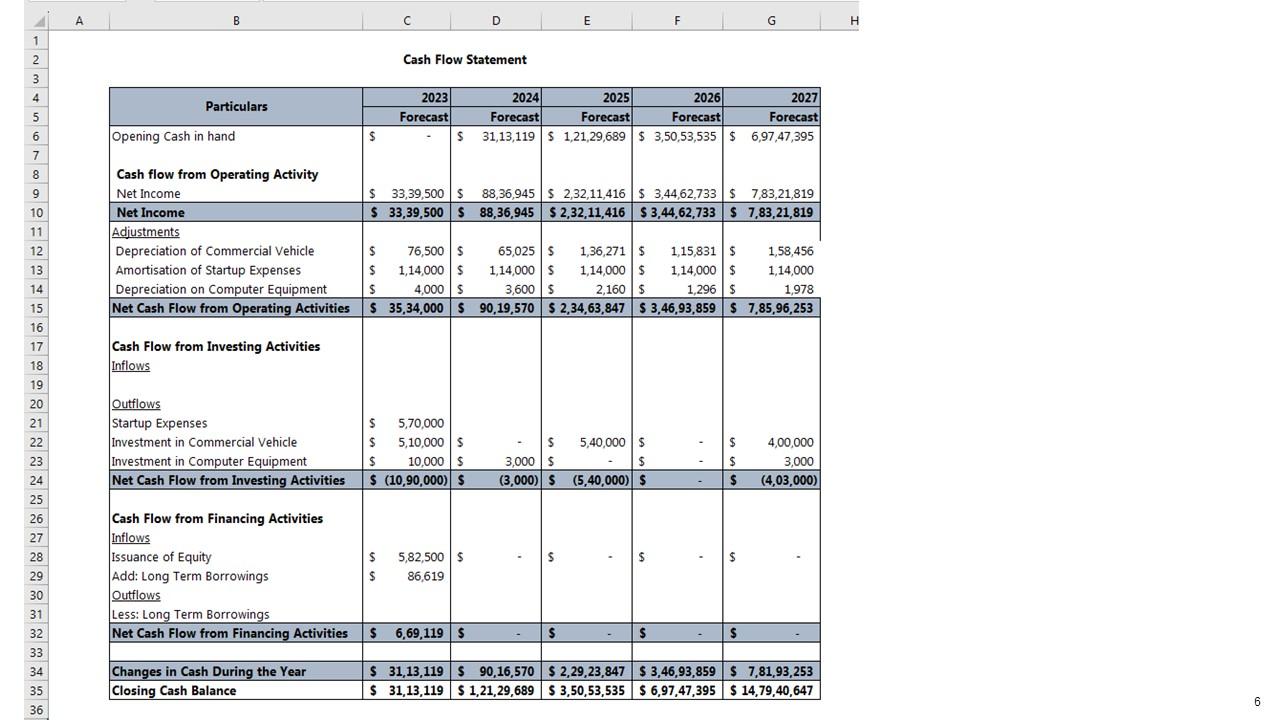
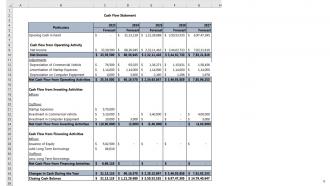
Folie 41 : Diese Folie zeigt die konsolidierte Kapitalflussrechnung des Speditions-Start-ups.
Folie 42 : Diese Folie führt die konsolidierte Kapitalflussrechnung des Speditions-Startups fort.
Folie 43 : Diese Folie erläutert die Vergleichsbilanz des Trucking-Startups.
Folie 44 : Dies ist eine weitere Folie, die die vergleichende Bilanz des Trucking-Start-ups fortsetzt.
Folie 45 : Diese Folie zeigt die Szenarioanalyse mit optimistischen, pessimistischen und nominalen Fällen.
Folie 46 : Diese Folie setzt die Szenarioanalyse mit optimistischen, pessimistischen und nominalen Fällen fort.
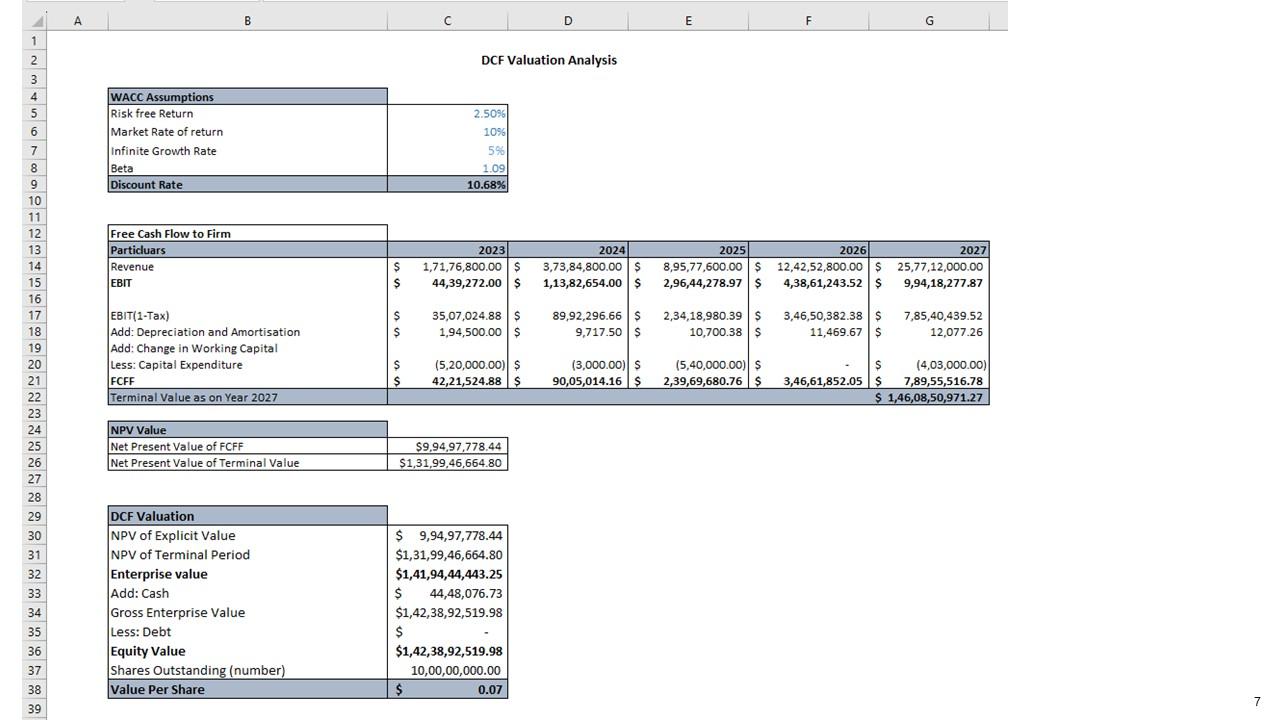
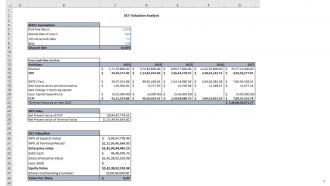
Folie 47 : Diese Folie zeigt die Discounted-Cash-Flow-Bewertung des Speditions-Startups.
Folie 48 : Diese Folie zeigt die Überschrift für die als nächstes zu besprechenden Komponenten.
Folie 49 : Diese Folie befasst sich mit der Bereitstellung einer effizienten Organisationsstruktur für einen reibungslosen Betrieb.
Folie 50 : Diese Folie zeigt die Aufgaben und Verantwortlichkeiten von Schlüsselpersonal.
Folie 51 : Diese Folie setzt die Aufgabenrollen und Verantwortlichkeiten von Schlüsselpersonal fort.
Folie 52 : Diese Folie enthält den Titel für die Ideen, die in der folgenden Vorlage behandelt werden sollen.
Folie 53 : Diese Folie stellt die Exit-Strategie für Stakeholder dar.
Folie 54 : Diese Folie zeigt die Überschrift für die als nächstes zu diskutierenden Ideen.
Folie 55 : Diese Folie zeigt die im Plan verwendeten Schlüsselabkürzungen.
Folie 56 : Dies ist die Symbolfolie, die alle im Plan verwendeten Symbole enthält.
Folie 57 : Diese Folie dient zur Darstellung einiger zusätzlicher Informationen.
Folie 58 : Diese Folie enthält die Mission und Vision der Organisation.
Folie 59 : Diese Folie zeigt das Säulendiagramm.
Folie 60 : Dies ist die Folie zur Ideengenerierung, um innovative Ideen zu fördern.
Folie 61 : Diese Folie repräsentiert die Roadmap des Unternehmens.
Folie 62 : Dies ist die 30 60 90-Tage-Planfolie für eine effektive Planung.
Folie 63 : Diese Folie zeigt die Zeitleiste des Unternehmens.
Folie 64 : Dies ist die Dankesfolie für die Bestätigung.
Trucking Business Plan Powerpoint-Präsentationsfolien mit allen 69 Folien:
Verwenden Sie unsere Powerpoint-Präsentationsfolien für den Trucking-Businessplan, um Ihnen effektiv dabei zu helfen, wertvolle Zeit zu sparen. Sie sind gebrauchsfertig und passen in jede Präsentationsstruktur.
FAQs
The company will use a fleet of various trucks, including semi-trucks, flatbed trucks, refrigerated trucks, and cargo vans, depending on the specific transportation needs of the clients.
The company will implement advanced tracking systems and optimize routes using GPS technology, while also maintaining regular communication with drivers to ensure prompt delivery and address any potential delays.
The company will prioritize cargo safety by employing trained and experienced drivers, conducting regular vehicle maintenance, and implementing secure loading and unloading procedures, including the use of proper restraints and packaging.
Yes, the company has expertise in handling specialized cargo and hazardous materials. It adheres to all relevant regulations and ensures proper licensing, training, and equipment for the safe transportation of such goods.
The company maintains a dedicated customer support team that is available 24/7 to address any customer inquiries, concerns, or issues promptly. It prioritizes excellent communication, responsiveness, and proactive problem-solving to ensure customer satisfaction and maintain strong client relationships.
-
Designs have enough space to add content.
-
Topic best represented with attractive design.
