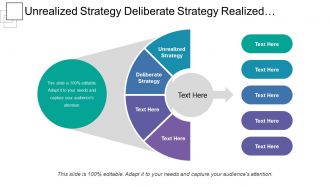
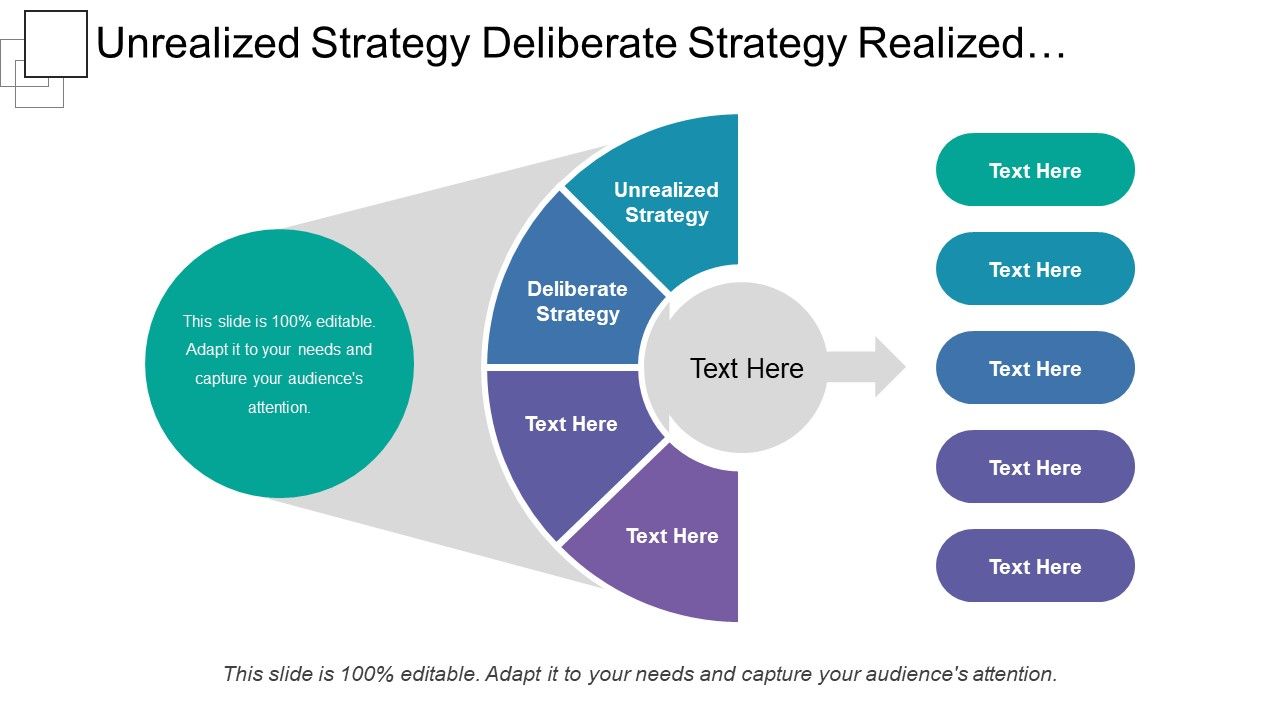
Unrealized strategy deliberate strategy realized strategy emergent strategy
Try Before you Buy Download Free Sample Product
Audience
Editable
of Time
Have a look at this unrealized, deliberate, realized and emergent strategy Presentation slide included in your next corporate presentation. Strategy is the most crucial aspect of business management whether you are planning things for sales, marketing or any other section you have to ensure that things are planned in the right way. This PowerPoint design gives you the liberty to show the details related to your business strategy to your associates, team or even your clients in the professional manner. The PPT slideshow has been designed after complete research and development, our research team has studied various aspects to make this slide possible for you. Delivering a presentation on growth strategy, product differentiation strategy, acquisition strategy is easily achievable with this PowerPoint slide. Apart from this, the three levels of strategy such as corporate level, business unit, market level can also be present using this design. To develop business, your strategy should be such that the end user should be able to engage with it. The PPT graphic comes with innovative shape which makes it look more professional. Presentation design is editable which gives another opportunity to mold it as per your need. Download it now. Avoid frantc conditions with our Unrealized Strategy Deliberate Strategy Realized Strategy Emergent Strategy. They allow the benefit of foresight.
People who downloaded this PowerPoint presentation also viewed the following :
Unrealized strategy deliberate strategy realized strategy emergent strategy with all 5 slides:
Highlight the fact that you have the credentials with our Unrealized Strategy Deliberate Strategy Realized Strategy Emergent Strategy. You will emerge as the favorite candidate.
FAQs for Unrealized strategy deliberate strategy realized
Honestly, most strategic planning fails at execution, so that's what I'd focus on first. You need the basics though - environmental scanning, strategy formulation, implementation, and evaluation. It's basically a cycle: analyze where you are, decide where you're going, execute, then check if it's actually working. SWOT analysis is super helpful for the situational stuff. Set clear objectives, then figure out your strategies. But seriously, make sure you've got the right people and resources before you start - I've seen too many good plans crash because of this. Oh, and don't forget to monitor progress regularly. Maybe audit your current process first to see what's missing?
Break your big strategy into specific targets for each team first. Then - and this is where most companies totally mess up - actually explain to people how their daily work connects to those bigger goals. I swear, half the workforce has zero idea why they're doing what they're doing. Set up regular check-ins to track progress and catch problems early. Dashboards help too, but don't go overboard with them. Communication is everything here. Pick one strategic goal this week and map it down to actual tasks - you'll probably find some weird gaps.
Honestly, SWOT is like having a reality check before you make any big moves. Map out your strengths, weaknesses, opportunities, and threats all in one place. You'll spot connections you'd probably miss otherwise. The magic happens when you match your strengths to actual market opportunities - or figure out which weaknesses could totally screw you if certain threats hit. I know it sounds super basic, but it's wild how many blind spots it reveals. Next time you're facing a strategic decision, just run through it quickly. Takes like 20 minutes but saves you from walking into disasters you never saw coming.
Look, outside forces will make or break your strategy whether you like it or not. Economic changes, new rules, what competitors do, shifting customer wants - all of it limits what moves you can actually make. My old company tried ignoring this stuff and it bit us hard. You've gotta build scanning into your planning process. Track the external factors that hit your industry the hardest. Do it consistently so you can pivot early instead of scrambling later. Honestly, most companies wait too long and then wonder why they're always playing catch-up.
Yeah, leadership totally makes or breaks strategic implementation. Like, you can have the most brilliant plan ever, but if leaders aren't actively pushing it forward, it just dies. They need to break down the big strategy into stuff people can actually do day-to-day. Plus someone has to explain why we're doing all this change - people hate change without context, you know? Leaders also have to fight for resources and clear out roadblocks when things inevitably get complicated. Stay visible, track what's happening, and don't be afraid to pivot when something isn't working.
Mix financial stuff with operational metrics - ROI, revenue growth, market share, but also employee engagement and customer satisfaction. Honestly, the balanced scorecard method is pretty solid for this. Keeps you from only obsessing over numbers. Check how fast you're pivoting when markets shift and whether initiatives actually launch on schedule. Non-financial indicators matter way more than most executives think they do. Quarterly reviews help you stay consistent with tracking everything. Short bursts work better than these marathon annual assessments, trust me.
Honestly, start by explaining WHY things are changing - like how it actually impacts their day-to-day work. Don't just announce decisions; get your key people involved in figuring out HOW to make it happen. That alone cuts down so much drama later. Build some quick wins early so everyone sees it's actually working. Oh, and give them proper training - can't expect people to adapt without the right tools. Resistance is totally normal btw, so don't ignore complaints. Address them head-on. Find your change champions first and work through them.
Look, competitive analysis is basically figuring out where everyone else is screwing up - and honestly, where they're crushing it better than you. You dig into their pricing, what customers actually say about them, their weak spots. The whole point isn't copying what they do. It's more like... understanding the game so you can find your own angle that's actually tough to replicate. Sometimes you'll discover gaps you never noticed before. Use those insights to build something different that people want but your competitors can't easily steal.
Do quarterly check-ins instead of those huge yearly strategy marathons - way more useful in crazy markets. Set up some basic monitoring stuff: customer feedback, what competitors are doing, maybe a simple dashboard. Most companies overthink this tbh and just freeze up analyzing everything to death. Keep your process simple but stick to it so you can actually spot trends. Oh, and always game out a few "what if" scenarios so you're not scrambling when things shift. I'd start with just monthly gut-checks on your main assumptions and build from there.
Look, frameworks like Porter's Five Forces work across industries, but you gotta adjust them to fit your space. Manufacturing? Focus on different competitive factors than you would in tech or healthcare. The bones stay the same though - just shift what you're paying attention to. Heavy regulation means compliance risks matter way more. Software moves so fast you need shorter planning cycles. Honestly, most people try to force-fit frameworks instead of tweaking them. Figure out what actually drives success in your industry first, then bend the framework around that. Makes way more sense.
Honestly, you're gonna hit the same walls everyone does - market uncertainty, never enough resources, getting people on the same page. Your team will push back on changes (shocker, right?). Making decisions with crappy data sucks too. Oh and balancing short-term wins vs long-term vision? That's the real headache. Here's the thing though - most strategies don't fail because they're bad strategies. They fail because nobody can actually execute them. So yeah, spend way more time on getting people bought in and communicating clearly than you think you need to.
Don't treat tech as this separate thing - weave it right into your regular strategy meetings. Use data tools to actually see what's happening with your business in real time instead of guessing. AI's pretty good at catching market shifts before you'd notice them otherwise. Here's the thing though: skip the flashy stuff that doesn't help your bottom line. I'd set aside some budget each quarter for testing new tech that makes sense for your goals. Maybe do innovation check-ins alongside your normal strategy reviews? The whole point is making data part of how you decide where to spend money and time.
Look, stakeholder analysis basically helps you figure out who can torpedo your plans before they do. Map out everyone - investors, customers, employees, regulators, whoever. Then rate their influence and what they actually want. I've watched so many good strategies crash because people skipped this step (or did it halfheartedly). You'll spot potential roadblocks early. Build alliances with the supporters. Design something that works in reality, not just your head. Next big decision you're facing? List everyone involved and their power level first. Trust me on this one.
Look, strategic management is basically having a game plan before everything goes sideways. You want contingency plans and different scenarios mapped out ahead of time - not when you're already panicking. Sure, your actual plan will probably fall apart immediately (they always do), but the thinking process is what saves you. When crisis hits, you can quickly figure out what's most at risk and move resources around fast. I'd start by looking at where your company is most vulnerable right now. Then brainstorm some "what if this happens" situations. It's like having a toolkit ready - you might not use every tool, but you'll know where to find what you need.
Look, stakeholder impact matters way more than people realize - think employees, customers, communities, not just shareholders. Transparency is huge too. I've seen companies tank overnight from ethical screwups, honestly it's wild how fast reputation can disappear. Fair treatment during layoffs, straight talk with investors, being smart about resources - all that stuff needs to be baked into your process from day one. Don't just slap ethics on at the end when things go sideways. It's tempting to tunnel vision on profits but the long-term consequences will bite you.
-
Design layout is very impressive.
-
I discovered this website through a google search, the services matched my needs perfectly and the pricing was very reasonable. I was thrilled with the product and the customer service. I will definitely use their slides again for my presentations and recommend them to other colleagues.