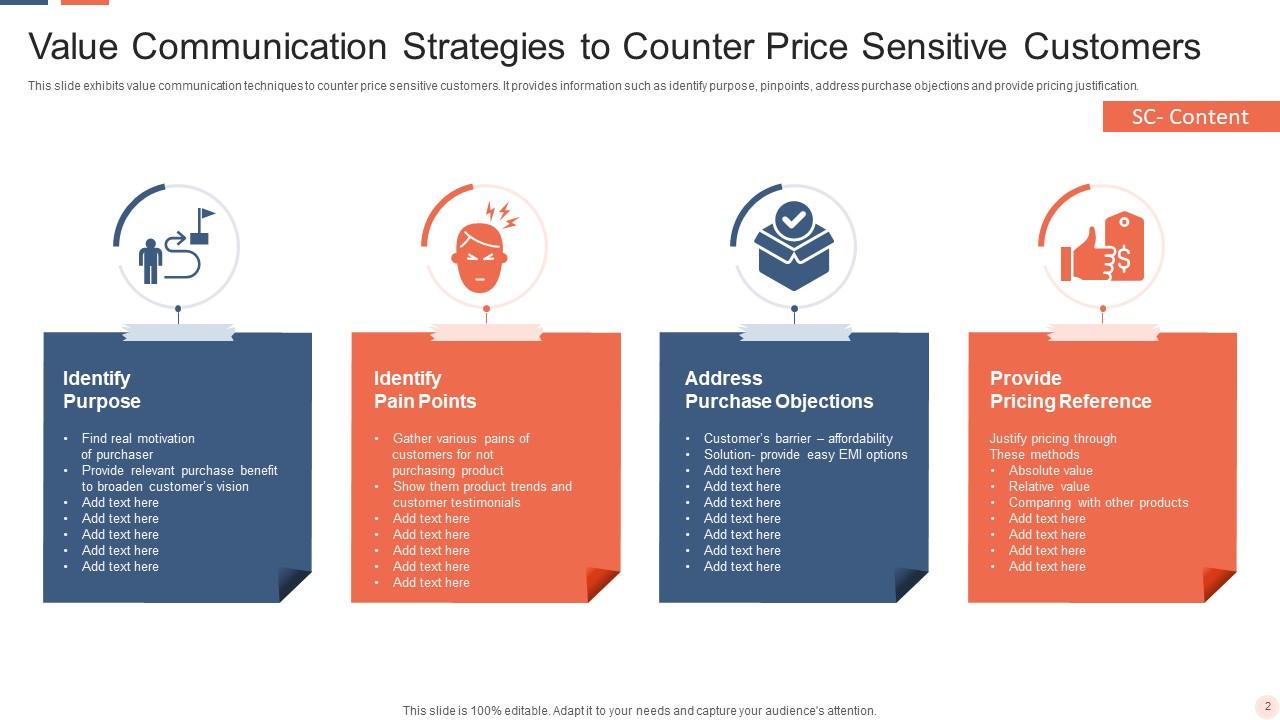
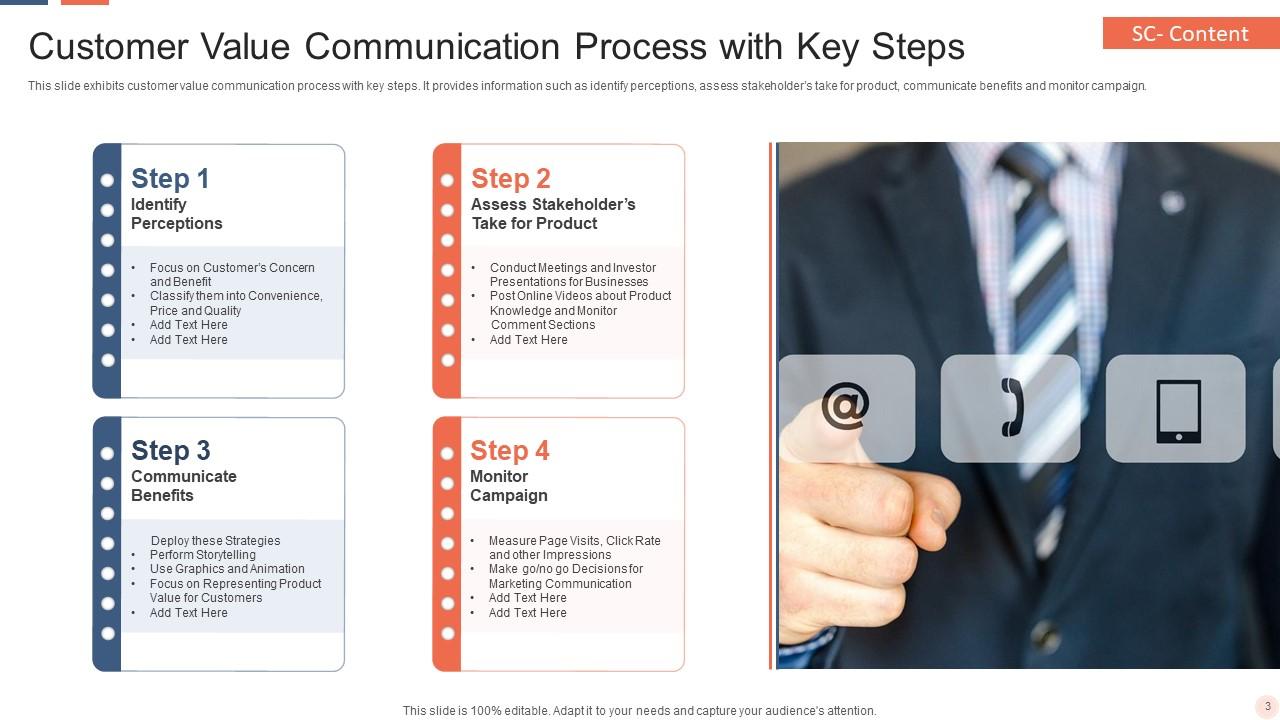
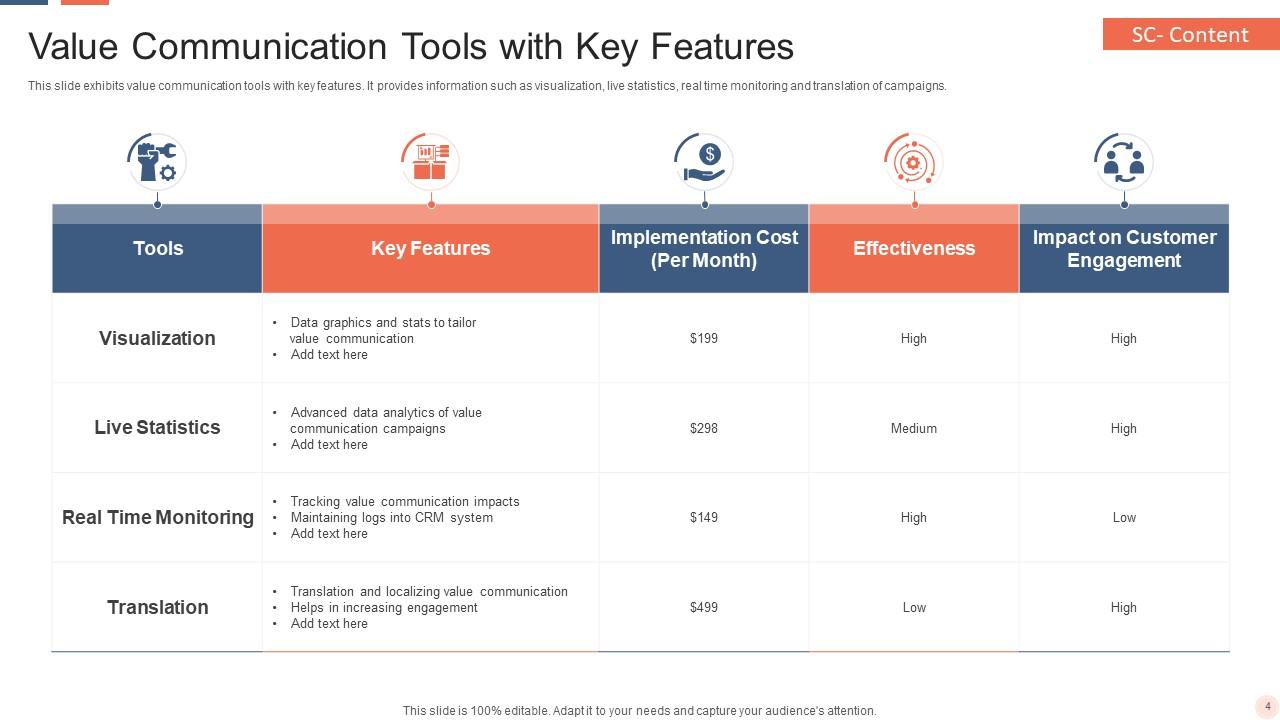
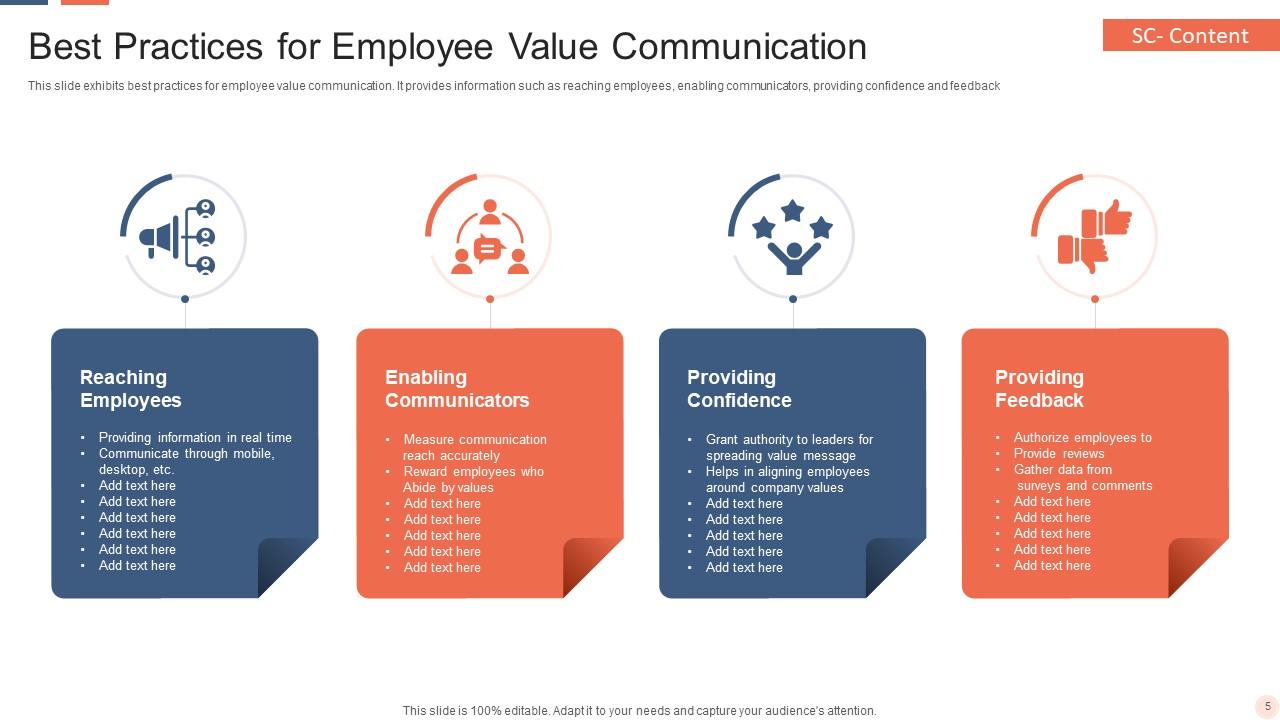
Value Communication Powerpoint Ppt Template Bundles
Try Before you Buy Download Free Sample Product
Audience
Editable
of Time
Our Value Communication Powerpoint Ppt Template Bundles are topically designed to provide an attractive backdrop to any subject. Use them to look like a presentation pro.
People who downloaded this PowerPoint presentation also viewed the following :
Value Communication Powerpoint Ppt Template Bundles with all 19 slides:
Use our Value Communication Powerpoint Ppt Template Bundles to effectively help you save your valuable time. They are readymade to fit into any presentation structure.
FAQs for Value Communication Powerpoint
Effective value communication in presentations includes clear benefit articulation, audience-specific messaging, compelling data visualization, emotional storytelling, and concrete ROI demonstrations. These elements work together by connecting features to outcomes, addressing stakeholder priorities, and quantifying impact, with many organizations finding that strategic value framing significantly enhances decision-making speed and stakeholder buy-in.
Visual aids enhance value communication by transforming complex information into digestible formats, creating emotional connections through compelling imagery, and enabling audiences to quickly grasp key benefits and outcomes. Through infographics, charts, and interactive presentations, organizations streamline their messaging while increasing retention rates, with many sales teams finding that visual storytelling accelerates decision-making and ultimately delivers higher conversion rates.
Storytelling transforms business presentations by making complex value propositions relatable, memorable, and emotionally compelling through narrative structure, real-world scenarios, and outcome-focused messaging. These storytelling techniques enable presenters to connect abstract benefits to tangible business results, with many organizations finding that narrative-driven presentations significantly enhance audience engagement, decision-making speed, and ultimately deliver stronger stakeholder buy-in.
Presenters can tailor value propositions by analyzing audience demographics, professional roles, industry challenges, pain points, and decision-making priorities before crafting segment-specific messaging. Through targeted research and stakeholder mapping, organizations develop customized presentations that resonate with executives focused on ROI, technical teams emphasizing functionality, and end-users prioritizing usability, ultimately delivering more persuasive and effective communication outcomes.
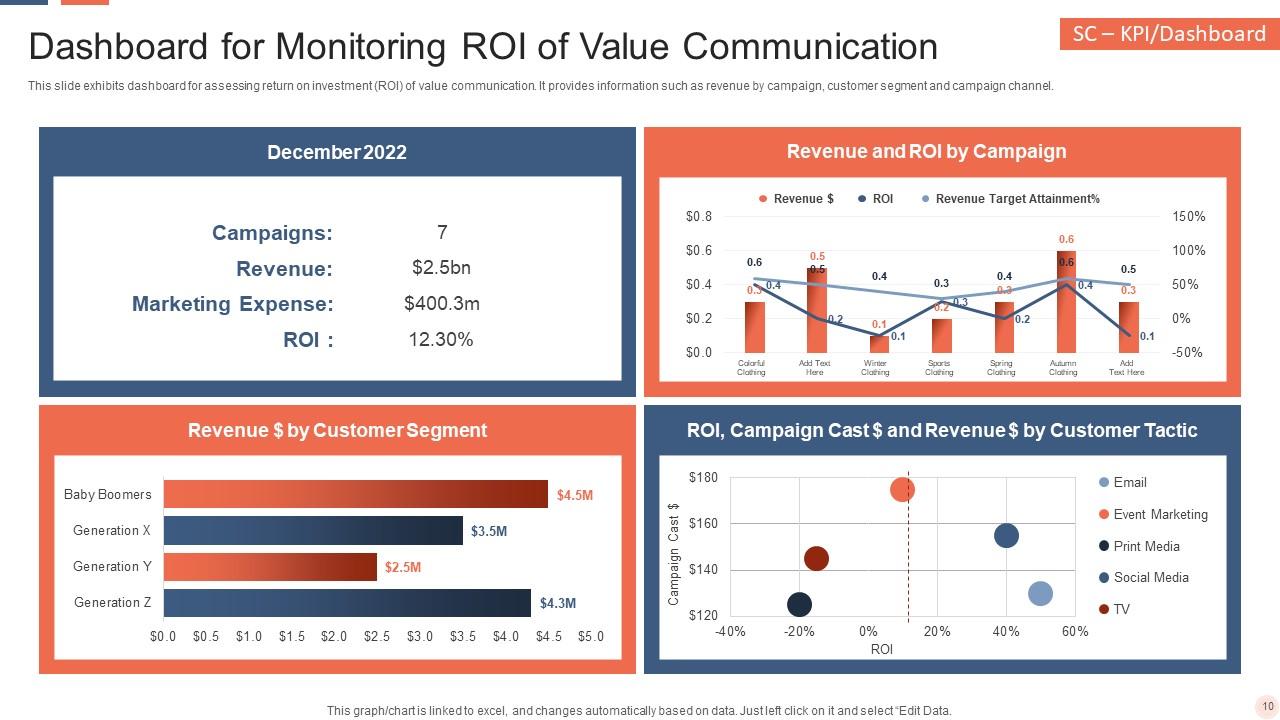
Value quantification techniques include ROI calculations, cost-benefit analyses, comparative metrics, before-and-after scenarios, and timeline projections showing measurable outcomes. These approaches enhance credibility by transforming abstract benefits into concrete numbers, with many organizations finding that data-driven presentations deliver significantly higher approval rates and stakeholder buy-in.
Clarity in value communication is essential for ensuring stakeholders understand benefits, make informed decisions, and align with organizational objectives. Through structured messaging frameworks, concrete examples, and consistent terminology, organizations streamline understanding, minimize misinterpretations, and accelerate decision-making processes, with many companies finding that clear value propositions significantly enhance customer engagement and competitive positioning.
Common pitfalls include focusing on features rather than benefits, using generic claims without proof points, overwhelming audiences with too much data, and failing to address specific customer pain points. Many organizations find that vague value propositions, lack of compelling visuals, and insufficient audience customization significantly reduce presentation impact, ultimately undermining their competitive positioning and strategic messaging effectiveness.
Feedback can be integrated into value communication strategies through customer surveys, social media monitoring, direct client interviews, sales team insights, and performance analytics. This continuous feedback loop enables organizations to refine their messaging, address specific pain points, and demonstrate measurable outcomes, with many companies finding that responsive communication strategies significantly enhance client trust and competitive positioning.
**INPUT**: What metrics should be utilized to measure the impact of value communication? **OUTPUT**: Value communication impact metrics include customer retention rates, deal conversion percentages, sales cycle duration, customer lifetime value, and price sensitivity measurements. These metrics enable organizations to track communication effectiveness across touchpoints, with many companies in financial services and technology finding that strategic measurement of value perception directly correlates with revenue growth and competitive positioning. [Word count: 54]
Cultural differences significantly impact value perceptions through varying communication styles, decision-making hierarchies, relationship priorities, and risk tolerances across global markets. International organizations increasingly adapt their presentations by emphasizing collective benefits in collectivist cultures, relationship-building in high-context societies, and data-driven outcomes in analytical cultures, ultimately delivering more resonant messaging and stronger cross-cultural business outcomes.
Emotional appeal is crucial in value communication because it creates deeper connections with audiences, drives decision-making beyond rational analysis, and makes messages more memorable and persuasive. Through storytelling, visual elements, and relatable scenarios, organizations enhance engagement, build trust, and motivate action, with many businesses finding that emotionally-driven communications deliver significantly higher conversion rates and customer loyalty.
Value communication evolves through continuous audience research, adaptive messaging frameworks, and multi-channel strategies that respond to shifting preferences and behaviors. Organizations increasingly leverage data analytics, personalized content delivery, and real-time feedback mechanisms to refine their approach, with many companies finding that flexible communication models enhance engagement and ultimately deliver stronger customer relationships and competitive advantage.
Technologies that enhance value communication during presentations include interactive presentation software, real-time polling platforms, augmented reality visualization tools, audience response systems, and AI-powered analytics dashboards. These technologies streamline engagement by enabling dynamic content adaptation, capturing immediate feedback, and delivering personalized experiences, with many organizations finding that interactive elements significantly improve message retention and stakeholder buy-in.
Presenters establish credibility through data-driven insights, specific case studies, transparent methodologies, and authentic testimonials from verified clients. By combining quantifiable results with honest assessments of both achievements and challenges, organizations demonstrate expertise and trustworthiness, with many businesses finding that this balanced approach ultimately enhances stakeholder confidence and accelerates decision-making processes.
Value communication fosters stronger client relationships by demonstrating tangible ROI, aligning solutions with specific business objectives, and providing transparent progress updates throughout engagements. Through consistent value articulation, organizations build trust and credibility while helping clients understand strategic outcomes, with many professional services firms finding that regular value discussions significantly enhance client retention and satisfaction.
-
Informative design.
-
Designs have enough space to add content.