


Warehouse Optimization And Performance Management To Increase Operational Efficiency Deck
Warehouse performance management refers to measuring, monitoring, and optimizing warehouse processes to reduce operational costs while maintaining the quality of goods. The Warehouse Optimization and Performance Management to Increase Operational Efficiency deck starts with assessing current issues faced by organizations in warehouse management and identifies the need for optimization. Further, Inventory Management PPT introduces a strategy for enhancing the performance of distribution centers and increasing business profitability. Also, this Warehouse Productivity PowerPoint presentation addresses the following areas in each dimension inventory management, order picking and shipping efficiency, space utilization, equipment utilization, labor productivity, inventory holding costs, and many more. Lastly, the Supply Chain Optimization template emphasizes warehouse automation with the integration of autonomous mobile robots to streamline inventory management, examine hiring needs, and allocate budget. Download our 100 percent editable and customizable deck to know more in detail.




























You must be logged in to download this presentation.


Do you want to remove this product from your favourites?
 Impress your
 audience
 100%
100% Editable
 Save Hours
 of Time
PowerPoint presentation slides
Deliver this complete deck to your team members and other collaborators. Encompassed with stylized slides presenting various concepts, this Warehouse Optimization And Performance Management To Increase Operational Efficiency Deck is the best tool you can utilize. Personalize its content and graphics to make it unique and thought-provoking. All the one hundred fifteen slides are editable and modifiable, so feel free to adjust them to your business setting. The font, color, and other components also come in an editable format making this PPT design the best choice for your next presentation. So, download now.

People who downloaded this PowerPoint presentation also viewed the following :
Content of this Powerpoint Presentation
Slide 1: The slide introduces Warehouse Optimization and Performance Management to Increase Operational Efficiency.
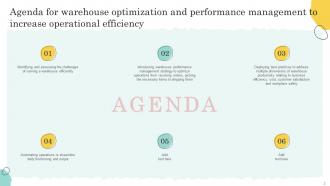
Slide 2: This is an Agenda slide. State your agendas here.
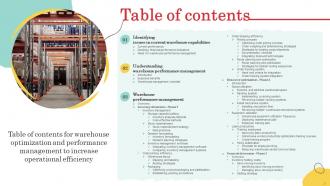
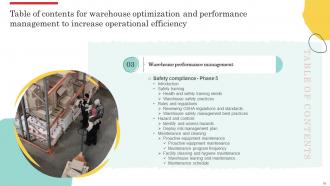
Slide 3: The slide displays Table of contents for presentation.
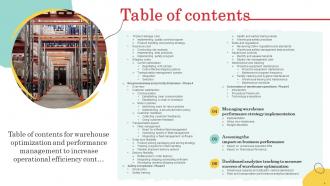
Slide 4: The slide continues Table of contents.
Slide 5: The slide depicts another Table of contents.
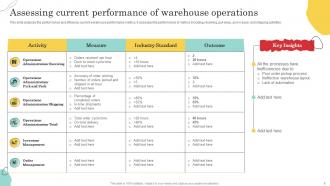
Slide 6: This slide analyzes the performance and efficiency current warehouse performance metrics.
Slide 7: This slide highlights the financial performance of the warehouse.
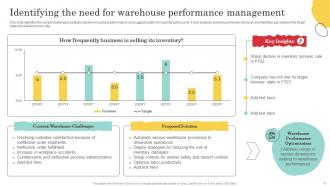
Slide 8: This slide identifies the current challenges leading to decline in business performance.
Slide 9: The slide highlights title of contents which is to be discussed further.
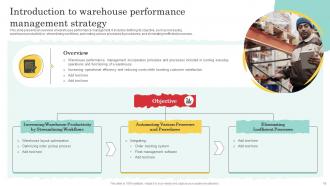
Slide 10: This slide presents an overview of warehouse performance management.
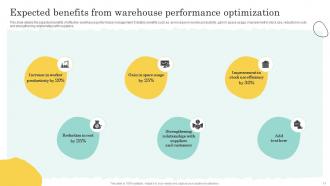
Slide 11: This slide details the expected benefits of effective warehouse performance management.
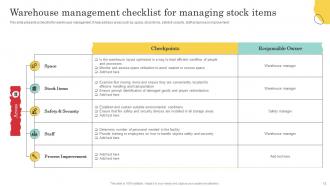
Slide 12: This slide presents a checklist for warehouse management.
Slide 13: The slide displays another title of contents further.
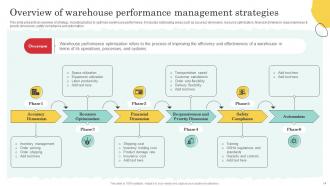
Slide 14: This slide represents an overview of strategy, including tactics to optimize warehouse performance.
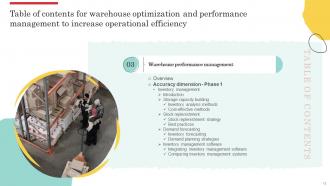
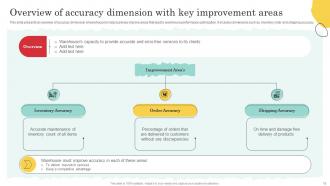
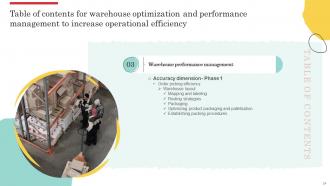
Slide 15: This slide exhibits an overview of accuracy dimension of warehouse to help business improve areas.
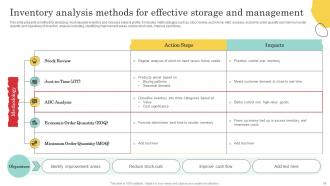
Slide 16: This slide presents a method for analyzing most valuable inventory and increase sales & profits.
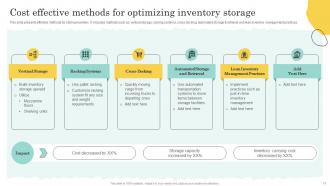
Slide 17: This slide represents effective methods for storing inventory.
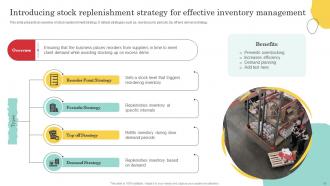
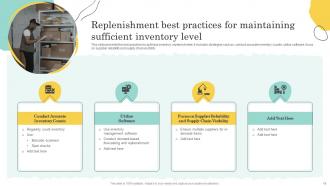
Slide 19: This slide presents the best practices to optimize inventory replenishment.
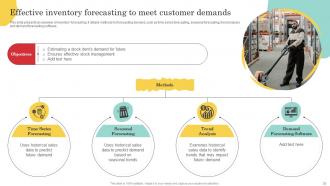
Slide 20: This slide demonstrates an overview of inventory forecasting.
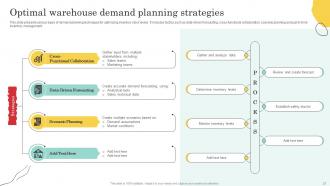
Slide 21: This slide shows various types of demand planning techniques for optimizing inventory stock levels.
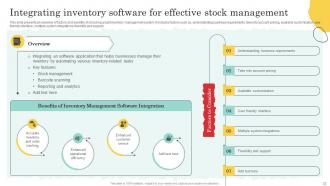
Slide 22: This slide renders an overview of factors and benefits of choosing a right inventory management system.
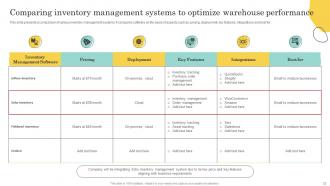
Slide 23: This slide presents a comparison of various inventory management systems.
Slide 24: The slide depicts title of contents further.
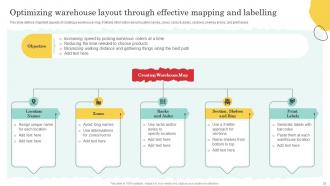
Slide 25: This slide defines important aspects of creating a warehouse map.
Slide 26: This slide shows an effective strategy for routing warehouse routes to ensure an efficient order-picking route.
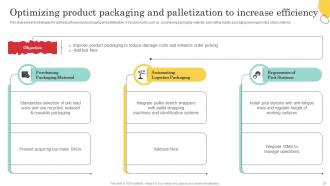
Slide 27: This slide renders strategies for optimizing the product packaging and palletization.
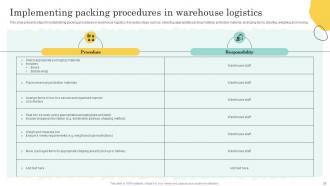
Slide 28: This slide presents steps for establishing packing procedures in warehouse logistics.
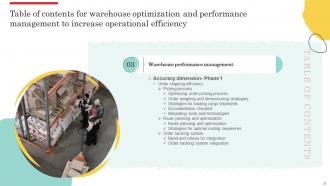
Slide 29: The slide also describes title of contents.
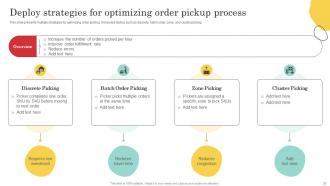
Slide 30: This slide presents multiple strategies for optimizing order picking.
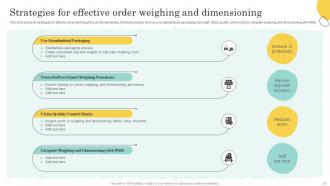
Slide 31: This slide howcases strategies for effective shipment weighing and dimensioning.
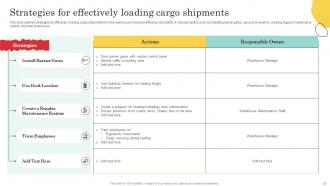
Slide 32: This slide outlines strategies for effectively loading cargo shipments from the warehouse to ensure efficiency and safety.
Slide 33: This slide contains a checklist to ensure necessary documentation at the time of shipping.
Slide 34: This slide describes various types of order-picking equipment that can help to optimize the warehouse’s picking processes.
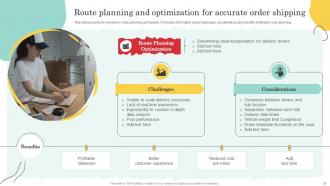
Slide 35: This slide presents an overview to route planning optimization.
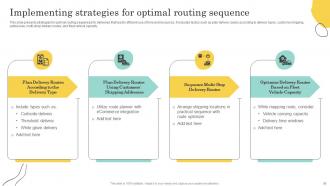
Slide 36: This slide exhibits strategies for optimal routing sequences for deliveries that lead to efficient use of time and resources.
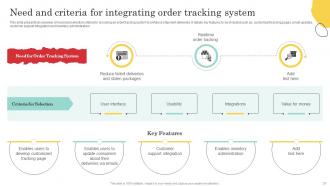
Slide 37: This slide depicts an overview of need and selection criteria for choosing an order tracking system to enhance shipment deliveries.
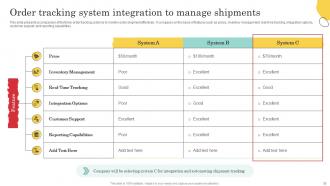
Slide 38: This slide presents a comparison of the three-order tracking systems to monitor order shipment effectively.
Slide 39: The slide also describes title of contents.
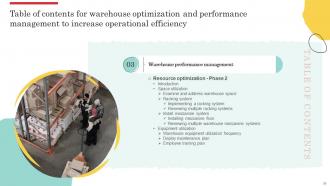
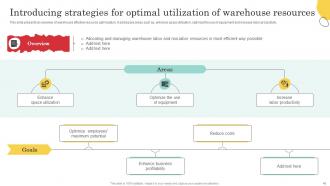
Slide 40: This slide presents an overview of warehouse effective resource optimization.
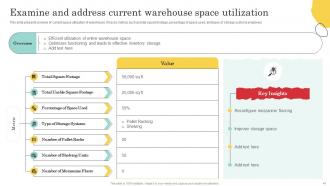
Slide 41: This slide illustrates a review of current space utilization of warehouse.
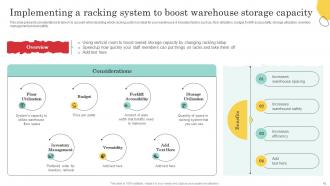
Slide 42: This slide presents considerations to take in to account when deciding which racking system is ideal for your warehouse.
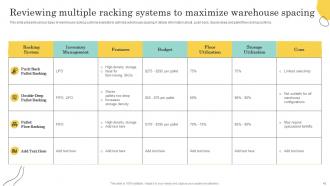
Slide 43: This slide represents various types of warehouse racking systems available to optimize warehouse spacing.
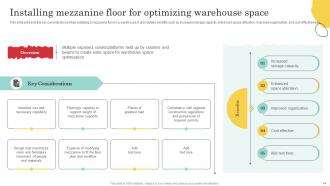
Slide 44: This slide highlights the key considerations when installing a mezzanine floor in a warehouse.
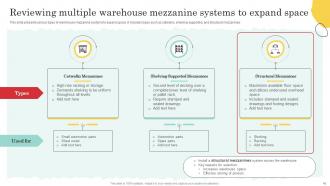
Slide 45: This slide renders various types of warehouse mezzanine systems to expand space.
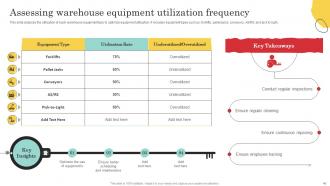
Slide 46: This slide analyzes the utilization of each warehouse equipment type to optimize equipment utilization.
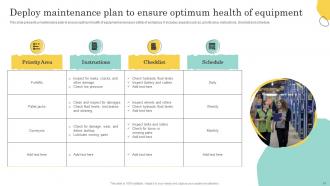
Slide 47: This slide presents a maintenance plan to ensure optimum health of equipment and ensure safety of workplace.
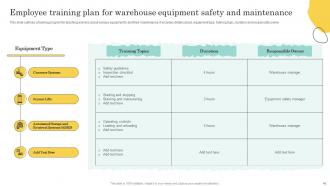
Slide 48: This slide outlines a training program for teaching workers about various equipment's and their maintenance.
Slide 49: The slide displays another title of contents.
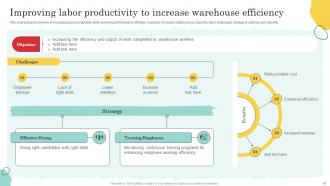
Slide 50: This slide presents overview of increasing labor productivity within warehouse that leads to effective business.
Slide 51: This slide outlines training courses for effective warehouse worker training to increase their productivity.
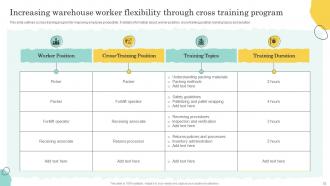
Slide 52: This slide containss a cross training program for improving employee productivity.
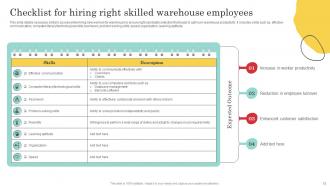
Slide 53: This slide details necessary skills to assess while hiring new workers for warehouse.
Slide 54: This slide presents strategies for hiring warehouse workers.
Slide 55: The slide exhibits title of contents which is to be discussed further.
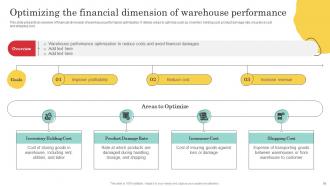
Slide 56: This slide represents an overview of financial dimension of warehouse performance optimization.
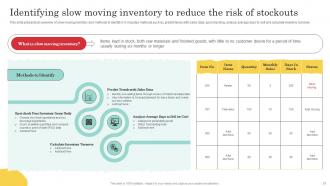
Slide 57: This slide demonstrates an overview of slow moving inventory and methods to identify it.
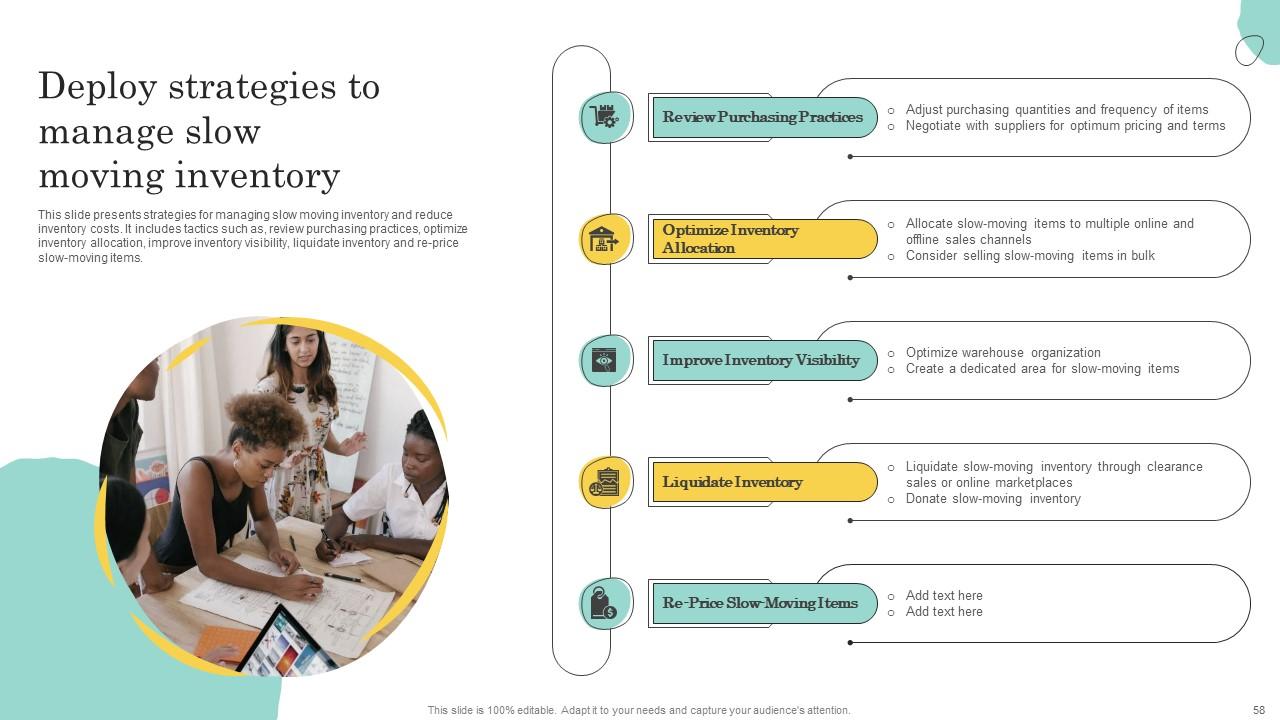
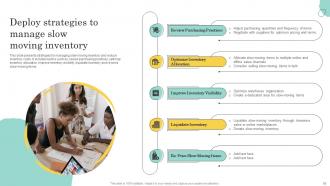
Slide 58: This slide exhibits strategies for managing slow moving inventory and reduce inventory costs.
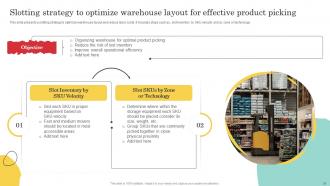
Slide 59: This slide describes a slotting strategy to optimize warehouse layout and reduce labor costs.
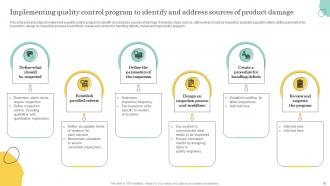
Slide 60: This slide displays steps to implement a quality control program to identify and address sources of damage.
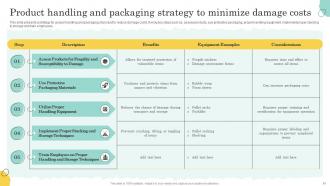
Slide 61: This slide presents a strategy for proper handling and packaging of product to reduce damage costs.
Slide 62: This slide conduct a risk analysis to determine the appropriate level of insurance coverage.
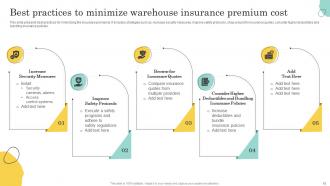
Slide 63: This slide presents best practices for minimizing the insurance premiums.
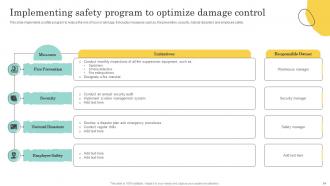
Slide 64: This slide implements a safety program to reduce the risk of loss or damage.
Slide 65: The slide highlights another title of contents.
Slide 66: This slide presents tips for effectively negotiating with carriers for better rates and minimize shipping costs .
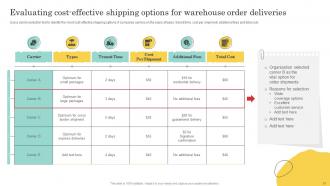
Slide 67: The slide use a carrier selection tool to identify the most cost-effective shipping options.
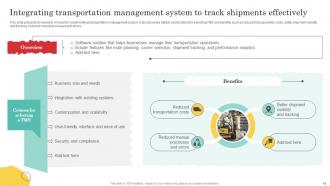
Slide 68: This slide represents an overview of need for implementing transportation management system.
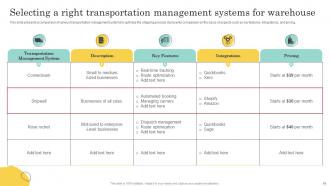
Slide 69: This slide showcases a comparison of various transportation management systems to optimize the shipping process.
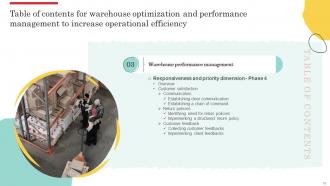
Slide 70: The slide describes title of contents further.
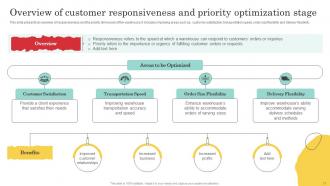
Slide 71: This slide presents an overview of responsiveness and the priority dimension of the warehouse.
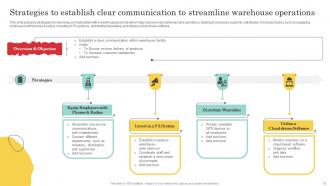
Slide 72: This slide presents strategies for improving communication within warehouse proximity.
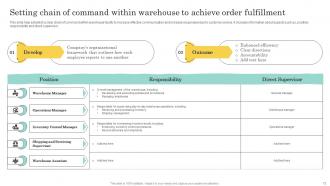
Slide 73: This slide help establish a clear chain of command within warehouse facility to increase effective communication.
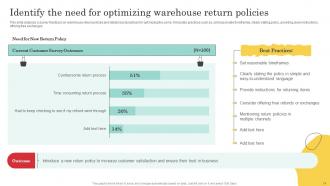
Slide 74: This slide analyzes a survey feedback on warehouse return policies and details best practices for optimizing the same.
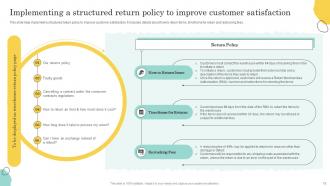
Slide 75: This slide help implement a structured return policy to improve customer satisfaction.
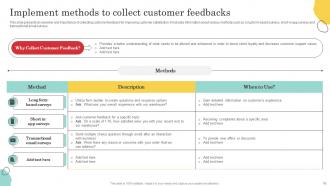
Slide 76: This slide presents an overview and importance of collecting customer feedback for improving customer satisfaction.
Slide 77: This slide presents a strategy for to successfully implement feedback and ensure that client feedback.
Slide 78: The slide displays another title of contents.
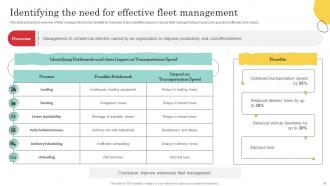
Slide 79: This slide represents an overview of fleet management and its benefits for business.
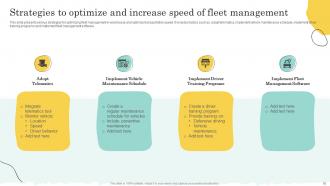
Slide 80: This slide presents various strategies for optimizing fleet management in warehouse and optimize transportation speed.
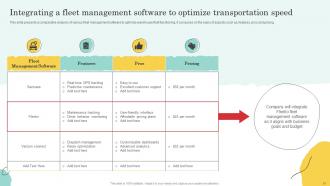
Slide 81: This slide contains a comparative analysis of various fleet management software to optimize warehouse fleet functioning.
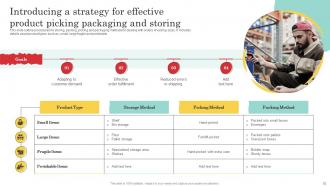
Slide 82: This slide outline procedures for storing, packing, picking and packaging methods for dealing with orders of varying sizes.
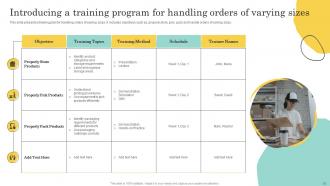
Slide 83: This slide represents a training plan for handling orders of varying sizes.
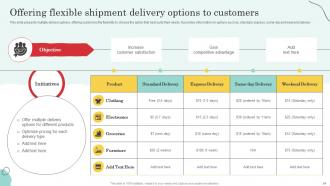
Slide 84: This slide presents multiple delivery options, offering customers the flexibility to choose the option that best suits their needs.
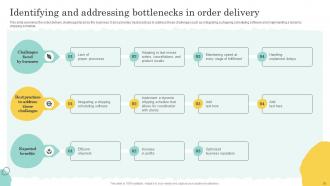
Slide 85: This slide examines the order delivery challenges faced by the business.
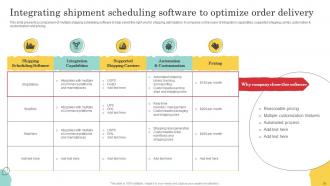
Slide 86: This slide presents a comparison of multiple shipping scheduling software to help select the right one for shipping optimization.
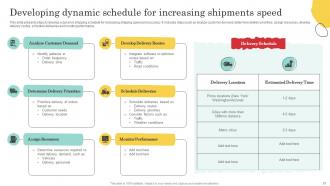
Slide 87: This slide renders steps to develop a dynamic shipping schedule for increasing shipping speed and accuracy.
Slide 88: The bslide exhibits title of contents further.
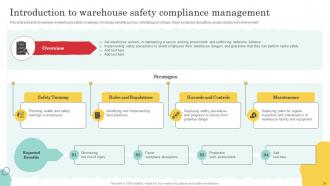
Slide 89: This slide presents an overview of warehouse safety compliance.
Slide 90: This slide identifies the organization's need for health and safety training and provides solutions to address the gaps.
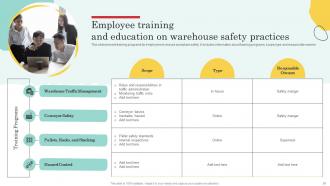
Slide 91: This slide represent training programs for employees to ensure workplace safety.
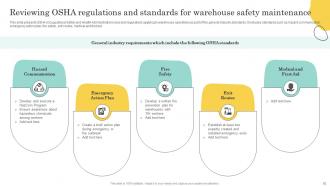
Slide 92: This slide shows OSHA rules and regulations applying to warehouse operations as part of the general industry standards.
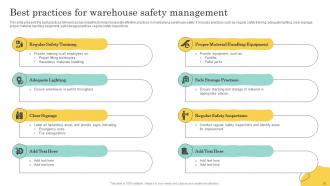
Slide 93: This slide illustrates the best practices followed across industries to help incorporate effective practices.
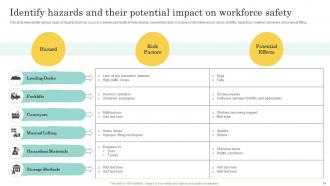
Slide 94: This slide help identify various types of hazards that may occur in a warehouse facility to help develop a prevention plan.
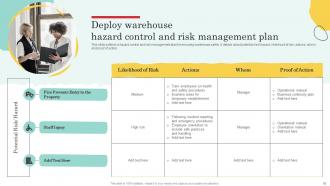
Slide 95: This slide outlines a hazard control and risk management plan for ensuring warehouse safety.
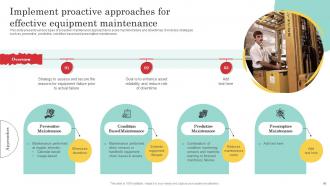
Slide 96: This slide presents various types of proactive maintenance approaches to avoid machine failure and downtimes.
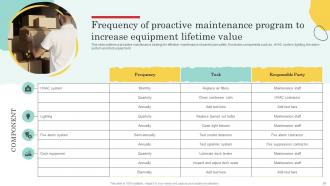
Slide 97: This slide outlines a proactive maintenance strategy for effective maintenance of warehouse safety.
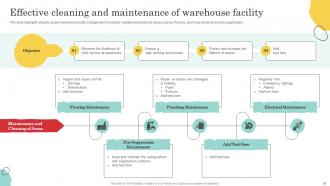
Slide 98: This slide highlights areas for proper warehouse facility management.
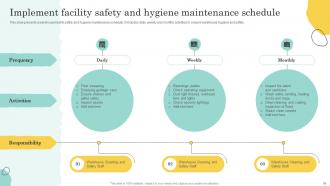
Slide 99: This slide presents a warehouse facility safety and hygiene maintenance schedule.
Slide 100: The slide decribes title of contents which is to be discussed further.
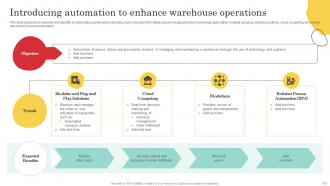
Slide 101: This slide highlights an overview and benefits of automating warehouse functioning.
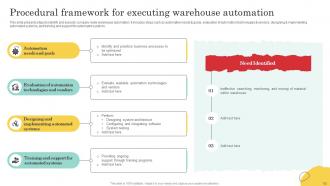
Slide 102: This slide show steps to identify and execute company-wide warehouse automation.
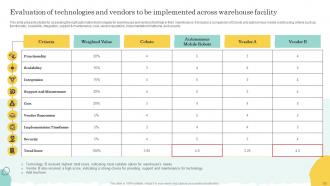
Slide 103: This slide presents a table for assessing the right automation technologies for warehouses and vendors that help in their maintenance.
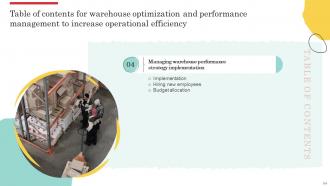
Slide 104: The slide depicts another title of contents.
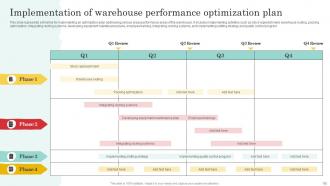
Slide 105: This slide represents a timeline for implementing an optimization plan addressing various areas performance areas of the warehouse.
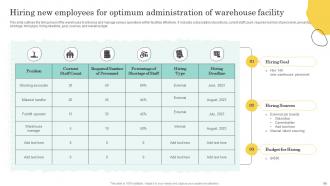
Slide 106: This slide outlines the hiring need of the warehouse to enhance and manage various operations within facilities effectively.
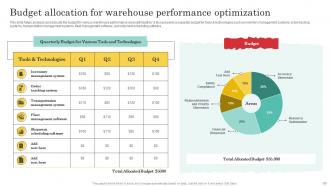
Slide 107: This slide helps analyzes and allocate the budget for various warehouse performance area optimization.
Slide 108: The slide again describes title of contents.
Slide 109: This slide analyzes the operations management efficiency of the warehouse.
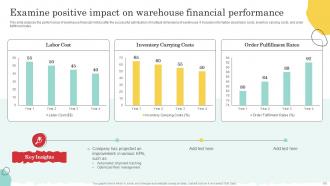
Slide 110: This slide shows the performance of warehouse financial metrics after the successful optimization of multiple dimensions of warehouse.
Slide 111: The slide exhibits another title of contents.
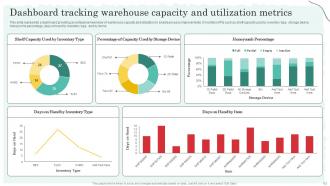
Slide 112: This slide represents a dashboard providing an enterprise-level view of warehouse capacity and utilization to enable process improvements.
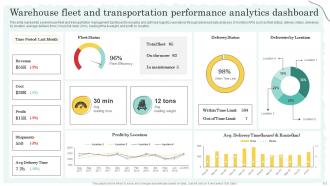
Slide 113: This slide presents a warehouse fleet and transportation management dashboard to visualize and optimize logistics operations.
Slide 114: This slide shows all the icons included in the presentation.
Slide 115: This is a Thank You slide with address, contact numbers and email address.
Warehouse Optimization And Performance Management To Increase Operational Efficiency Deck with all 120 slides:
Use our Warehouse Optimization And Performance Management To Increase Operational Efficiency Deck to effectively help you save your valuable time. They are readymade to fit into any presentation structure.
-
Thanks for all your great templates they have saved me lots of time and accelerate my presentations. Great product, keep them up!
-
The website is jam-packed with fantastic and creative templates for a variety of business concepts. They are easy to use and customize.
