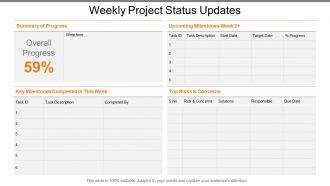
Atualizações semanais do status do projeto

Slide 1 of 5
Favourites Favourites

Try Before you Buy Download Free Sample Product

Audience Impress Your
Audience
Editable 100%
Editable
Time Save Hours
of Time
The Biggest Sale is ending soon in
0
0
:
0
0
:
0
0

Recursos desses slides de apresentação do PowerPoint:

Apresentando este conjunto de slides com o nome Atualizações Semanais de Status do Projeto. Os tópicos discutidos nesses slides são Relatórios de progresso semanais, Relatórios de desempenho semanais, Rastreamento de progresso semanal. Esta é uma apresentação do PowerPoint totalmente editável e está disponível para download imediato. Baixe agora e impressione seu público.

FAQs for Weekly

Focus on schedule progress first - are you hitting milestones or falling behind? Budget burn rate is obvious but critical. Team velocity tells you if you're actually getting stuff done at a sustainable pace. Scope changes will kill you if you don't track them religiously. Quality metrics like defect rates are good in theory but honestly a pain to measure well. Risk stuff is where projects really die though - open issues, blockers, dependencies that aren't moving. Oh and don't sleep on team morale checks. Nobody talks about it but burnt out teams tank everything. Start with maybe 3-4 that actually apply to your situation.

Instead of just blasting people with updates, give them actual jobs in your reporting process. Have key stakeholders weigh in on blockers they can help fix, or get them to review drafts before you send them out. Honestly, some people love being hands-on way more than getting passive updates. Try rotating who presents different sections in meetings, or build dashboards where they can track their specific stuff. Oh, and this approach gets you better insights too - people buy in more when they're actually participating instead of just receiving info all the time.

Honestly, Asana or Monday.com are solid choices - they've got those visual dashboards where everyone can see what's happening in real time. Trello works too if you want something simpler. The Slack integrations are game-changers because updates just pop up automatically in your channels. For the higher-ups who don't want all the details, set up weekly reports or a basic status page they can peek at whenever. Oh, and whatever you pick, make sure your team will actually stick with it. I've seen too many fancy tools just collect digital dust because nobody wanted to log in every day.

Weekly updates are usually my go-to during busy project phases. But honestly? It really depends on what you're dealing with. Fast-moving or risky stuff might need daily check-ins plus those weekly summaries. Monthly works fine for the slower, steady projects. Here's the thing though - consistency matters way more than the exact schedule. When deadlines start slipping, don't go quiet on people. That's when they freak out the most. I'd say start weekly and adjust from there. Oh, and ignore whatever template your company pushes if it doesn't actually fit your situation.

Think of project status as your radar for catching problems early. You'll spot stuff like tasks running behind or your team getting overloaded way before it becomes a crisis. That's way better than crossing your fingers and hoping things work out (they rarely do, trust me). The real trick is actually doing something with those updates once you get them. Don't just collect status reports to check a box - dig into what they're showing you about potential risks. Then you can jump on issues while they're still manageable instead of scrambling later.

Ugh, this stuff happens constantly - don't beat yourself up. First thing? Figure out what went wrong. Scope creep? Bad estimates from the start? Resource problems? Write it all down because people will ask for details later. Now here's the thing - you gotta be brutally honest about where you actually are, not where you hoped you'd be. Recalibrate everything based on reality. Talk to your team and stakeholders straight up about what changed. I'd probably do quick weekly check-ins going forward so you don't get blindsided again.

Oh man, the biggest mistake is burying your main point - just lead with green/yellow/red status right off the bat. Don't sugarcoat issues either, you'll tank your credibility. I see people turn these into grocery lists of every little thing they did. Like, congrats on those 12 emails but literally no one cares! Stick to actual progress on stuff that matters. Watch the tech speak around non-technical folks too. And please, for the love of all that's holy, don't blindside people with major problems during the meeting. Give them a heads up so they can actually think solutions instead of just panicking.

Honestly, visuals are a game-changer for project updates. People just absorb images way faster than walls of text. Gantt charts work great for timelines. Color-coded dashboards? Perfect for quick health checks. I'm weirdly obsessed with good before/after slides - they really hit different. Progress bars are solid for showing completion rates too. Skip the boring bullet points about deliverables and dependencies. Your stakeholders will actually see what's working, what's behind, and where they need to jump in. One visual per major point keeps everyone focused instead of scrolling Instagram under the table.

Look, stakeholders really just want to know three things: are we on time, on budget, and what's gonna blow up the project. So track schedule progress (% done vs planned), budget burn rate, and your biggest risks or blockers. Milestone dates and resource usage are solid too. I've learned the hard way that executives don't care about fancy technical metrics - they want the simple stuff. Focus on trends instead of just snapshots from this week. Always throw in what decisions you need from them or what's coming next. Keeps everyone happy and actually informed.

Honestly, your project status is like your GPS for money and people. Running behind? Time to throw more resources at the critical stuff to catch up. Ahead of schedule means you can move those extra hands somewhere else - which is a nice problem to have, trust me. When roadblocks pop up or scope creeps in, your budget's gotta flex too. The trick is staying on top of status updates regularly. That way you're making smart moves instead of panicking when everything's already on fire.

Honestly, status reports are like magic for team morale. Everyone can see what's actually getting done instead of wondering if they're the only one working. I always make sure to call out individual wins - people need that recognition, you know? Plus you'll catch problems before they blow up into real disasters. The momentum thing is real too. When people see progress happening week after week, it keeps them pumped about the project. Short version: transparency builds trust, wins build energy, and early problem-spotting saves your butt later.

Okay so definitely track status changes with timestamps and who did what. The "why" part is huge - I used to skip that and then three weeks later I'm staring at my screen like "what was I thinking??" Note any timeline or budget hits too. Oh and set up those auto notifications! Game changer for keeping everyone updated without having to send a million follow-up messages. Just make sure it's detailed enough that future you (or whoever takes over) can actually figure out what happened. Trust me on this one.

So here's the thing - when you're constantly sharing project updates, people automatically become more accountable. They know their work is visible and can't just let problems slide under the radar. It's like a friendly spotlight (not creepy surveillance, more like "we're all figuring this out together"). People start flagging issues early instead of hoping they'll magically resolve themselves. Honestly, I've seen teams totally transform once they get into this rhythm. Try weekly async check-ins where everyone drops three quick things: what they finished, what they're tackling next, and any roadblocks. Works way better than those endless status meetings.

Honestly, think of that feedback as your goldmine for figuring out what's actually broken. Most teams collect it then never look at it again - total waste. Start tracking the stuff that keeps popping up: same delays, confusion, whatever. Then actually talk about it in your retros instead of just going through the motions. Short bursts work better than long sentences here. What's really causing these issues? Maybe your timelines suck, or communication's off. I'd keep a simple log of themes. The whole point is doing something with what you learn, not just collecting comments for the sake of it.

Honestly, just keep everyone in the loop consistently and don't overcomplicate it. Set up regular updates - maybe weekly emails or dashboard check-ins, whatever clicks with your team. Visual dashboards are clutch because nobody wants to read through paragraphs of updates (I sure don't). Don't sugarcoat the bad stuff either. Share your wins AND your roadblocks upfront. Pick metrics that actually matter to whoever you're talking to, not just vanity numbers. Oh, and make sure info is easy to find when people need it. Biggest thing though? Never blindside people in meetings with stuff you could've mentioned earlier.

Ratings and Reviews

0% of 100
Review Form
Write a review
Most Relevant Reviews

No Reviews