


Workforce Training Playbook Powerpoint-Präsentationsfolien
Das Coaching-Playbook entwickelt sich zu einer Schulungsrichtlinie für Mitarbeiter am Arbeitsplatz. Es dient als Spielplan zur Optimierung der Mitarbeiterleistung und zur Nutzung bestehender Talentpools. Holen Sie sich unsere vorgefertigte und zu 100 Prozent bearbeitbare Workforce Training Playbook-Vorlage. Es behandelt die Kriterien des Workforce-Coaching-Programms, die auf unterschiedlichen Lernpraktiken, Talententwicklung für Mitarbeiter, verschiedenen Mitarbeiter-Coaching-Methoden, der Bedeutung des Coachings für Mitarbeiter und Arbeitgeber und der Einbindung von Mitarbeitern im gesamten Unternehmen basieren. Das Playbook umfasst ein Mitarbeiter-Coaching-Programm, das einen Spielplan für einen Mitarbeiter-Coaching-Fahrplan für ein erfolgreiches Mitarbeiter-Coaching-Programm hervorhebt. Die Belegschaft benötigte abteilungsübergreifendes Coaching, die Ziele des den Mitarbeitern angebotenen Coachings, die Matrix zur Kompetenzbewertung der Auszubildenden, das Formular zur Identifizierung der Anforderungen an das Coaching der Mitarbeiter, die Anforderungen an die Fähigkeiten und Kenntnisse der Mitarbeiter und den Zeitplan für die Sitzungen des Mitarbeiter-Coachings. Verschiedene Coaching-Module heben ein effektives Mitarbeiter-Onboarding, die Verbesserung der Fähigkeiten, das Coaching des Vertriebsteams und ein effizientes Kundensupport-Team hervor. Darüber hinaus richtet es sich an Trainer und Coaching-Initiativen für das Mitarbeiter-Coaching, das Coaching von Kommunikationsfähigkeiten für Führungskräfte usw. Die Wirksamkeit des Workforce-Coachings und die Kostenschätzung werden zusammen mit dem Dashboard zur Leistungsverfolgung des Workforce-Coachings hervorgehoben. Jetzt zugreifen.




















-

- Google Slides is a new FREE Presentation software from Google.
- All our content is 100% compatible with Google Slides.
- Just download our designs, and upload them to Google Slides and they will work automatically.
- Amaze your audience with SlideTeam and Google Slides.
-

Want Changes to This PPT Slide? Check out our Presentation Design Services
-

- WideScreen Aspect ratio is becoming a very popular format. When you download this product, the downloaded ZIP will contain this product in both standard and widescreen format.
-

- Some older products that we have may only be in standard format, but they can easily be converted to widescreen.
- To do this, please open the SlideTeam product in Powerpoint, and go to
- Design ( On the top bar) -> Page Setup -> and select "On-screen Show (16:9)” in the drop down for "Slides Sized for".
- The slide or theme will change to widescreen, and all graphics will adjust automatically. You can similarly convert our content to any other desired screen aspect ratio.
Compatible With Google Slides

Get This In WideScreen
You must be logged in to download this presentation.


Do you want to remove this product from your favourites?
Merkmale dieser PowerPoint-Präsentationsfolien :
Stellen Sie eine informative PPT zu verschiedenen Themen bereit, indem Sie diese Powerpoint-Präsentationsfolien des Workforce Training Playbook verwenden. Dieses Deck konzentriert sich auf bewährte Branchenpraktiken und setzt diese um, wodurch das Thema aus der Vogelperspektive betrachtet wird. Umfasst von 54 Folien, die mit hochwertigen Bildern und Grafiken entworfen wurden, ist dieses Deck ein komplettes Paket zum Verwenden und Herunterladen. Alle Folien, die in diesem Deck angeboten werden, unterliegen unzähligen Änderungen und machen Sie so zu einem Profi im Liefern und Erziehen. Sie können die Farbe der Grafik, des Hintergrunds oder alles andere nach Ihren Bedürfnissen und Anforderungen ändern. Aufgrund seines anpassungsfähigen Layouts eignet es sich für jede Branche.

People who downloaded this PowerPoint presentation also viewed the following :
Inhalt dieser Powerpoint-Präsentation
Folie 1 : Diese Folie stellt das Workforce Training Playbook vor. Geben Sie Ihren Firmennamen an und beginnen Sie.
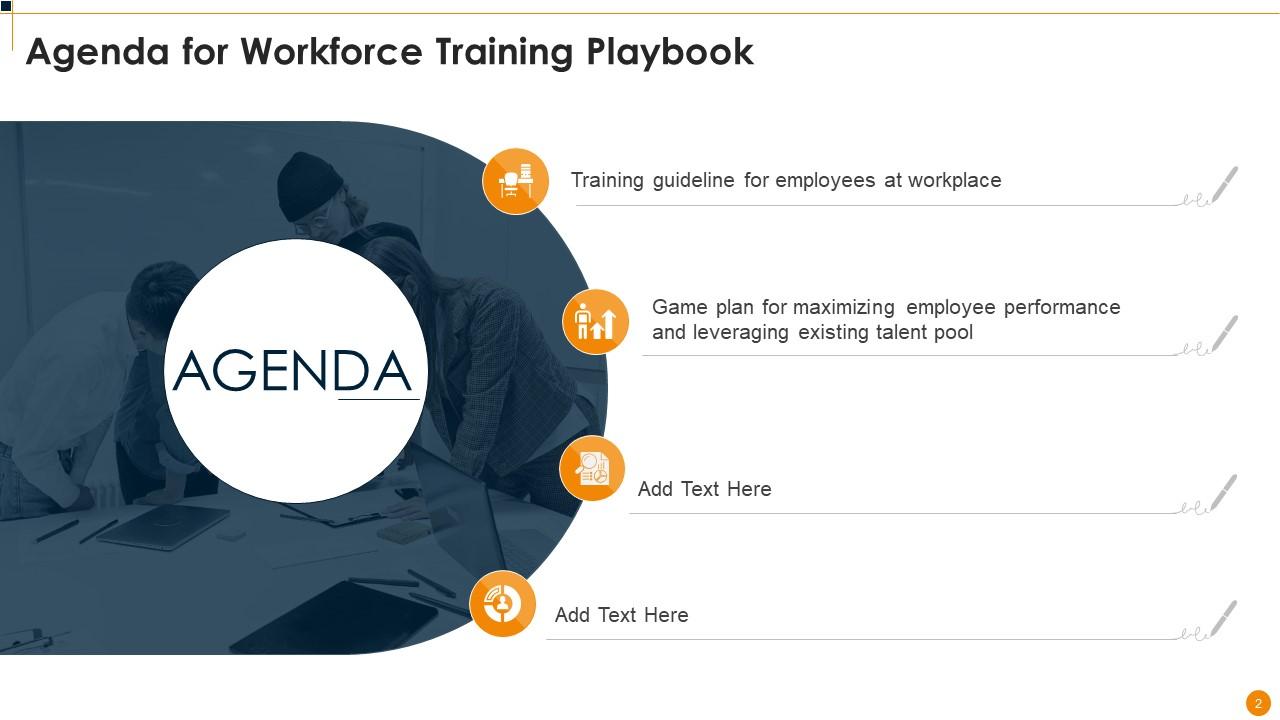
Folie 2 : Diese Folie gibt die Agenda der Präsentation an.
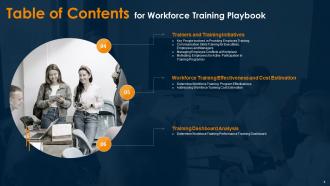
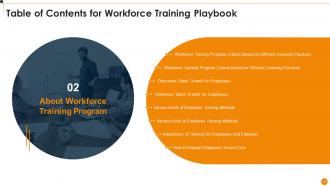
Folie 3 : Diese Folie zeigt das Inhaltsverzeichnis für die Präsentation.
Folie 4 : Dies ist eine weitere Folie, die das Inhaltsverzeichnis der Präsentation fortsetzt.
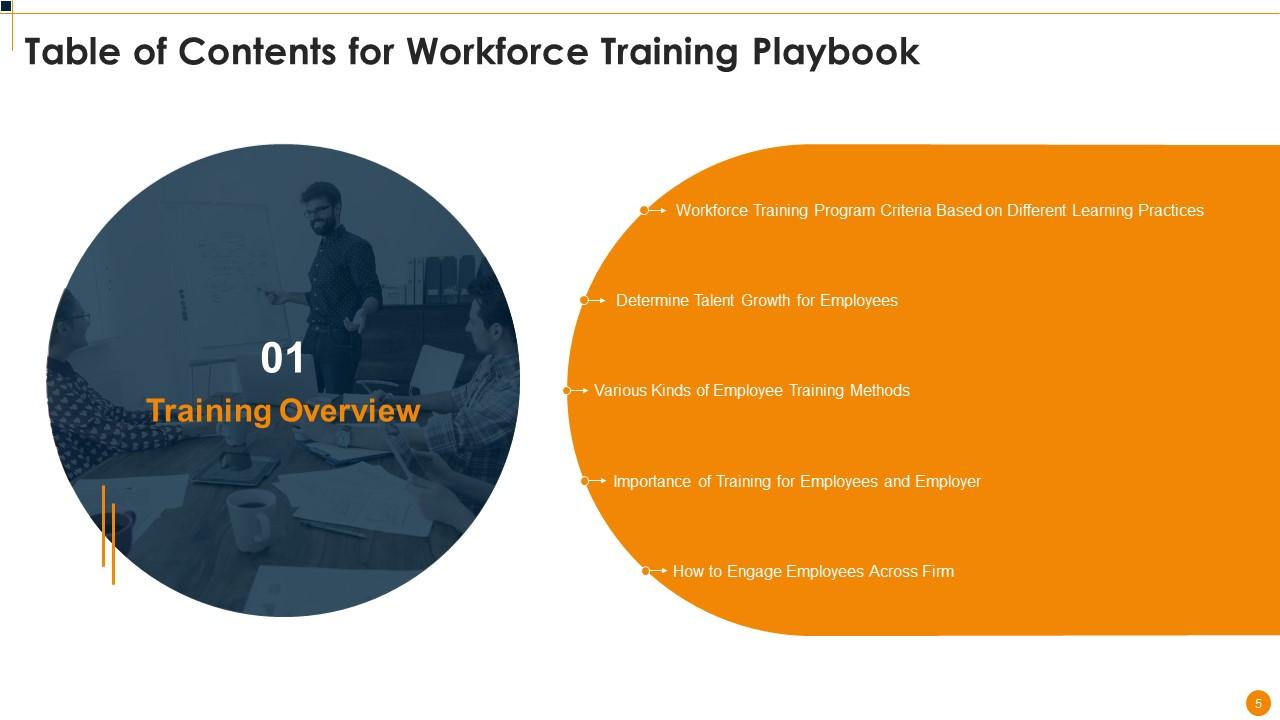
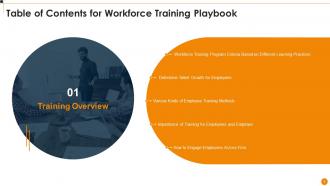
Folie 5 : Diese Folie zeigt Titel für Themen, die als nächstes in der Vorlage behandelt werden sollen.
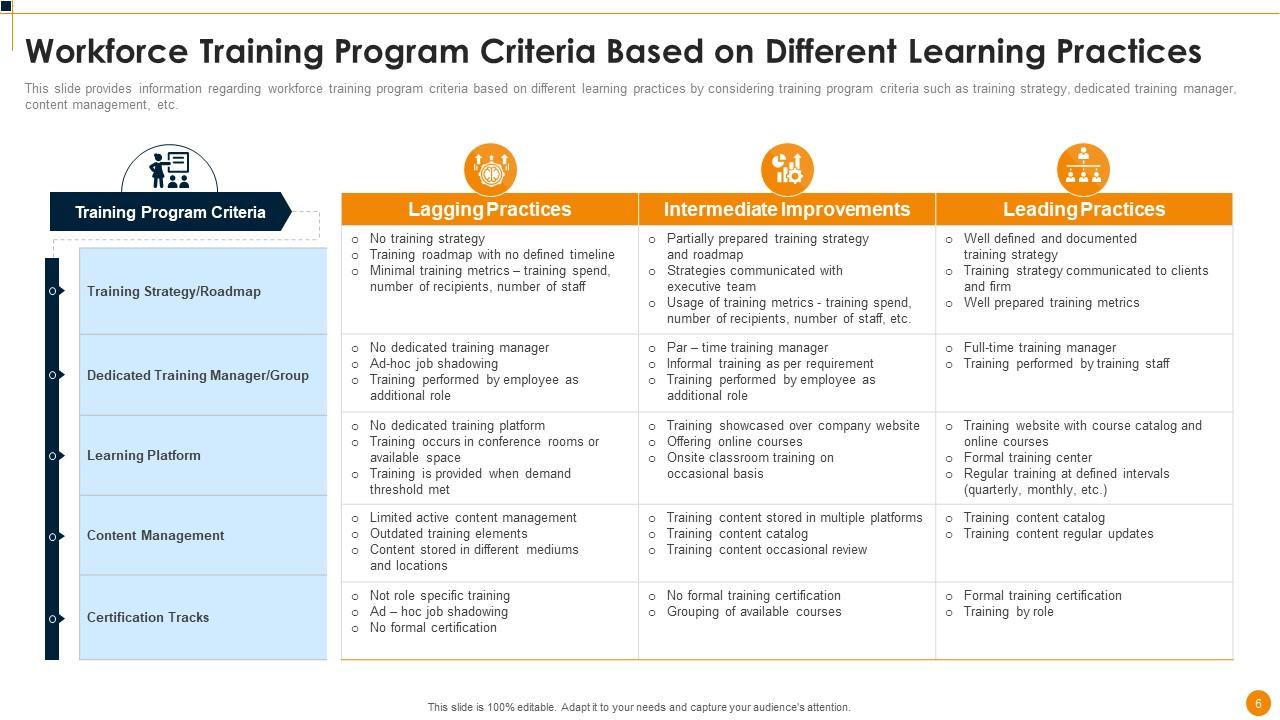
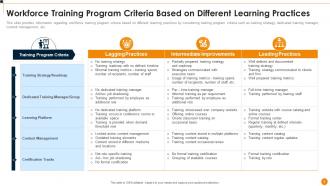
Folie 6 : Diese Folie zeigt die Kriterien des Mitarbeiterschulungsprogramms basierend auf unterschiedlichen Lernpraktiken.
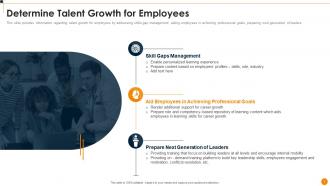
Folie 7 : Diese Folie enthält Informationen zum Talentwachstum für Mitarbeiter durch die Behebung von Qualifikationslücken.
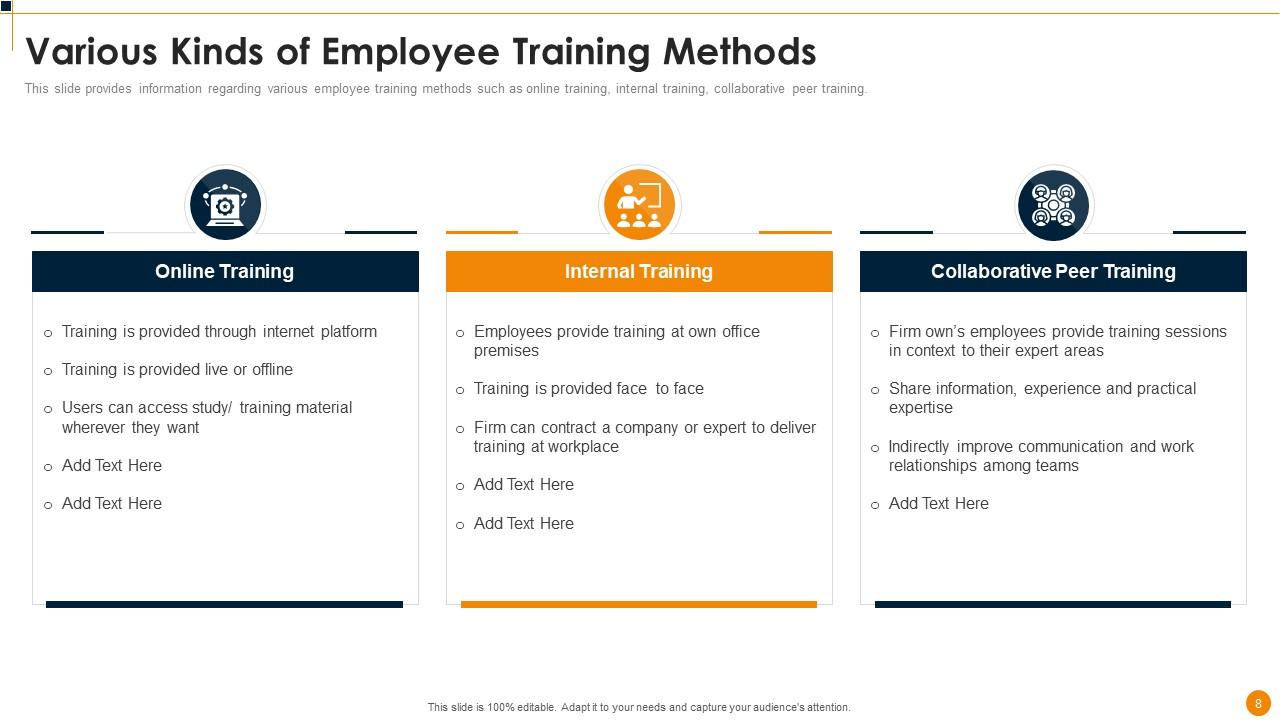
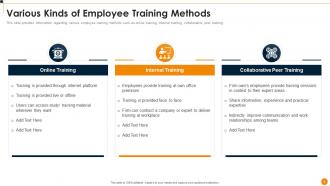
Folie 8 : Diese Folie repräsentiert verschiedene Arten von Mitarbeiterschulungsmethoden.
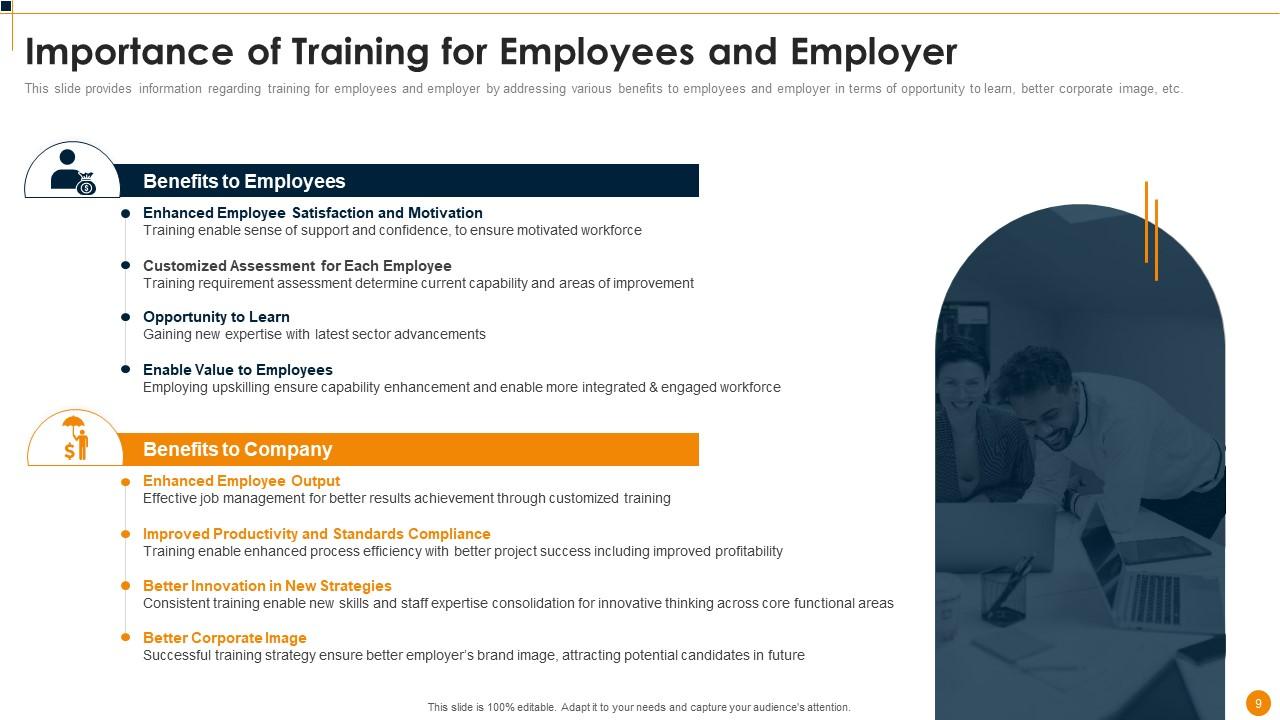
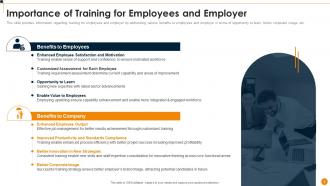
Folie 9 : Diese Folie zeigt Schulungen für Arbeitnehmer und Arbeitgeber, indem verschiedene Vorteile für Arbeitnehmer angesprochen werden.
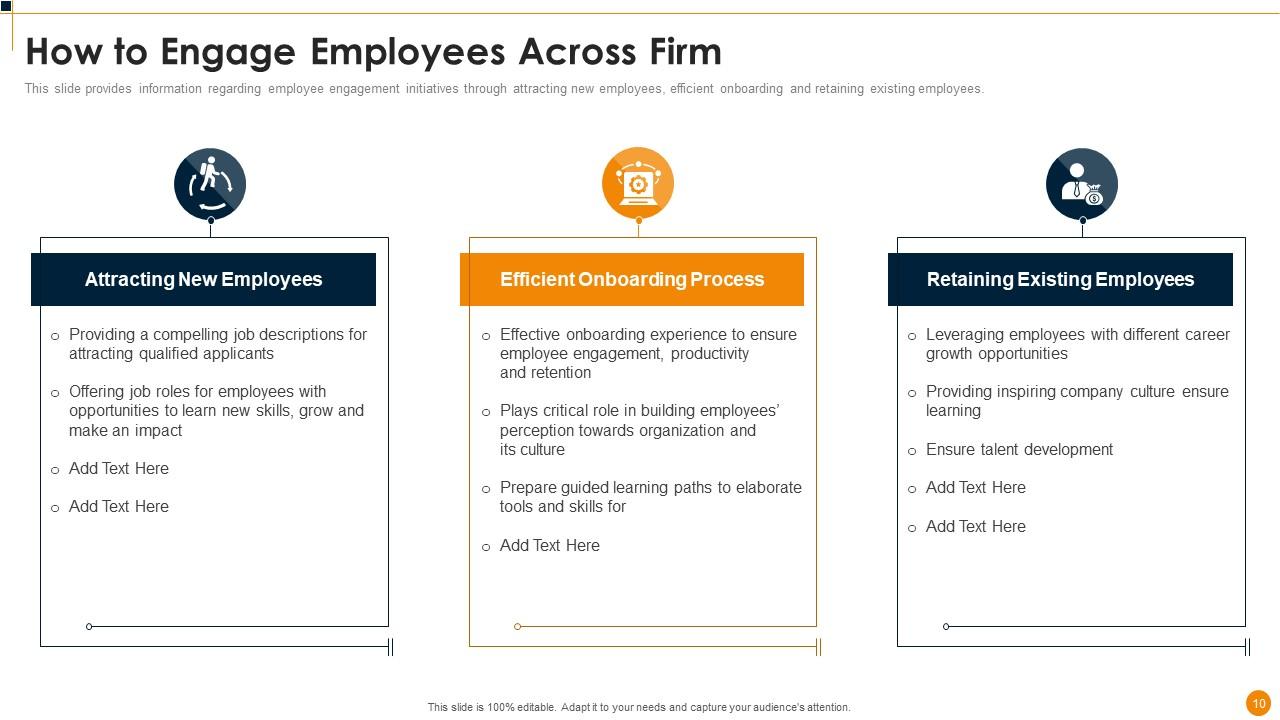
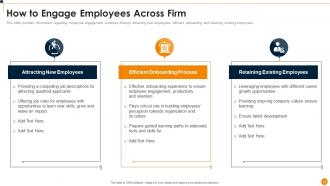
Folie 10 : Diese Folie zeigt die Bereitstellung überzeugender Stellenbeschreibungen zur Gewinnung qualifizierter Bewerber.
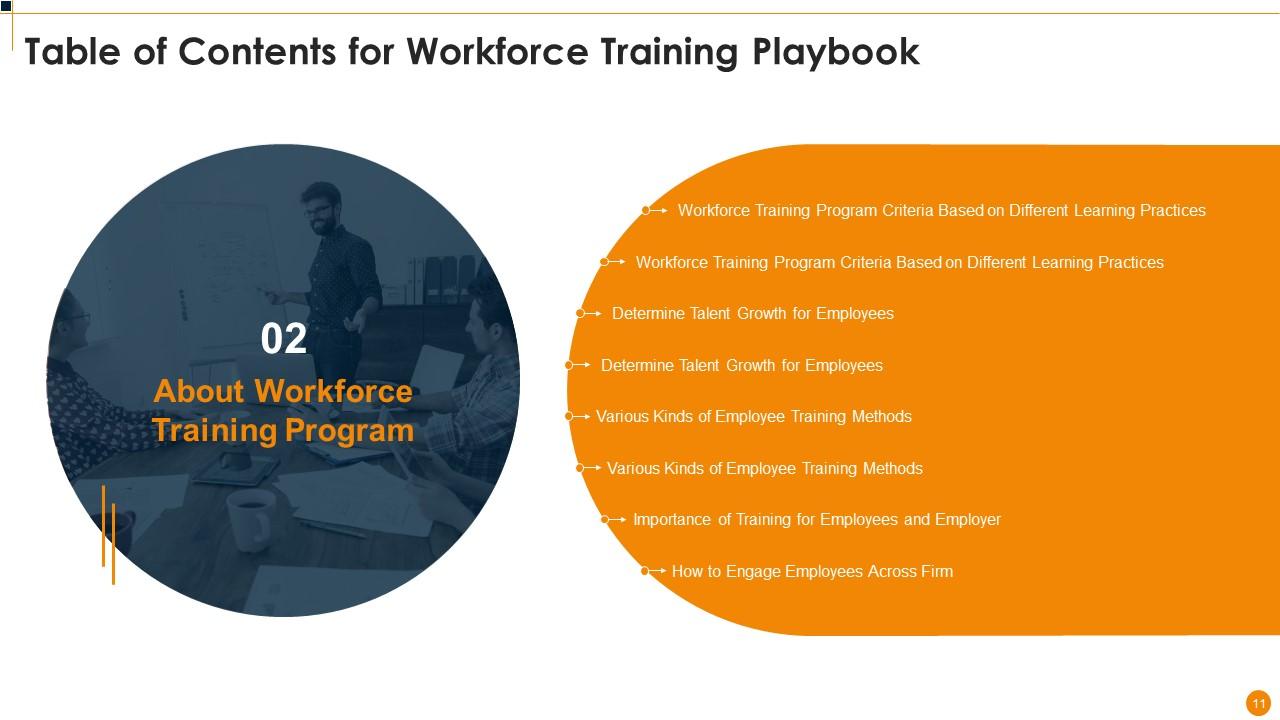
Folie 11 : Diese Folie zeigt Titel für Themen, die als nächstes in der Vorlage behandelt werden sollen.
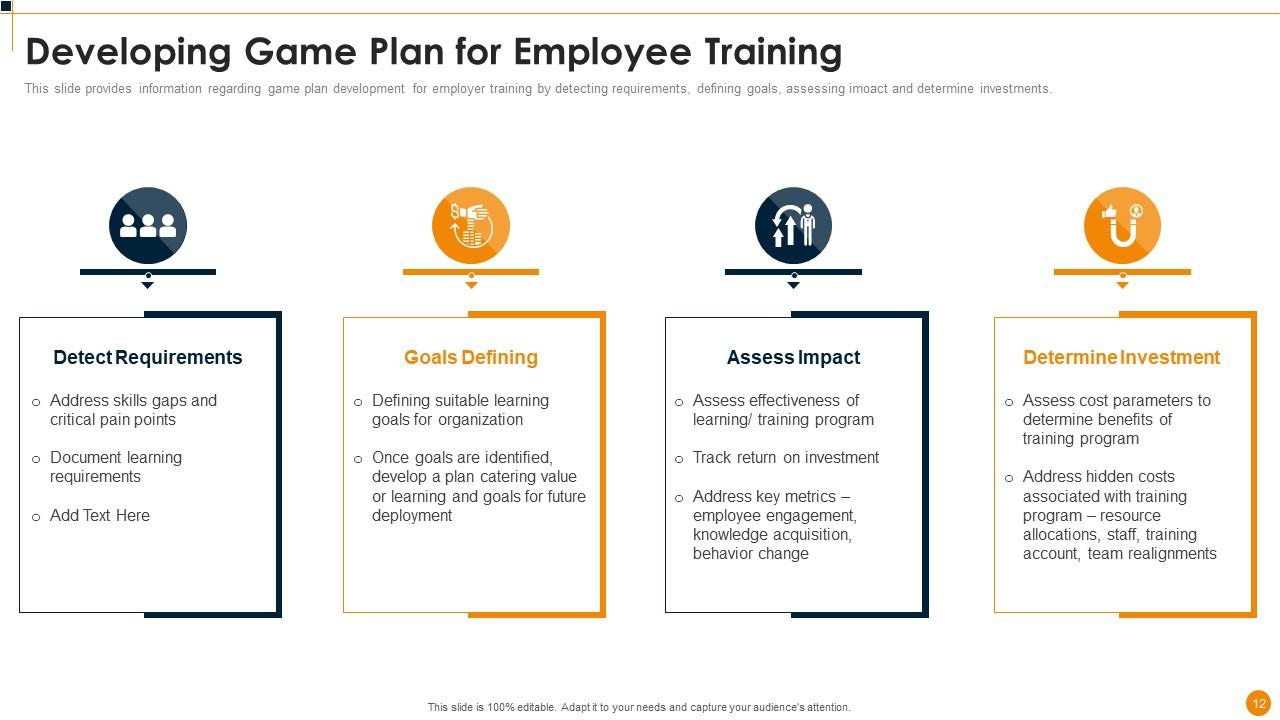
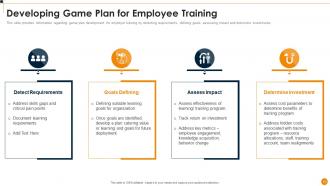
Folie 12 : Diese Folie zeigt die Entwicklung eines Spielplans für die Mitarbeiterschulung.
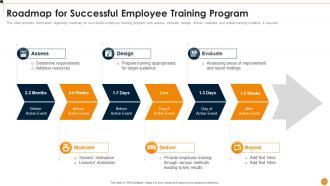
Folie 13 : Diese Folie zeigt den Fahrplan für ein erfolgreiches Mitarbeiterschulungsprogramm.
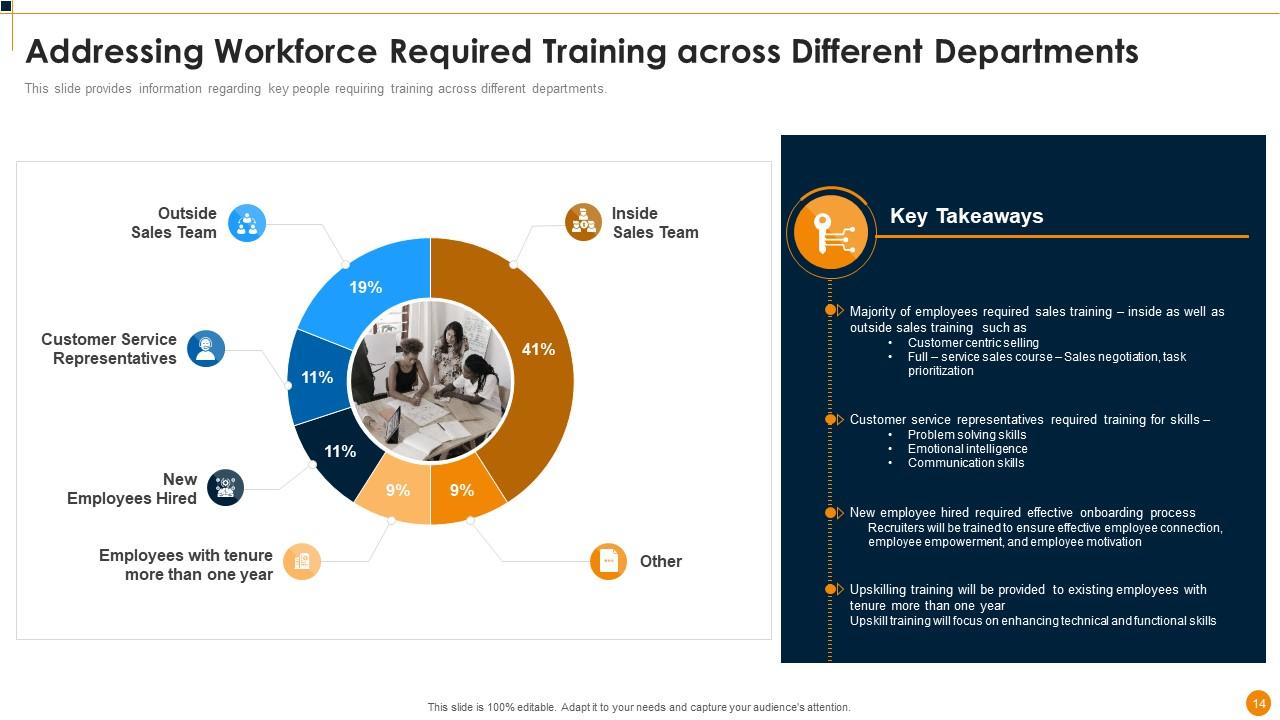
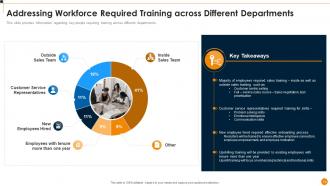
Folie 14 : Diese Folie stellt dar, wie die erforderliche Schulung der Belegschaft in verschiedenen Abteilungen behandelt wird.
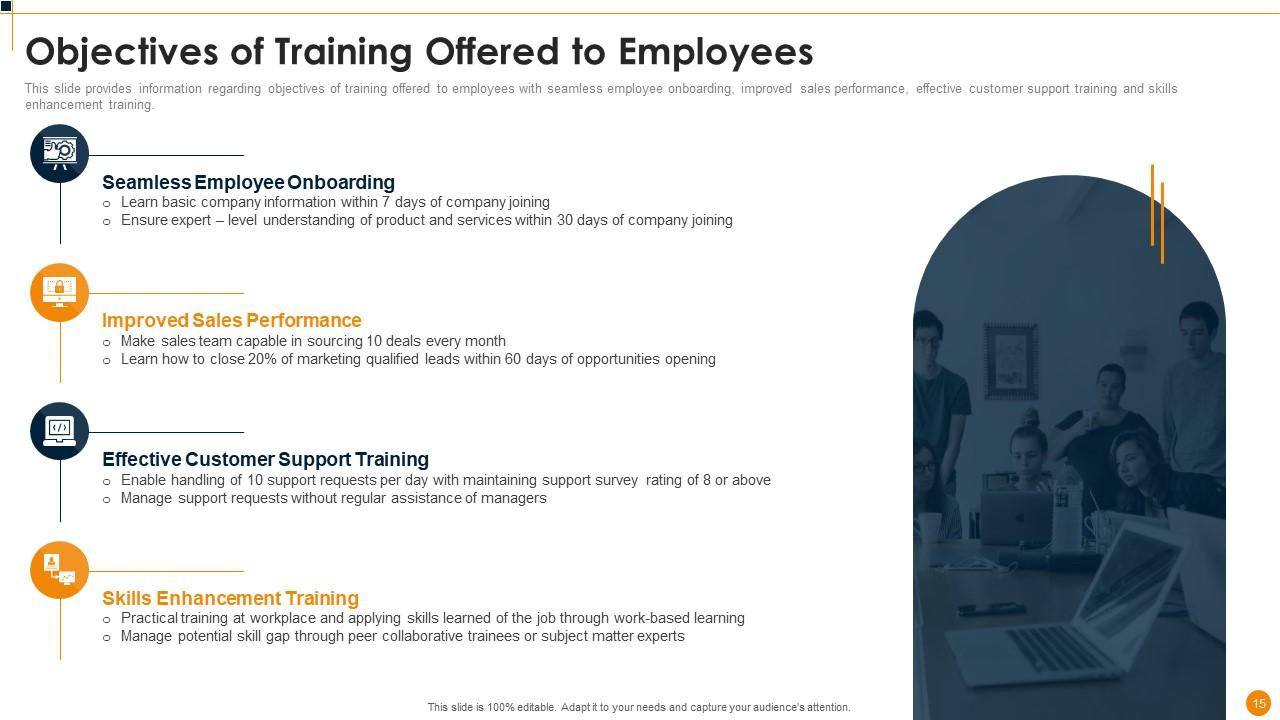
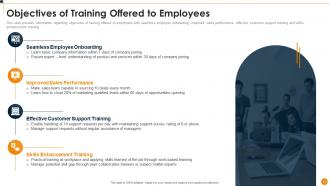
Folie 15 : Diese Folie zeigt die Schulungsziele für Mitarbeiter.
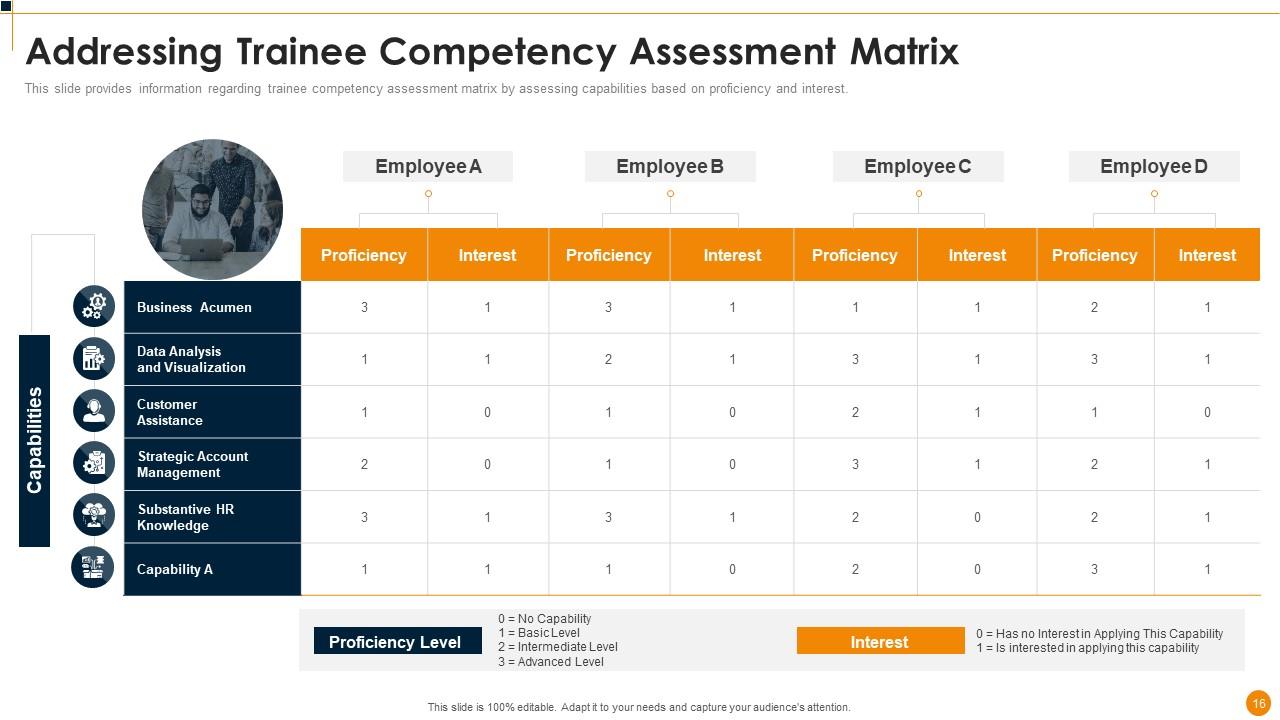
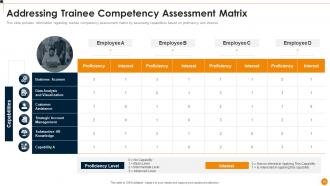
Folie 16 : Diese Folie zeigt die Kompetenzbewertungsmatrix für Auszubildende.
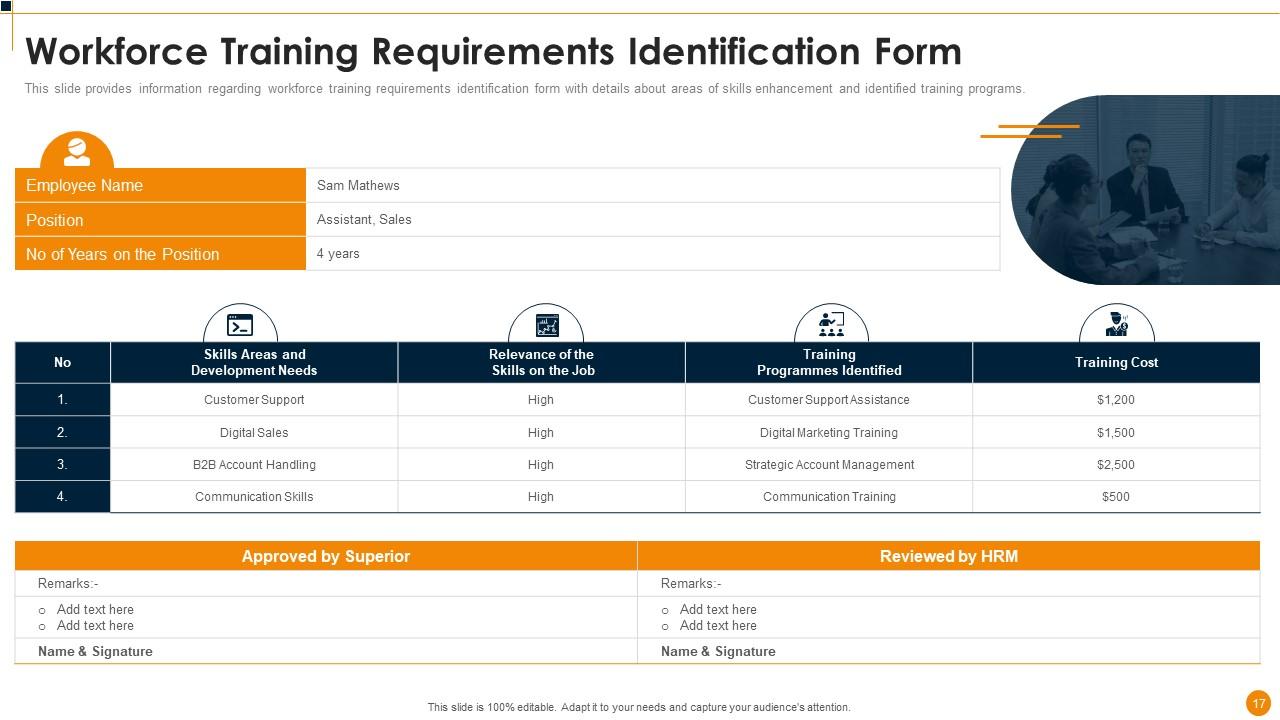
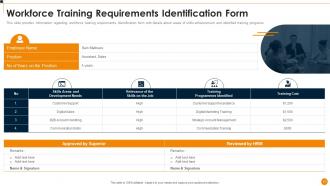
Folie 17 : Diese Folie zeigt das Formular zur Identifizierung des Schulungsbedarfs der Belegschaft.
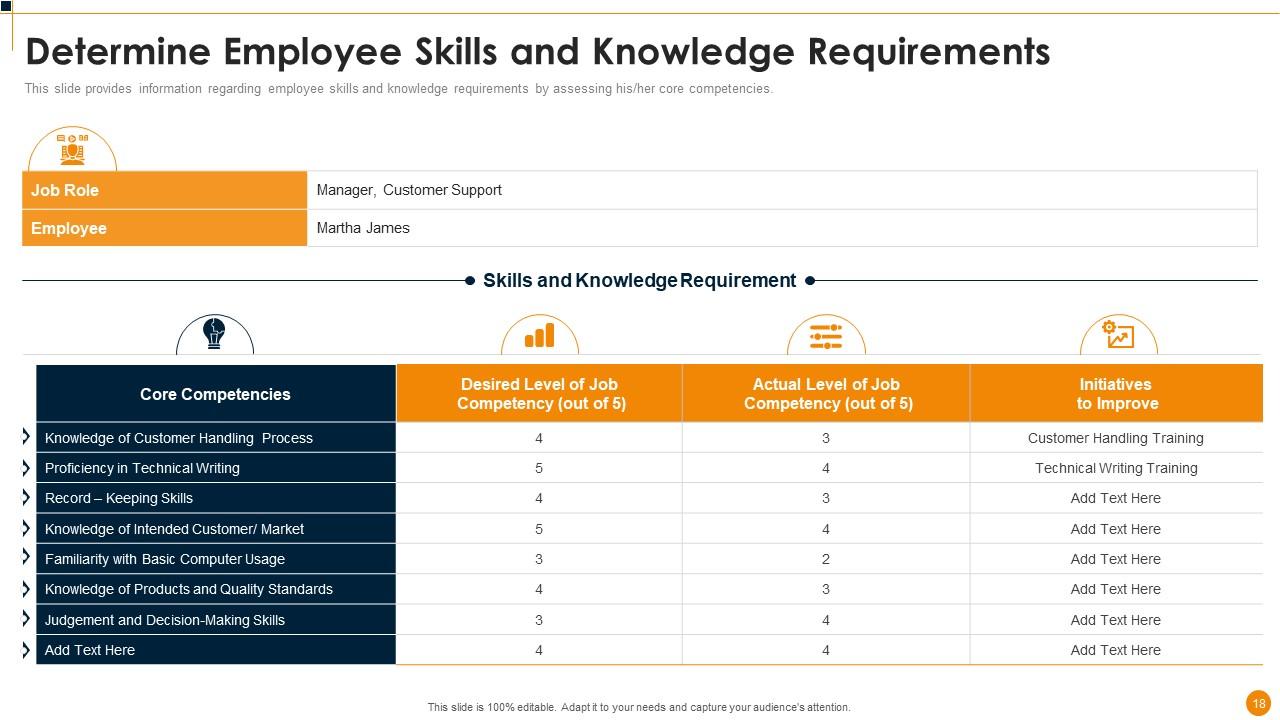
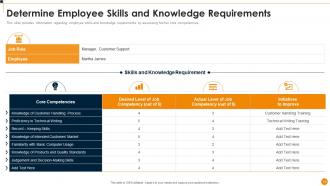
Folie 18 : Diese Folie zeigt die Bestimmung der Fähigkeiten und Wissensanforderungen von Mitarbeitern.
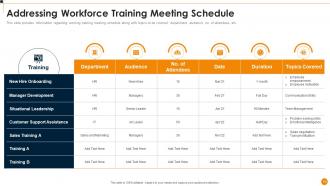
Folie 19 : Diese Folie zeigt den Besprechungsplan für Mitarbeiterschulungen.
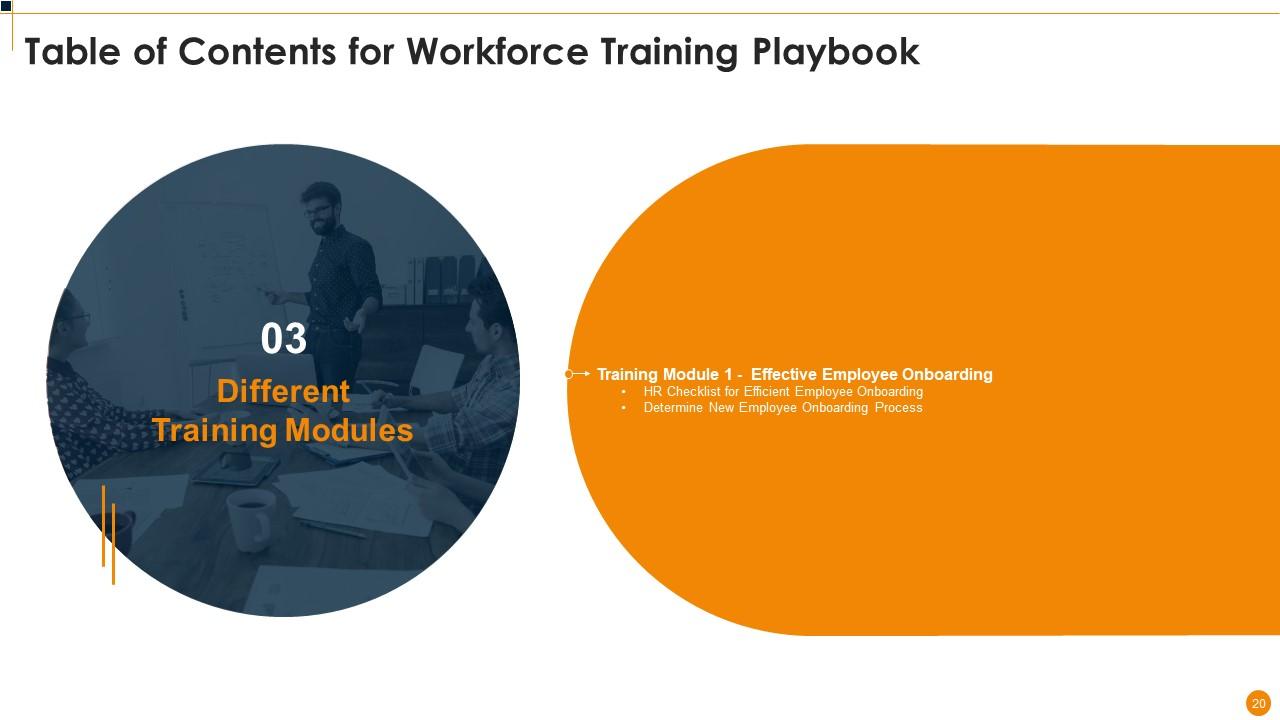
Folie 20 : Diese Folie zeigt Titel für Themen, die als nächstes in der Vorlage behandelt werden sollen.
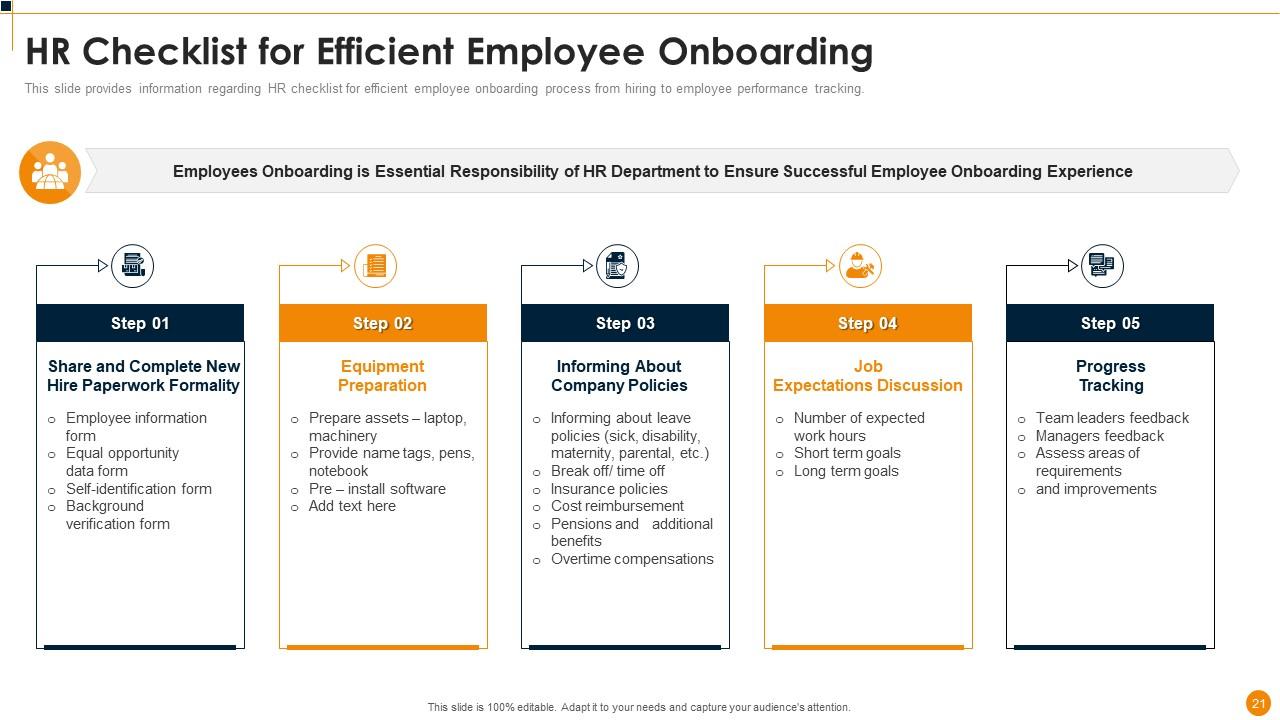
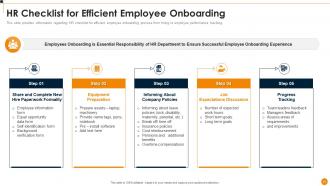
Folie 21 : Diese Folie zeigt die HR-Checkliste für einen effizienten Mitarbeiter-Onboarding-Prozess von der Einstellung bis zur Leistungsverfolgung der Mitarbeiter.
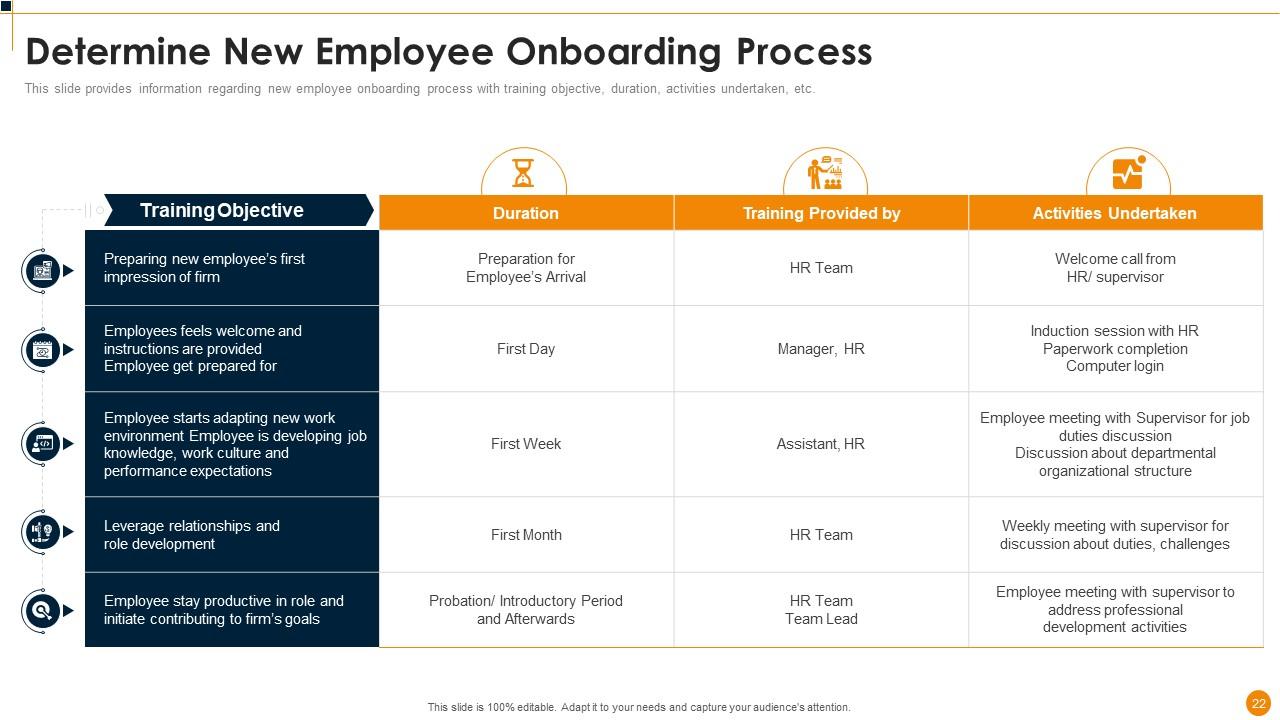
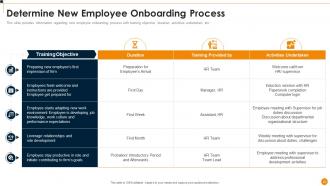
Folie 22 : Diese Folie zeigt den Onboarding-Prozess für neue Mitarbeiter.
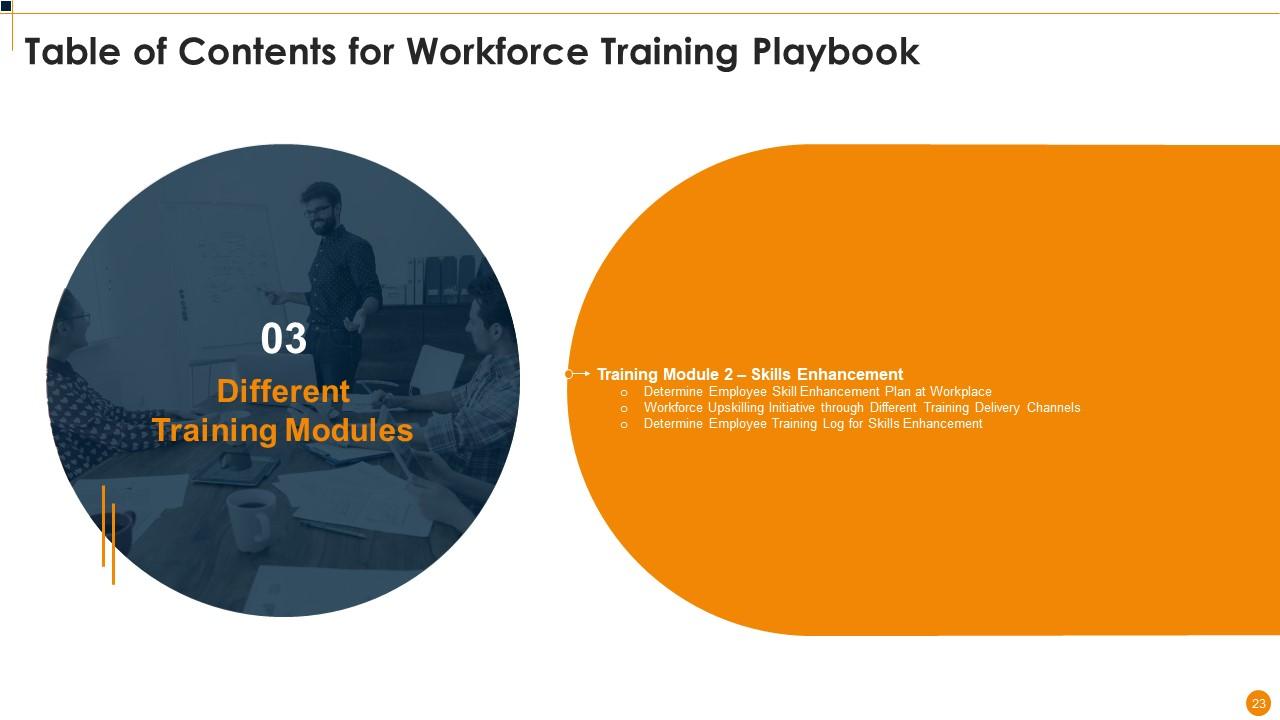
Folie 23 : Diese Folie zeigt Titel für Themen, die als nächstes in der Vorlage behandelt werden sollen.
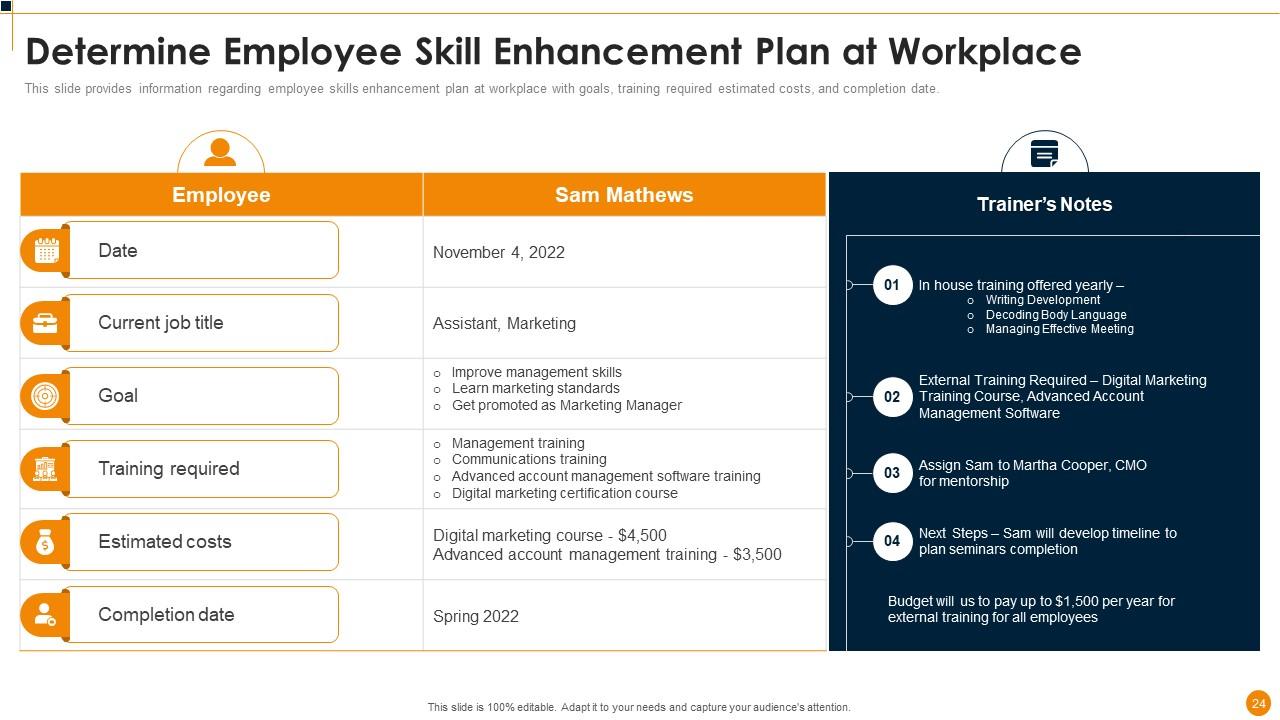
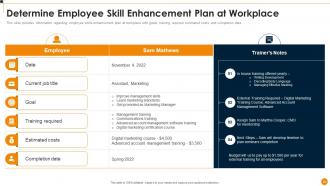
Folie 24 : Diese Folie zeigt den Plan zur Verbesserung der Mitarbeiterfähigkeiten am Arbeitsplatz.
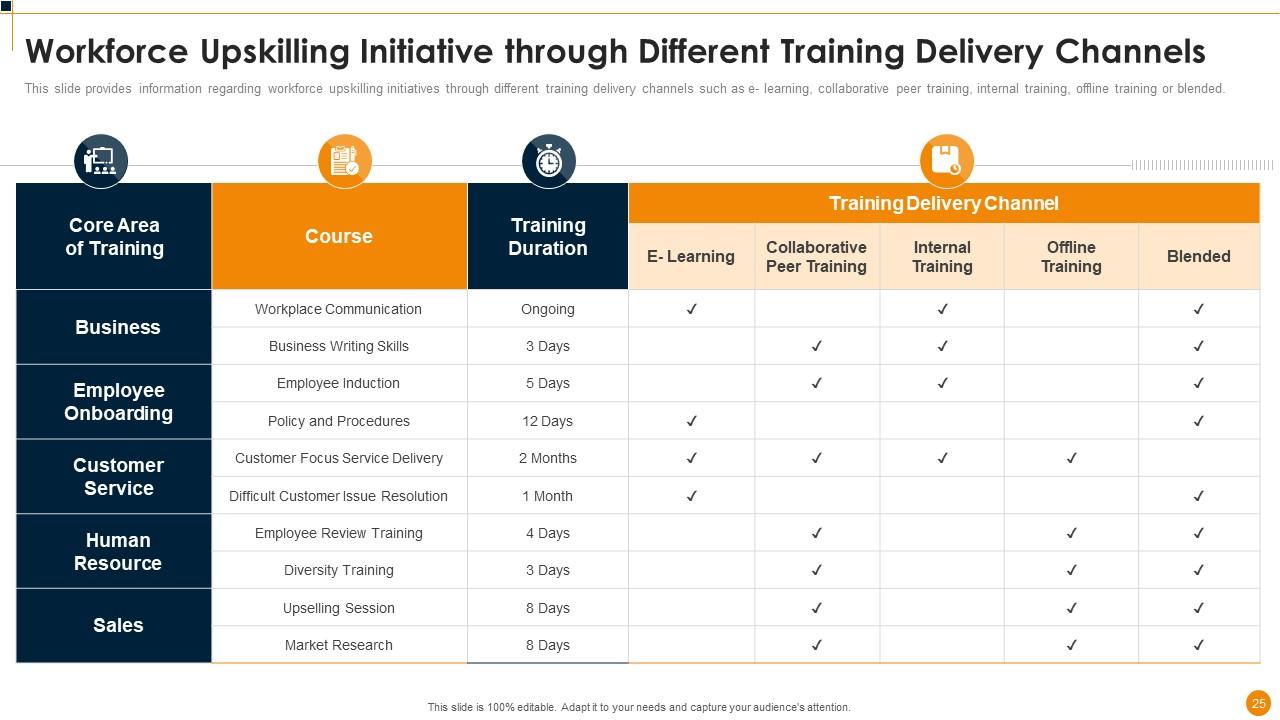
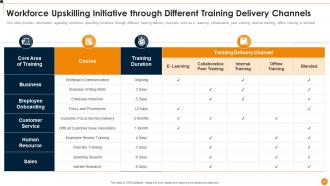
Folie 25 : Diese Folie zeigt die Workforce Upskilling-Initiative durch verschiedene Schulungsbereitstellungskanäle.
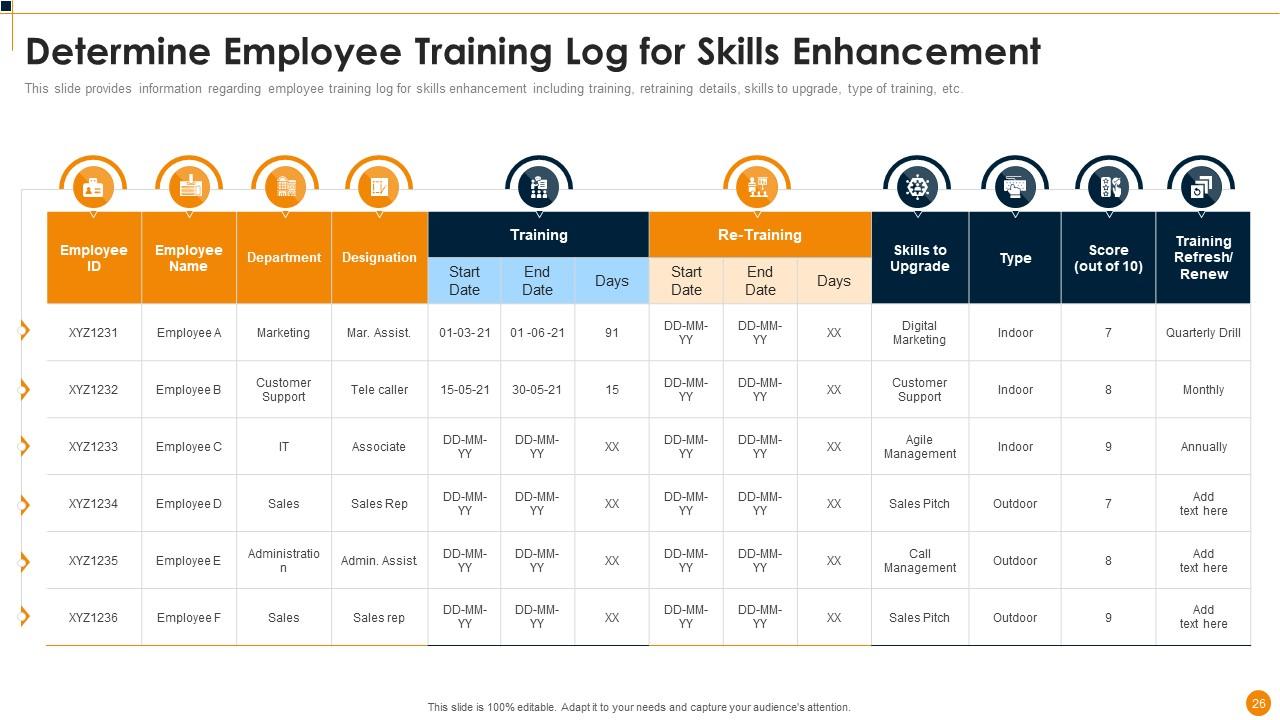
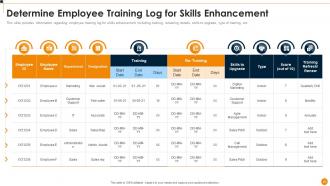
Folie 26 : Diese Folie stellt das Mitarbeiterschulungsprotokoll zur Verbesserung der Fähigkeiten fest.
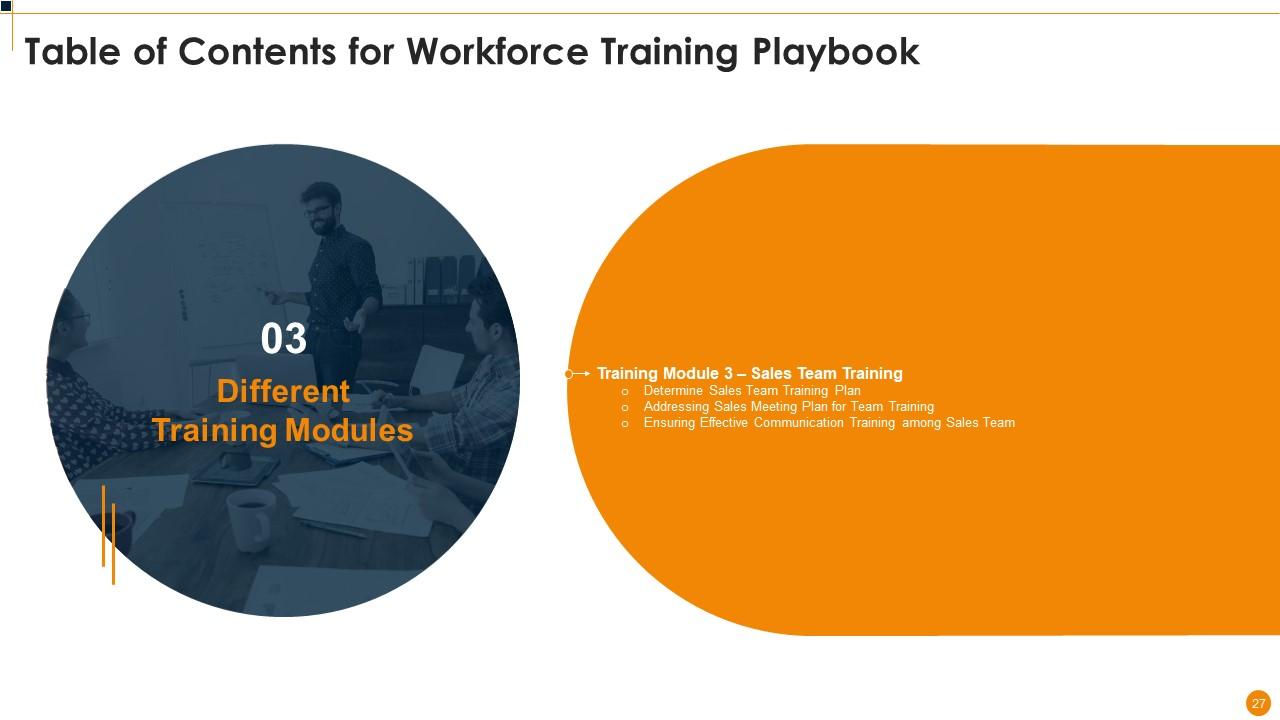
Folie 27 : Diese Folie zeigt Titel für Themen, die als nächstes in der Vorlage behandelt werden sollen.
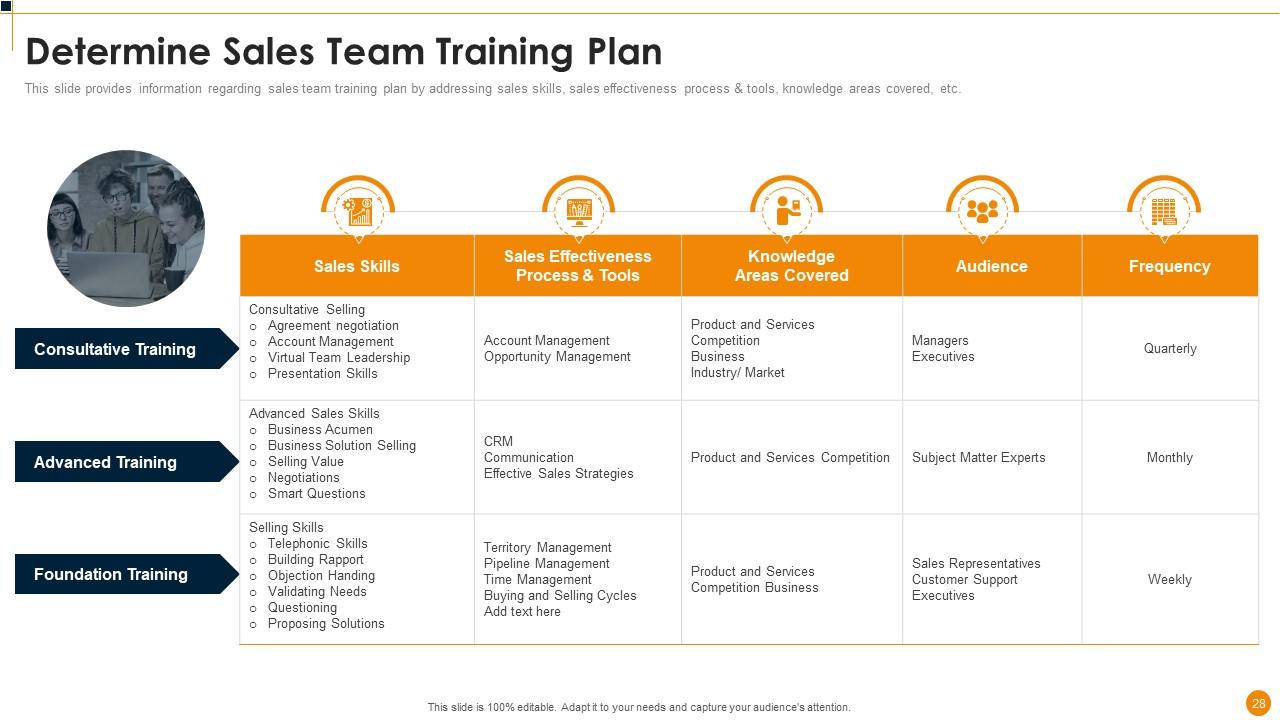
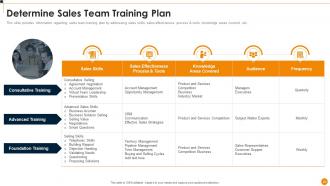
Folie 28 : Diese Folie bietet Informationen zum Schulungsplan für das Verkaufsteam, indem sie sich mit Verkaufsfertigkeiten befasst.
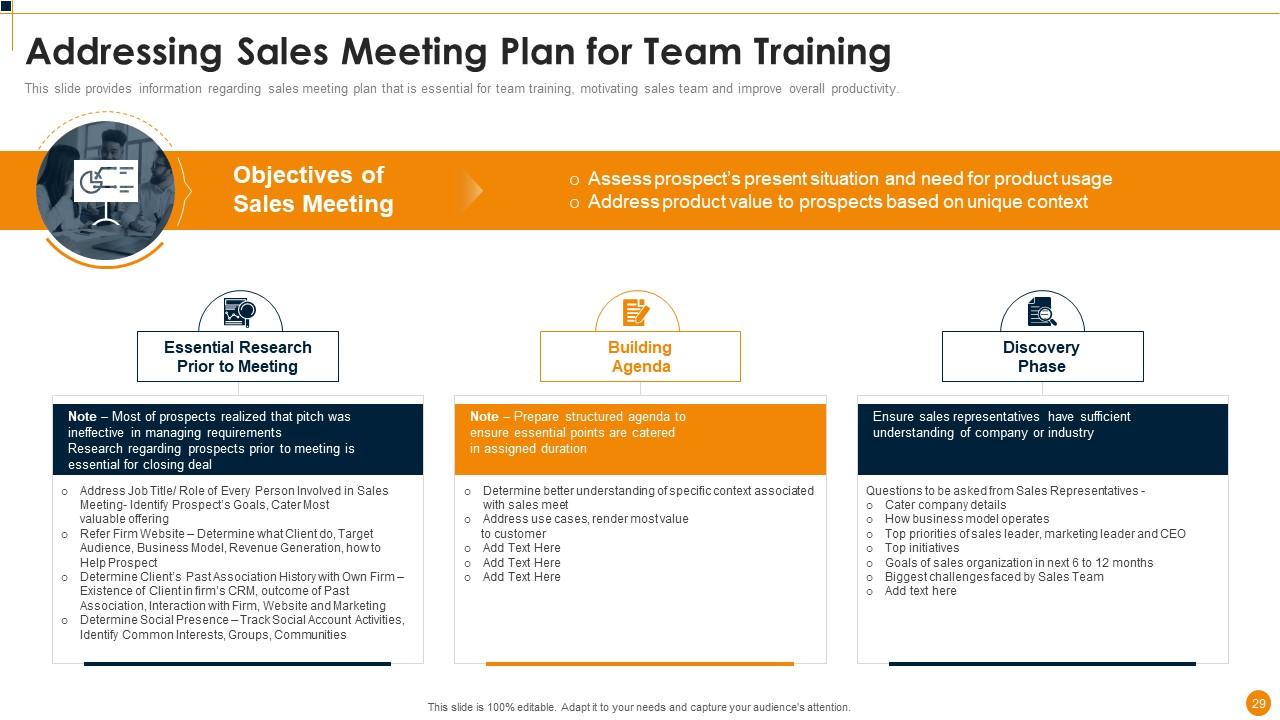
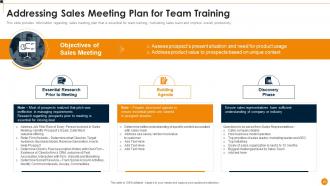
Folie 29 : Diese Folie zeigt den Plan für Verkaufsgespräche für Teamschulungen.
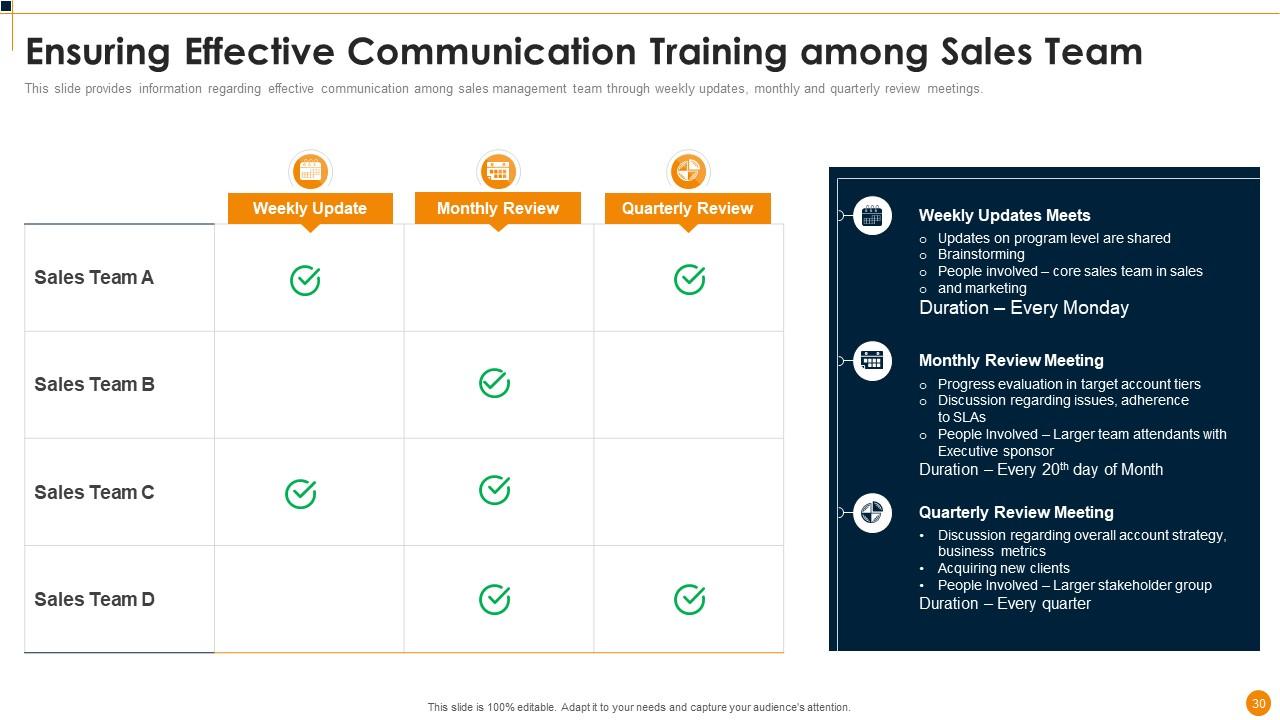
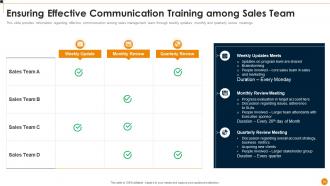
Folie 30 : Diese Folie zeigt die Gewährleistung eines effektiven Kommunikationstrainings für das Verkaufsteam.
Folie 31 : Diese Folie zeigt Titel für Themen, die als nächstes in der Vorlage behandelt werden sollen.
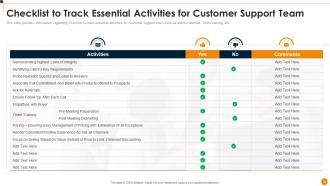
Folie 32 : Diese Folie enthält eine Checkliste zur Nachverfolgung wesentlicher Aktivitäten für das Kundensupportteam.
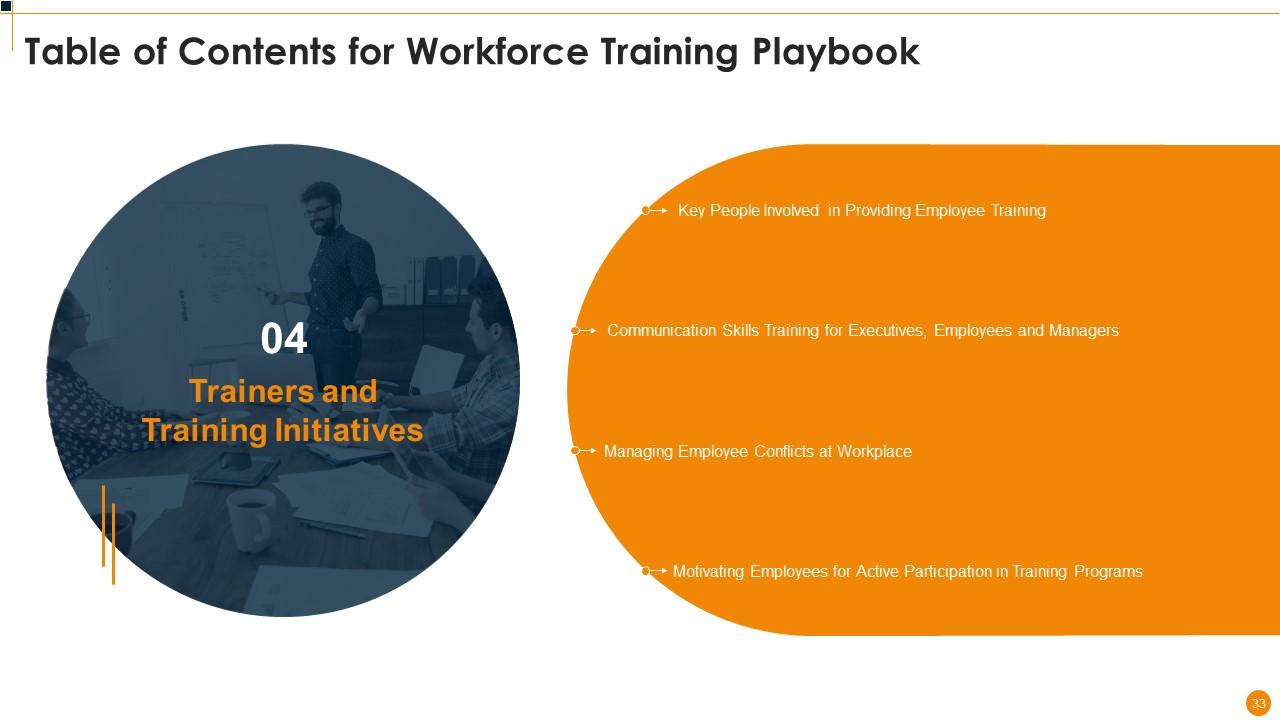
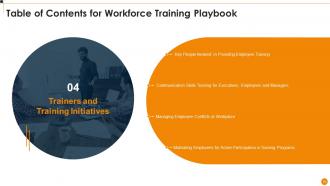
Folie 33 : Diese Folie zeigt Titel für Themen, die als nächstes in der Vorlage behandelt werden sollen.
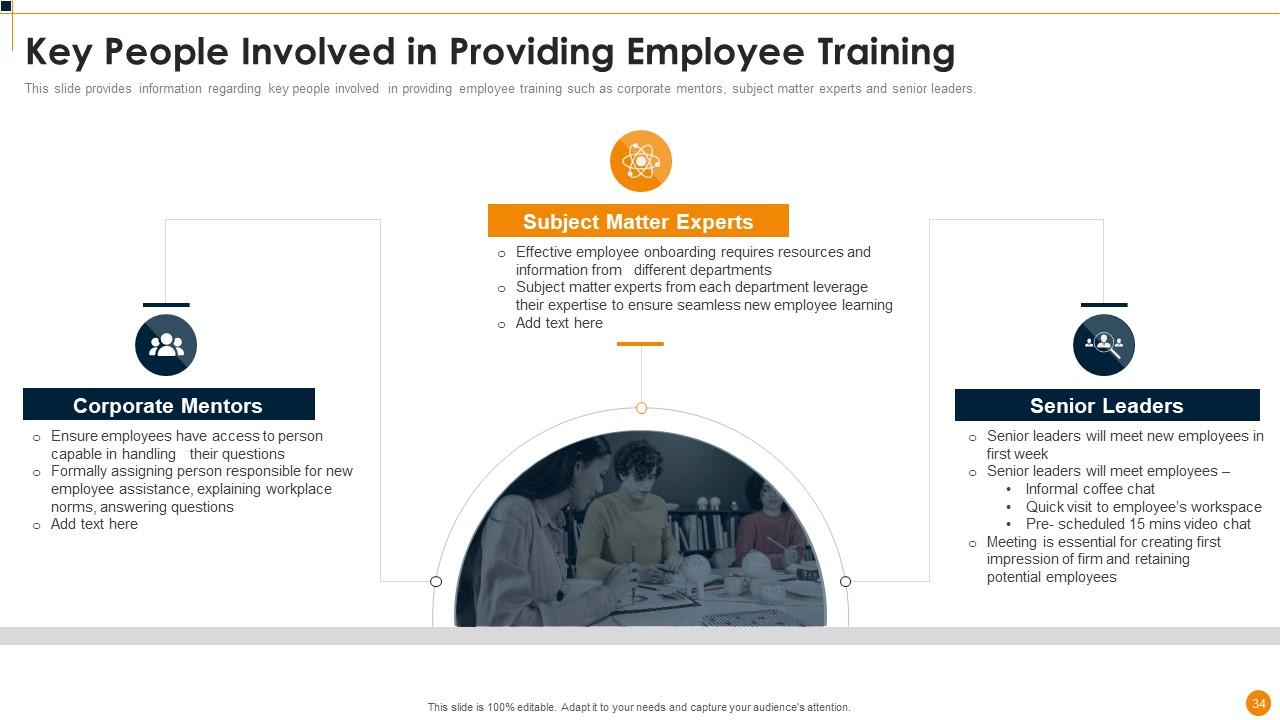
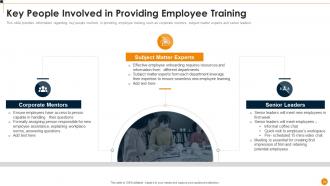
Folie 34 : Diese Folie zeigt Schlüsselpersonen, die an der Bereitstellung von Mitarbeiterschulungen beteiligt sind.
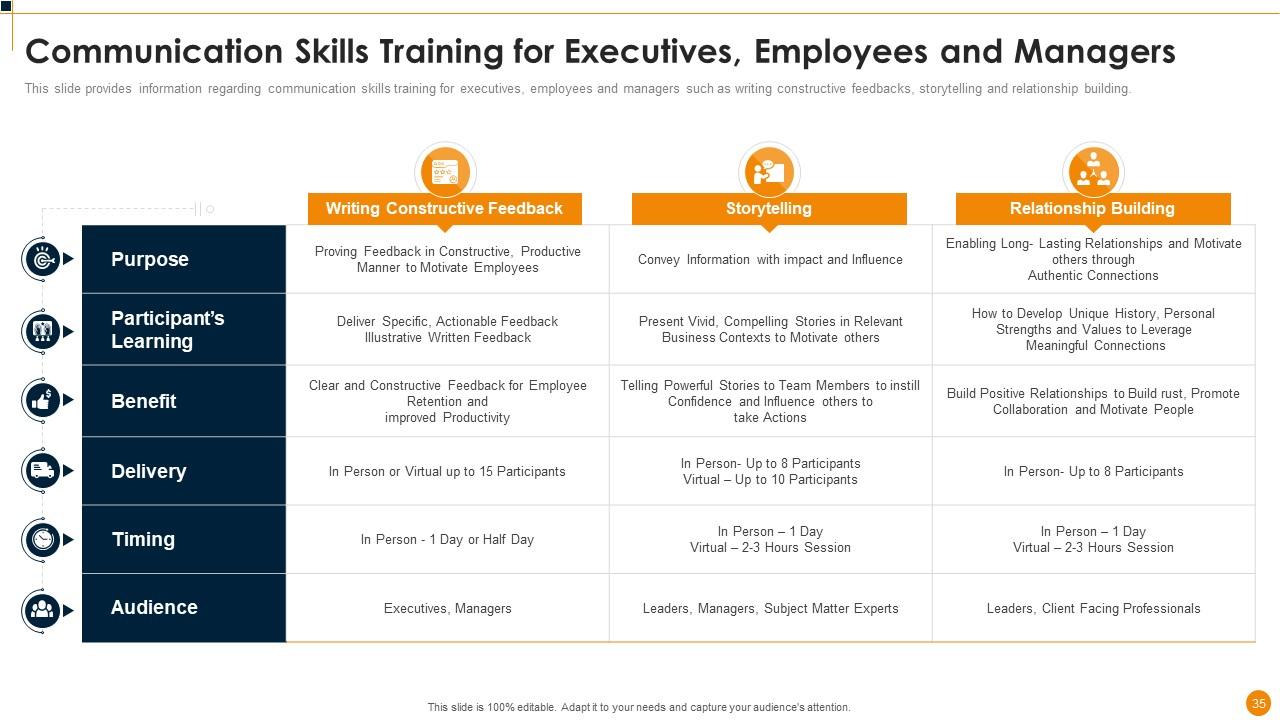
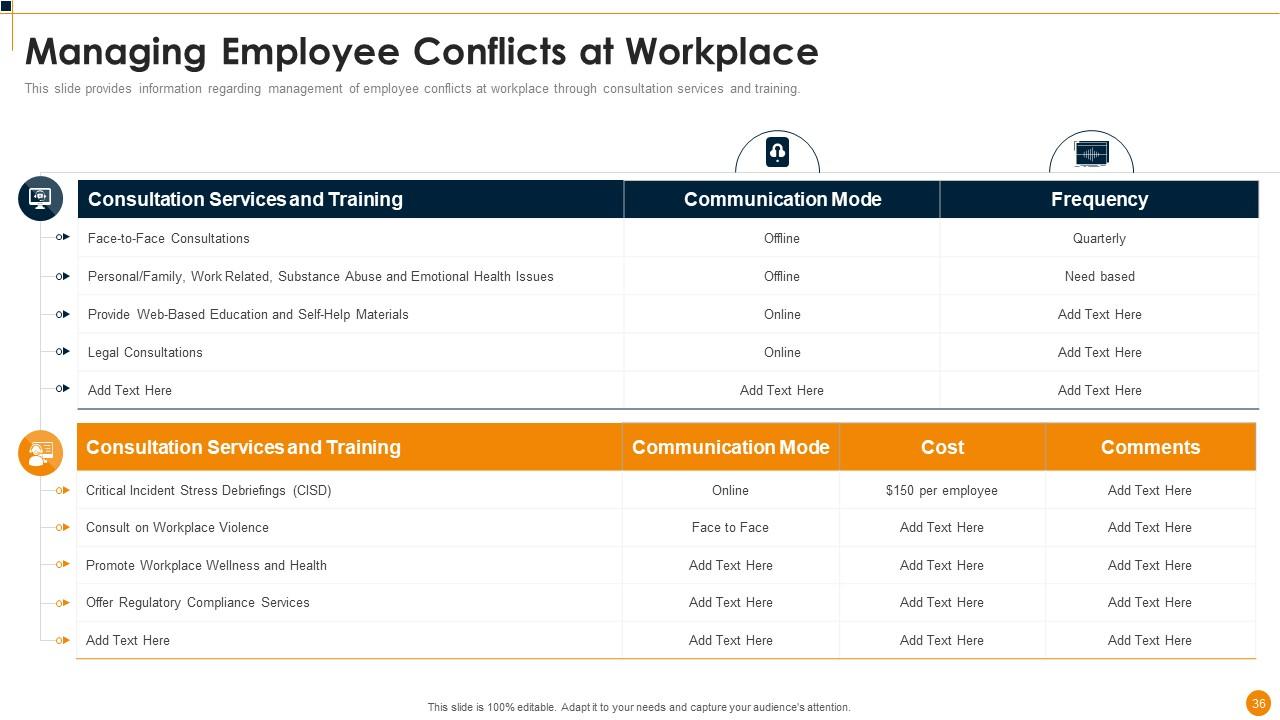
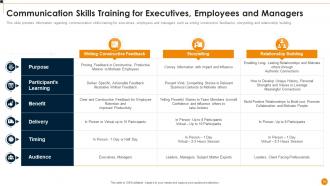
Folie 36 : Diese Folie repräsentiert Kommunikationsfähigkeitstraining für Führungskräfte, Mitarbeiter und Manager.
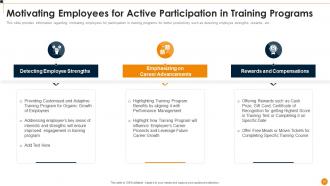
Folie 37 : Diese Folie zeigt die Motivierung von Mitarbeitern zur aktiven Teilnahme an Schulungsprogrammen.
Folie 38 : Diese Folie zeigt Titel für Themen, die als nächstes in der Vorlage behandelt werden sollen.
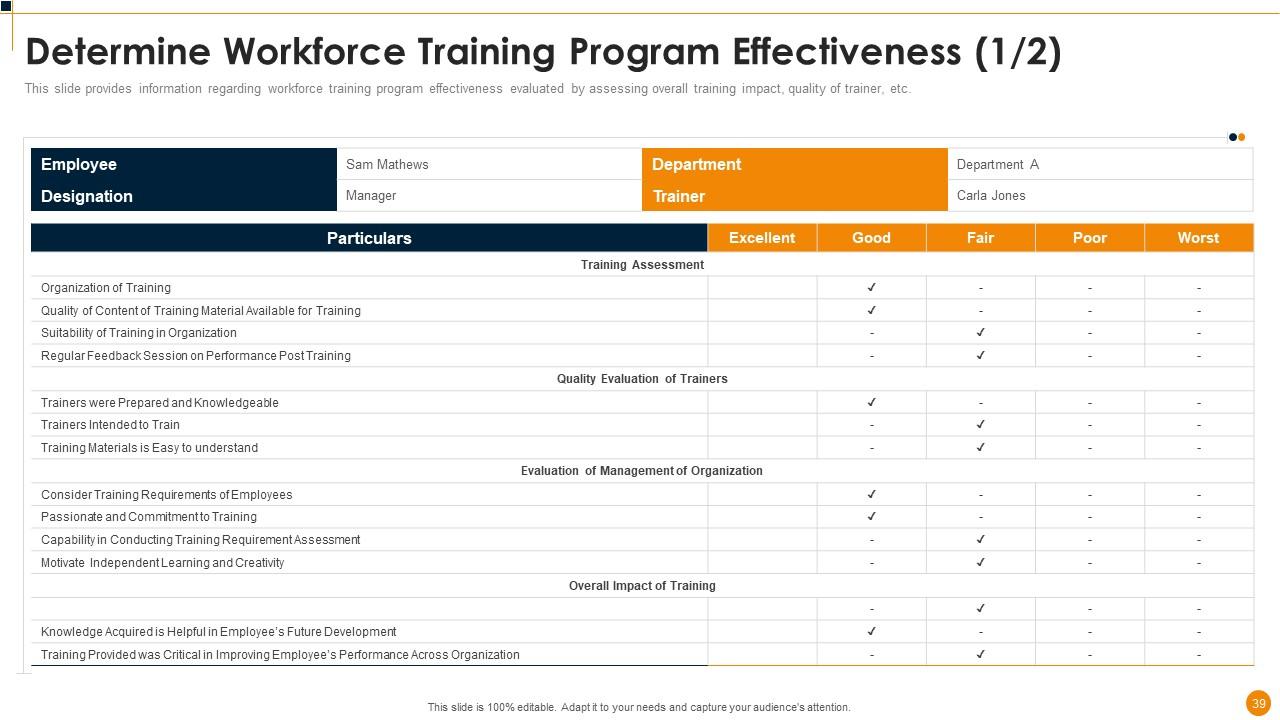
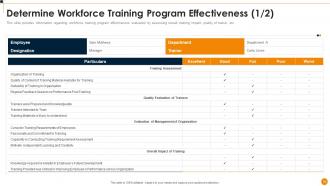
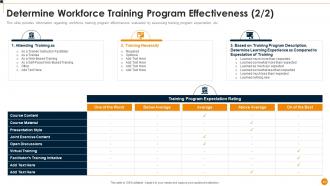
Folie 39 : Diese Folie zeigt die Effektivität des Mitarbeiterschulungsprogramms.
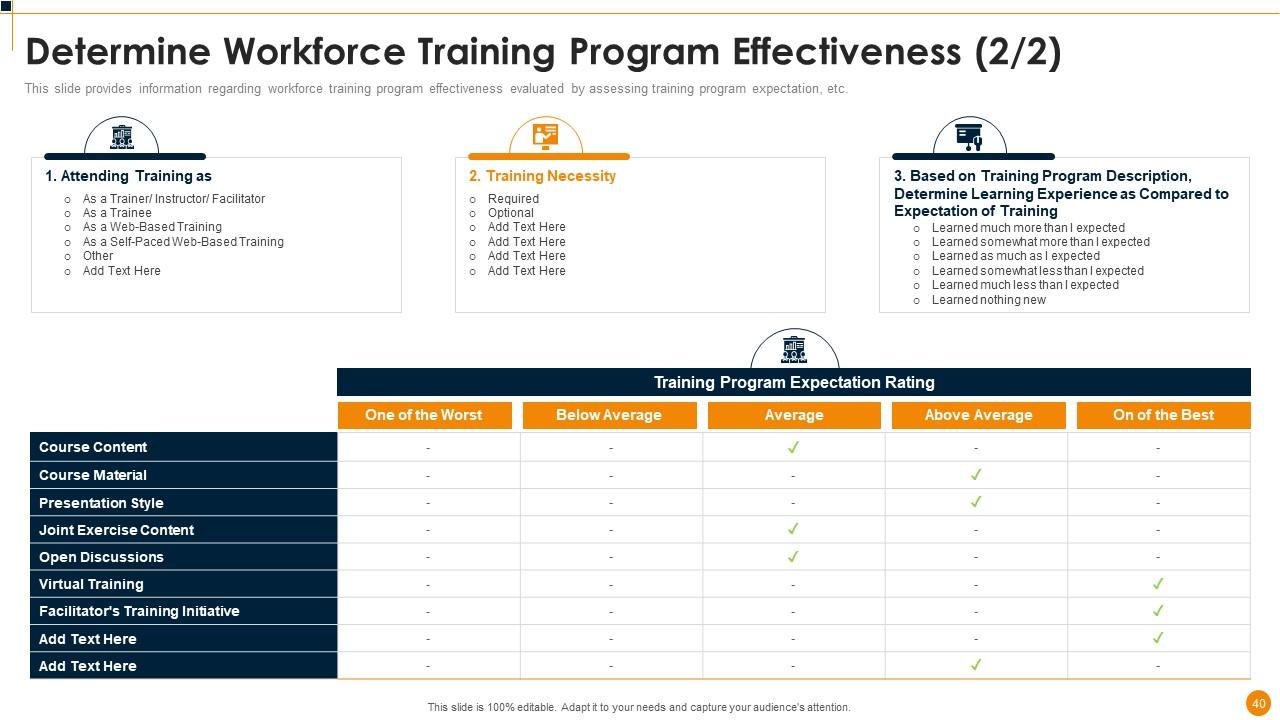
Folie 40 : Dies ist eine weitere Folie, die die Effektivität des Mitarbeiterschulungsprogramms fortsetzt.
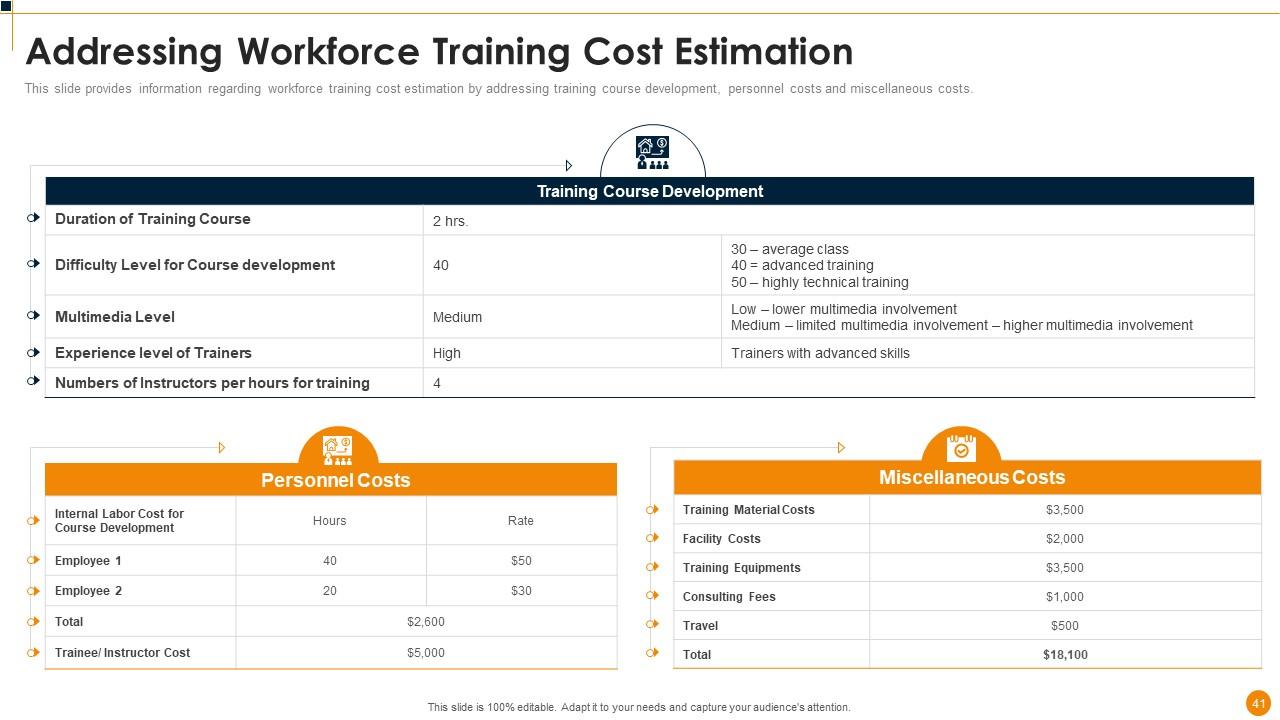
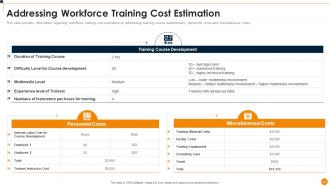
Folie 41 : Diese Folie enthält Informationen zur Kostenschätzung für die Schulung von Arbeitskräften.
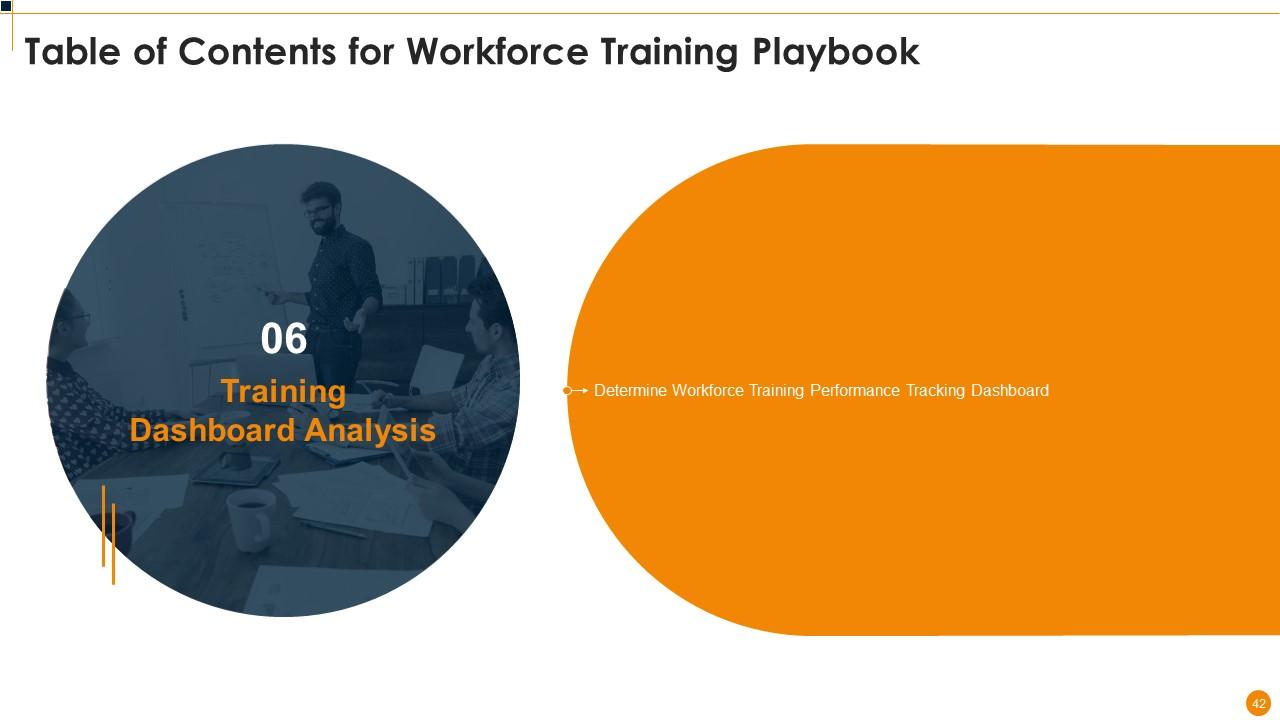
Folie 42 : Diese Folie zeigt Titel für Themen, die als nächstes in der Vorlage behandelt werden sollen.
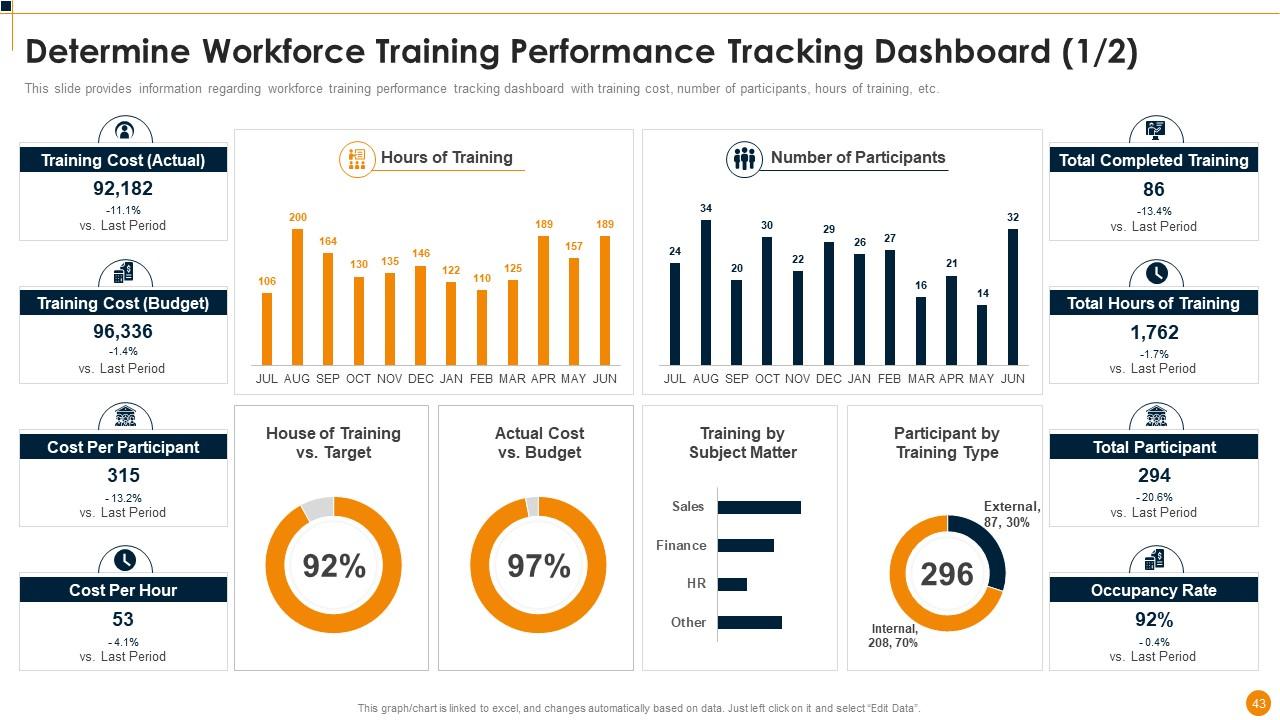
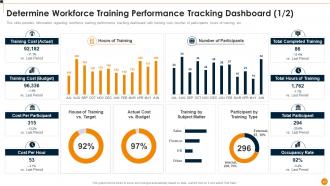
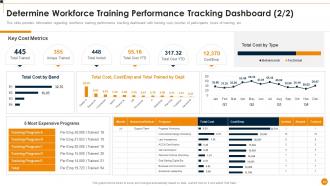
Folie 43 : Auf dieser Folie wird das Dashboard zur Ermittlung der Mitarbeiterschulungsleistung vorgestellt.
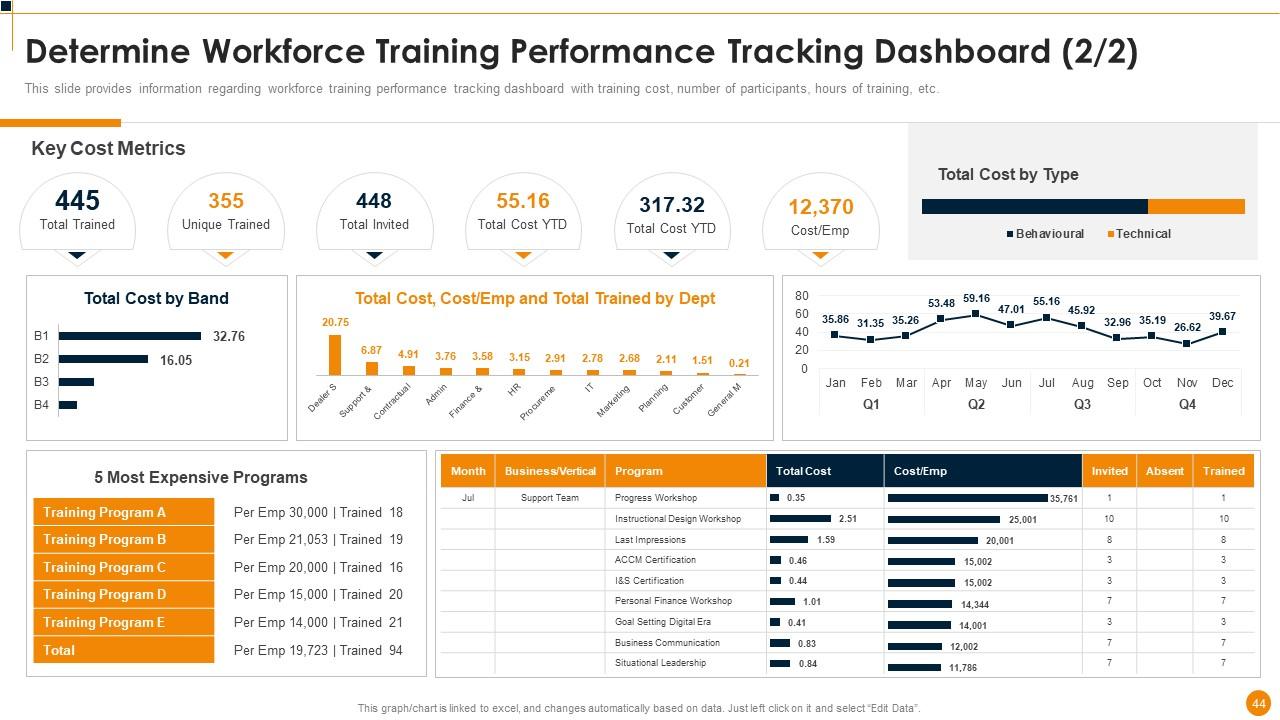
Folie 44 : Dies ist eine weitere Folie, die mit dem Dashboard zur Ermittlung der Mitarbeiterschulungsleistung fortfährt.
Folie 45 : Diese Folie zeigt Icons for Workforce Training Playbook.
Folie 46 : Diese Folie trägt den Titel „Zusätzliche Folien“, um voranzukommen.
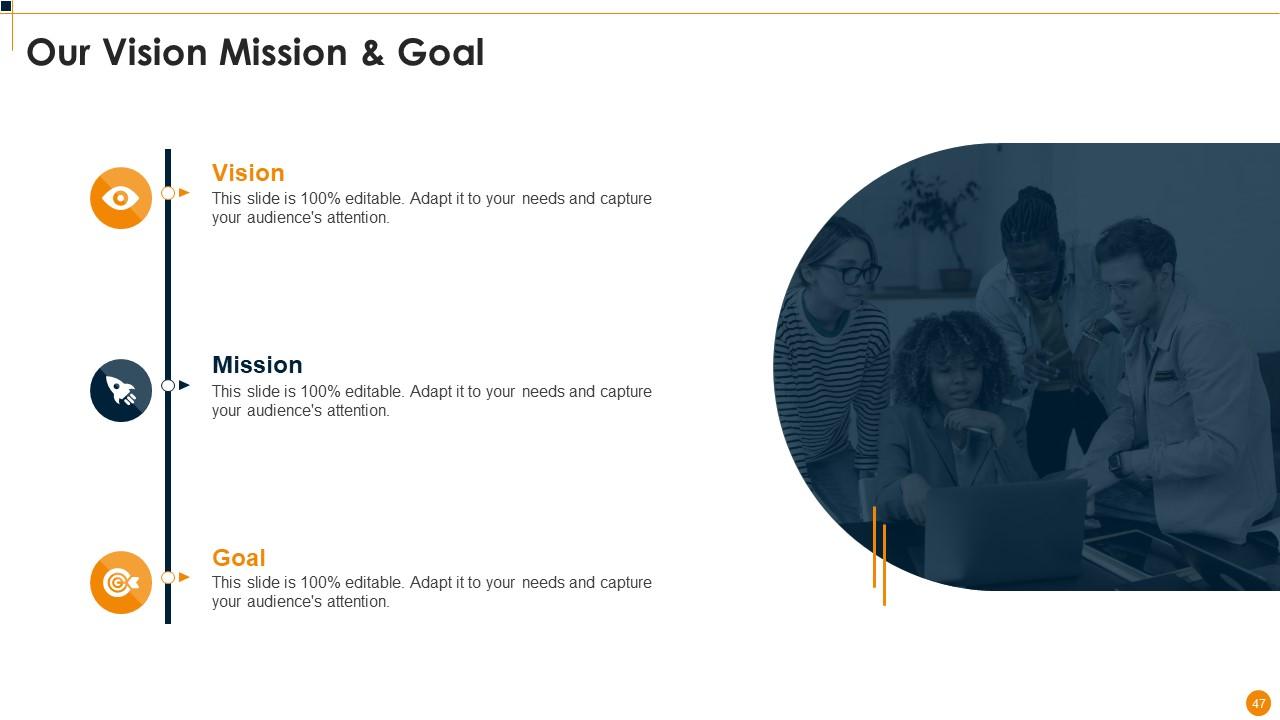
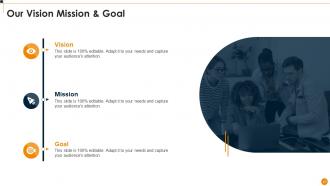
Folie 47 : Dies ist unsere Missionsfolie mit zugehörigen Bildern und Texten.
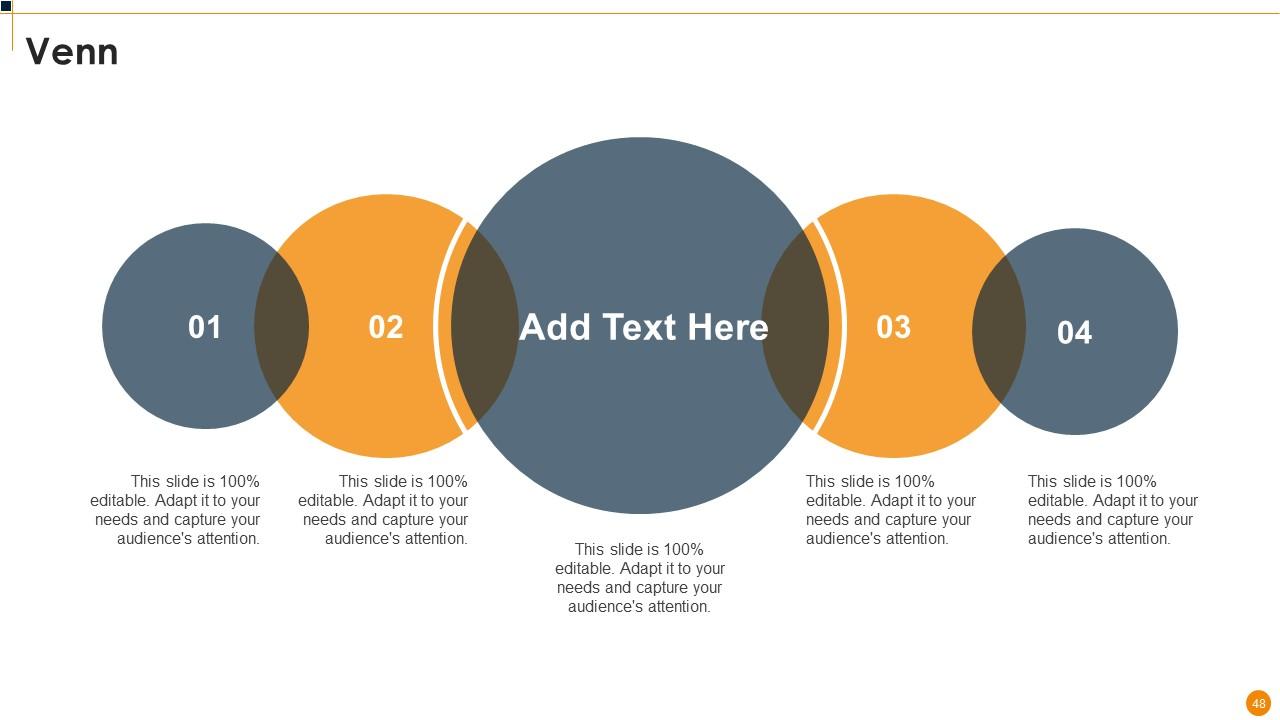
Folie 48 : Diese Folie zeigt ein Venn-Diagramm mit Textfeldern.
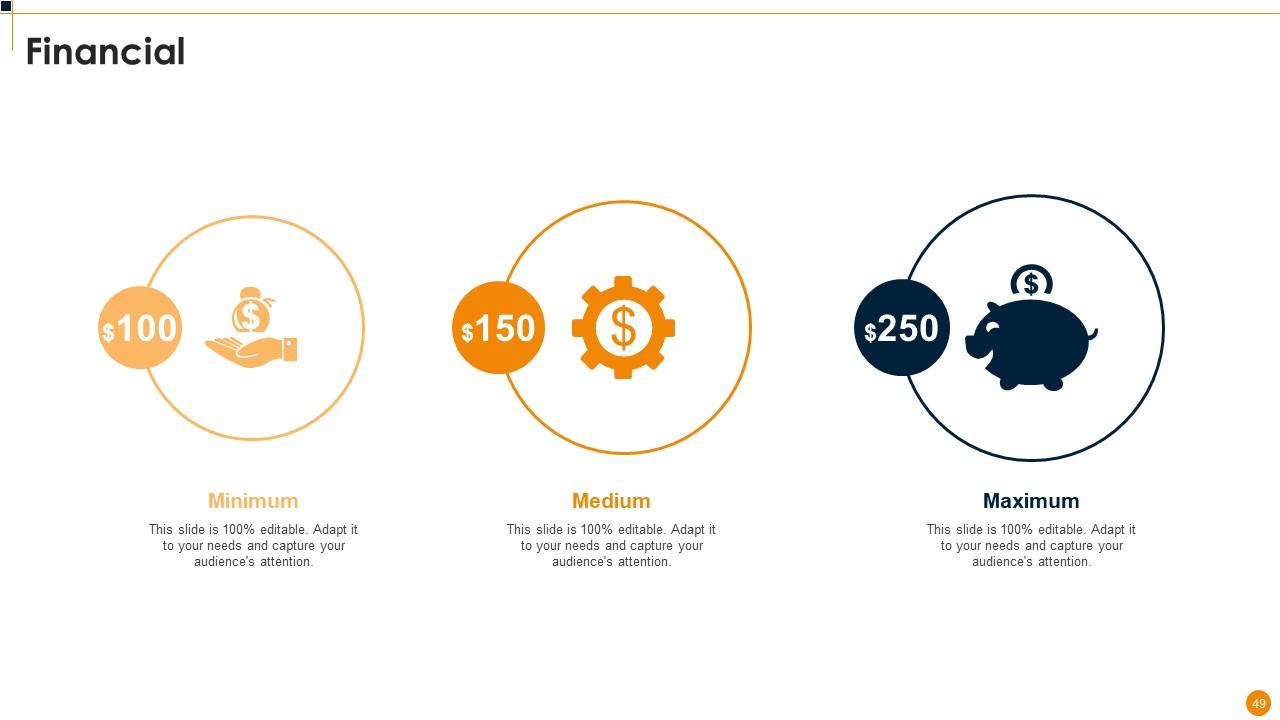
Folie 49 : Dies ist eine Finanzfolie. Zeigen Sie hier Ihre finanzbezogenen Sachen.
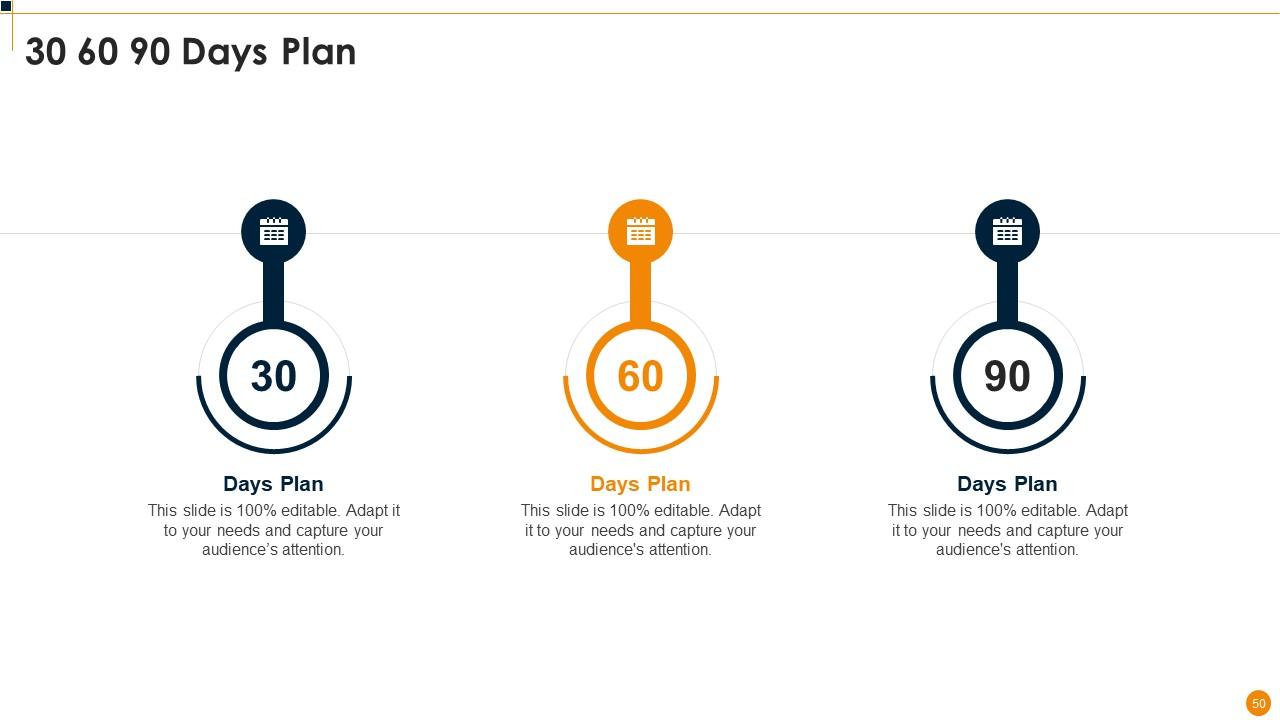
Folie 50 : Diese Folie enthält einen 30 60 90-Tage-Plan mit Textfeldern.
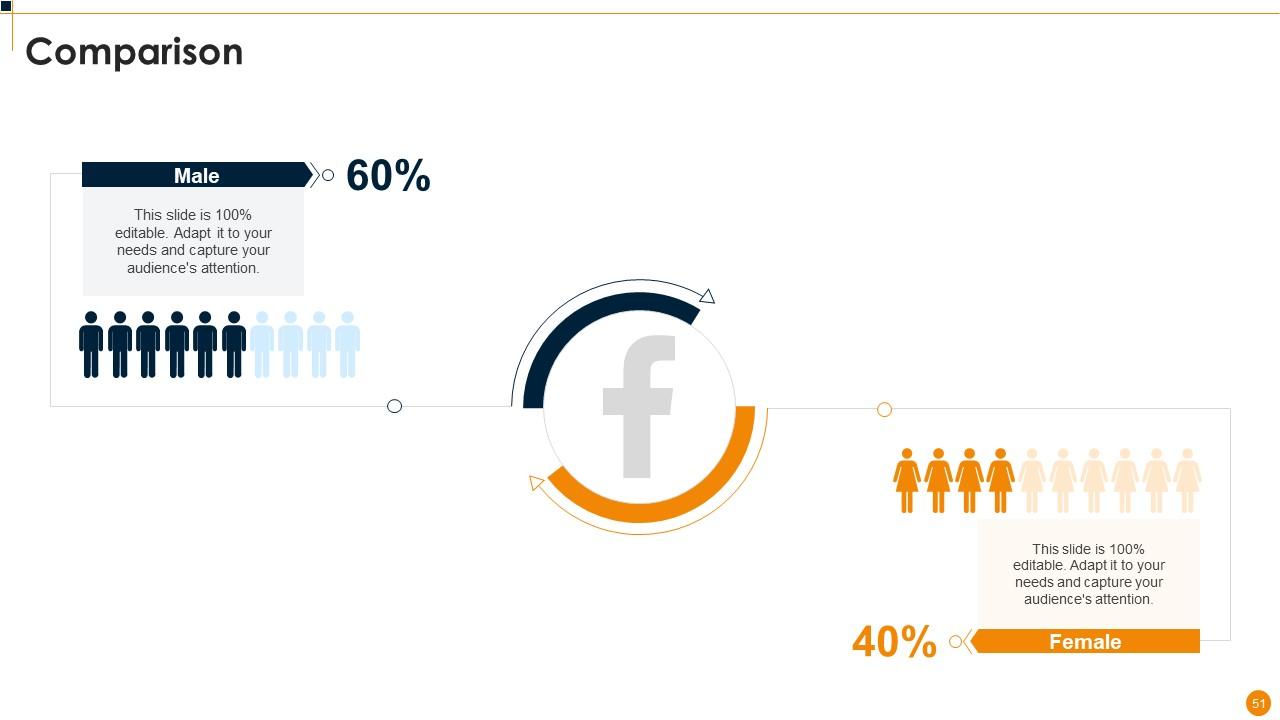
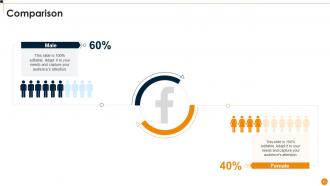
Folie 51 : Dies ist eine Vergleichsfolie zum Vergleich zwischen Waren, Unternehmen usw.
Folie 52 : Diese Folie zeigt Haftnotizen. Posten Sie hier Ihre wichtigen Notizen.
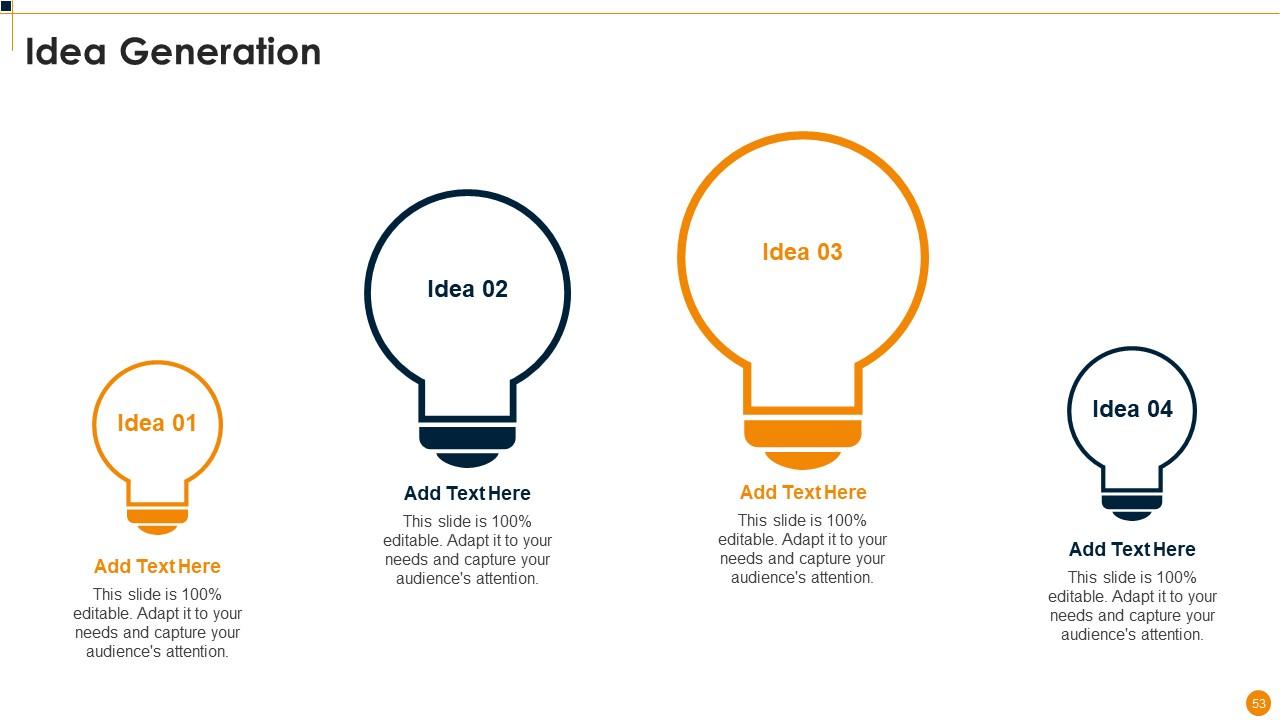
Folie 53 : Dies ist eine Folie zur Ideengenerierung, um eine neue Idee darzulegen oder Informationen, Spezifikationen usw. hervorzuheben.
Folie 54 : Dies ist eine Dankeschön-Folie mit Adresse, Kontaktnummern und E-Mail-Adresse.
Workforce Training Playbook Powerpoint-Präsentationsfolien mit allen 59 Folien:
Verwenden Sie unsere Workforce Training Playbook Powerpoint-Präsentationsfolien, um Ihnen effektiv dabei zu helfen, wertvolle Zeit zu sparen. Sie sind gebrauchsfertig und passen in jede Präsentationsstruktur.
-
Great product, helpful indeed!
-
Great product with highly impressive and engaging designs.
