

World religion powerpoint presentation slides




Try Before you Buy Download Free Sample Product
 Impress Your
 Audience
 100%
100% Editable
 Save Hours
 of Time


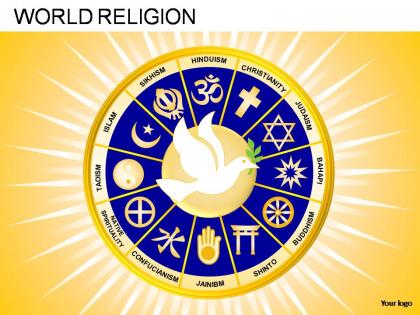
Create a vision with our World Religion Powerpoint Presentation Slides. Your views will provide a clear insight for all.
People who downloaded this PowerPoint presentation also viewed the following :
World religion powerpoint presentation slides with all 29 slides:
Your Ideas will glow with our World Religion Powerpoint Presentation Slides. Their intrinsic beauty will come shining through.
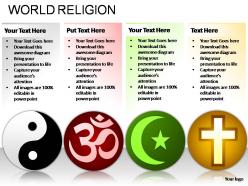

FAQs for World religion
So basically it boils down to a few big things: how many gods they believe in, what they think happens when you die, and how you're supposed to live a good life. Christians believe Jesus saves you and you get eternal life through faith. Muslims focus on submitting to Allah and doing the Five Pillars. Jews follow the Torah and their covenant with God. Hinduism is honestly the most confusing - multiple gods, reincarnation, karma affecting your next life. Buddhism wants to end suffering through the Eightfold Path, though they don't always have a main god. If you're trying to get where someone's coming from, those are the big questions to ask about.
So basically, Eastern stuff like Buddhism and Hinduism is way more about your own spiritual journey - meditation, yoga, that whole vibe. They're pretty chill about how you practice it. Western religions are more structured with set services, clear hierarchies, and everyone following the same texts. Christianity, Judaism, Islam - they're big on community worship and doctrine. But honestly? The lines are super blurry now. I know plenty of Christians who meditate daily, and Buddhist temples near me have regular group meetings just like churches. If you're writing a paper on this or whatever, don't paint with too broad a brush - there's massive variety within each religion.
So basically, mythology is like the backbone of most religions - it's how believers make sense of their faith and the bigger picture. Every major religion has these stories: Genesis for Christians, the Ramayana in Hinduism, Norse creation tales. They're not just old stories though. These myths tackle life's huge questions and give moral lessons people still use today. Honestly, if you want to understand any religion, start with their main mythological stories first. They'll show you what that faith really cares about way better than reading doctrine or whatever. It's like getting the CliffsNotes version but actually useful.
So interfaith dialogues are basically these safe spaces where people from different religions can actually talk to each other without anyone getting defensive. You'll hear what someone's faith really means to them instead of just going off stereotypes or whatever you see on TV. It's like having dinner at your neighbor's house - suddenly they're not some "other" group, just people with different traditions. Honestly, these conversations are pretty good at breaking down weird assumptions we all have. Most communities do regular interfaith events if you're curious about checking one out.
Religion basically touches everything in a culture, even when people don't realize it. Christmas completely takes over in December, right? Same with how the call to prayer structures entire days in Muslim areas. Your food, holidays, how you dress, marriage stuff - it all connects back somehow. Even your moral compass gets shaped by religious ideas floating around for centuries. Art and language too, obviously. I mean, look at your own neighborhood and you'll start seeing these influences everywhere once you're paying attention. It's wild how deep it goes, honestly.
So Judaism's actually the oldest - goes back to like 2000 BCE with Abraham. Then you've got Hinduism developing from those ancient Vedic traditions in the Indus Valley. Buddhism came later when Siddhartha hit enlightenment in 5th century India. Christianity popped up in Palestine with Jesus around the first century. Islam started in 7th century Arabia through Muhammad's revelations. It's honestly crazy how these super old belief systems still run so much of the world today! If you want to dig into any of them, I'd start with their main texts and just the basic historical background.
So basically Christians and Muslims think you go to heaven or hell based on faith/good deeds. Hindus and Buddhists are all about reincarnation though - like you come back as something else depending on your karma (which is kinda wild if you think about it). Judaism's actually super varied on this stuff. Some Jews focus on resurrection, others don't really emphasize afterlife details much. It's honestly fascinating how different these approaches are! For your project I'd stick to those main patterns instead of diving into every little denomination - that'll just make your head spin.
So globalization basically does two opposite things to religion at once. Major religions spread faster through migration and media, which can water down local traditions. But then communities push back harder to protect their unique practices - it's like a defense mechanism or something. Religions get creative too, using modern tech and global networks while doubling down on their core beliefs. I think it actually makes the religious world more connected AND more diverse, which sounds contradictory but totally makes sense when you see it happening. Look at how specific groups handle that balance between global influence and staying authentic to themselves.
So sacred texts are like the moral rulebook for religious groups, you know? They lay out what's right and wrong, how to treat people, justice stuff. The Ten Commandments, Buddhist teachings, Quran guidelines - they're all frameworks believers use for daily ethical choices. What's crazy is how the same text gets interpreted totally differently by different communities over time. I'd honestly focus on how these ancient writings still shape modern debates and personal decisions. It's wild how relevant they stay, even thousands of years later.
So there's tons of tension between tech and religion these days. Scientific discoveries mess with creation stories, social media spreads ideas that clash with church teachings. Dating apps totally go against traditional relationship rules too. Then you've got AI and genetic stuff raising questions about what makes us human - religions are still figuring that part out honestly. The internet's huge because anyone can interpret religious texts now without needing a priest or whatever. Oh and if you're writing about this, definitely focus on how religions adapt instead of just fighting back. Way more interesting angle.
So yeah, creation myths are weirdly similar everywhere. The whole "chaos to order" thing shows up constantly - Hebrew Genesis, Hindu stories, you name it. Water's huge too, whether it's floods or ancient oceans. Makes sense since water = life, right? Then there's gods breathing life into things or speaking stuff into existence. Humans usually get made from dirt or clay, which is pretty universal. Oh, and don't get me started on the cosmic tree thing - apparently every culture needed a "center of the world" spot. Honestly, it's wild how different civilizations came up with such similar ideas. Really shows what humans worry about deep down.
Honestly, it's all over the place depending on which religion and even which branch you're looking at. Christianity ranges from super progressive churches with female pastors to traditional groups that are all about conventional family roles. Islam has more defined gender expectations, but that changes a ton based on culture and how people interpret things. With Judaism, Orthodox communities keep men and women pretty separate while Reform Jews are way more egalitarian. Hinduism and Buddhism? Those are complicated - there's empowering stuff mixed with restrictive traditions. My advice would be to look into specific denominations instead of trying to paint entire religions with one brush.
Look, rituals are huge in religion - they're how people actually connect with God/the divine and bond as a community. Baptisms, bar mitzvahs, Hindu ceremonies, all that stuff. They help mark the big life moments too - birth, marriage, death. What's interesting is even non-religious stuff works the same way. Like graduations are basically secular rituals, right? Same function. These practices give people shared identity and help process major changes. If you're studying this, notice how they build both personal spiritual connection and group unity. It's pretty universal across different faiths, which I find fascinating.
Yeah, pretty much every major religion has social justice stuff built right in. Christianity, Islam, Judaism, Buddhism - they all talk about helping the poor and protecting people who can't protect themselves. The methods are different though. Some religions focus more on individual charity while others push for bigger systemic changes. Tons of religious groups run food banks and hospitals. Actually, a lot of them are super active in advocacy work too. It's kinda cool when you really look into it. If this is for school or whatever, I'd check out what specific denominations are doing - they usually aren't shy about promoting their humanitarian projects.
So yeah, religious stuff actually does help people mentally - like prayer and meditation literally lower stress hormones, which is pretty wild. Creates tight social bonds too. People get this whole support system plus a sense of purpose from their beliefs. Honestly, even if you're not into it yourself, it's worth understanding since so many people rely on faith to get through tough times. The community aspect is huge - shared rituals build real trust between people. Those brain scans show religious practices hit the same areas as other stress-busters. Just good to know when you're dealing with religious coworkers or clients, you know?
-
Goood
-
Excellent design and quick turnaround.
-
Understandable and informative presentation.