Year based timeline for business strategy roadmap powerpoint slides
Try Before you Buy Download Free Sample Product
Audience
Editable
of Time
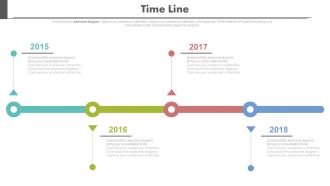
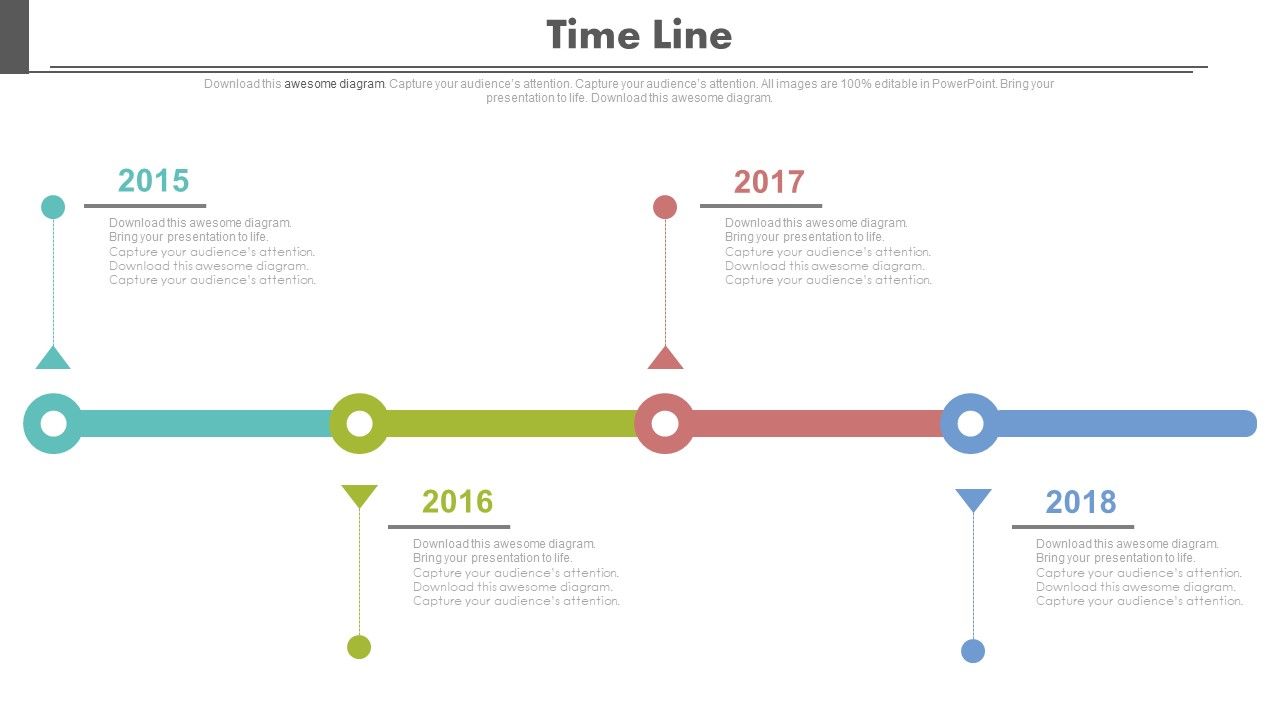
Presenting eye catching designs for displaying business and financial strategies of your company. This PPT design is a perfect display of how modern-day technology is a big part of reaching the audience or clients for any organization. This roadmap timeline PowerPoint template diagram has been crafted with the graphic of year-based timeline diagram. This PPT icon slide contains the concept of business strategy representation and professionals can use this PPT diagram for business and finance related presentations. Linear timeline view has been given here, where years 2015 to 2018 are shown through different points. Text area corresponding to each stage can be used to describe your business planning, views on the current market and actions needed to be taken to achieve desired goals. Get started with all new experiences with our most engaging PPT template, "Year Based Timeline for Business Strategy PowerPoint Slides" and forget about disappointments. Click on the download button and just get started. Generate enormous faith with our Year Based Timeline for Business Strategy PowerPoint Slides. Your credentials will build great belief.
People who downloaded this PowerPoint presentation also viewed the following :
Year based timeline for business strategy roadmap powerpoint slides with all 4 slides:
Ride the beam with our Year Based Timeline For Business Strategy Powerpoint Slides. Your thoughts will fly accurately to their target.
FAQs for Year based timeline for business strategy
You'll want clear milestones, realistic timeframes, and someone owning each piece. Start with your 3-5 year vision, then work backwards into annual goals and quarterly check-ins. Honestly, I always screw up timelines at first - don't feel bad if you do too. Build in buffer time because everything takes way longer than you think. Include resource allocation and figure out which projects depend on others. Set up review periods so you can pivot when needed (you will need to). Oh, and pick specific KPIs for each phase - otherwise you're just guessing if things are working.
Oh man, you'll love having one of these. So basically it stops your teams from going in totally different directions - like when marketing's planning some huge launch while dev is focused on maintenance work. The visual aspect really helps too because people can actually see how their stuff connects to what everyone else is doing. Honestly, it just forces those awkward "wait, what's our actual goal here?" conversations upfront instead of three months later when it's too late. You can catch conflicts between departments early, and everyone knows what winning looks like at each step. I'd probably check in monthly with your team leads to stay on track.
So for business strategy timelines, there's a bunch of good options. Microsoft Project and Smartsheet are solid if you need detailed tracking with dependencies. Asana and Monday.com are way more collaborative though - easier for teams to actually use. Personally? I'm obsessed with Miro and Lucidchart for visual stuff. They're perfect when you're mapping things out in brainstorming sessions. Excel Gantt charts still do the job for basic timelines too, honestly. I'd start with whatever tools your team already knows. Most have free versions you can test out first - way better than dropping money on something fancy you won't use.
Honestly? Monthly reviews work way better than quarterly ones these days. Markets move too fast now - customer wants change, competitors do weird pivots, the economy's all over the place. I've watched companies stick to their yearly strategy reviews and completely miss stuff that could've helped them. Short monthly check-ins let you catch problems early and actually do something about them. Keep it flexible though. If something big happens in your space, don't wait for your next scheduled meeting - just pivot right then.
Ugh, timing is where everyone screws up - myself included! You'll think something takes 2 weeks when it's actually a month, especially if you need other teams involved. Don't pack your roadmap like you're playing Tetris either. Your team will hate you. Buffer time is clutch for random disasters that pop up. Oh, and stop adjusting the timeline every time something tiny shifts - that's so annoying. Honestly? Just tack on an extra 20% to each big milestone from the start. You'll look like a genius when you actually deliver on time.
Honestly, visuals are a game changer for timelines. Color coding helps group similar stuff together, and those little icons for different departments? Super helpful. I always throw in progress bars too - way easier than explaining percentages out loud. Milestone markers are clutch for highlighting big dates. Oh, and spacing things out proportionally actually matters more than you'd think - it shows the real time relationships. Keep your text minimal or people zone out completely. Make a simple legend so nobody's lost during your presentation. Trust me, charts will save you tons of explaining.
Look, stakeholder feedback is like having a BS detector for your timelines. You'll catch unrealistic deadlines before they bite you in the ass. Get people involved early and they'll point out stuff you missed - dependencies, resource issues, weird market timing things. Honestly, their buy-in makes everything run smoother later anyway. They always know about random bottlenecks like regulatory stuff or seasonal cycles that could blow up your schedule. I learned this the hard way once. Set up feedback sessions at major milestones. And when they say something will take longer? Listen to them.
Market shifts will mess with your timeline whether you like it or not. Sometimes you'll need to hit the gas on certain projects, other times slam the brakes. New tech pops up or customers suddenly want something different? Your whole roadmap gets reshuffled. I've watched teams panic and completely flip their priorities when competitors drop something out of nowhere. Honestly happens way more than people admit. Build in extra time upfront - trust me on this one. Check in regularly to see if outside changes mean you need to adjust course. Stay flexible but don't chase every shiny trend that comes along.
Think of milestones as your reality checks - they stop you from wandering off into fantasy land with your timeline. Break those massive goals down so your team doesn't freak out looking at the big picture. Here's the thing though: people actually get pumped when you celebrate hitting these smaller wins, which is huge for keeping everyone motivated. You'll catch problems early instead of scrambling later. Set them where things naturally shift in your project and make sure you can actually measure if you've hit them or not. Otherwise you're just guessing.
Honestly, just pick a project management tool and stick with it - Asana, Monday, or Trello all work fine. Set up your major milestones and assign someone to own each one. The automated updates are clutch because you'll know immediately when things start going sideways (and trust me, they will). I'd say start simple though. Map out the big stuff first, then add weekly check-ins so people actually stay on track. The real trick is getting your team to use whatever you pick consistently. Dashboard reporting beats doing manual updates any day - learned that the hard way.
Amazon's the obvious one - they literally went from selling books to becoming the "everything store" with a clear roadmap spanning decades. Apple pulled off something similar, going iPod → iPhone → services empire. Tesla's been methodical too, starting with luxury sports cars then working down to mass market EVs and energy stuff. Oh and Netflix, though honestly their DVD-to-streaming thing felt more like scrambling to survive than grand planning. What's cool is they all kept their plans flexible enough to pivot when needed. You can't predict everything, but having that north star vision really helps.
So here's the thing - mapping out your business moves on a timeline actually shows you where stuff could go sideways before it happens. Mark down your big launches, expansions, whatever major things you've got planned. Then look at each phase and think "what could mess this up?" Honestly, it's way better than just winging it and hoping for the best. You'll spot vulnerable periods (like those brutal seasonal slumps) and can plan around them. Build in extra time where you need it. Set aside resources for when things inevitably get weird. It's not exactly rocket science, but most people skip this step and then wonder why they're always scrambling.
Track both leading and lagging indicators that match your strategic goals. Revenue growth, customer acquisition cost, and market share are your main lagging metrics. Pipeline velocity, customer engagement scores, and employee productivity work as leading indicators - they'll warn you early when things shift. Honestly, stick to 3-5 metrics max or you'll get buried in numbers. Each one should tie directly to a strategic objective. Review monthly alongside timeline progress. Oh, and set up automated dashboards so you're not pulling reports manually every single time - learned that one the hard way.
Dude, startup timelines are completely different than big companies. You're basically working in these crazy 3-6 month chunks, changing direction based on whatever customers tell you. Big companies? They plan like 1-3 years out because they've got existing money coming in and can't just flip everything overnight - shareholders hate that stuff. Startups have to move fast or they're dead. Established companies move slower because they don't want to mess up what's already making money. Speed vs. stability basically. If you're early stage, stick with shorter cycles. You can always stretch them out later when things get more predictable.
Make it visual and stick to big milestones only - nobody wants to see every tiny task. Always pad your timeline because projects never go smoothly (learned this the hard way). Show how different parts connect so people get why X has to happen before Y. The key thing? Tie every milestone back to money or business impact. That's literally all execs care about. Oh, and end by telling them exactly what you need decided and when. Otherwise you'll just get more meetings about having meetings.
-
Cool
-
Design layout is very impressive.
-
Understandable and informative presentation.