Jornada Anual de Transformação de 5 Etapas

Yearly 5 stages transformation journey
Slide 1 of 2
Favourites Favourites

Try Before you Buy Download Free Sample Product

Audience Impress Your
Audience
Editable 100%
Editable
Time Save Hours
of Time
The Biggest Sale is ending soon in
0
0
:
0
0
:
0
0

Características destes slides de apresentação do PowerPoint:

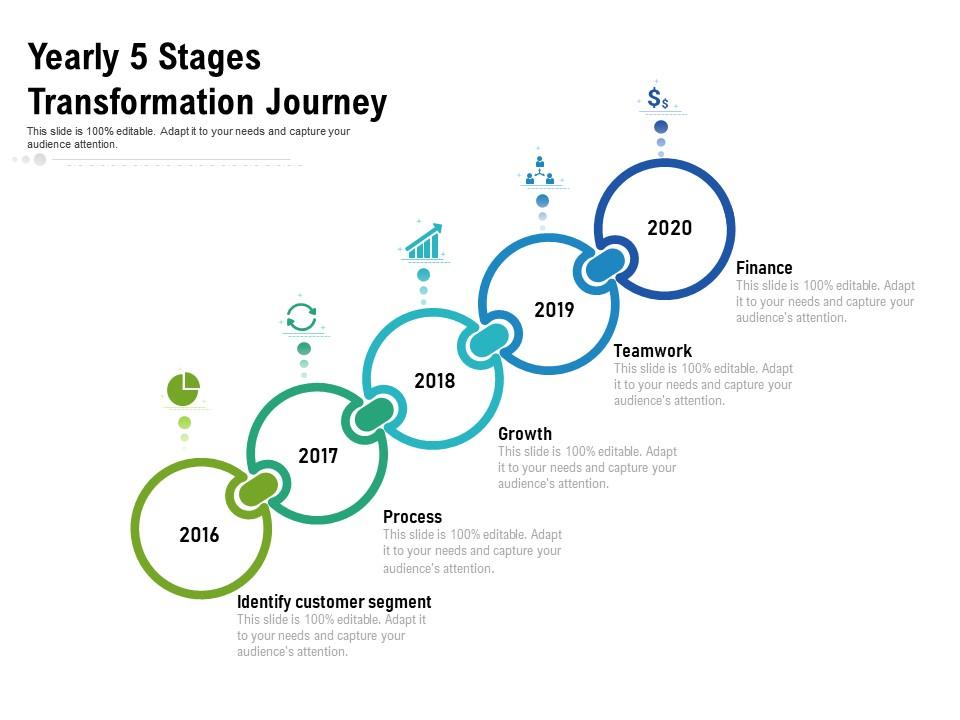
Apresentando este conjunto de slides com o nome de Jornada de Transformação Anual de 5 Etapas. Este é um processo de cinco etapas. As etapas deste processo são Identificar o Segmento do Cliente, Processo, Crescimento, Trabalho em Equipe, Finanças. Esta é uma apresentação PowerPoint completamente editável e está disponível para download imediato. Baixe agora e impressione seu público.

FAQs for Yearly 5

Effective transformation requires clear strategic vision, strong leadership commitment, comprehensive change management processes, robust communication frameworks, and employee engagement initiatives. These elements work synergistically by aligning organizational goals with operational capabilities, fostering cultural adaptability, and ensuring sustained momentum, with many companies finding that integrated approaches ultimately deliver competitive advantage and enhanced performance.

Visual storytelling enhances transformative change messaging by simplifying complex concepts, creating emotional connections, and making abstract transformation goals tangible through charts, infographics, and narrative visuals. These approaches streamline stakeholder communication, accelerate buy-in across departments, and ultimately deliver clearer understanding of change benefits, with many organizations finding that visual narratives significantly reduce resistance while enhancing transformation success rates.

Leadership and culture serve as the foundation for successful transformations, with leaders driving vision, communication, and resource allocation while culture determines employee engagement, adaptability, and resistance levels. Organizations with strong leadership alignment and collaborative cultures consistently achieve transformation goals faster, with companies like Microsoft and IBM demonstrating how cultural shifts enable sustainable change, ultimately delivering competitive advantage and operational excellence.

Different industries approach transformation through sector-specific strategies, with healthcare focusing on patient care digitization, manufacturing emphasizing automation and supply chain optimization, financial services prioritizing regulatory compliance and customer experience enhancement, and retail concentrating on omnichannel integration. These tailored approaches enable organizations to address unique operational challenges while delivering improved efficiency, competitive advantage, and enhanced stakeholder experiences within their respective market environments.

Common transformation pitfalls include inadequate change management, insufficient stakeholder buy-in, unrealistic timelines, poor communication strategies, and lack of leadership commitment. These challenges can derail initiatives across industries, with many organizations finding that addressing cultural resistance early, maintaining transparent progress updates, and securing executive sponsorship throughout delivers sustainable transformation outcomes and competitive advantage.

Data visualization supports transformation decision-making by converting complex datasets into clear charts, dashboards, and interactive reports that reveal patterns, trends, and performance gaps. Through real-time analytics and visual storytelling, organizations can track transformation progress, identify bottlenecks, and communicate insights across teams, ultimately enabling faster, more informed strategic decisions during critical change initiatives.

Stakeholder engagement strategies include transparent communication plans, collaborative workshops, regular feedback sessions, cross-functional teams, and milestone celebrations. These approaches streamline buy-in by building trust, addressing concerns proactively, and creating shared ownership of outcomes, with many organizations finding that early involvement and consistent updates ultimately deliver smoother implementations and sustained transformation success.

Technology facilitates seamless transformations through cloud migration platforms, automation tools, data analytics systems, artificial intelligence solutions, and integrated communication networks. These technologies streamline operations by minimizing disruption, accelerating implementation timelines, and enabling real-time monitoring, with many organizations finding that strategic technology adoption delivers enhanced efficiency, reduced costs, and sustained competitive advantage.

Measuring transformation success involves tracking key performance indicators like revenue growth, operational efficiency improvements, customer satisfaction scores, employee engagement levels, and time-to-market reductions. Organizations typically establish baseline metrics before implementation, then monitor progress through quarterly assessments, with many companies finding that balanced scorecards combining financial and operational metrics deliver comprehensive visibility into transformation outcomes.

Employee feedback significantly impacts transformation strategies by identifying implementation barriers, revealing cultural resistance points, and highlighting operational gaps that leaders might overlook. Through regular pulse surveys and focus groups, organizations can adjust their transformation approaches, address employee concerns proactively, and ensure higher adoption rates, ultimately delivering more successful change outcomes.

Organizations maintain post-transformation momentum by establishing continuous improvement processes, embedding new behaviors into company culture, and implementing regular progress monitoring systems. Through ongoing employee training, leadership reinforcement, and adaptive feedback mechanisms, companies sustain change initiatives while remaining agile, with many organizations finding that consistent communication and celebrating incremental wins ultimately delivers lasting transformation success.

Incremental transformation involves gradual, step-by-step changes that build upon existing processes, systems, and structures, while radical transformation requires comprehensive, disruptive overhauls that fundamentally reshape entire business models and operations. While incremental approaches minimize risk and enable smoother transitions, radical transformations deliver faster competitive advantages, with many organizations finding that combining both strategies maximizes their strategic positioning.

Transformation frameworks help simplify complex changes by providing structured methodologies, clear milestone tracking, standardized communication protocols, and risk mitigation strategies that break overwhelming initiatives into manageable phases. These frameworks enable organizations to navigate large-scale changes systematically, with companies in healthcare, finance, and manufacturing finding they reduce project timelines while ensuring stakeholder alignment and sustainable outcomes.

Innovation serves as the continuous engine for long-term transformation by introducing new technologies, processes, methodologies, and business models that prevent organizational stagnation. It enables companies to adapt to evolving market conditions, anticipate customer needs, and maintain competitive advantage, with many organizations finding that sustained innovation cultures deliver ongoing operational efficiency and strategic resilience.

Aligning transformation goals with business strategy requires establishing clear strategic priorities, conducting comprehensive stakeholder analysis, defining measurable outcomes, and creating integrated roadmaps that support core objectives. Organizations achieve this through regular cross-functional planning sessions, balanced scorecards, and milestone reviews, with many companies finding that quarterly alignment assessments ensure transformation initiatives directly contribute to revenue growth, operational efficiency, and competitive positioning.

Ratings and Reviews

0% of 100
Review Form
Write a review
Most Relevant Reviews

No Reviews