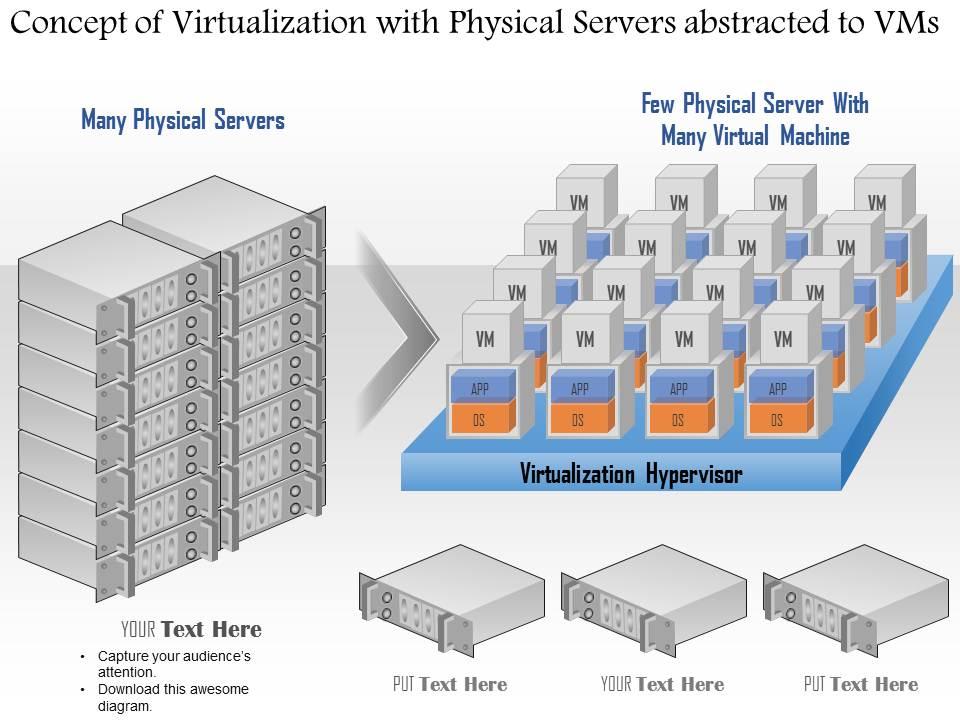
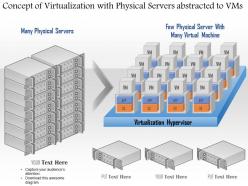
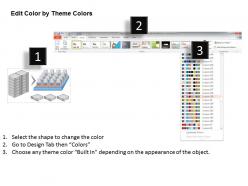
0115 concept of virtualization with physical servers abstracted to vms ppt slide

Rating:
80%
0115 concept of virtualization with physical servers abstracted to vms ppt slide
Slide 1 of 5
Favourites Favourites

Try Before you Buy Download Free Sample Product

Audience Impress Your
Audience
Editable 100%
Editable
Time Save Hours
of Time
The Biggest Sale is ending soon in
0
0
:
0
0
:
0
0
Rating:
80%
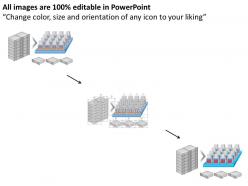
Hassle free download in straightforward steps. Edit text as per need without worrying about word length constraints. PPT icons with absolutely modifiable size and orientation. Insert your company name, brand name, trademark, tagline etc. High resolution PPT infographics without pixelation on wide screen projection. Perfect for system engineers, software developers etc.

People who downloaded this PowerPoint presentation also viewed the following :

FAQs for 0115 concept of virtualization with physical servers abstracted to

Key benefits of virtualization in modern IT infrastructures include improved resource utilization, reduced hardware costs, enhanced scalability, simplified disaster recovery, and increased operational flexibility. These technologies streamline infrastructure management by consolidating servers, accelerating deployment processes, and minimizing energy consumption, with many organizations finding that virtualization ultimately delivers significant cost savings and competitive advantage in increasingly complex digital environments.

Virtualization contributes to resource optimization by consolidating multiple virtual machines onto fewer physical servers, reducing hardware requirements, and maximizing CPU and memory utilization. Through server consolidation, organizations streamline data center operations, minimize energy consumption, and lower maintenance costs, with many enterprises finding that virtualization reduces infrastructure expenses by 40-60% while enhancing operational efficiency.

Virtualization types include hardware virtualization, software virtualization, network virtualization, storage virtualization, and desktop virtualization. These technologies streamline IT operations by consolidating resources, reducing physical infrastructure costs, and enhancing scalability, with many enterprises finding that strategic virtualization delivers improved resource allocation, faster deployment times, and significant operational efficiency gains.

Organizations ensure virtualized security through hypervisor hardening, network segmentation, virtual machine isolation, regular security patching, and comprehensive monitoring tools. These approaches deliver enhanced threat detection, reduced attack surfaces, and streamlined compliance management, with many financial services and healthcare institutions finding that multi-layered virtual security frameworks ultimately provide stronger protection than traditional infrastructure.

Common virtualization implementation challenges include resource allocation complexities, security vulnerabilities, performance overhead, compatibility issues, and management complexity across diverse infrastructure. While these present significant technical hurdles, organizations increasingly find that strategic planning, proper training, and phased deployment approaches enable them to streamline operations, reduce costs, and ultimately deliver enhanced scalability and competitive advantage.

Cloud computing leverages virtualization through hypervisors, containers, virtual machines, software-defined networking, and storage abstraction technologies that enable resource pooling and dynamic allocation. These technologies streamline operations by maximizing hardware utilization, reducing infrastructure costs, and enabling rapid scaling, with many enterprises finding that virtualized cloud environments deliver enhanced flexibility and operational efficiency.

Virtualization enables rapid disaster recovery through instant VM snapshots, automated failover systems, and geographically distributed backup infrastructure. Financial institutions and healthcare organizations leverage virtual environments to maintain critical operations during outages, significantly reducing recovery time objectives from hours to minutes while streamlining compliance requirements and minimizing business disruption costs.

Virtualization simplifies server management by enabling centralized control, automated provisioning, and rapid deployment through hypervisor platforms. IT teams can create, modify, and migrate virtual servers within minutes rather than hours, while consolidated management interfaces streamline monitoring, resource allocation, and maintenance tasks, ultimately reducing operational complexity and accelerating service delivery across enterprise environments.

Running multiple virtual machines on a single host creates resource contention for CPU, memory, storage, and network bandwidth, potentially leading to performance degradation and increased latency. However, modern hypervisors optimize resource allocation through dynamic scheduling and memory management, with many enterprises finding that proper resource planning and workload distribution actually enhances overall infrastructure efficiency while reducing operational costs.

Virtualization accelerates application testing and development by enabling rapid environment provisioning, consistent configurations across teams, and simultaneous testing on multiple platforms. Development teams can quickly spin up isolated virtual environments, test applications against various operating systems and configurations, and streamline deployment pipelines, ultimately reducing development cycles and improving software quality.

Best practices for monitoring and managing virtualized environments include resource allocation tracking, performance baseline establishment, automated alerting systems, capacity planning protocols, and security compliance monitoring. These approaches streamline operations by preventing resource bottlenecks, minimizing downtime, and optimizing infrastructure costs, with many organizations finding that proactive monitoring delivers enhanced system reliability and operational efficiency.

Containerization shares the host operating system kernel across multiple containers, while traditional virtualization creates separate virtual machines with individual operating systems for each instance. Through containerization, organizations achieve faster deployment, reduced resource overhead, and improved scalability compared to VMs, with many enterprises finding that containers streamline application development, enhance portability across environments, and ultimately deliver more efficient infrastructure utilization.

**INPUT**: What tools and technologies are available for virtualization management? **OUTPUT**: Virtualization management tools include VMware vSphere, Microsoft Hyper-V, Citrix XenServer, Red Hat Virtualization, and cloud platforms like AWS EC2. These technologies streamline infrastructure by automating resource allocation, monitoring performance, and enabling centralized control, with many organizations finding that integrated management delivers enhanced operational efficiency and significant cost reductions. **Word count: 54 words**

Businesses can assess virtualization readiness by evaluating current infrastructure capacity, application compatibility, staff technical expertise, budget allocation, and security requirements. Through comprehensive infrastructure audits and pilot programs, organizations in manufacturing, healthcare, and financial services streamline resource utilization, reduce operational costs, and enhance system scalability, ultimately delivering improved efficiency and competitive advantage.

Virtualization significantly reduces data center environmental impact through decreased energy consumption, lower carbon emissions, reduced hardware waste, minimized cooling requirements, and optimized server utilization rates. By consolidating multiple virtual machines onto fewer physical servers, organizations achieve 50-80% energy savings while reducing their carbon footprint, with many enterprises finding that virtualization delivers both operational efficiency and measurable sustainability goals.

Ratings and Reviews

80% of 100
Write a review
Most Relevant Reviews
  1. 80%

    by Edison Rios

    Colors used are bright and distinctive.
  2. 80%

    by Deshawn Schmidt

    Awesome use of colors and designs in product templates.

2 Item(s)

per page: