0814 green ribbon batch for championship graphic for powerpoint

Rating:
80%
0814 green ribbon batch for championship graphic for powerpoint
Slide 1 of 3
Favourites Favourites

Try Before you Buy Download Free Sample Product

Audience Impress Your
Audience
Editable 100%
Editable
Time Save Hours
of Time
The Biggest Sale is ending soon in
0
0
:
0
0
:
0
0
Rating:
80%
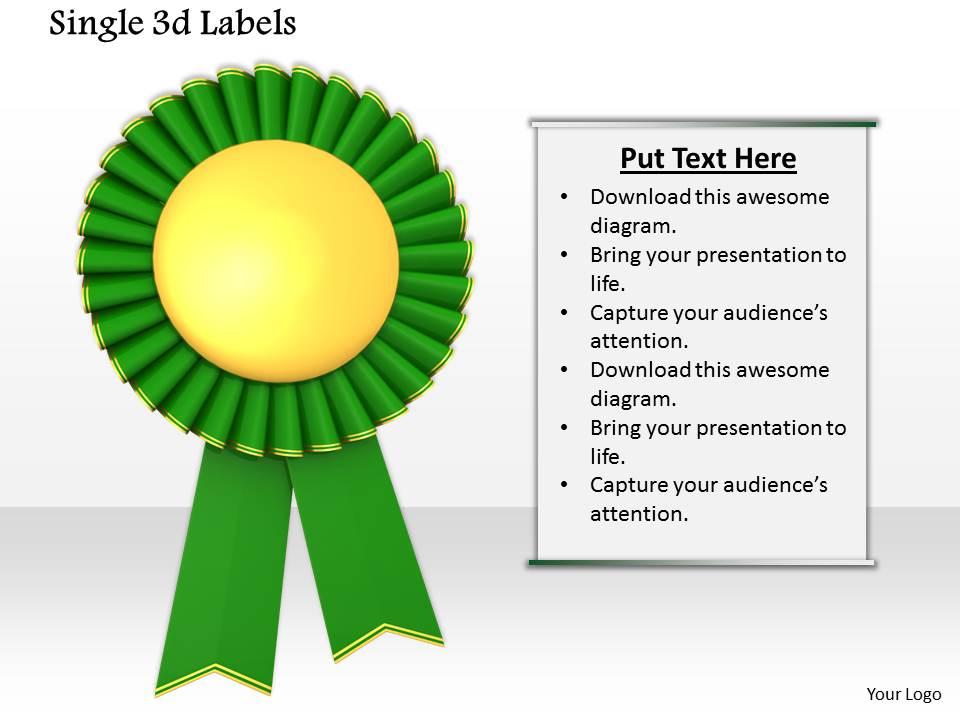
We are proud to present our 0814 green ribbon batch for championship graphic for powerpoint. This business image has been designed with green ribbon batch. This image displays the concept of championship and winner. Use this image in your sports and tournament related topics. Make awesome presentation with this innovative image. .

People who downloaded this PowerPoint presentation also viewed the following :

FAQs for 0814 green ribbon batch for championship

The Green Ribbon Championship aims to promote environmental sustainability through competitive innovation, encourage collaboration between organizations and communities, recognize outstanding green initiatives across various sectors, and drive measurable impact in carbon reduction efforts. These objectives streamline sustainability practices by fostering knowledge sharing, accelerating eco-friendly solutions, and creating benchmarks for environmental performance, with many participating organizations finding that competitive frameworks ultimately deliver enhanced operational efficiency and stronger stakeholder engagement.

The Green Ribbon Championship promotes sustainability in schools by encouraging comprehensive environmental programs, energy conservation initiatives, waste reduction strategies, and curriculum integration across multiple subjects. Through competitions and recognition systems, participating schools develop renewable energy projects, implement recycling programs, and create outdoor learning spaces, ultimately delivering enhanced student engagement, reduced operational costs, and stronger community environmental awareness.

Green Ribbon Championship evaluation criteria include environmental impact reduction, sustainability innovation, community engagement, resource efficiency, and measurable conservation outcomes. These comprehensive assessments examine participants' carbon footprint reductions, waste management strategies, and renewable energy adoption, with many organizations finding that structured environmental competitions ultimately deliver enhanced operational efficiency and stronger competitive positioning in increasingly sustainability-focused markets.

Educational institutions can effectively prepare for the Green Ribbon Championship by implementing comprehensive sustainability programs, establishing energy-efficient infrastructure, developing environmental curricula, creating waste reduction initiatives, and engaging students in green projects. These strategic approaches enhance campus sustainability while building measurable environmental outcomes, with many schools finding that early preparation through cross-departmental collaboration and student leadership programs ultimately delivers competitive advantage and lasting institutional change.

Community partnerships serve as the foundation for Green Ribbon Championship success, providing essential resources, volunteer support, venue access, sponsorship opportunities, and local expertise. These collaborative relationships enable organizers to expand event reach, reduce operational costs, and enhance participant experiences, while partners gain environmental recognition and community engagement, ultimately creating sustainable championships that deliver lasting environmental impact and strengthen local green initiatives.

The Green Ribbon Championship influences student behavior by creating competitive engagement, peer accountability, and tangible recognition for environmental actions. Through gamified sustainability challenges, students develop lasting habits around waste reduction, energy conservation, and eco-friendly practices, with many schools finding that participants become environmental advocates who influence their families and communities, ultimately creating broader cultural shifts toward stewardship.

Past Green Ribbon Championship participants have implemented solar panel installations, waste reduction programs, energy-efficient building retrofits, sustainable transportation systems, and water conservation technologies. These initiatives streamline operational costs while enhancing environmental performance, with many schools and organizations finding that strategic sustainability programs deliver significant cost savings, improved community engagement, and competitive advantage in an increasingly eco-conscious landscape.

The Green Ribbon Championship integrates with existing sustainability curriculum by providing real-world applications for environmental concepts, hands-on project experiences, and measurable impact assessments that complement classroom learning. Through structured competitions and collaborative initiatives, educational institutions can enhance student engagement, demonstrate practical sustainability solutions, and ultimately deliver deeper understanding while fostering environmental stewardship across diverse academic programs.

Schools participating in the Green Ribbon Championship gain enhanced sustainability practices, improved student engagement in environmental stewardship, reduced operational costs through energy efficiency, strengthened community partnerships, and elevated institutional reputation. These comprehensive benefits enable educational institutions to demonstrate environmental leadership while delivering cost savings, enriched learning experiences, and competitive advantages in attracting environmentally conscious students and families.

Schools can leverage the Green Ribbon Championship by hosting community sustainability fairs, partnering with local businesses on green initiatives, and inviting families to participate in environmental projects and educational workshops. These collaborative efforts create lasting partnerships between schools, parents, and community organizations, ultimately building broader environmental awareness while demonstrating the school's leadership in sustainability education and community stewardship.

Schools can access EPA guidance documents, sustainability assessment tools, energy audit resources, curriculum development materials, and peer network connections through state education departments. Many successful participants, including those in districts focused on renewable energy and waste reduction programs, find that combining federal resources with local environmental partnerships ultimately delivers comprehensive sustainability strategies and competitive advantage in demonstrating measurable environmental achievements.

The Green Ribbon Championship addresses equity in environmental education by expanding access to underserved communities, providing multilingual resources, and creating inclusive programming that reflects diverse cultural perspectives. Through partnerships with schools in low-income areas, community organizations, and minority-serving institutions, the initiative ensures equitable participation while delivering enhanced learning opportunities and environmental awareness across all demographics.

Previous Green Ribbon Championship competitors have developed innovative solutions including smart urban farming systems, AI-powered waste sorting technologies, renewable energy microgrids, carbon capture applications, and sustainable packaging alternatives. These projects streamline environmental management by reducing operational costs, enhancing resource efficiency, and delivering measurable sustainability outcomes, with many organizations finding that championship-tested innovations provide significant competitive advantages in increasingly eco-conscious markets.

Participation in the Green Ribbon Championship enhances student learning outcomes by fostering critical thinking, collaborative problem-solving, and environmental awareness through hands-on sustainability projects. Students develop research skills, presentation abilities, and scientific literacy while working on real-world challenges, with many schools finding that participants demonstrate improved academic performance, increased engagement in STEM subjects, and stronger environmental stewardship attitudes.

Schools can maintain sustainability momentum through embedded curriculum integration, ongoing student leadership programs, community partnership development, regular progress tracking, and annual goal-setting cycles. Many institutions find that establishing green committees, partnering with local environmental organizations, and celebrating incremental wins helps sustain engagement, ultimately delivering long-term environmental impact and continued operational cost savings.

Ratings and Reviews

80% of 100
Write a review
Most Relevant Reviews
  1. 80%

    by Damion Ford

    Design layout is very impressive.
  2. 80%

    by Darwin Mendez

    Appreciate the research and its presentable format.

2 Item(s)

per page: