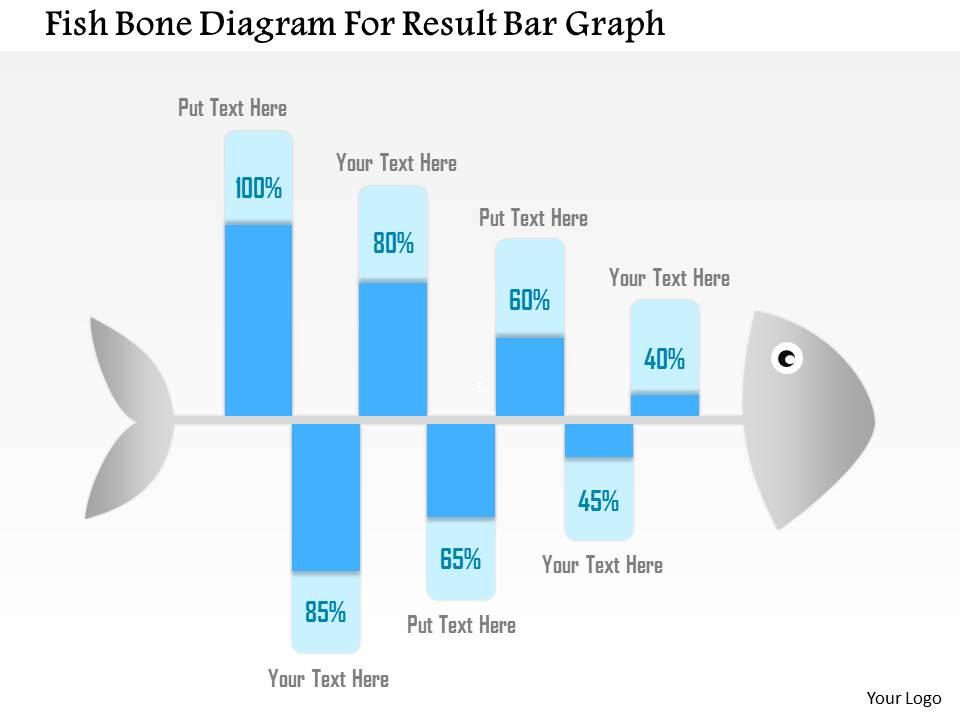
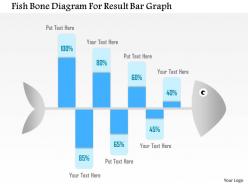
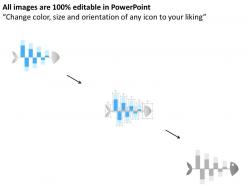
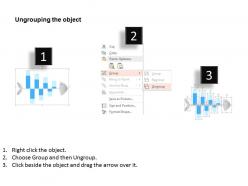
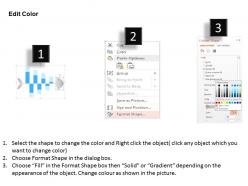
1114 fish bone diagram for result bar graph powerpoint template
Try Before you Buy Download Free Sample Product
Audience
Editable
of Time
Discover the elegant Ppt bar graph designs in an innovative fish bone interface to present the financial and technical database in the most simplified and explicit manner. Conduct the quarterly, annually/yearly comparisons of the figures with the help of the PowerPoint Presentation to extract/deduce the outcomes from the plain facts. Introduce the professional approach by incorporating the use of specially crafted Ppt templates to advance the functioning of your business. The popular bar graph charts are highly beneficial for analyzing financial data, putting across the studies of census data, and comparisons of various other concepts to assist the dynamic decision making. The bar graph Ppt is fully equipped to present the precise abstract of the information available and accentuate its relevance in the desired context. Intensify your data interpretation with the Slide Team's Ppt’s that bears a world class graphics knitted with a detailed research and ideology to serve your purpose utterly. Rule out the possibility to procrastinate any further and grab the deal now!. Come across as an old hand with our 1114 Fish Bone Diagram For Result Bar Graph Powerpoint Template. Display extensive awareness in your field.
People who downloaded this PowerPoint presentation also viewed the following :
1114 fish bone diagram for result bar graph powerpoint template with all 5 slides:
Establish a connection easily with our 1114 Fish Bone Diagram For Result Bar Graph Powerpoint Template. Evolve as an effective communicator.
FAQs for 1114 fish bone diagram for result bar
A fishbone diagram is a visual problem-solving tool that systematically identifies potential causes of an issue by categorizing them into major branches like methods, materials, equipment, and personnel. Manufacturing teams, healthcare organizations, and service companies use this structured approach to conduct thorough root cause analysis, enabling faster problem resolution and preventing recurring issues while improving overall operational efficiency.
Fishbone diagrams are crucial in project management because they systematically identify root causes of project issues, prevent recurring problems, and enable data-driven decision making. Through structured cause-and-effect analysis, project managers streamline troubleshooting processes, enhance team collaboration during problem-solving sessions, and ultimately deliver more successful project outcomes, with many organizations finding that this visual approach significantly reduces project delays and budget overruns.
The main components of a fishbone diagram template include the problem statement (fish head), major cause categories (main bones), subcauses (smaller bones), and detailed root causes (bone extensions). These structural elements streamline problem-solving by organizing potential causes systematically, enabling teams across manufacturing, healthcare, and service industries to identify root issues efficiently, ultimately delivering faster resolution times and improved operational processes.
PowerPoint templates enhance fishbone diagram presentations by providing professional formatting, consistent visual hierarchy, and pre-designed layouts that streamline creation. These templates enable teams to focus on root cause analysis rather than design complexities, while delivering clear stakeholder communication and standardized documentation across departments, ultimately improving problem-solving efficiency and organizational decision-making processes.
Common mistakes include overcrowding the diagram with too many causes, using vague or generic labels, poor visual hierarchy, and failing to involve the right team members during brainstorming. These errors undermine the diagram's effectiveness by creating confusion, reducing clarity, and missing critical root causes, with many organizations finding that structured facilitation and clear categorization ultimately deliver more actionable insights and faster problem resolution.
Customizing a PowerPoint fishbone diagram template improves clarity through tailored categories, industry-specific terminology, and strategic color coding that aligns with your organization's visual standards. These personalized elements enhance audience engagement by making complex problem analysis more relatable and actionable, with many teams finding that customized templates accelerate root cause identification and streamline collaborative decision-making processes.
Manufacturing, healthcare, automotive, software development, and financial services benefit significantly from fishbone diagrams for systematic problem-solving and quality improvement initiatives. These industries leverage this tool to identify root causes in production defects, patient safety issues, system failures, and operational inefficiencies, ultimately streamlining troubleshooting processes and enhancing overall performance standards.
A fishbone diagram facilitates root cause analysis by systematically organizing potential causes into major categories like people, process, environment, materials, and methods, creating a comprehensive visual framework for investigation. This structured approach enables teams to methodically examine each category, identify underlying issues rather than symptoms, and collaborate more effectively in problem-solving sessions, ultimately delivering faster resolution times and preventing recurring problems.
Fishbone diagrams work exceptionally well with other quality management tools like Pareto charts, control charts, 5 Whys analysis, and statistical process control methods. This strategic combination enables organizations to identify root causes through fishbone analysis, prioritize issues using Pareto principles, and monitor improvements with control charts, ultimately delivering comprehensive quality solutions and sustained operational excellence.
Digital fishbone diagram templates offer enhanced collaboration, easy editing, professional formatting, instant sharing capabilities, and seamless integration with other business tools. These templates streamline root cause analysis by enabling real-time team input, version control, and consistent visual standards, with many organizations finding that digital formats accelerate problem-solving processes while delivering more polished, actionable presentations to stakeholders.
Visual aids in fishbone diagram templates enhance team collaboration by providing clear category labels, color-coded branches, and intuitive icons that make complex cause-and-effect relationships immediately accessible to all participants. These visual elements streamline brainstorming sessions, enable faster consensus-building, and ensure comprehensive problem analysis, with many project teams finding that structured visual frameworks significantly improve meeting productivity and solution identification.
**INPUT**: What tips can be provided for effectively presenting a fishbone diagram in a meeting? **OUTPUT**: Effective fishbone diagram presentations include starting with the problem statement, walking through each category systematically, encouraging collaborative input, and maintaining clear visual hierarchy throughout the discussion. These approaches streamline problem-solving sessions by fostering structured brainstorming, enhancing team participation, and ensuring comprehensive cause analysis, with many organizations finding that interactive presentations ultimately deliver faster root cause identification and stronger consensus. [Word count: 60 words]
**INPUT**: Are there specific design principles to follow when creating a fishbone diagram in PowerPoint? **OUTPUT**: Effective fishbone diagram design principles include clear hierarchical structure, consistent formatting, readable fonts, strategic color coding, and balanced spacing between cause categories. These design elements enhance comprehension by ensuring visual clarity, maintaining professional appearance, and facilitating collaborative problem-solving sessions, with many organizations finding that well-designed templates streamline root cause analysis while improving team engagement.
Fishbone diagram templates help educators teach cause-and-effect relationships, critical thinking, and problem-solving methodologies by providing visual frameworks that break complex concepts into manageable components. Through structured analysis, students in business schools, engineering programs, and healthcare training can systematically explore root causes, develop analytical skills, and collaborate effectively, ultimately enhancing comprehension and retention.
**INPUT**: What are the variations of fishbone diagrams that can be created using PowerPoint templates? **OUTPUT**: Fishbone diagram variations include cause-and-effect analysis, process flow diagrams, timeline fishbones, comparative analysis charts, and root cause investigation templates. These PowerPoint formats enhance problem-solving by streamlining issue identification, facilitating team collaboration, and enabling systematic analysis, with many organizations finding that customizable templates accelerate decision-making while delivering clearer insights. [Word count: 54 words]
-
Excellent design and quick turnaround.
-
Editable templates with innovative design and color combination.