12 Month Roadmap Plan For B2b Marketing
Try Before you Buy Download Free Sample Product
Audience
Editable
of Time
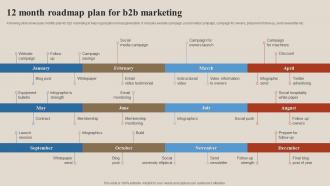
Following slide showcases monthly plan for b2b marketing to help organization in lead generation. It includes website campaign, social media campaign, campaign for owners, prepare for follow up, send newsletter etc.
People who downloaded this PowerPoint presentation also viewed the following :
12 Month Roadmap Plan For B2b Marketing with all 6 slides:
Use our 12 Month Roadmap Plan For B2b Marketing to effectively help you save your valuable time. They are readymade to fit into any presentation structure.
FAQs for 12 Month Roadmap Plan
So B2B marketing is totally different from B2C - way longer sales cycles and you're dealing with multiple decision-makers instead of just one person. B2C buyers make quick emotional choices, but B2B folks need months (sometimes years!) of nurturing because they're risking company money and their jobs. They want ROI data, case studies, all that proof stuff. B2C is more about feelings and lifestyle - honestly way easier in some ways. Start by mapping who's actually involved in buying decisions at your target companies. Trust me, it's probably messier than you think with way more stakeholders than expected.
Check out who's already buying from you first - that's your goldmine. What industries are they in? Company size? Job titles? I'd dig into the firmographic stuff too like revenue and headcount. Honestly, most companies just wing this part and wonder why their campaigns suck. Survey your current clients about their biggest headaches and how they make decisions. LinkedIn Sales Navigator is clutch for finding similar companies and spotting patterns. You'll want maybe 2-3 solid personas max. More than that and you're just confusing yourself. Then you can actually write messaging that doesn't sound like generic corporate garbage.
Look, content marketing is what makes everything else work in B2B. Blog posts and thought leadership bring people in at the top. Case studies help close deals later on. Without good content, your other marketing just kinda... doesn't hit the same way, you know? The trick is matching content types to where someone is in their buying journey. Right message, right time. Oh, and you'll want to figure out what content gaps you have first - that's honestly where most people should start but never do.
LinkedIn's your best bet - that's where business people actually spend time scrolling. I'd put like 80% of your energy there vs Twitter (though Twitter works okay for tech stuff). Sales Navigator is clutch for finding the right people. Here's what actually works: comment on your prospects' posts first before you start posting your own content. Share case studies, industry stuff, whatever - just don't be salesy about it. Takes maybe 15 minutes a day but makes a huge difference. Oh and actually reply when people engage with you - sounds obvious but most people suck at this part.
Go talk to your clients for real - like actual conversations, not some survey nonsense. Figure out how formal they are and match that energy. I swear, half these B2B companies think they need to sound like hipster startups when their clients just want someone who knows their stuff. Your voice should work whether you're writing an email or a whole whitepaper. Don't overthink it though. Just make a quick guide with examples of what sounds like you vs what doesn't, so your team isn't all over the place.
Oh, SEO's huge for B2B. Your prospects are googling their problems way before they know your product exists. Focus on those "how to fix X" keywords instead of just your product names - that's where the magic happens. Create content that actually solves their headaches, and definitely go for featured snippets since everyone wants quick answers these days. Don't ignore the technical stuff either - nobody's buying from a site that takes forever to load. Takes longer than paid ads to pay off, but honestly? The compound growth is insane. I'd start by figuring out what your ideal customers are actually typing into Google when they're stuck.
Honestly, you'll want to track everything from lead gen (MQLs, SQLs) down to actual conversions. Email opens, content downloads, deal velocity - all of it matters. Cost per acquisition is probably my favorite metric though, since nobody has unlimited budget lol. Pipeline stuff like lead-to-customer rates and average deal size are huge too. The tricky part? Actually connecting your marketing to real revenue. I'd set up monthly check-ins to catch trends early. That way you can kill campaigns that aren't working before they drain your budget.
So basically you flip everything upside down. Instead of spraying and praying, pick like 20-50 accounts you actually want to work with (seriously, don't go overboard here). Get sales and marketing on the same page first - that's half the battle right there. Then build campaigns specifically for each account. Custom content, targeted ads, personalized outreach based on their actual problems and who makes decisions there. It's way more work upfront, I won't lie. Each account becomes its own little project instead of just another lead in the funnel. Takes longer to see results but the deals are bigger and close way better. Worth the extra effort.
Honestly, LinkedIn's your best bet - everyone in B2B is already scrolling there anyway. Email newsletters are clutch too, plus your company blog for that SEO juice. Guest posting on industry sites works well if you're trying to build authority. Webinars are good for going deeper with prospects who are actually interested. Oh, and definitely repurpose everything - turn that blog post into LinkedIn carousels, email snippets, maybe some Twitter threads. YouTube's getting big for B2B too, especially demos. I'd start with LinkedIn and email since you've got people there already, then figure out where your buyers actually spend time.
Dude, personalization works so well it's crazy - like 2-3x better email opens when you actually tailor stuff to their role or industry. Generic sales pitches? People delete those instantly, obviously. What I'd do is start with the data you already have - job titles, company size, whatever interactions you've logged. Use that for custom subject lines and landing pages. Honestly, even just personalized email sequences by industry makes a huge difference. Your prospects need to feel like you get their actual business problems, not just throwing random solutions at them. Start small though, then build it out from there.
Look for companies that serve your customers but aren't competitors - that's where the magic happens. Strategic alliances work really well, like when software companies team up with consultants. Channel partnerships are solid too since you can tap into their existing sales network. Affiliate programs expand reach fast, though honestly the quality can be all over the place. Co-marketing is huge - joint webinars, shared content, that kind of stuff. Oh, and becoming part of someone's vendor ecosystem is pretty effective. I'd start by literally mapping out who your ideal customers already work with. Those relationships are gold.
Track campaigns that actually bring in money, not just clicks and likes - that stuff's basically useless. Dig into your customer journey to spot where people bail out, then fix those problem areas. Cohort analysis is my new obsession btw - shows you which channels get customers who stick around vs ones that disappear after a week. Attribution modeling helps figure out what deserves credit for sales. The whole point is tying your marketing to real results. Start with tracking your best customer segments first, then work down from there.
Webinars are honestly such a smart move for nurturing B2B leads. You get actual face time with people who already raised their hand by signing up - way better than cold outreach. Perfect for moving prospects along with demos or case studies. People dig the whole "learn from my couch with coffee" vibe too. The magic happens in your follow-up though. Don't just blast everyone the same email - check who actually showed up and engaged, then tailor your next move. Maybe send extra resources to the engaged ones, different approach for no-shows. Works every time.
Map out your buyer's journey first - B2B cycles are brutal, like 6+ months minimum. Different content for each stage works best: thought leadership for awareness, case studies and demos when they're comparing options, then ROI calculators for final decisions. Here's the tricky part though - you've got multiple people involved, so your content needs to hit both the tech folks and whoever controls the budget. Nurture sequences are honestly make-or-break since these deals drag on forever. Set up email workflows that actually add value over time. Most importantly, track what touchpoints led to actual sales, not just random leads that go nowhere.
Look, three things are totally reshaping B2B right now. Intent data is everything - people research for weeks before they'll even take your call, so you gotta be where they're already looking. Personalization isn't optional anymore, it's just expected. Plus honestly? If you're not using AI for content yet, you're playing catch-up already. The other thing - and this one's annoying - is buying committees are massive now. You're not selling to one person, you're selling to like six different stakeholders who all want different info. I'd start by looking at what content you have vs. what these trends actually need.
-
“Excellent service from the customer support team when I wanted a slide that was a bit different from those on their standard menu. Super helpful.”
-
SlideTeam is a great place for PPT templates. They have many templates on a single topic. It has made my life a lot easier.