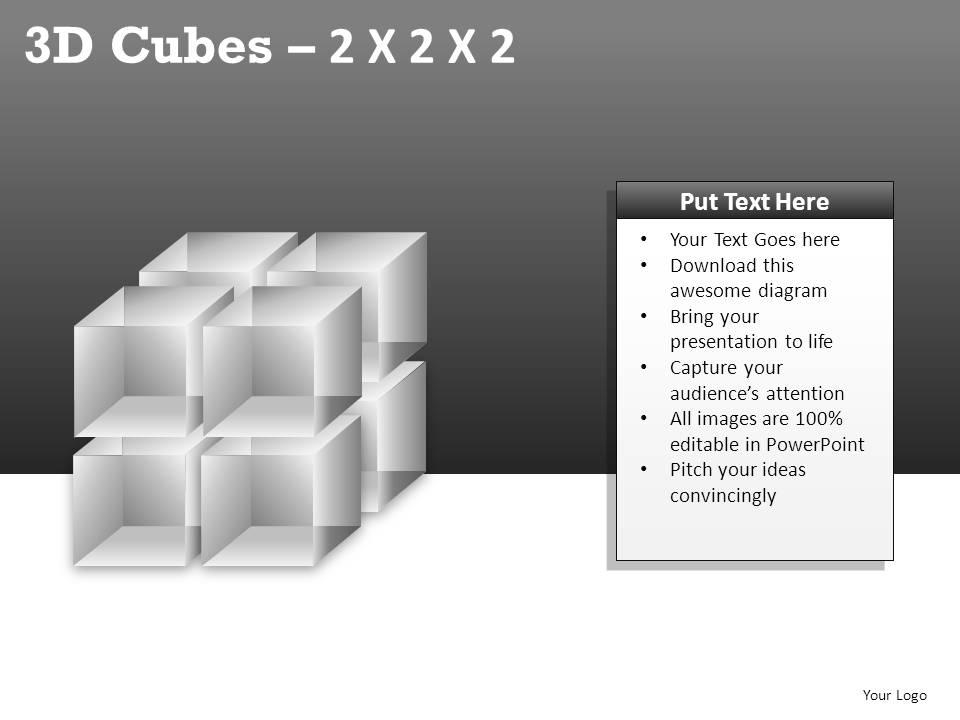
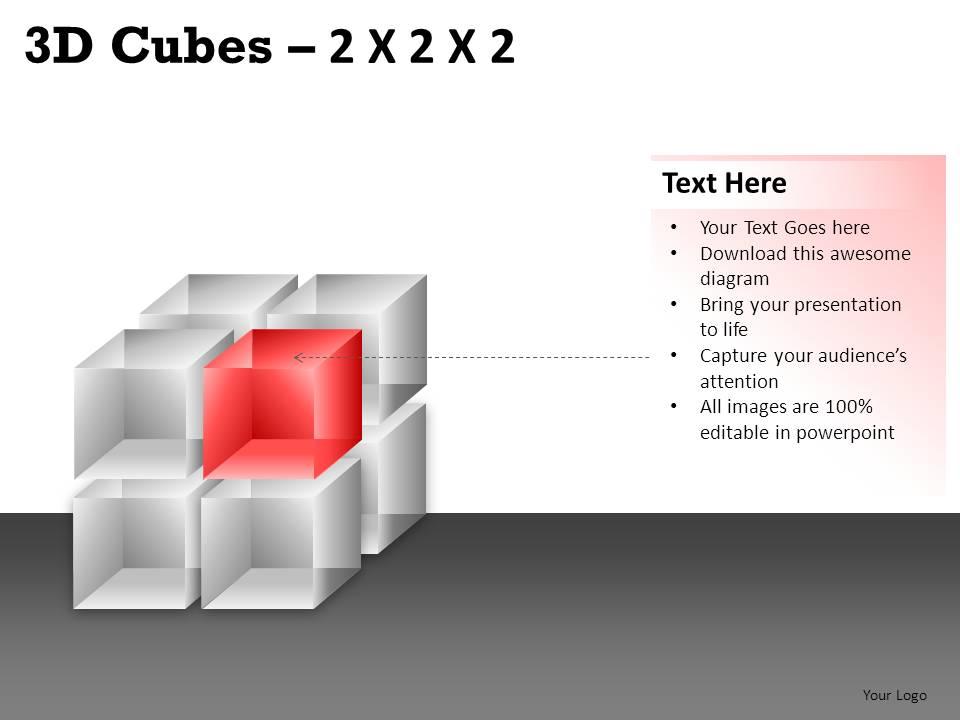
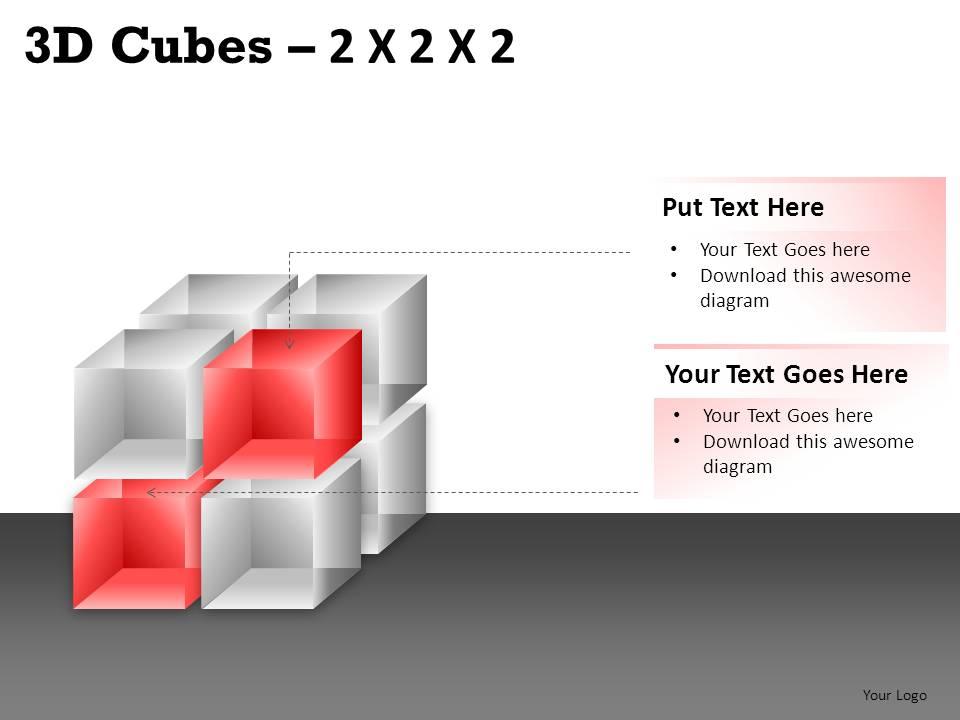
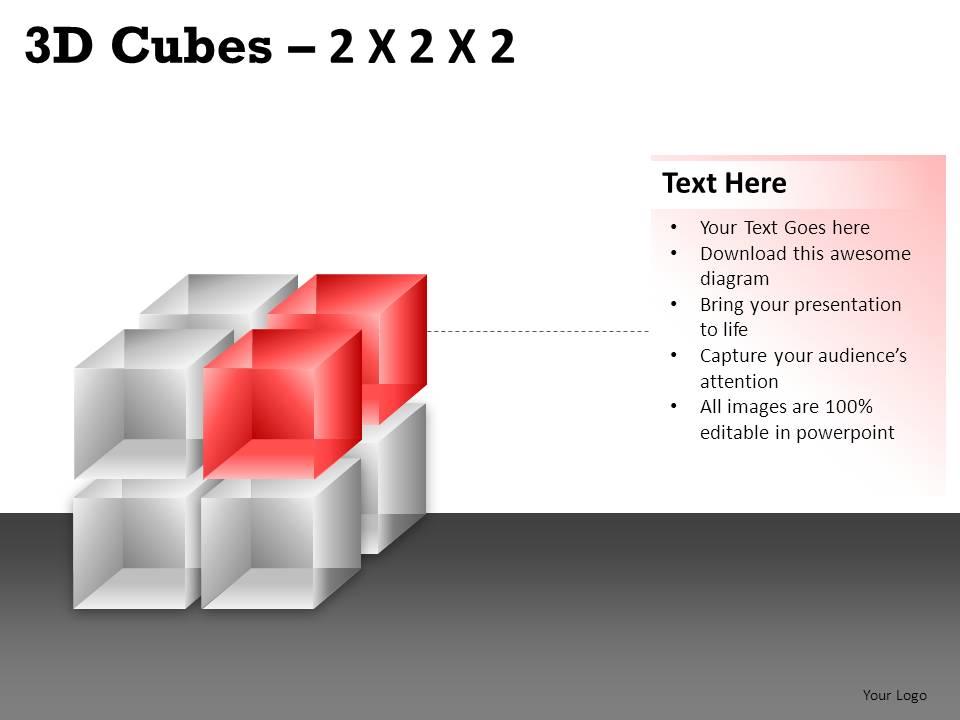
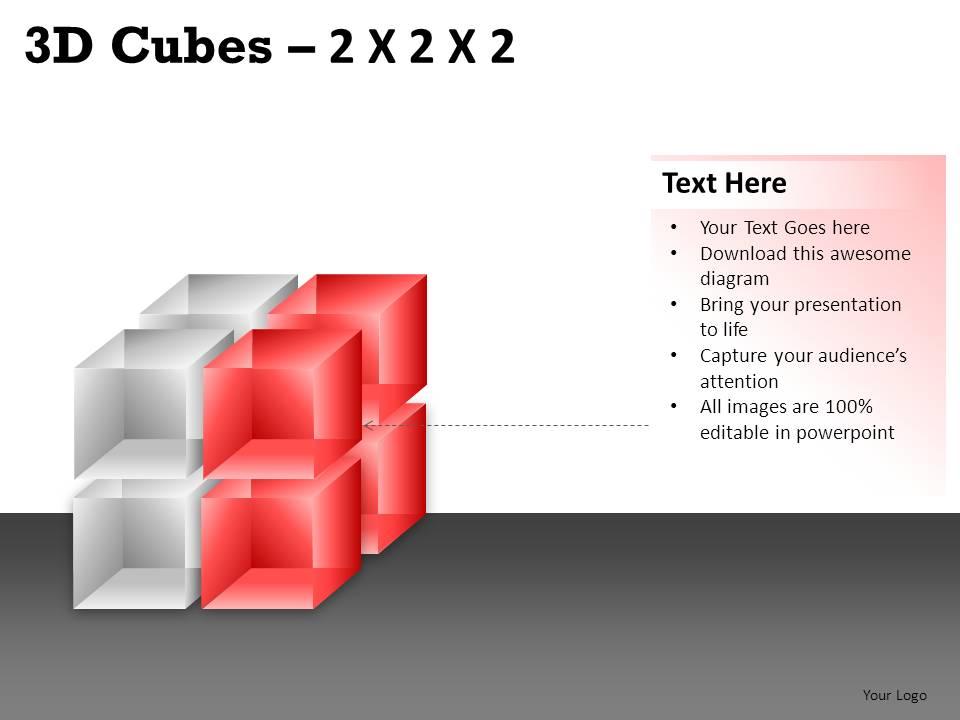
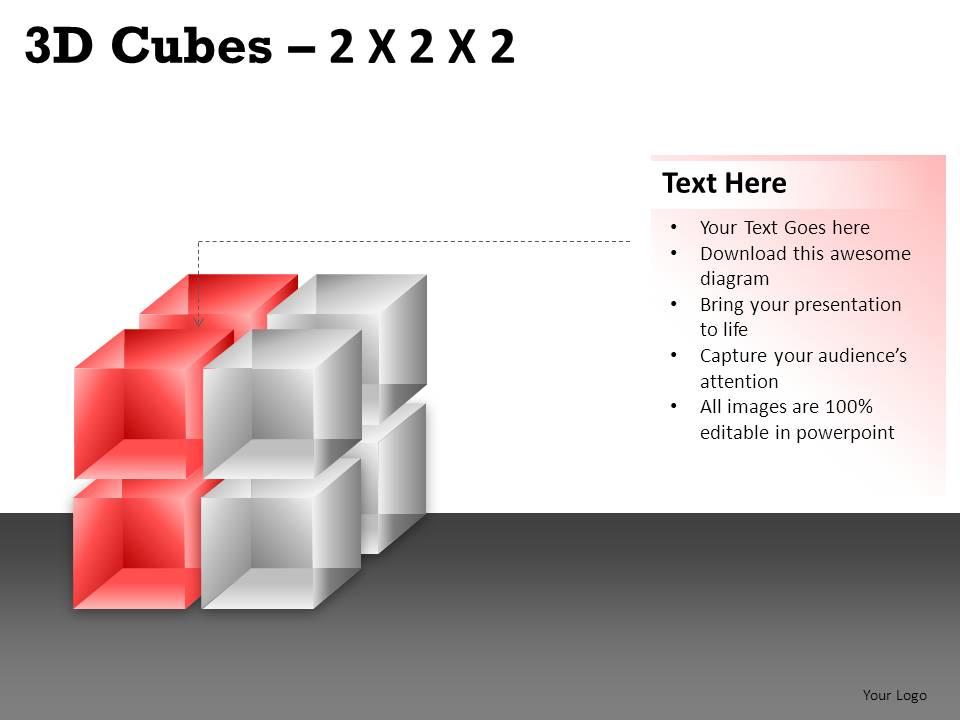
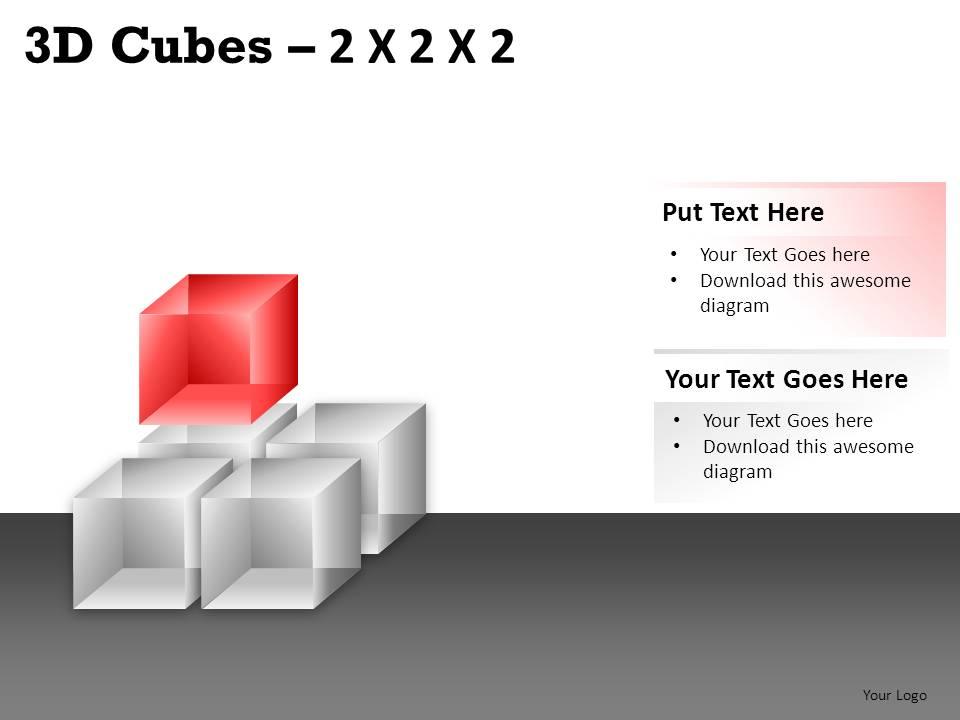
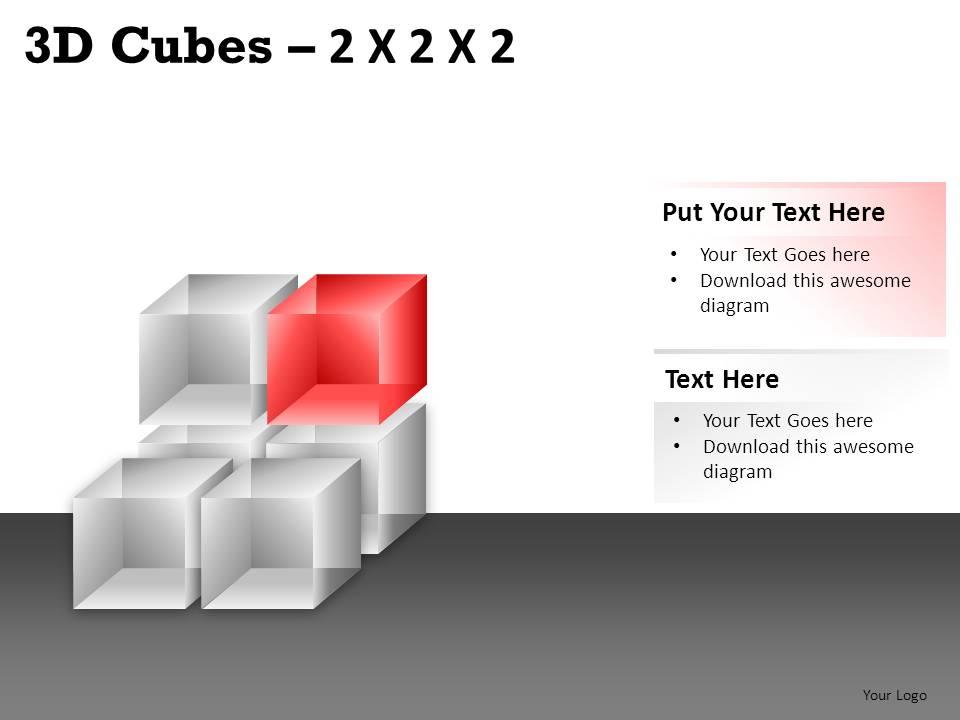
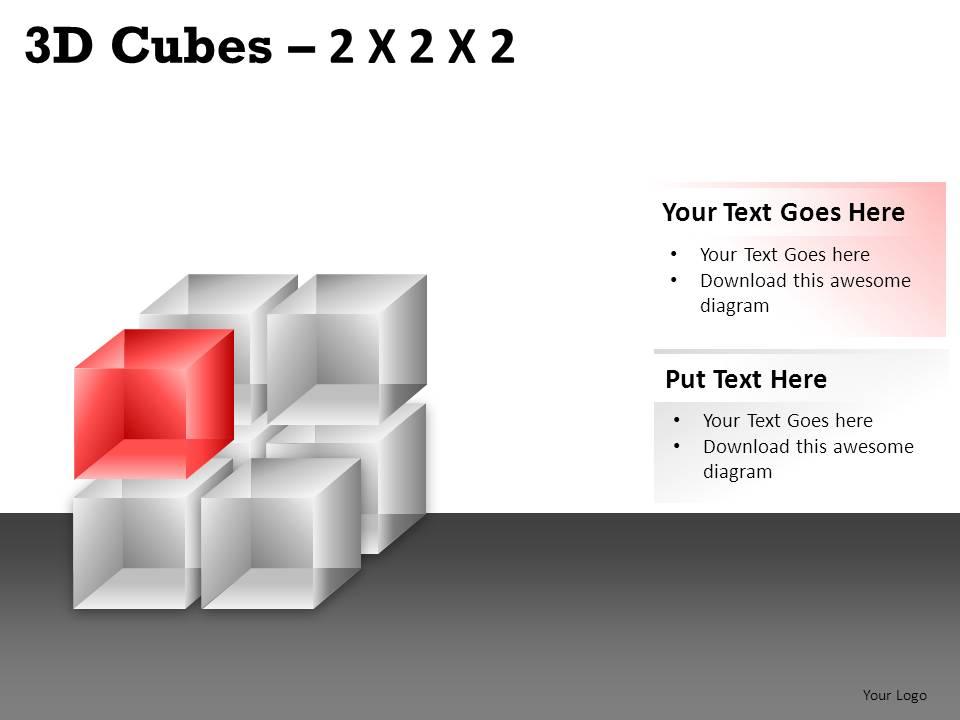
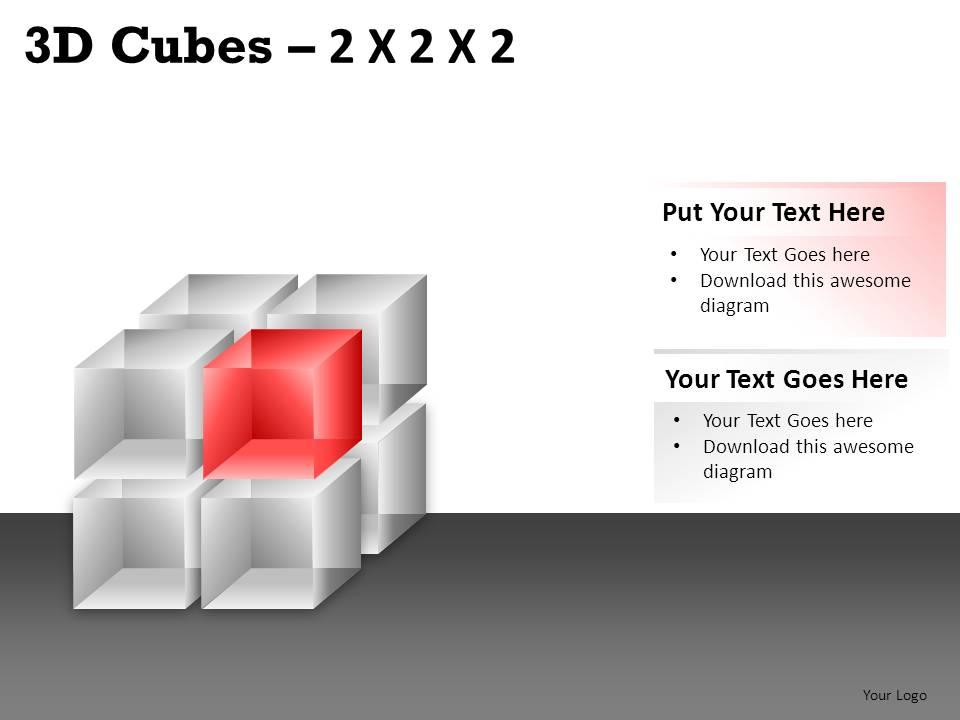
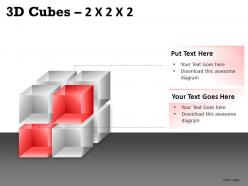
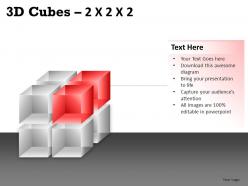
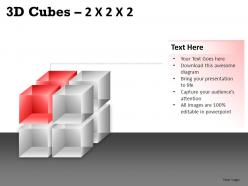
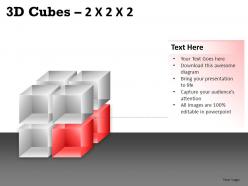
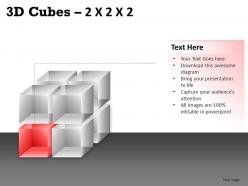
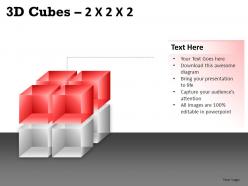
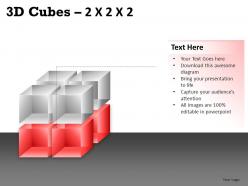
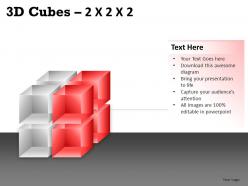
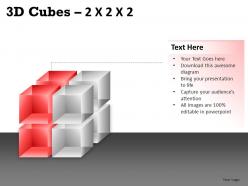
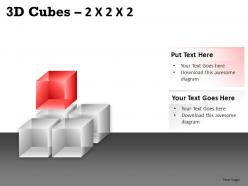
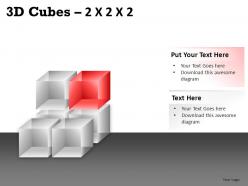
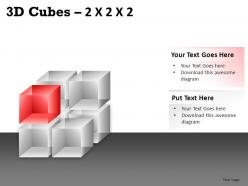
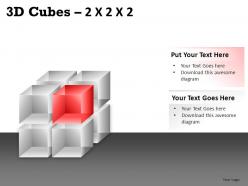
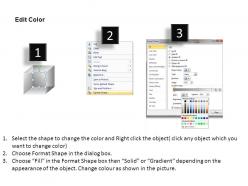
3d cubes 2x2x2 powerpoint presentation slides

Rating:
80%
3d cubes 2x2x2 powerpoint presentation slides
Slide 1 of 19
Favourites Favourites

Try Before you Buy Download Free Sample Product

Audience Impress Your
Audience
Editable 100%
Editable
Time Save Hours
of Time
The Biggest Sale is ending soon in
0
0
:
0
0
:
0
0
Rating:
80%
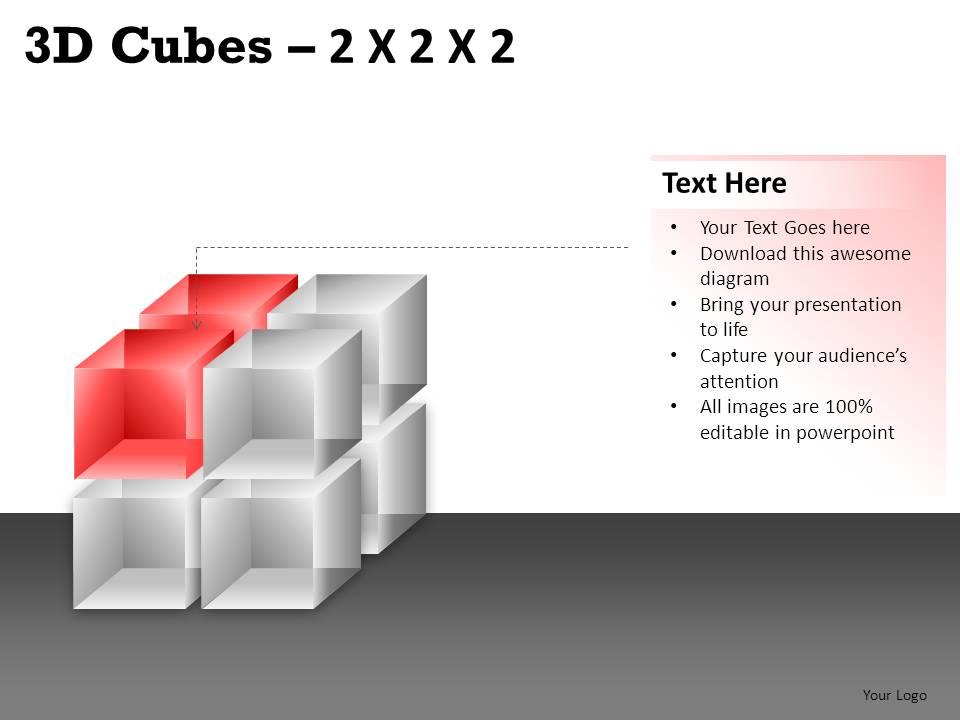
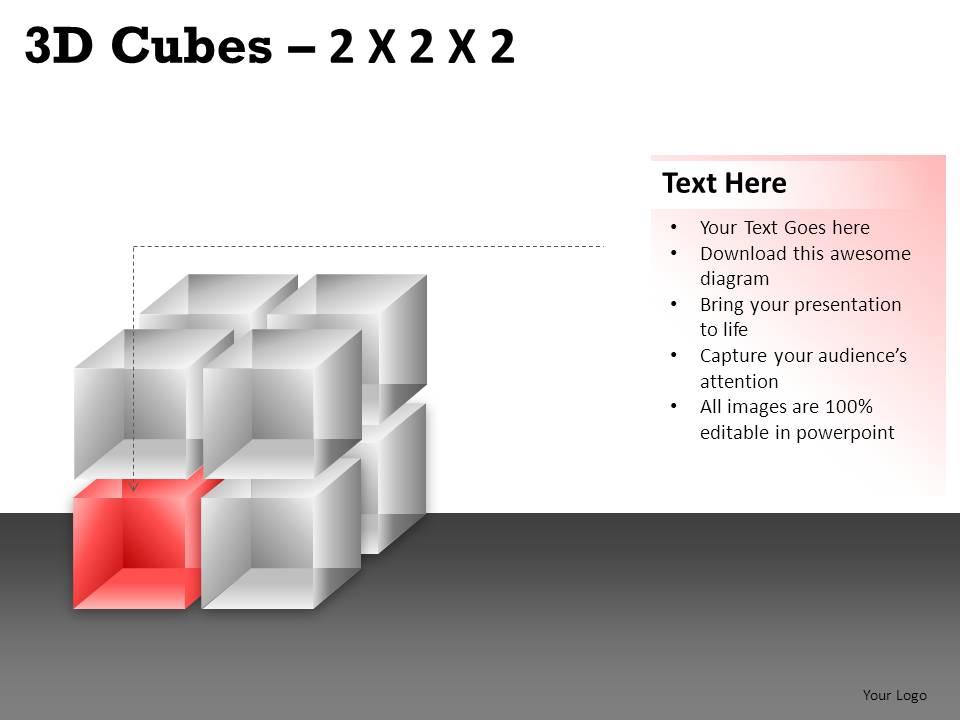
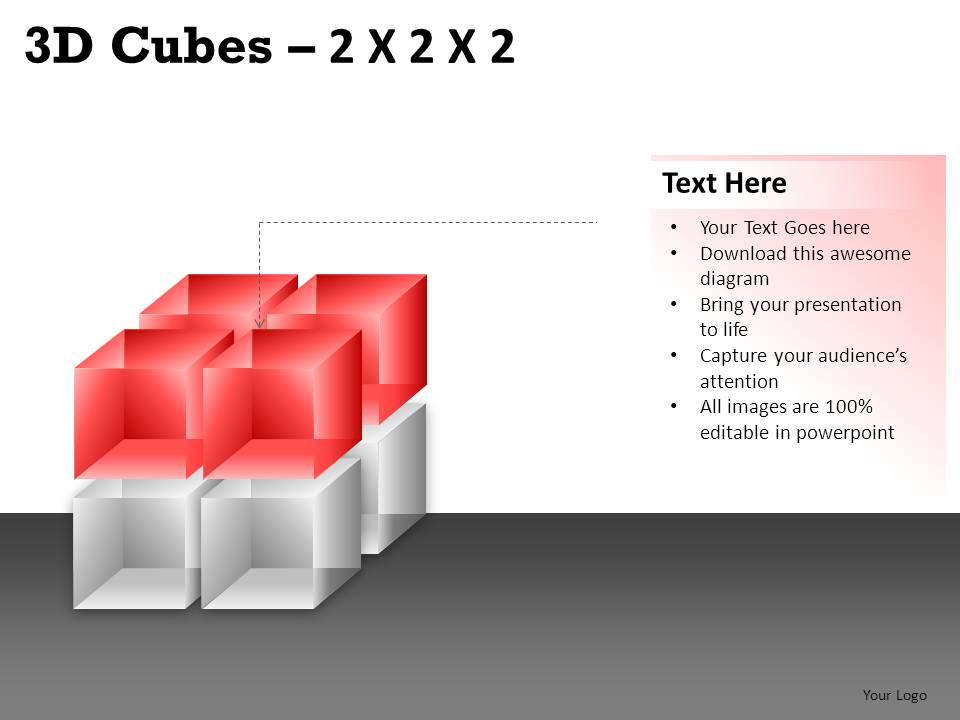
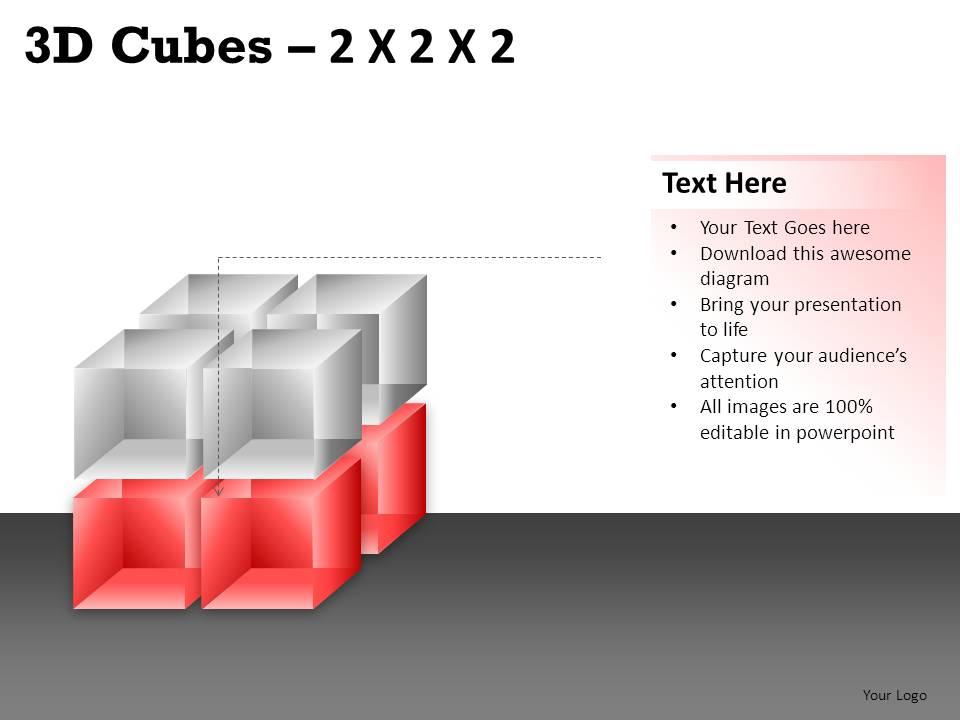
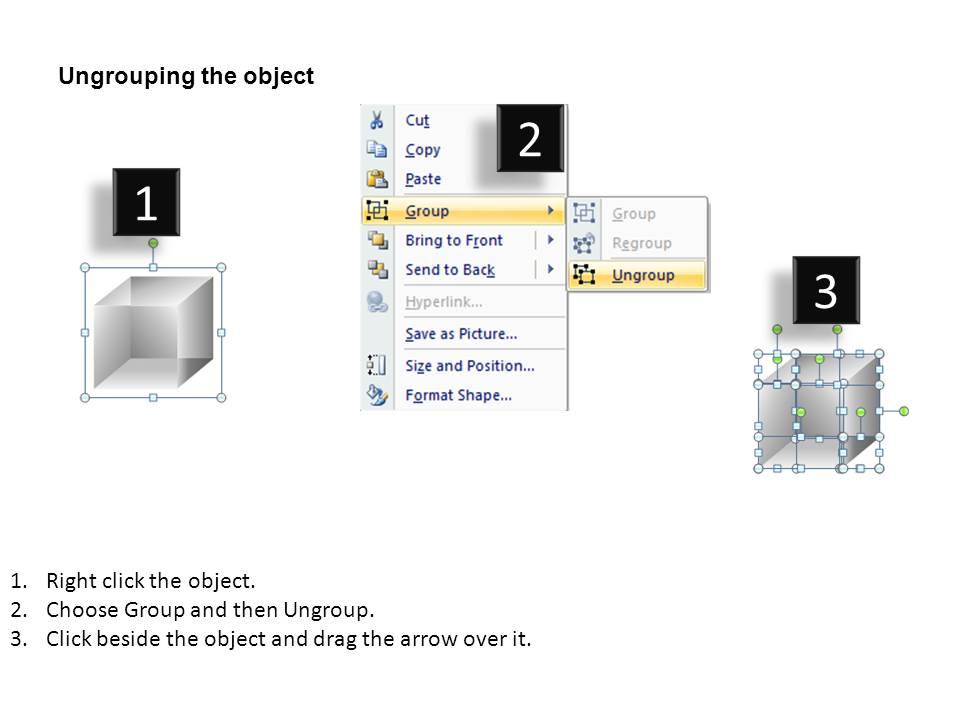
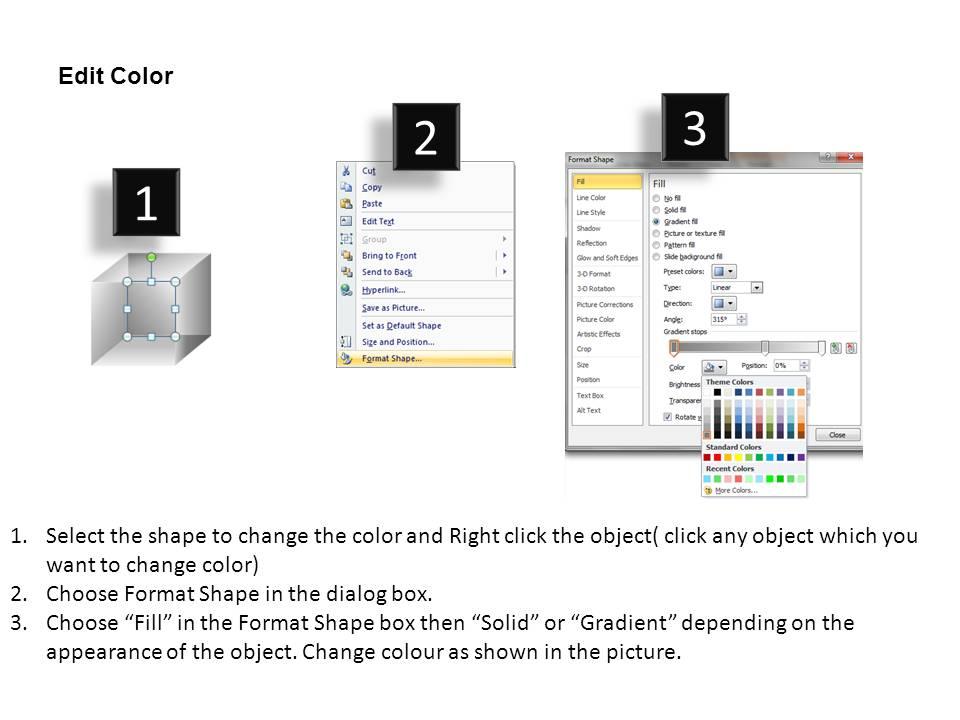
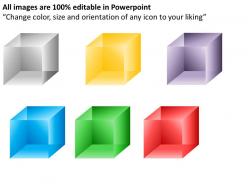
Create significantly superior quality Microsoft PowerPoint presentations to impress your audience with our attractive, versatile 3D Blocks PowerPoint themes, visuals and slides. Our 3D PPT charts, diagrams and graphics are colored, organized and identified in smaller cubes to enable you to emphatically accentuate the individual units of the larger structure in your Business multi-level marketing workflow processes and Human Resources Microsoft PowerPoint presentations, Business conceptual pyramids and Hierarcies PPT presentations, Business strategic expansion alignments and building new division PPT slideshows, Children Educational PowerPoint presentations, Architecture, Design and Construction PPT presentations, Media, Digital and Advertising PowerPoint templates, Nature and Environment PPT themes, Food, Health and Medical Pyramid PPT presentations and Business Operational Processes Organizational structure and Customer Supply Chain logistics PPT presentations.

People who downloaded this PowerPoint presentation also viewed the following :

FAQs for 3d cubes 2x2x2

A 3D cube features six equal square faces, twelve equal edges, eight vertices, and three pairs of parallel faces meeting at right angles. These geometric properties enable versatile applications in architecture, engineering, and design visualization, with many professionals finding that cubes provide structural stability, modular construction possibilities, and efficient space utilization across various industries.

3D cubes enhance data visualization presentations by representing multi-dimensional datasets, hierarchical structures, comparative metrics, and complex relationships through depth, width, and height parameters. These visual elements streamline audience comprehension by transforming abstract data into intuitive geometric forms, enabling presenters to demonstrate correlations, trends, and organizational hierarchies more effectively, ultimately delivering enhanced engagement and clearer strategic insights.

Cubes differ from other polyhedra through their six identical square faces, twelve equal edges, and eight vertices, while other polyhedra like tetrahedrons, octahedrons, and dodecahedrons feature varying face shapes, edge lengths, and vertex configurations. This geometric uniformity enables cubes to deliver superior space optimization, structural stability, and manufacturing efficiency across industries like architecture, packaging, and engineering design, ultimately providing strategic advantages in material usage and cost reduction.

Cubes serve as fundamental building blocks in computer graphics and 3D modeling, providing basic geometric primitives for creating complex objects, establishing coordinate systems, and testing rendering algorithms. Through subdivision, extrusion, and Boolean operations, 3D artists and game developers transform simple cubes into detailed characters, architectural structures, and environments, ultimately streamlining the creative workflow while delivering efficient polygon management.

Cubes can be applied in architectural design through modular construction systems, geometric facade patterns, space division frameworks, structural grid planning, and volumetric massing studies. These geometric applications streamline design processes by enabling standardized components, optimizing material usage, and enhancing spatial efficiency, with many architectural firms finding that cube-based systems ultimately deliver cost-effective construction and flexible, scalable building solutions.

Cubes serve as fundamental building blocks in gaming development, providing collision detection, environmental mapping, spatial organization, and modular world construction. These geometric primitives enable developers to create immersive environments by establishing consistent physics interactions, optimizing rendering performance, and facilitating procedural generation, with many game studios finding that cube-based architectures streamline development while delivering scalable, interactive experiences.

3D cubes enhance STEM learning by enabling spatial visualization, supporting kinesthetic learning styles, and making abstract concepts tangible through interactive manipulation. Educational institutions increasingly use digital 3D cube models in mathematics, chemistry, and engineering courses, with many teachers finding that students demonstrate improved problem-solving skills and deeper conceptual understanding when complex theories become physically explorable.

Effective techniques include keyframe animation, rotation transitions, scale transformations, opacity changes, and path-based movement animations. These methods enhance presentations by creating dynamic visual storytelling, emphasizing key data points, and maintaining audience engagement, with many corporate trainers and sales professionals finding that animated cubes significantly improve information retention and presentation impact.

Lighting conditions dramatically alter 3D cube perception by modifying shadow depth, surface contrast, and dimensional clarity, with directional lighting enhancing edges while ambient lighting flattens appearance. In presentation design and architectural visualization, strategic lighting enables clearer spatial understanding, improved audience engagement, and more compelling visual communication, ultimately delivering enhanced viewer comprehension and professional impact.

**INPUT**: What are some innovative applications of 3D cubes in marketing presentations? **OUTPUT**: Innovative 3D cube applications in marketing presentations include interactive product showcases, multi-dimensional data visualization, brand story timelines, competitive analysis frameworks, and modular service demonstrations. These visual elements enhance audience engagement by transforming static information into dynamic, rotatable content, with many organizations finding that 3D cubes significantly improve information retention and presentation memorability. [Word count: 54 words]

Interactive 3D cube visuals are created using presentation templates with layered animations, clickable elements, and structured content blocks that rotate or transition between faces. Templates enable presenters to showcase multi-dimensional data, product features, or process flows through engaging cube rotations, with many finding that these visuals enhance audience engagement and information retention significantly.

Incorporating 3D cubes in digital designs presents challenges including rendering performance optimization, cross-platform compatibility, file size management, accessibility compliance, and user experience consistency. While these elements enhance visual engagement and brand differentiation, designers must balance aesthetic impact with loading speeds and device limitations, with many organizations finding that strategic implementation delivers stronger user engagement and competitive advantage.

3D cubes embody perfect symmetry through their equal faces, edges, and angles, making them fundamental elements in art and design for creating balance, rhythm, and visual harmony. Designers leverage cubic symmetry in architecture, product design, and digital interfaces to establish geometric consistency and structural integrity, while artists use cube-based compositions to create dynamic visual tension, ultimately delivering both aesthetic appeal and functional stability across creative disciplines.

Professional 3D cube design tools include Blender, SketchUp, Autodesk Maya, Cinema 4D, and PowerPoint's built-in 3D models feature. These applications streamline cube creation by offering intuitive modeling interfaces, customizable textures, and direct presentation integration, with many business professionals finding that PowerPoint and SketchUp deliver the most accessible combination of functionality and ease-of-use for corporate presentations.

Cubist art influences modern presentation templates by introducing fragmented perspectives, geometric abstraction, and multi-dimensional visual storytelling that breaks information into interconnected segments. These design principles enable presenters to display complex data through layered 3D cube arrangements, angular layouts, and deconstructed visual hierarchies, ultimately delivering more engaging audience experiences and enhanced information retention across corporate, educational, and creative sectors.

Ratings and Reviews

80% of 100
Write a review
Most Relevant Reviews
  1. 80%

    by Cory Reynolds

    Good research work and creative work done on every template.
  2. 80%

    by Dana Owens

    Great quality slides in rapid time.

2 Item(s)

per page: