

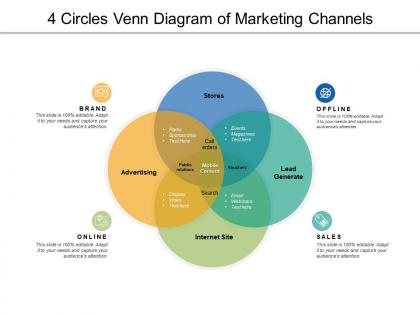
4 circles venn diagram of marketing channels




Try Before you Buy Download Free Sample Product
 Impress Your
 Audience
 100%
100% Editable
 Save Hours
 of Time


Browbeat the competition with our 4 Circles Venn Diagram Of Marketing Channels. It will compel folks to back down.
People who downloaded this PowerPoint presentation also viewed the following :
4 circles venn diagram of marketing channels with all 5 slides:
Folks feel compelled to back down due to our 4 Circles Venn Diagram Of Marketing Channels. Be able to browbeat the competition.

FAQs for 4 circles venn diagram
Honestly, Instagram and TikTok are killing it right now for reaching millennials. Email's still solid too - I know it sounds old school but it works. YouTube's having this weird moment where longer videos are actually doing well again, which is kinda surprising. Oh, and if you're doing B2B stuff, LinkedIn's not as boring as people think. The real key though? Don't try to be perfect. Millennials can spot fake content instantly and they hate it. User-generated stuff performs way better than polished ads. Just pick like 2-3 platforms and actually focus on them instead of trying to be everywhere at once.
Honestly, digital beats traditional marketing by like 2-3x ROI most of the time. With digital you can see exactly what's working - every click, every sale. Traditional stuff like TV ads? Good luck figuring out if they actually worked lol. Plus you can tweak digital campaigns on the fly and target really specific audiences. That said, traditional still kills it for brand awareness and reaching older folks who aren't glued to their phones. I'd start with digital first since you can actually measure results, then maybe add traditional once you know your messaging doesn't suck.
Look, social media lets you hit different groups without betting everything on just your website or email list. Instagram people act totally different than LinkedIn folks - same brand, completely different vibe. It's actually crazy how that works. You're basically spreading your risk while getting seen more. Pick maybe 2-3 platforms where your customers actually spend time though. Don't try being everywhere because honestly? You'll just burn out and do everything halfway decent instead of crushing it somewhere specific.
Honestly, most businesses totally mess this up - their website looks nothing like their actual store! Make sure everything feels connected when customers bounce between online and offline. Your social media vibe should match how your staff actually talks to people. QR codes are clutch for connecting physical stuff to your digital world. I'd also grab emails in-store so you can follow up later. Oh, and definitely track how people move between your channels. Sometimes they'll see your Instagram ad but buy in person, you know? That way you'll actually know what's driving sales instead of just guessing.
Honestly? TikTok Shop is blowing up right now - you don't want to miss that boat. Podcast ads and voice assistant stuff are getting real traction too. Connected TV is huge since everyone's streaming these days. AI personalization tools that change content based on what users actually do? Game changer. Also, community platforms where customers basically do your marketing for you through user content - pure gold. Here's what I'd do: pick 2-3 of these and test with small budgets now. Don't wait around while competitors grab all the good spots. Seriously, start playing with this stuff today.
Honestly, influencer marketing works really well if you don't mess it up. Most brands chase big follower counts which is stupid - you want someone whose audience actually cares about your stuff. I'd start with micro-influencers since their engagement is usually way better anyway. Build real relationships with creators who genuinely use your product. My cousin tried this for her jewelry brand and saw great results. Give them creative freedom but set clear boundaries on what you need. Don't just track reach either - look at actual conversions and engagement rates.
Honestly, focus on conversion rate, CAC, and ROAS first - those three will tell you if you're making money or just burning it. LTV to CAC ratio is huge too because I've seen so many people get excited about cheap clicks that turn into customers who bounce after one purchase. Click-through rates and engagement stuff matter but more for predicting what'll work down the road. Oh, and don't try tracking everything at once - pick maybe 4 metrics tops or you'll just confuse yourself. Once you start seeing what's actually moving the needle, then you can get nerdy with the data.
So basically, you're creating different content for each stage of your customer journey. Blog posts and social stuff pull people in at the top through SEO and sharing. Then you've got your middle stuff - ebooks, webinars, whatever builds trust and gets their email. Case studies and demos seal the deal at the bottom. What's wild is most people don't even realize how much this content shapes their buying choices. You'll want to map out what content fits where in your funnel, then actually track what's working. Oh and start by looking at what you already have first - probably more gaps than you think, but might surprise you too.
Definitely start with segmenting your lists - group people by what they've bought or how much they actually engage with your emails. Personalization goes way beyond just using their name too. Show them stuff that matches their interests or previous purchases. A/B testing is honestly where you'll see the biggest wins - try different subject lines, send times, all that. Oh and make sure everything looks good on mobile since that's where most people read emails anyway. I'd check your current open rates first though, so you know what you're working with as a baseline.
Your audience's age totally dictates where they spend time online. Gen Z's all over TikTok and Insta, but Boomers? Still scrolling Facebook and actually opening emails. Income matters too - broke college kids aren't hanging out on premium platforms. Oh, and location's weird but important since rural folks still watch more TV and read newspapers. We completely whiffed on this once, spending thousands on LinkedIn ads for teen acne products (yeah, that was dumb). Map out who your customers are first, then figure out where they actually are before you waste money.
So basically you set up stuff like email sequences and chatbots that respond to what your customers do - someone signs up, boom, welcome email. They abandon their cart, another email goes out automatically. The best part? You don't have to babysit it 24/7. These systems actually get better over time as they learn from customer interactions. Your people get quick responses and personalized content while you focus on bigger picture stuff instead of answering the same questions all day (trust me, that gets old fast). I'd start with just one channel - maybe automate your most common customer questions first.
Start with attribution tracking - use UTM parameters so you can see what's actually working in Google Analytics. Most teams just look at last-click attribution because it's simple, but cross-channel models give you way better insights. Track the whole customer journey and test with holdout groups to measure real impact. Each channel needs its own KPIs, but honestly the magic happens when you see how they all connect. Don't get stuck measuring channels in silos - the customer path tells the real story about what's driving conversions.
Okay so first thing - get your messaging locked down across everything. Same brand voice, visuals, value props whether they're on your site, seeing an Instagram ad, whatever. Most companies totally botch the tech integration part (honestly it's painful to watch). Your CRM needs to actually talk to your email platform and social tools so customer data isn't just sitting in silos. Map out how customers typically move through your channels and figure out where the handoffs get weird. Those transition points? Test them constantly. Oh and maybe start small - just pick one customer path and audit it this week from start to finish.
Attribution is such a pain - you can't tell which channels actually work vs which ones just get lucky being the last touchpoint. Teams get super defensive about their budgets too, which makes cuts brutal. Some channels pay off right away while others take forever to show ROI, so timing gets messy. Oh and don't even get me started on being stuck with crappy legacy contracts. Honestly, I'd start small with test reallocations instead of going nuclear. Just make sure your tracking doesn't suck first so you can actually see what's happening.
Ugh, channel fragmentation is such a pain. Your audience gets scattered across like 20 different platforms and you're stuck trying to chase them everywhere. Social media, email, podcasts, streaming - it never ends. Your budget gets sliced so thin that nothing really hits hard anymore. Plus tracking everything becomes this massive headache. Honestly, I think most brands would do way better just picking 2-3 channels where their people actually spend time and going all-in there. Why spread yourself crazy thin when you could dominate a few key spots instead?
No Reviews