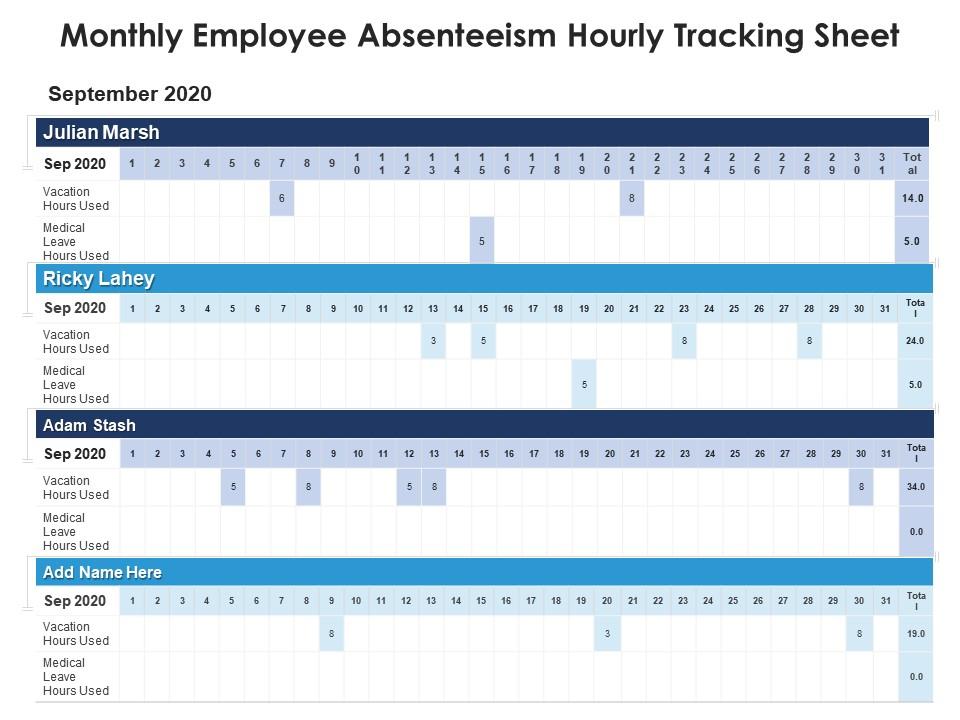
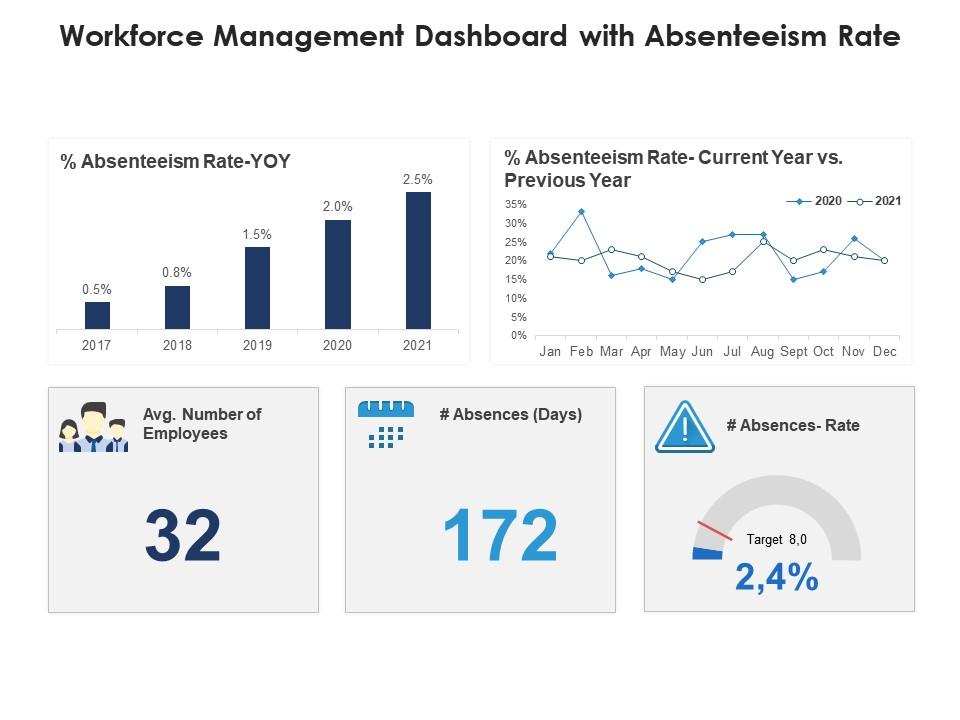
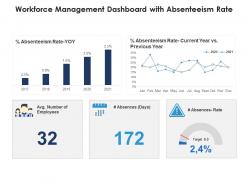
Absenteeism Workforce Productivity Manufacturing Representing Department Effectiveness
Try Before you Buy Download Free Sample Product
Audience
Editable
of Time
Our Absenteeism Workforce Productivity Manufacturing Representing Department Effectiveness are topically designed to provide an attractive backdrop to any subject. Use them to look like a presentation pro.
People who downloaded this PowerPoint presentation also viewed the following :
Absenteeism Workforce Productivity Manufacturing Representing Department Effectiveness with all 12 slides:
Use our Absenteeism Workforce Productivity Manufacturing Representing Department Effectiveness to effectively help you save your valuable time. They are readymade to fit into any presentation structure.
FAQs for Absenteeism Workforce Productivity Manufacturing
Primary causes of workplace absenteeism include illness and health issues, personal and family responsibilities, workplace stress and burnout, lack of job satisfaction, and poor work-life balance. These factors often interconnect, with organizations in healthcare, manufacturing, and retail finding that addressing root causes through flexible policies, wellness programs, and improved management practices significantly reduces absence rates while enhancing overall productivity.
Absenteeism significantly disrupts team productivity by increasing workloads for remaining staff, delaying project timelines, and creating knowledge gaps that hinder collaborative workflows. This strain often leads to declining morale, heightened stress levels, and potential burnout among present employees, with many organizations finding that chronic absenteeism ultimately compromises service quality and operational efficiency.
Company culture plays a pivotal role in reducing absenteeism by fostering employee engagement, psychological safety, and work-life balance initiatives. Organizations with strong cultures that emphasize recognition, flexible scheduling, and supportive management see significantly lower absence rates, with many companies finding that investing in cultural transformation ultimately delivers improved retention and operational efficiency.
Managers can effectively identify absenteeism patterns by tracking attendance data through HR systems, monitoring frequency and timing of absences, analyzing departmental trends, and noting correlations with specific events or seasons. By maintaining detailed records and conducting regular reviews, organizations streamline workforce planning, enhance productivity forecasting, and ultimately deliver improved operational efficiency while addressing underlying workplace issues proactively.
Organizations can implement flexible work arrangements, comprehensive wellness programs, clear attendance policies, employee recognition systems, and regular feedback mechanisms to address absenteeism. These strategies work by enhancing work-life balance, improving employee engagement, and creating supportive environments, with many companies finding that proactive wellness initiatives and flexible scheduling reduce unplanned absences while boosting overall productivity.
Health and wellness programs significantly improve employee attendance by reducing illness-related absences, enhancing physical and mental well-being, and creating supportive workplace cultures. Through preventive healthcare initiatives, stress management resources, and fitness programs, organizations streamline workforce reliability while reducing healthcare costs, with many companies finding that comprehensive wellness strategies ultimately deliver stronger employee engagement and measurable productivity gains.
High absenteeism creates significant financial implications including increased overtime costs, temporary staffing expenses, reduced productivity, higher healthcare premiums, and administrative overhead for tracking and managing absences. These costs compound across organizations, with many businesses finding that strategic absenteeism management through wellness programs, flexible scheduling, and engagement initiatives ultimately delivers substantial cost savings and improved operational efficiency.
Technology-based attendance tracking systems help manage absenteeism by automating data collection, identifying patterns through analytics, and enabling real-time monitoring of workforce presence. Through digital platforms, managers can quickly spot chronic absenteeism trends, implement targeted interventions, and streamline administrative processes, ultimately delivering improved operational efficiency and enhanced employee accountability across organizations.
Employers must consider compliance with FMLA regulations, ADA accommodation requirements, state sick leave laws, workers' compensation statutes, and anti-discrimination protections when developing absenteeism policies. These legal frameworks require careful policy design that balances operational needs with employee rights, with many organizations finding that proactive compliance ultimately reduces litigation risks while enhancing workplace transparency.
Higher employee engagement significantly reduces absenteeism by creating stronger workplace connections, increased job satisfaction, and greater sense of purpose. Engaged employees demonstrate lower absence rates through improved motivation and commitment, with many organizations finding that strategic engagement initiatives, regular feedback systems, and recognition programs ultimately deliver reduced operational disruptions and enhanced productivity across teams.
**INPUT**: What specific metrics should businesses track to analyze absenteeism trends? **OUTPUT**: Businesses should track absenteeism rate, frequency patterns, duration averages, departmental comparisons, and cost per absence to analyze workforce trends effectively. These metrics enable organizations to identify problem areas, seasonal patterns, and financial impacts, with many companies finding that comprehensive tracking ultimately delivers improved resource planning, targeted interventions, and enhanced operational efficiency. [Word count: 54 words]
Flexible work arrangements reduce absenteeism by accommodating personal needs, eliminating commute-related delays, and enabling employees to work during their most productive hours. These arrangements, including remote work, flexible schedules, and hybrid models, help organizations minimize stress-related absences, improve work-life balance, and ultimately deliver higher retention rates and enhanced productivity across diverse industries.
Employee Assistance Programs (EAPs), mental health services, flexible work arrangements, childcare support, and financial counseling provide comprehensive support for personal challenges affecting attendance. These resources enhance employee wellbeing by addressing root causes, offering confidential guidance, and enabling work-life balance solutions, with many organizations finding that proactive support significantly reduces absenteeism while improving retention.
Training supervisors in absenteeism management enhances retention by equipping them with skills for early intervention, empathetic communication, and supportive problem-solving approaches. Through structured coaching techniques, supervisors can identify underlying causes, create flexible accommodation strategies, and build stronger employee relationships, ultimately reducing turnover while fostering workplace trust and engagement.
Best practices for communicating absenteeism policies include clear written documentation, interactive training sessions, accessible digital platforms, regular policy updates, and transparent reporting procedures. These approaches enhance understanding by providing multiple communication channels, ensuring consistent messaging across departments, and creating accountability frameworks, with many organizations finding that proactive communication significantly reduces policy violations and improves workplace attendance culture.
-
Awesome presentation, really professional and easy to edit.
-
Easy to edit slides with easy to understand instructions.
-
Amazing product with appealing content and design.
-
Best Representation of topics, really appreciable.
-
Thanks for all your great templates they have saved me lots of time and accelerate my presentations. Great product, keep them up!
-
Illustrative design with editable content. Exceptional value for money. Highly pleased with the product.
-
Easily Editable.
-
Nice and innovative design.