


Lograr el objetivo de ventas Rendimiento de ventas y ventas Ícono de Ppt del panel de control de Kpi
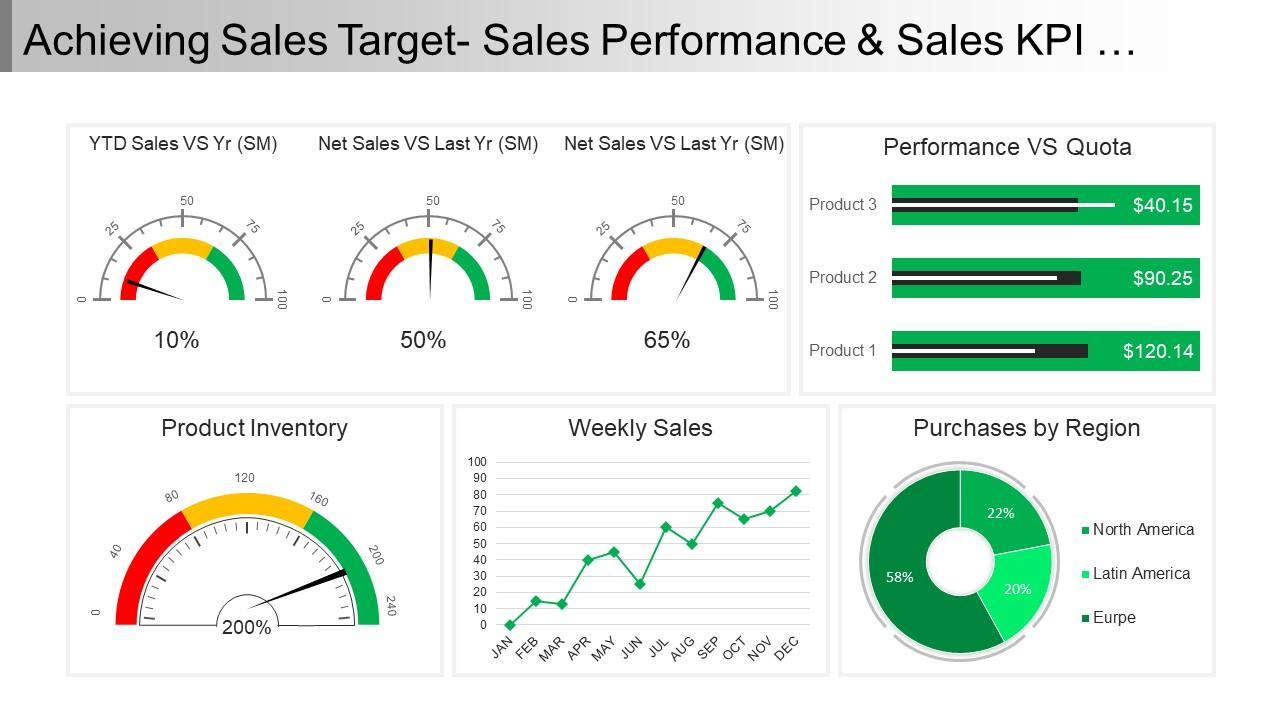
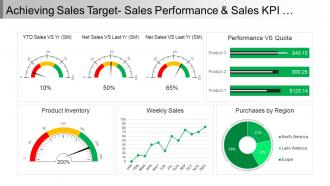
Como gerente de ventas, siempre querrá seguir el ritmo del progreso de su equipo de ventas. Ahora puede ver fácilmente lo que necesita su atención con esta plantilla de panel de indicadores de rendimiento de ventas y KPI de ventas objetivo de ventas. Lograr los objetivos de ventas puede ser difícil, pero mostrarlos en forma de informes de presentación puede ser aún más difícil. Por eso es muy importante crear la presentación de PowerPoint de objetivos de ventas de una manera que pueda expresar rápidamente estadísticas importantes para la alta dirección, subordinados y empleados. Para que su diseño de rendimiento de ventas sea fácil de entender y más animado, puede usar esta plantilla de PowerPoint Tablero de ventas vinculada a Excel lista para usar. Ayude a sus compañeros de trabajo a comprender a qué ritmo aumentan o disminuyen los ingresos por ventas. Este diseño ayudará al equipo de ventas a gestionar mejor la lista de índices de rendimiento de ventas. Nuestra presentación del panel de KPI de ventas mostrará su capacidad y lo ayudará a analizar el rendimiento de ventas orientado a resultados. Estas plantillas de PowerPoint de objetivos de ventas diseñadas profesionalmente son 100% personalizables. Simplemente descargue este impresionante formato PPT de panel de ventas e inspire a sus colegas a través de su presentación. Como gerente de ventas, siempre querrá seguir el ritmo del progreso de su equipo de ventas. Ahora puede ver fácilmente lo que necesita su atención con esta plantilla de panel de indicadores de rendimiento de ventas y KPI de ventas objetivo de ventas. Lograr los objetivos de ventas puede ser difícil, pero mostrarlos en forma de informes de presentación puede ser aún más difícil. Por eso es muy importante crear la presentación de PowerPoint de objetivos de ventas de una manera que pueda expresar rápidamente estadísticas importantes para la alta dirección, subordinados y empleados. Para que su diseño de rendimiento de ventas sea fácil de entender y más animado, puede usar esta plantilla de PowerPoint Tablero de ventas vinculada a Excel lista para usar. Ayude a sus compañeros de trabajo a comprender a qué ritmo aumentan o disminuyen los ingresos por ventas. Este diseño ayudará al equipo de ventas a gestionar mejor la lista de índices de rendimiento de ventas. Nuestra presentación del panel de KPI de ventas mostrará su capacidad y lo ayudará a analizar el rendimiento de ventas orientado a resultados. Estas plantillas de PowerPoint de objetivos de ventas diseñadas profesionalmente son 100% personalizables. Simplemente descargue este impresionante formato PPT de panel de ventas e inspire a sus colegas a través de su presentación. Su equipo está ansioso por escuchar sus opiniones. Satisfaga su sed con nuestro Ícono de PPT del panel de control de rendimiento de ventas y Kpi de ventas objetivo de ventas.

-

- Google Slides is a new FREE Presentation software from Google.
- All our content is 100% compatible with Google Slides.
- Just download our designs, and upload them to Google Slides and they will work automatically.
- Amaze your audience with SlideTeam and Google Slides.
-

Want Changes to This PPT Slide? Check out our Presentation Design Services
-

- WideScreen Aspect ratio is becoming a very popular format. When you download this product, the downloaded ZIP will contain this product in both standard and widescreen format.
-

- Some older products that we have may only be in standard format, but they can easily be converted to widescreen.
- To do this, please open the SlideTeam product in Powerpoint, and go to
- Design ( On the top bar) -> Page Setup -> and select "On-screen Show (16:9)” in the drop down for "Slides Sized for".
- The slide or theme will change to widescreen, and all graphics will adjust automatically. You can similarly convert our content to any other desired screen aspect ratio.
Compatible With Google Slides

Get This In WideScreen
You must be logged in to download this presentation.


Do you want to remove this product from your favourites?
Características de estas diapositivas de presentación de PowerPoint:
Presentando el icono de PPT de panel de control de rendimiento de ventas objetivo de ventas y KPI de ventas. Esta presentación incluye procesos de cinco etapas con todas las instrucciones para personalizar según sus necesidades y preferencias. Las etapas de este proceso son los objetivos de ventas, la meta de ventas, el logro de la meta de ventas. Puede agregar el nombre, el logotipo o la etiqueta de su marca para lograr un impacto adicional. La información completa y las imágenes mejoradas son los puntos más fuertes de este PPT del panel de KPI de ventas.

People who downloaded this PowerPoint presentation also viewed the following :
Contenido de esta presentación de Powerpoint
Lograr el objetivo de ventas Rendimiento de ventas y ventas Ícono de Ppt del tablero de Kpi con las 5 diapositivas:
Obtenga los lazos de amistad para crecer con nuestro Ícono de Ppt del Panel de control de ventas y rendimiento de ventas objetivo de ventas. Ayudará a construir una mayor buena voluntad.
-
Good research work and creative work done on every template.
-
Perfect template with attractive color combination.
