


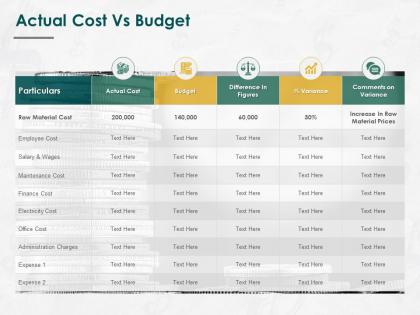
Actual cost vs budget ppt powerpoint presentation model samples




Try Before you Buy Download Free Sample Product
 Impress Your
 Audience
 100%
100% Editable
 Save Hours
 of Time


Our Actual Cost Vs Budget Ppt Powerpoint Presentation Model Samples are a blend of beauty and brains. They are both functional and attractive.
People who downloaded this PowerPoint presentation also viewed the following :
Actual cost vs budget ppt powerpoint presentation model samples with all 5 slides:
Display aesthetics and ability with our Actual Cost Vs Budget Ppt Powerpoint Presentation Model Samples. They allow for an excellent blend.


FAQs for Actual cost vs budget ppt powerpoint
Budgeted cost is what you planned to spend when you first sketched out the project. Actual cost? That's what you've really shelled out so far. Compare the two and you'll see if you're staying on budget or about to blow it. Honestly, I've learned this the hard way - those surprise expenses always pop up when you least expect them. Weekly check-ins work best for catching problems early. You don't want to wait until month-end to realize you're already 30% over budget. Short sentences help here. Track both numbers religiously and you'll actually have a fighting chance.
Track your spending weekly or bi-weekly - honestly depends how long the project is. Log expenses in your project software right when they happen, don't wait until the end because you'll forget half of it (learned this the hard way). Compare actual costs to your budget regularly. Don't just track materials - team hours eat up budget fast too. Set alerts before you hit spending limits so you can adjust early instead of having that awkward "we're over budget" conversation later. Way easier to fix problems when you catch them early.
Dude, scope creep is the absolute worst - it'll destroy your budget faster than anything. Most people are way too optimistic upfront and don't pad for the weird stuff that always happens. Also, check if you're using old data or forgetting about indirect costs like training and random fees. If your team hasn't done something similar before, you're basically just guessing anyway. Oh, and everyone forgets overhead costs somehow. I always throw in at least 10-20% extra just in case, then obsessively track everything so I can catch issues before they spiral.
Look, variances basically tell you when your project's going sideways financially. If you're spending way more than planned, you've got three options: cut stuff out, beg for more money, or steal budget from somewhere else. I've watched so many projects just die because the numbers kept getting worse - sounds harsh but that's reality. On the flip side, coming in under budget? That's your chance to add features or save up for when things inevitably go wrong later. The trick is catching this stuff early with regular check-ins. Weekly reviews are clutch if you can swing it.
Honestly, rolling forecasts are a game changer - you're updating monthly based on real spending instead of that crusty budget from January. Watch your variance percentages by category for trends, not just random spikes. I'm obsessed with 3-point estimation (best/worst/likely case) because it actually gives you room to breathe. Oh, and set alerts at 80% of each line item so you can pivot before your boss starts asking uncomfortable questions. Way better than scrambling to explain why you blew through everything. The monthly updates are kind of annoying but they'll save your butt.
Honestly, budget analysis is like giving everyone a reality check on their spending. When departments have to explain why they went over budget, they suddenly start caring about costs. Monthly reviews work way better than waiting until year-end - trust me on that one. Make managers justify their variances and watch how quickly people start thinking twice before spending. It catches problems early and nobody can just blow through money without consequences. The whole thing creates this culture where spending actually matters, which sounds obvious but you'd be surprised how many places don't do this basic stuff.
Dude, get some automation going - it'll save your sanity. ERP software and project management tools capture expenses as they happen instead of you manually entering everything later. Real-time data collection cuts out so many mistakes. The analytics side is pretty cool too - flags weird spending before it spirals. Cloud platforms let you see everything across departments instantly. Honestly beats the hell out of spreadsheet nightmares. I'd start by figuring out where your data's messiest, then find tools that automate those exact spots. Makes a huge difference.
Check your actual spending against what you budgeted and look for patterns. Those "small" expenses always get me - they somehow turn into huge costs by month-end! Focus on where you consistently went over or under budget. That'll show you how good (or terrible) you are at estimating. Don't forget about seasonal stuff and one-time costs that might happen again. Build in bigger buffers where you always overspend. Track a few key metrics each quarter so you're learning from your mistakes instead of just guessing next time.
Look at three things: percentage variance, actual dollar amounts, and patterns over time. Percentages give you context - 5% over vs 50% over is completely different territory. But don't ignore the dollar impact either, especially since tiny budgets can show wild percentages that don't really matter. Month-to-month tracking helps you catch trends instead of freaking out over random one-time stuff. Set some thresholds beforehand - maybe 10% for smaller items, 5% for the big budget lines. That way you know when something actually deserves your attention versus normal fluctuation.
Monthly's usually the way to go - catches problems before they get messy. Weekly reviews? Yeah, tried that once and it was exhausting as hell. You need enough time to actually see patterns instead of freaking out over random spikes. Bi-weekly works if you're burning through cash fast or dealing with something super time-sensitive. The trick is just being consistent about it. Pick whatever schedule works and don't keep switching around. Your team will thank you for knowing when these meetings are coming instead of getting surprised every time.
Oh man, you're gonna get burned if this keeps happening. Clients will start seeing you as the team that can't handle money - and honestly, I'd probably think twice about hiring someone like that too. Your own people lose faith in leadership when budgets are always wrong. Future projects? Good luck getting approval when everyone remembers your track record. Stakeholders will micromanage everything, which is annoying but fair I guess. The whole thing snowballs fast. You need better cost tracking and maybe pad those estimates more. Way easier to fix the process now than rebuild your reputation later.
So basically, scenario planning is like creating backup budgets for when things go sideways. You map out best-case, worst-case, and realistic scenarios ahead of time - that way you're not panicking when costs blow up unexpectedly. I usually focus on the biggest cost variables first since those hurt the most. When actual numbers start looking weird compared to your original budget, you've already got plans ready. It's honestly saved my butt more times than I can count. Update everything quarterly though, or you'll be working with stale data. Having three different projections running gives you options when reality hits.
Okay so basically you wanna do value engineering - just question every single expense and find cheaper alternatives that don't suck. Figure out what you absolutely can't compromise on (the stuff that actually affects quality) vs. the nice extras you can ditch or push back. I swear, I've watched teams blow their budget on expensive software they use like twice. Try negotiating with vendors, maybe do phased delivery to spread things out? Oh and definitely keep some money aside for when things inevitably go sideways. Be super picky about priorities but don't mess with your core standards. Check your numbers weekly so you can fix problems before they get ugly.
Look, industry standards are basically your safety net for budgeting. You get real data on what things actually cost - labor, materials, how long stuff takes. Without that baseline? You're just throwing darts at a board honestly. The cool thing is they help you catch problems early too. When your costs start going way off from both your budget AND what's normal for your industry, that's your cue something's up. Always check your assumptions against current industry data before you lock in numbers. Then use those same benchmarks later to figure out what went sideways if you blow your budget.
Hit the big variances first - nobody wants to wade through tiny details. Charts help tons for making numbers less painful to look at. The "why" part is where most people crash and burn, but honestly it's the most important piece for getting stakeholders to trust you. Always compare to last quarter or industry stuff so they have context. What happened, why it went sideways, and your game plan moving forward. Oh and don't just dump problems on them - come with actual solutions already mapped out. They'll appreciate that you've thought it through instead of just pointing out what's broken.
No Reviews