Agile development and scrum example of ppt
Try Before you Buy Download Free Sample Product
Audience
Editable
of Time
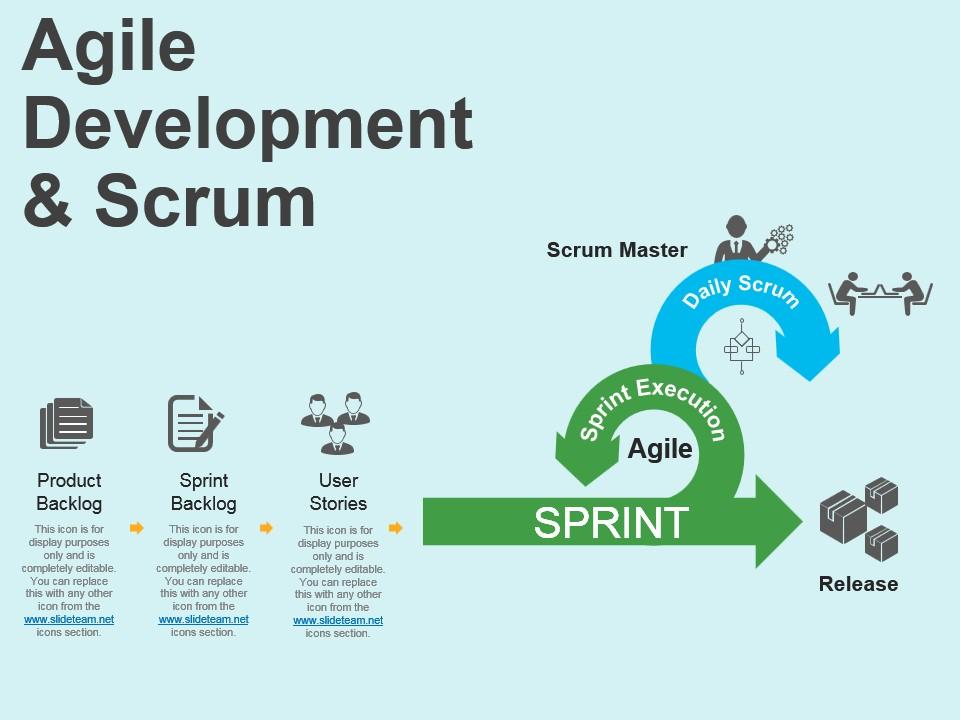
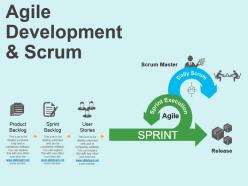
Scrum is an agile software development technique that is built on iterative and incremental procedures. Scrum is an agile framework that is adaptive, rapid, flexible, and successful in delivering value to the client throughout the project's development. Scrum's fundamental goal is to meet the needs of the customer through an atmosphere of communication transparency, group accountability, and continual improvement. The development process begins with a rough understanding of what needs to be produced, followed by the creation of a list of characteristics ordered by priority (product backlog) that the product's owner desires. If you want to learn more about agile development and scrum, we have some great resources for you. Slideteam has a wide variety of agile development ppt templates that can help you get up to speed quickly. You can also check out our blog for more information on agile methodology and how it can benefit your business. And if you’re ready to start using agile in your own projects, download our templates today.
People who downloaded this PowerPoint presentation also viewed the following :
Agile development and scrum example of ppt with all 5 slides:
Use our Agile Development And Scrum Example Of Ppt to effectively help you save your valuable time. They are readymade to fit into any presentation structure.
FAQs for Agile development and scrum
Scrum is basically the opposite of those rigid waterfall projects where you're stuck with the same plan for months. You work in short 2-week sprints instead. Get feedback constantly and can actually pivot when something's not working. Way less stressful honestly. The team figures stuff out together without waiting for manager approvals all the time. You focus on building actual working software instead of writing endless docs. Plus you're talking to customers throughout the process rather than just at the end. Much more flexible approach - I'd definitely try a couple sprints and see how it compares to whatever you're doing now.
Honestly, your Product Backlog is gold for this - way better than boring slides nobody cares about. Start with that to show your vision and what features actually matter to users. Then flip to your Sprint Backlog to prove you're not just talking, you're doing stuff. The cool part is showing how items jump between them based on value and what your team can handle. Oh, and definitely make visual snapshots instead of just rambling about them. People need to see it, not hear you explain it for ten minutes.
Honestly, concrete examples work way better than theory here. Do the whole "before and after" thing - show what happens when stakeholders ghost you versus actually showing up. I'm obsessed with using disaster stories from projects that totally bombed! Balance those with wins where people stayed engaged and everything clicked. Throw in some visuals like stakeholder maps to make it stick. Role-playing hits different too - let them feel what it's like being left out. Oh, and don't forget actionable stuff they can start tomorrow, like weekly check-ins or structured demo feedback.
Try using real scenarios where things actually go wrong - roadblocks, team conflicts, that sort of mess. Show before/after slides where the Scrum Master helps the team figure it out instead of just telling them what to do. I'm a big fan of those "day in the life" examples over boring role definitions. Maybe show them clearing obstacles, coaching people through disagreements, keeping executives from bugging the team constantly. Oh, and use visuals - like comparing them to a gardener growing things rather than a boss barking orders. Give people actual techniques they can steal for their own teams.
Okay so the biggest traps: teams treating Scrum like waterfall with sprints slapped on top. Daily standups becoming these endless status meetings - ugh, such a time suck. Skip retrospectives and you're basically flying blind. Half the organizations I've seen don't even have a real Product Owner, just someone wearing the title. Teams either overcommit every sprint or treat commitments like loose suggestions. The cultural shift is huge though - leadership expects magic results without actually changing how people collaborate. Honestly, if you're not ready to fail fast and learn from it, Scrum's probably not for you. It's way more than just following process steps.
Honestly, visuals are a game-changer for explaining Scrum roles. Instead of boring people with job descriptions, show them how everyone actually works together. I usually draw simple diagrams - Product Owner handles the "what," Scrum Master deals with "how smoothly things run," and Dev Team tackles "how to build it." Works every time. People get those lightbulb moments when they see the connections mapped out visually. You could use org charts, workflow diagrams, whatever works. Even basic icons help! Draw their daily interactions and watch it click instantly. Way better than memorizing responsibilities - they'll actually remember the relationships between roles.
Honestly, stick with velocity trends and sprint burndowns - they're your bread and butter for showing actual progress. Team satisfaction scores matter too since miserable teams tank performance (learned that the hard way). Cycle time's good for proving you're getting faster, and defect rates keep quality concerns at bay. Oh, and definitely include retrospective highlights to show you're actually improving between sprints. Keep everything visual though - charts beat spreadsheets every time with executives. Pick maybe 4 metrics max and focus on the story behind them rather than just throwing numbers around.
Start with the mess you were in before - missed deadlines, chaos, whatever. Then briefly cover how you rolled out Scrum (don't bore them with too much process stuff). Focus most of your time on actual results with real numbers - faster delivery times, happier teams, that kind of thing. Honestly, include one thing that didn't go perfectly because nobody believes stories where everything was amazing. Oh, and wrap up with 2-3 practical takeaways they can steal for their own teams. People love walking away with something actionable.
Jira's probably your best bet for the main stuff - sprint planning, backlogs, all that. Confluence is solid for docs and retros too. Since everyone's still doing remote work, Slack or Teams are pretty much essential now. Miro's great for visual stuff like sprint boards (way better than trying to explain user stories with just text, trust me). Maybe add Zoom for demos and sprint reviews. Honestly though, don't go crazy with too many tools - stick to like 3 or 4 max. People's eyes glaze over if you show them a dozen different platforms they'd need to learn.
Skip the boring theory slides - nobody stays awake for those anyway. Instead, dig into real scenarios where communication totally fell apart. You know, like when dev and product teams weren't on the same page (happens constantly). Walk them through how standups and retros actually fix this stuff. Role-playing works great for practicing those awkward conflict conversations. Teach concrete stuff like the "5 whys" technique and team working agreements. Oh, and give them a retro template they can actually use right away - something simple that tackles team drama head-on.
So Sprint Reviews should totally be about demos and getting everyone talking. Keep them short - like 2-4 hours tops - and get stakeholders involved early. Always show actual working software, not slides (honestly, PowerPoint demos are the worst). I've watched too many turn into these deadly boring status updates. Structure-wise: demo what you built, collect feedback, talk through what's coming next. Then tweak your backlog based on what people say. The whole point is creating real conversation between your team and stakeholders. Oh, and for your workshop - emphasize it's about learning and adapting, not just bragging about completed work.
Honestly, the best trick is making your presentation *feel* Agile, not just talk about it. Do quick polls or break people into small groups instead of lecturing about collaboration. I'm obsessed with "checkpoint moments" - pause every 15 minutes and ask what's clicking so far. Skip the boring feature slides and do live demos instead. Here's the thing though: be ready to totally pivot mid-session if people get excited or confused about something. Always end sections asking "what's one thing you'll actually try tomorrow?" That's what creates real change, not just head nods.
Focus on getting 1-3 actual action items with real owners, not just "let's communicate better" fluff. Show how the team figured out what's already working too - you want to keep that stuff going. The magic happens when everyone feels heard, honestly. I've been in retros where people just go through the motions vs ones where you can feel the energy shift. Make sure your presentation shows the team walked away with specific people owning improvements and ways to track if they're making a difference. Oh, and don't forget the psychological safety piece - that's huge for team alignment.
Show them the retro cycle actually working - create a visual timeline of teams spotting issues, fixing stuff, then measuring what happened sprint by sprint. Real before/after metrics work way better than theory. Velocity charts, bug reduction numbers, team happiness scores across multiple sprints. I'd definitely include concrete wins like "pair programming cut our bugs by 40%" or show how their Definition of Done got better over time. Maybe throw in a story about one team's journey? Give them a template they can actually use. People love stealing good frameworks that already work.
So feedback in Scrum is everywhere - daily standups, sprint reviews, retrospectives. It's like this never-ending conversation that keeps your project moving. Show it as a visual cycle in your presentation, where input from stakeholders and users feeds directly into the next sprint. Real examples work best here. Got before/after screenshots? User quotes that changed everything? Use those. People need to see that feedback actually shifts what you build, not just theory stuff. Oh, and honestly? Sometimes the feedback contradicts itself, which is... fun. But that's the whole point - you adapt based on what you learn.
-
Easily Editable.
-
Good research work and creative work done on every template.