


AI Startup Go To Market Strategy Powerpoint Presentation Slides GTM CD
An AI based image generator tool typically utilizes advanced machine learning techniques, particularly deep learning, to create or manipulate images. Introducing our professionally made AI Startup Go to Market Strategy PowerPoint presentation. This PPT bundle helps launch and ensures the startup is well equipped to thrive in the dynamic professional services landscape. The PowerPoint begins with an overview of the global e learning market. It highlights problems and solutions, showing how the startup business will resolve market problems. Moreover, the AI photo generator PPT templates present an overview of the business, including the introduction, products services offered, value proposition, and target audience. Furthermore, it shows competitor analyses of businesses that provide similar solutions. It offers various strategies, including pricing, branding, positioning, and marketing. Additionally, it displays content marketing strategies, sales strategies, distribution strategies, customer onboarding strategies, and customer retention strategies. The Visual content PPT slides outline a timeline for the startup businesss market entry. Lastly, it provides performance metrics, cost and investment, financial forecasts, legal considerations, and risk analysis. Download our 100 percentage editable and customizable PowerPoint Bundle, compatible with Google Slides, Today.
An AI based image generator tool typically utilizes advanced machine learning techniques, particularly deep learning, to cr..


















-

- Google Slides is a new FREE Presentation software from Google.
- All our content is 100% compatible with Google Slides.
- Just download our designs, and upload them to Google Slides and they will work automatically.
- Amaze your audience with SlideTeam and Google Slides.
-

Want Changes to This PPT Slide? Check out our Presentation Design Services
-

- WideScreen Aspect ratio is becoming a very popular format. When you download this product, the downloaded ZIP will contain this product in both standard and widescreen format.
-

- Some older products that we have may only be in standard format, but they can easily be converted to widescreen.
- To do this, please open the SlideTeam product in Powerpoint, and go to
- Design ( On the top bar) -> Page Setup -> and select "On-screen Show (16:9)” in the drop down for "Slides Sized for".
- The slide or theme will change to widescreen, and all graphics will adjust automatically. You can similarly convert our content to any other desired screen aspect ratio.
Compatible With Google Slides

Get This In WideScreen
You must be logged in to download this presentation.


Do you want to remove this product from your favourites?
PowerPoint presentation slides
Deliver this complete deck to your team members and other collaborators. Encompassed with stylized slides presenting various concepts, this AI Startup Go To Market Strategy Powerpoint Presentation Slides GTM CD is the best tool you can utilize. Personalize its content and graphics to make it unique and thought-provoking. All the thirty four slides are editable and modifiable, so feel free to adjust them to your business setting. The font, color, and other components also come in an editable format making this PPT design the best choice for your next presentation. So, download now.

People who downloaded this PowerPoint presentation also viewed the following :
Content of this Powerpoint Presentation
Slide 1: This slide introduces AI Startup – Go to Market Strategy. State your company name and begin.
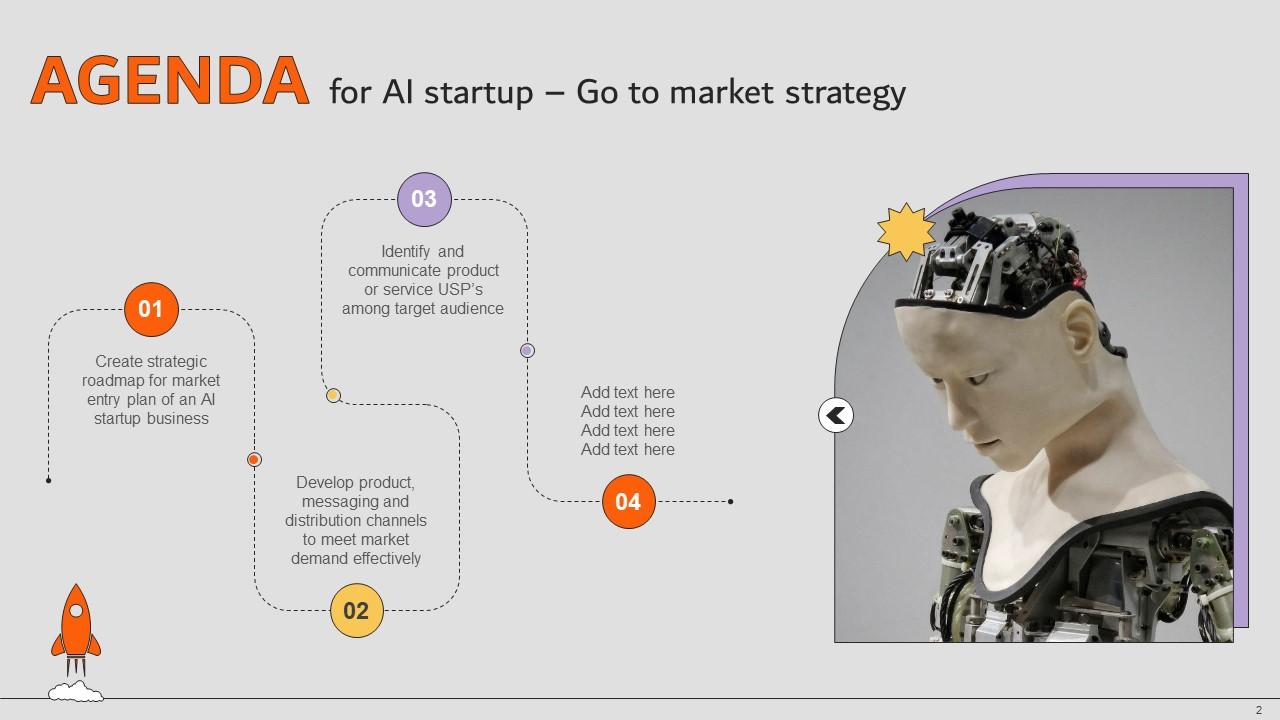
Slide 2: This is an Agenda slide. State your agendas here.
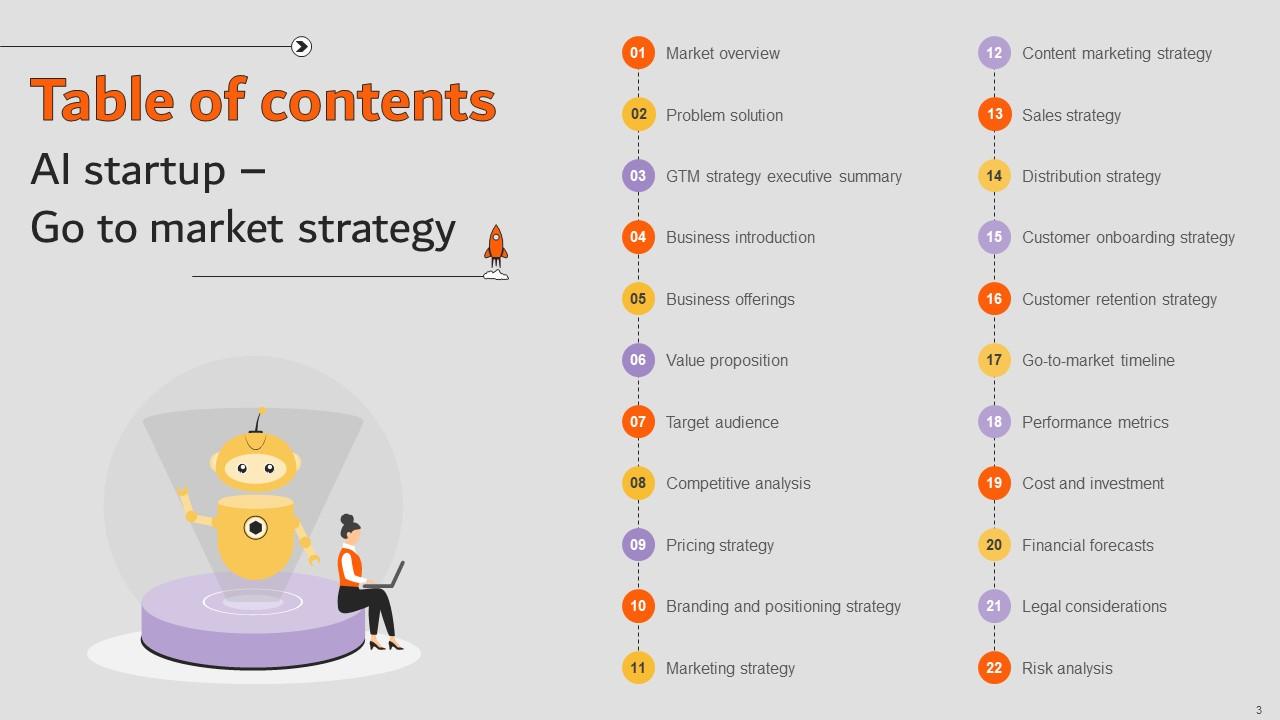
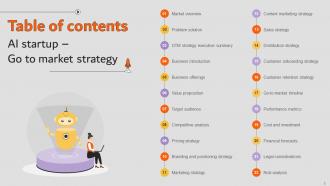
Slide 3: This slide shows Table of Content for the presentation.
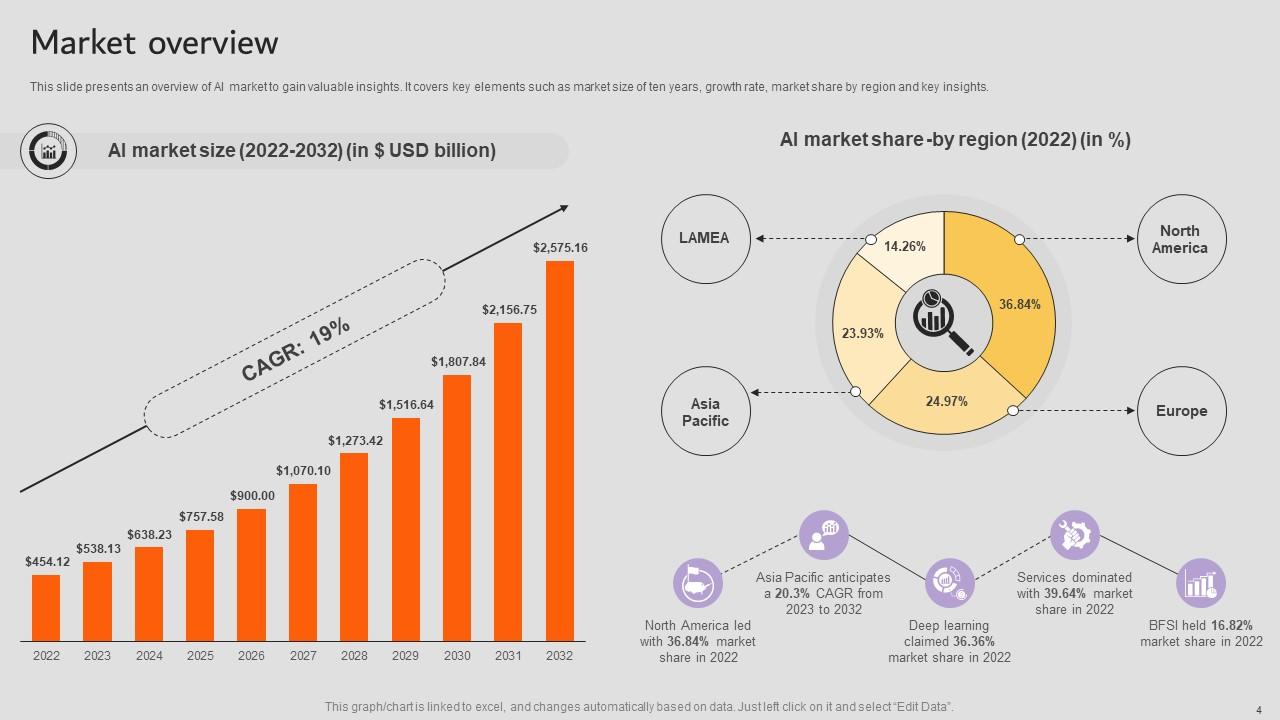
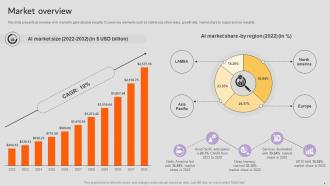
Slide 4: This slide presents an overview of AI market to gain valuable insights. It covers key elements such as market size of ten years, growth rate etc.
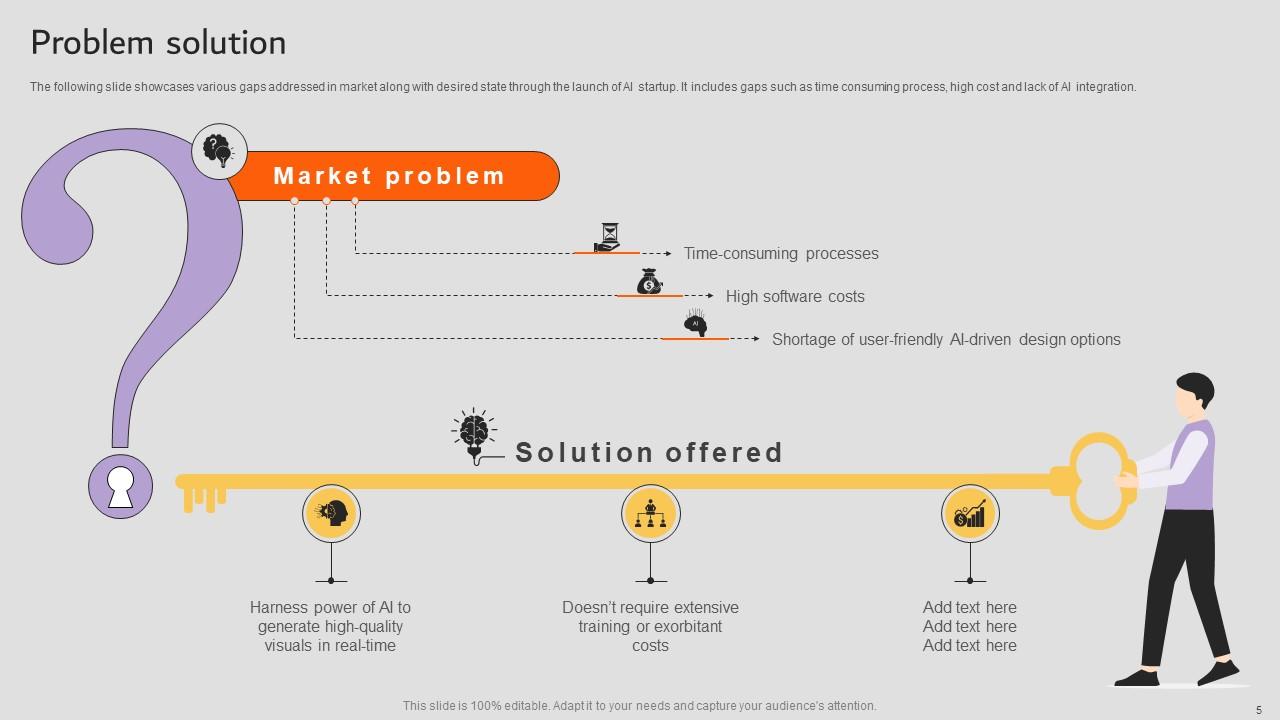
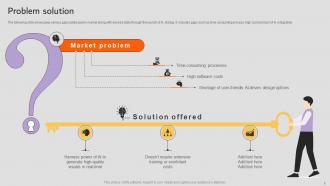
Slide 5: This slide showcases various gaps addressed in market along with desired state through the launch of AI startup.
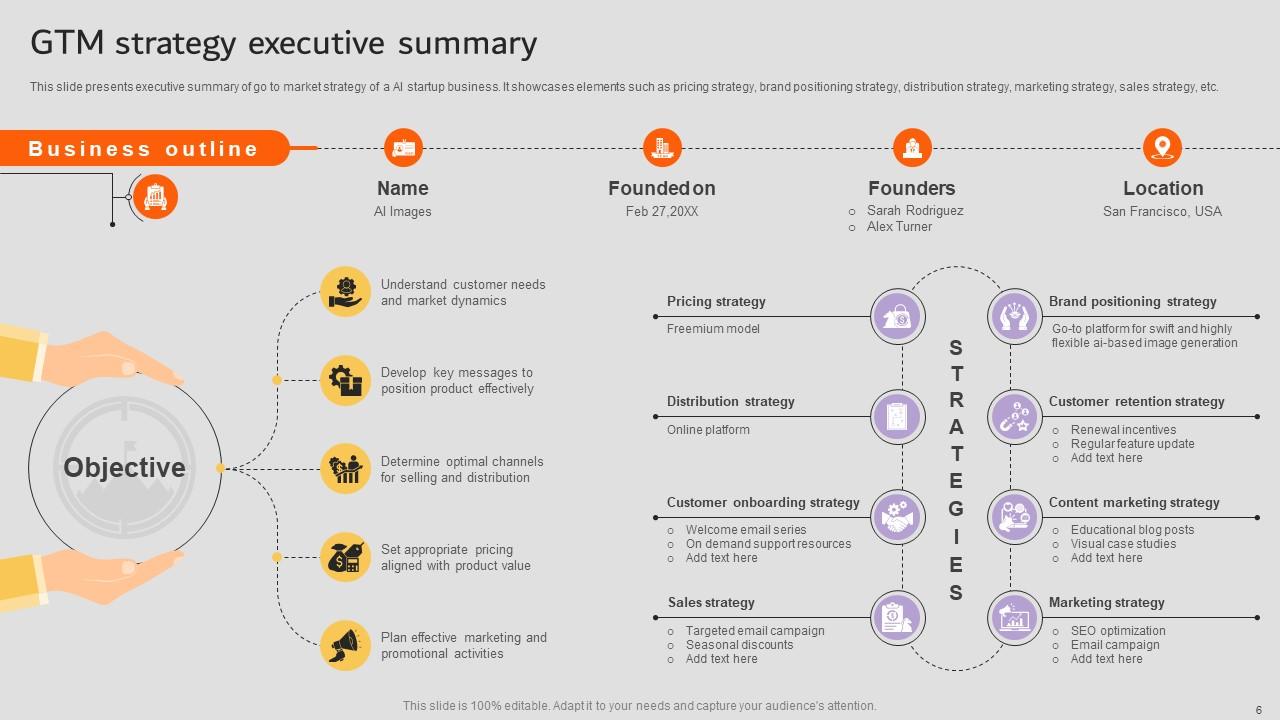
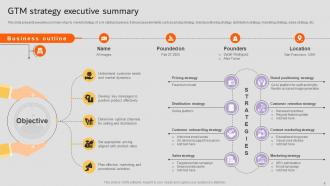
Slide 6: This slide presents executive summary of go to market strategy of a AI startup business. It showcases elements such as pricing strategy, brand positioning strategy etc.
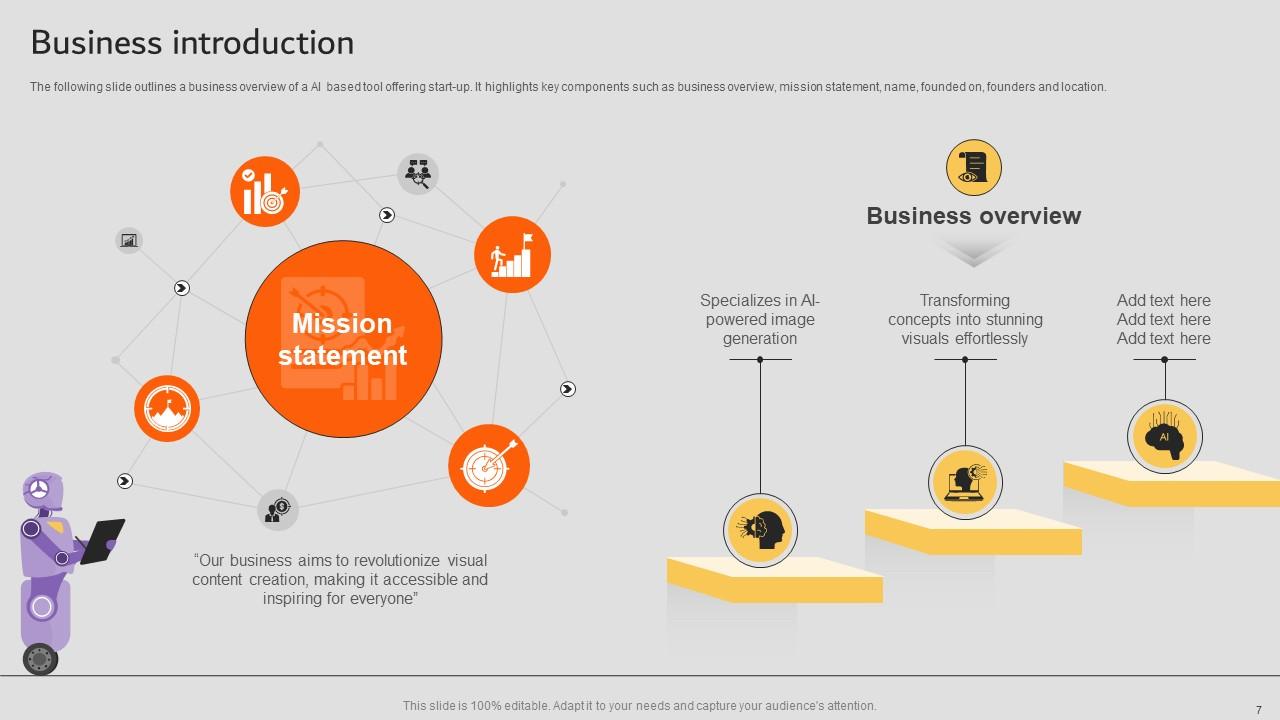
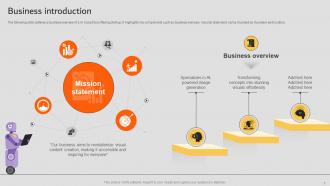
Slide 7: This slide outlines a business overview of a AI based tool offering start-up. It highlights key components such as business overview, mission statement, name etc.
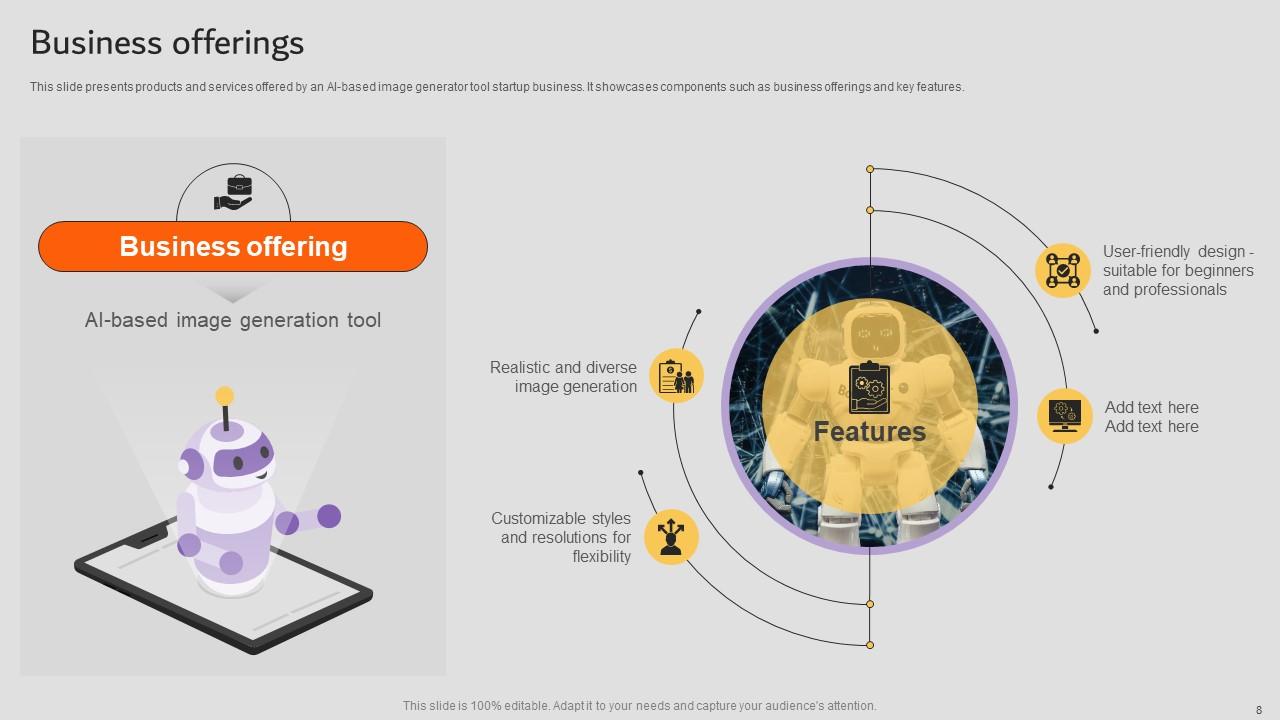
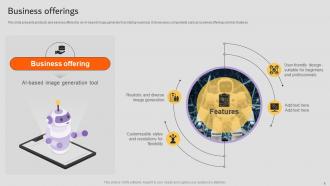
Slide 8: This slide presents products and services offered by an AI-based image generator tool startup business.
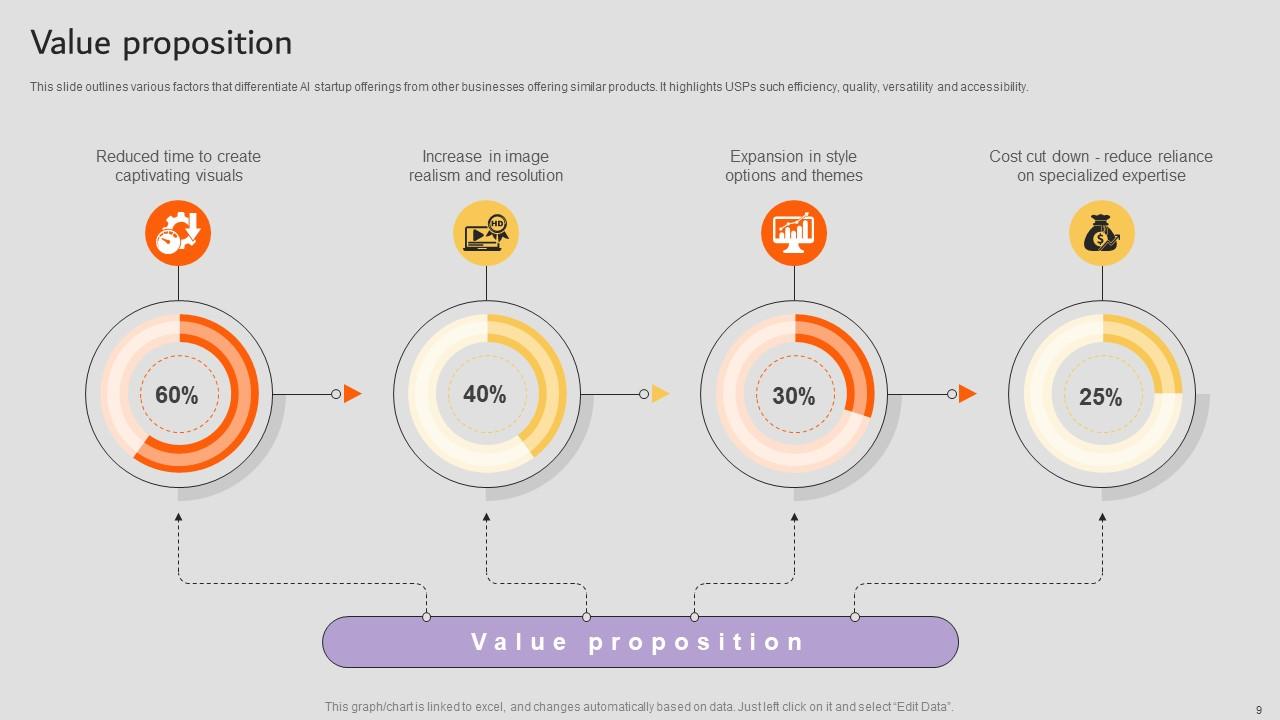
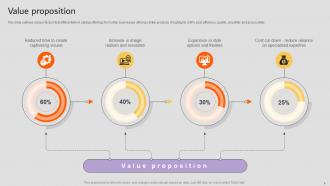
Slide 9: This slide outlines various factors that differentiate AI startup offerings from other businesses offering similar products.
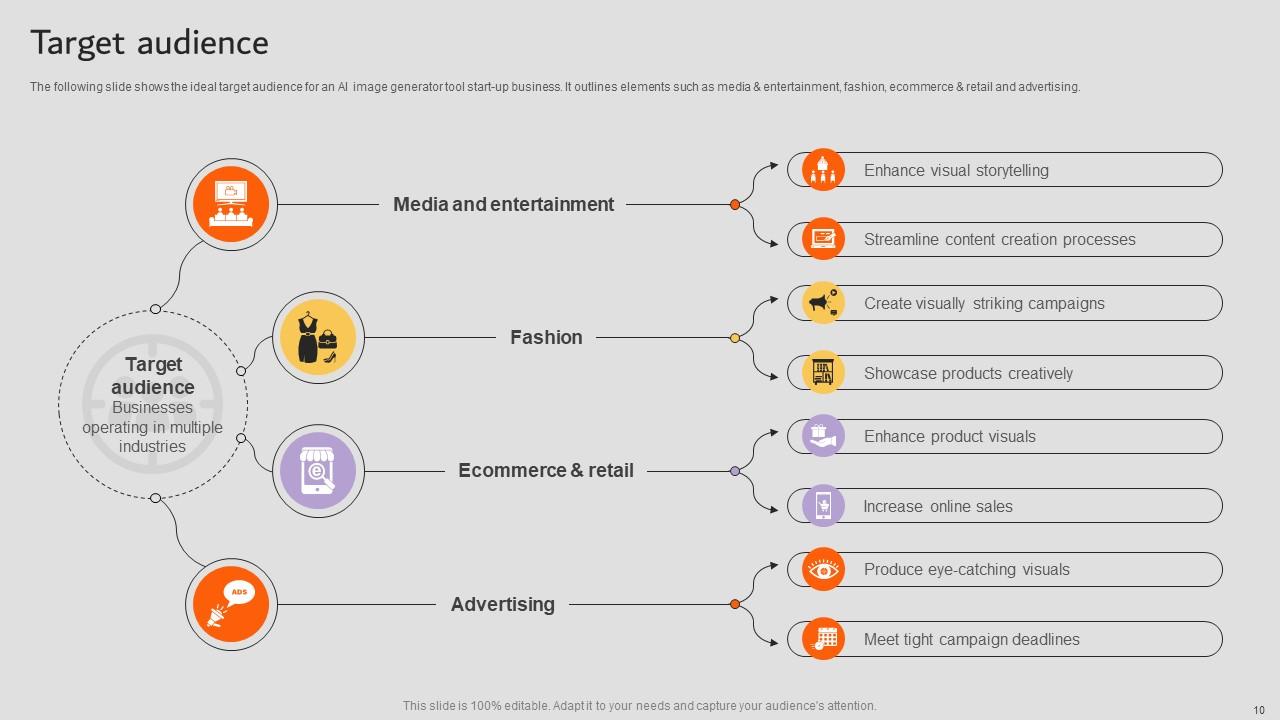
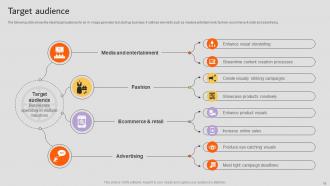
Slide 10: This slide shows the ideal target audience for an AI image generator tool start-up business. It outlines elements such as media & entertainment, fashion etc.
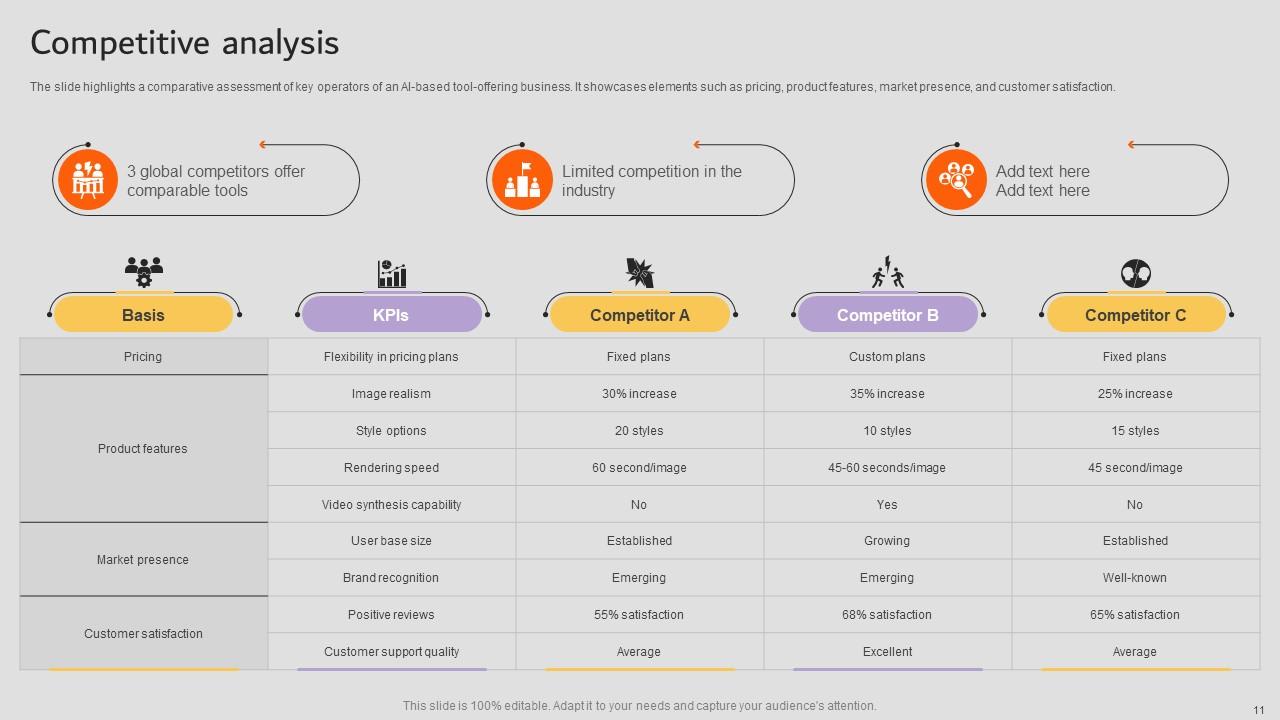
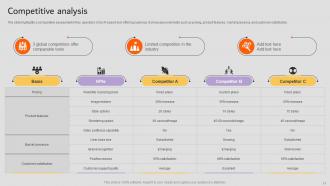
Slide 11: The slide highlights a comparative assessment of key operators of an AI-based tool-offering business. It showcases elements such as pricing, product features etc.
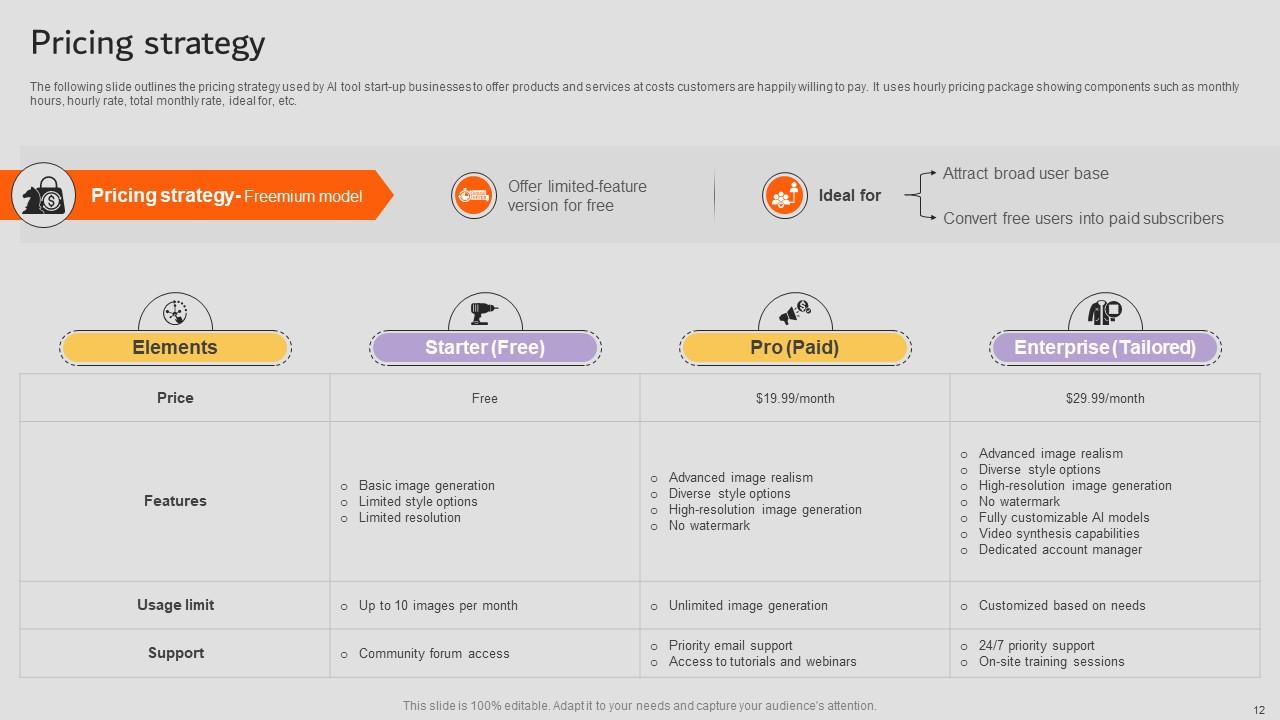
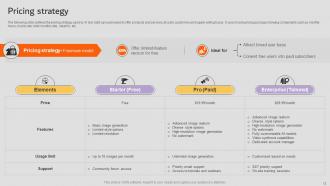
Slide 12: This slide outlines the pricing strategy used by AI tool start-up businesses to offer products and services at costs customers are happily willing to pay.
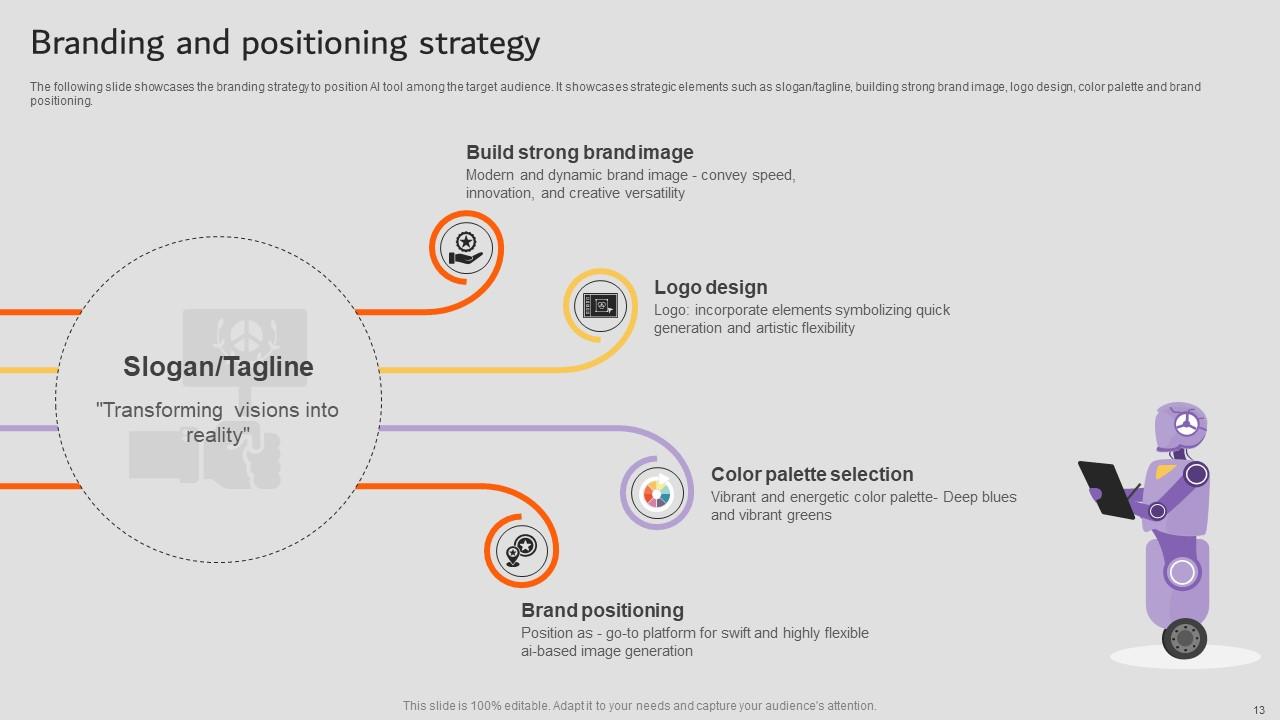
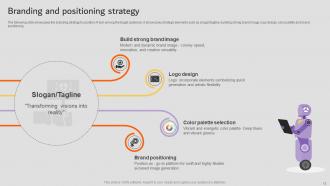
Slide 13: This slide showcases the branding strategy to position AI tool among the target audience. It showcases strategic elements such as slogan/tagline etc.
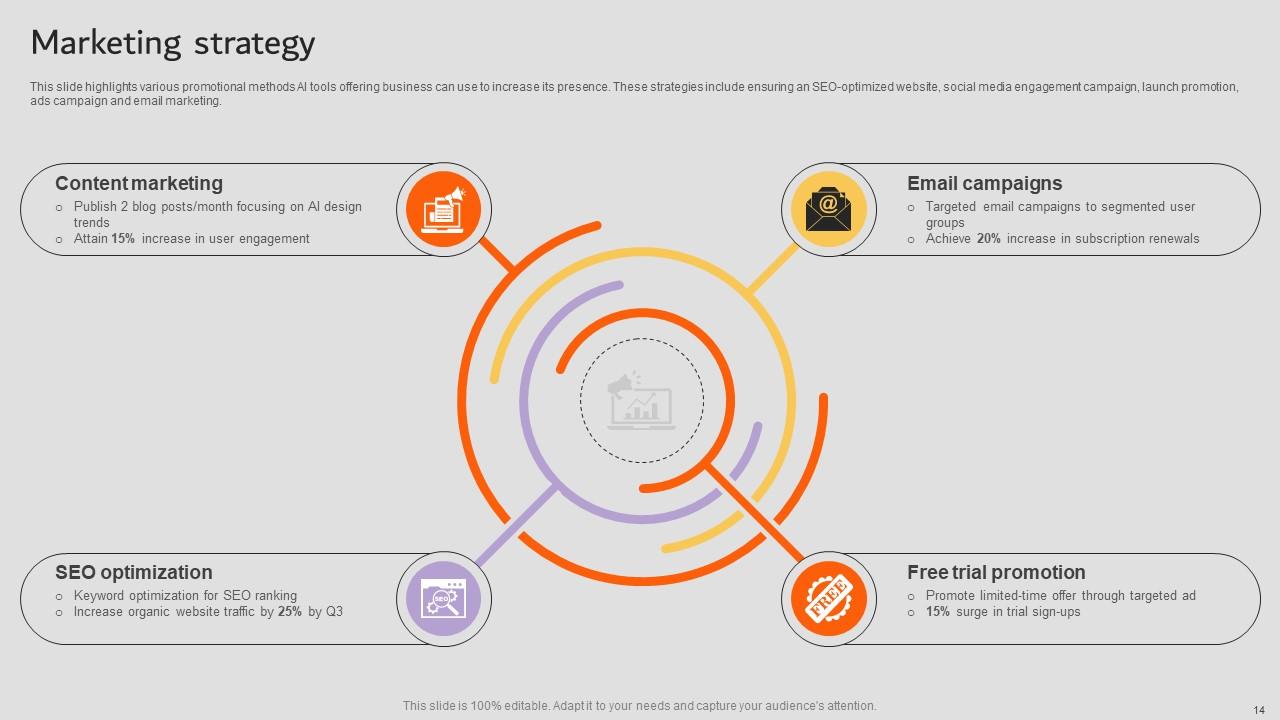
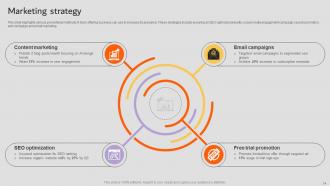
Slide 14: This slide highlights various promotional methods AI tools offering business can use to increase its presence.
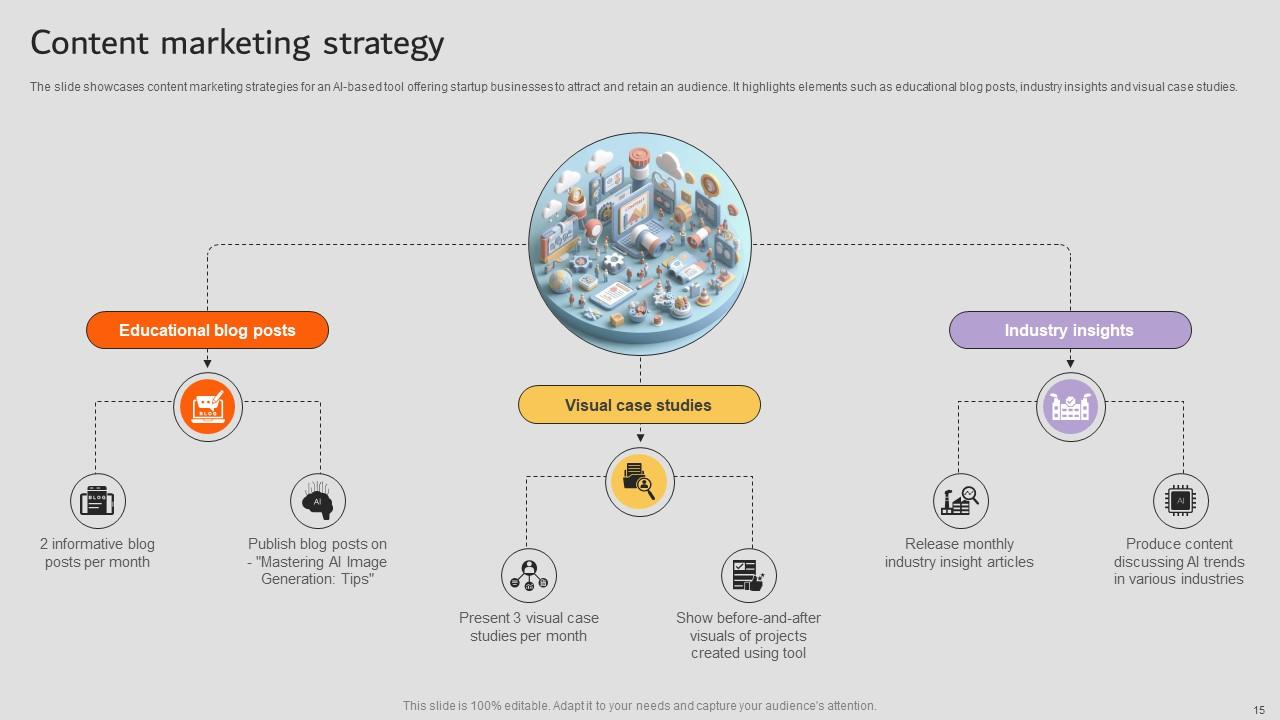
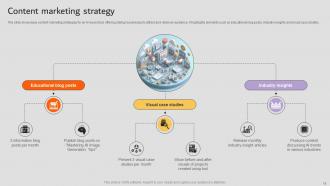
Slide 15: The slide showcases content marketing strategies for an AI-based tool offering startup businesses to attract and retain an audience.
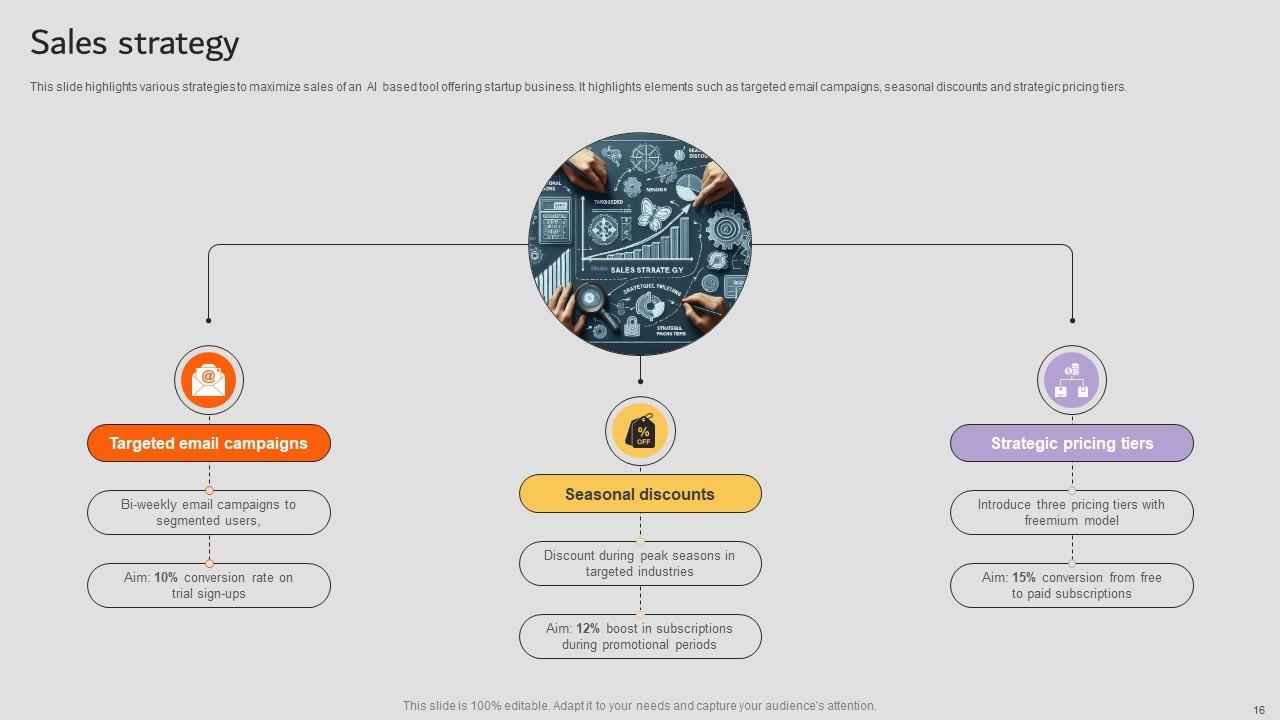
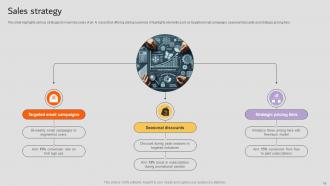
Slide 16: This slide highlights various strategies to maximize sales of an AI based tool offering startup business.
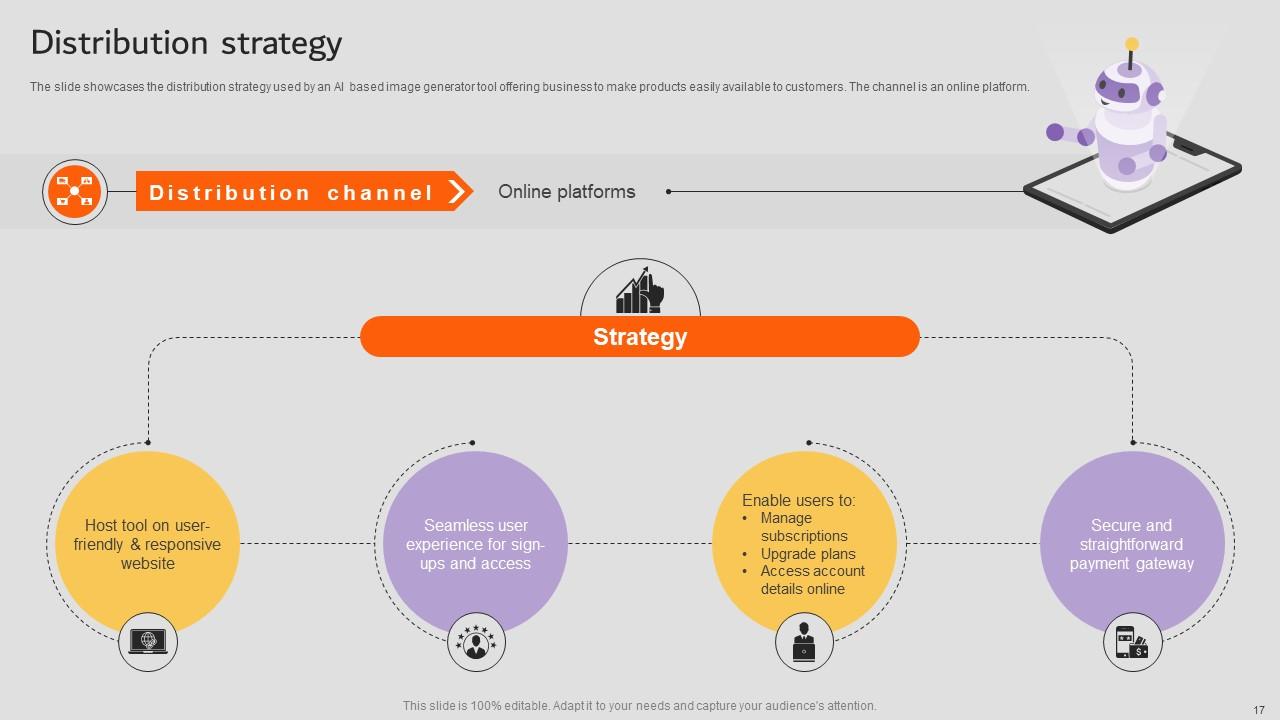
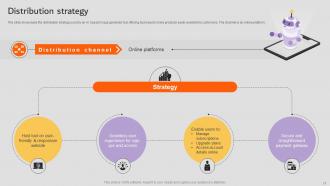
Slide 17: The slide showcases the distribution strategy used by an AI based image generator tool offering business to make products easily available to customers.
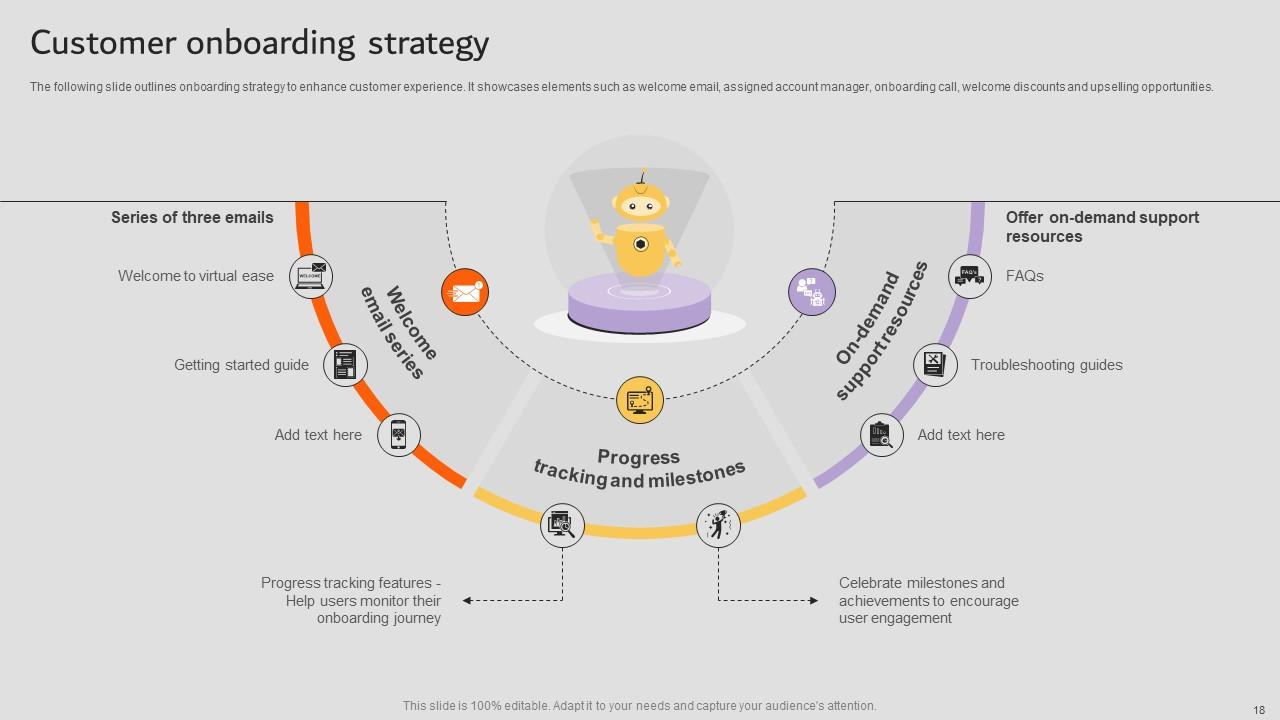
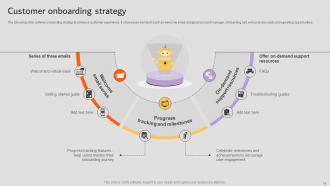
Slide 18: This slide outlines onboarding strategy to enhance customer experience. It showcases elements such as welcome email, assigned account manager etc.
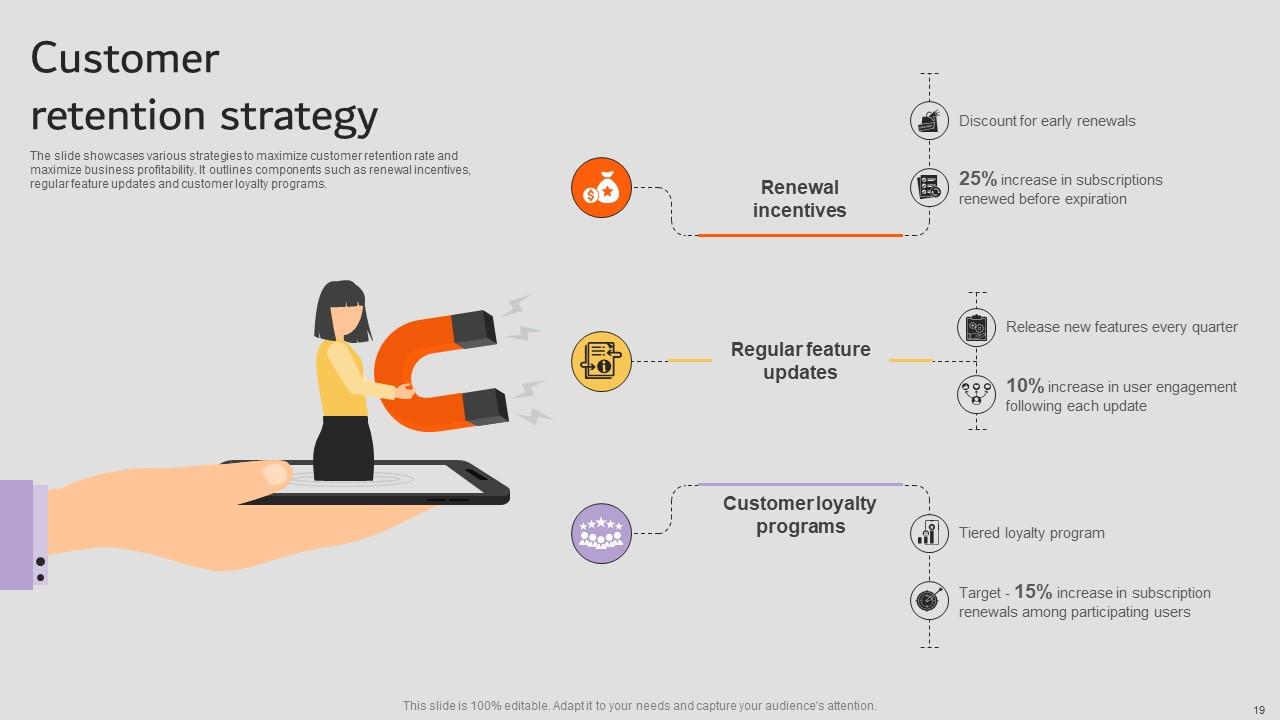
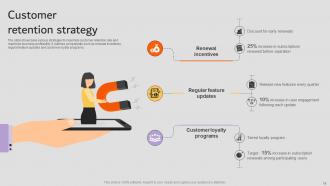
Slide 19: The slide showcases various strategies to maximize customer retention rate and maximize business profitability.
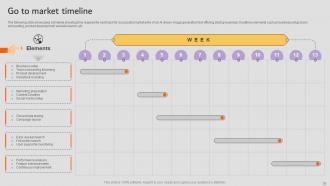
Slide 20: This slide displays a timeline showing time required for each task for successful market entry of an AI-driven image generation tool offering startup business.
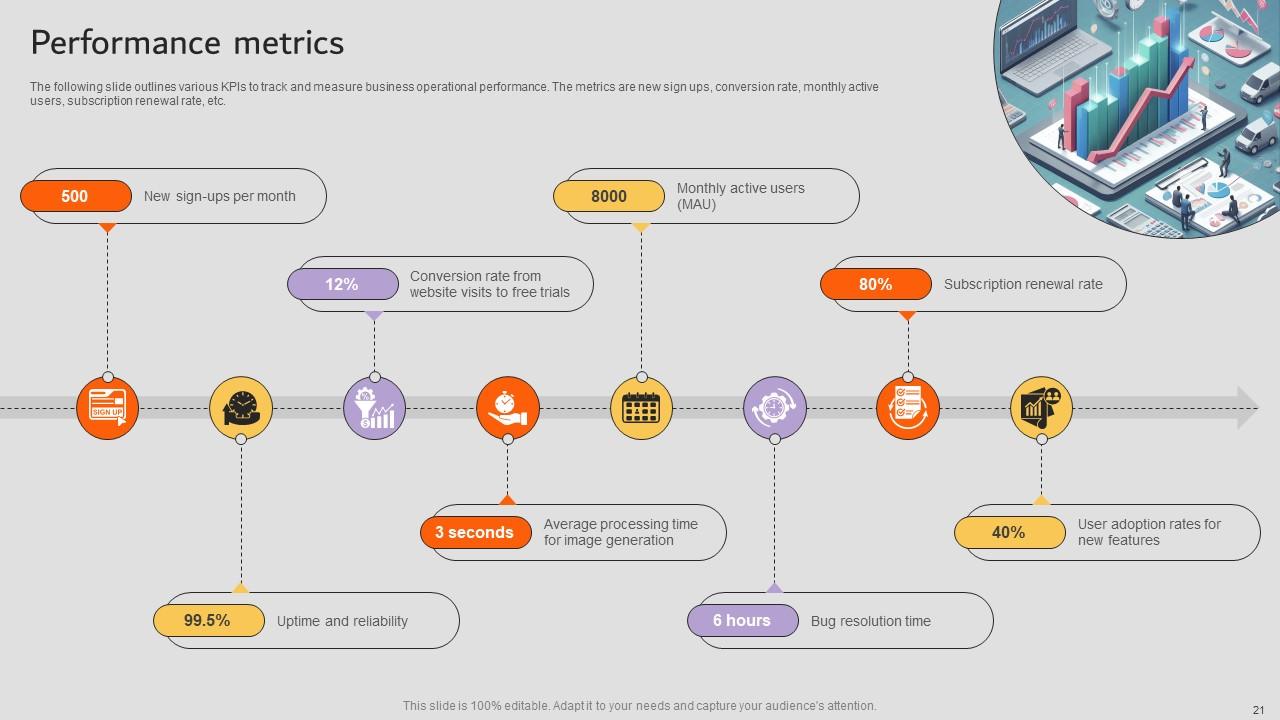
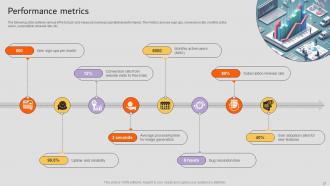
Slide 21: This slide outlines various KPIs to track and measure business operational performance. The metrics are new sign ups, conversion rate, monthly active users etc.
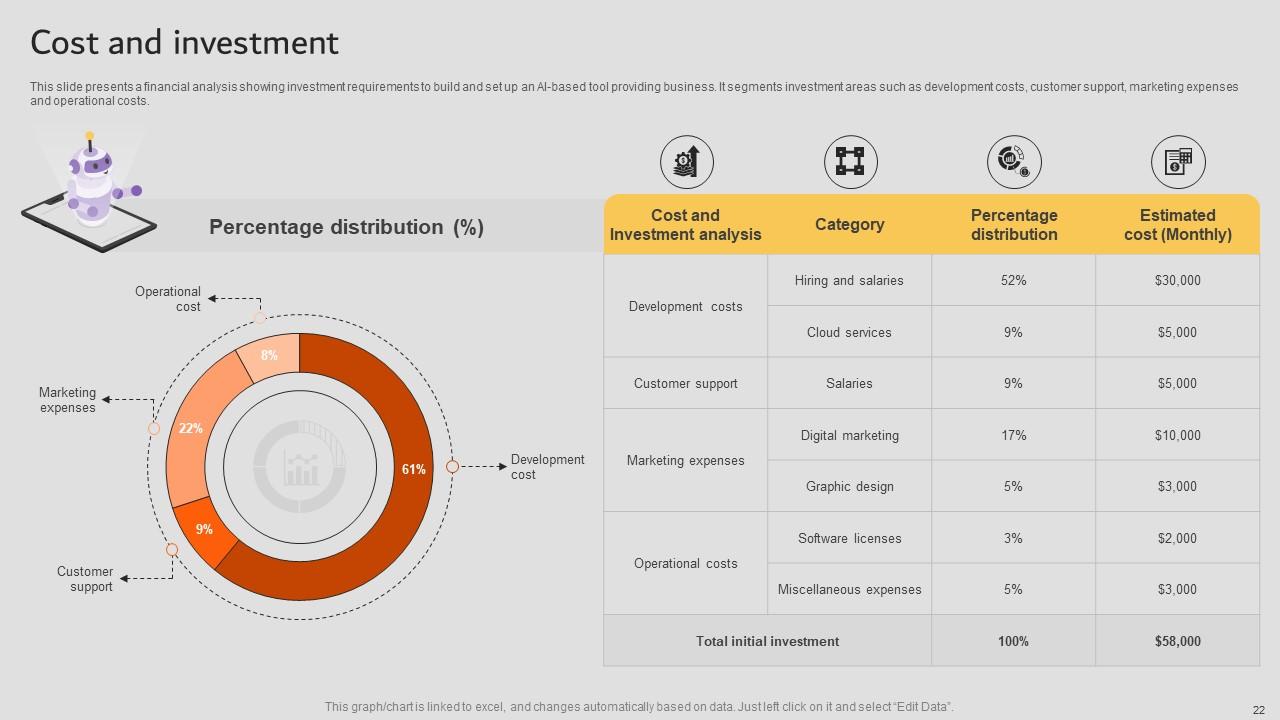
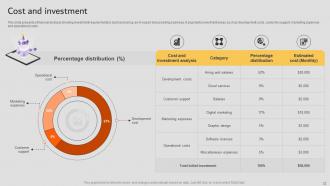
Slide 22: This slide presents a financial analysis showing investment requirements to build and set up an AI-based tool providing business.
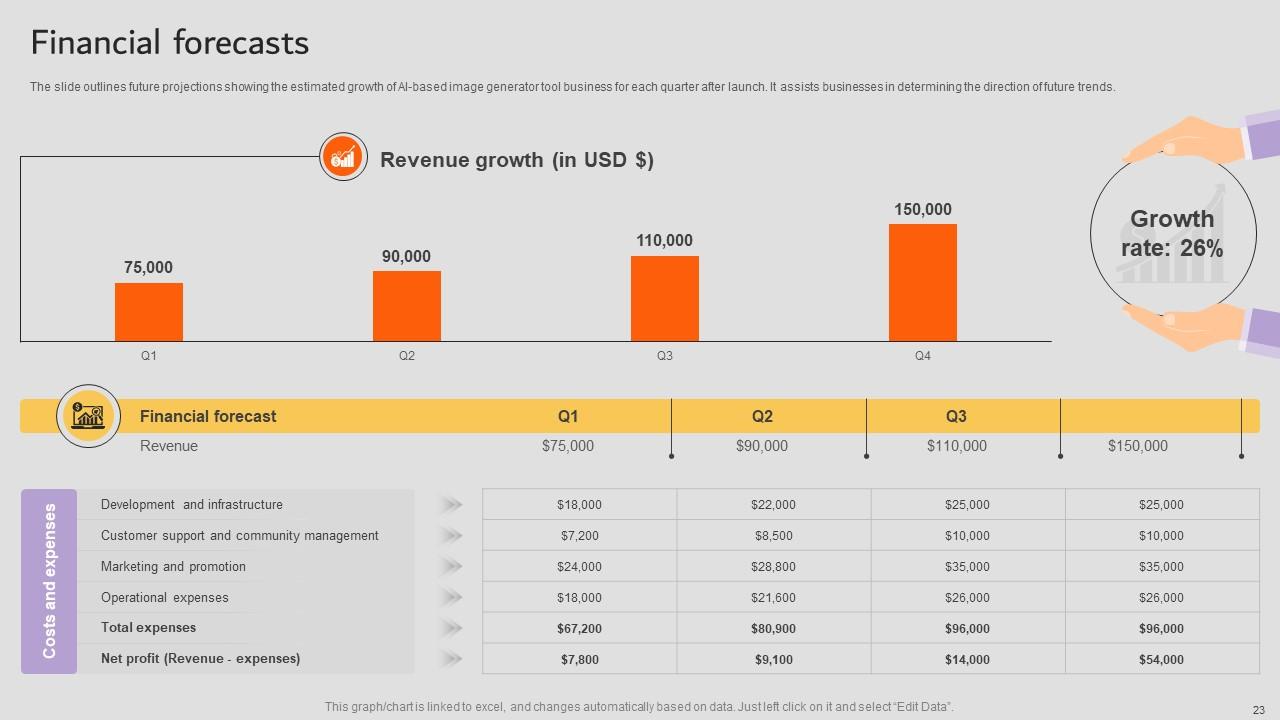
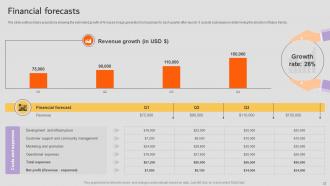
Slide 23: This slide outlines future projections showing the estimated growth of AI-based image generator tool business for each quarter after launch.
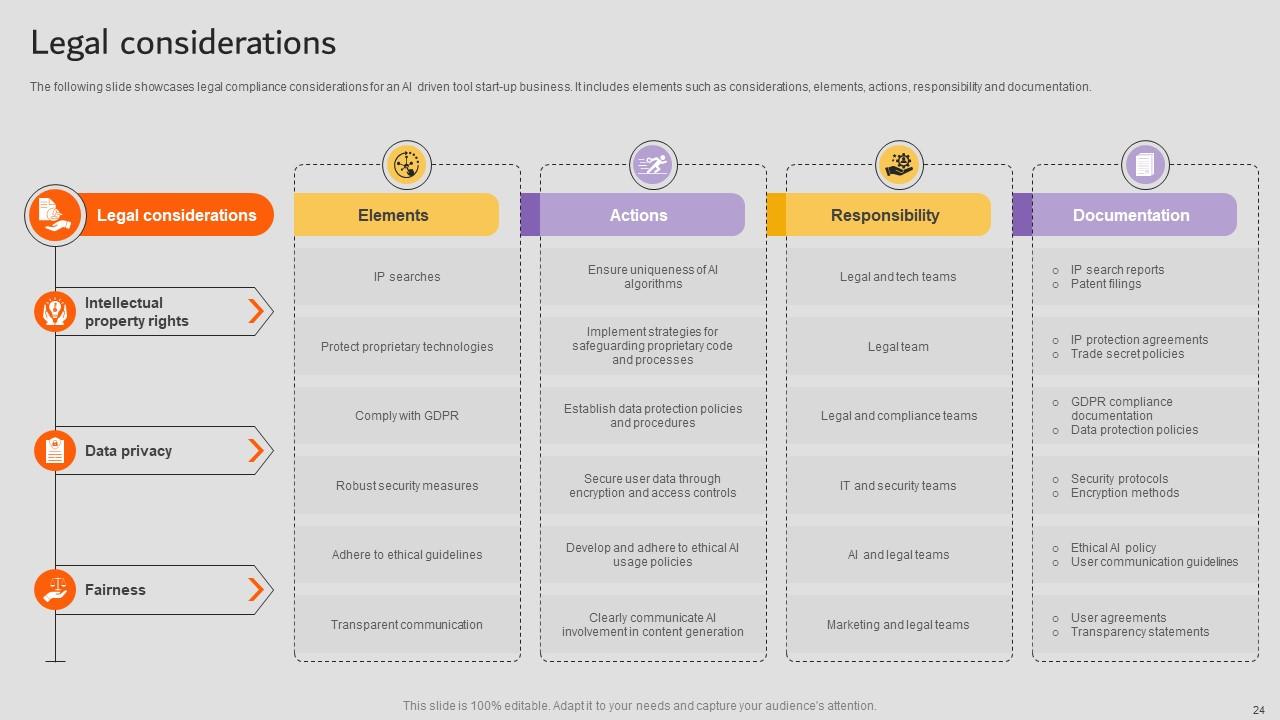
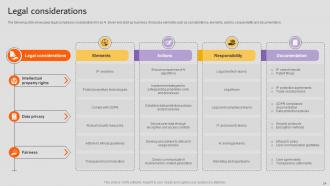
Slide 24: This slide showcases legal compliance considerations for an AI driven tool start-up business. It includes elements such as considerations, elements, actions etc.
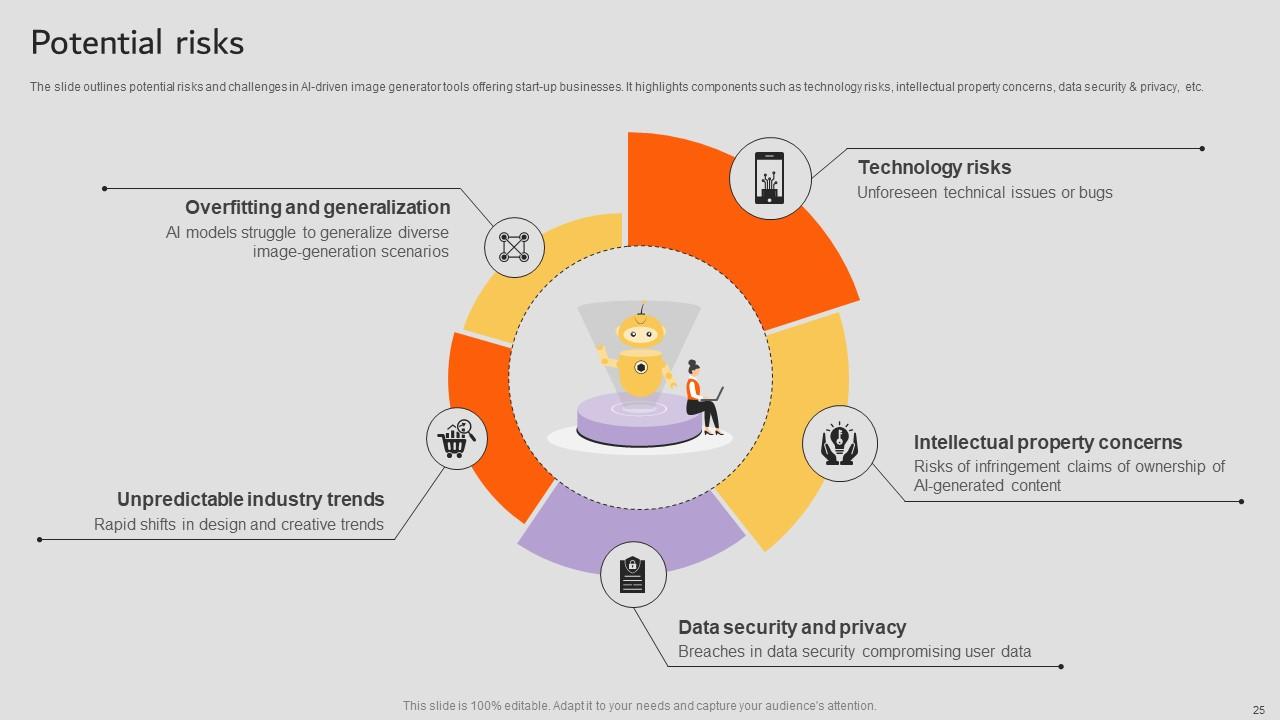
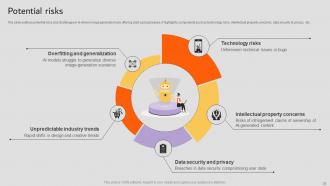
Slide 25: This slide outlines potential risks and challenges in AI-driven image generator tools offering start-up businesses.
Slide 26: This slide shows all the icons included in the presentation.
Slide 27: This slide is titled as Additional Slides for moving forward.
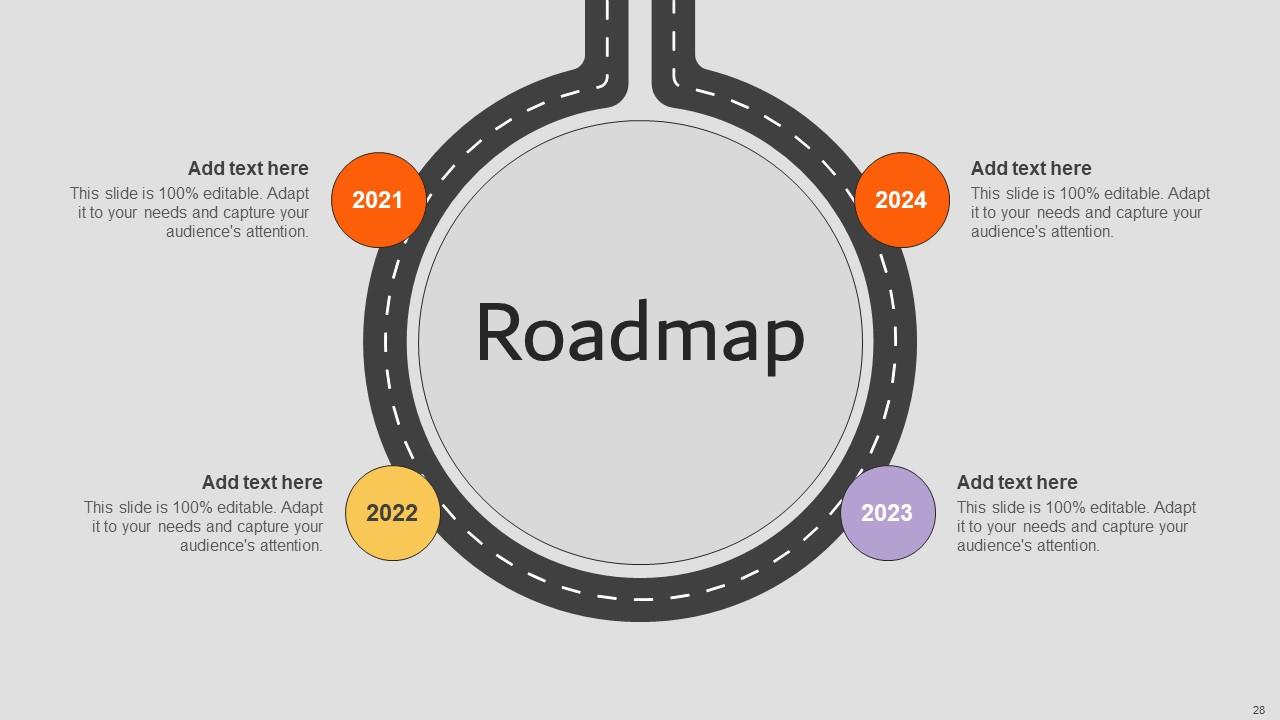
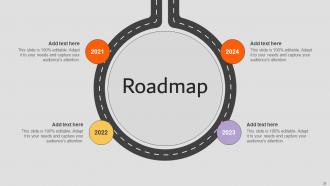
Slide 28: This slide presents Roadmap with additional textboxes. It can be used to present different series of events.
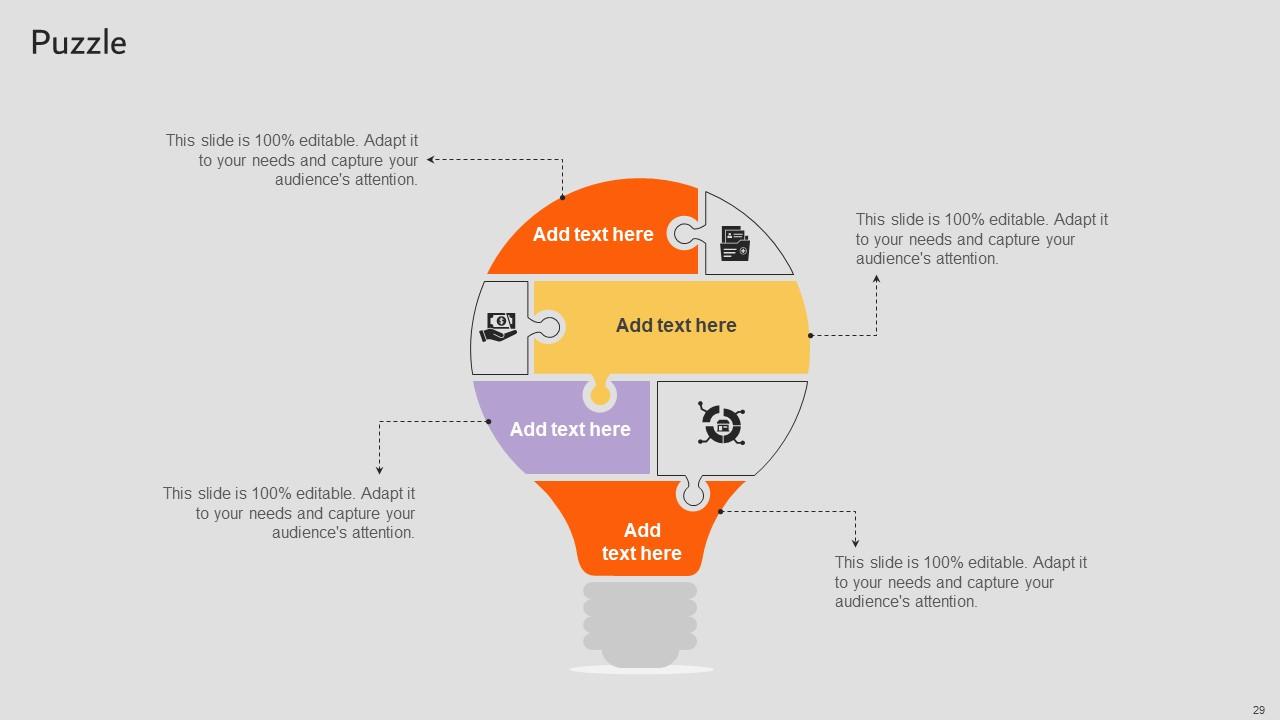
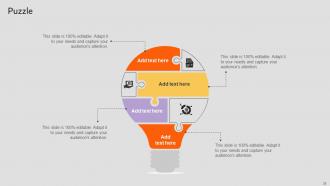
Slide 29: This slide contains Puzzle with related icons and text.
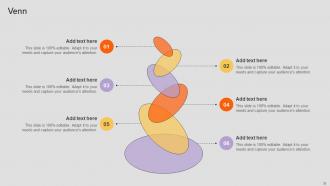
Slide 30: This slide depicts Venn diagram with text boxes.
Slide 31: This slide provides 30 60 90 Days Plan with text boxes.
Slide 32: This slide showcases Magnifying Glass to highlight, minute details, information, specifications etc.
Slide 33: This slide shows Post It Notes for reminders and deadlines. Post your important notes here.
Slide 34: This is a Thank You slide with address, contact numbers and email address.
AI Startup Go To Market Strategy Powerpoint Presentation Slides GTM CD with all 43 slides:
Use our AI Startup Go To Market Strategy Powerpoint Presentation Slides GTM CD to effectively help you save your valuable time. They are readymade to fit into any presentation structure.
-
Awesome use of colors and designs in product templates.
-
Crisp and neat slides. Makes it fun and easier to curate presentations.
