


Apparel Business Operational Plan To Streamline Processes Powerpoint Presentation Slides
If youre looking to improve your e commerce apparel businesss profitability and sales, our professionally designed presentation on Apparel Business Operational Plan to Streamline Processes may be just what you need. This comprehensive deck covers the latest insights and trends in the e commerce clothing market, along with a range of marketing strategies designed to help you attract and retain customers, from pay per click advertising to influencer marketing and more. Our Apparel Firm module takes a deep dive into the operational systems that can streamline your business, including the use of appropriate software and blockchain technology. Youll also find detailed information on your companys products, business model canvas, market and SWOT analysis, organizational structure, business partners, and awards. And with our finances section, youll be able to track and measure your financial position with ease. Best of all, our presentation is 100 percentage editable, so you can customize it to meet your specific needs. Download it now to get started.
If youre looking to improve your e commerce apparel businesss profitability and sales, our professionally designed presenta..

















-

- Google Slides is a new FREE Presentation software from Google.
- All our content is 100% compatible with Google Slides.
- Just download our designs, and upload them to Google Slides and they will work automatically.
- Amaze your audience with SlideTeam and Google Slides.
-

Want Changes to This PPT Slide? Check out our Presentation Design Services
-

- WideScreen Aspect ratio is becoming a very popular format. When you download this product, the downloaded ZIP will contain this product in both standard and widescreen format.
-

- Some older products that we have may only be in standard format, but they can easily be converted to widescreen.
- To do this, please open the SlideTeam product in Powerpoint, and go to
- Design ( On the top bar) -> Page Setup -> and select "On-screen Show (16:9)” in the drop down for "Slides Sized for".
- The slide or theme will change to widescreen, and all graphics will adjust automatically. You can similarly convert our content to any other desired screen aspect ratio.
Compatible With Google Slides

Get This In WideScreen
You must be logged in to download this presentation.


Do you want to remove this product from your favourites?
PowerPoint presentation slides
Deliver this complete deck to your team members and other collaborators. Encompassed with stylized slides presenting various concepts, this Apparel Business Operational Plan To Streamline Processes Powerpoint Presentation Slides is the best tool you can utilize. Personalize its content and graphics to make it unique and thought-provoking. All the fifty nine slides are editable and modifiable, so feel free to adjust them to your business setting. The font, color, and other components also come in an editable format making this PPT design the best choice for your next presentation. So, download now.

People who downloaded this PowerPoint presentation also viewed the following :
Content of this Powerpoint Presentation
Slide 1: This slide introduces Apparel Business Operational Plan to Streamline Processes. State your company name and begin.
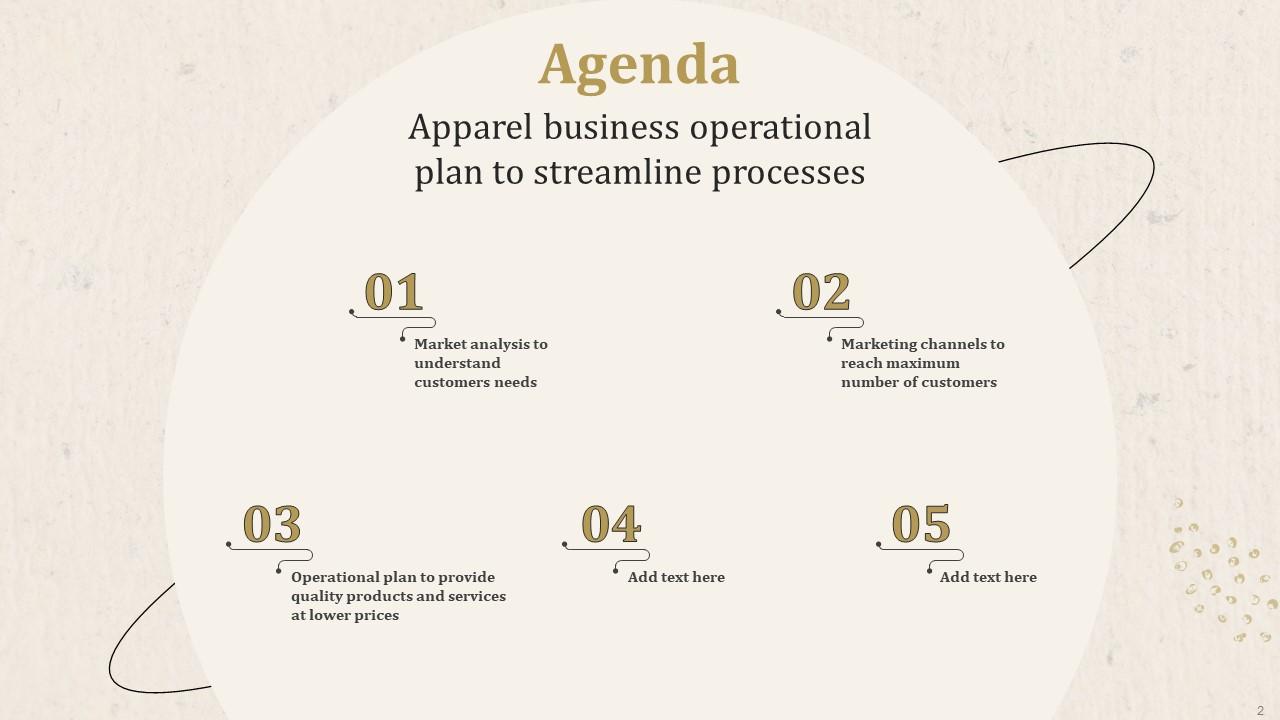
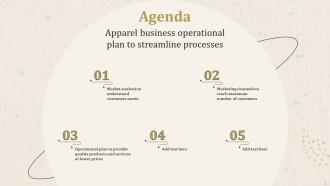
Slide 2: This slide depicts the Agenda of the presentation.
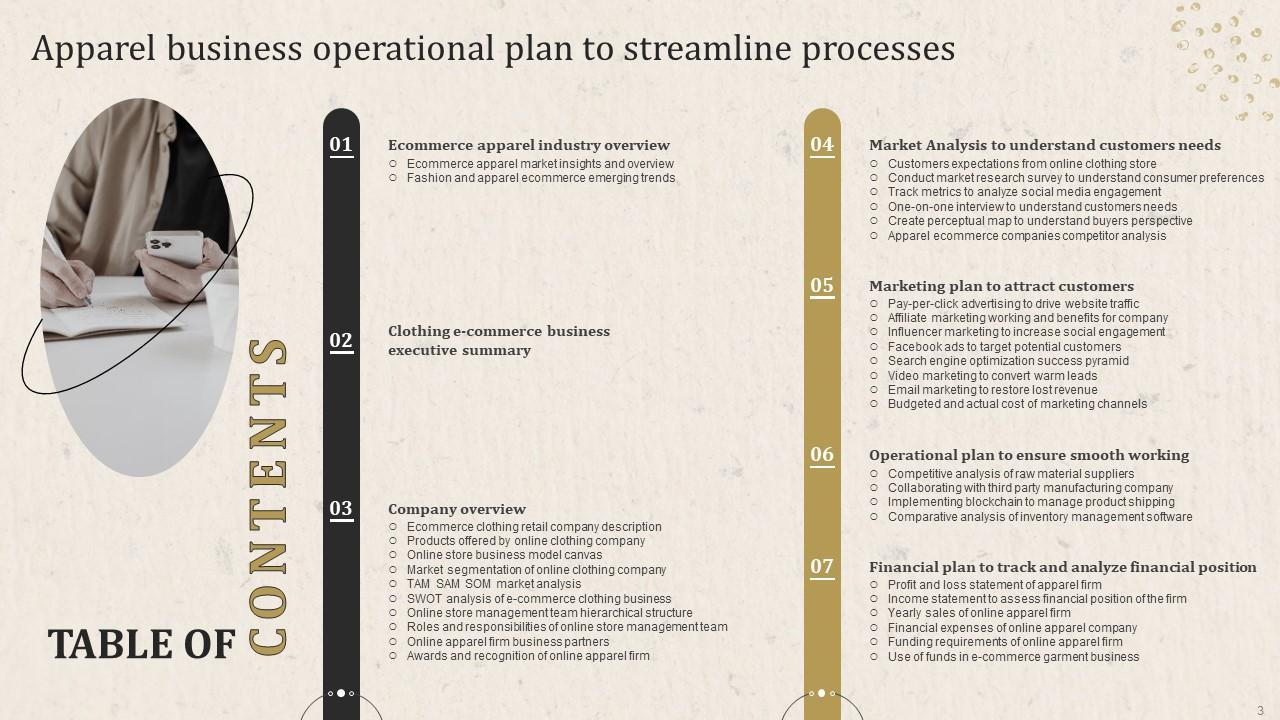
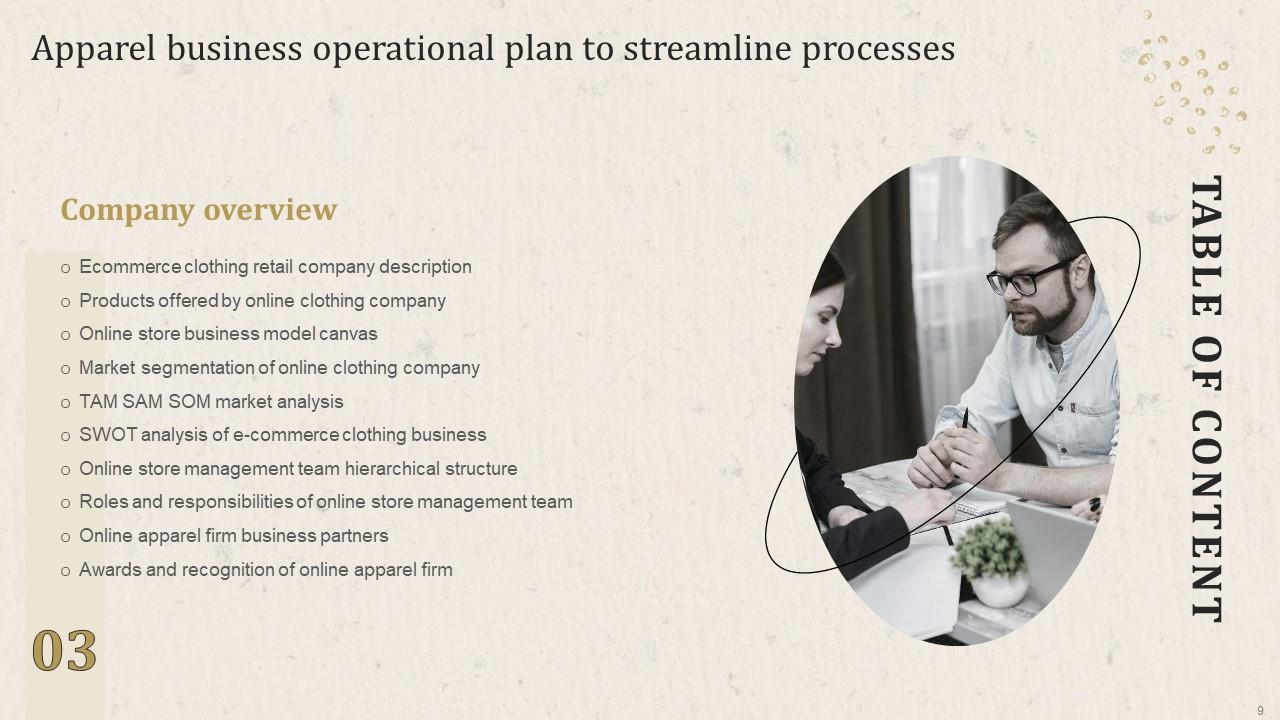
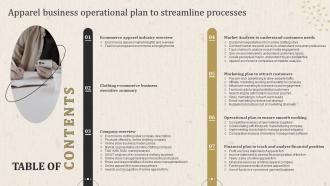
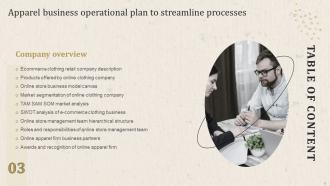
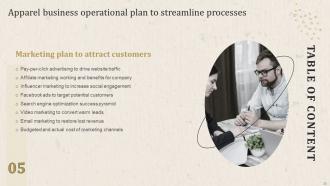
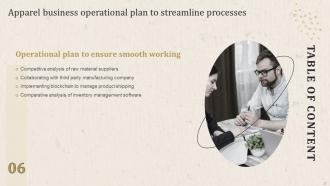
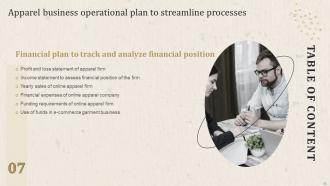
Slide 3: This slide shows Table of Content for the presentation.
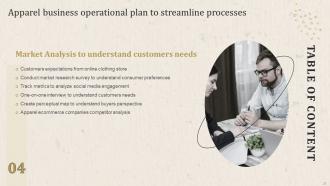
Slide 4: This slide highlights title for topics that are to be covered next in the template.
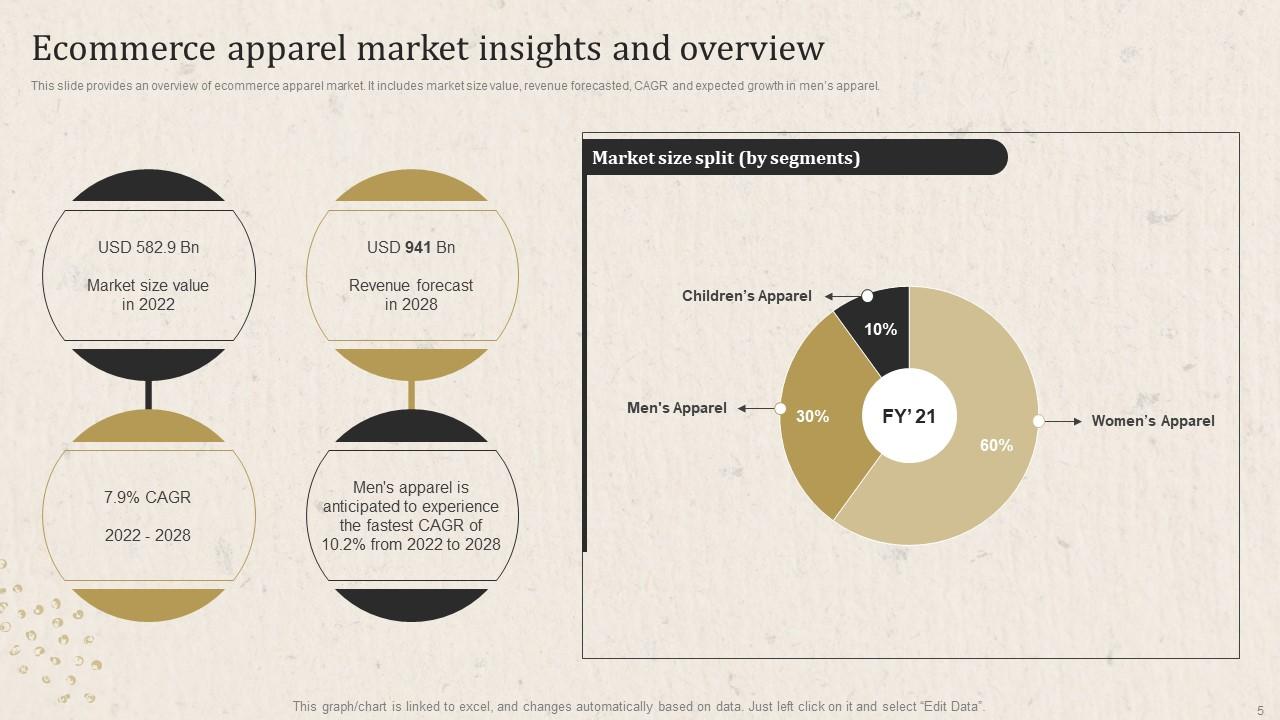
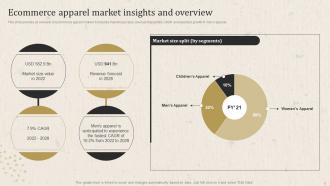
Slide 5: This slide provides an overview of ecommerce apparel market.
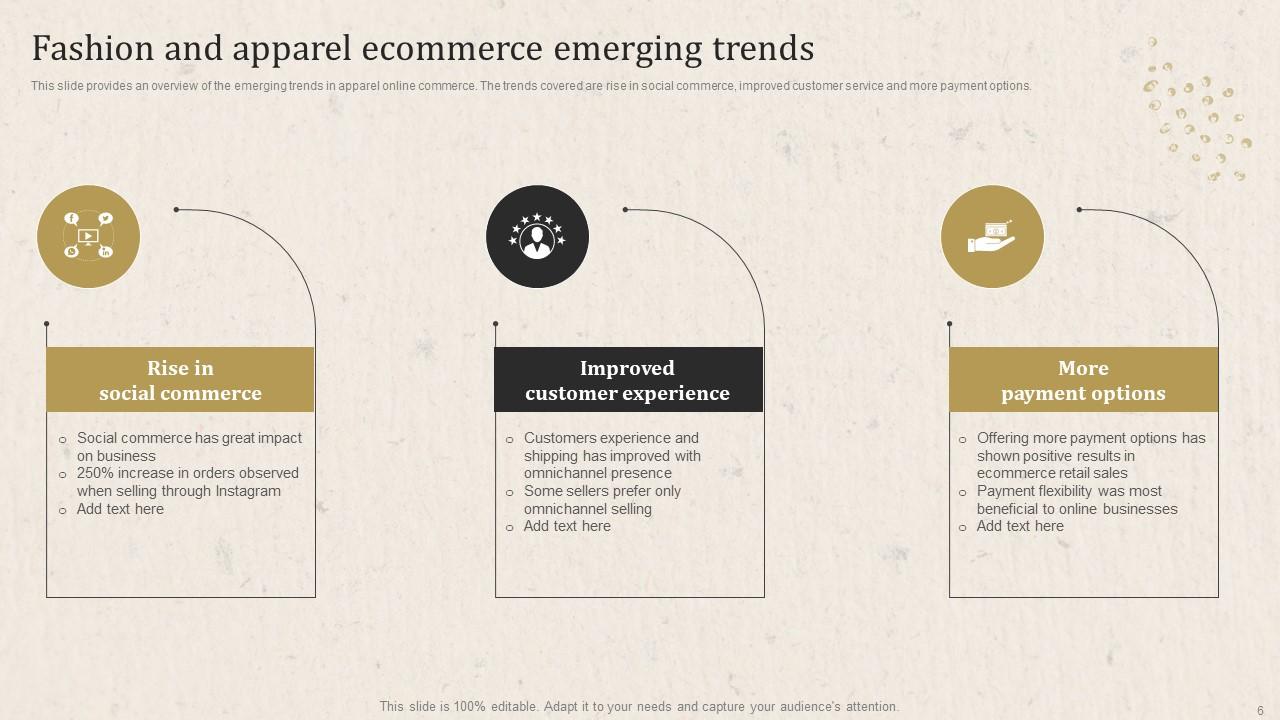
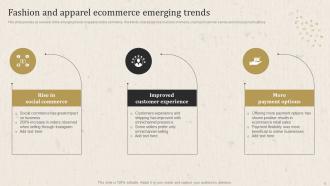
Slide 6: This slide highlights the emerging trends in apparel online commerce.
Slide 7: This slide displays the Heading for the Contents to be discussed further.
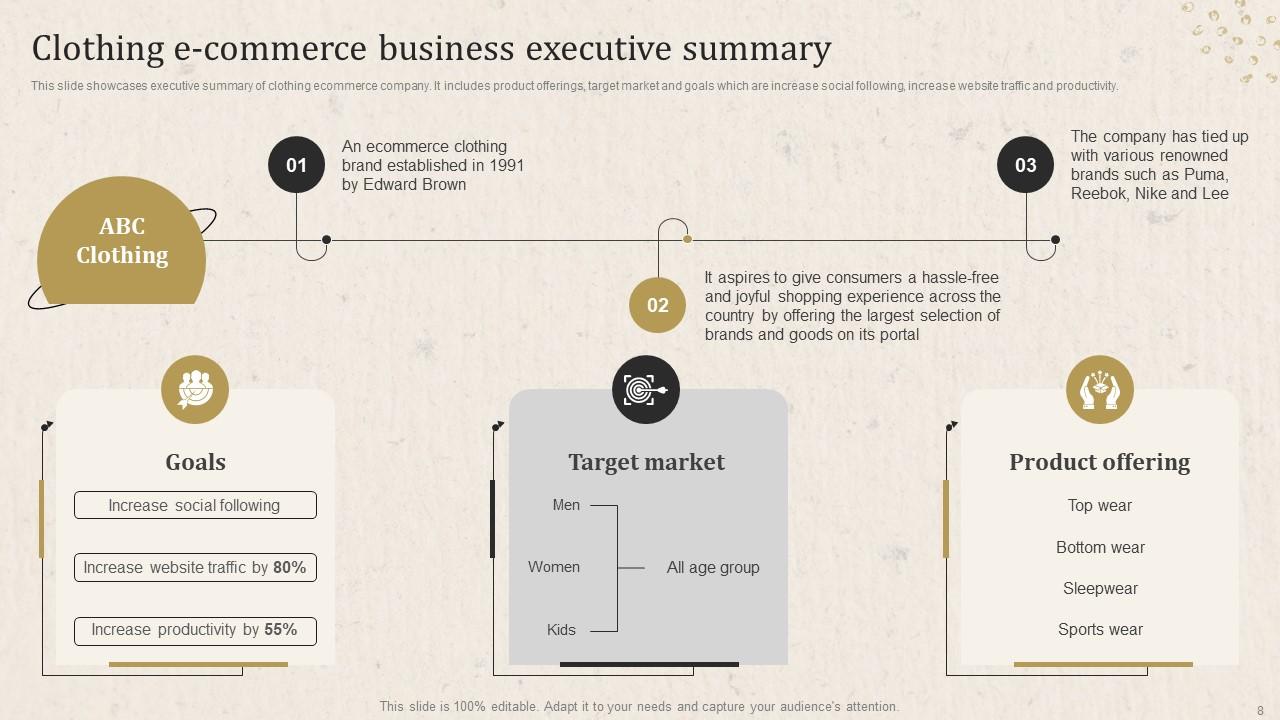
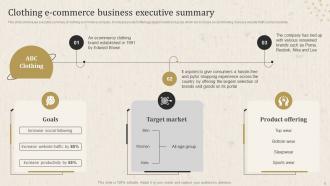
Slide 8: This slide showcases executive summary of clothing ecommerce company.
Slide 9: This slide elucidates the Title for the Ideas to be covered next.
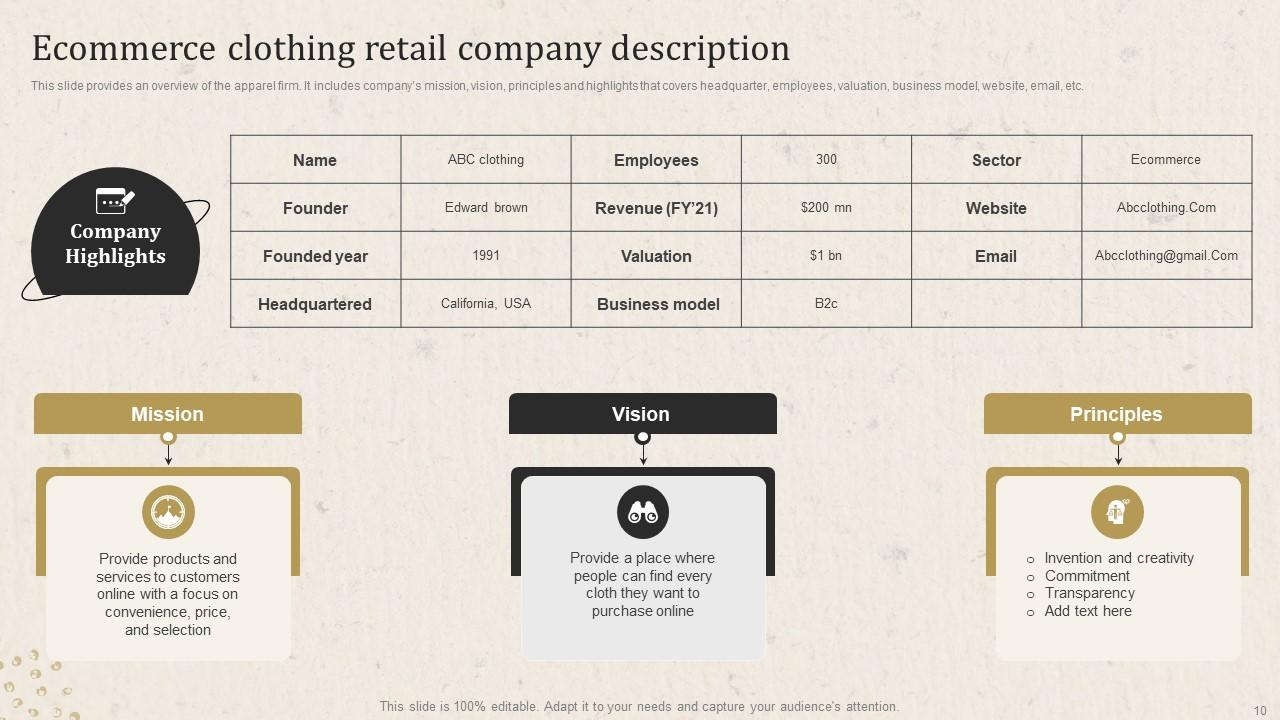
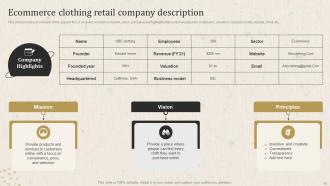
Slide 10: This slide provides an overview of the apparel firm, including company’s mission, vision, principles, etc.
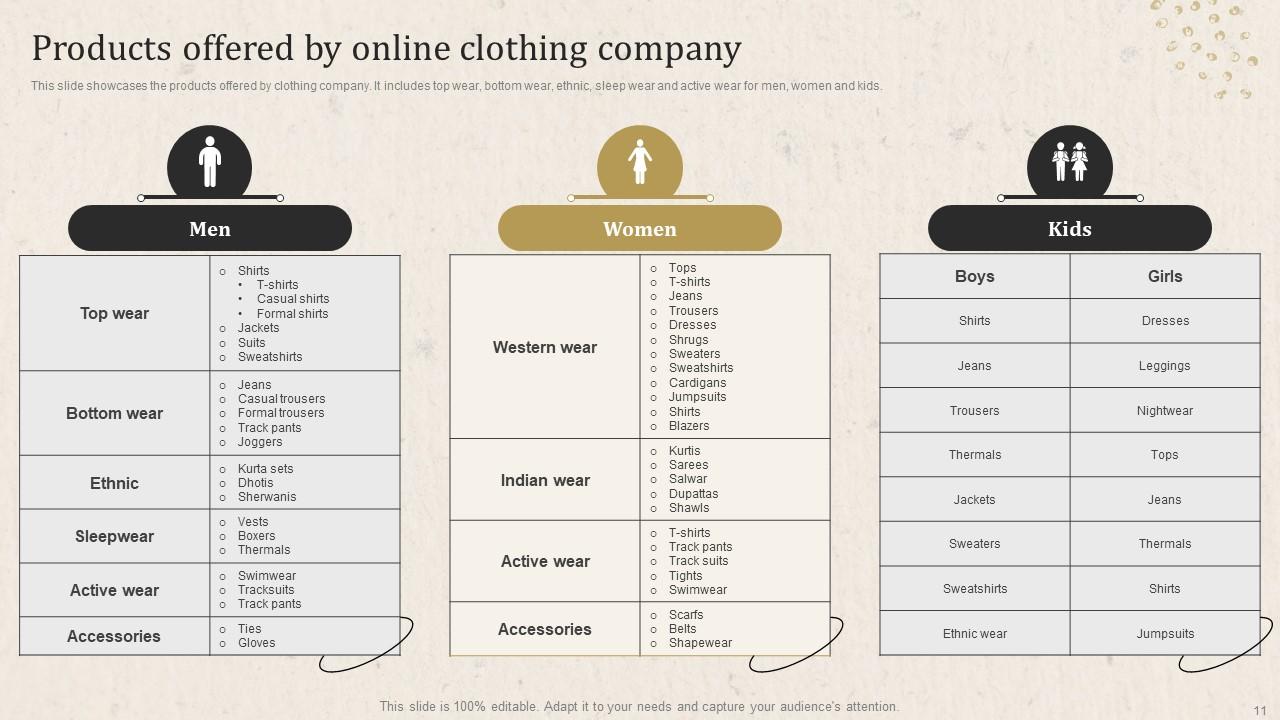
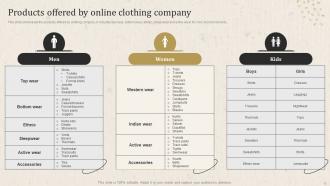
Slide 11: This slide states the Products offered by online clothing company.
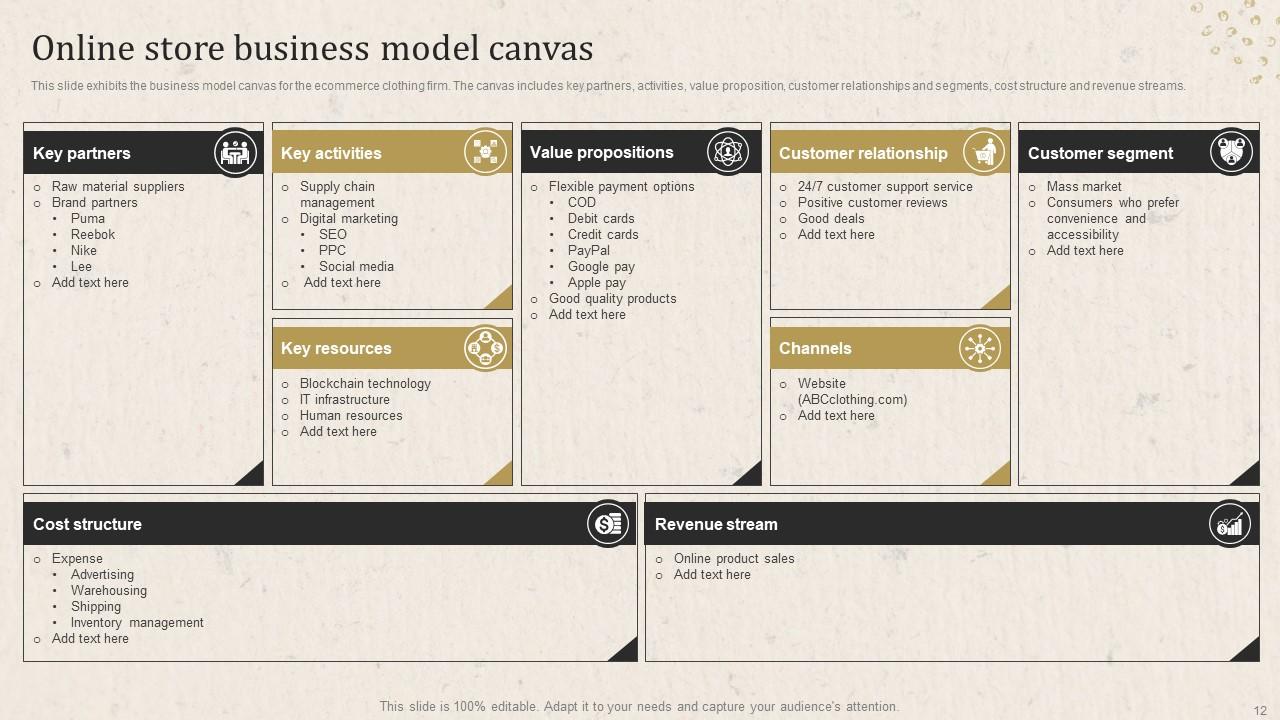
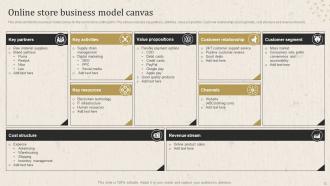
Slide 12: This slide exhibits the Online store business model canvas.
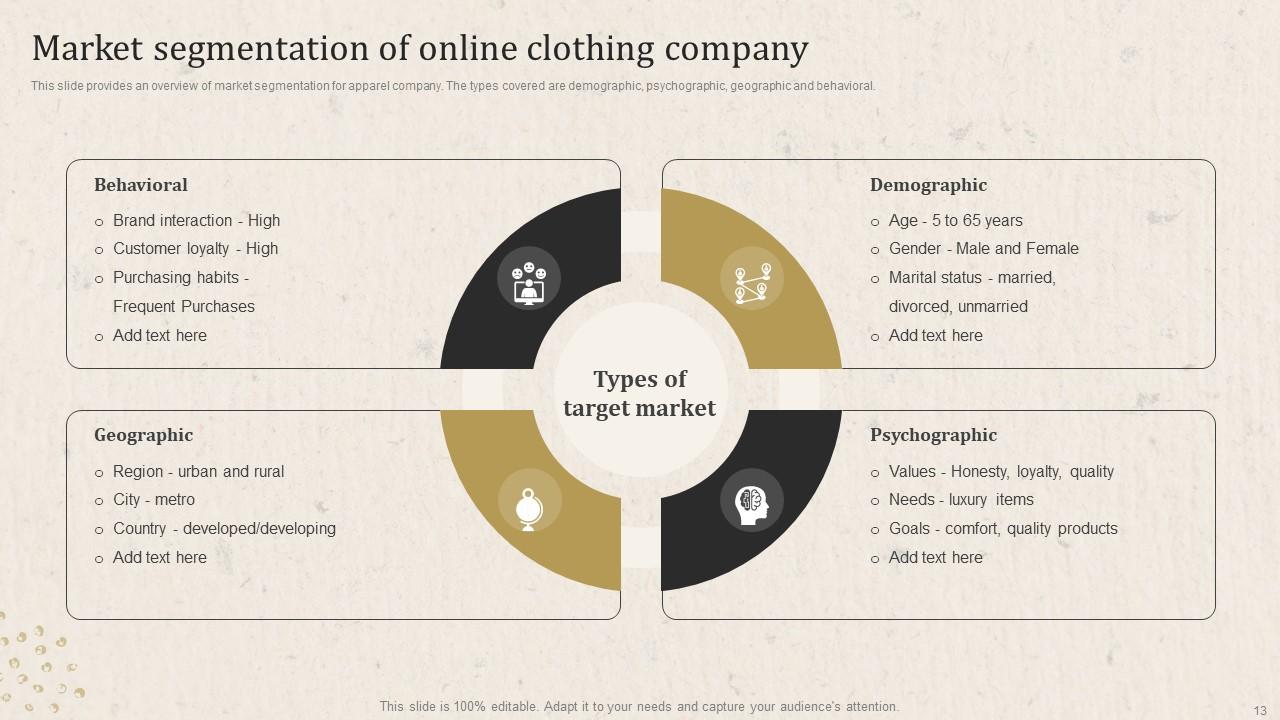
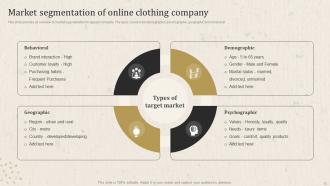
Slide 13: This slide presents the Market segmentation of online clothing company.
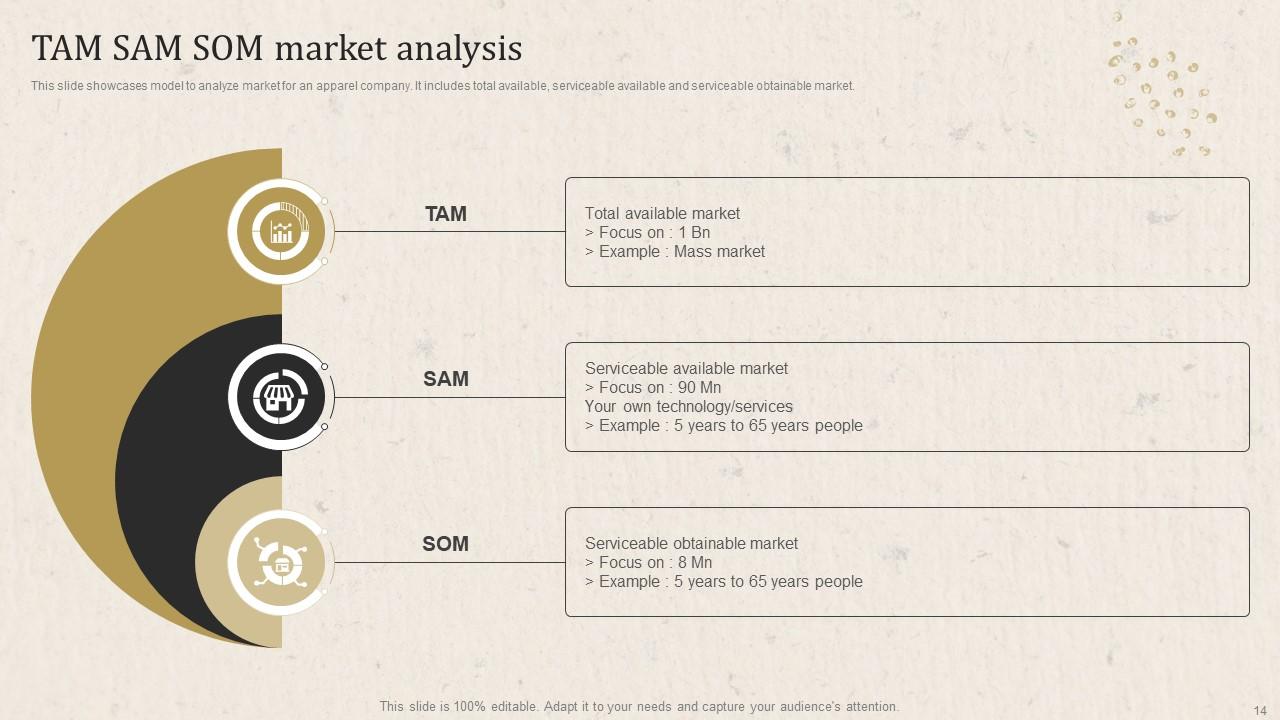
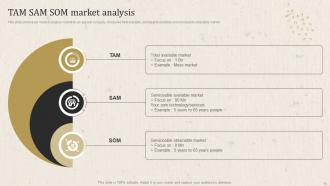
Slide 14: This slide elucidates the TAM SAM SOM market analysis.
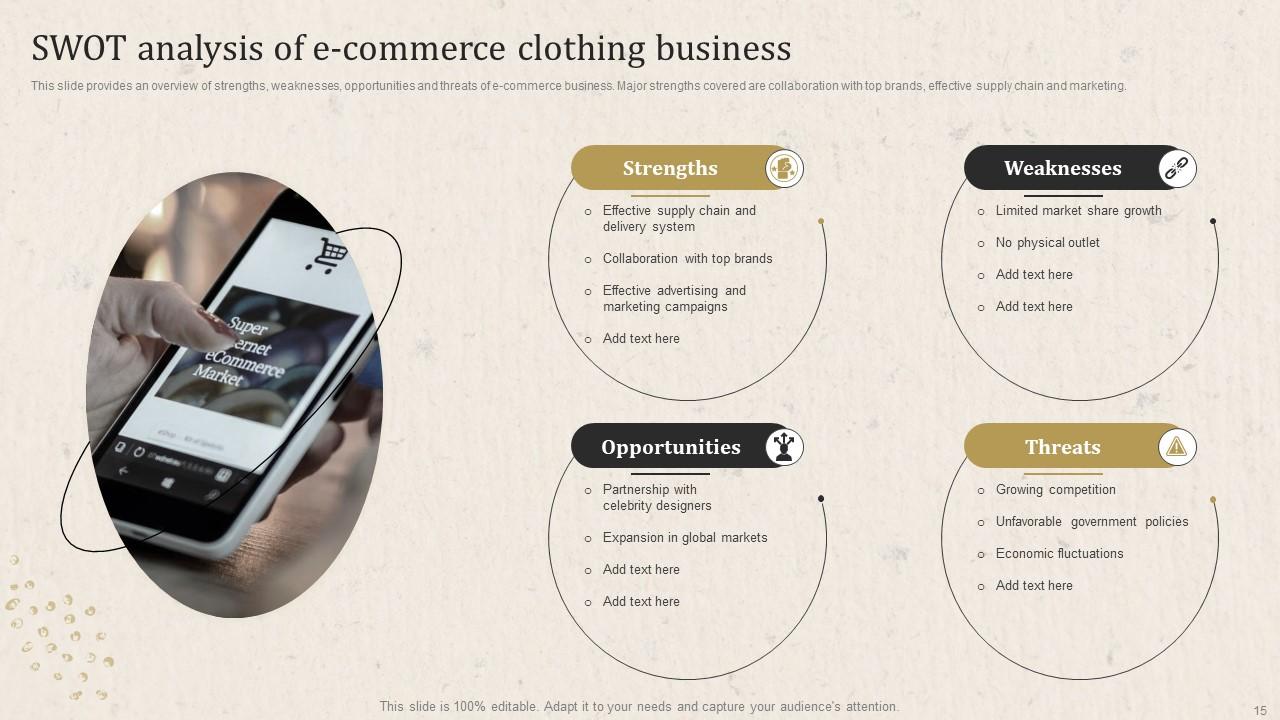
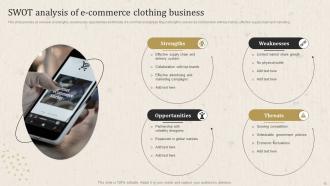
Slide 15: This slide shows the SWOT analysis of e-commerce clothing business.
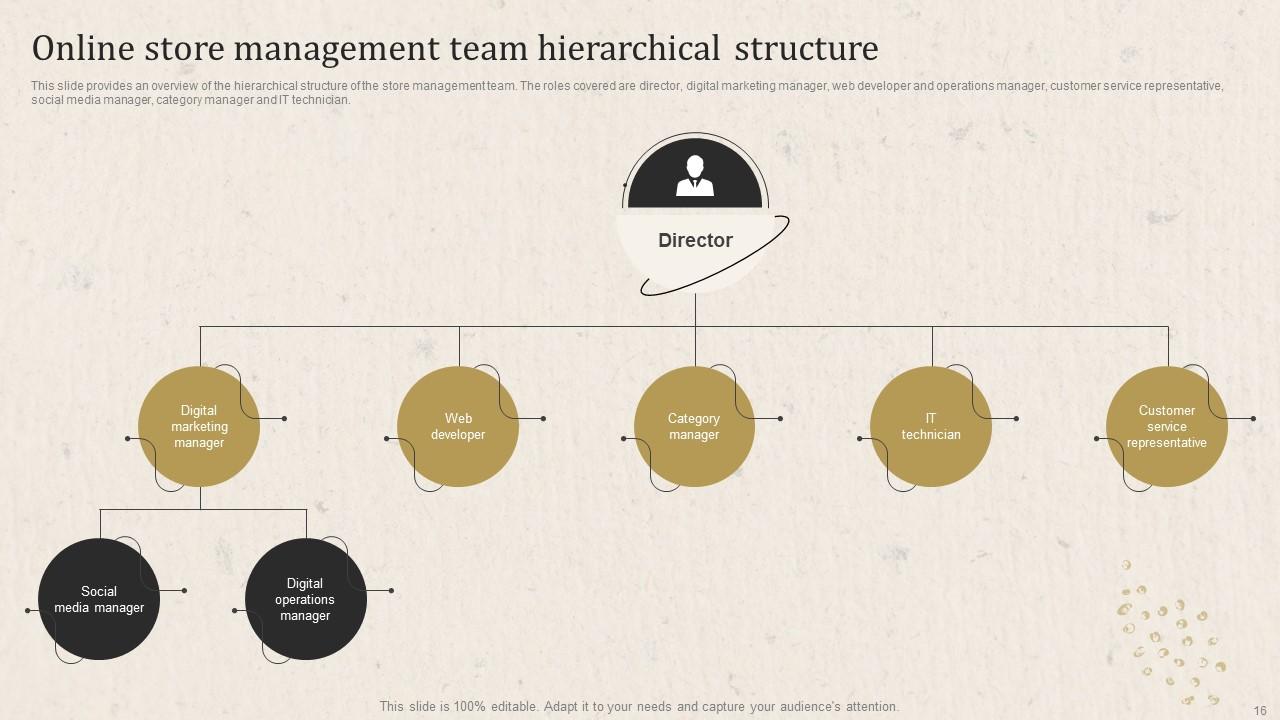
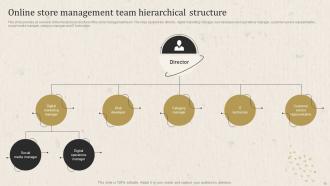
Slide 16: This slide represents the Online store management team hierarchical structure.
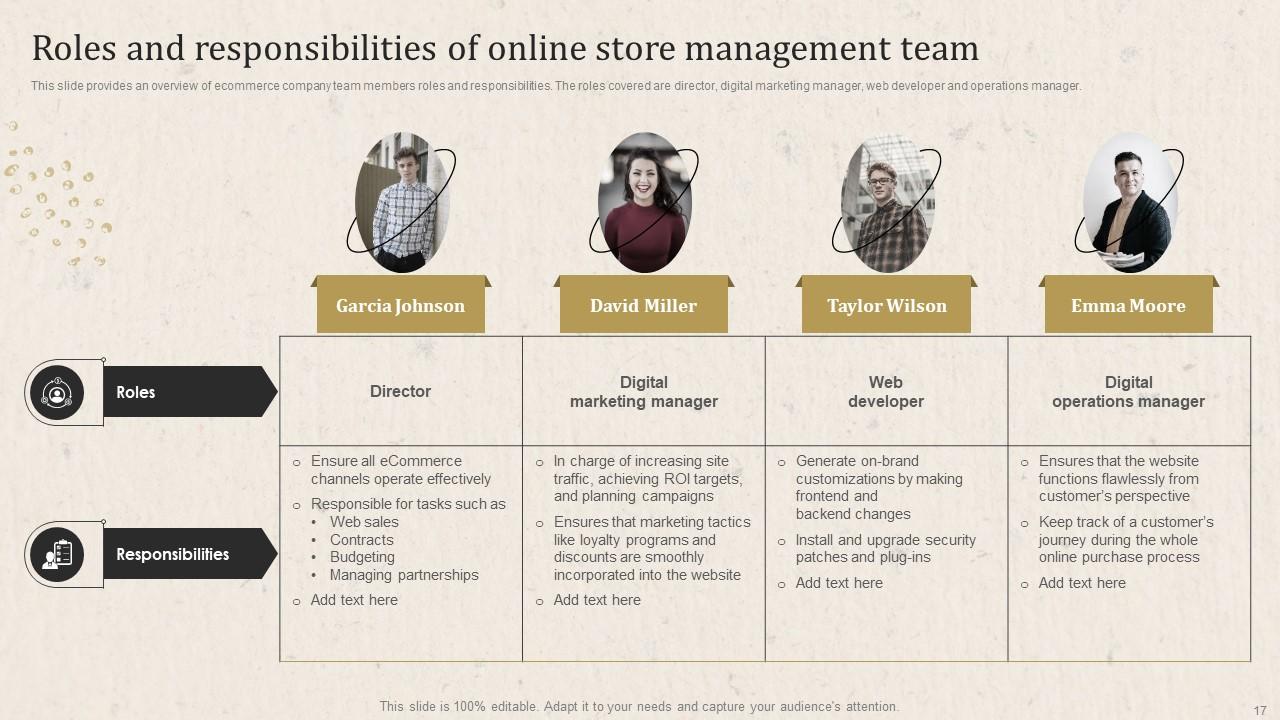
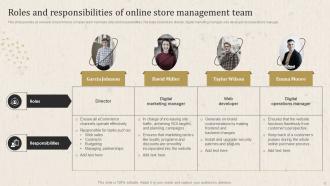
Slide 17: This slide mentions about the ecommerce company team members roles and responsibilities.
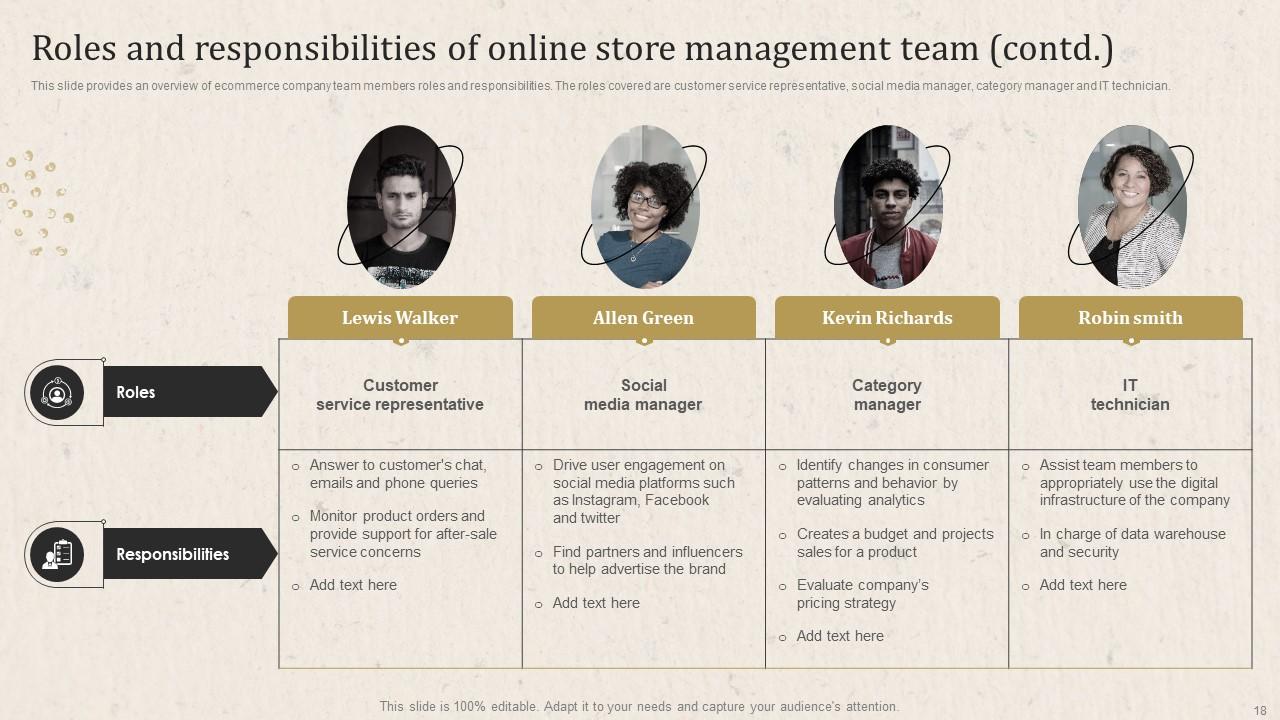
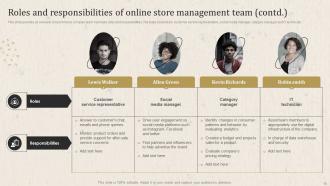
Slide 18: This slide continues the Roles and responsibilities of online store management team.
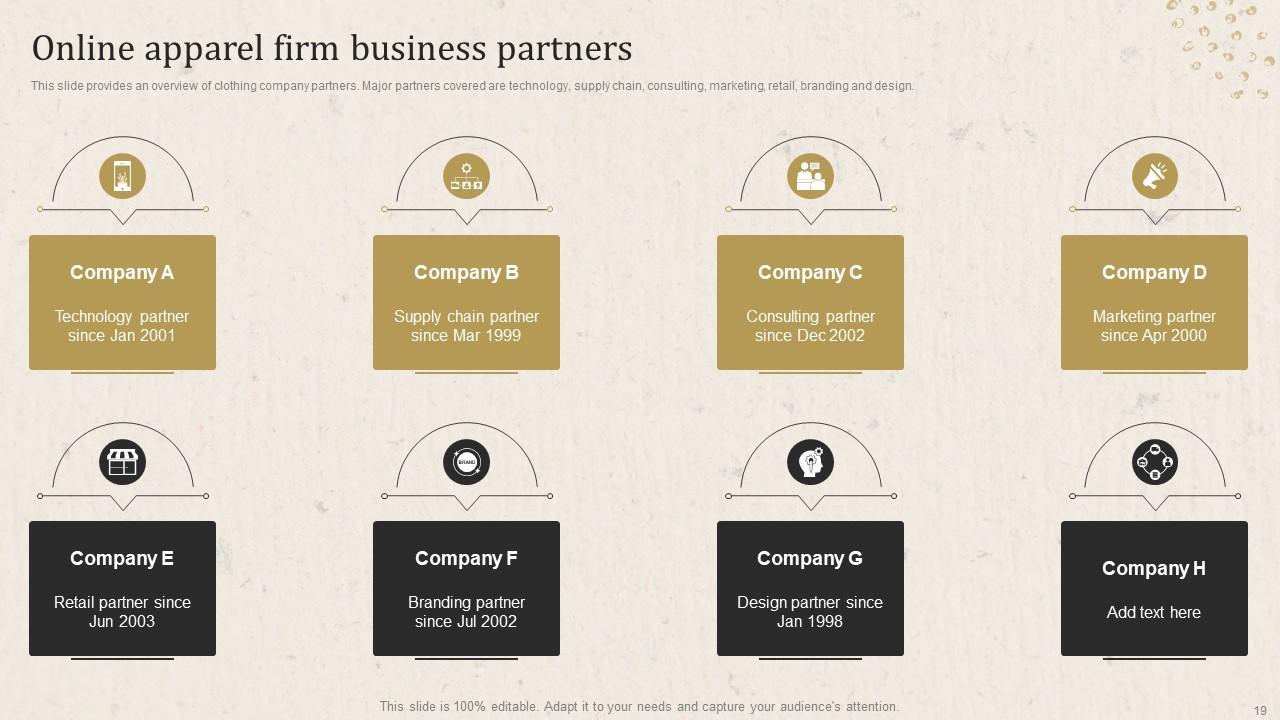
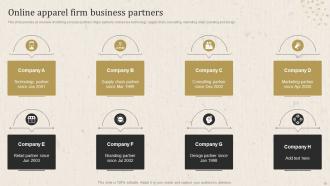
Slide 19: This slide lists the Online apparel firm business partners.
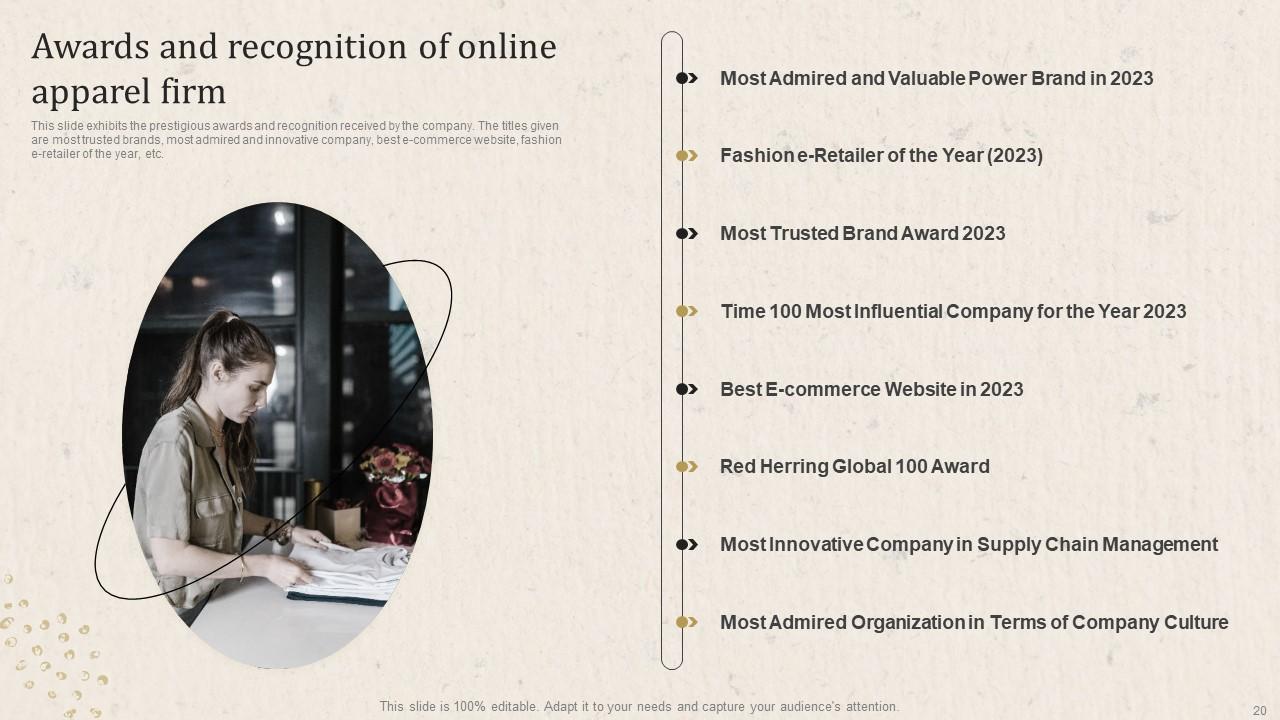
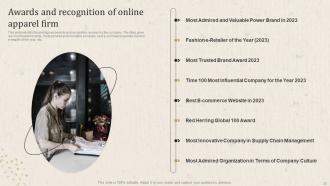
Slide 20: This slide exhibits the prestigious awards and recognition received by the company.
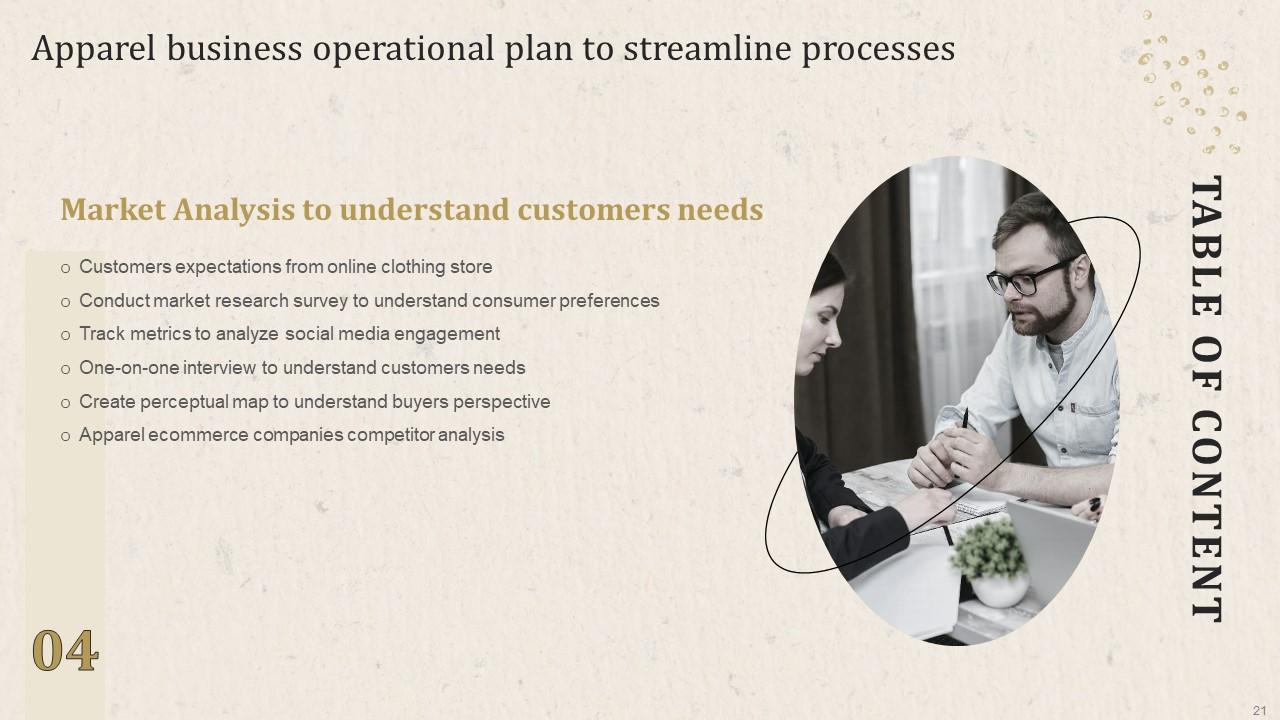
Slide 21: This slide highlights the Heading for the Components to be covered next.
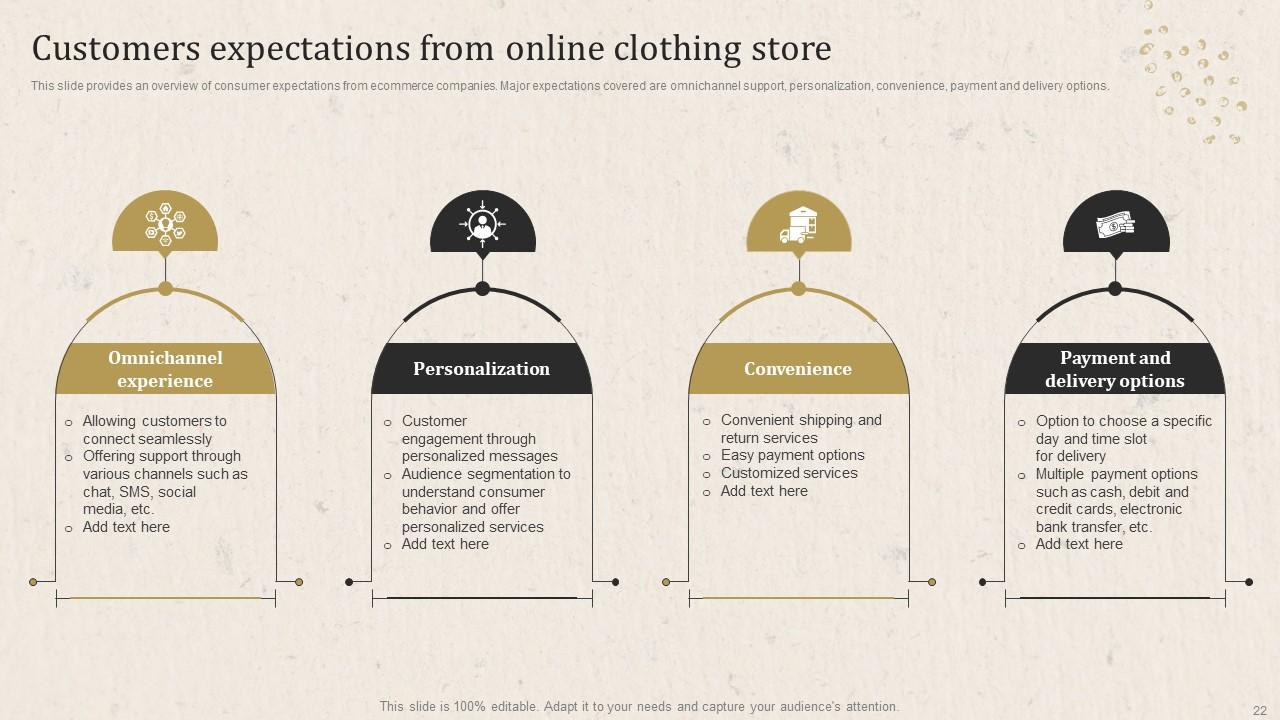
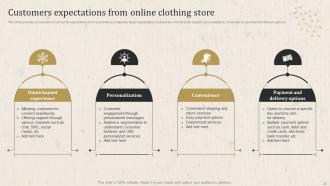
Slide 22: This slide deals with the Customers expectations from online clothing store.
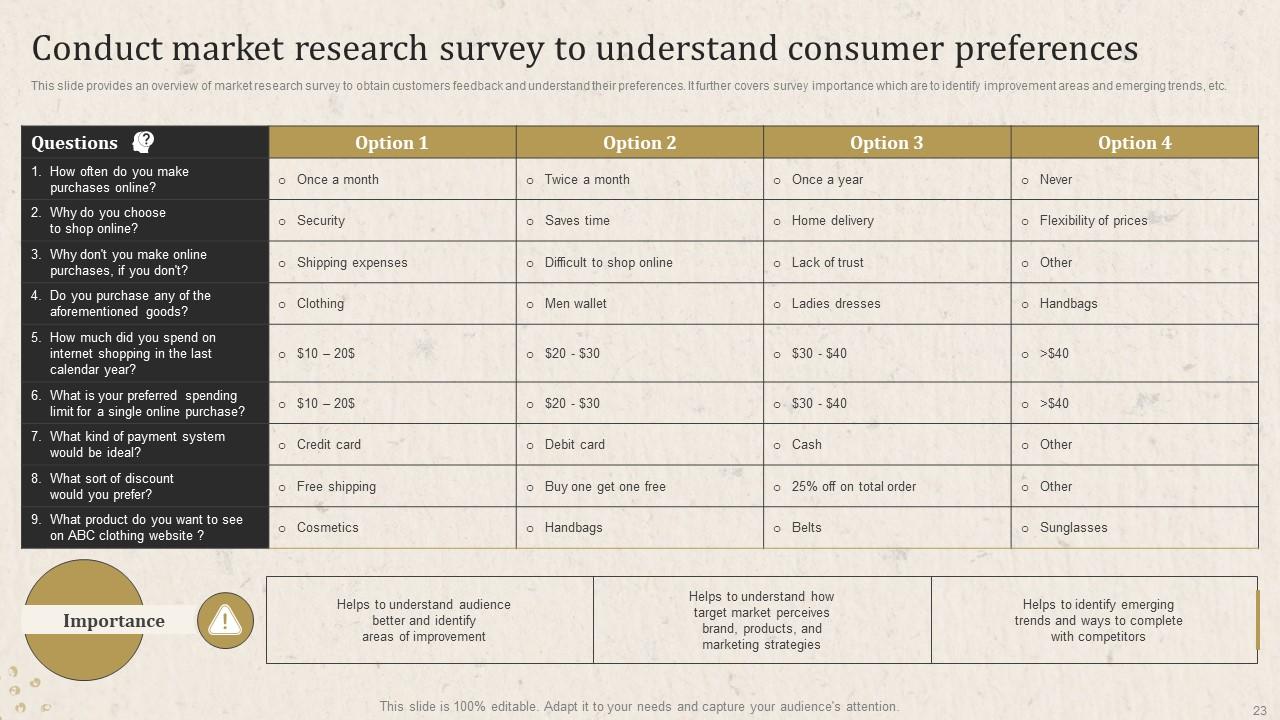
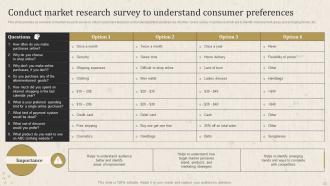
Slide 23: This slide focuses on the Conduct market research survey to understand consumer preferences.
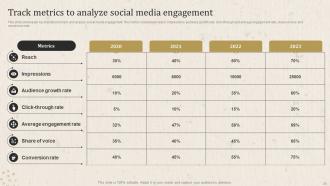
Slide 24: This slide showcases key indicators to track and analyze social media engagement.
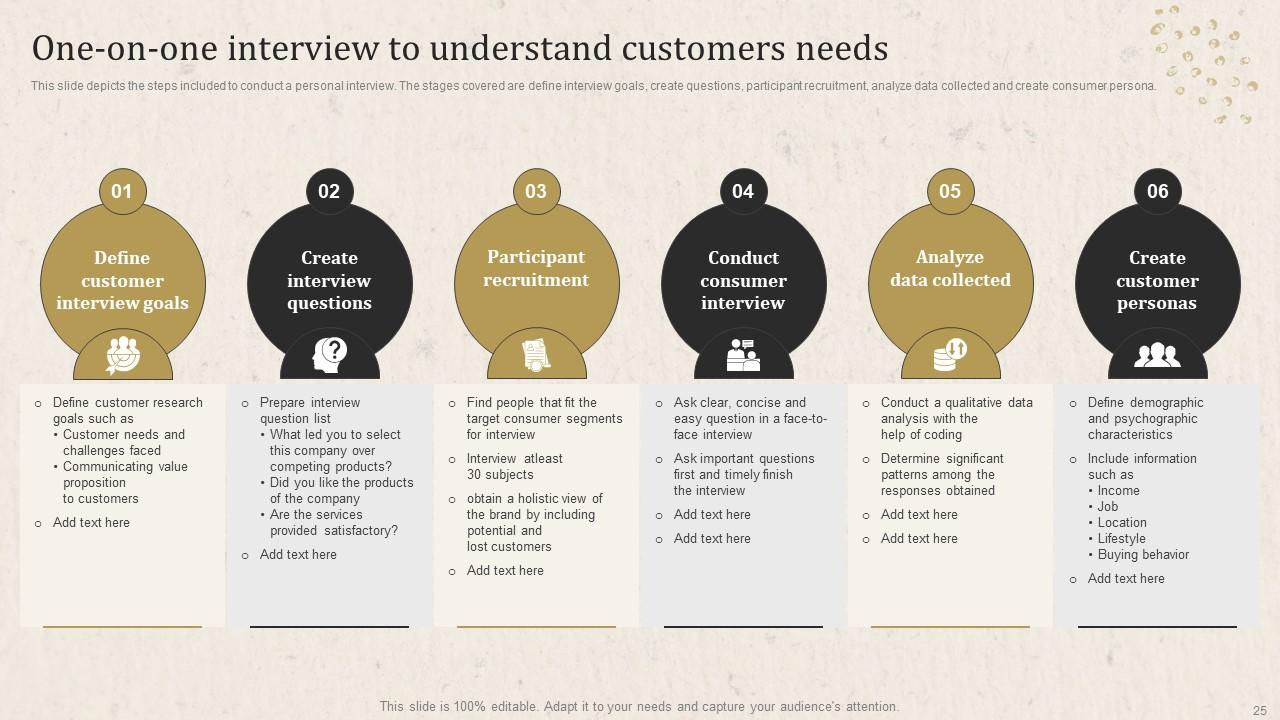
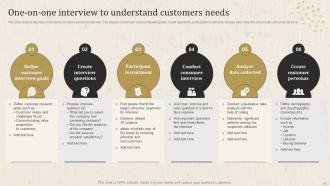
Slide 25: This slide depicts the steps included to conduct a personal interview.
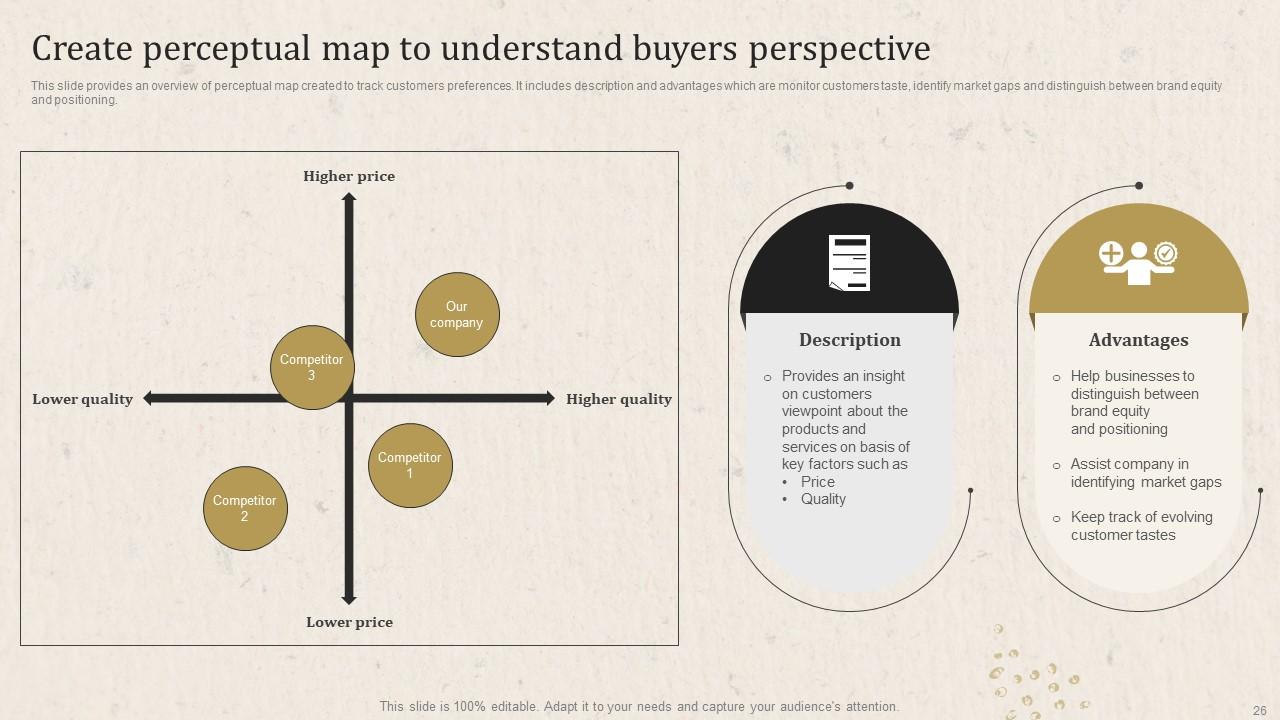
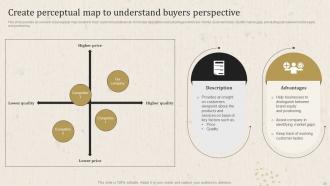
Slide 26: This slide provides an overview of perceptual map created to track customers preferences.
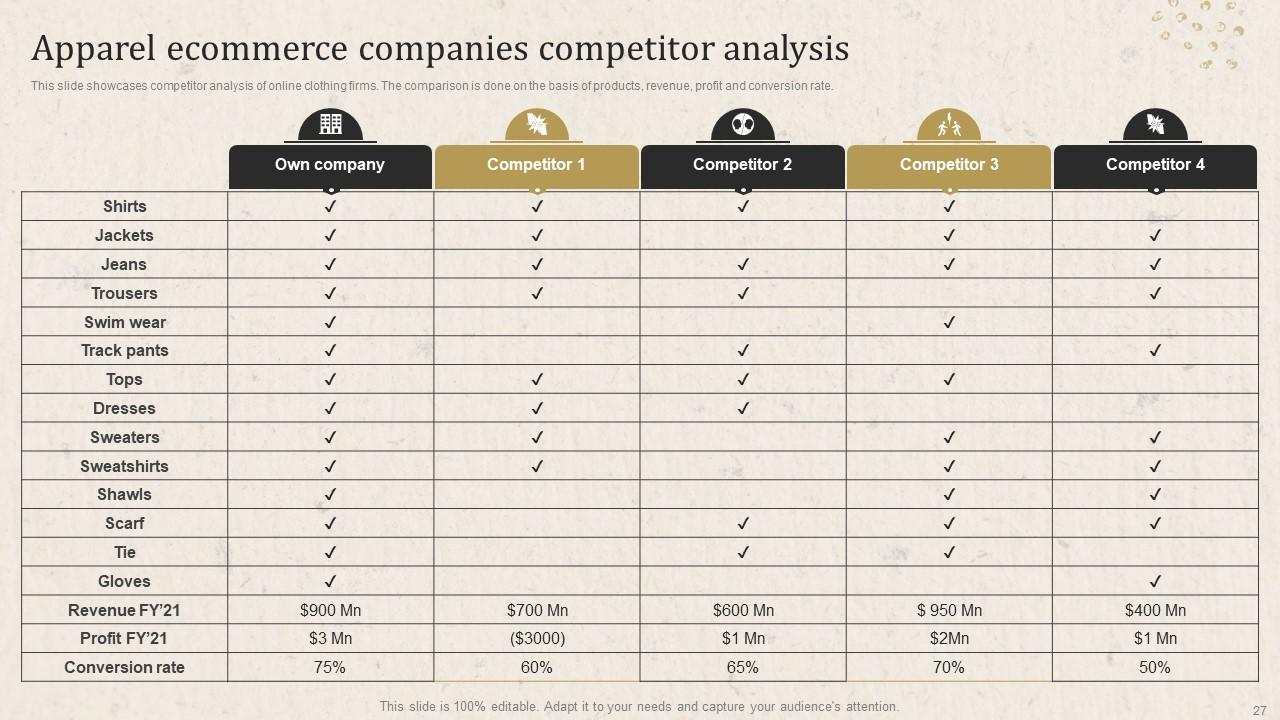
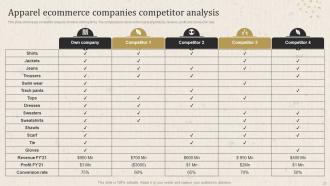
Slide 27: This slide displays the Apparel ecommerce companies competitor analysis.
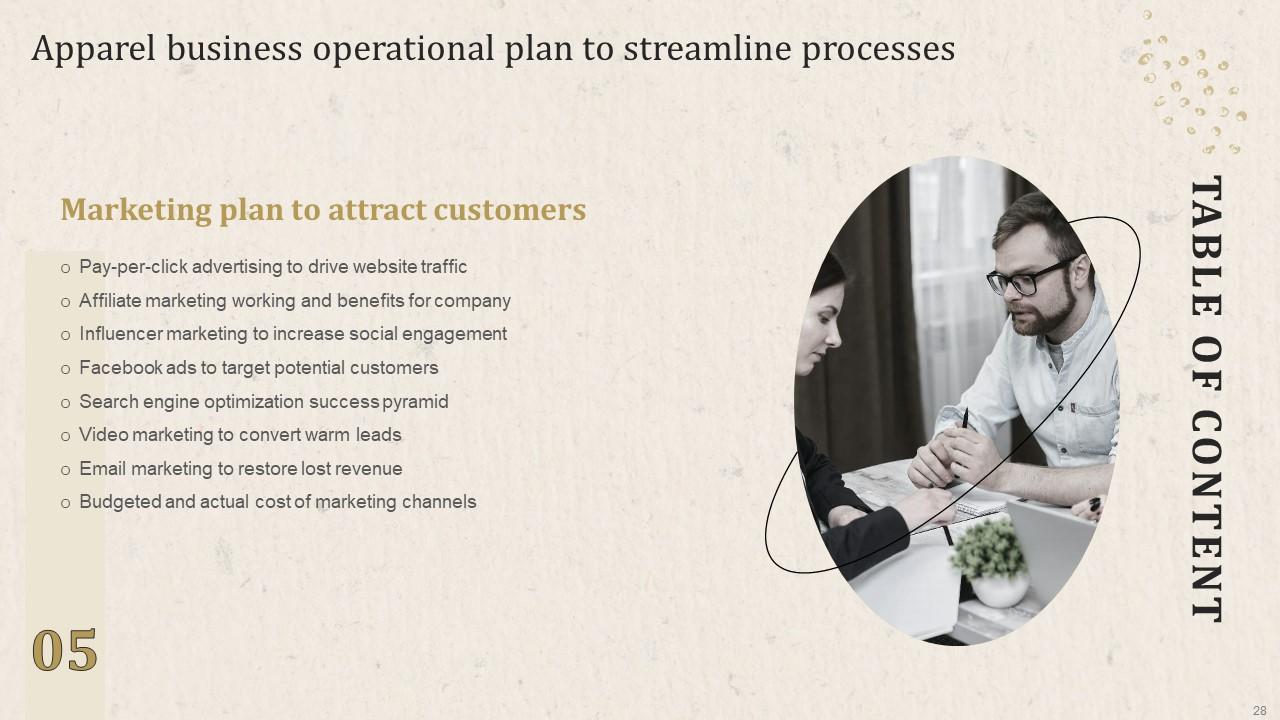
Slide 28: This slide incorporates the Title for the Topics to be discussed in the upcoming template.
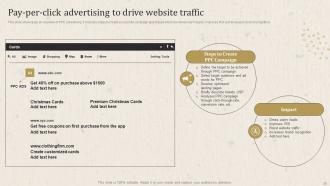
Slide 29: This slide showcases the Pay-per-click advertising to drive website traffic.
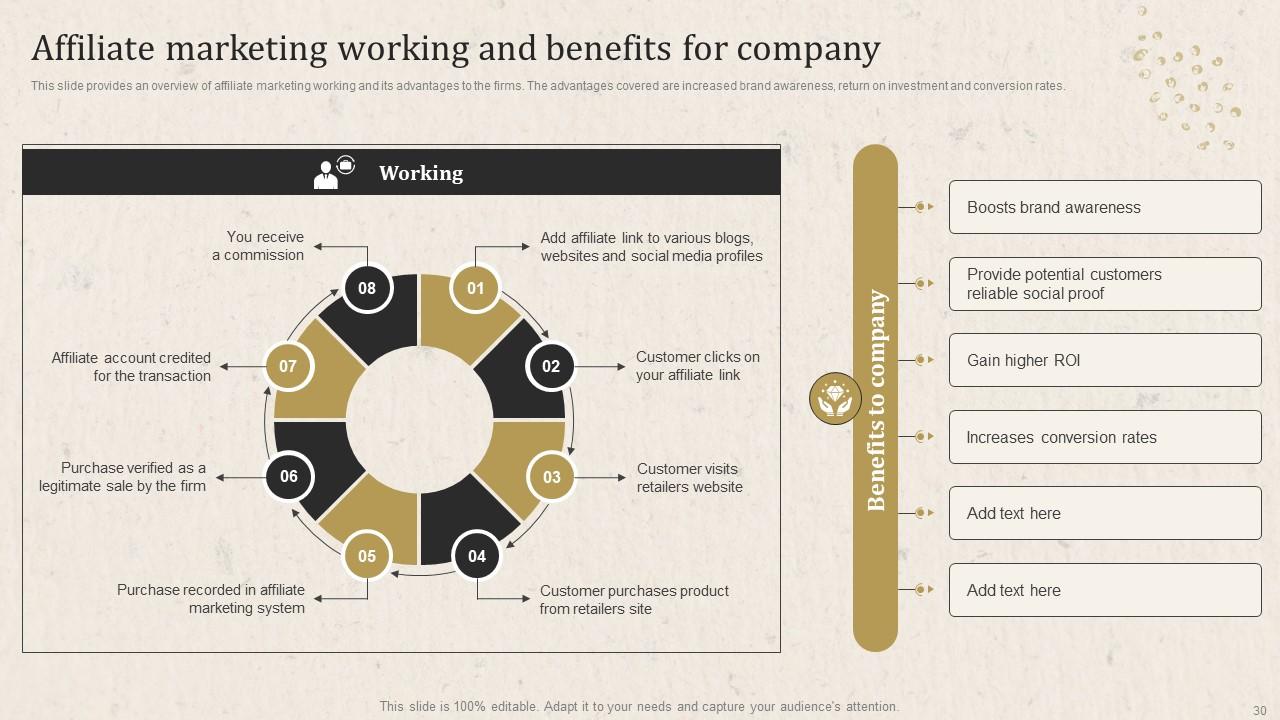
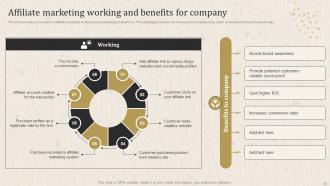
Slide 30: This slide highlights the Affiliate marketing working and benefits for company.
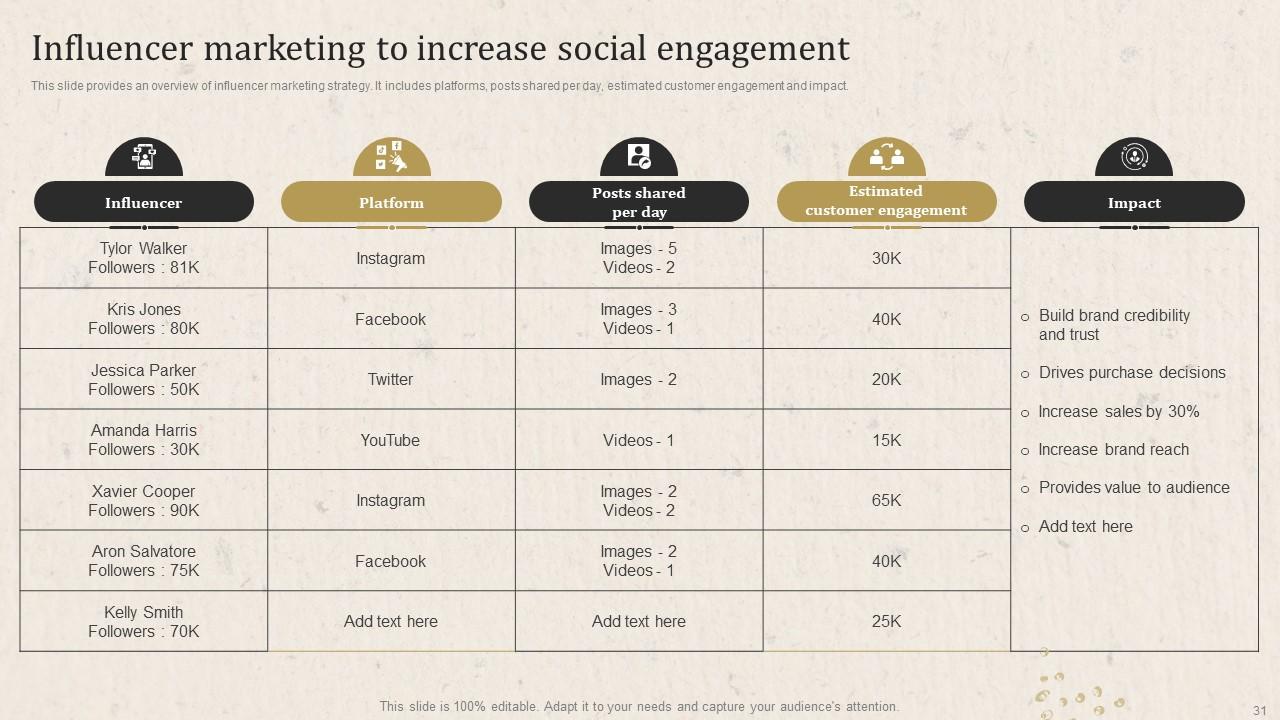
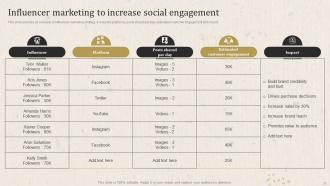
Slide 31: This slide provides an overview of influencer marketing strategy.
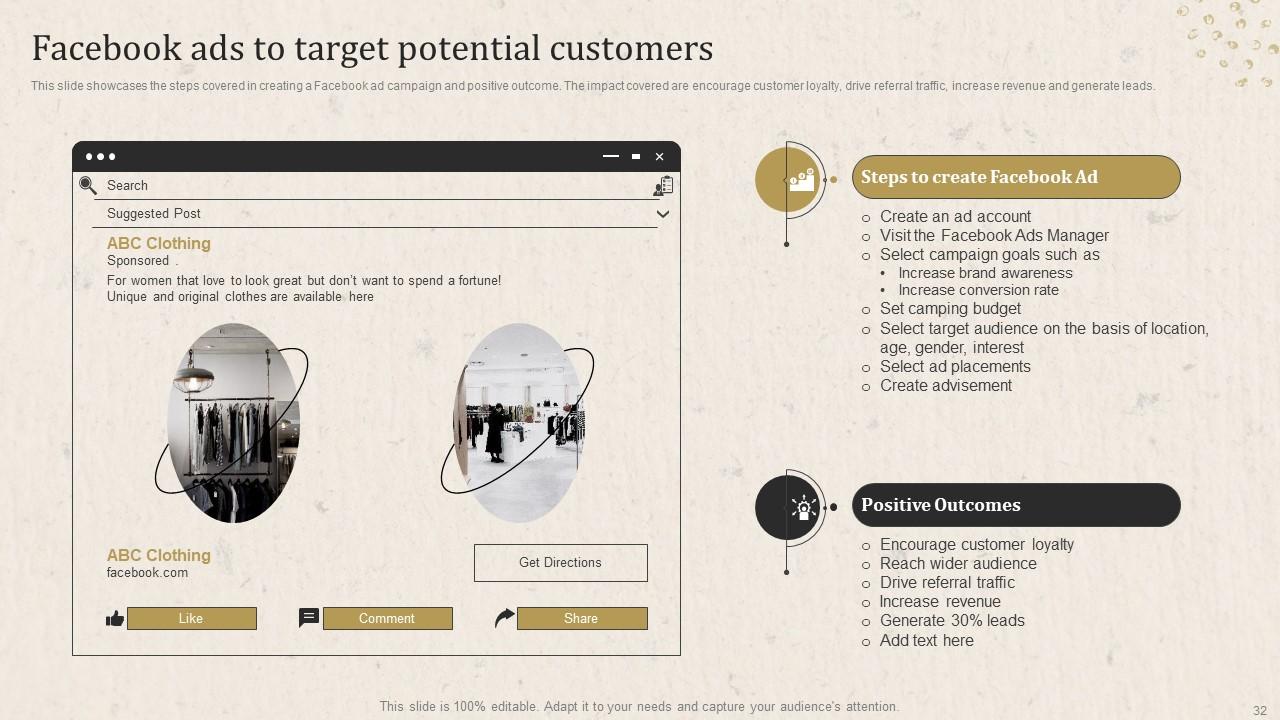
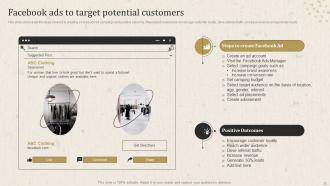
Slide 32: This slide showcases the steps covered in creating a Facebook ad campaign and positive outcome.
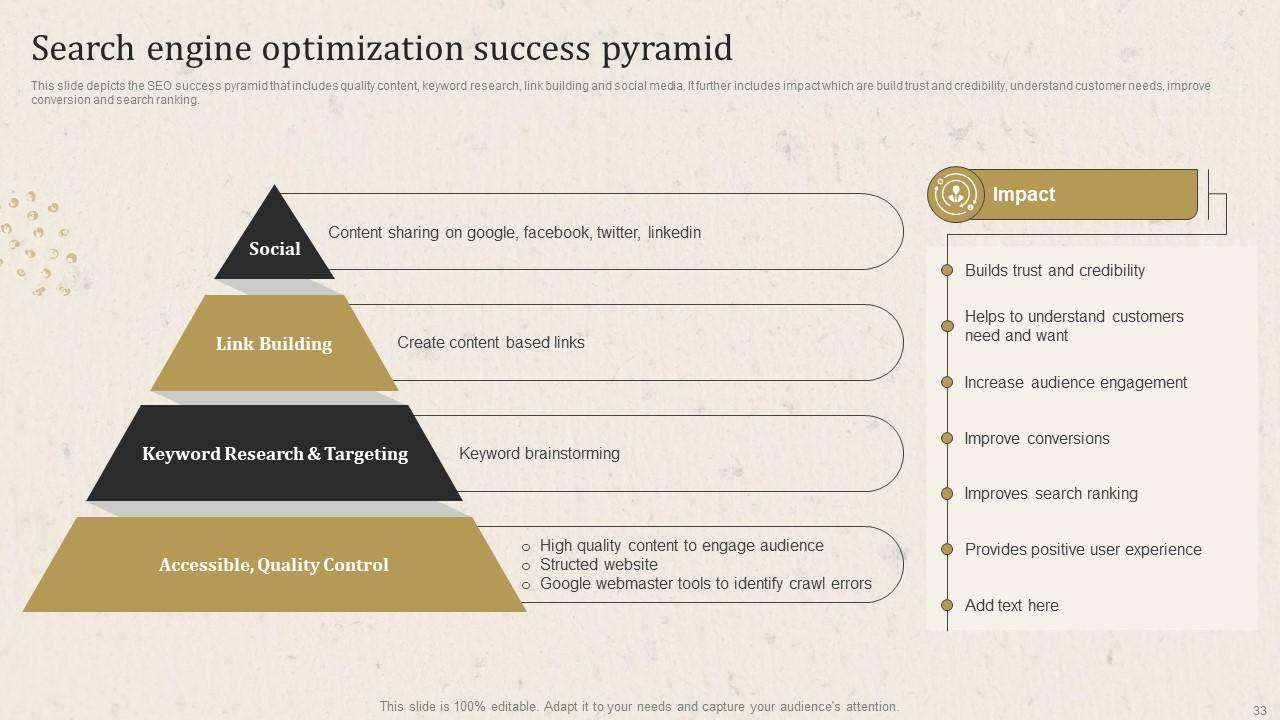
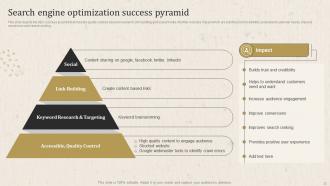
Slide 33: This slide depicts the SEO success pyramid that includes quality content, keyword research, link building and social media.
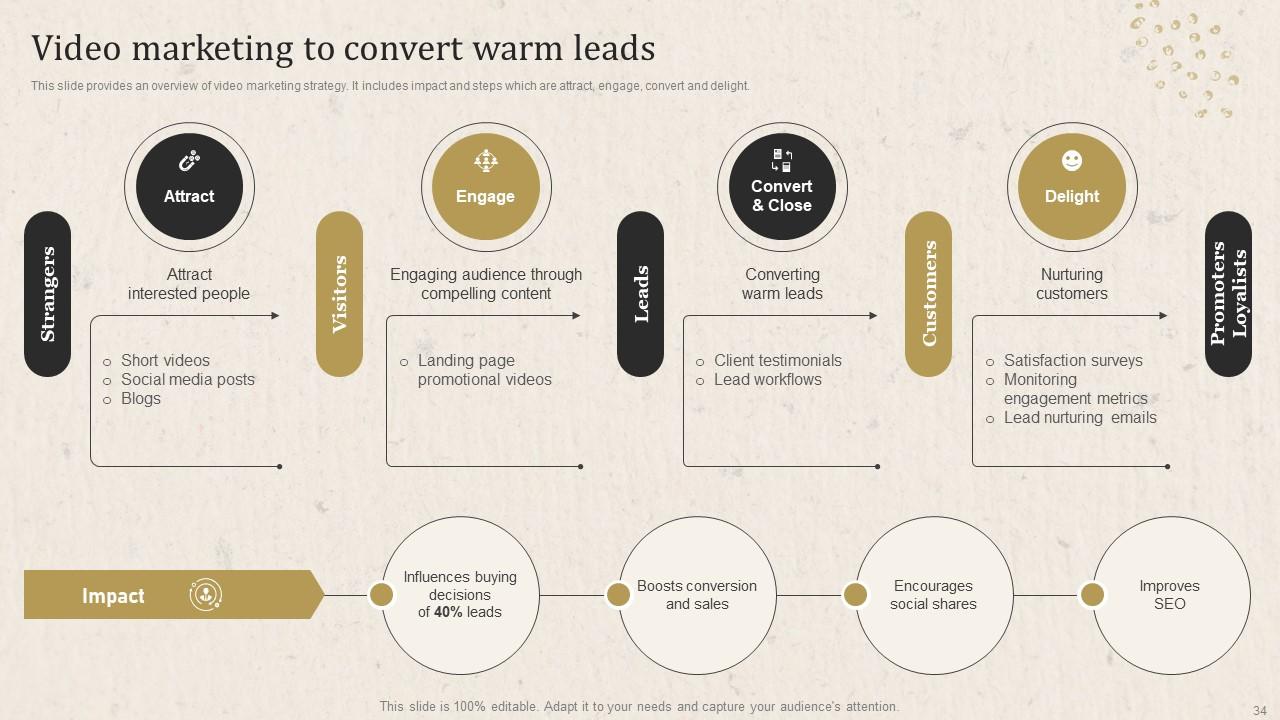
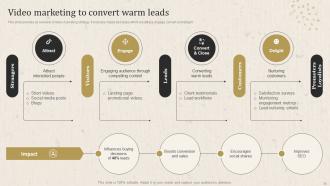
Slide 34: This slide provides an overview of video marketing strategy.
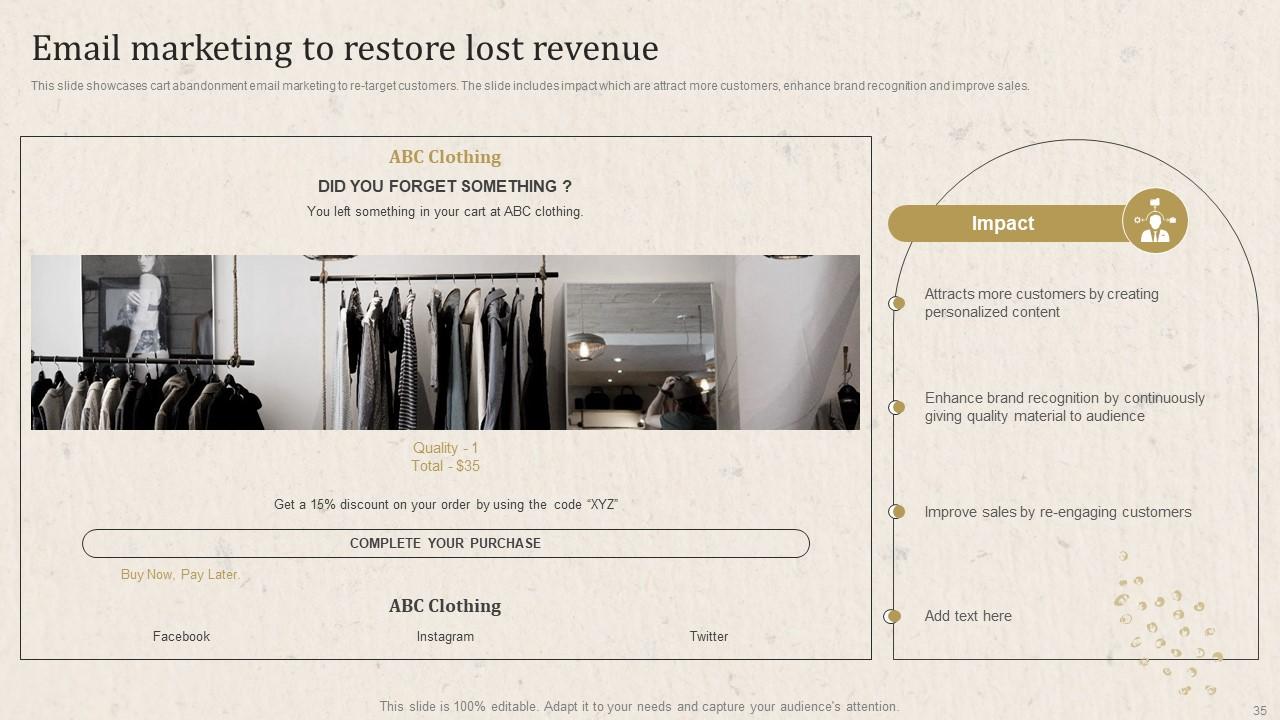
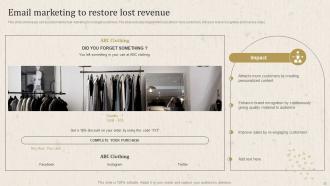
Slide 35: This slide showcases cart abandonment email marketing to re-target customers.
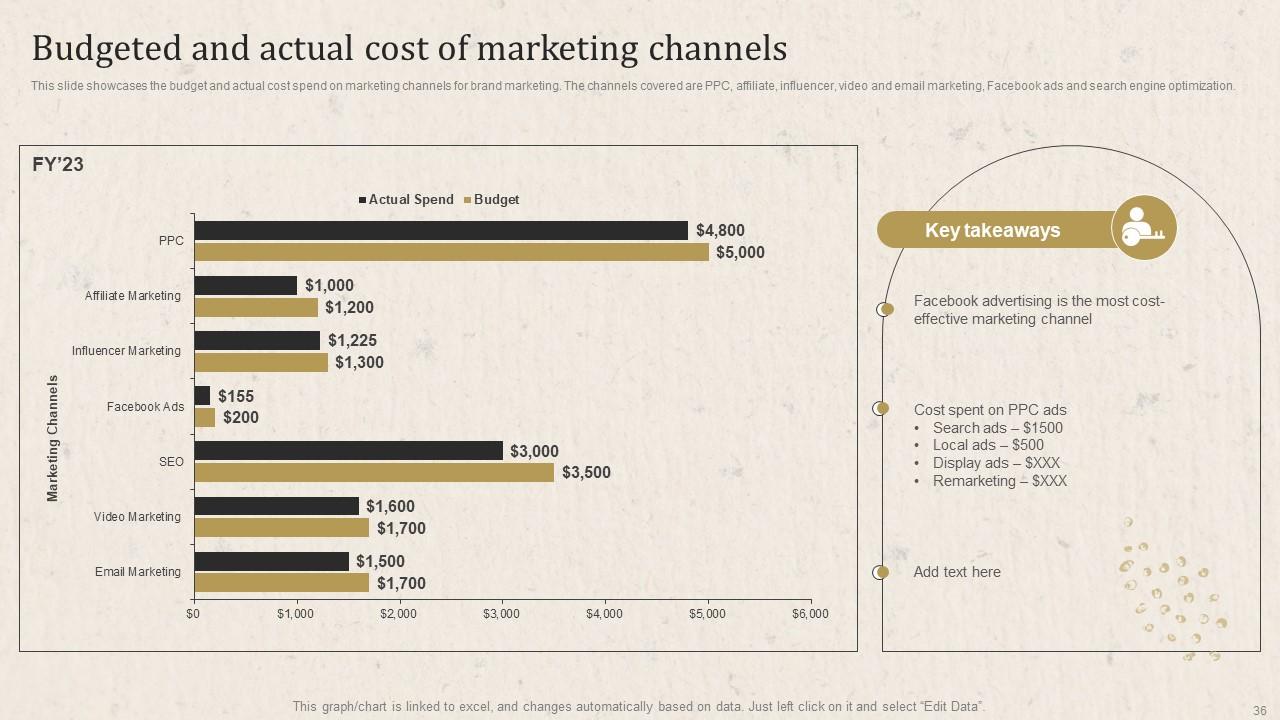
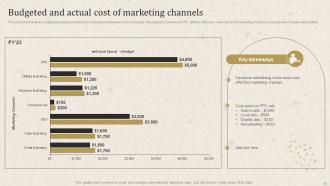
Slide 36: This slide elucidates the budget and actual cost spend on marketing channels for brand marketing.
Slide 37: This slide mentions about the Title for the Components to be discussed further.
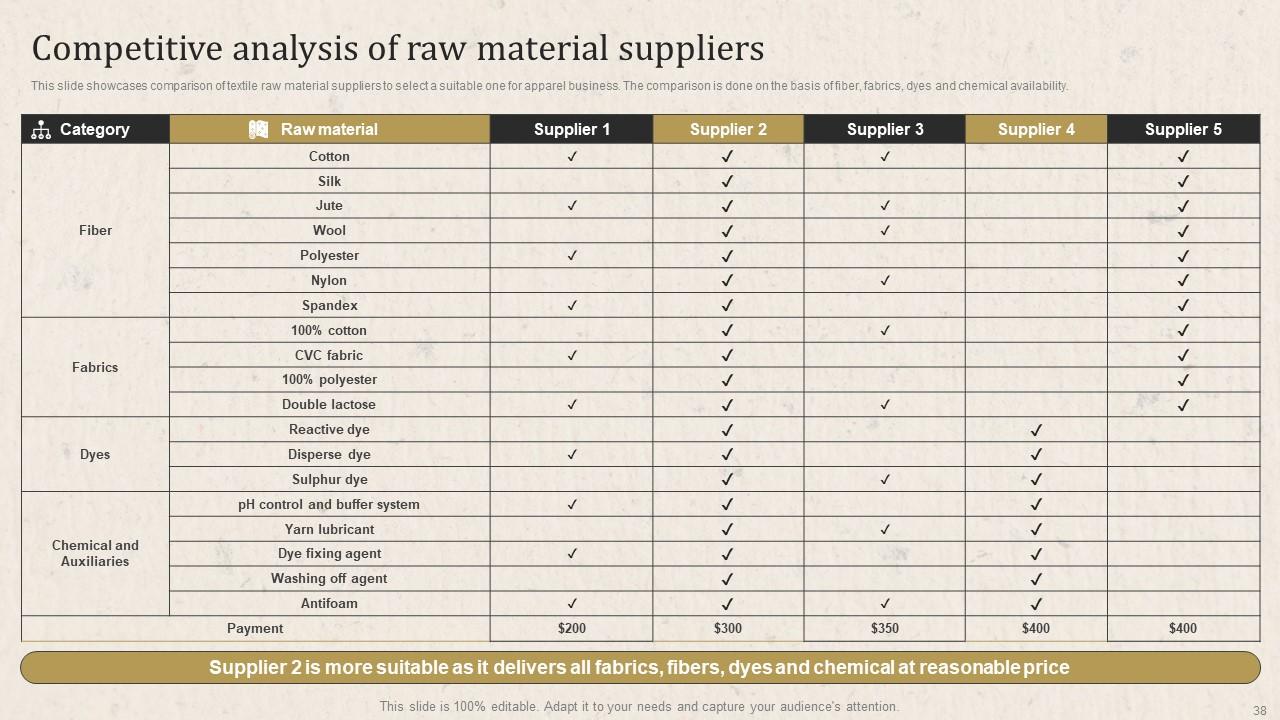
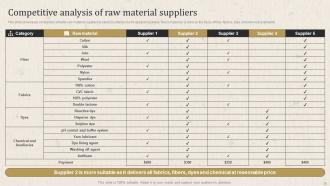
Slide 38: This slide shows comparison of textile raw material suppliers to select a suitable one for apparel business.
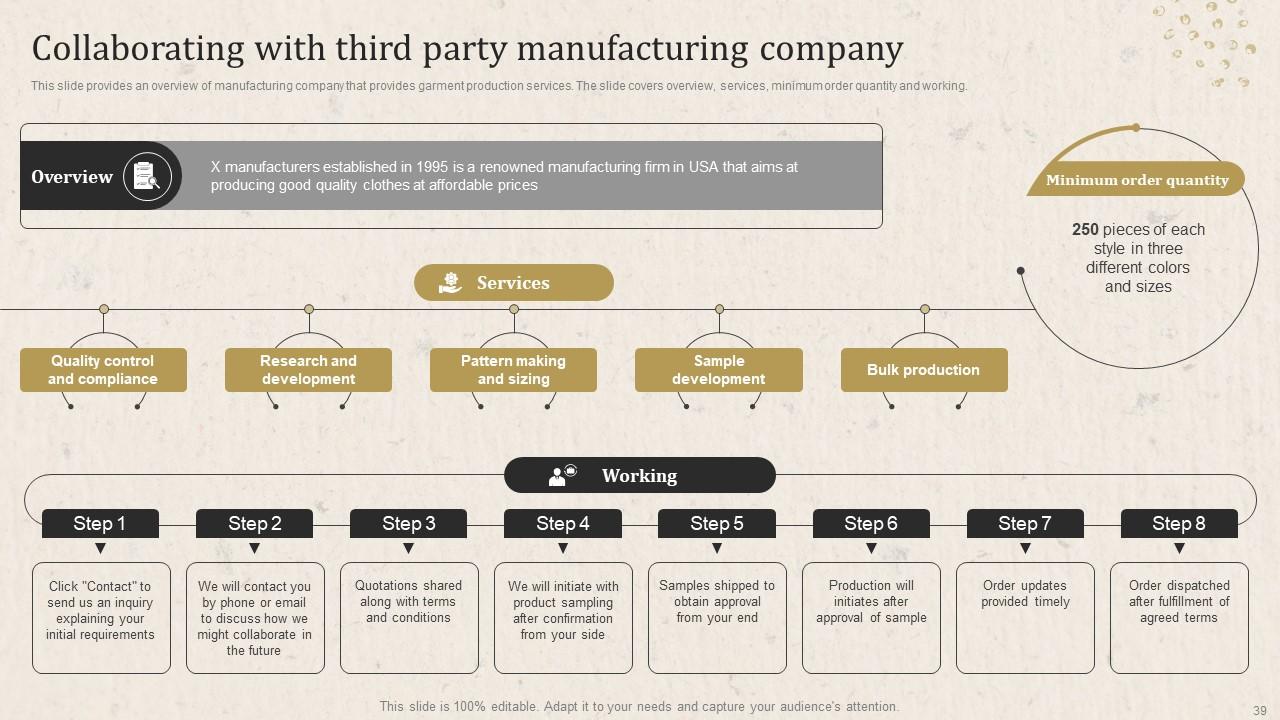
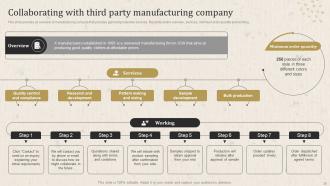
Slide 39: This slide provides an overview of manufacturing company that provides garment production services.
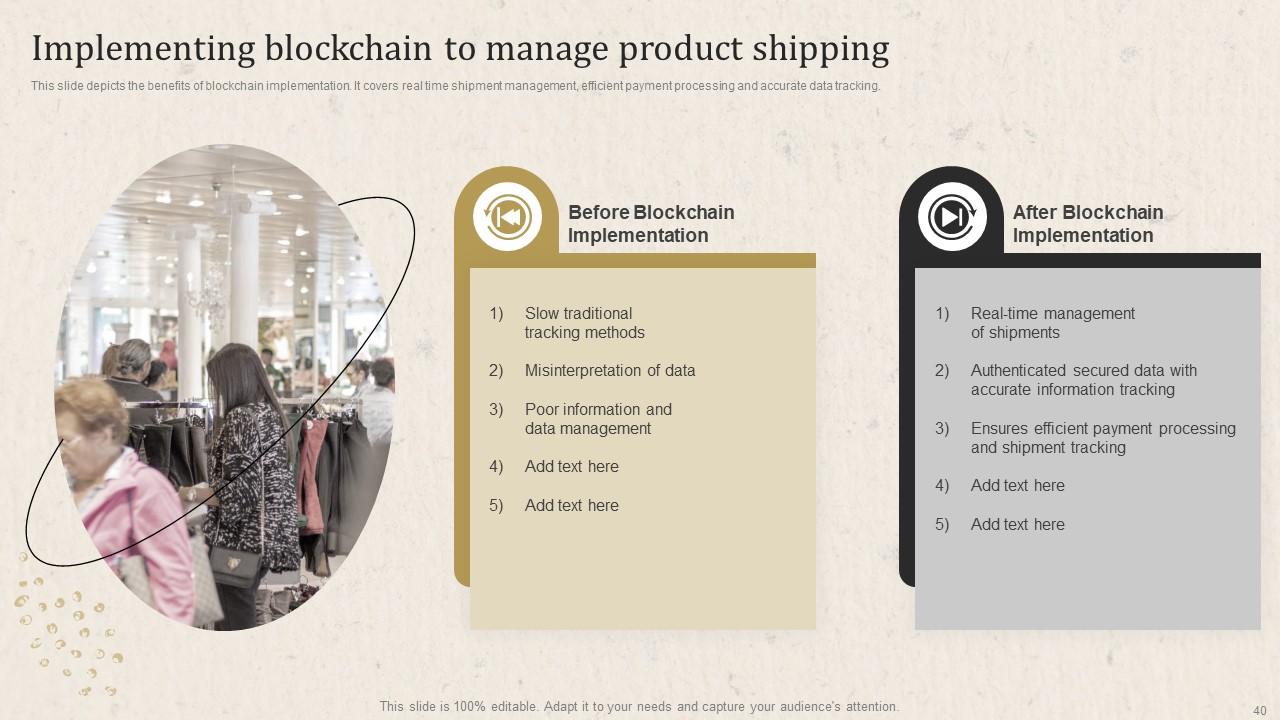
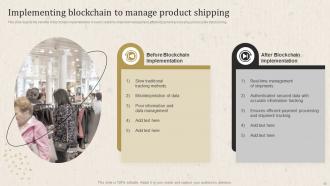
Slide 40: This slide depicts the benefits of blockchain implementation.
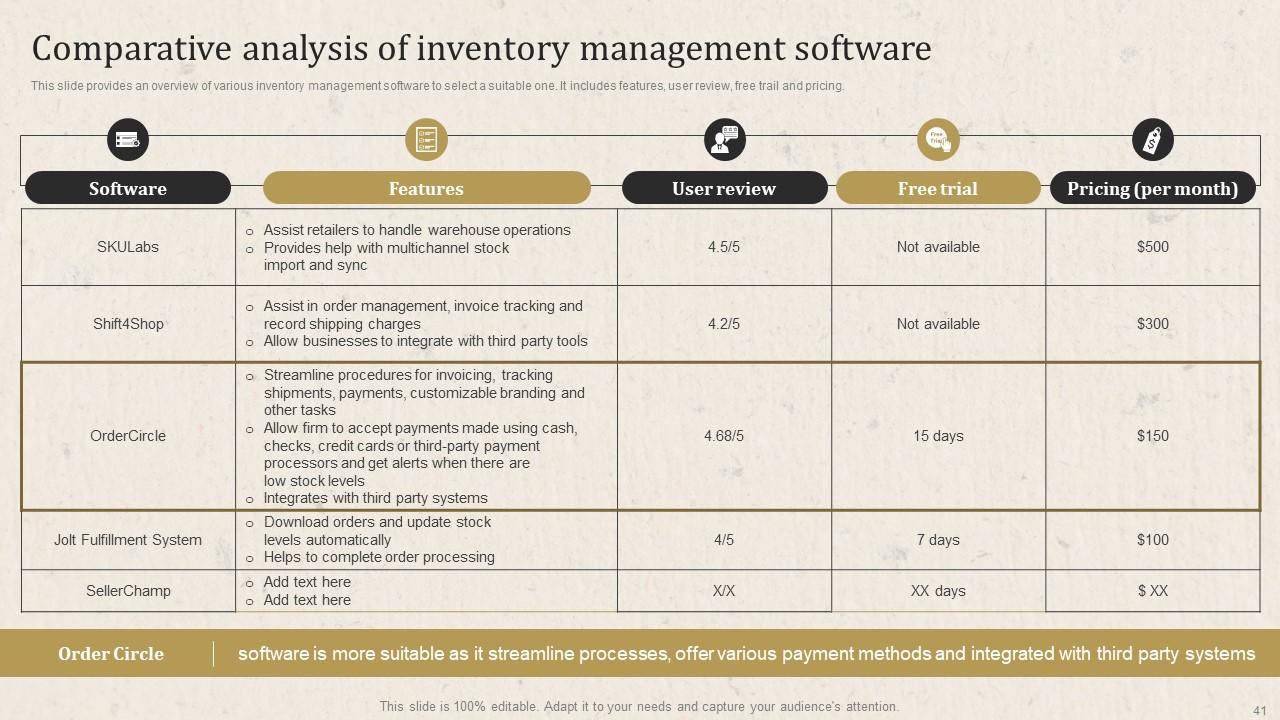
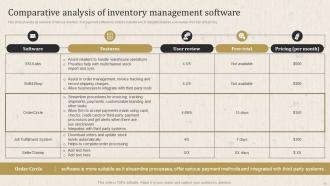
Slide 41: This slide deals with the Comparative analysis of inventory management software.
Slide 42: This slide incorporates the Title for the Ideas to be covered in the upcoming template.
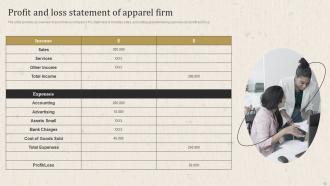
Slide 43: The slide provides an overview of ecommerce company’s P/L statement.
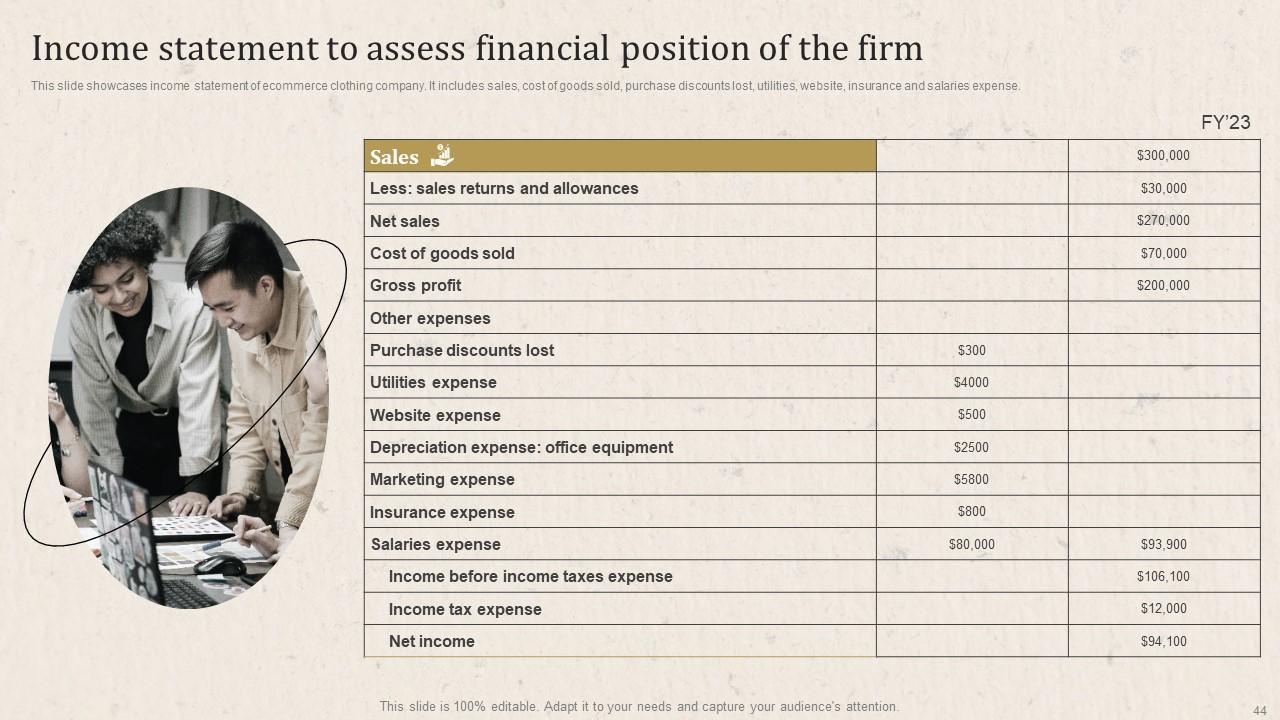
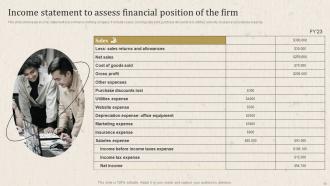
Slide 44: This slide represents the Income statement to assess financial position of the firm.
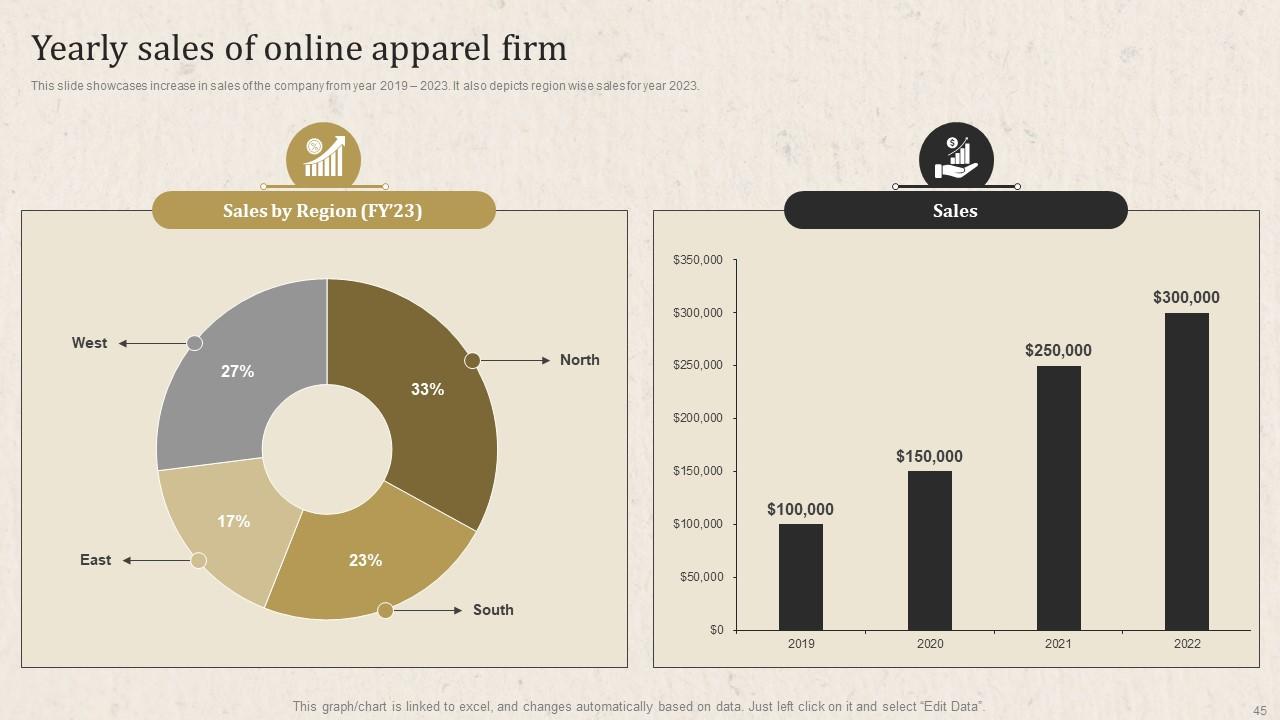
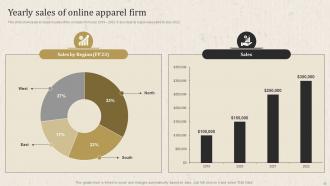
Slide 45: This slide showcases increase in sales of the company from year 2019 - 2022.
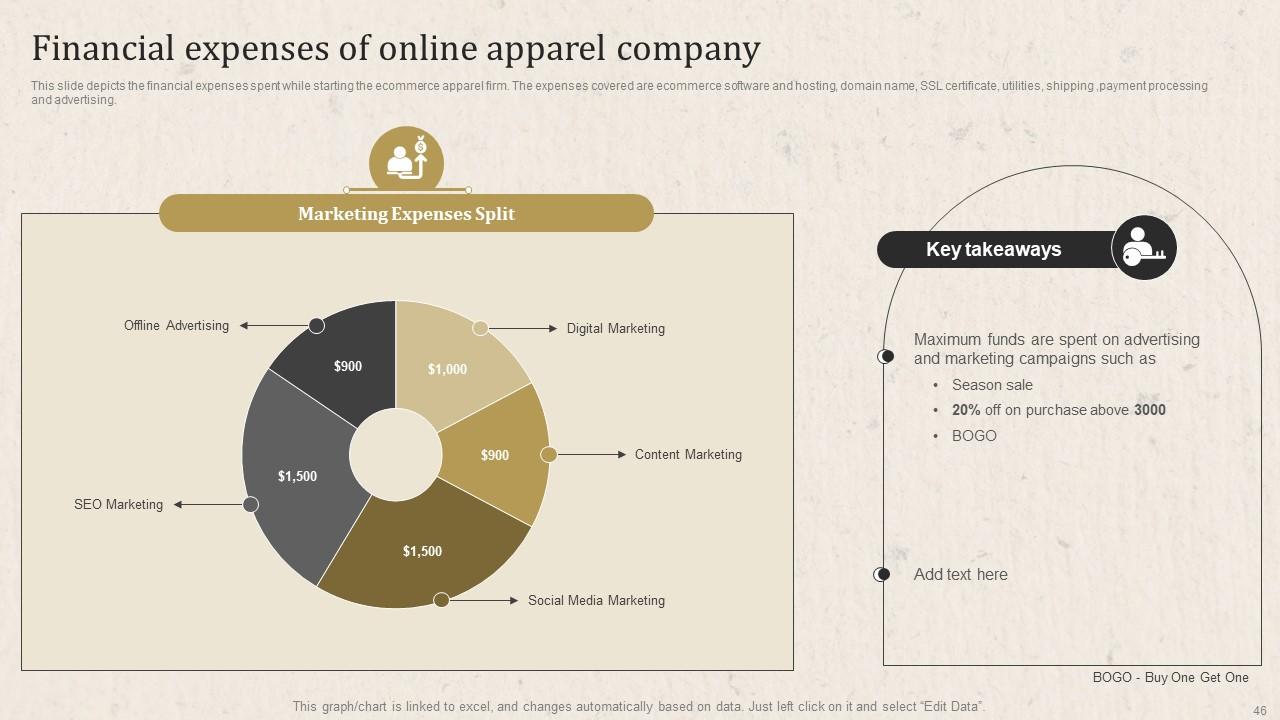
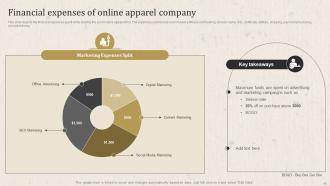
Slide 46: This slide depicts the financial expenses spent while starting the ecommerce apparel firm.
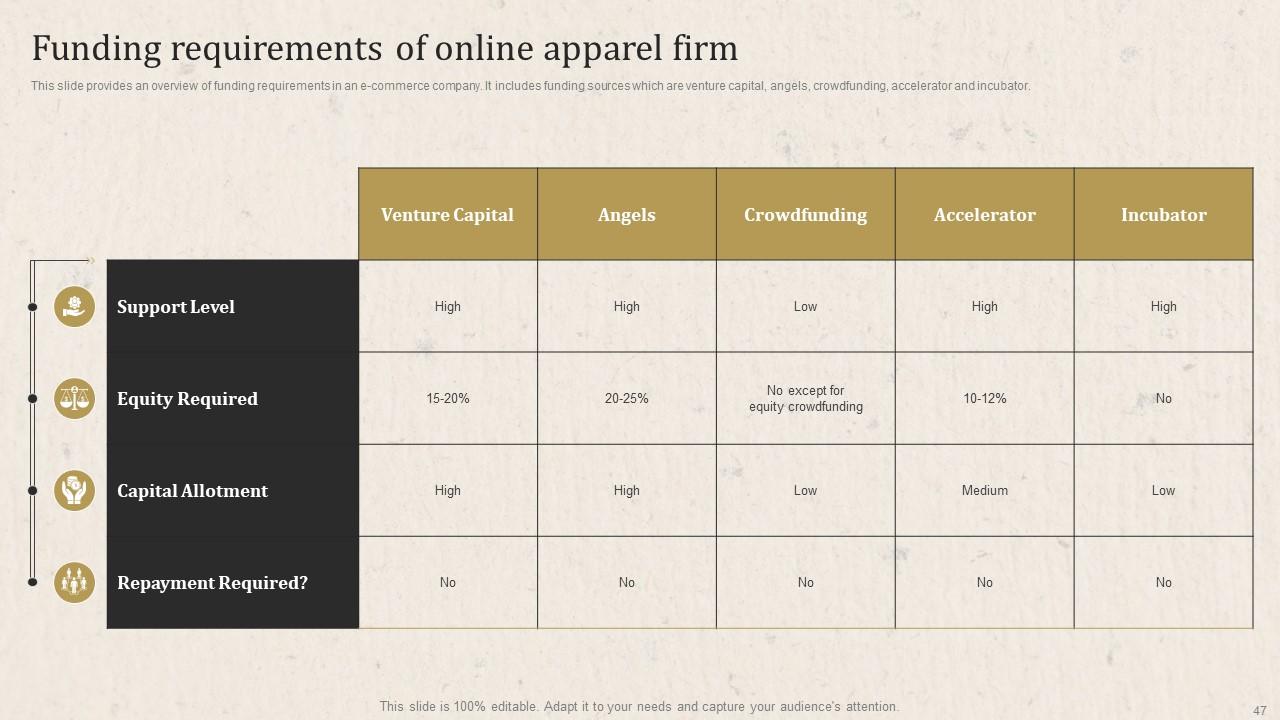
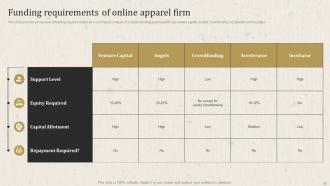
Slide 47: This slide provides an overview of funding requirements in an e-commerce company.
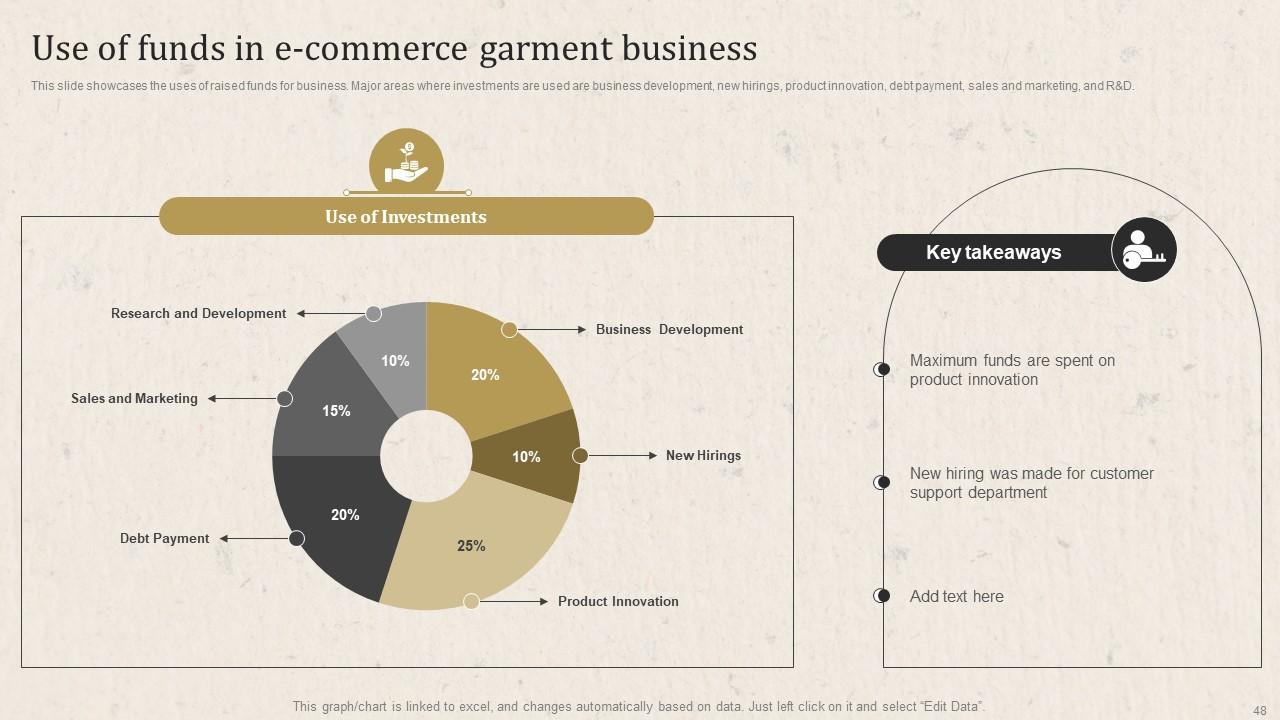
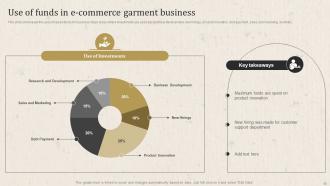
Slide 48: This slide displays the uses of raised funds for business.
Slide 49: This is the Icons slide containing all the Icons used in the plan.
Slide 50: This slide is used for depicting the Additional information.
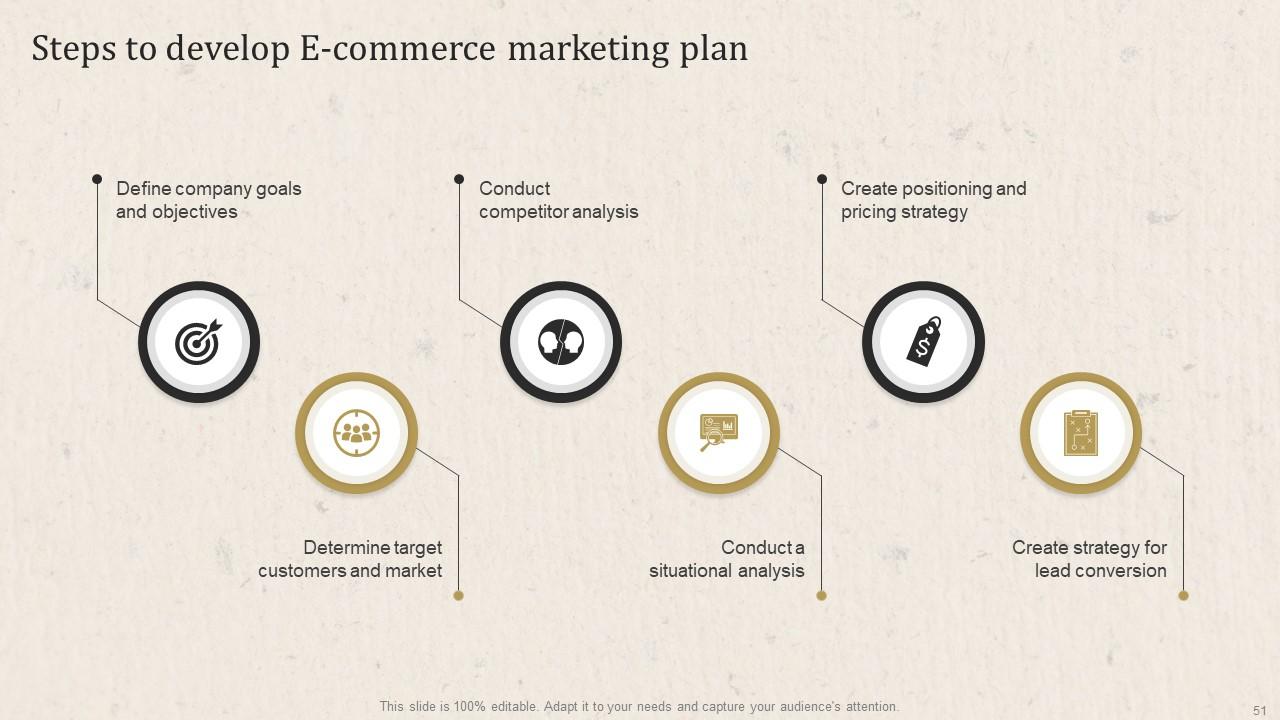
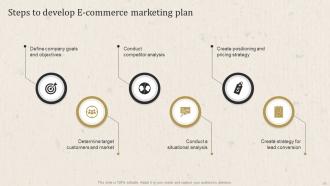
Slide 51: This slide reveals the Steps to develop e-commerce marketing plan.
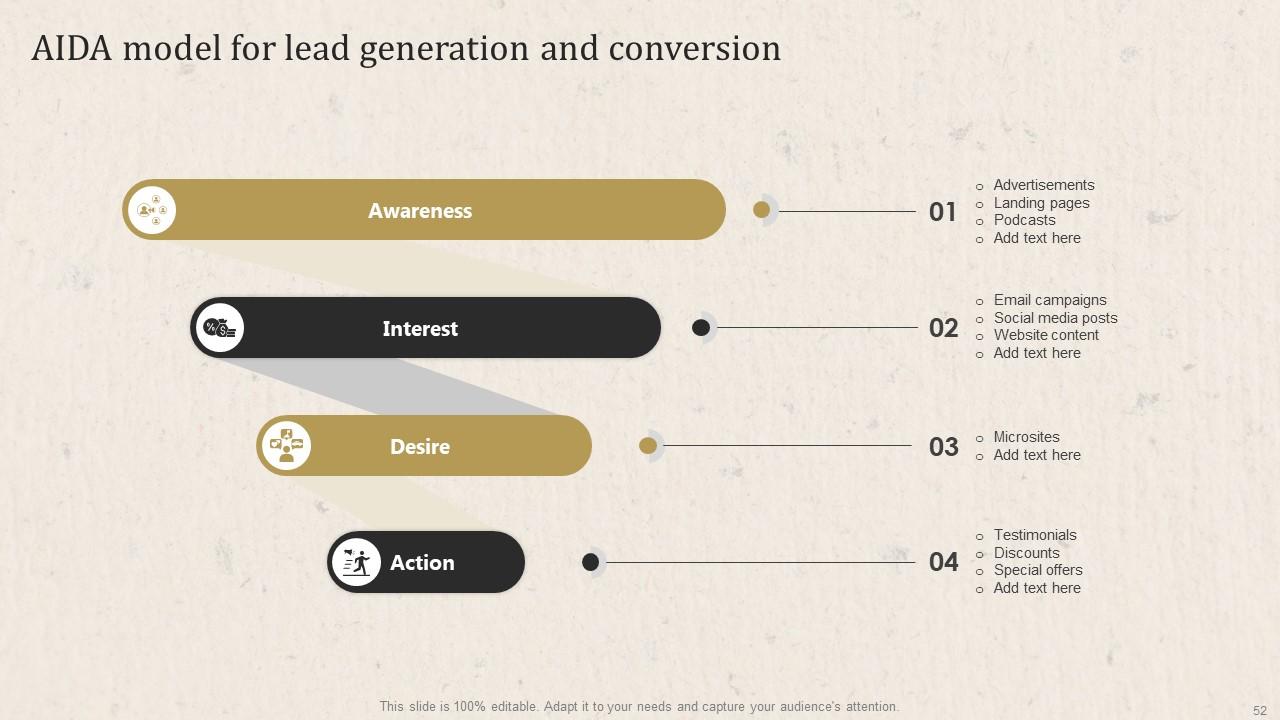
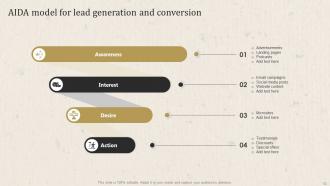
Slide 52: This sid epresents the AIDA model for lead generation and conversion.
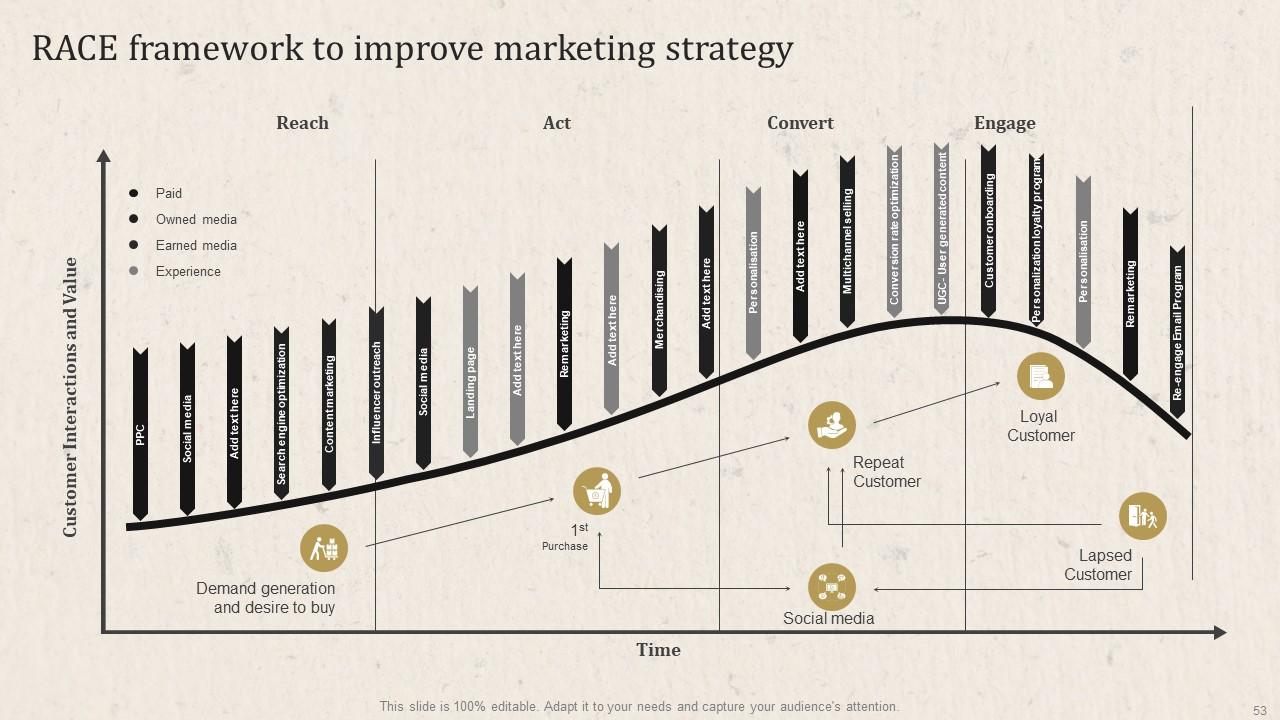
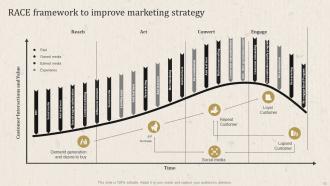
Slide 53: This slide illustrates the RACE framework to improve marketing strategy.
Slide 54: This is the About us slide for showcasing company related information.
Slide 55: This is Our Team slide with names and designation.
Slide 56: This is Our Mission slide with related imagery and text.
Slide 57: This slide provides 30 60 90 Days Plan with text boxes.
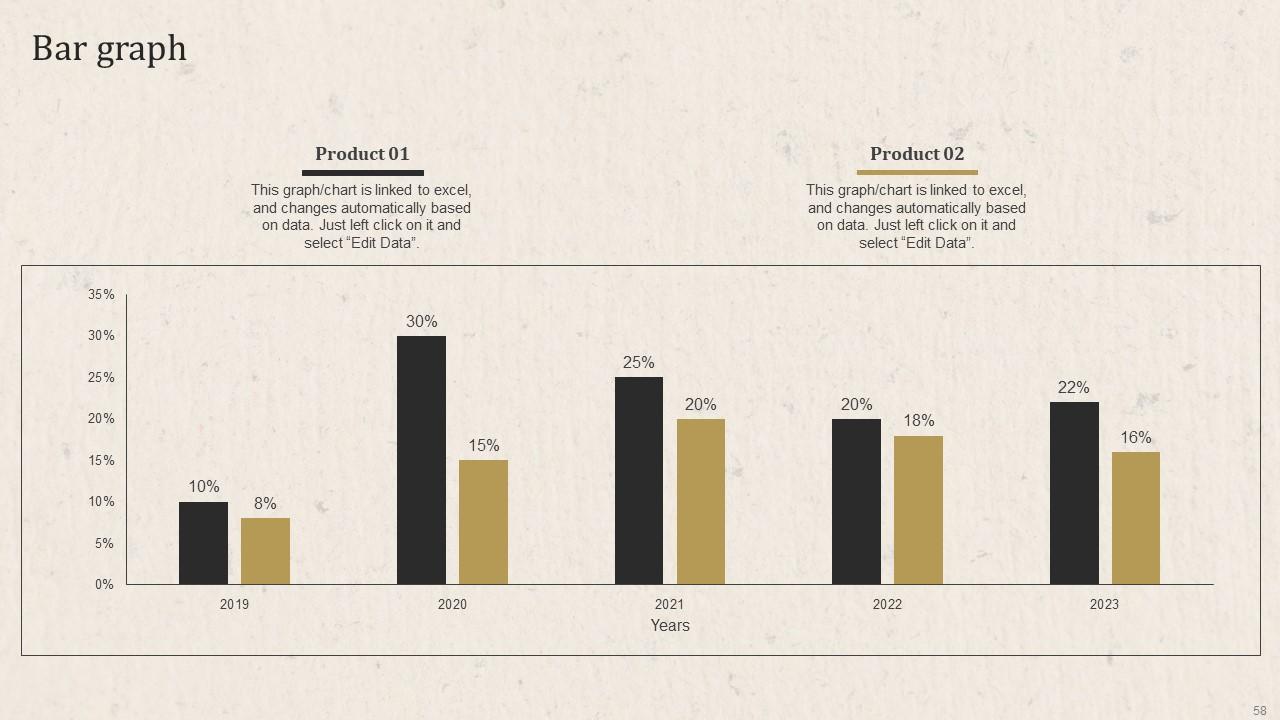
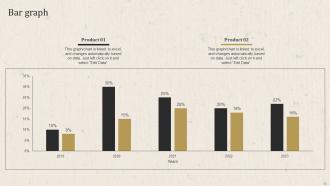
Slide 58: This slide presents Bar chart with two products comparison.
Slide 59: This is a Thank You slide with address, contact numbers and email address.
Apparel Business Operational Plan To Streamline Processes Powerpoint Presentation Slides with all 64 slides:
Use our Apparel Business Operational Plan To Streamline Processes Powerpoint Presentation Slides to effectively help you save your valuable time. They are readymade to fit into any presentation structure.
-
“I always have a wonderful experience with SlideTeam. It's my ""go to"" when I need a template.”
-
Easily Understandable slides.
