


Apples Branding Strategy To Gain Competitive Edge Branding CD V
Our PowerPoint presentation Apples branding strategy to gain competitive edge showcases Apples brand story and how it has become a market leader through its innovative solutions. The deck presents Apples brand identity as a unique character with a clear vision of consistently developing solutions that change human lives. It also highlights Apples overall brand progress as a global leader with optimum brand value, which is managed through advertising initiatives, product lines, and marketing mix. Our Apple story presentation covers the details of Apples leveraged customer-product connection, brand architecture, archetypes, and brand valuation assessment. Moreover, it highlights the key members associated with the brand and the role of Apple leaders in ensuring a consistent innovation environment. Our 100 percent editable and customizable presentation is perfect for anyone looking to understand Apples branding strategy and how it has helped the company gain a competitive edge. Get access to our highly researched and skillfully designed product today.
Our PowerPoint presentation Apples branding strategy to gain competitive edge showcases Apples brand story and how it has b..


























-

- Google Slides is a new FREE Presentation software from Google.
- All our content is 100% compatible with Google Slides.
- Just download our designs, and upload them to Google Slides and they will work automatically.
- Amaze your audience with SlideTeam and Google Slides.
-

Want Changes to This PPT Slide? Check out our Presentation Design Services
-

- WideScreen Aspect ratio is becoming a very popular format. When you download this product, the downloaded ZIP will contain this product in both standard and widescreen format.
-

- Some older products that we have may only be in standard format, but they can easily be converted to widescreen.
- To do this, please open the SlideTeam product in Powerpoint, and go to
- Design ( On the top bar) -> Page Setup -> and select "On-screen Show (16:9)” in the drop down for "Slides Sized for".
- The slide or theme will change to widescreen, and all graphics will adjust automatically. You can similarly convert our content to any other desired screen aspect ratio.
Compatible With Google Slides

Get This In WideScreen
You must be logged in to download this presentation.


Do you want to remove this product from your favourites?
PowerPoint presentation slides
Enthrall your audience with this Apples Branding Strategy To Gain Competitive Edge Powerpoint Presentation Slides Branding CD. Increase your presentation threshold by deploying this well-crafted template. It acts as a great communication tool due to its well-researched content. It also contains stylized icons, graphics, visuals etc, which make it an immediate attention-grabber. Comprising seventy three slides, this complete deck is all you need to get noticed. All the slides and their content can be altered to suit your unique business setting. Not only that, other components and graphics can also be modified to add personal touches to this prefabricated set.

People who downloaded this PowerPoint presentation also viewed the following :
Content of this Powerpoint Presentation
Slide 1: This slide introduces Apple’s Branding Strategy to Gain Competitive Edge. State your company name and begin.
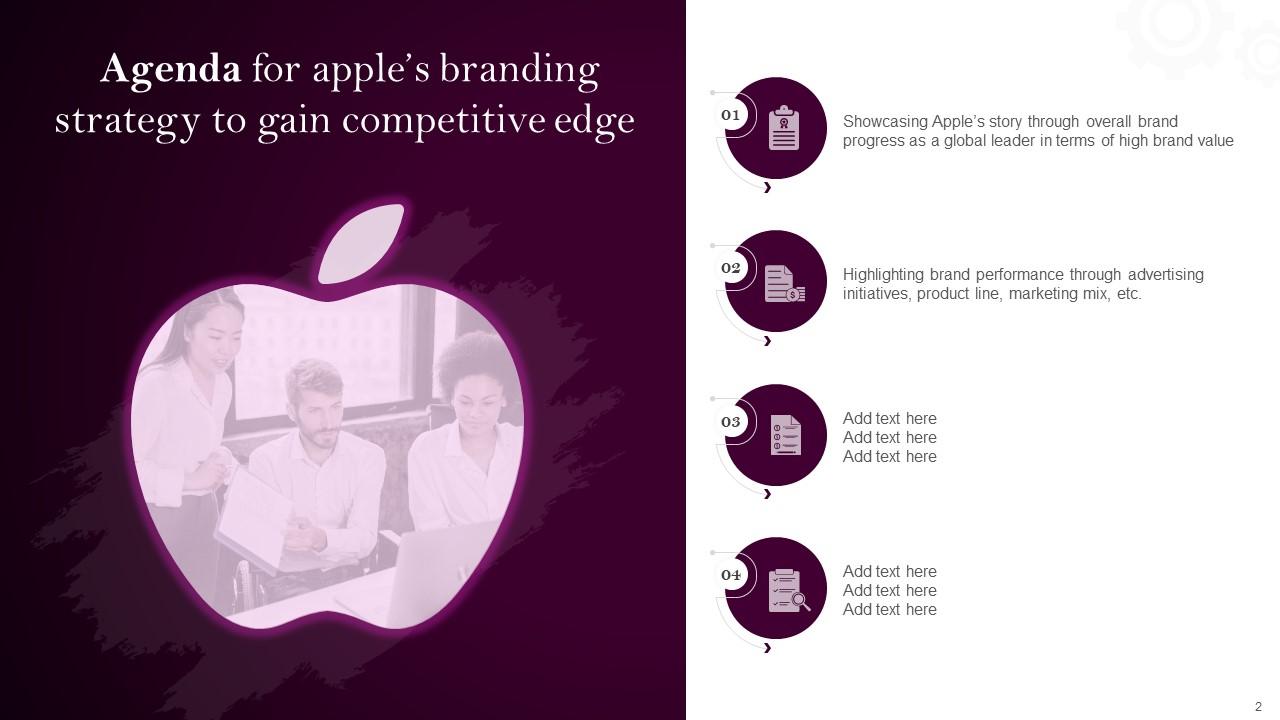
Slide 2: This slide states Agenda of the presentation.
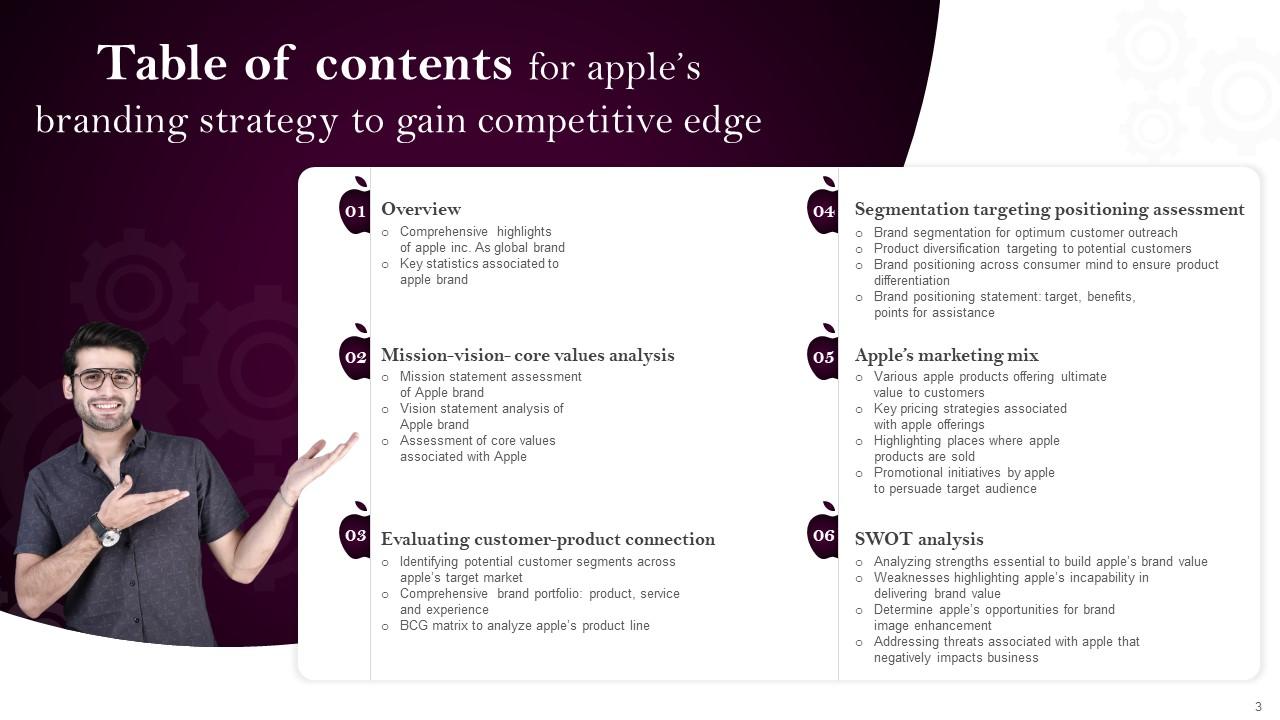
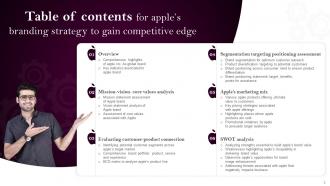
Slide 3: This slide shows Table of Content for the presentation.
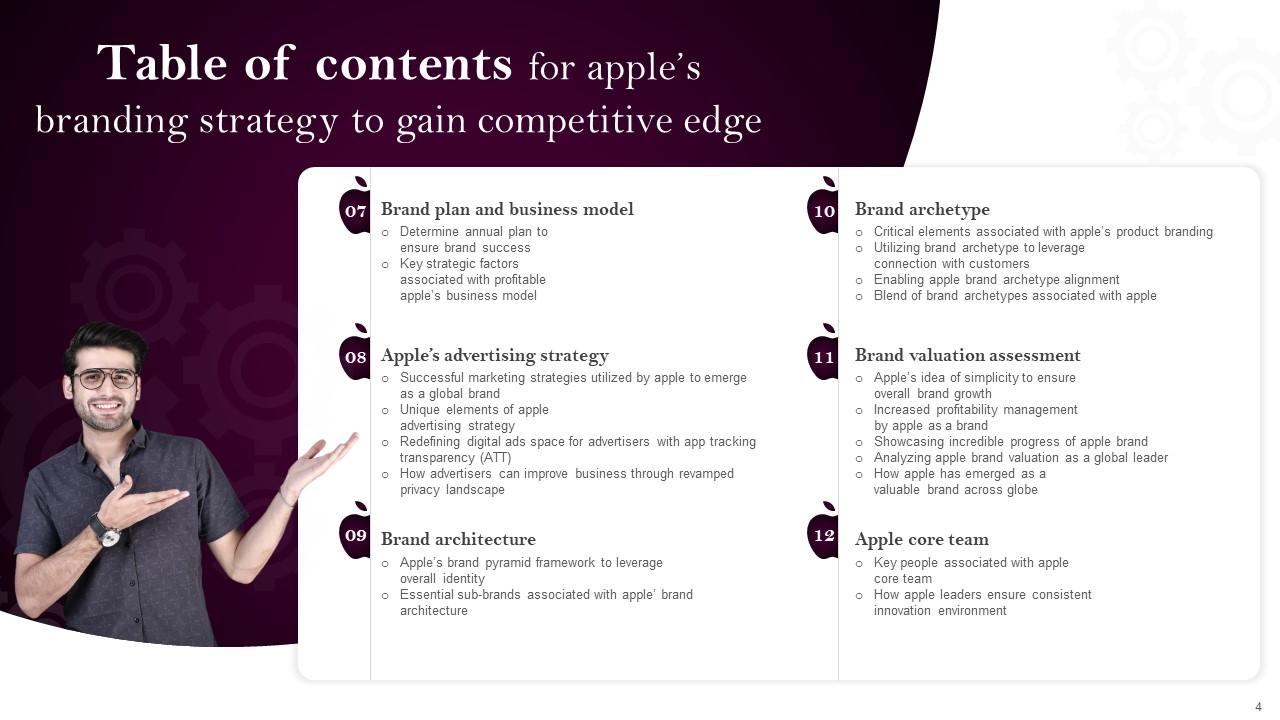
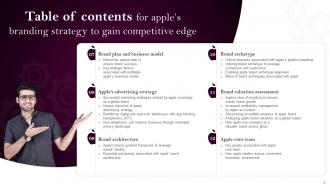
Slide 4: This is another slide continuing Table of Content for the presentation.
Slide 5: This slide highlights title for topics that are to be covered next in the template.
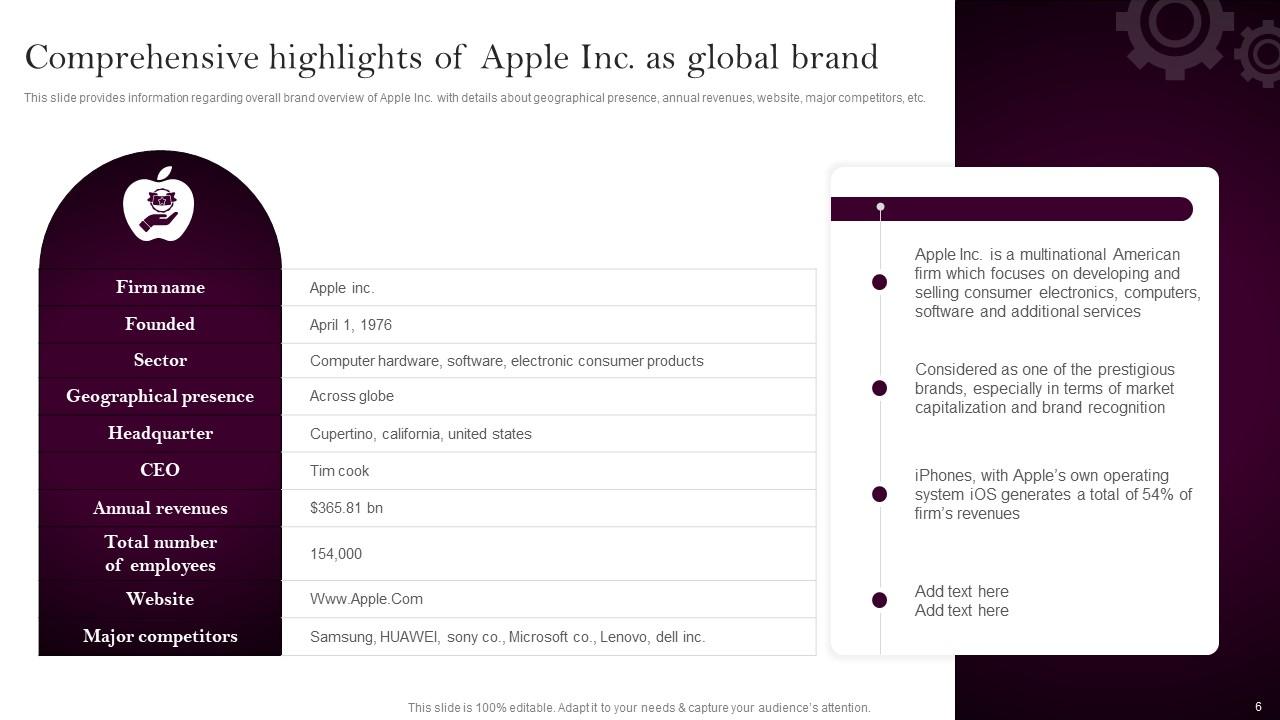
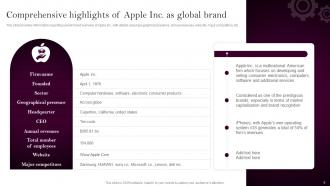
Slide 6: This slide presents Comprehensive highlights of Apple Inc. as global brand.
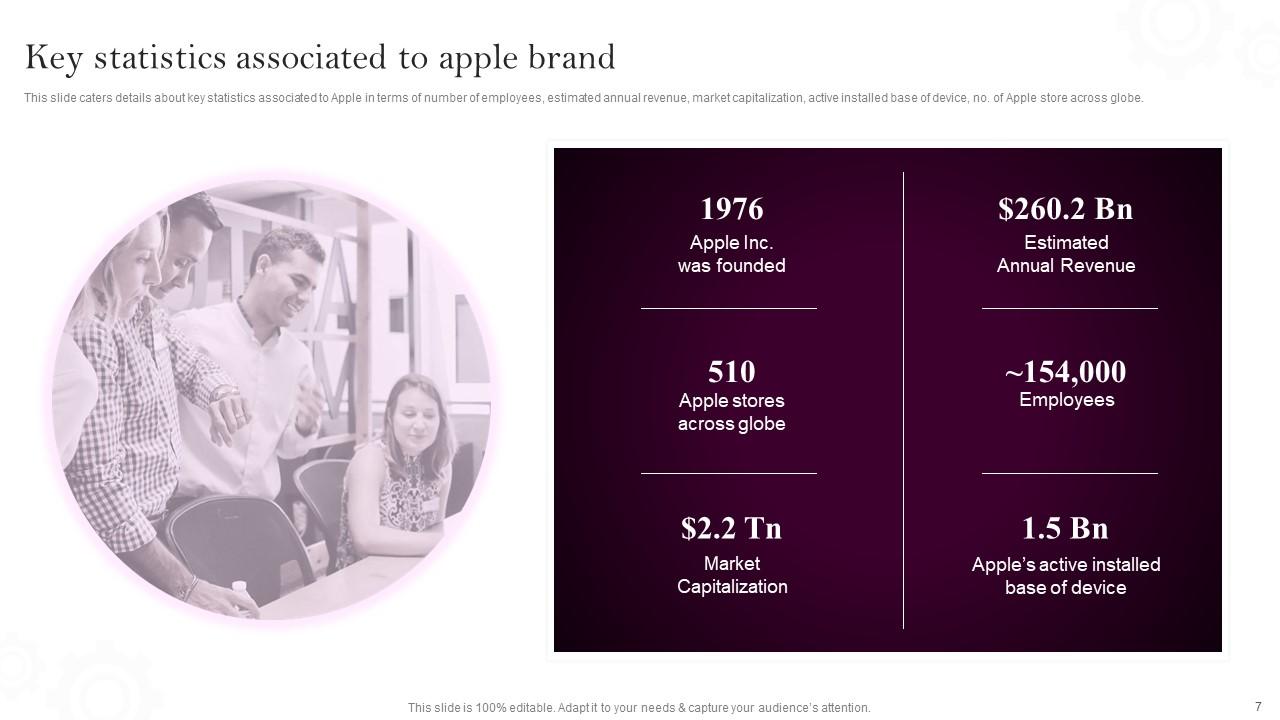
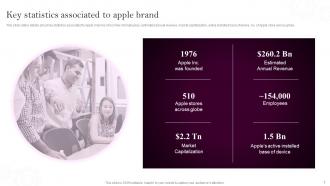
Slide 7: This slide displays Key statistics associated to Apple brand.
Slide 8: This slide highlights title for topics that are to be covered next in the template.
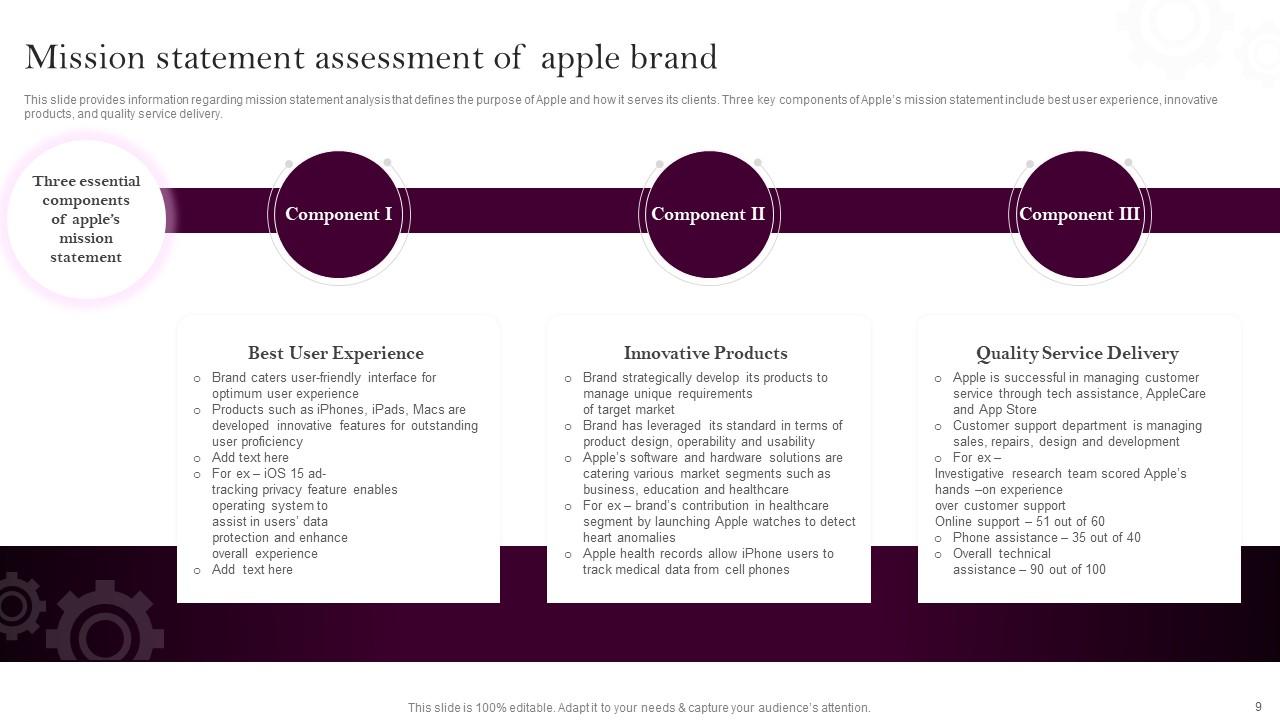
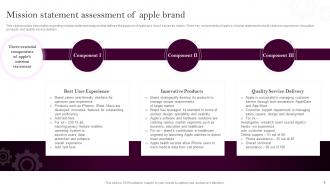
Slide 9: This slide represents Mission statement assessment of Apple brand.
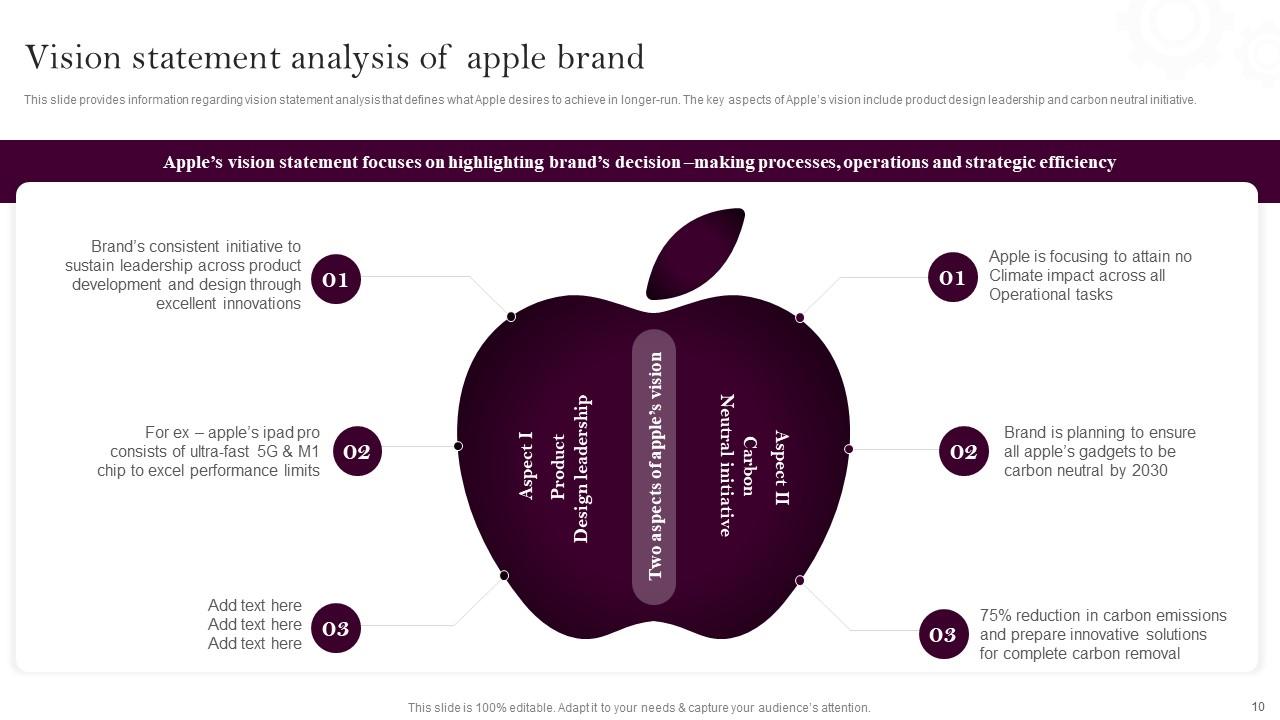
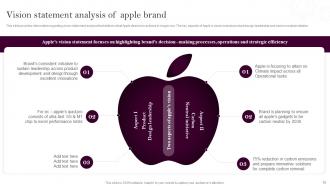
Slide 10: This slide showcases Vision statement analysis of Apple brand.
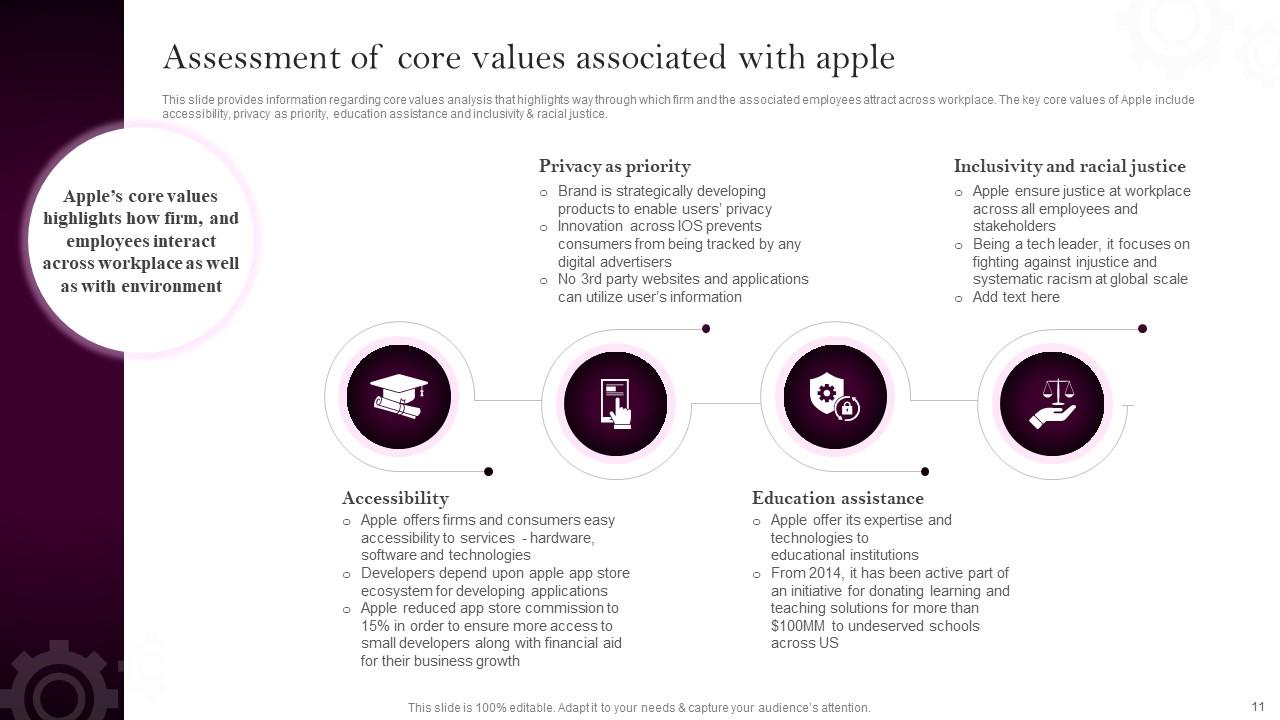
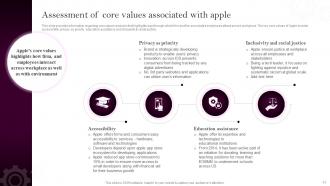
Slide 11: This slide shows Assessment of core values associated with Apple.
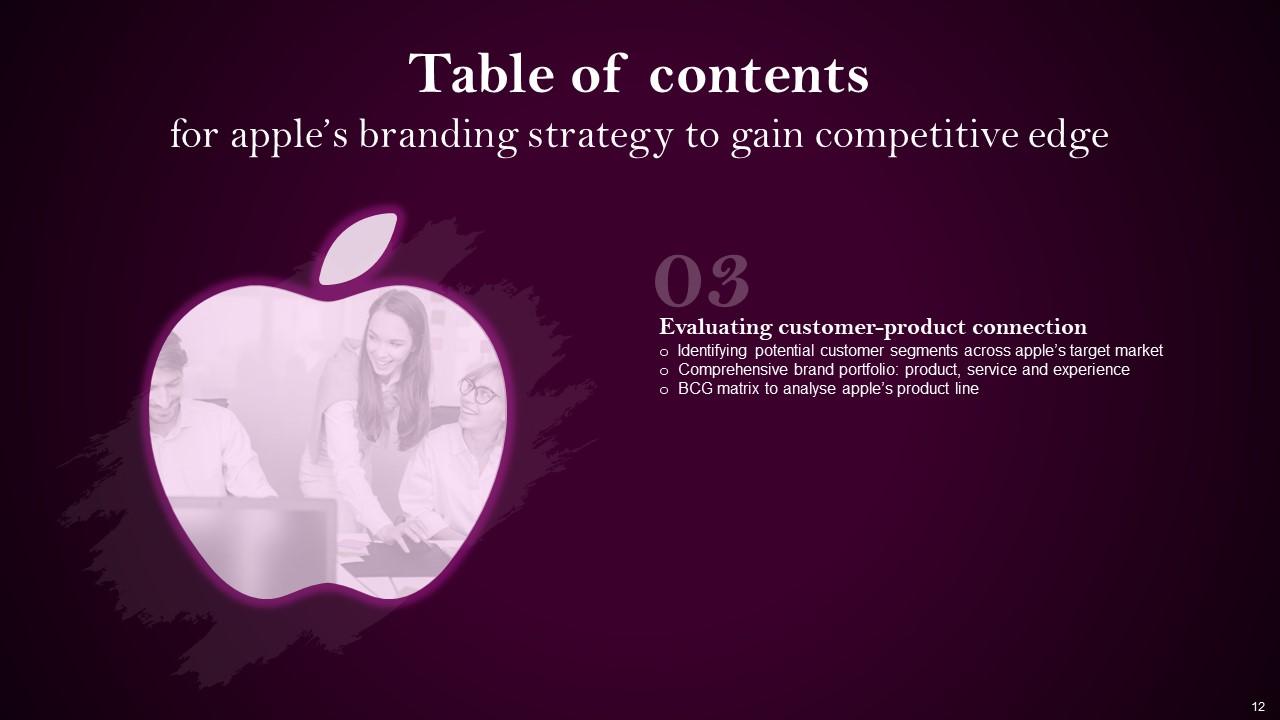
Slide 12: This slide highlights title for topics that are to be covered next in the template.
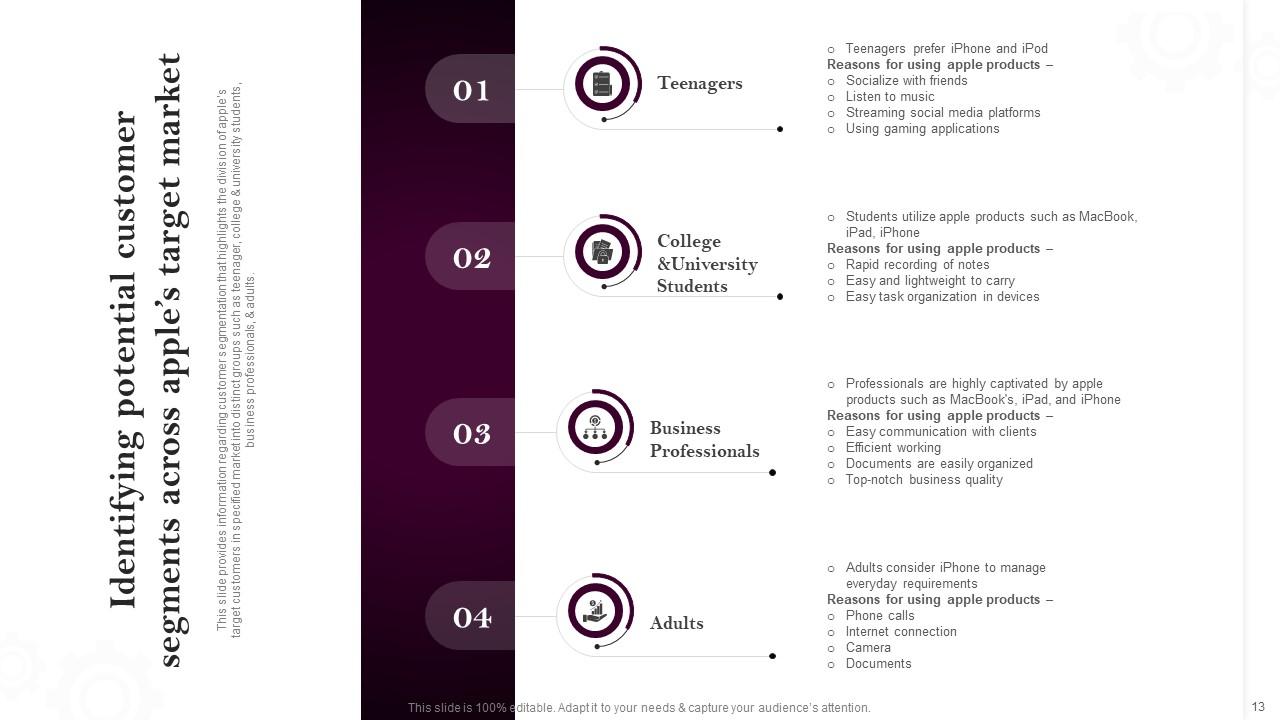
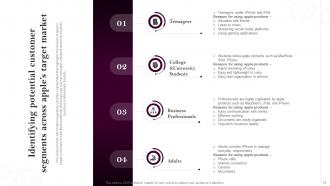
Slide 13: This slide presents Identifying potential customer segments across Apple’s target market.
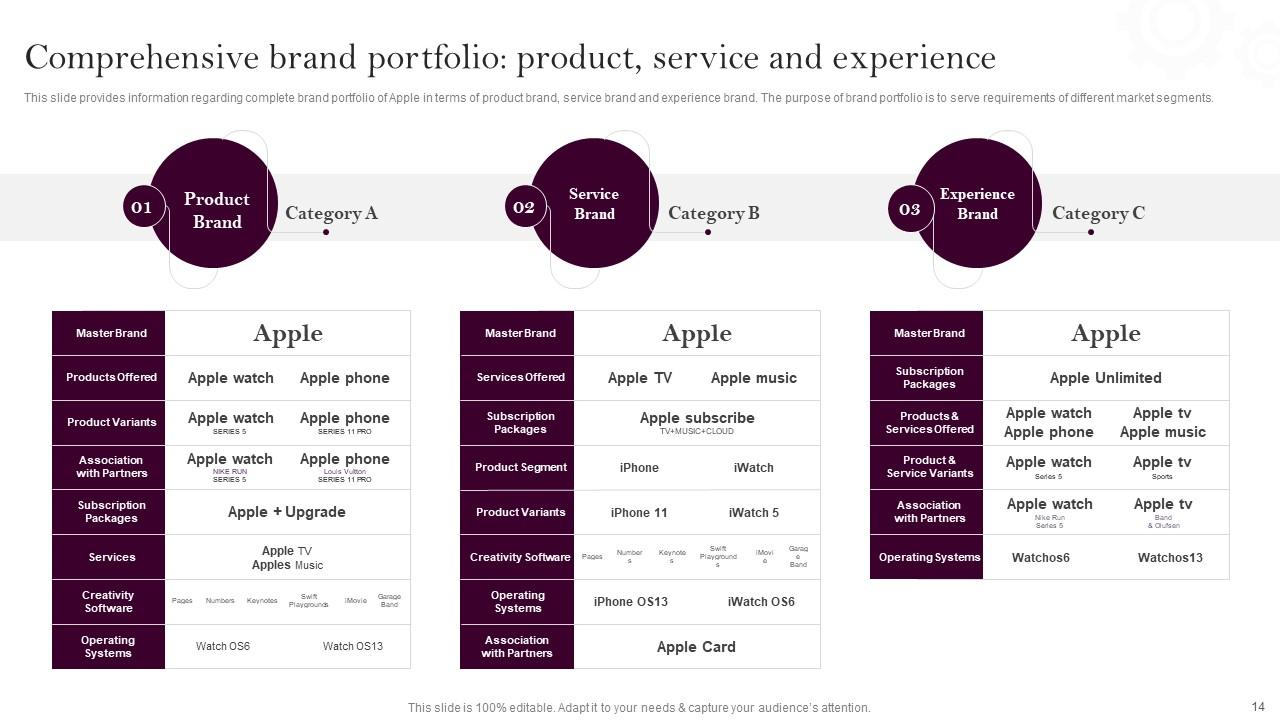
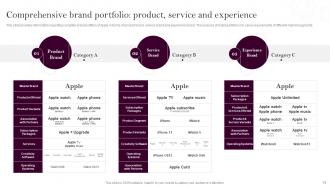
Slide 14: This slide displays Comprehensive brand portfolio: product, service and experience.
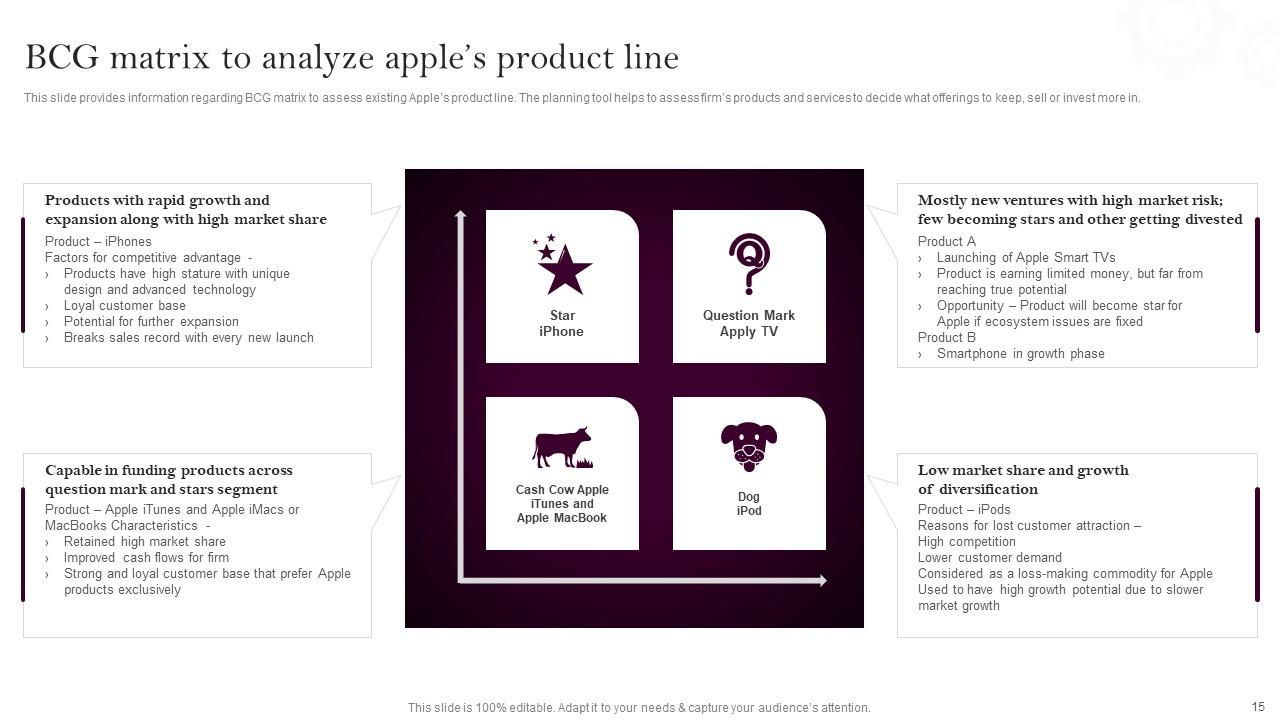
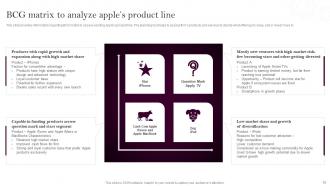
Slide 15: This slide represents BCG matrix to analyse Apple’s product line.
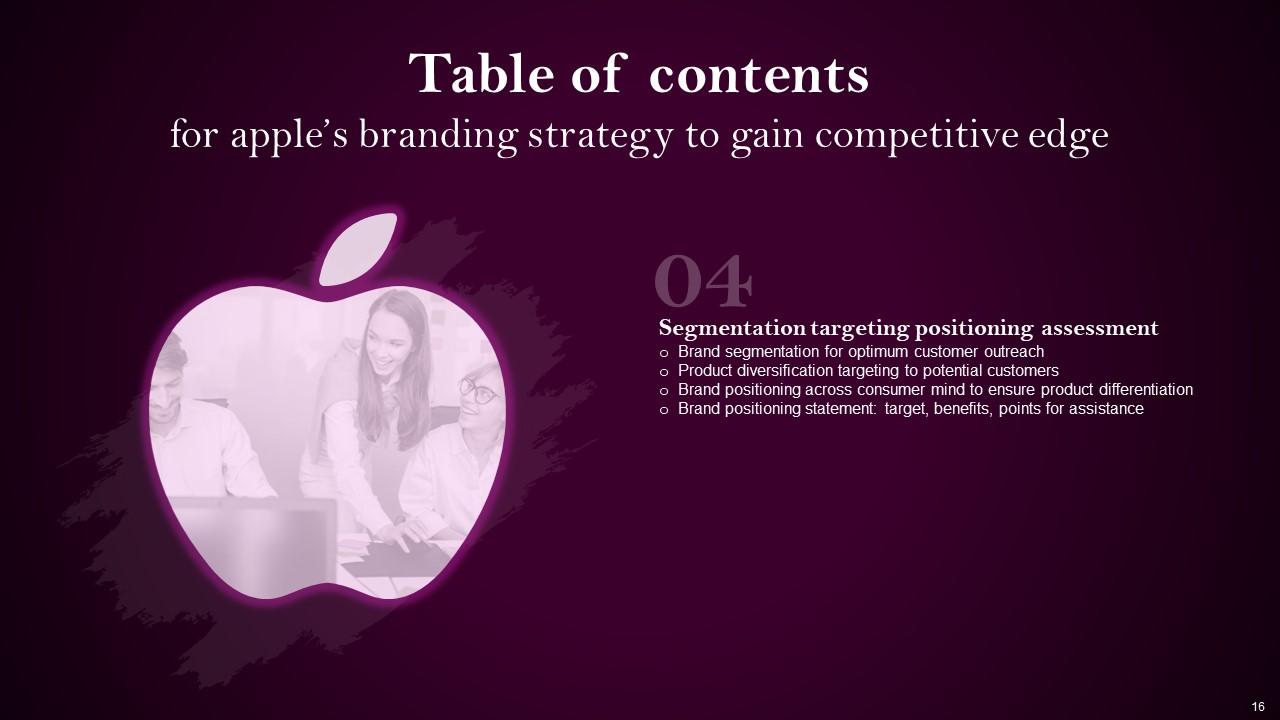
Slide 16: This slide highlights title for topics that are to be covered next in the template.
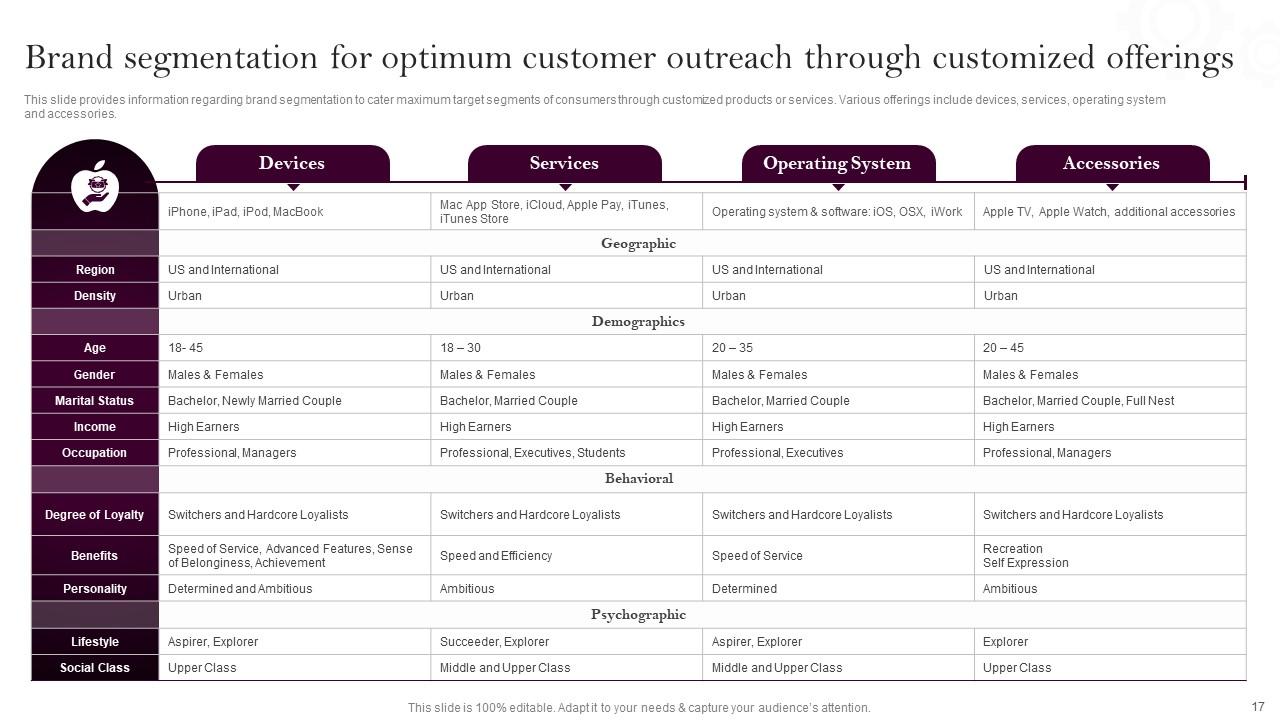
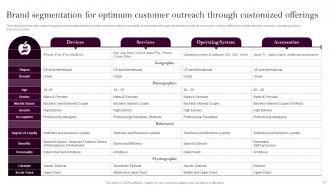
Slide 17: This slide showcases Brand segmentation for optimum customer outreach through customized offerings.
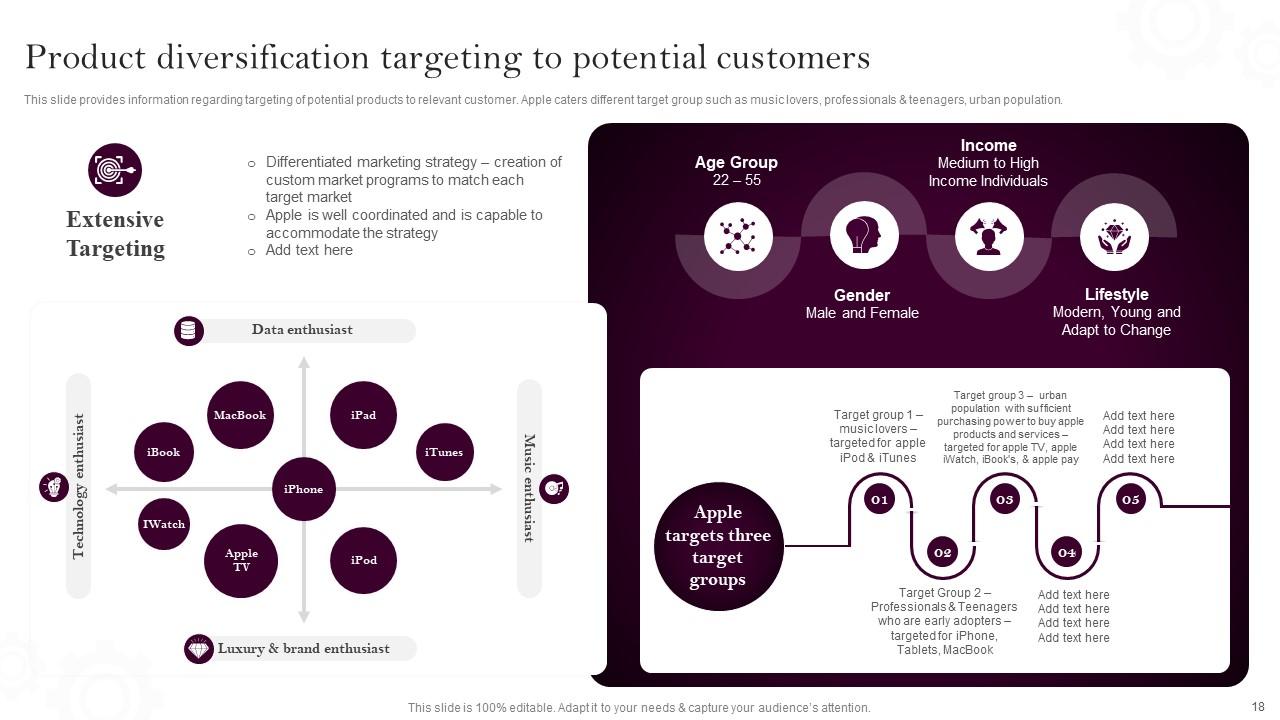
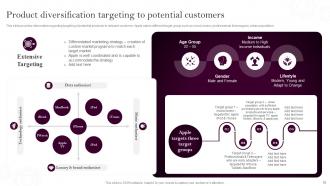
Slide 18: This slide shows Product diversification targeting to potential customers.
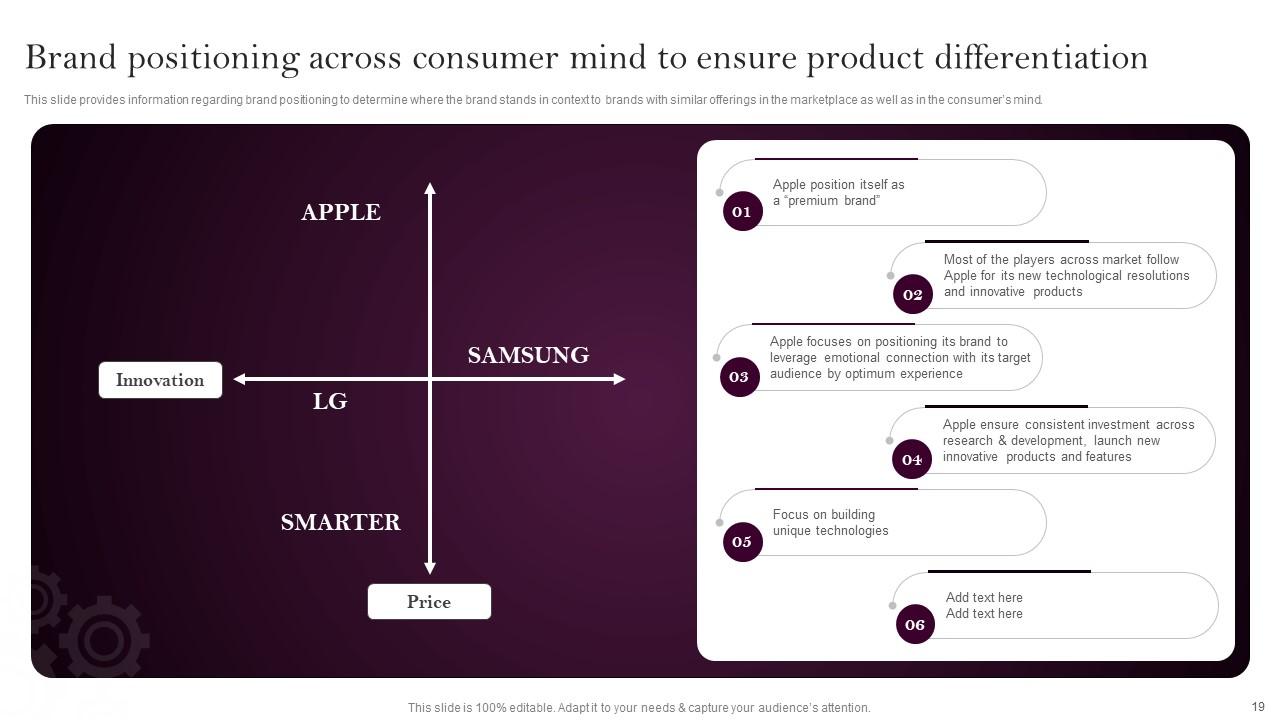
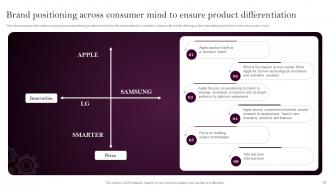
Slide 19: This slide presents Brand positioning across consumer mind to ensure product differentiation.
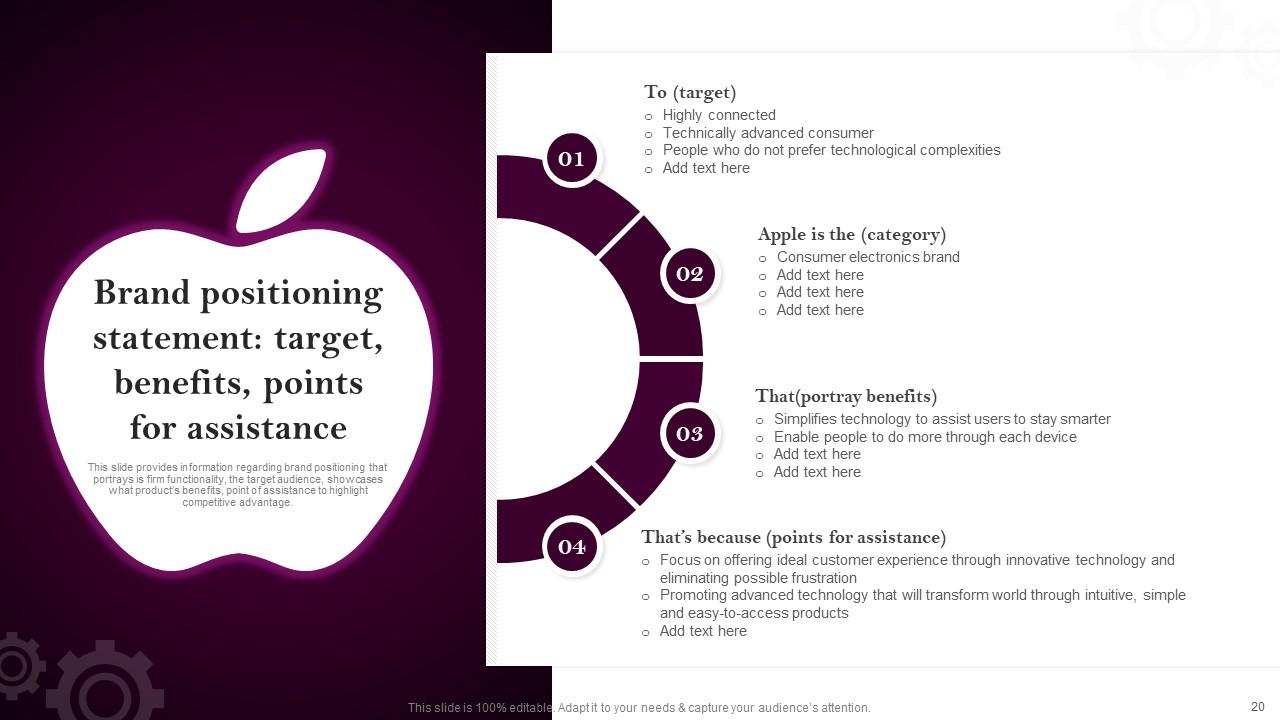
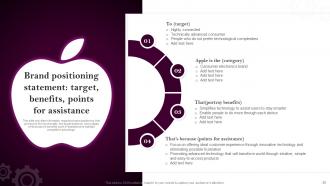
Slide 20: This slide provides information regarding brand positioning.
Slide 21: This slide highlights title for topics that are to be covered next in the template.
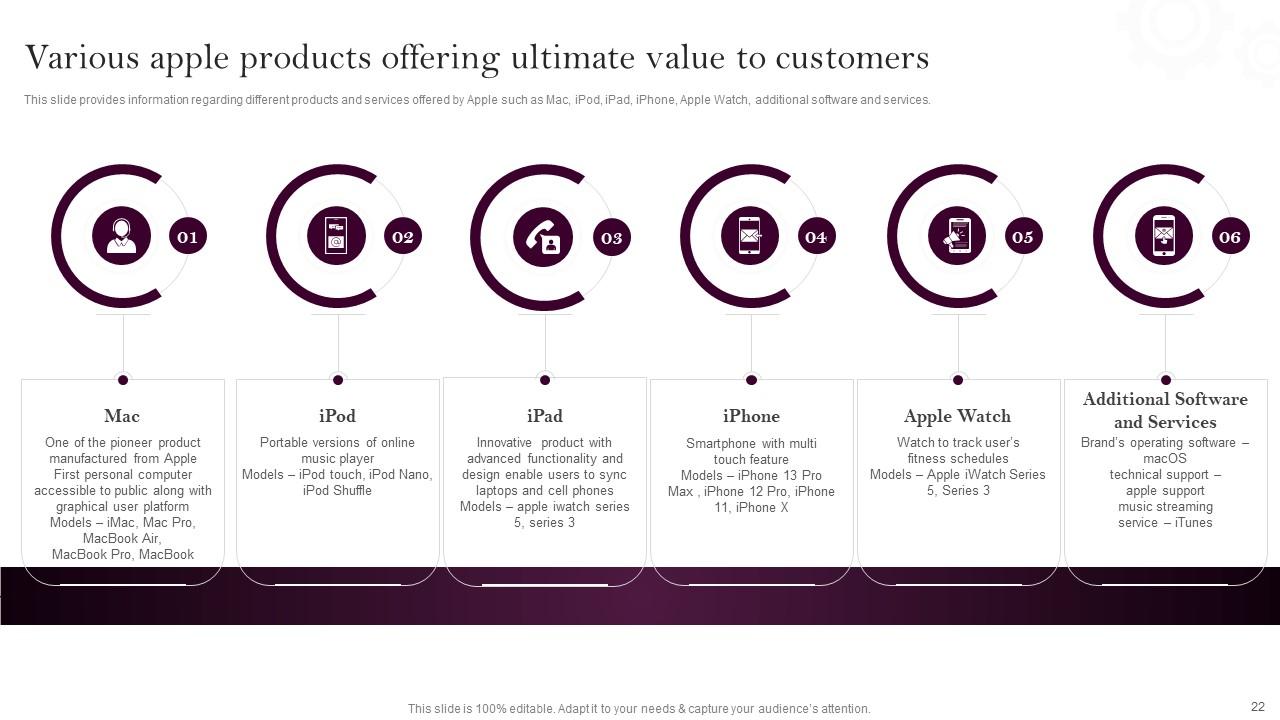
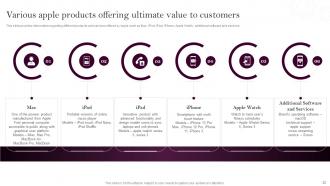
Slide 22: This slide displays Various Apple products offering ultimate value to customers.
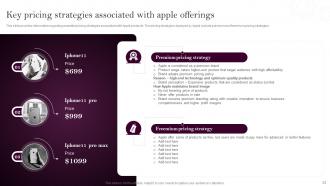
Slide 23: This slide represents Key pricing strategies associated with Apple offerings.
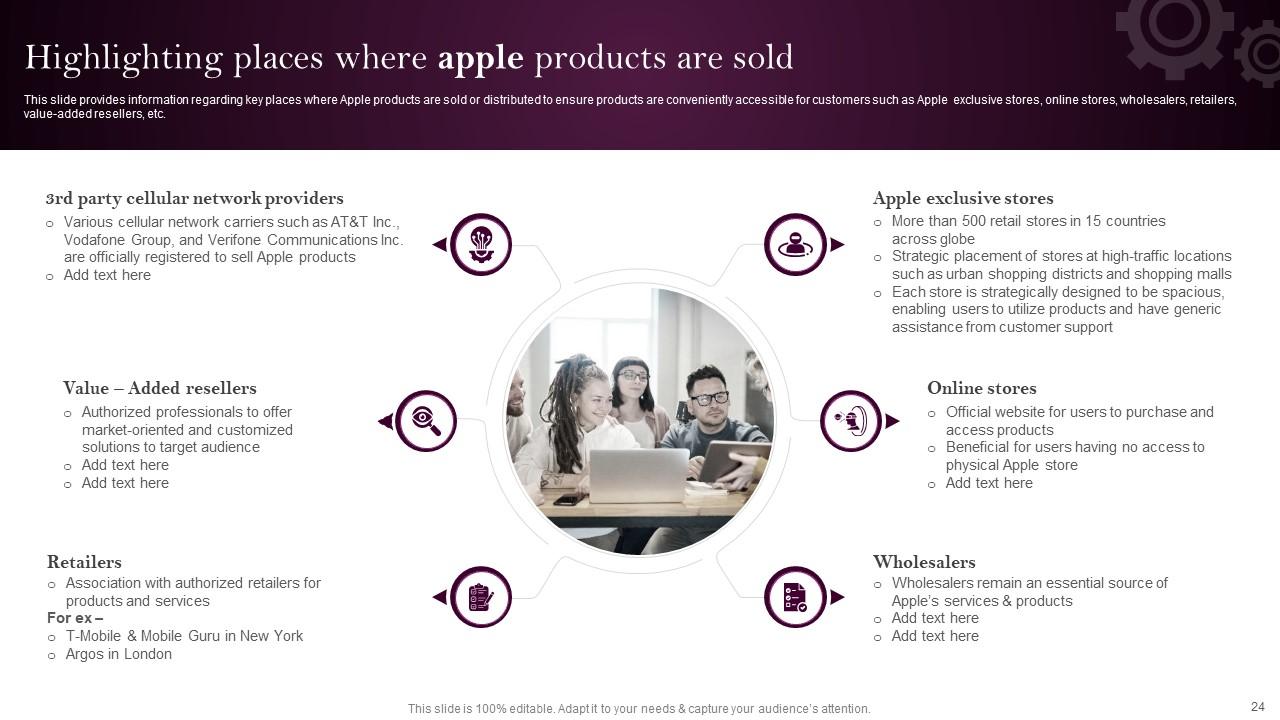
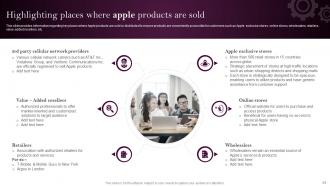
Slide 24: This slide showcases Highlighting places where Apple products are sold.
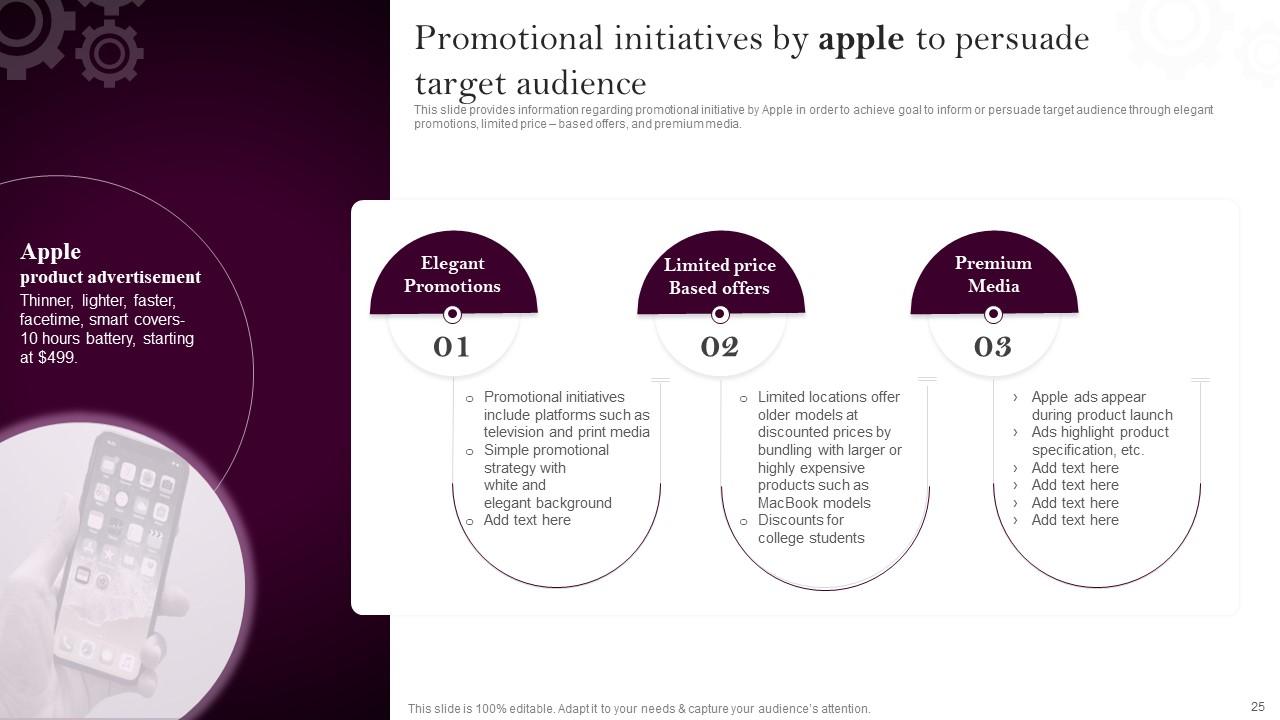
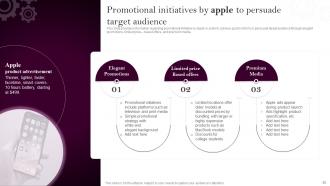
Slide 25: This slide shows Promotional initiatives by Apple to persuade target audience.
Slide 26: This slide highlights title for topics that are to be covered next in the template.
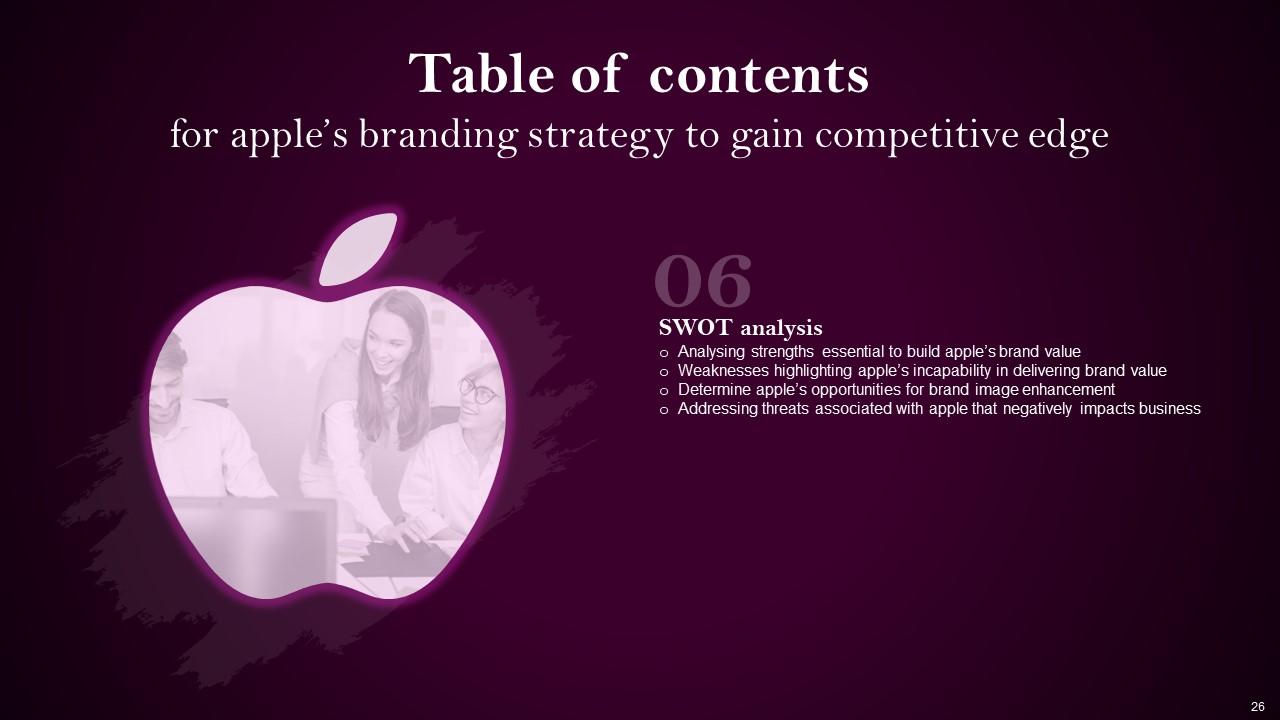
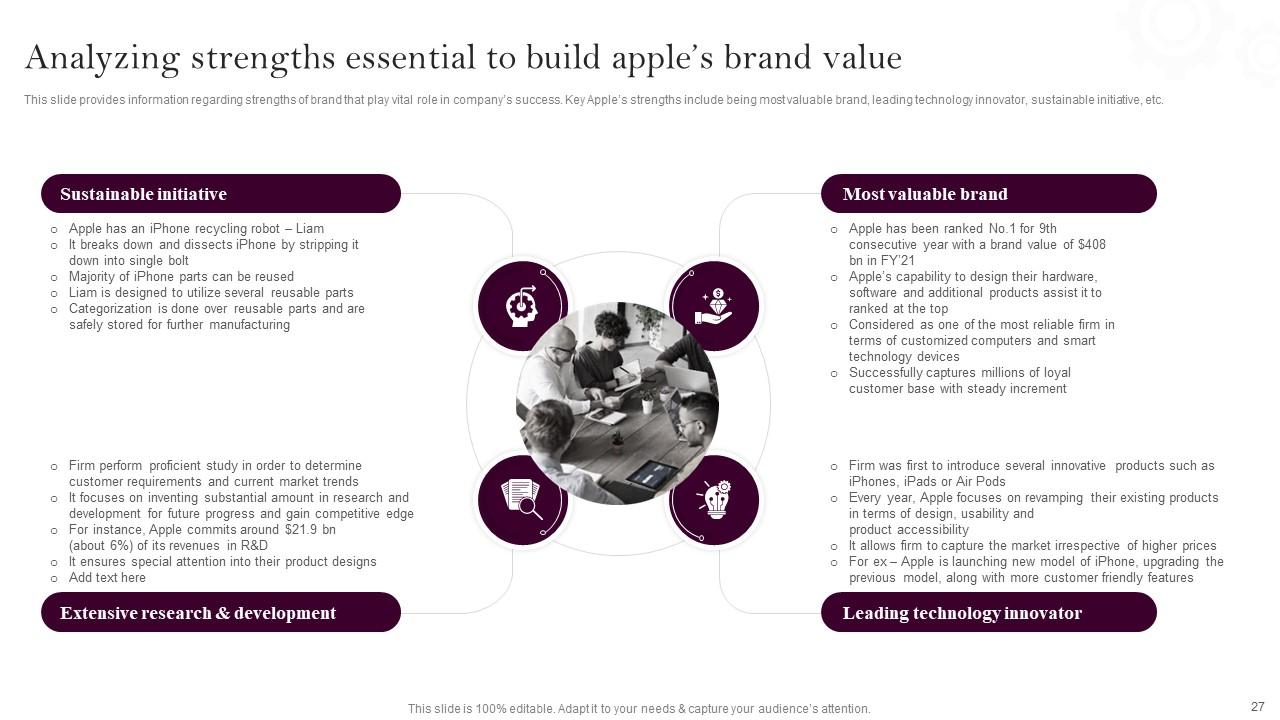
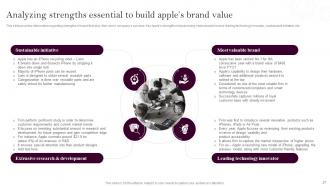
Slide 27: This slide presents Analysing strengths essential to build Apple’s brand value.
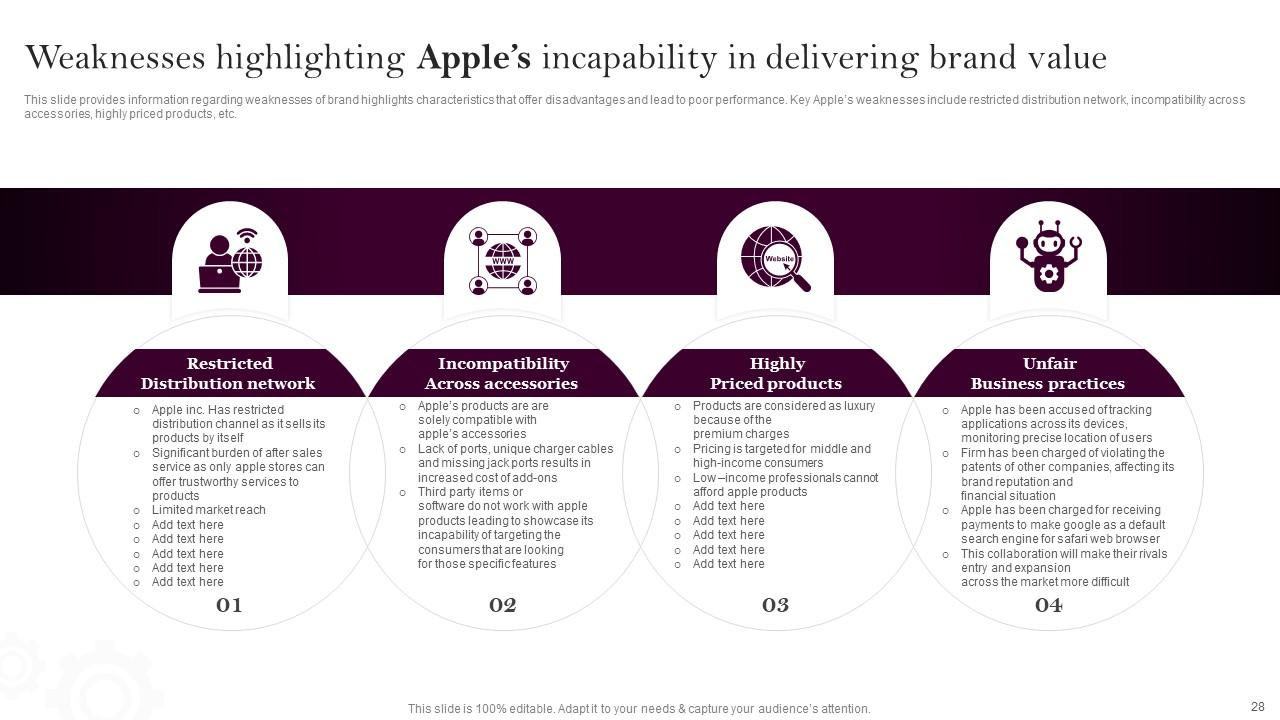
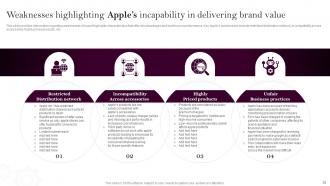
Slide 28: This slide displays Weaknesses highlighting Apple’s incapability in delivering brand value.
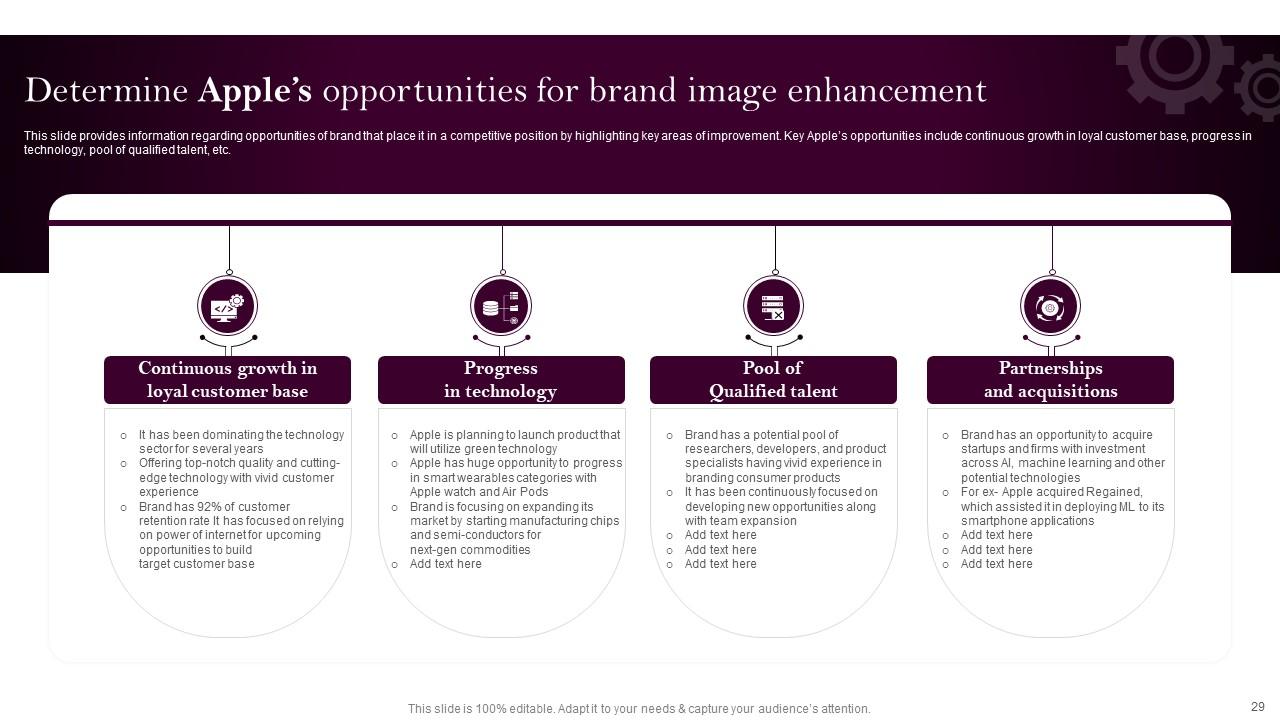
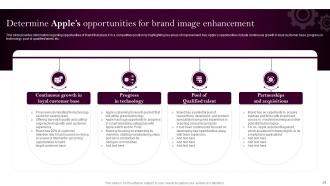
Slide 29: This slide represents Determine Apple’s opportunities for brand image enhancement.
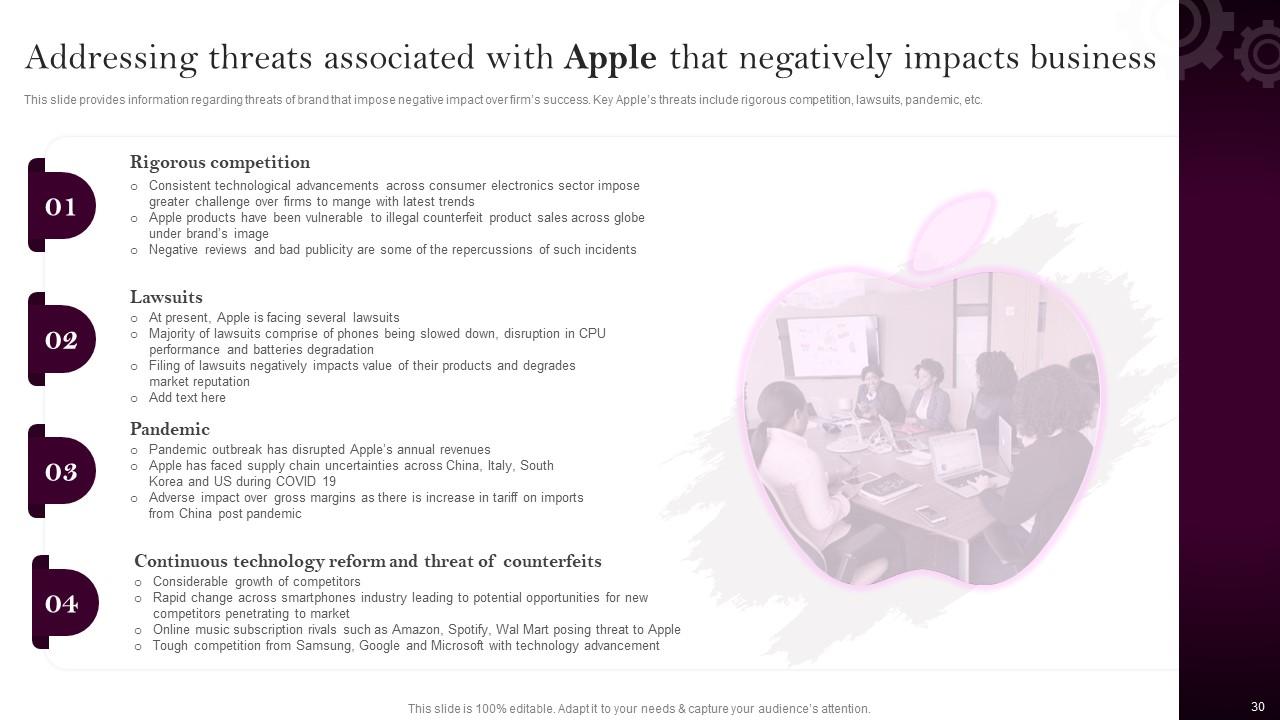
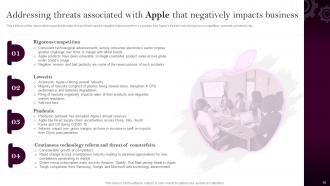
Slide 30: This slide addresses threats associated with Apple that negatively impacts business.
Slide 31: This slide highlights title for topics that are to be covered next in the template.
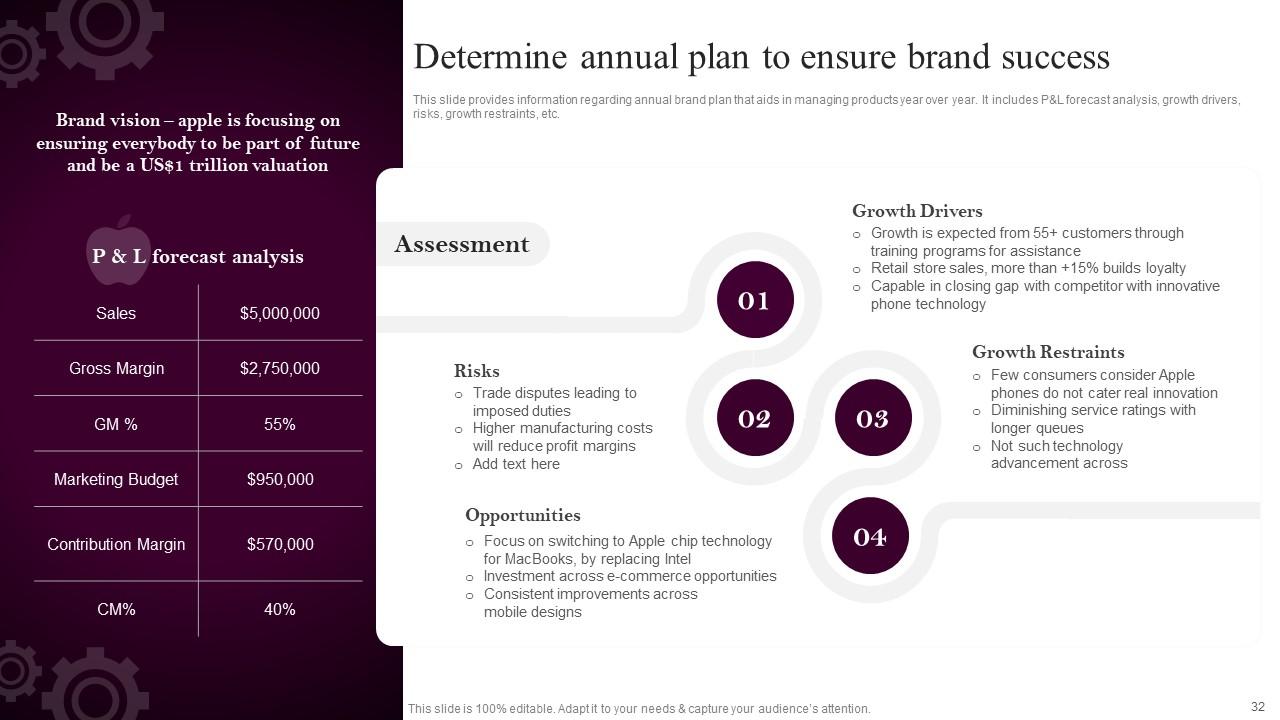
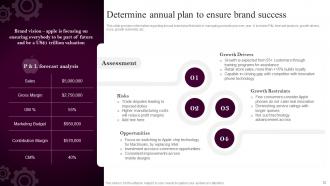
Slide 32: This slide showcases Determine annual plan to ensure brand success.
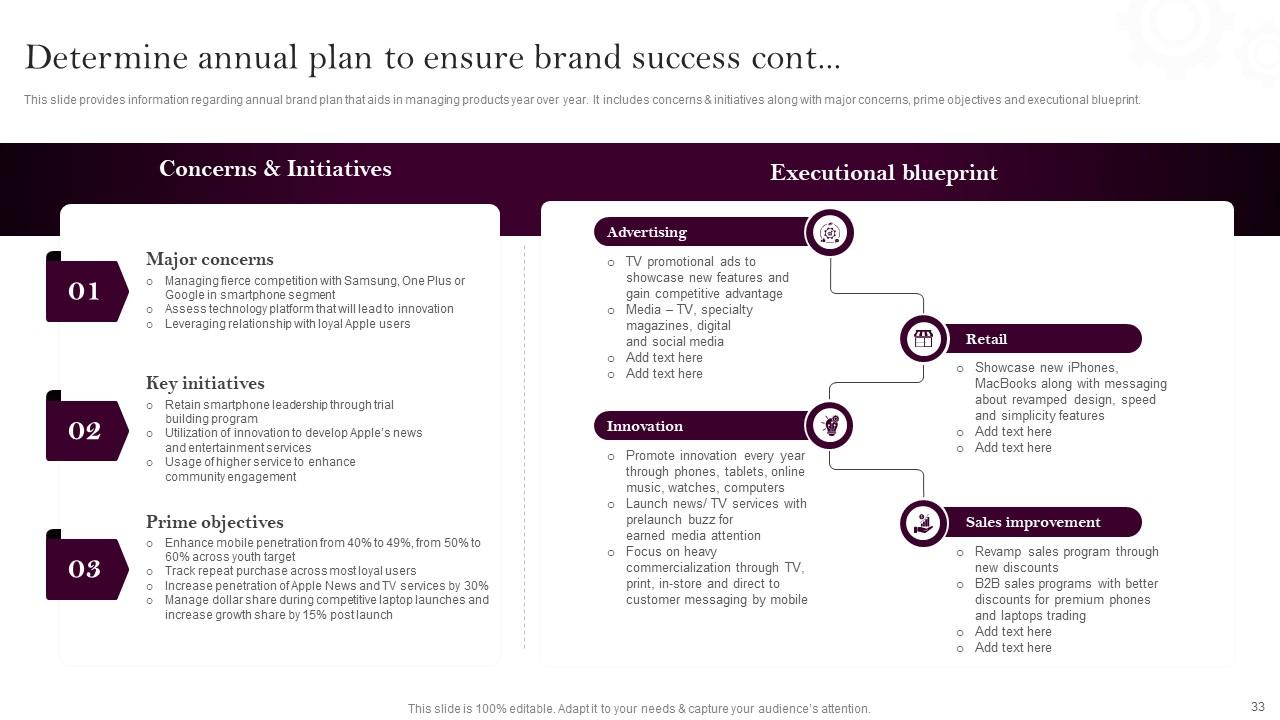
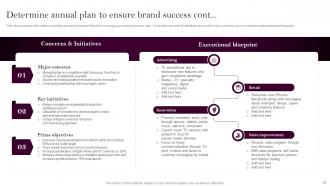
Slide 33: This is another slide continuing Determine annual plan to ensure brand success.
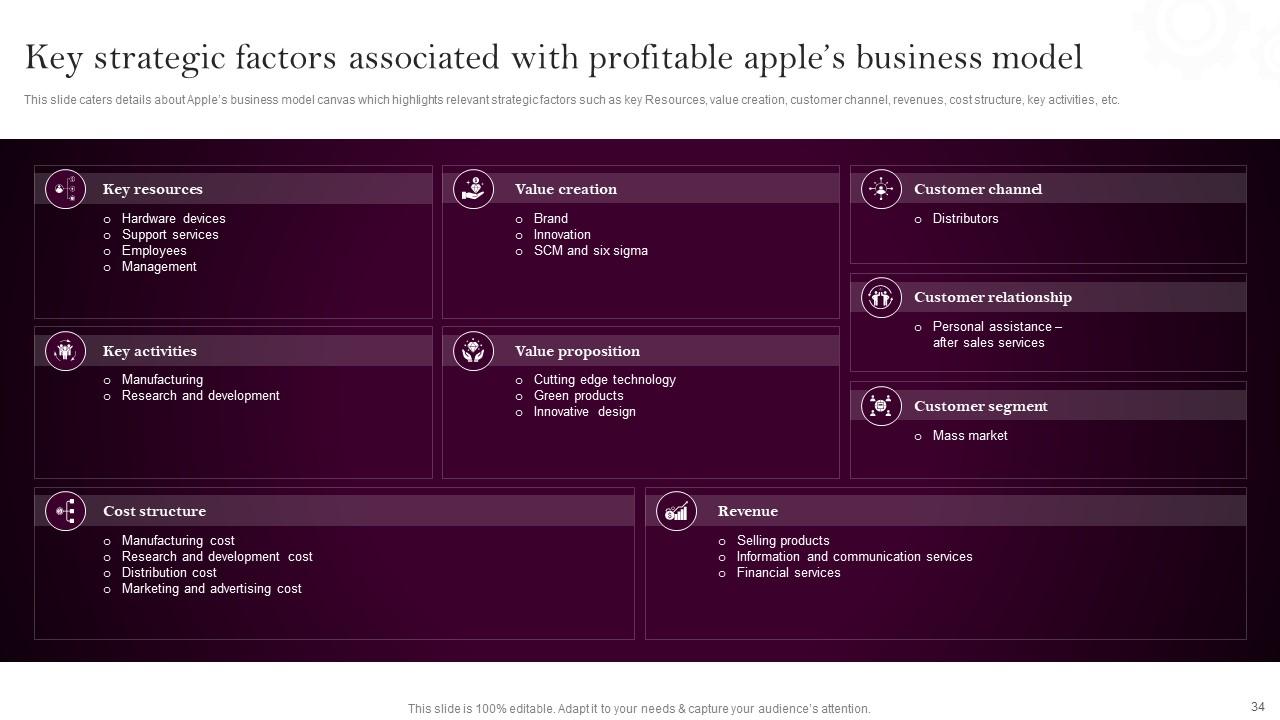
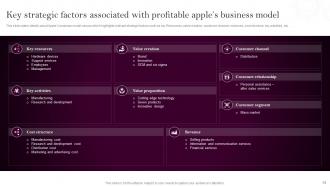
Slide 34: This slide shows Key strategic factors associated with profitable Apple’s business model.
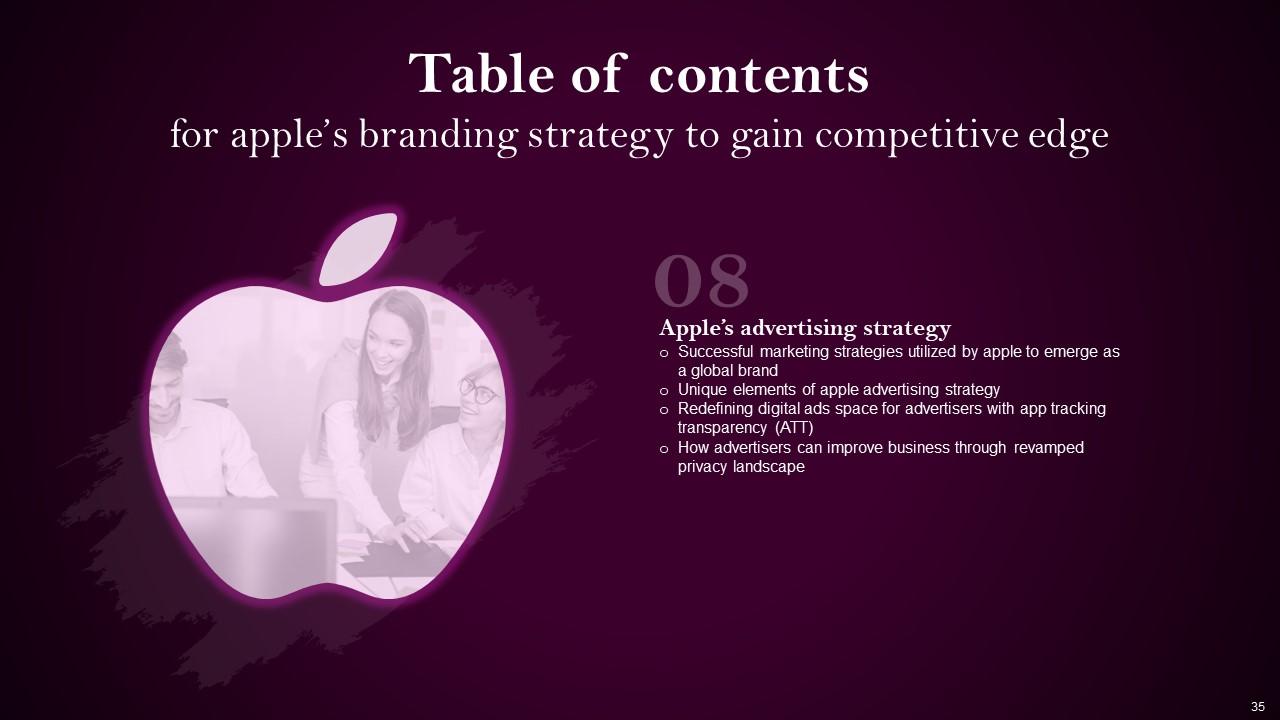
Slide 35: This slide highlights title for topics that are to be covered next in the template.
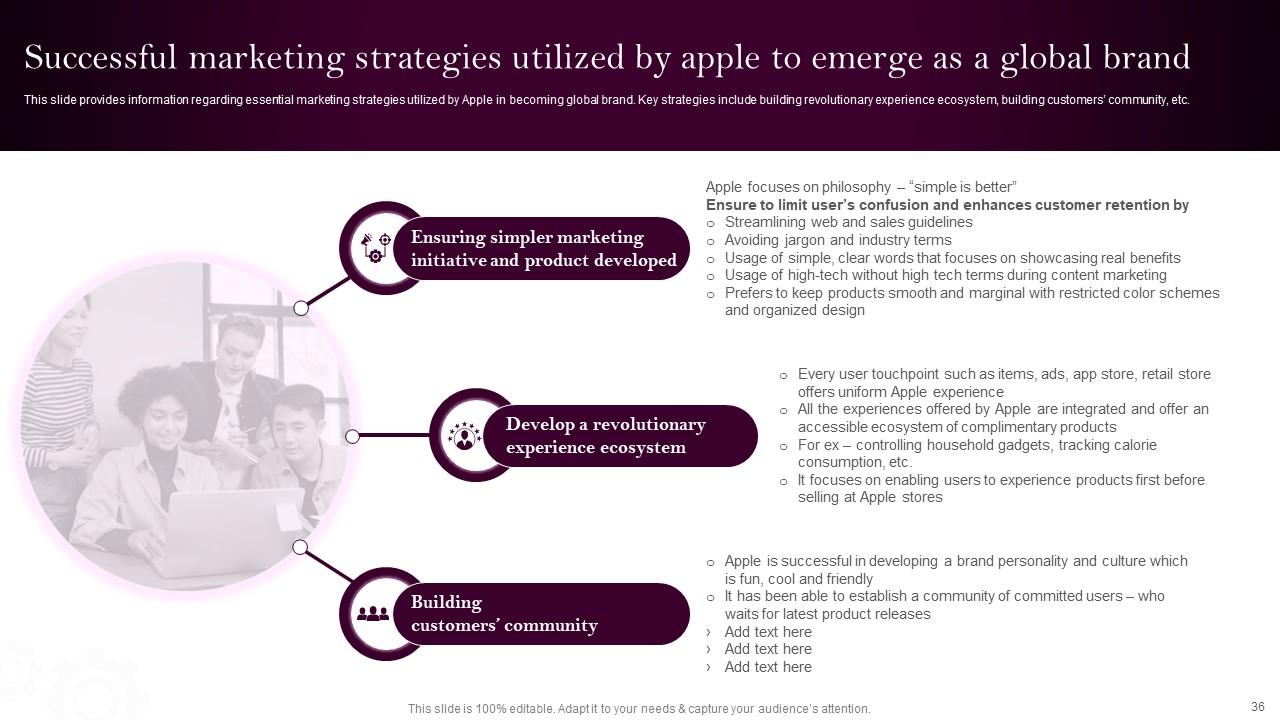
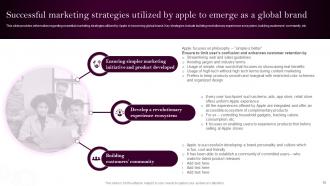
Slide 36: This slide presents Successful marketing strategies utilized by Apple to emerge as a global brand.
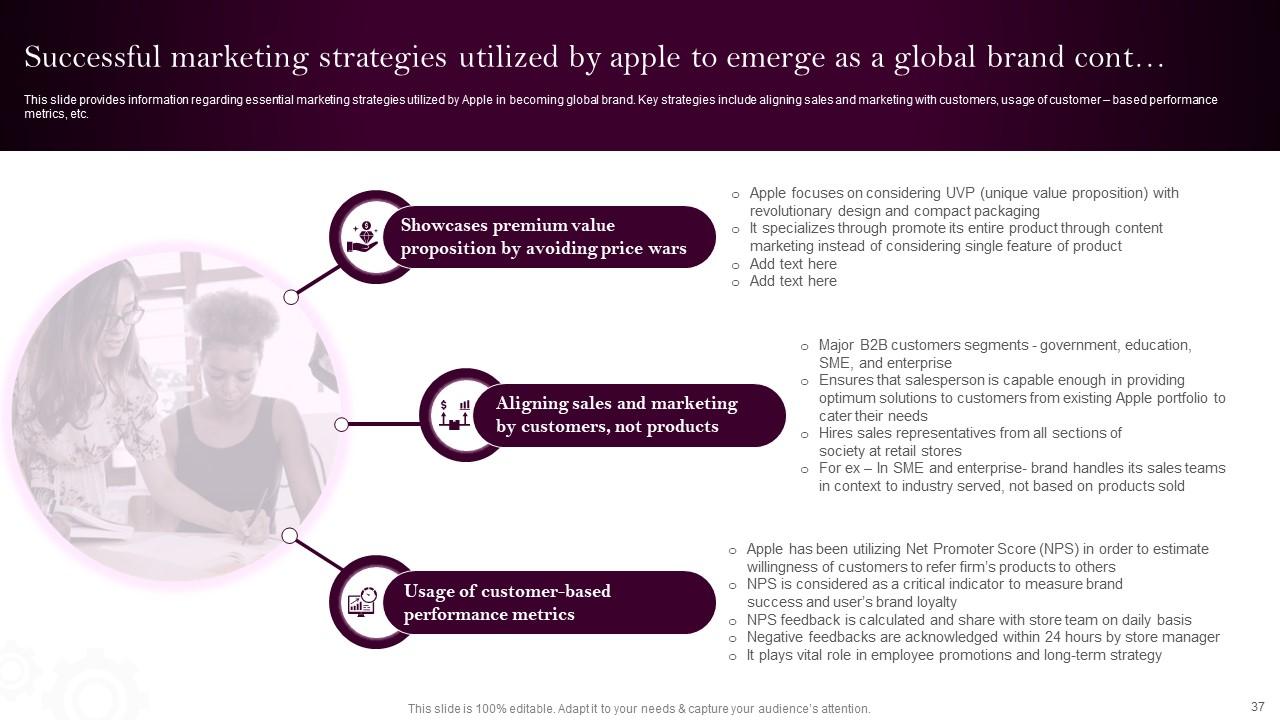
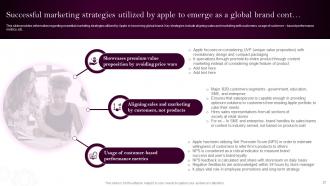
Slide 37: This is another slide continuing Successful marketing strategies utilized by Apple to emerge as a global brand.
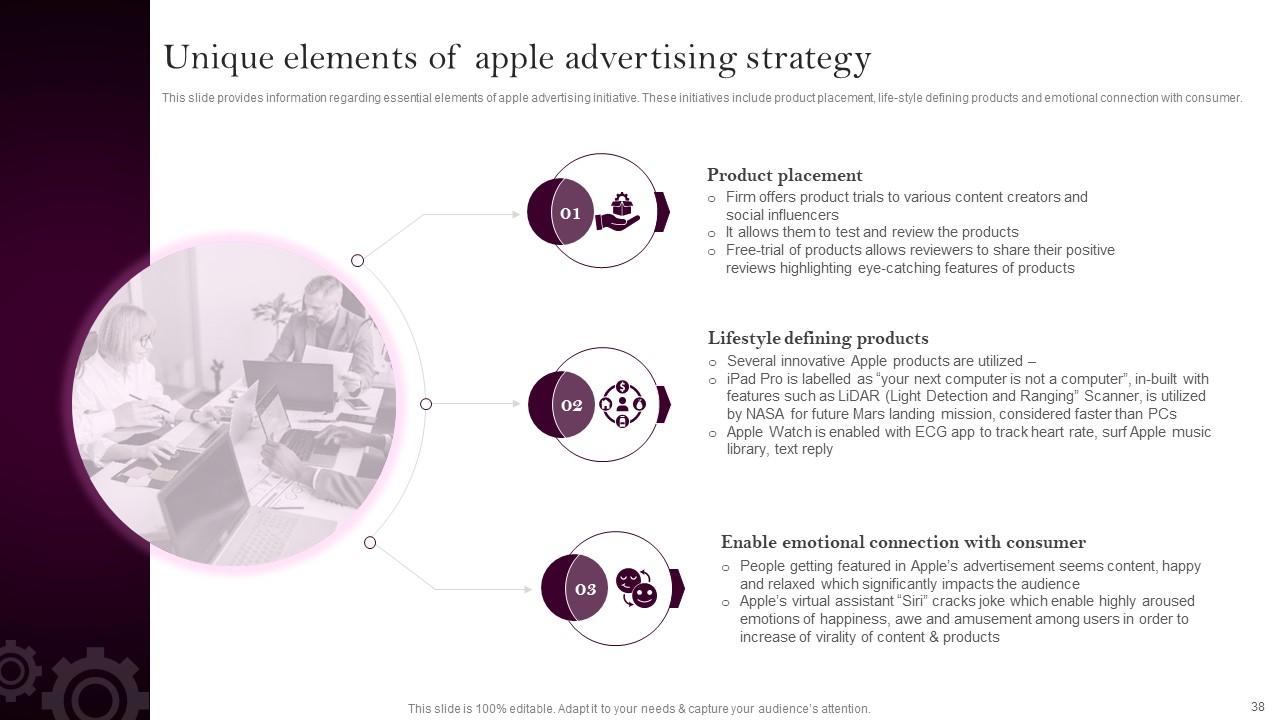
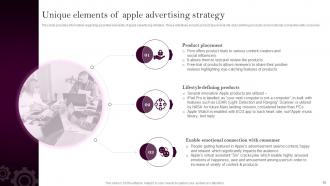
Slide 38: This slide displays Unique elements of Apple advertising strategy.
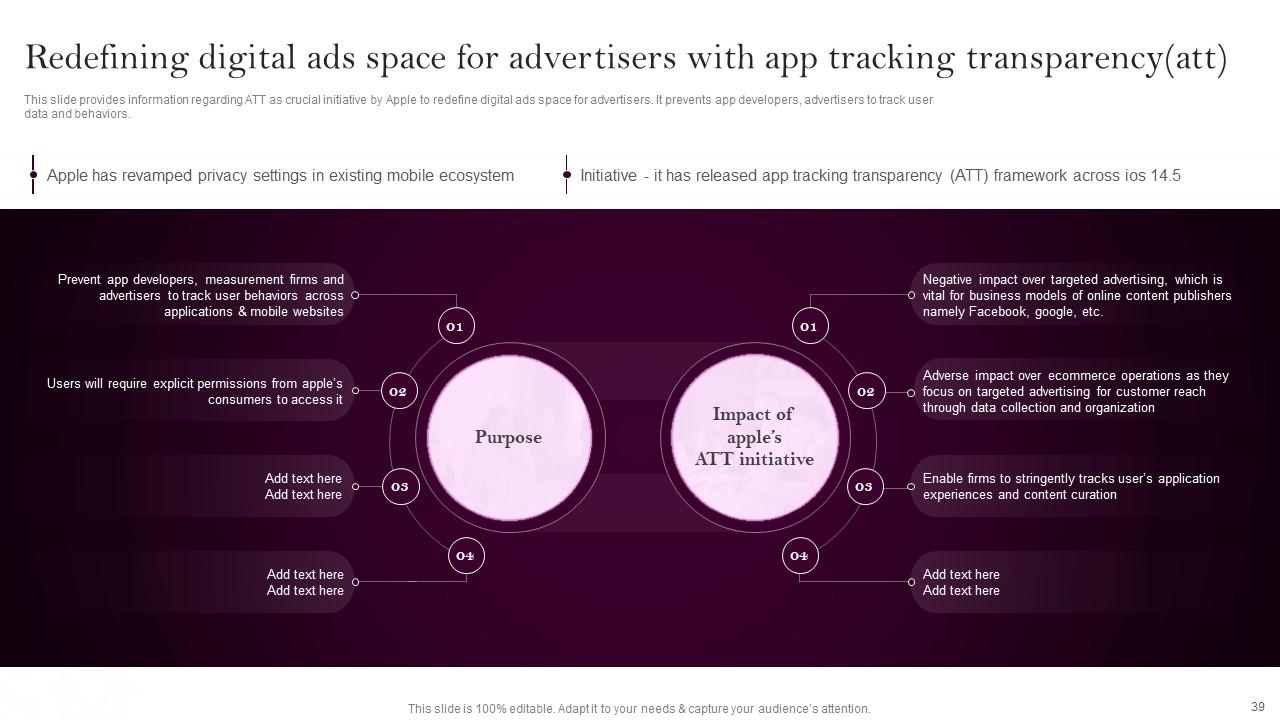
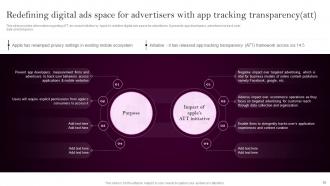
Slide 39: This slide represents Redefining digital ads space for advertisers with App Tracking Transparency(ATT).
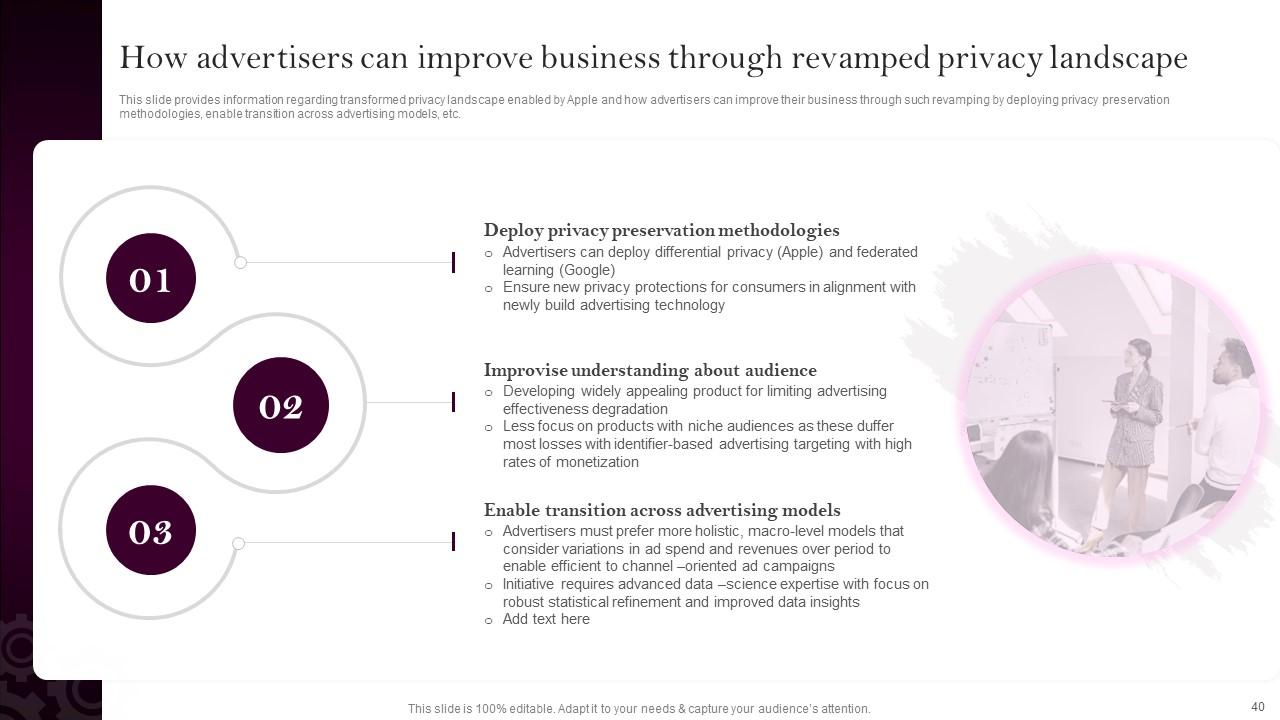
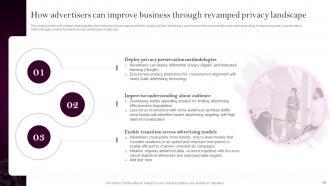
Slide 40: This slide showcases How advertisers can improve business through revamped privacy landscape.
Slide 41: This slide highlights title for topics that are to be covered next in the template.
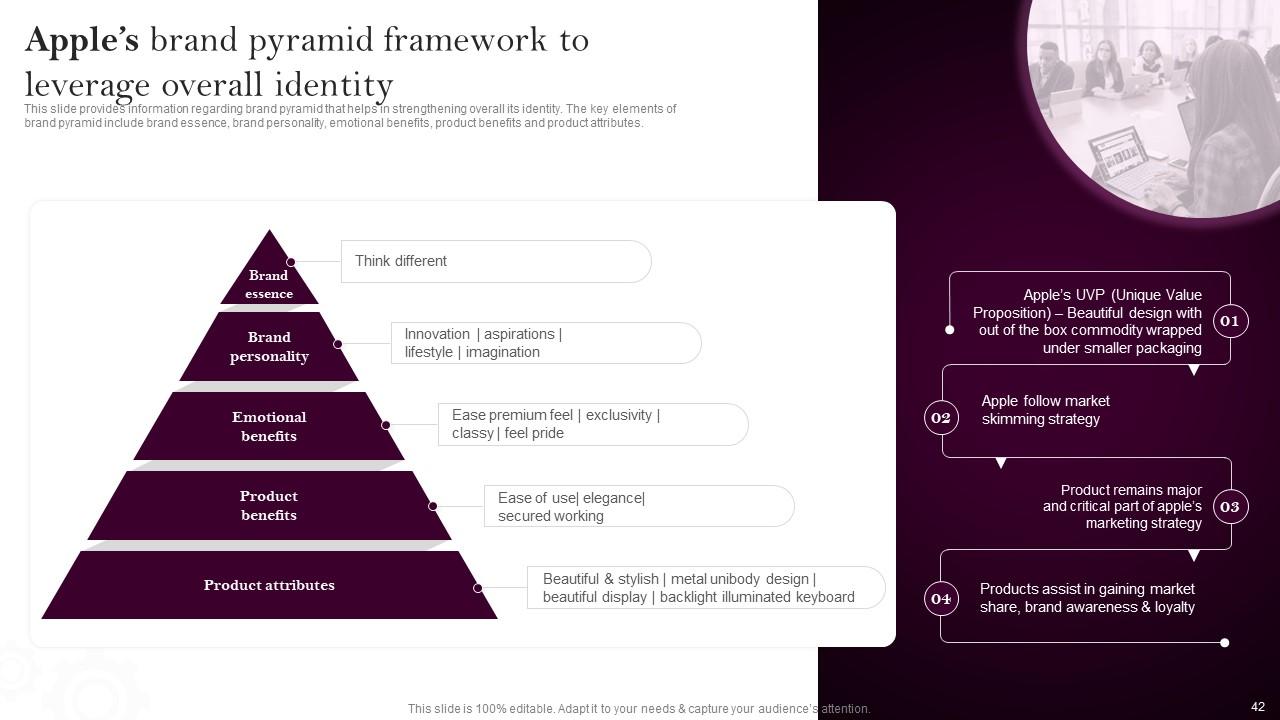
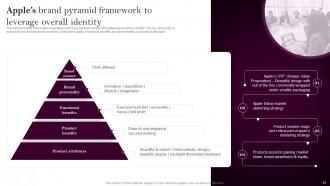
Slide 42: This slide shows Apple’s brand pyramid framework to leverage overall identity.
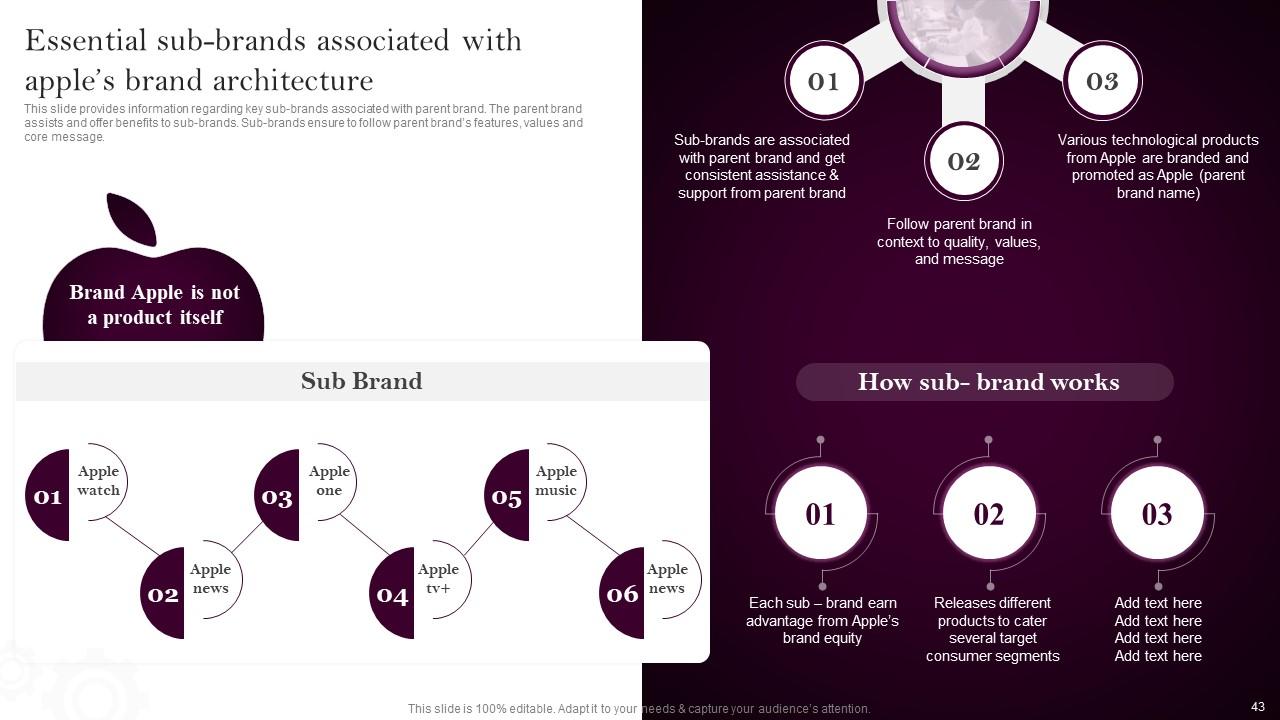
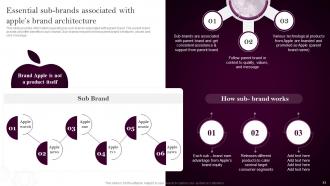
Slide 43: This slide presents Essential sub-brands associated with Apple’s brand architecture.
Slide 44: This slide highlights title for topics that are to be covered next in the template.
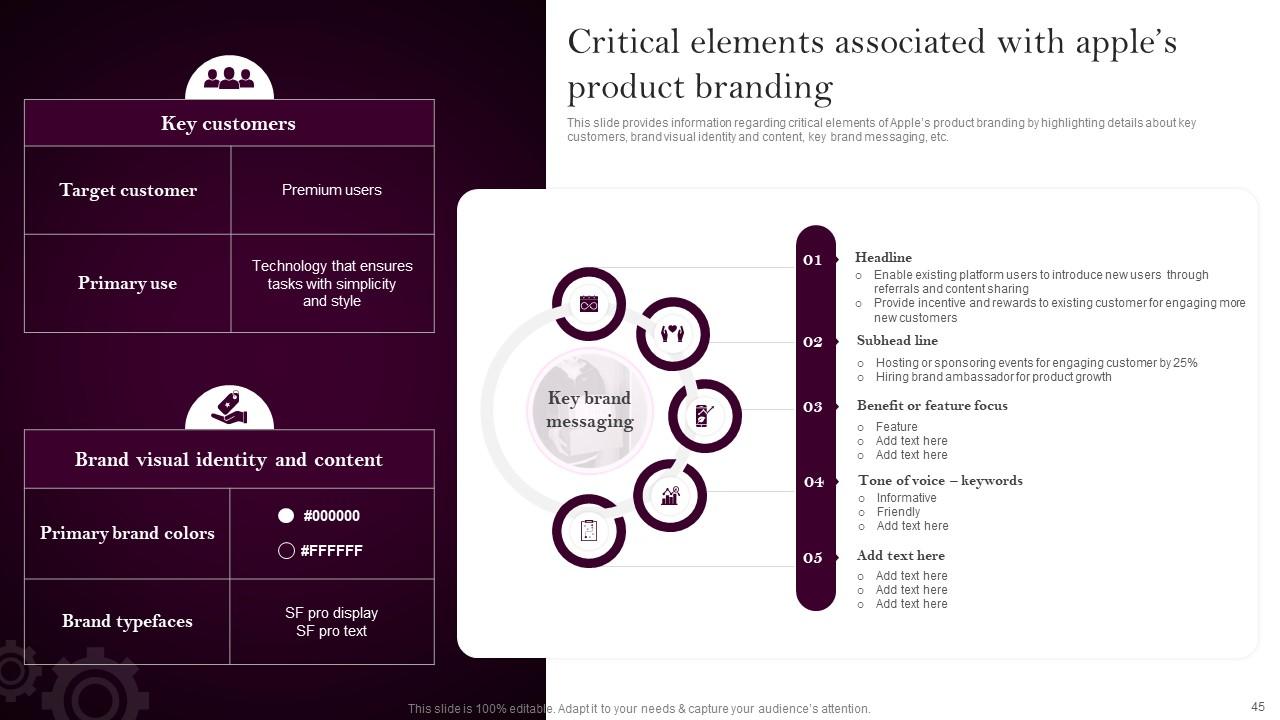
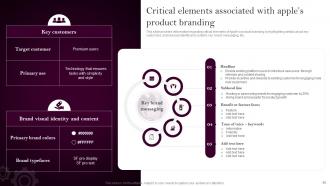
Slide 45: This slide displays Critical elements associated with Apple’s product branding.
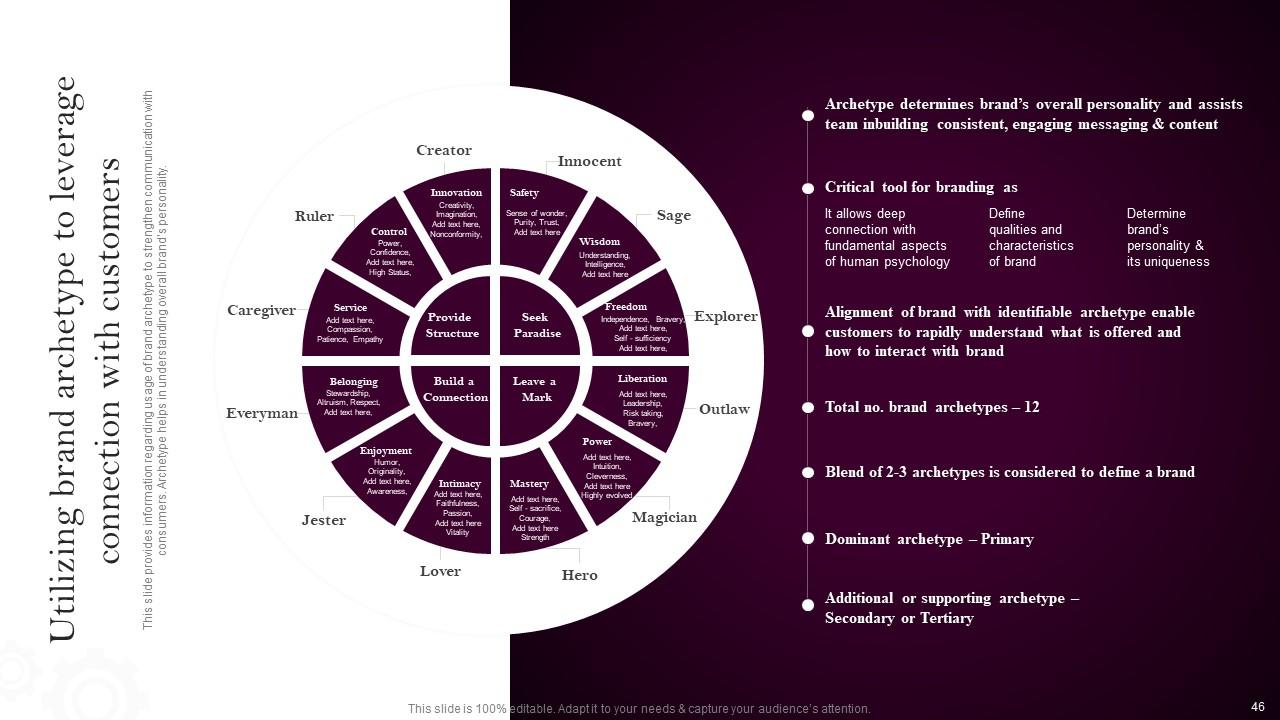
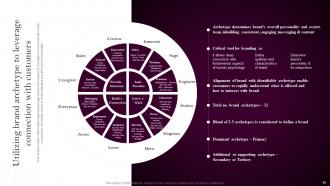
Slide 46: This slide represents Utilizing brand archetype to leverage connection with customers.
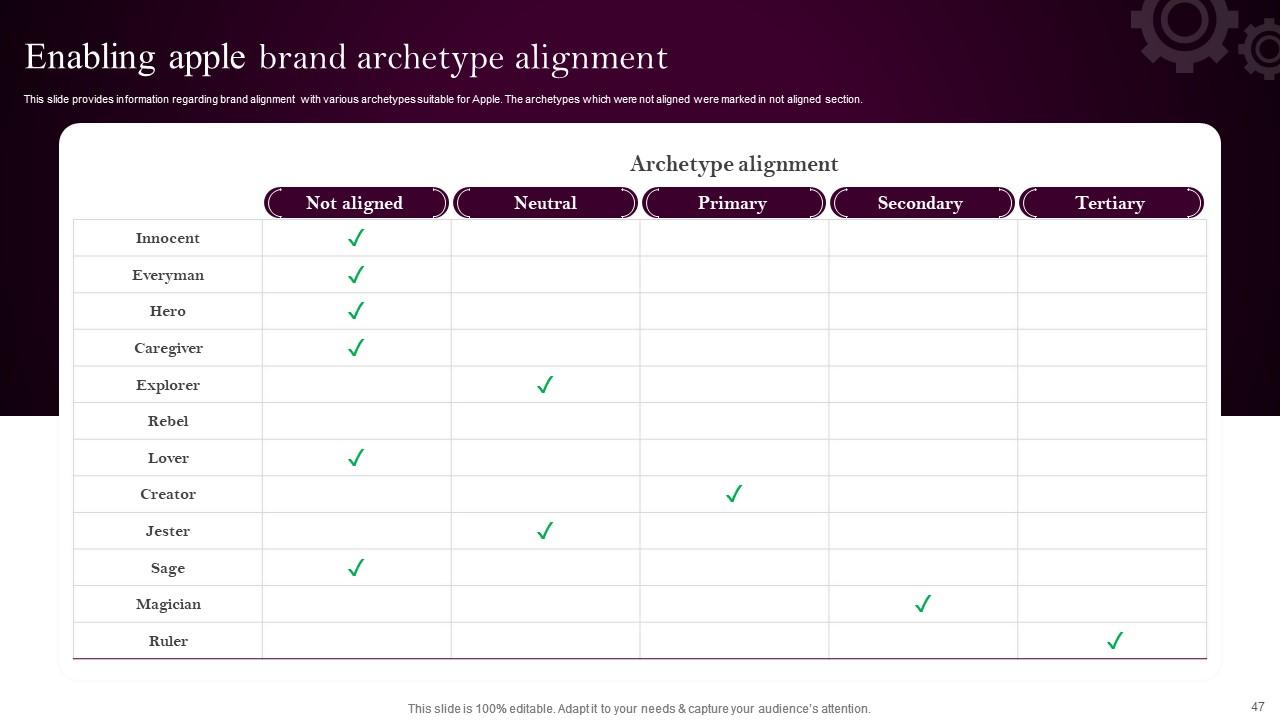
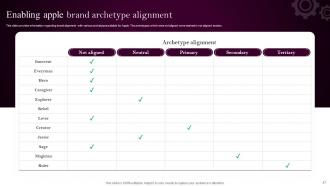
Slide 47: This slide showcases Enabling Apple brand archetype alignment.
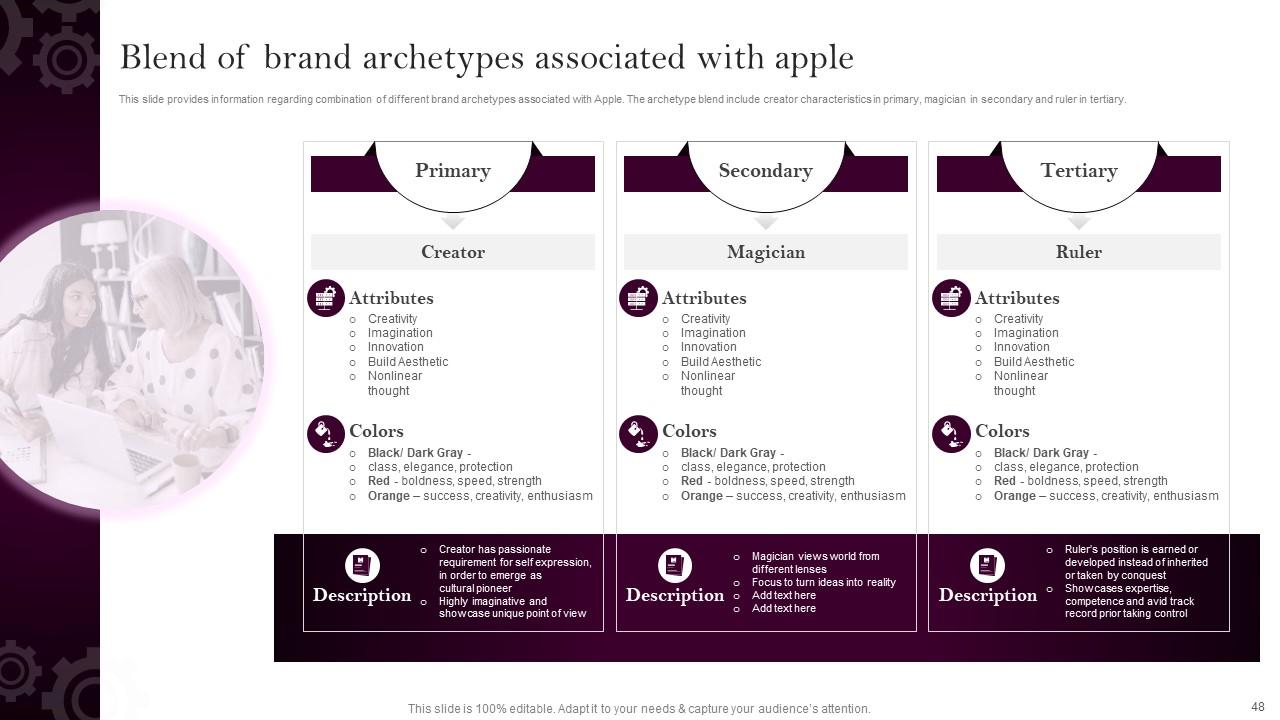
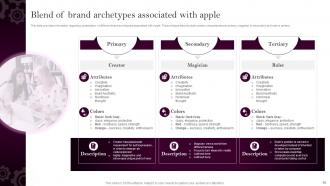
Slide 48: This slide shows Blend of brand archetypes associated with Apple.
Slide 49: This slide highlights title for topics that are to be covered next in the template.
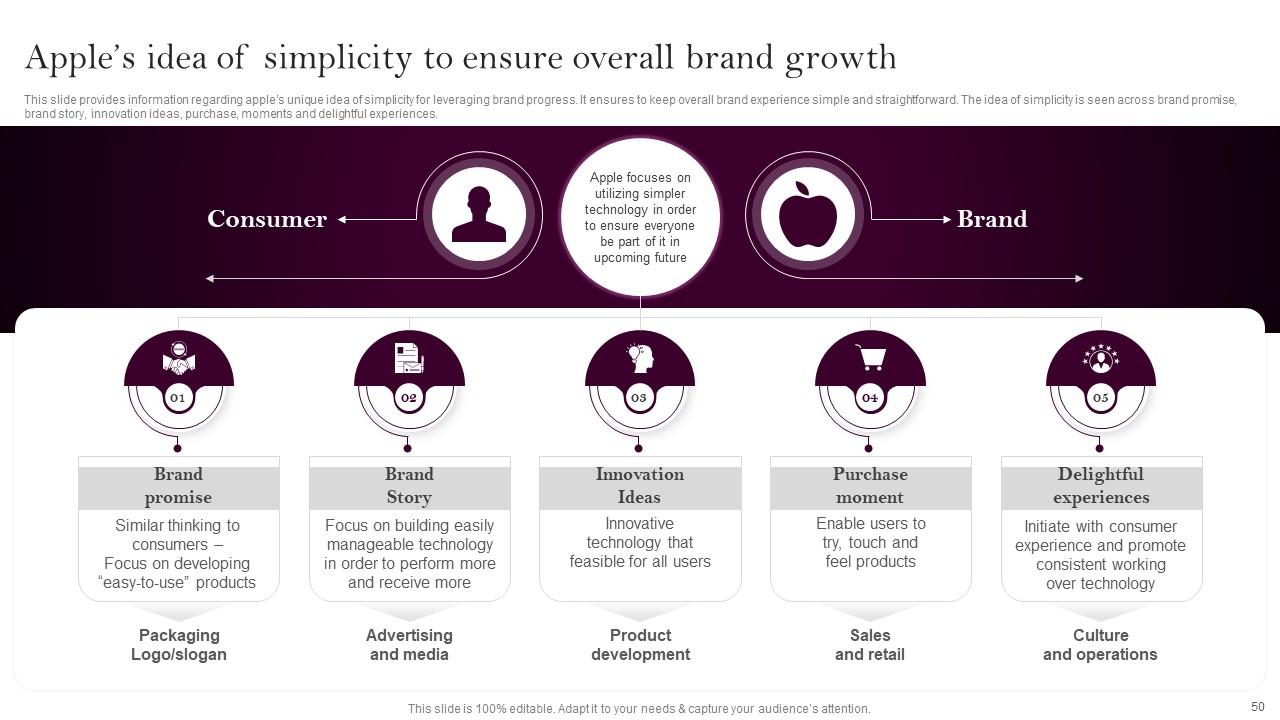
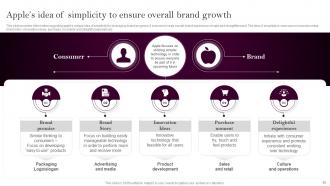
Slide 50: This slide presents Apple’s idea of simplicity to ensure overall brand growth.
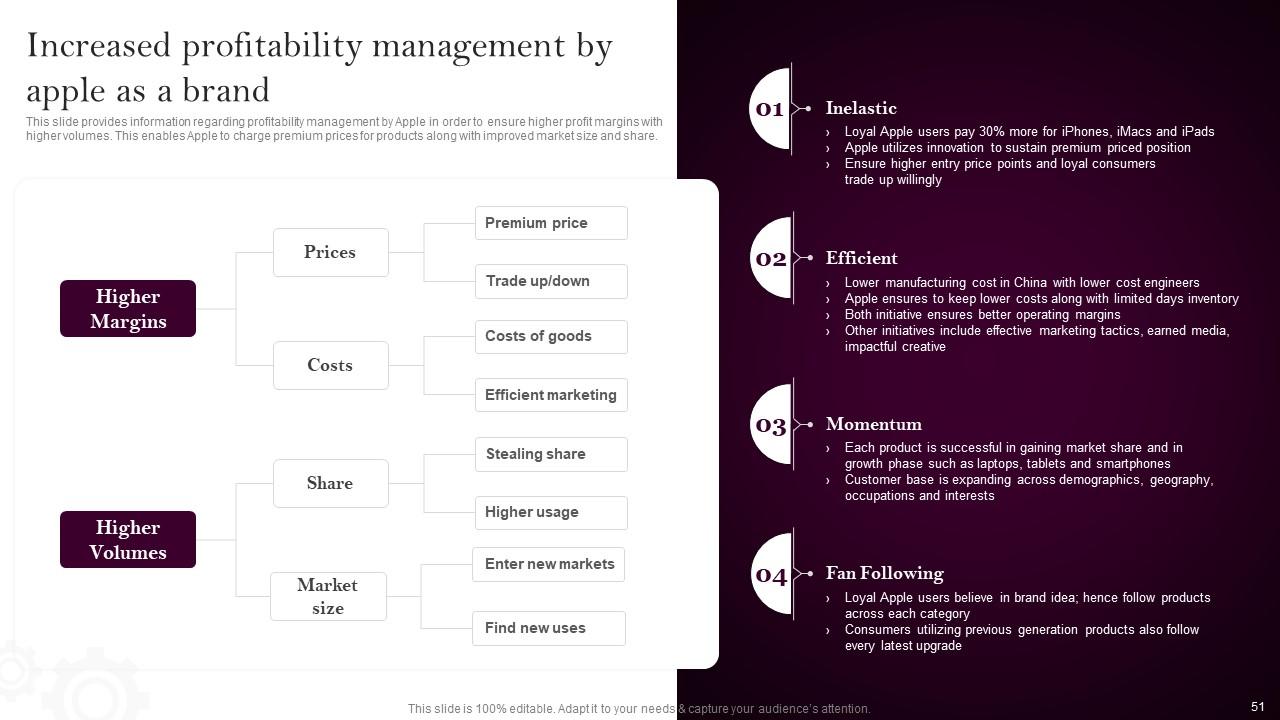
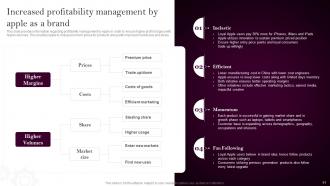
Slide 51: This slide displays Increased profitability management by Apple as a brand.
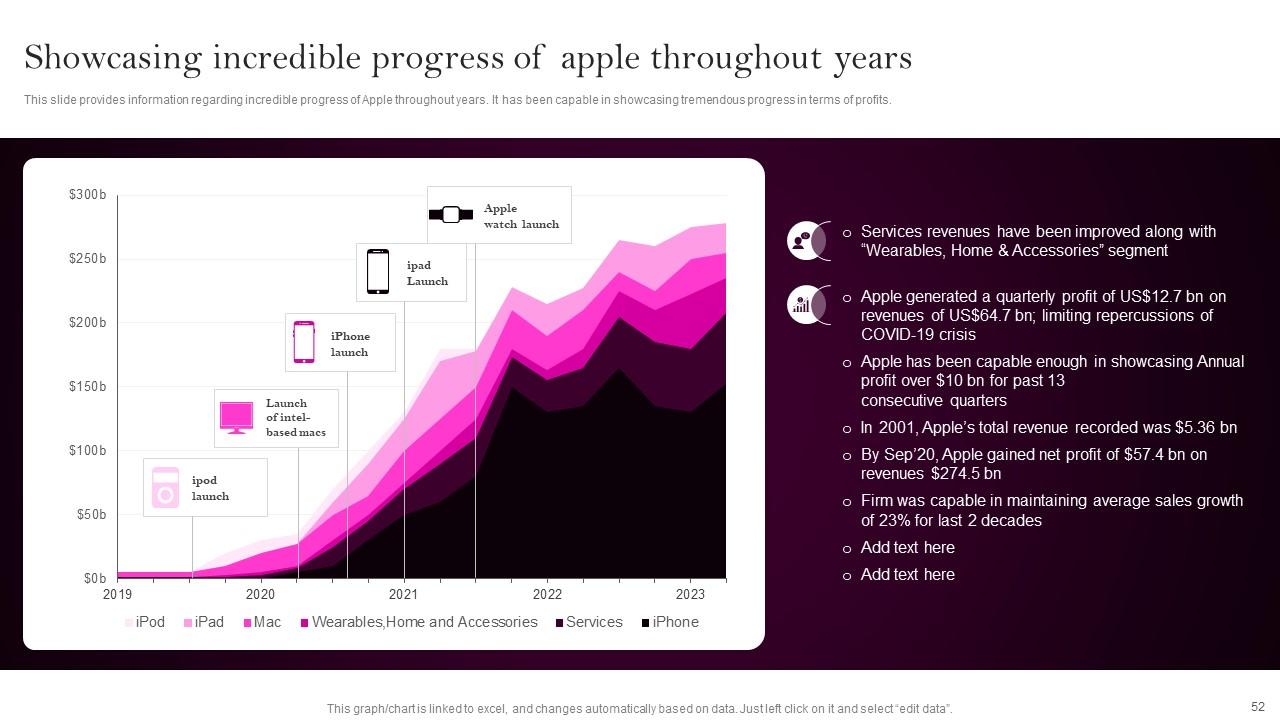
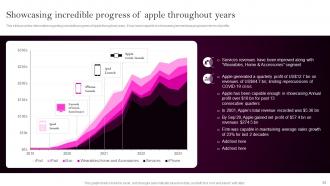
Slide 52: This slide represents Showcasing incredible progress of Apple throughout years.
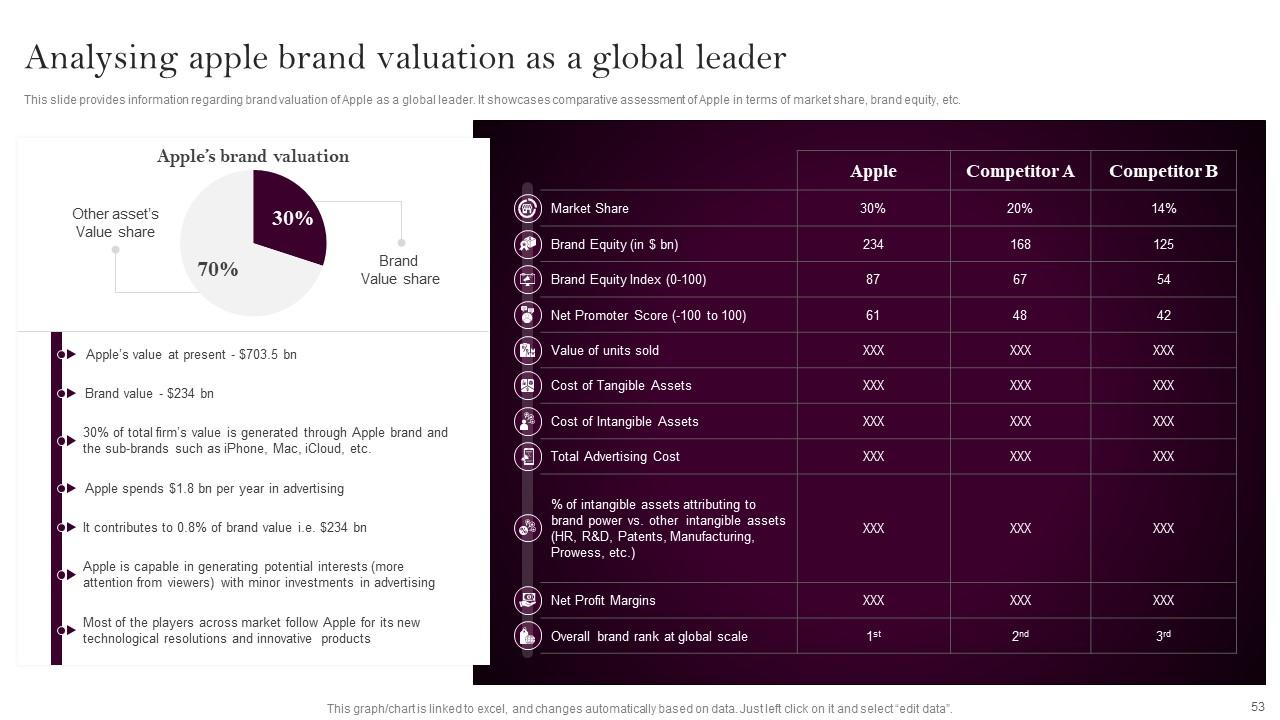
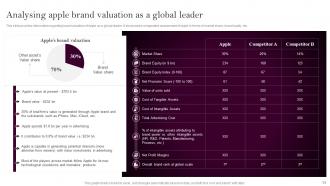
Slide 53: This slide showcases Analysing Apple brand valuation as a global leader.
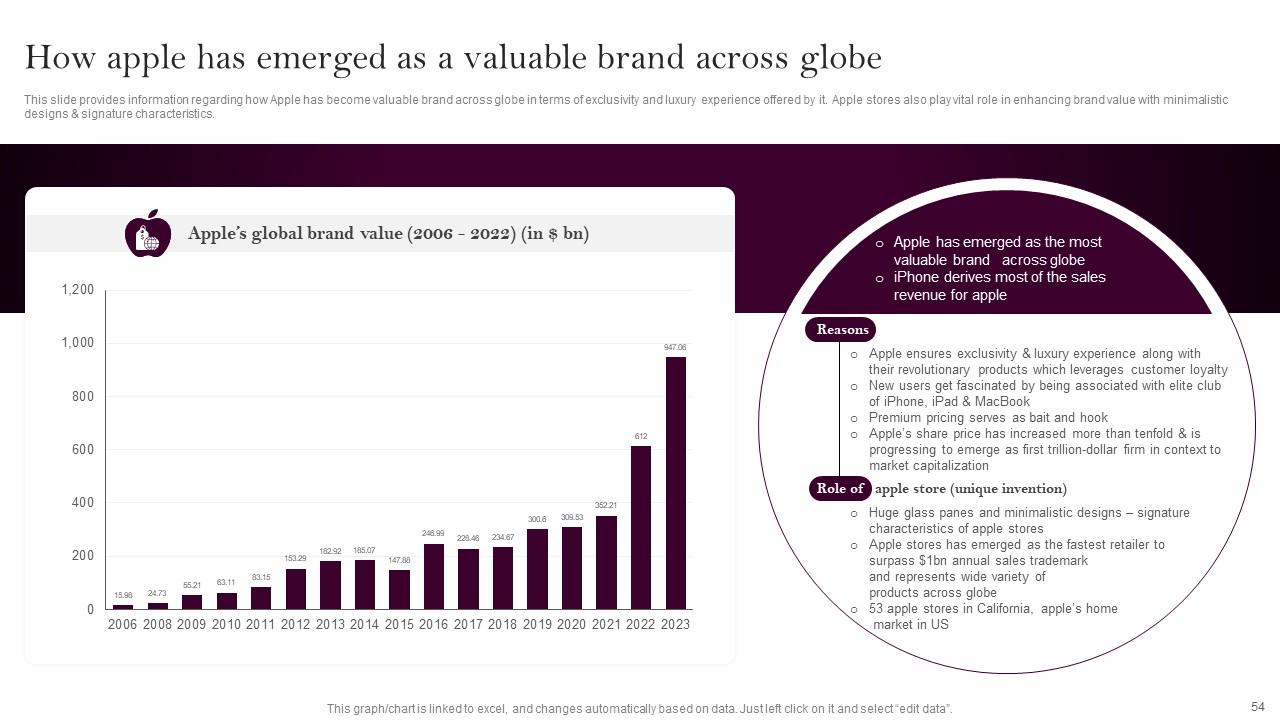
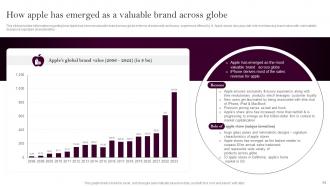
Slide 54: This slide represents How Apple has emerged as a valuable brand across globe.
Slide 55: This slide highlights title for topics that are to be covered next in the template.
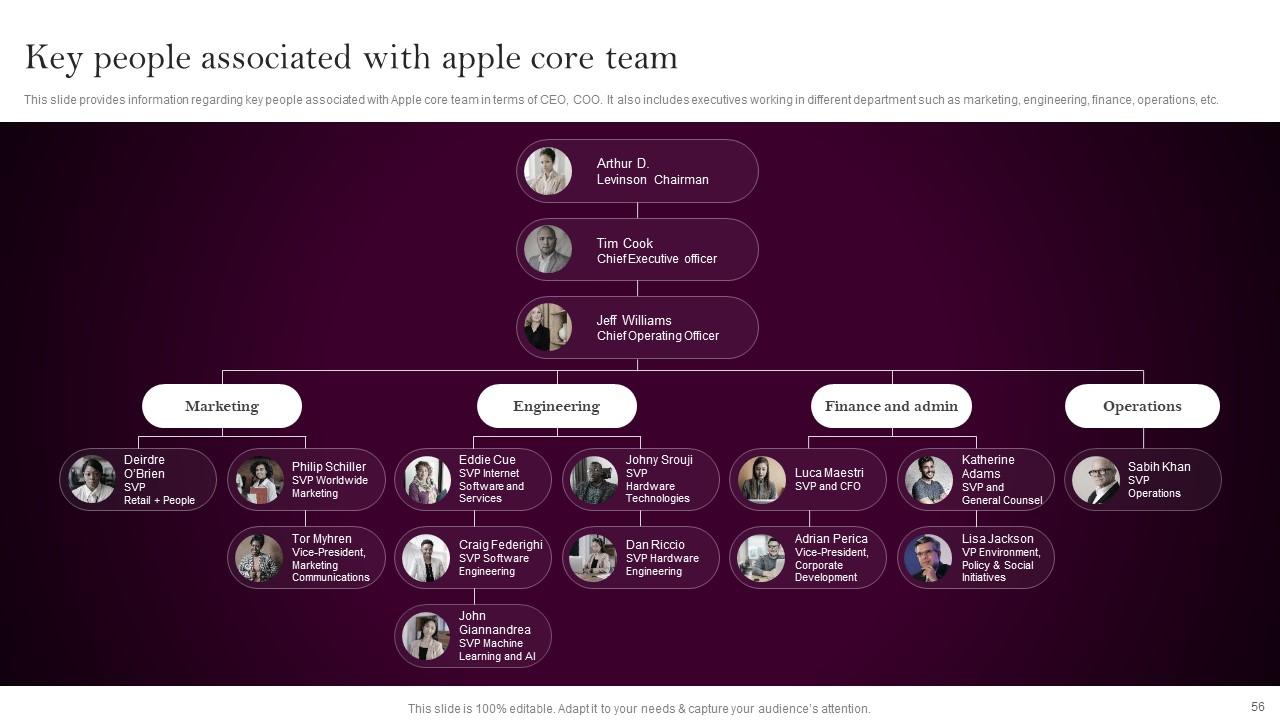
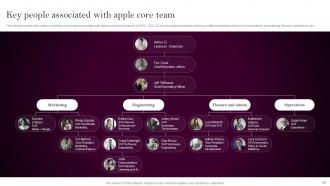
Slide 56: This slide showcases Key people associated with Apple core team.
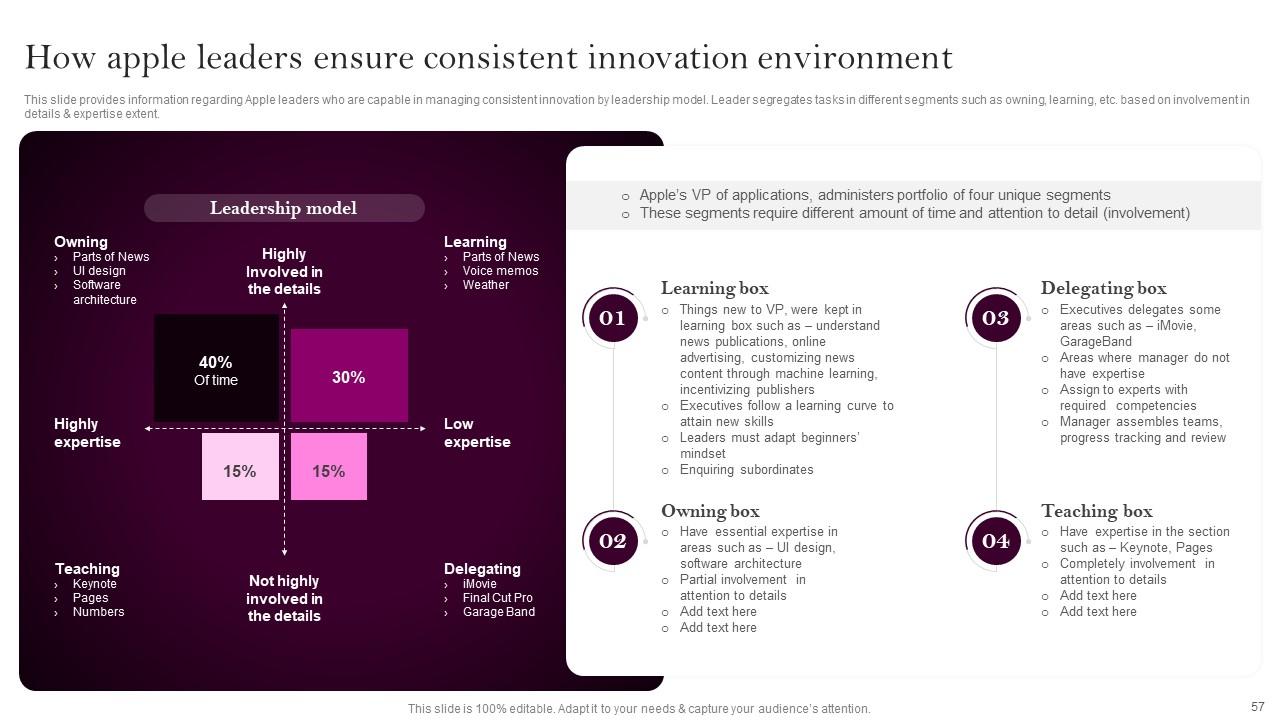
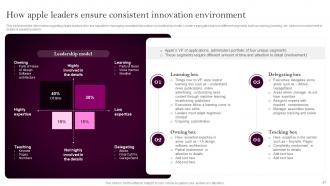
Slide 57: This slide displays How Apple leaders ensure consistent innovation environment.
Slide 58: This slide contains all the icons used in this presentation.
Slide 59: This slide is titled as Additional Slides for moving forward.
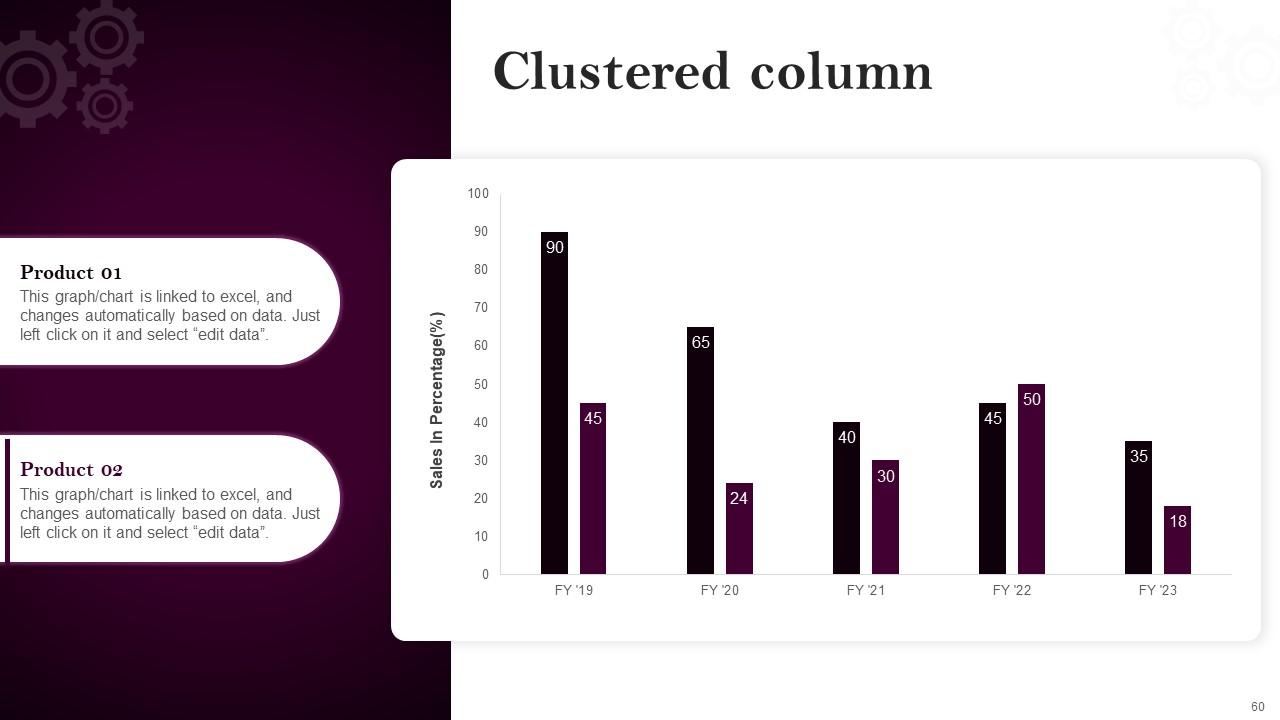
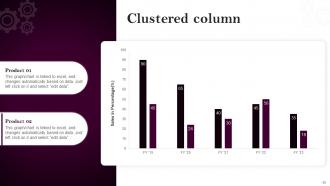
Slide 60: This slide provides Clustered Column chart with two products comparison.
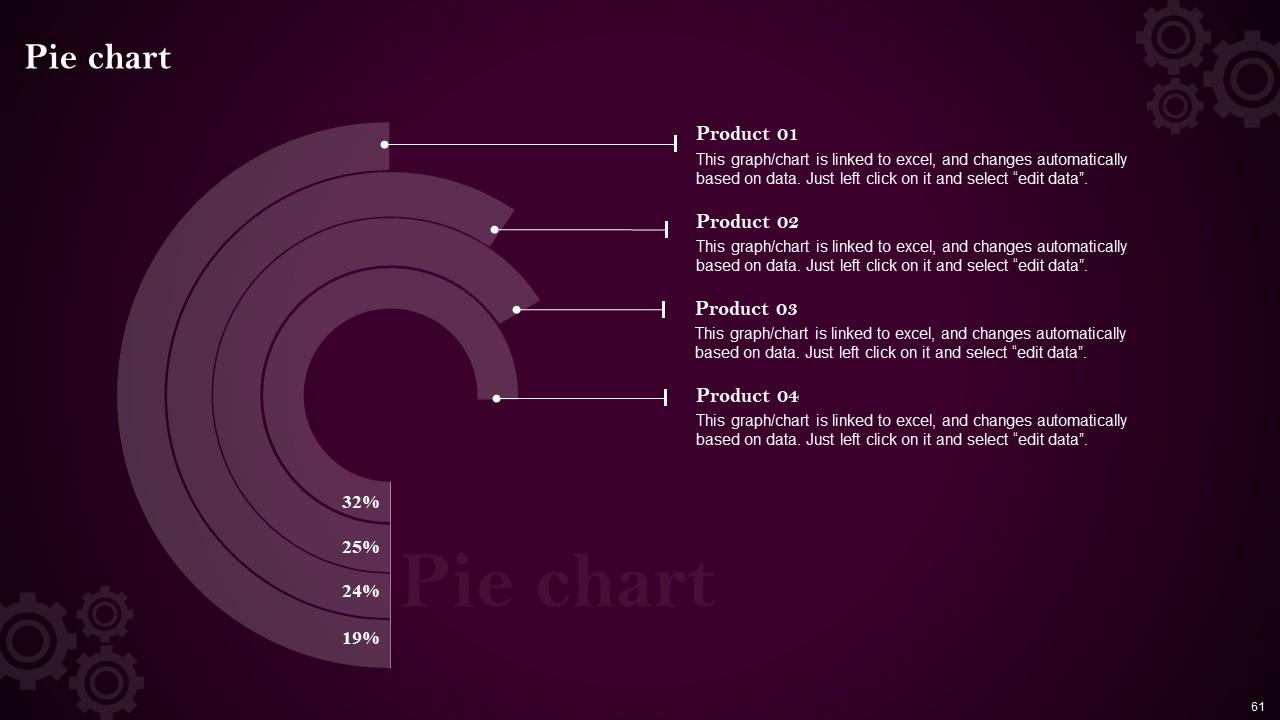
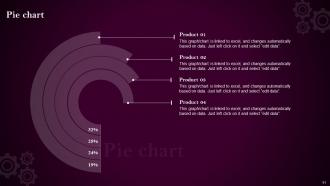
Slide 61: This slide shows Pie Chart with data in percentage.
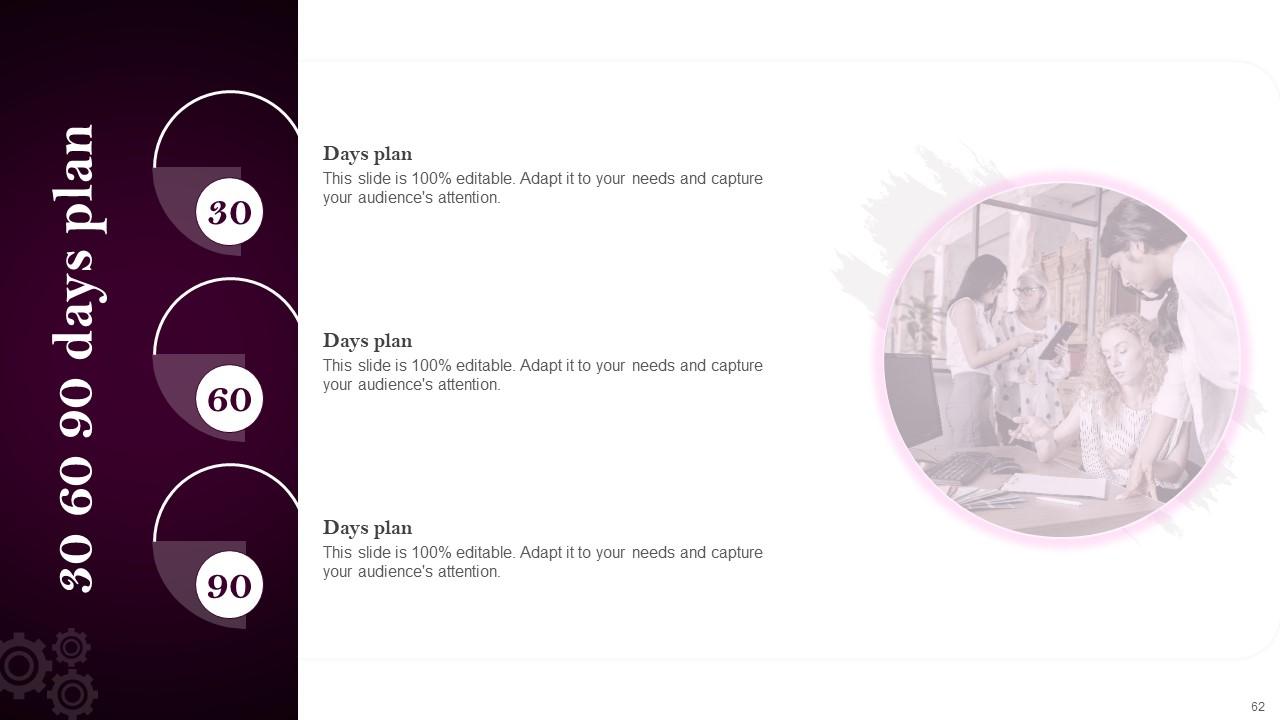
Slide 62: This slide provides 30 60 90 Days Plan with text boxes.
Slide 63: This is Our Mission slide with related imagery and text.
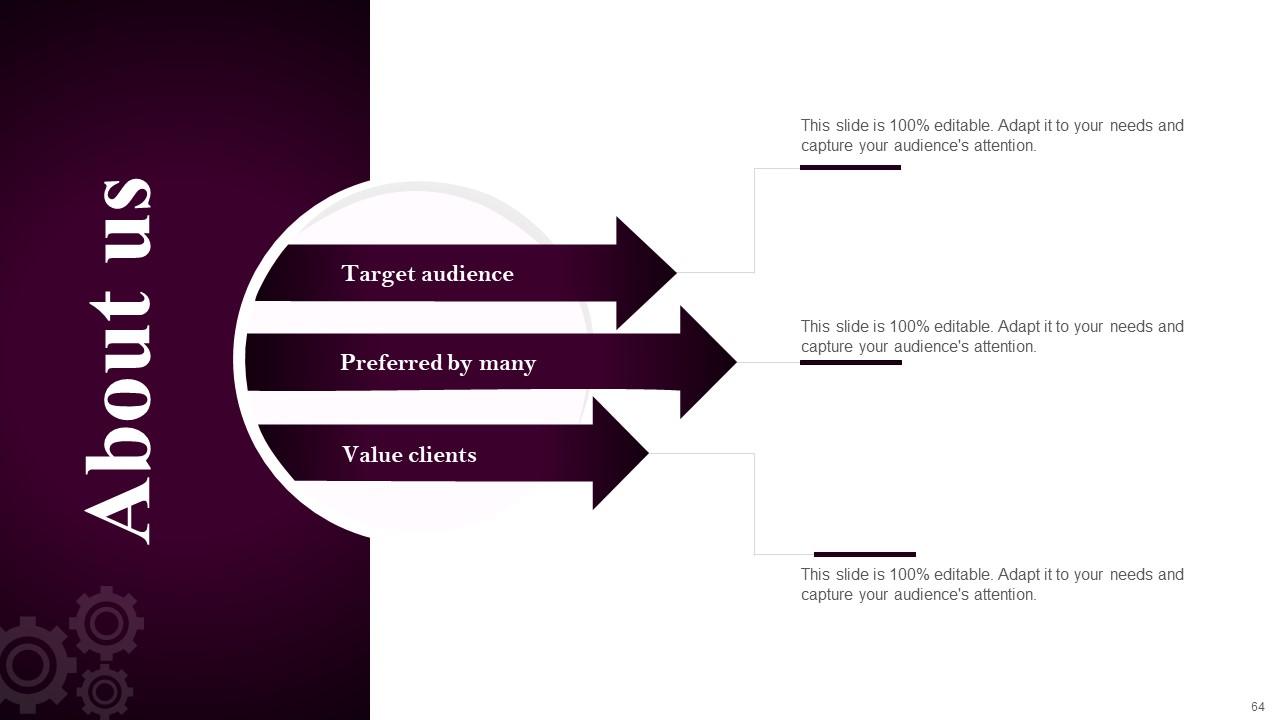
Slide 64: This is About Us slide to show company specifications etc.
Slide 65: This slide displays Mind Map with related imagery.
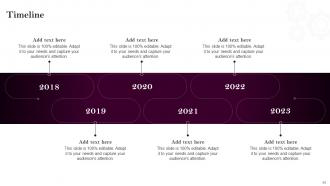
Slide 66: This is a Timeline slide. Show data related to time intervals here.
Slide 67: This is Our Team slide with names and designation.
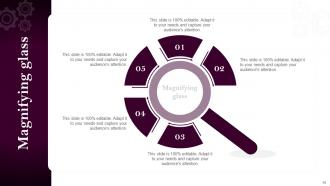
Slide 68: This slide showcases Magnifying Glass to highlight information, specifications etc
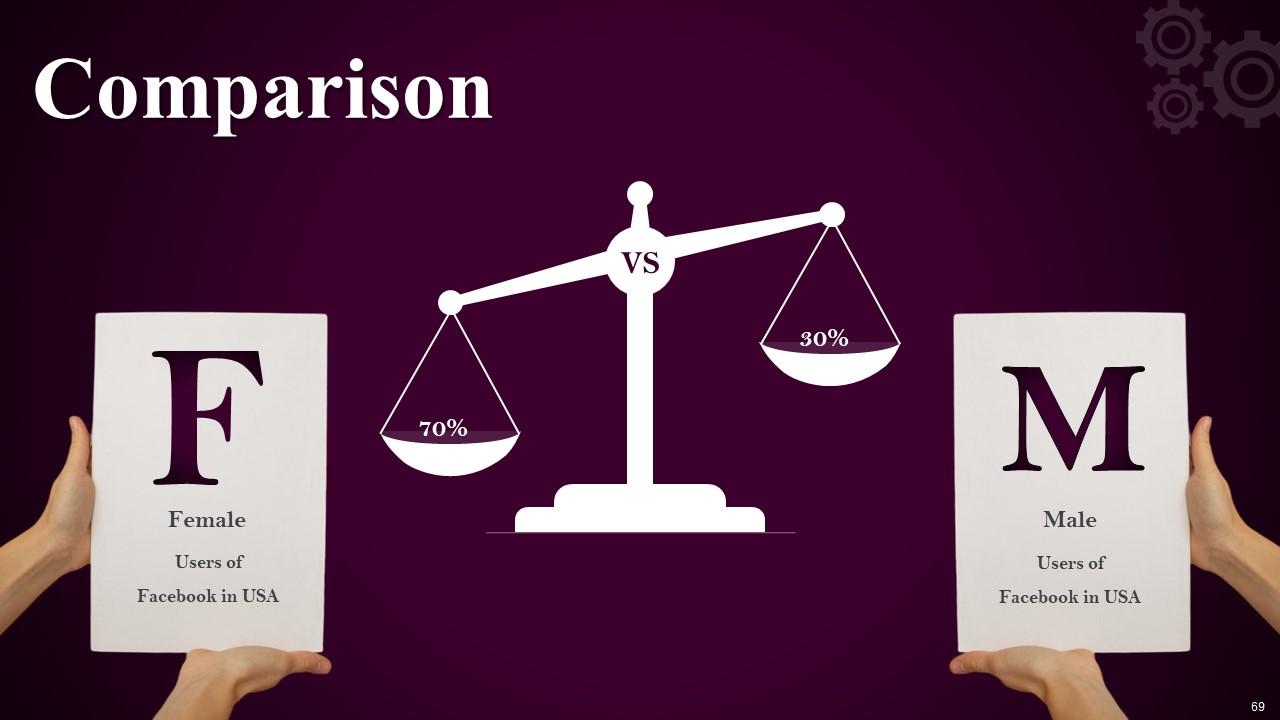
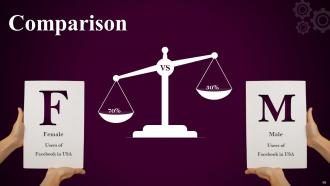
Slide 69: This is a Comparison slide to state comparison between commodities, entities etc.
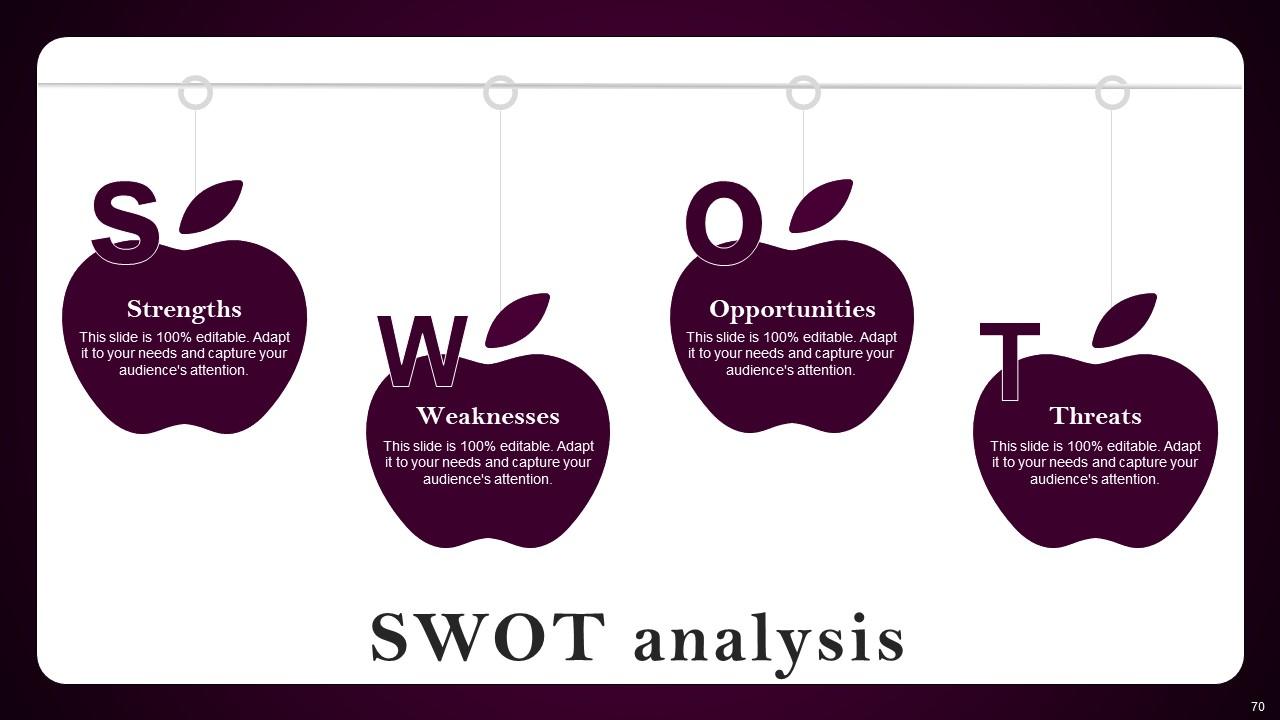
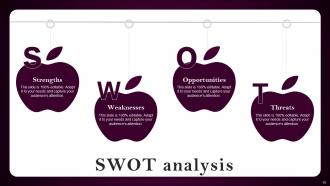
Slide 70: This slide shows SWOT describing- Strength, Weakness, Opportunity, and Threat.
Slide 71: This slide shows Post It Notes. Post your important notes here.
Slide 72: This is an Idea Generation slide to state a new idea or highlight information, specifications etc.
Slide 73: This is a Thank You slide with address, contact numbers and email address.
Apples Branding Strategy To Gain Competitive Edge Branding CD V with all 78 slides:
Use our Apples Branding Strategy To Gain Competitive Edge Powerpoint Presentation Slides Branding CD to effectively help you save your valuable time. They are readymade to fit into any presentation structure.
-
If you are looking for satisfactory PowerPoint services, SlideTeam is your go-to place. I am fully contented with their research and development team.
-
Colors used are bright and distinctive.
