Artificial intelligence future data strategy framework

Rating:
92%
Artificial intelligence future data strategy framework
Slide 1 of 9
Favourites Favourites

Try Before you Buy Download Free Sample Product

Audience Impress Your
Audience
Editable 100%
Editable
Time Save Hours
of Time
The Biggest Sale is ending soon in
0
0
:
0
0
:
0
0
Rating:
92%
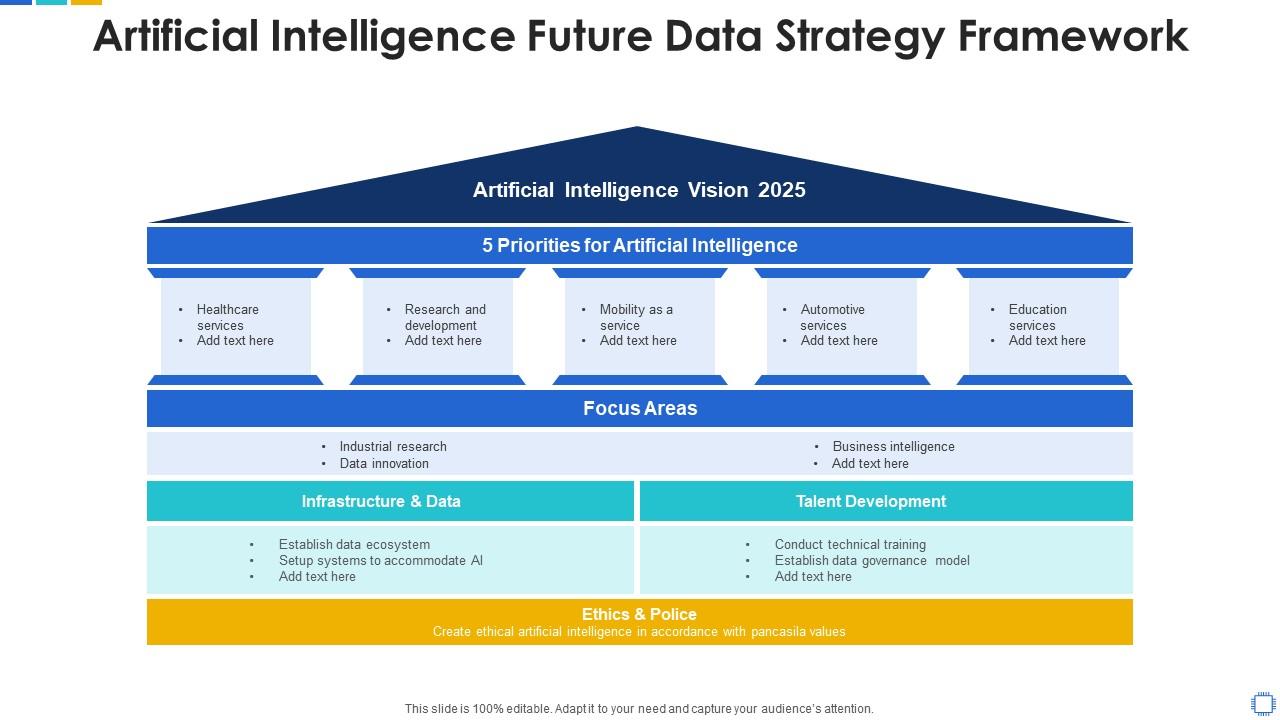
Introducing our Artificial Intelligence Future Data Strategy Framework set of slides. The topics discussed in these slides are Development, Service, Data Innovation. This is an immediately available PowerPoint presentation that can be conveniently customized. Download it and convince your audience.

FAQs for Artificial intelligence future

So you'll need four main things: data governance, quality management, infrastructure, and security. Start with clear policies around collecting, storing, and using data - honestly, this part's boring but you can't skip it. Set up good pipelines for cleaning your data too. Infrastructure gets tricky because you need storage and computing power that scales but won't bankrupt you. Security's huge now with all the privacy laws. Oh, and definitely audit your current data first - figure out what gaps exist between what you have and what your AI projects actually need.

First thing - do a data audit. Figure out what you've got, where it sits, and honestly? Most companies are pretty horrified when they see how messy everything actually is. Check if your infrastructure can even handle AI stuff - the compute power, storage, all those data pipelines that need to keep models fed. Don't skip data governance either since AI just makes bad data problems way worse. Oh, and definitely get your data team talking to whoever's running the AI projects. That collaboration piece is huge. Start there and the gaps will become super obvious pretty fast.

Dude, data quality will make or break your whole project. I'm not even exaggerating - I've watched teams with brilliant algorithms crash and burn because their data was messy. Your AI learns from whatever you feed it, so garbage in definitely means garbage out. The cleaning part is super tedious (nobody wants to do it), but you've got to bite the bullet. Otherwise your model will tank once it's actually running. Start by figuring out where your biggest data problems are. Trust me, spending time on validation and cleaning upfront will save you so much headache later.

Honestly, don't make the mistake most companies do - you can't just slap privacy on after building your AI system. Data minimization is huge here, only grab what you actually need. Get your anonymization and encryption sorted early (this is where I see teams screw up by moving too fast). GDPR and CCPA compliance isn't optional if you're in those regions. Regular audits will save your butt before regulators come knocking. Train your team properly on data governance - sounds boring but it matters. Oh, and always do a privacy impact assessment before starting new projects.

Honestly, you're gonna want to start with cataloging your data sources first - figure out who owns what because that gets chaotic quick. Set up solid access controls and quality monitoring throughout the whole pipeline. Garbage data will wreck your models faster than you'd think. Version control is clutch for both your datasets and models so you can actually track what changed when. Oh, and treat this as ongoing work, not something you do once and forget about. I'd probably focus on your most critical stuff first then build out from there. Quality checks should be automated wherever possible.

Yeah definitely! Just audit what you've got first - databases, logs, customer stuff, whatever. Clean it up though because garbage data = garbage models (trust me on this one lol). Pick your best quality dataset that actually matches what you're trying to do with AI. You can always add external data later if you need more. Oh and check your privacy rules early - don't want legal breathing down your neck. Honestly I'd just start with one solid dataset for a pilot. Way easier to figure out what actually works before you go crazy with it.

Track the tech stuff first - data quality scores, how often your pipelines break, model accuracy. But honestly? None of that matters if you're not hitting business goals. So also watch time-to-insights, automation savings, whether teams actually make better decisions faster. I always tell people the magic happens when better data quality directly boosts business wins. Oh and don't overwhelm yourself - pick 3-5 metrics your stakeholders care about most and stick with those consistently.

Honestly, you can't pull off AI strategy without getting everyone talking to each other. Data scientists gotta understand the actual business problems they're solving - not just build fancy models. Business teams need reality checks about what AI can actually do (hint: way less magical than they think). IT needs to make sure your infrastructure won't crash under the load. Plus legal has to sign off on how you're using data. I've watched so many projects tank because teams stayed in their bubbles and solved problems nobody cared about. Get everyone in the same room from day one and keep dragging them back.

So I'd start with data orchestration - Airflow or Prefect are solid for managing pipelines. For features, Feast or Tecton work well for engineering and serving. MLflow and Kubeflow handle the MLOps side pretty nicely. Cloud data lakes (S3, Azure Data Lake) plus Spark or Dask cover your storage and processing needs. Honestly, this stuff changes crazy fast though - like, blink and there's five new tools everyone's hyping. My advice? Pick one tool per category first. Don't try building everything at once or you'll lose your mind. You can always add more later once you've got the basics working.

Honestly, go cloud-native from day one - I learned this the hard way watching teams rebuild everything later. Get a data lake or warehouse that separates storage from compute so you're not hemorrhaging money when you scale. APIs matter big time since your AI models need clean data feeds. Oh, and don't skip data governance early on. Track your data lineage and monitor quality from the start. Pick one small use case first, nail it, then build out based on what you actually use rather than guessing. Way too many people go all-in on fancy infrastructure they don't even need yet.

Honestly, data quality is gonna be your biggest pain in the ass. All your existing stuff is probably spread across random databases and systems that hate each other - like trying to make a smartphone work with an old fax machine lol. Different teams store things differently too, which creates a mess. Most AI needs clean data, but yours likely has gaps and weird inconsistencies everywhere. I'd start by figuring out what data you actually have first. Then tackle the worst quality problems before doing anything else.

Honestly, dashboards are a game-changer for getting buy-in on AI projects. Show your stakeholders visual stuff - data quality metrics, how models perform over time, actual ROI numbers. Way better than drowning them in spreadsheets. I've watched so many solid projects crash because executives just couldn't see the value buried in all those numbers. Interactive charts are perfect for displaying data lineage too. Tableau or Power BI work great for building executive dashboards that track your key metrics. Oh, and they're surprisingly good at exposing infrastructure gaps you didn't even know existed.

Honestly, it starts with getting your execs to actually use the data themselves - otherwise everyone sees right through the BS. Build some decent dashboards so people can grab their own reports instead of constantly hitting up the analytics team (those poor souls). Train folks on basic data stuff, but don't make it boring. When someone nails a project using data, make a big deal about it. Here's the thing though - you've gotta tie it to reviews and bonuses somehow. People need to see it as their secret weapon, not just another task on their already crazy to-do list.

Honestly, you've gotta bake this stuff in from the start - can't just slap it on at the end. First thing: nail down your data policies around consent and bias detection. Know where your data's coming from and make sure it actually represents people fairly. I've watched way too many teams skip this part and totally regret it later. Set up regular bias audits, especially with sensitive demographics. Also figure out data retention early - you don't want to be that company hoarding personal info forever. The whole trick is making ethics part of every single data decision, not something you think about later.

Healthcare's got patient privacy laws and messy medical records to deal with. Finance? Compliance hell plus fraud detection. Manufacturing is my favorite nightmare - trying to get data from machines that are older than dirt and don't play nice with new tech. Retail bounces between seasonal chaos and tracking customers who shop everywhere. Honestly, the worst mistake is grabbing some cookie-cutter solution off the shelf. You've got to figure out what's actually breaking in your specific industry first. Then build around those weird constraints instead of pretending they don't exist.

Ratings and Reviews

92% of 100
Review Form
Write a review
Most Relevant Reviews
  1. 100%

    by Chas Kelly

    Good research work and creative work done on every template.
  2. 80%

    by Clair Gray

    Excellent work done on template design and graphics.
  3. 100%

    by Dante Wells

    Innovative and attractive designs.
  4. 80%

    by Davis Mason

    Great quality product.
  5. 100%

    by Darnell Tucker

    Graphics are very appealing to eyes.

5 Item(s)

per page: