Assessment process five process having arrow upward

Rating:
100%
Assessment process five process having arrow upward
Slide 1 of 5
Favourites Favourites

Try Before you Buy Download Free Sample Product

Audience Impress Your
Audience
Editable 100%
Editable
Time Save Hours
of Time
The Biggest Sale is ending soon in
0
0
:
0
0
:
0
0
Rating:
100%
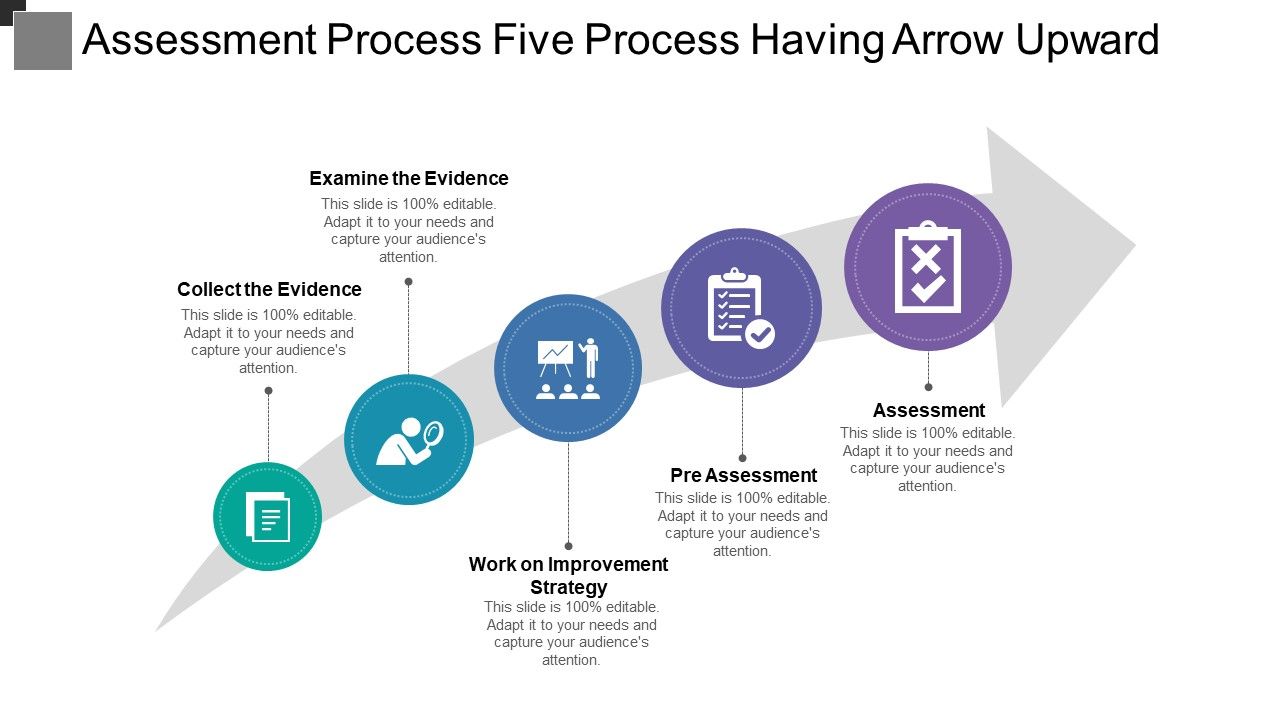
Presenting this set of slides with name - Assessment Process Five Process Having Arrow Upward. This is a five stage process. The stages in this process are Assessment Process, Assessment Cycle, Assessment Management.

FAQs for Assessment process five process

So basically you've got four main steps. First, figure out exactly what you're measuring and why - I know it sounds dumb but people genuinely forget this part. Collect your data next through whatever works: tests, watching people work, portfolios, whatever. Then analyze what it's all telling you about performance gaps or learning issues. The last step? Actually doing something with those insights. Honestly, most assessment projects die right there - tons of data collection but zero follow-through. Such a waste.

Oh, formative assessments are honestly game-changers! You're basically checking in with kids constantly instead of waiting until test day to see who's lost. Exit tickets work great - just have them write one thing they learned on a sticky note. Quick thumbs up/down during lessons too. The whole point is catching confusion before it snowballs into bigger problems. Way better than those brutal summative tests that just tell you what already happened. Keep them super low-pressure though - I learned that the hard way my first year. Mini-quizzes, quick discussions, whatever keeps you in the loop about their thinking.

Dude, feedback is everything! Without it, assessment is basically just slapping grades on papers. Students need to know exactly where they messed up and how to fix it next time. Timing matters too - give it while the work is still fresh in their minds. Don't just write "good job" or whatever. That tells them nothing. Be specific about what worked and what didn't. Like, instead of "needs improvement," try "your thesis was solid but you need more evidence in paragraph three." Honestly? I've seen teachers who think grading IS feedback. It's not. Make it actionable so kids actually learn something.

Honestly, backward design is a game changer - figure out your learning objectives first, then build assessments around those. I literally make spreadsheets now to track which questions hit which objectives because I'm nerdy like that. Used to just throw assessments together and couldn't figure out why kids bombed certain topics! If you want them thinking critically, multiple choice ain't gonna cut it. Match your assessment style to what you're actually trying to measure, not what's quickest to grade. Oh, and don't set it and forget it - I'm constantly tweaking throughout the semester.

Start with measurable stuff that actually matches what you're trying to teach. Each level needs specific descriptions - none of that "good" or "adequate" nonsense. Test it on sample work first! You'll find holes you never saw coming. Get other people to look at it too, students included. They catch confusing language way faster than you will. Oh, and keep it simple enough that you'll actually use the thing consistently. I've seen too many elaborate rubrics that just end up forgotten in desk drawers because they're too much work to grade with.

Honestly, tech can save you so much time here. Start with automating the boring stuff - data collection and scoring instead of doing it all by hand. Online platforms are great because you can send assessments out instantly and actually see who's completed them without playing email tag (which I hate). Analytics tools will spot patterns for you and spit out reports automatically. Way better than living in Excel hell. The feedback part gets faster too since everything's digital. I'd pick whatever's currently sucking up most of your time and digitize that first. Baby steps work better than trying to overhaul everything at once.

Honestly, just give kids different ways to show what they know. Some crush presentations while others freeze up completely. Try mixing in portfolios, hands-on stuff, or even those voice recordings - I swear students say the most insightful things when they're just rambling into their phones. Visual kids love making infographics or concept maps. For your kinesthetic learners, simulations work great. The trick is offering choice upfront and being clear about what you're actually looking for. Maybe pick 2-3 alternatives for your next big assessment? See what sticks.

So validity basically means - does your test actually measure what you think it does? Look at content validity (covers the right topics), construct validity (measures the right concept), and criterion validity (predicts outcomes). Reliability's all about consistency. Test internal consistency with Cronbach's alpha, plus test-retest over time. If multiple people are scoring, check inter-rater reliability too. The stats can get messy, not gonna lie. First figure out exactly what you're measuring, then pick maybe 2-3 validity/reliability checks that actually make sense for your situation. Don't overthink it initially.

Oh peer assessment is amazing for engagement! Students actually start caring more when they're the ones doing the evaluating instead of just sitting there. They have to really look at the rubric and understand what makes good work. Plus seeing how other people tackle the same assignment? Game changer for their learning. My students honestly surprise me sometimes - their feedback can be spot on, maybe even better than mine occasionally. Just give them solid rubrics first and maybe practice with something low-stakes. Don't jump straight into graded stuff or they'll panic.

So the biggest thing is giving kids extra time - honestly, most students just need to breathe and think without rushing. But you can get creative too. Try oral tests instead of written ones, or break big exams into smaller pieces. Some kids do way better with visual stuff or using tech like text-to-speech. Here's what I've learned though - don't just look at their diagnosis and assume what they need. Figure out what's actually blocking them from showing what they know, then work backwards. Sometimes it's weird little things you wouldn't expect.

So basically you want to focus on being fair, keeping things confidential, and making sure people actually understand what you're doing to them. Use assessment tools that make sense for their background - cultural bias creeps in way more than people realize. Always explain what the assessment is for and who might see the results. Keep their info locked down tight. Don't try assessing stuff you're not qualified for (I've seen that go badly). Be upfront about limitations in your methods. Document everything properly because you'll need that paper trail later. Oh, and think about how this whole thing might actually affect the person - assessments aren't just academic exercises, they impact real lives.

Skip multiple choice - way too easy to just guess randomly. Case studies work great, or give them messy situations where they have to walk through their thinking out loud. I love throwing conflicting data at students and watching them figure out what's actually reliable. Ask stuff like "explain how you'd tackle this problem" instead of looking for one right answer. Honestly, their process matters way more than whether they nail the final conclusion. Rubrics help track if they're spotting assumptions and considering different angles. Start small with one real problem and see how it goes.

Honestly, the tech stuff will drive you crazy - kids' wifi dies right in the middle of exams. Academic integrity is rough too since you can't see what they're doing off-camera. Group projects? Total nightmare to coordinate online. You'll miss reading the room - like when everyone looks confused but nobody speaks up. Students zone out way more easily at home. Oh, and some assessment types just don't work virtually. Break things into smaller chunks instead of one massive test. Always have a backup plan because something will go wrong.

Honestly, self-assessment is a game changer because it gets kids thinking about their own learning instead of just waiting for you to tell them how they did. They start noticing their strengths and weak spots on their own - which is way more powerful than us pointing it out. Plus they're not constantly looking for your approval anymore. I'd start with quick reflection questions after assignments, nothing fancy. Even something simple like "what was hardest about this?" helps them take ownership. It's wild how much more engaged they get once they're tracking their own progress instead of just going through the motions.

Honestly, data analysis changed everything for my assessments. You'll spot which questions are way too hard or ridiculously easy, plus see where your rubrics are wonky. I used to just go with my gut - terrible idea lol. When students bomb the same question repeatedly, it's probably the question that sucks, not them. Pull reports after each round and hunt for weird patterns. Oh and don't try to fix everything at once or you'll burn out. Pick something simple like question difficulty first, then build from there.

Ratings and Reviews

100% of 100
Review Form
Write a review
Most Relevant Reviews
  1. 100%

    by Davis Gutierrez

    Informative design.
  2. 100%

    by Donnie Knight

    Excellent Designs.

2 Item(s)

per page: