Automation Process Opportunities Technology Marketing Gear Robotic
Try Before you Buy Download Free Sample Product
Audience
Editable
of Time
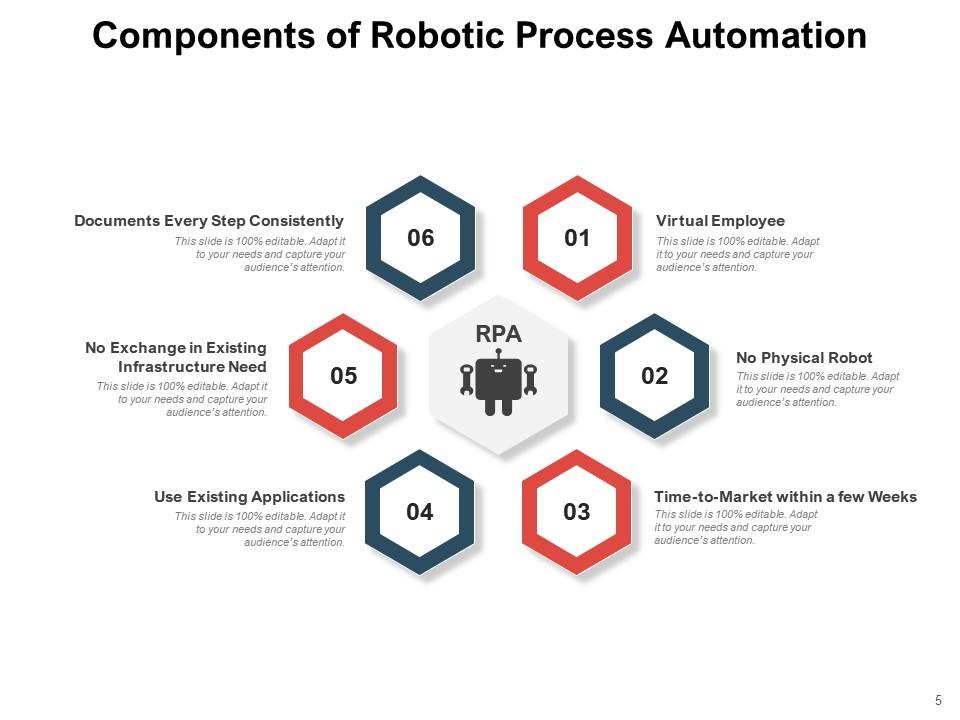
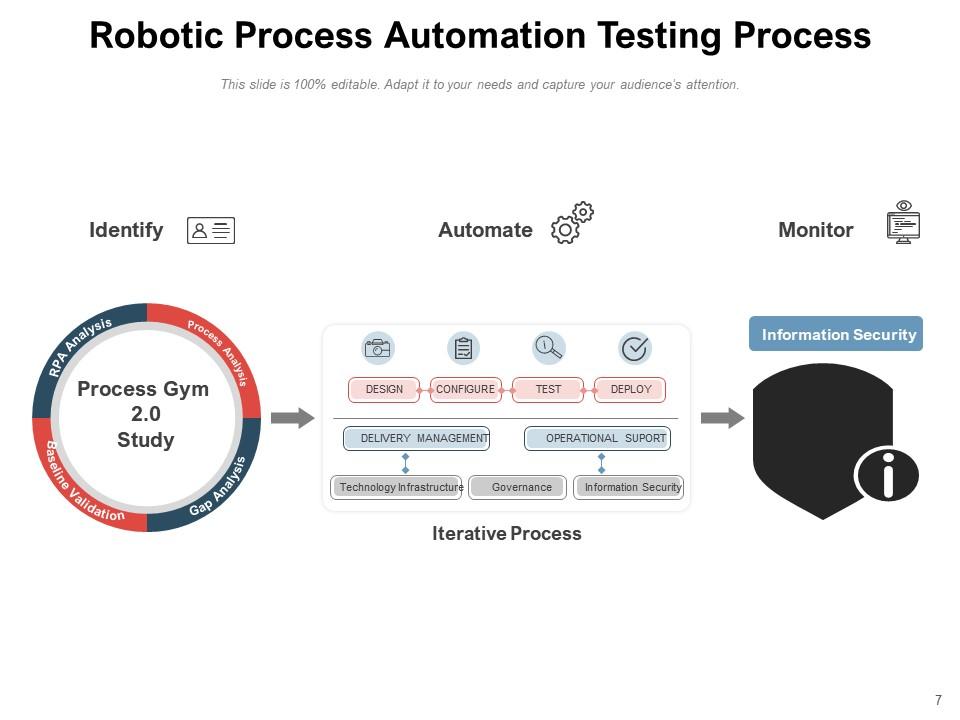
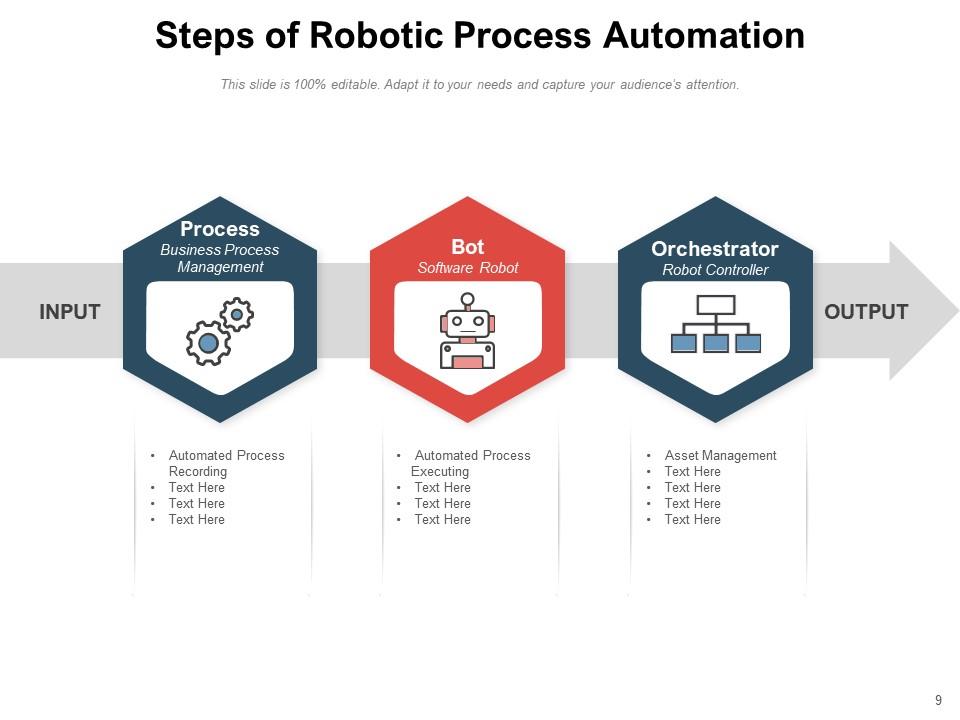
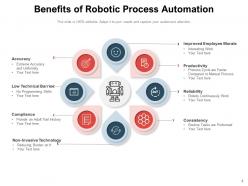
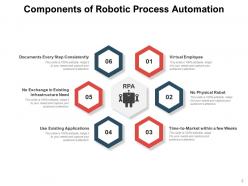
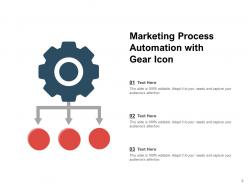
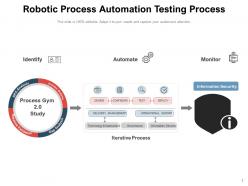
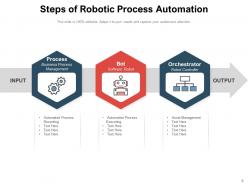
It has been a long time since business corridors have been flooded with stories about digital disruption, particularly Robotic Process Automation (RPA) and AI influencing every aspect of life, from employment to healthcare diagnosis to shopping. While strategy heads and digital officers have accumulated a vast amount of information on automation trends, one significant difficulty we confront when working with clients is determining the best place to begin. In this piece, I'd want to give some tips for identifying RPA possibilities inside your organisation where software bots may be efficiently exploited. Robotic process automation can help your business save time and money. By using our robotic process automation PowerPoint templates, you can get in-depth information about the opportunities for technology marketing gear and robotics through the Automation process. These templates are easy to use and customizable, so you can create a presentation that is perfect for your needs. Download them now to get started on automating your business processes.
People who downloaded this PowerPoint presentation also viewed the following :
Automation Process Opportunities Technology Marketing Gear Robotic with all 10 slides:
Use our Automation Process Opportunities Technology Marketing Gear Robotic to effectively help you save your valuable time. They are readymade to fit into any presentation structure.
FAQs for Automation Process Opportunities Technology
Modern automation technology includes artificial intelligence, machine learning algorithms, robotic process automation, IoT sensors, and cloud-based control systems. These technologies streamline operations by reducing manual tasks, enhancing data accuracy, and enabling real-time monitoring, with many organizations finding that strategic combinations ultimately deliver significant cost reductions and competitive advantages.
Automation technology significantly enhances productivity by streamlining repetitive tasks, reducing human error, and accelerating processes across multiple sectors. Manufacturing companies achieve faster production cycles, healthcare facilities deliver quicker patient processing, and financial services automate loan approvals, ultimately enabling organizations to reallocate resources strategically while delivering improved efficiency and competitive advantage.
AI serves as automation's cognitive engine, enabling systems to learn, adapt, and make complex decisions through machine learning, natural language processing, predictive analytics, and computer vision. These technologies revolutionize automation by shifting from rule-based processes to intelligent responses, with sectors like manufacturing, healthcare, and financial services finding that AI-driven automation delivers faster decision-making, reduced operational costs, and enhanced competitive advantage.
Small businesses can leverage automation technology by streamlining operations, reducing labor costs, and enhancing customer experiences through automated workflows, customer service chatbots, and inventory management systems. These technologies enable smaller firms to operate with enterprise-level efficiency, delivering faster services and competitive pricing, with many finding that strategic automation ultimately levels the playing field against larger competitors.
Automation technology risks include job displacement, high implementation costs, system vulnerabilities, over-dependence on technology, and potential security breaches. While these challenges present real considerations, many organizations find that strategic implementation with proper training, cybersecurity measures, and phased rollouts ultimately delivers competitive advantages, with successful automation enhancing rather than replacing human capabilities.
Industries implement automation solutions based on their specific operational needs and regulatory requirements, with manufacturing focusing on robotic assembly lines, healthcare utilizing automated diagnostic systems, and financial services deploying algorithmic trading platforms. These sector-specific approaches enable streamlined processes, reduced operational costs, and enhanced service delivery, with many organizations finding that tailored automation strategies deliver significant competitive advantages.
Professionals in automation technology require programming skills in Python, Java, or C++, systems integration expertise, project management capabilities, and knowledge of robotics, AI, and industrial control systems. These competencies enable engineers and technicians to design, implement, and maintain automated solutions across manufacturing, healthcare, and financial services, ultimately delivering enhanced operational efficiency and competitive advantage for organizations embracing digital transformation.
Automation technology transforms the job market by eliminating routine tasks, creating demand for technical skills, and reshaping entire industries like manufacturing, finance, and healthcare. While it displaces certain roles, it simultaneously generates new positions in AI management, system maintenance, and strategic oversight, with many organizations finding that upskilling existing employees delivers competitive advantages.
Latest automation trends include hyperautomation, AI-driven process optimization, robotic process automation integration, intelligent document processing, and no-code automation platforms. These technologies streamline operations by reducing manual tasks, enhancing decision-making accuracy, and enabling faster scalability, with many organizations finding that strategic automation delivers significant cost reductions and competitive advantages.
Automation technologies enhance customer experiences by enabling faster response times, 24/7 availability, and personalized interactions through chatbots, self-service portals, and predictive analytics. Banks use automated loan processing, hotels deploy smart check-in systems, and retail companies leverage AI-driven recommendations, ultimately delivering seamless service while reducing wait times and operational costs.
Automation technology raises ethical considerations including job displacement impacts, algorithmic bias in decision-making, privacy concerns with data collection, accountability gaps in automated decisions, and equitable access to benefits. While these present challenges, organizations increasingly find that proactive ethical frameworks, transparent implementation processes, and strategic workforce retraining programs enable responsible automation adoption while delivering competitive advantages.
Organizations measure automation ROI by tracking metrics like cost savings, productivity gains, error reduction rates, processing speed improvements, and employee time freed for strategic tasks. Through comprehensive analytics dashboards, companies calculate payback periods, compare pre and post-automation performance, and quantify benefits across operations, with many finding measurable returns within 12-18 months of implementation.
Automation technology significantly enhances sustainability by optimizing energy consumption, reducing waste through precision manufacturing, and enabling smart resource management across operations. Through IoT sensors and AI-driven systems, organizations streamline production processes, minimize material waste, and automate energy-efficient practices, with many manufacturing and logistics companies finding that automated systems deliver both cost reduction and measurable environmental benefits.
Automation technology integrates with IoT through connected sensors, real-time data analytics, and intelligent device orchestration, creating comprehensive smart systems. Through IoT connectivity, automated processes can monitor equipment performance, predict maintenance needs, and optimize resource allocation across manufacturing plants, smart buildings, and supply chains, ultimately delivering enhanced operational efficiency and reduced costs.
Notable automation successes include Amazon's warehouse robotics reducing fulfillment times, JPMorgan Chase's contract analysis AI processing 360,000 hours of legal work annually, and Walmart's inventory management systems optimizing stock levels across thousands of stores. These implementations demonstrate how strategic automation streamlines operations, reduces costs, and enhances customer experiences, with many corporations finding that targeted automation delivers measurable competitive advantages.
-
Informative presentations that are easily editable.
-
Unique design & color.
-
Designs have enough space to add content.
-
Enough space for editing and adding your own content.
-
Awesome use of colors and designs in product templates.