

B2B Social Media Marketing Plan For Product Promotion Powerpoint Presentation Slides




Try Before you Buy Download Free Sample Product
 Impress Your
 Audience
 100%
100% Editable
 Save Hours
 of Time


A B2B social media marketing strategy is now one of the most effective ways to reach prospective customers. Check out our insightfully designed B2B Social Media Marketing Plan for Product Promotion template. It will act as a strategic guide to help the organization promote products or services through various social media platforms. Our Customer Retention deck displays the organizations current marketing performance and compares it to competitors and industry standards. It also compares multiple social media platforms and a road map for running a B2B marketing campaign. A significant portion of the PPT is dedicated to B2B marketing plans via various social media platforms, including Facebook, Instagram, LinkedIn, and Twitter. It further demonstrates strategies for retaining B2B customers via a social media marketing campaign. Additionally, Our Content Promotion module outlines the roles and responsibilities of marketing team members and the budget and tools used to run promotional campaigns. Finally, it emphasizes the impact of marketing campaigns on B2B organizations. Get instant access to this 100 percent editable template now.
People who downloaded this PowerPoint presentation also viewed the following :
Content of this Powerpoint Presentation
Slide 1: This slide elucidates B2B Social Media Marketing Plan for Product Promotion. Commence by stating Your Company Name.
Slide 2: This slide depicts the Agenda of the presentation.
Slide 3: This slide incorporates the Tables of contents.
Slide 4: This slide highlights the Title for the Topics to be discussed further.
Slide 5: This slide showcases current scenario and results of organization marketing campaigns.
Slide 6: This slide mentions the Current problems with organization social media marketing strategy.
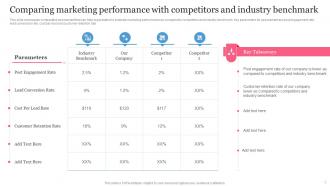
Slide 7: This slide Compares the marketing performance with competitors and industry benchmark.
Slide 8: This slide contains the Heading for the Components to be covered in the forth-coming slide.
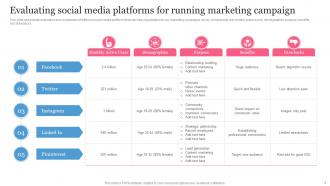
Slide 9: This slide focuses on Evaluating social media platforms for running marketing campaign.
Slide 10: This slide elucidates the Importance of social media platforms for B2B marketing.
Slide 11: This slide mentions about the Heading for the Ideas to be discussed further.
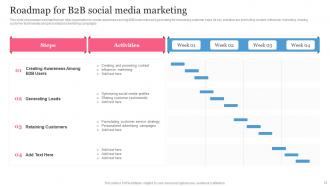
Slide 12: This slide showcases roadmap that can help organization to create awareness among B2B customers and generating for increasing customer base.
Slide 13: This slide indicates the Title for the Ideas to be covered in the following template.
Slide 14: This slide exhibits the Influencer marketing plan for creating awareness.
Slide 15: This slide reveals profile optimization practices that can help organization generate more leads from instagram.
Slide 16: This slide portrays the Heading for the Topics to be dicussed next.
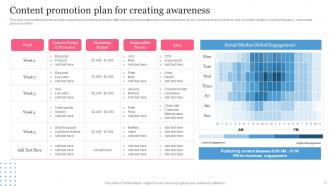
Slide 17: This slide showcases plan that can help organization promoting content on different social media platforms for brand awareness.
Slide 18: This slide focuses on the Facebook strategies for generating B2B leads.
Slide 19: This slide reveals the Title for the Components to be covered in the next template.
Slide 20: This slide talks about the Linkedin strategies for creating awareness among B2B consumers.
Slide 21: This is Meet our customers slide for showcasing customer testimonials that organization can share on linkedin to generate B2B leads.
Slide 22: This slide incorporates the Title for the Topics to be covered further.
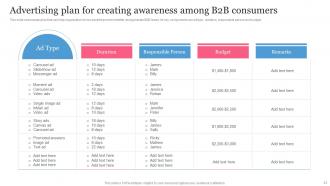
Slide 23: This slide focuses on the Advertising plan for creating awareness among B2B consumers.
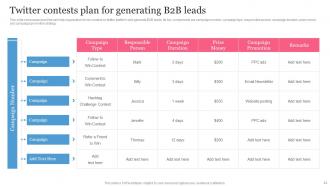
Slide 24: This slide showcases plan that can help organization to run contest on twitter platform and generate B2B leads.
Slide 25: This slide elucidates the Heading for the Components to be discussed further.
Slide 26: This slide showcases strategies that can help organization to retain customers on different social media platforms.
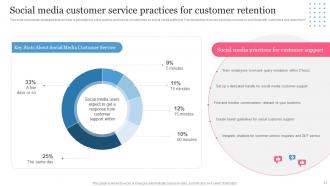
Slide 27: This slide deals with Social media customer service practices for customer retention.
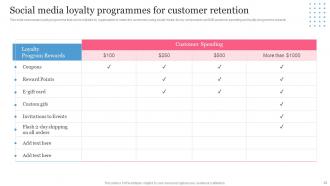
Slide 28: This slide focuses on Social media loyalty programmes for customer retention.
Slide 29: This slide depicts the Title for the Contents to be covered in the upcoming template.
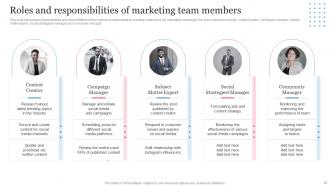
Slide 30: This slide exhibits the Roles and responsibilities of marketing team members.
Slide 31: This slide incorporates the Heading for the Topics to be discussed further.
Slide 32: This slide showcases tools that can help B2B marketeers to manage and run marketing campaigns on various social media platforms.
Slide 33: This slide presents the Title for the Topics to be covered in the forth-coming template.
Slide 34: This slide outlines the Budget for social media marketing activities.
Slide 35: This slide represents the Heading for the Components to be covered in the upcoming slide.
Slide 36: This slide indicates the Impact of new social media marketing campaign.
Slide 37: This slide exhibits the Title for the Ideas to be covered further.
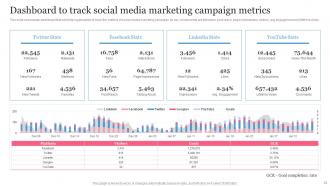
Slide 38: This slide presents the Dashboard to track social media marketing campaign metrics.
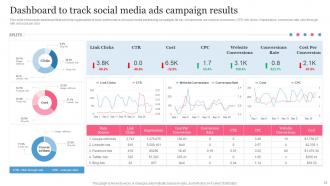
Slide 39: This slide illustrates the dashboard that can help organization to track performance of social media advertising campaigns.
Slide 40: This is the Icons slide containing all the Icons used in the plan.
Slide 41: The purpose of this slide is to elucidate Additional information.
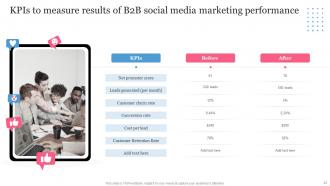
Slide 42: This slide reveals the KPIs to measure results of B2B social media marketing performance.
Slide 43: This slide incorporates the Solutions to overcome B2B marketing problems.
Slide 44: This slide shows the Marketing funnel for social media content.
Slide 45: This slide focuses on the Content scheduling calendar for social media platforms.
Slide 46: This is the Sheet for tracking and scheduling social media content.
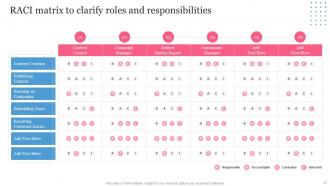
Slide 47: This slide displays the RACI matrix to clarify roles and responsibilities.
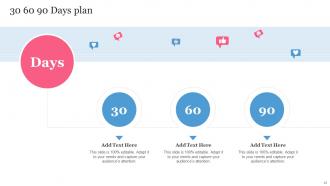
Slide 48: This is the 30 60 90 Days plan slide for efficient planning.
Slide 49: This slide shows information related to the Financial topic.
Slide 50: This slide elucidates the Vision, mission, and goal of the organization.
Slide 51: This is the Venn Diagram slide.
Slide 52: This is the Idea generation slide for encouraging fresh ideas.
Slide 53: This is the Thank You slide for acknowledgement.
B2B Social Media Marketing Plan For Product Promotion Powerpoint Presentation Slides with all 58 slides:
Use our B2B Social Media Marketing Plan For Product Promotion Powerpoint Presentation Slides to effectively help you save your valuable time. They are readymade to fit into any presentation structure.



























FAQs for B2B Social Media Marketing Plan For Product Promotion
Honestly, it's all about patience vs instant gratification. B2C customers might impulse-buy your product after seeing one TikTok ad. B2B? You're dealing with committees that take forever to decide anything. Your content needs to actually teach them stuff and solve real business headaches. LinkedIn becomes your best friend instead of Instagram - though weirdly, some B2B companies are crushing it on TikTok lately. You'll be nurturing leads for months, creating different content for the CEO vs the procurement guy. Building trust matters way more than flashy sales tactics.
Honestly, forget follower counts - they don't pay the bills. What you really need is UTM codes on all your social links so you can actually see which platforms send people to your site. Then track those visitors through your whole sales process. Quality matters too though - maybe your social leads take longer to close but they're way more loyal customers (which happened to us last year). Your CRM should connect the dots between social touchpoints and actual deals. The whole point is tying social stuff back to real revenue, even when sales cycles drag on forever.
LinkedIn's your obvious starting point - that's where all the decision-makers actually spend time scrolling during their lunch breaks. Twitter can work too if you're into the whole thought leadership thing, but honestly the algorithm there drives me nuts sometimes. YouTube's solid if you can commit to making content regularly (which is harder than it sounds). Facebook still works for certain B2B niches, weirdly enough. Instagram's tough but possible if your industry is visual. Start with LinkedIn first since your prospects are already there hunting for solutions, then figure out where else your specific crowd hangs out.
LinkedIn's killer for B2B leads, trust me. First thing - get your company page looking decent, then have everyone post industry stuff that's actually useful. Sales Navigator costs money but it's worth it since you can find exactly who you need by company size, role, whatever. But here's the thing - don't pitch right away or you'll look desperate. Comment on their posts first, maybe send a casual DM. Share some case studies if you've got good ones. Those lead gen forms work great in sponsored posts too. Sounds obvious but focus on helping people before trying to sell them anything.
B2B influencers are basically those industry experts your prospects already follow - think CEOs, consultants, analysts, whoever's got credibility in your space. Way more valuable than random celebrities since their audience actually cares about business stuff. Find people whose expertise matches what you're selling. LinkedIn's perfect for this - see who your target customers engage with most. Then you can collaborate on content, get them to share your insights, or have them speak at events. Honestly, it's one of the fastest ways to build trust since you're borrowing their reputation.
People absorb info so differently, you know? Some folks scroll past everything except videos during their commute. Others want those quick infographics they can share in two seconds. Then there's people like me who actually read the long blog posts (weird, I know). Mix it up so you're not just posting the same format over and over - that gets boring fast. Videos usually get the most engagement anyway. Try one blog, one video, one infographic each week. Then just see what your people actually click on most.
HubSpot's killing it on LinkedIn - they share tons of helpful marketing tips instead of just selling stuff. Salesforce is great on Twitter too, always responding to people and posting customer wins. Adobe's probably my favorite though, their LinkedIn shows actual customer transformations that don't feel fake. Even IBM makes boring tech topics interesting somehow. Oh and they all do this thing where they actually help people first before trying to sell anything. Honestly, just start posting one useful tip each week. That's literally how most of these companies started building their followings.
Okay so here's what saved my butt - stick to the 80/20 thing. Most of your posts (like 80%) should actually help people or be interesting, not just "buy my stuff!" Only 20% can be straight sales pitches. Trust me, I posted too many promos once and our engagement died. Share tutorials, industry news, behind-the-scenes pics - that kind of thing. Mix it up with infographics and case studies too. The educational posts usually do way better anyway. Then sprinkle in your product posts here and there. Watch which ones get more likes and comments, then do more of whatever's working for your crowd.
Keep everything consistent - same logo, colors, messaging across all platforms. Your bio needs to actually explain what you do and who you're for, not some "we empower synergistic solutions" garbage that means nothing. Use professional photos and quality images. Pin your top posts. Make sure contact info is current - sounds obvious but you'd be surprised how many people forget this. LinkedIn should feel corporate and polished. Twitter can be way more relaxed and conversational. Oh, and throw in keywords your customers actually search for, not industry buzzwords that sound impressive but help nobody find you.
LinkedIn's your best bet - target super specific job titles and company sizes instead of casting a wide net. Facebook works okay, but honestly LinkedIn is where decision makers actually scroll during their lunch breaks. Video ads and case studies crush static images every time. Don't lead with product features though, that's boring. Start with the problems keeping your prospects up at night, then swoop in as the solution. Test small budgets across different audiences first. Whatever converts, throw more money at it. Oh, and always send traffic to dedicated landing pages - your homepage is way too generic.
Honestly? Most companies just blast out sales pitches constantly - total turn-off. Pick one or two platforms max and actually stick to posting regularly. B2B people want real insights, not your recycled consumer marketing fluff. I see so many businesses treating LinkedIn like Instagram or whatever, but each platform has its own vibe. Don't just share random industry articles either - add your own take! Oh, and here's the big one: actually engage with people who comment. Nothing worse than posting then vanishing. Start small with a basic content calendar. Trust me, consistency beats perfection every time.
Dude, social media feedback is pure gold for B2B product stuff. Your customers are already complaining about what sucks and praising what works on LinkedIn and Twitter - you just gotta listen. Set up some social listening tools (takes like 20 minutes) and watch for patterns. I swear, companies will completely change their roadmap when they see the same complaints popping up everywhere. Industry forums are clutch too. Here's what I do: spend 30 minutes each week scrolling mentions, then dump all the themes into your product meetings. Your dev team will actually thank you for real user insights instead of guessing what people want.
Don't push products right away - that's backwards. Help people first by sharing useful industry stuff and jumping into conversations where your audience actually is. LinkedIn Live sessions work great if you're answering real questions. Honestly, most people still do that annoying spray-and-pray thing, but being genuinely helpful gets way better results. Make content that fixes actual problems - templates, guides, those behind-the-scenes videos people love. Oh, and engage with their posts too, not just yours. Pick one platform first though. Master that before you spread yourself too thin everywhere else.
Honestly, remote work has been a game-changer for B2B social media marketing. Decision-makers who used to hate social platforms are now scrolling LinkedIn all day because it's basically their only connection to industry stuff. People are online constantly anyway, so you're hitting them where they already are. Twitter and LinkedIn have become like the new office break room - except better networking, obvs. The trick is posting actually useful content about remote work challenges instead of just trying to sell them something. I swear, executives who wouldn't touch social media two years ago are now posting thought leadership content daily. It's wild how much the landscape shifted.
Honestly, start with LinkedIn Campaign Manager and Twitter Analytics for the basics. But you'll need something like Hootsuite or Sprout Social to see the full picture across platforms. Google Analytics is a must - seriously, so many B2B teams forget to use UTM parameters and then wonder why they can't track anything. If you want to get fancy, Brandwatch does solid sentiment analysis. The key thing though? Pick one tool that connects to your CRM. Otherwise you're just collecting vanity metrics instead of tracking actual revenue from social.
-
Requested a complete pitch deck. Delivered immediately and with high quality well researched content.
-
Helpful product design for delivering presentation.