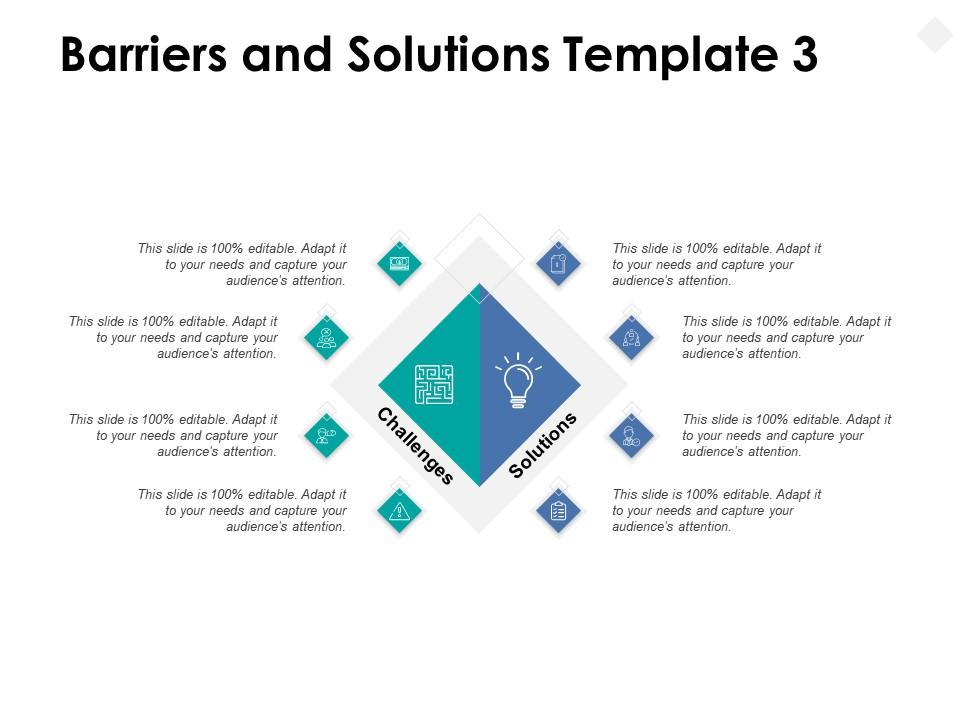
Barriers and solutions template challenges planning ppt powerpoint presentation file
Try Before you Buy Download Free Sample Product
Audience
Editable
of Time
Add to the inflow with our Barriers And Solutions Template Challenges Planning Ppt Powerpoint Presentation File. Encourage the continuous generation of ideas.
People who downloaded this PowerPoint presentation also viewed the following :
Barriers and solutions template challenges planning ppt powerpoint presentation file with all 5 slides:
Encourage the continuous generation of ideas with our Barriers And Solutions Template Challenges Planning Ppt Powerpoint Presentation File. It will add to the inflow.
FAQs for Barriers and solutions template challenges planning ppt
Common project planning barriers include unclear objectives, inadequate resource allocation, poor communication, unrealistic timelines, and insufficient risk assessment. These challenges affect industries from construction and healthcare to software development and manufacturing, with many organizations finding that implementing structured methodologies, stakeholder engagement protocols, and regular progress reviews ultimately streamlines project delivery and enhances operational efficiency.
Organizational culture and structure significantly impact planning by determining communication flows, decision-making hierarchies, risk tolerance levels, and resource allocation priorities. Traditional hierarchical structures may slow planning through lengthy approval chains, while collaborative cultures enable faster consensus-building and implementation, with many organizations finding that flatter structures and adaptive cultures ultimately deliver more agile planning processes.
Stakeholder engagement minimizes planning barriers by building consensus, identifying potential obstacles early, securing buy-in across departments, and ensuring diverse perspectives shape strategic decisions. Through collaborative workshops and regular communication touchpoints, organizations streamline approval processes, reduce implementation resistance, and accelerate project timelines, with many finding that inclusive planning ultimately delivers stronger outcomes and sustained competitive advantage.
Inadequate data creates blind spots in decision-making, leading to unrealistic goals, poor resource allocation, and missed market opportunities, while limited resources force organizations to compromise on strategic initiatives. These constraints particularly challenge growing businesses and startups, with many finding that investing in data infrastructure and phased implementation strategies ultimately delivers more accurate forecasting and sustainable growth trajectories.
Strategies for managing time constraints include setting clear priorities, breaking projects into smaller phases, utilizing automated planning tools, implementing parallel workflows, and establishing realistic deadlines with buffer time. These approaches streamline planning processes by reducing bottlenecks, accelerating decision-making, and enhancing resource allocation, with many organizations finding that strategic time management ultimately delivers faster project launches and improved operational efficiency.
Technology mitigates project planning challenges by automating scheduling, enhancing resource allocation, and providing real-time visibility into project progress. Through AI-powered tools and cloud-based platforms, organizations streamline timeline management, minimize resource conflicts, and accelerate decision-making processes, with many project managers finding that integrated systems ultimately deliver improved accuracy and competitive operational efficiency.
Regulatory compliance significantly impacts planning by requiring extensive documentation, timeline extensions, and resource allocation adjustments across sectors like healthcare, financial services, and manufacturing. While compliance creates operational complexity and cost considerations, it also enables enhanced risk management, standardized processes, and competitive differentiation, with many organizations finding that strategic compliance planning ultimately delivers market credibility and sustainable growth advantages.
Risk management integrates into planning by identifying potential threats, assessing their likelihood and impact, and developing mitigation strategies throughout project phases. This proactive approach enables organizations to allocate resources more strategically, create contingency plans, and maintain operational continuity, with many companies finding that systematic risk assessment ultimately reduces costs and enhances competitive advantage.
Techniques to enhance planning team communication include regular structured meetings, collaborative digital platforms, clear role definitions, shared documentation systems, and cross-functional workshops. These approaches streamline information flow by establishing consistent touchpoints, centralizing project updates, and breaking down departmental silos, with many organizations finding that enhanced transparency and real-time collaboration ultimately deliver faster decision-making and improved project outcomes.
Conflict resolution strategies enhance planning by facilitating open communication, establishing common ground among stakeholders, and creating structured frameworks for addressing disagreements before they escalate. These approaches streamline decision-making processes through mediation techniques, collaborative problem-solving methods, and consensus-building practices, with many organizations finding that proactive conflict management reduces project delays and ultimately delivers more cohesive, implementable plans.
Cognitive biases significantly impact planning decisions by creating overconfidence in timelines, anchoring on initial estimates, and causing confirmation bias when evaluating risks. These mental shortcuts lead to unrealistic project scopes, inadequate resource allocation, and poor contingency planning, with many organizations finding that structured decision-making frameworks and diverse planning teams help minimize bias-driven errors while enhancing strategic outcomes.
Flexibility and adaptability can be integrated through agile planning frameworks, scenario-based modeling, iterative review cycles, modular strategy structures, and real-time adjustment protocols. These methodologies enable organizations to pivot quickly during market changes, incorporate emerging opportunities seamlessly, and maintain competitive advantage while delivering sustained growth, with many businesses finding that adaptive planning reduces risks and accelerates decision-making.
Teams need strategic thinking, data analysis, risk assessment, stakeholder management, and adaptive problem-solving skills to overcome planning barriers effectively. Through comprehensive training in scenario planning, communication techniques, and change management, organizations streamline decision-making processes, enhance cross-functional collaboration, and ultimately deliver more resilient project outcomes, with many finding that continuous skill development significantly improves planning success rates.
External economic factors significantly influence planning through market volatility, inflation rates, interest rate fluctuations, regulatory changes, and supply chain disruptions. These conditions reshape resource allocation strategies, budget forecasting approaches, and timeline considerations, with organizations increasingly adopting flexible planning frameworks and scenario-based modeling to navigate uncertainty while maintaining competitive advantage.
Global project planning success requires establishing clear communication protocols, implementing standardized project management frameworks, conducting thorough cultural assessments, creating flexible timeline buffers, and leveraging collaborative technology platforms. These practices streamline coordination across time zones and cultural differences, with many multinational organizations finding that combining local market expertise with centralized oversight ultimately delivers faster project execution and stronger stakeholder alignment.
No Reviews