Budgeting management accounting ppt powerpoint presentation layouts maker cpb

Budgeting management accounting ppt powerpoint presentation layouts maker cpb
Slide 1 of 2

or

Favourites Favourites

Try Before you Buy Download Free Sample Product

Audience Impress Your
Audience
Editable 100%
Editable
Time Save Hours
of Time
The Biggest Sale is ending soon in
0
0
:
0
0
:
0
0
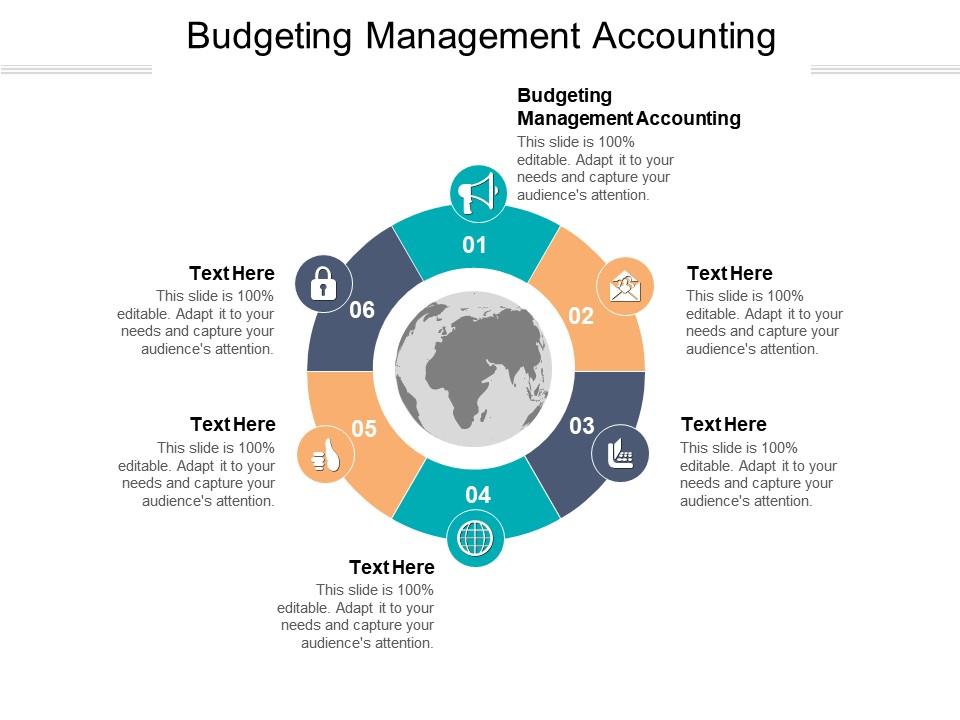
Presenting this set of slides with name Budgeting Management Accounting Ppt Powerpoint Presentation Layouts Maker Cpb. This is an editable Powerpoint six stages graphic that deals with topics like Budgeting Management Accounting to help convey your message better graphically. This product is a premium product available for immediate download and is 100 percent editable in Powerpoint. Download this now and use it in your presentations to impress your audience.

FAQs for Budgeting management accounting ppt powerpoint presentation

Effective budgeting in management accounting includes revenue forecasting, expense planning, cash flow projections, variance analysis, and performance monitoring systems. These components work together by establishing financial targets, tracking actual performance against budgets, and enabling strategic adjustments, with many organizations finding that integrated budgeting processes ultimately deliver improved resource allocation and enhanced operational efficiency.

Variance analysis improves budgeting by identifying differences between planned and actual performance, enabling companies to understand cost drivers, revenue fluctuations, and operational inefficiencies. Through systematic comparison of budget versus actuals, organizations streamline future forecasting accuracy, enhance resource allocation decisions, and deliver better financial control, with many companies finding that regular variance reviews ultimately strengthen their competitive positioning and profitability.

Forecasting serves as the foundation for effective budgeting by predicting future revenues, expenses, and market conditions based on historical data, industry trends, and strategic objectives. This predictive analysis enables organizations to set realistic financial targets, allocate resources strategically, and anticipate potential challenges, ultimately delivering more accurate budgets and enhanced financial planning across departments.

Organizations align budgets with strategic goals by implementing zero-based budgeting, establishing clear performance metrics, conducting regular strategic reviews, and creating cross-departmental budget committees. Through these approaches, companies like manufacturing firms and financial services ensure resource allocation directly supports growth objectives, market expansion initiatives, and operational improvements, ultimately delivering enhanced competitive positioning and measurable strategic outcomes.

Zero-based budgeting techniques include activity-based costing analysis, cost-benefit evaluation for each expense, departmental priority ranking, resource allocation from scratch, and performance metric alignment with strategic objectives. These approaches streamline budget development by eliminating historical spending assumptions, enabling organizations across retail, manufacturing, and financial services to reduce operational costs while enhancing resource efficiency and strategic focus.

External economic factors influence budgeting decisions through inflation rates, interest rates, market volatility, regulatory changes, and currency fluctuations. Organizations adapt by implementing scenario planning, adjusting revenue projections, and reallocating resources, with many financial institutions and manufacturing companies finding that flexible budgeting frameworks enable better risk management and strategic positioning during economic uncertainty.

Departmental budgets serve as critical building blocks in management accounting frameworks, enabling precise resource allocation, performance measurement, accountability tracking, and strategic alignment across organizational units. These targeted budgets help companies identify cost centers, streamline operational efficiency, and enhance decision-making processes, with many organizations finding that departmental-level budgeting delivers improved transparency and ultimately strengthens overall financial control.

Technology enhances budgeting through cloud-based platforms, automated data integration, real-time analytics, predictive modeling, and collaborative workflows. These solutions streamline budget preparation by eliminating manual processes, enabling scenario planning, and providing instant visibility into variances, with many organizations finding that automated budgeting reduces cycle times significantly while improving accuracy and strategic decision-making.

Common budgeting pitfalls include unrealistic revenue projections, insufficient contingency planning, over-reliance on historical data, inadequate stakeholder input, and inflexible budget structures. These challenges can significantly impact financial accuracy and strategic decision-making, with many organizations finding that implementing rolling forecasts, scenario planning, and cross-departmental collaboration ultimately delivers enhanced operational efficiency and competitive advantage.

Activity-based costing influences budgeting decisions by providing precise cost allocation based on actual resource consumption, enabling more accurate departmental budgets, project forecasting, and resource planning. Organizations using ABC can identify cost drivers more effectively, eliminate wasteful activities, and allocate budgets strategically, with many companies finding significantly improved profitability through better-informed investment decisions.

Key performance metrics for budget effectiveness include variance analysis, budget-to-actual comparisons, cost per unit measurements, return on investment ratios, and cash flow accuracy indicators. These metrics enable organizations to streamline financial oversight by identifying spending patterns, enhancing resource allocation, and minimizing cost overruns, with many companies finding that comprehensive performance tracking ultimately delivers improved operational efficiency and strategic financial control.

Management accounting integrates sustainability initiatives into budgeting through environmental cost tracking, carbon footprint allocations, sustainable procurement budgets, and ESG performance metrics. These approaches enable organizations to balance financial targets with environmental goals, with many manufacturing companies and retail chains finding that sustainability budgets ultimately deliver cost reductions, regulatory compliance, and enhanced brand value while supporting long-term competitive advantage.

Collaborative budgeting among cross-functional teams delivers enhanced accuracy, improved buy-in, reduced silos, better resource allocation, and increased accountability across departments. This strategic approach enables organizations to leverage diverse expertise from finance, operations, and marketing teams, ultimately streamlining decision-making processes and creating more realistic forecasts that drive sustainable growth.

Rolling forecasting continuously updates financial projections throughout the year, extending the forecast horizon as each period concludes, while traditional budgeting creates fixed annual plans that remain static until the next budget cycle. This dynamic approach enables organizations to respond quickly to market changes, adjust resource allocation in real-time, and maintain more accurate financial visibility, with many companies finding that rolling forecasts deliver enhanced agility and strategic decision-making capabilities.

Effective stakeholder engagement during budgeting involves transparent communication, collaborative planning sessions, regular progress updates, clearly defined roles and responsibilities, and structured feedback mechanisms. These practices enhance buy-in by ensuring stakeholders understand budget rationale, contribute meaningful input, and remain informed throughout implementation, with many organizations finding that inclusive budgeting processes ultimately deliver stronger financial accountability and strategic alignment.

Ratings and Reviews

0% of 100
Review Form
Write a review
Most Relevant Reviews

No Reviews