


Building A Customer Service Strategy Edu Ppt
This set of slides showcases significant elements of a customer service strategy. The strategys major segments are identifying all customer touchpoints, setting goals for customer service, identifying customer service KPIs to monitor, building a powerful customer service toolkit, and creating a consistent feedback loop.
This set of slides showcases significant elements of a customer service strategy. The strategys major segments are identify..

















-

- Google Slides is a new FREE Presentation software from Google.
- All our content is 100% compatible with Google Slides.
- Just download our designs, and upload them to Google Slides and they will work automatically.
- Amaze your audience with SlideTeam and Google Slides.
-

Want Changes to This PPT Slide? Check out our Presentation Design Services
-

- WideScreen Aspect ratio is becoming a very popular format. When you download this product, the downloaded ZIP will contain this product in both standard and widescreen format.
-

- Some older products that we have may only be in standard format, but they can easily be converted to widescreen.
- To do this, please open the SlideTeam product in Powerpoint, and go to
- Design ( On the top bar) -> Page Setup -> and select "On-screen Show (16:9)” in the drop down for "Slides Sized for".
- The slide or theme will change to widescreen, and all graphics will adjust automatically. You can similarly convert our content to any other desired screen aspect ratio.
Compatible With Google Slides

Get This In WideScreen
You must be logged in to download this presentation.


Do you want to remove this product from your favourites?
PowerPoint presentation slides
Presenting Building A Customer Service Strategy. This slide is well crafted and designed by our PowerPoint specialists. This PPT presentation is thoroughly researched by the experts, and every slide consists of appropriate content. All slides are customizable. You can add or delete the content as per your need. Download this professionally designed business presentation, add your content, and present it with confidence.

People who downloaded this PowerPoint presentation also viewed the following :
Content of this Powerpoint Presentation
Slide
1
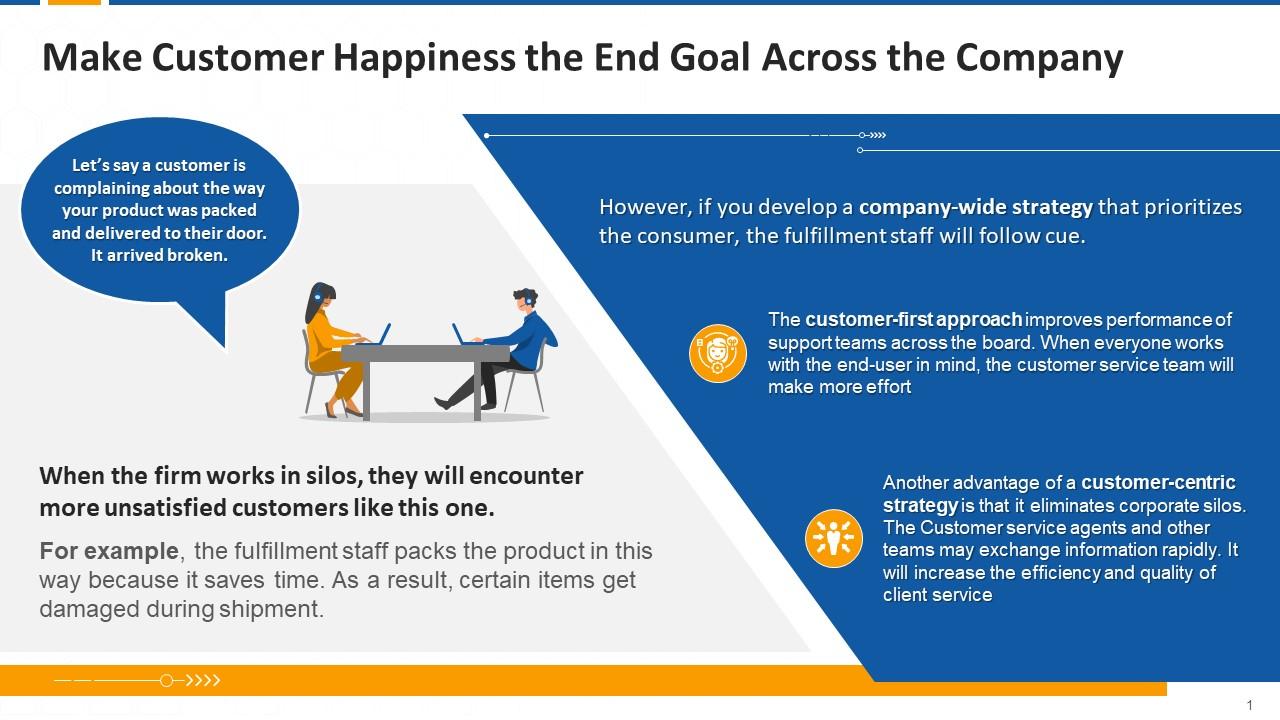
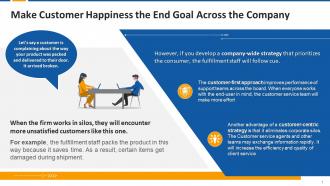
This slide
covers customer service strategy as making customer satisfaction the end goal
of the company. It also depicts that to maximize customer satisfaction,
companies should implement customer-first approach in the organization.
Slide
2
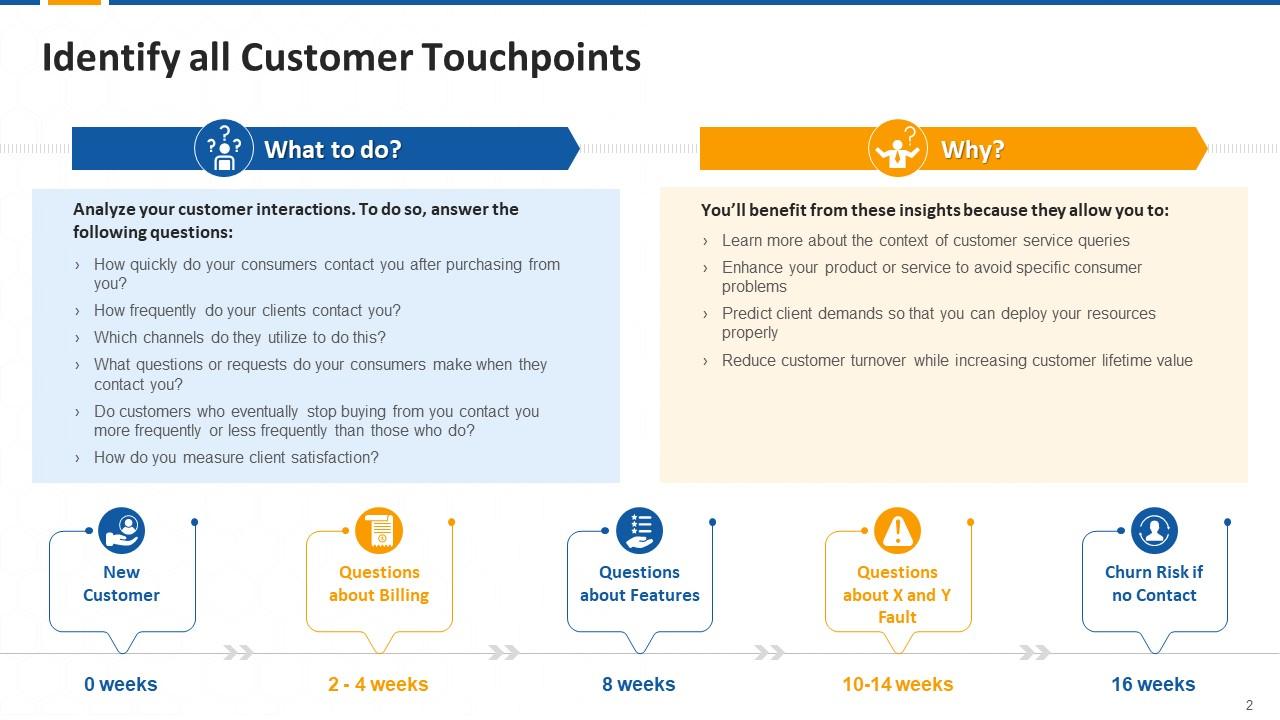
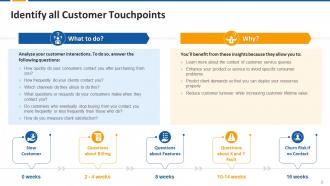
This slide
covers customer service strategy as identifying all the customer's touchpoints.
It also depicts that companies can reach out to customers by learning more
about their problems and enhancing products or services to avoid specific
problems etc.
Instructor’s
Notes:
Example:
·
Many companies have noticed that many of the first month's queries are
regarding billing. The preferred
channel is phone calls. You may solve this by giving more actionable
information to the customer support team regularly
·
You've also learnt that there's a churn risk if your consumers don't
contact you by week 16. You may prevent this by checking in with your
consumer more frequently and resolving any concerns that arise
·
Buyers who are unhappy with a brand will depart in 91% of cases.
They're not going to complain. Learning about their problems can be beneficial
to you!
Slide
3
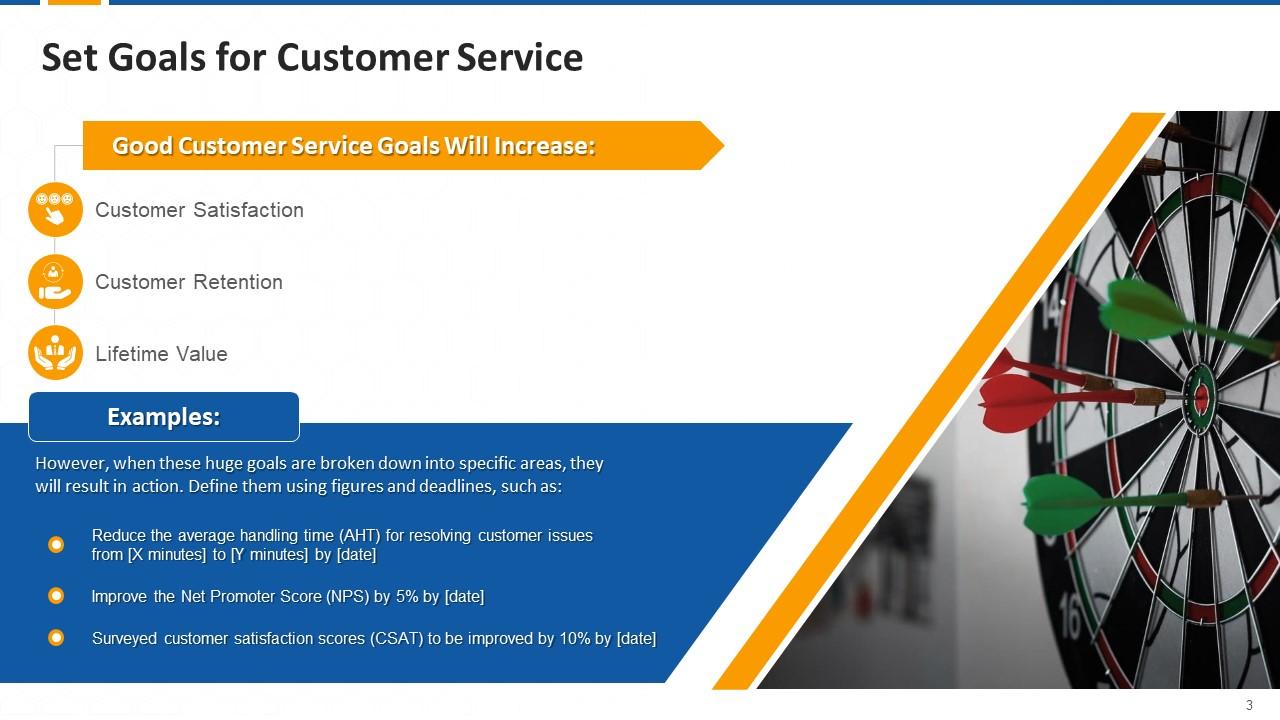
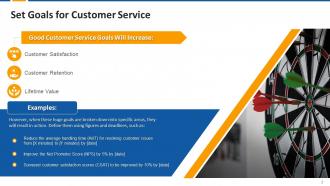
This slide
covers customers service strategy as setting goals for client support team. It
also depicts that goals must be SMART and broken down into specific areas, to
get better result in action
Instructor’s
Notes:
Create
SMART goals
(Specific,
Measurable, Attainable, Relevant, and Time bound)
·
Instead of broad aspirations, set specific goals: Make each objective
just for one area
·
Make the objectives tough enough to keep you developing but also
reachable with hard work and focused effort
·
Ensure that the customer service objectives are closely related to the
company objectives
·
Determine how will you measure the progress and how long will it take
The top
customer service representatives prioritize client contact. They believe they
are empowered and encouraged to do the right thing for the consumer. Make this
approach the foundation of all customer service goals you establish.
Slide
4
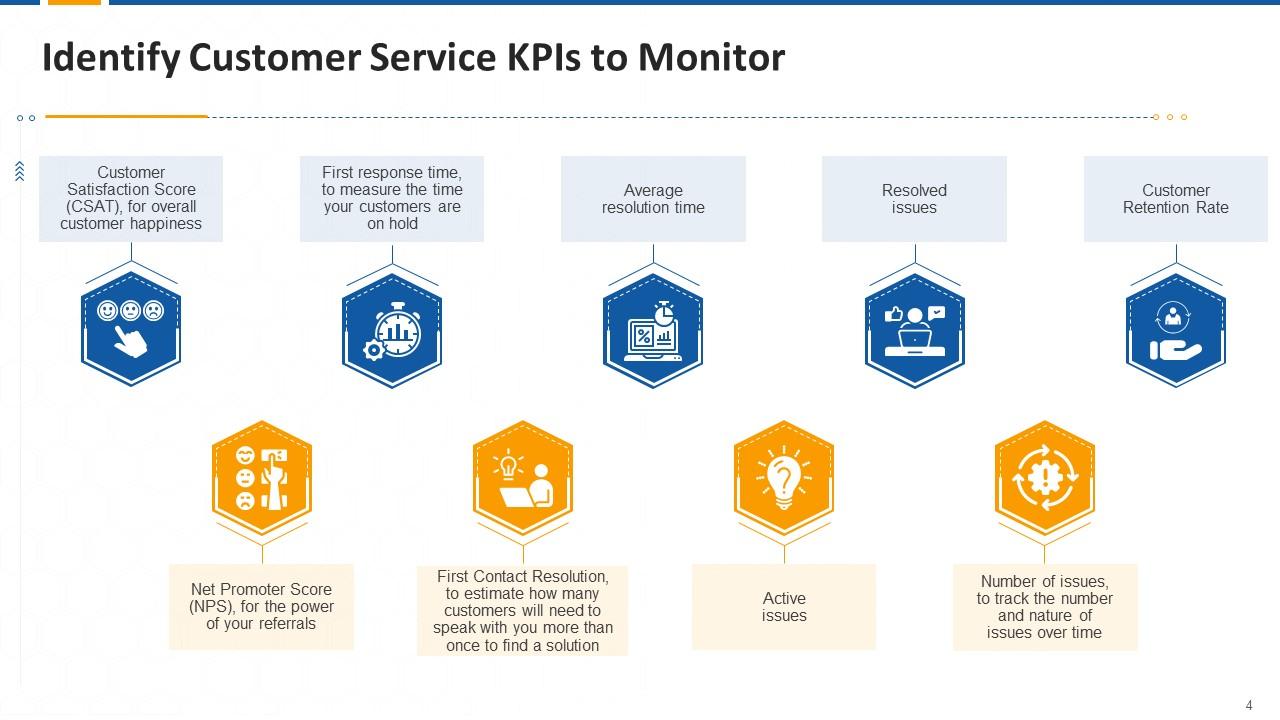
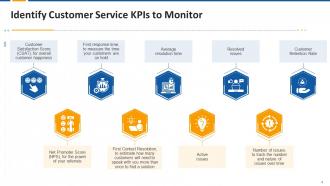
This slide
covers customers service strategy as identifying customer service KPIs to
monitor. It includes metrices such as customer satisfaction score, net promoter
score, active and resolved issues etc.
Instructor’s
Notes:
Example:
·
You've increased one key performance indicator, such as NPS. However,
you've seen that revenue indicators such as client lifetime value are decreasing.
You need to go back to the KPIs and figure out how to connect the two.
·
Reducing the average resolution time is another example. Assume your team is
effective in reducing the time it takes to close a problem. As a result, people
begin to handle issues ineffectively. This can harm client satisfaction and a
variety of other important indicators. Make sure you don't look at the KPIs in
a vacuum.
Slide
5
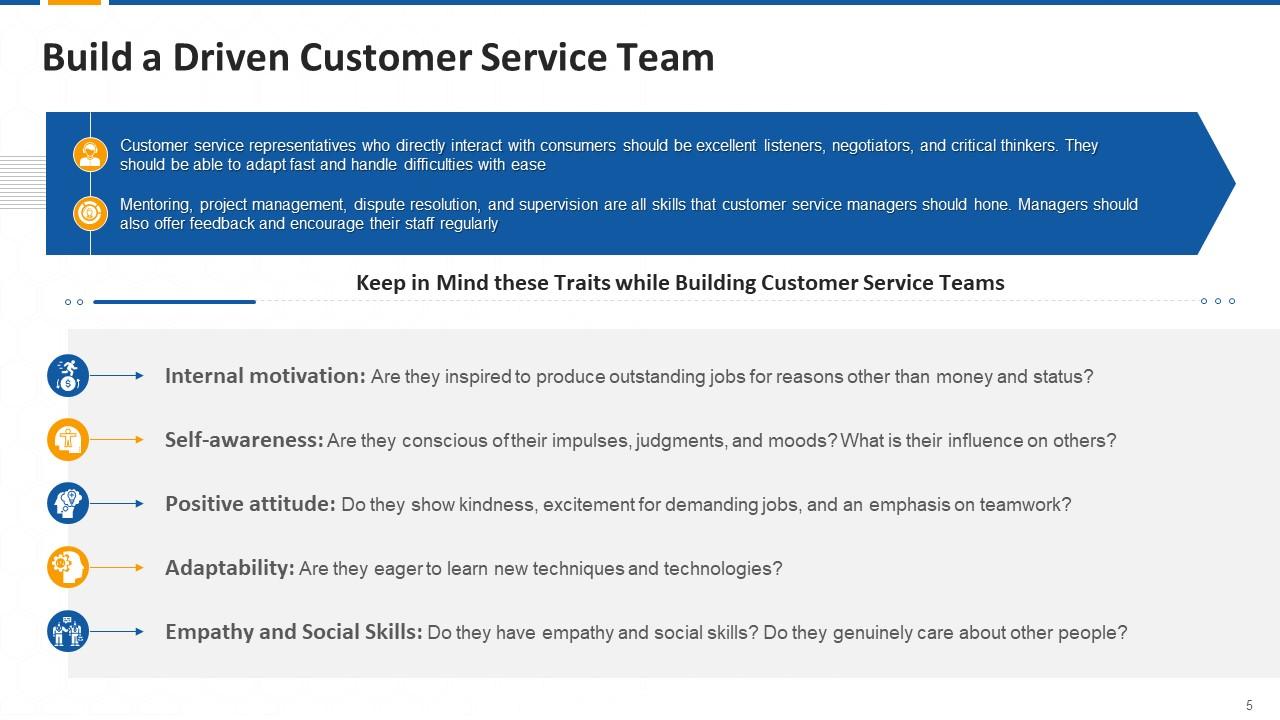
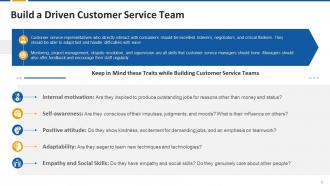
This slide
covers customers service strategy such as building a driven client service team.
It also depicts that the customer support teams
must have some traits such as excellent listening, negotiation, and
critical thinking etc.
Slide
6
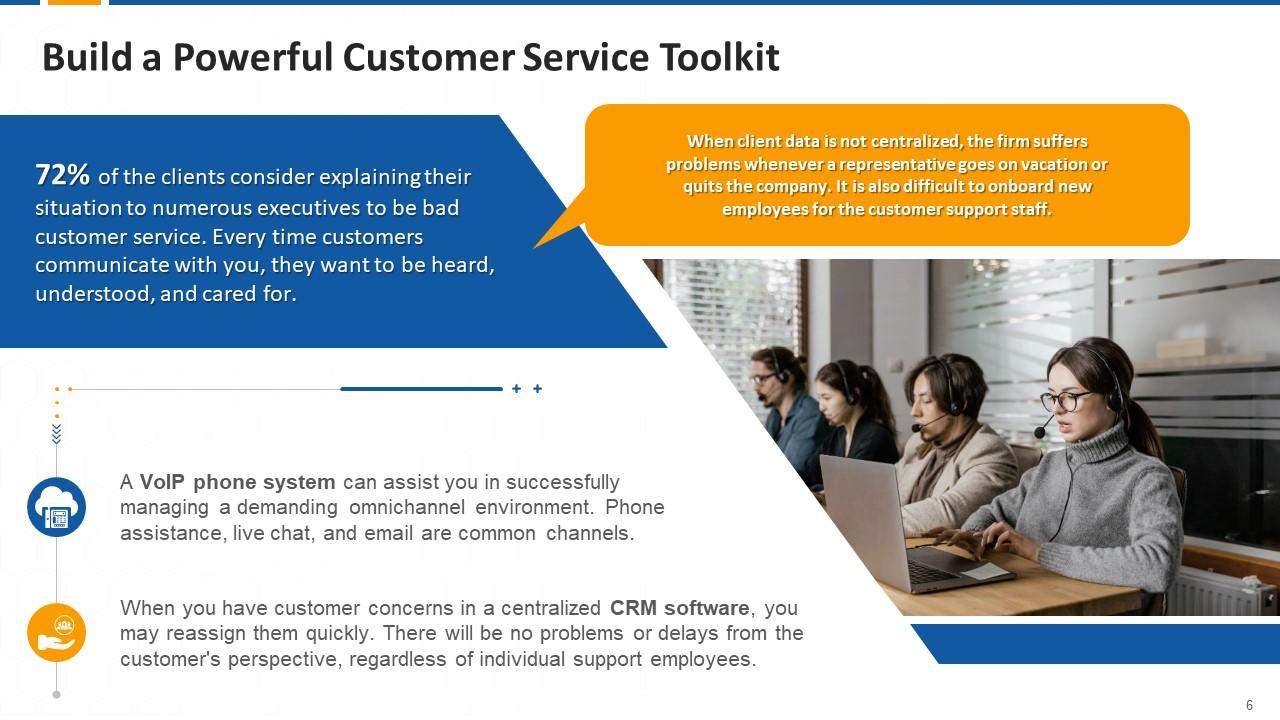
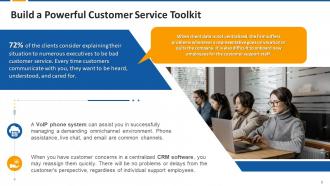
This slide
covers customers service strategy such as building a powerful client service
toolkit. It also depicts that a CRM software can help companies to assist
customers through live chats, emails and phone calls.
Slide
7
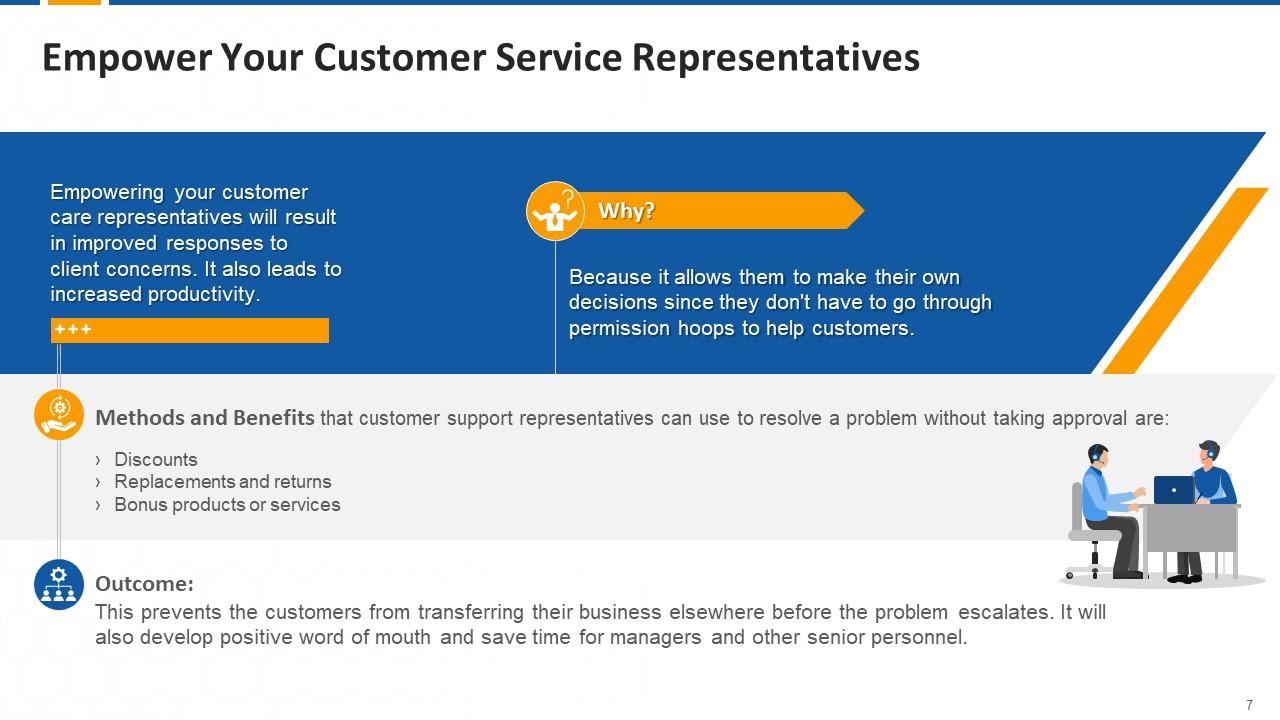
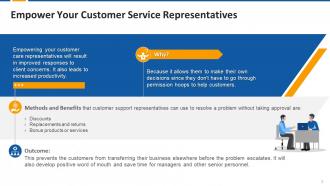
This slide
covers customers service strategy such as empowering the customer service
agents. It also depicts that empowering customer support team will allows them
to make their own decisions and can resolve client problems quickly
Instructor’s
Notes:
Example:
·
The employee empowerment initiatives of Ritz-Carlton hotels are among
the best in the industry
·
According to their well-known policy, staff can spend up to $2,000 to
resolve each client complaint that arises. They are not required to request a
manager or wait for a green signal
·
As a result, the consumer always receives an instant solution. A service
like that leaves little space for dissatisfaction
Slide
8
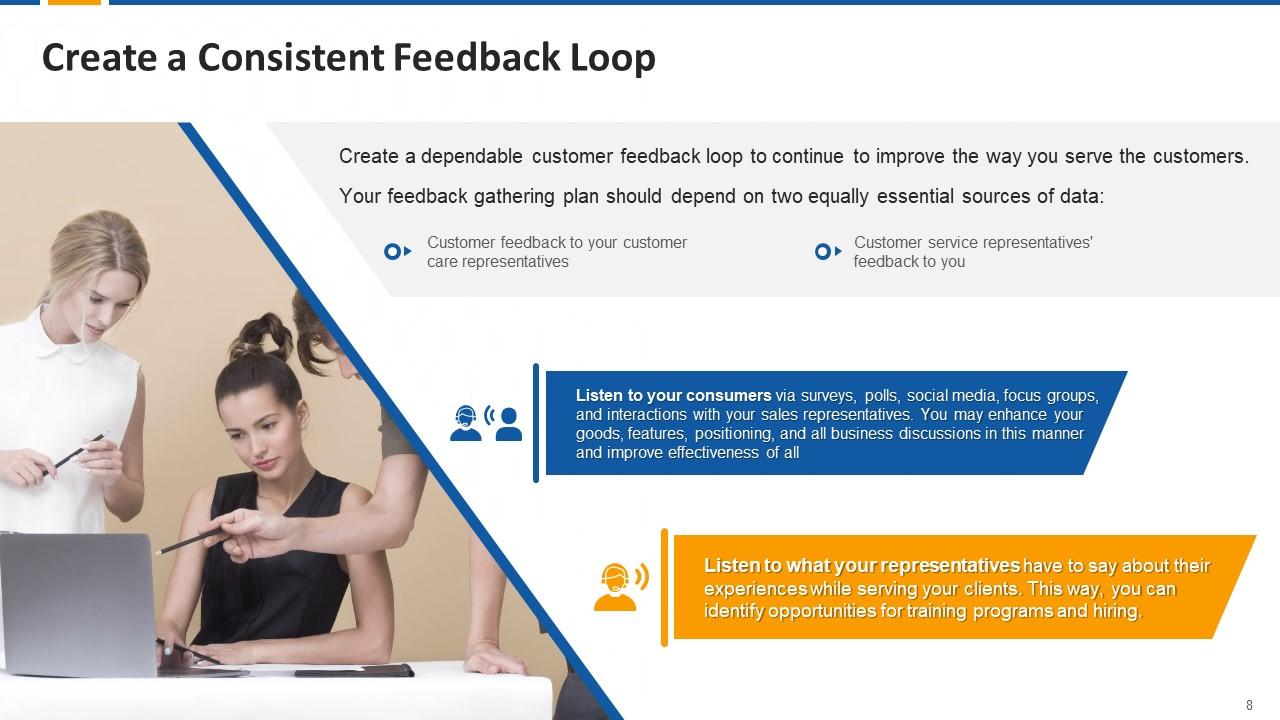
This slide
covers customers service strategy such as creating a constant feedback loop. It
can be achieved by listening to consumers via surveys, polls, social media,
focus groups etc., And listening to what customer representatives have to
say about their experiences while serving the clients.
Building A Customer Service Strategy Edu Ppt with all 24 slides:
Use our Building A Customer Service Strategy Edu Ppt to effectively help you save your valuable time. They are readymade to fit into any presentation structure.
-
Unique and attractive product design.
-
Placing an order on SlideTeam is very simple and convenient, saves you a lot of your time.
