


Business process evaluation powerpoint show






Try Before you Buy Download Free Sample Product
 Impress Your
 Audience
 100%
100% Editable
 Save Hours
 of Time


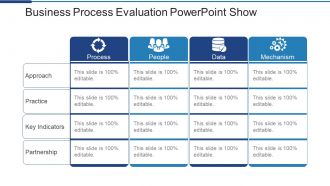
For regular maintenance and development of your business process and its strategies, use our business process evaluation PowerPoint show. Incorporate this impeccable BPM presentation slide to explain as well as evaluate the various process of your organization including, the finance process, manufacturing process, various management process and other operational process and more. This PPT design can be used to describe the importance of the same for the growth of your business as it helps in streamlining your process and automate your organization structure. Our business process management PowerPoint images will also help in reviewing and even managing or accomplishing your long term business objectives and goals. Our PowerPoint layout also helps in engaging your audiences to describe other benefits associated with the concept as it helps in enhancing the company revenue and more. Download this professionally designed business process evaluation complete presentation slideshow to develop a result oriented business process for continuous business growth. Improve agricultural growth with our Business Process Evaluation Powerpoint Show. Enlighten folks about efficient farming appliances.
People who downloaded this PowerPoint presentation also viewed the following :
Business process evaluation powerpoint show with all 5 slides:
Enhance the force of attraction with our Business Process Evaluation Powerpoint Show. They will add on to your charisma.

FAQs for Business process
Honestly, I'd focus on the basics first - efficiency, quality, cost, and whether customers are actually happy. Check your cycle times and error rates, see how much you're spending on resources. Map out what the process should do vs what it's actually doing right now. The gaps will tell you everything. Don't try measuring every single thing though, you'll go crazy. Pick 2-3 metrics that actually matter for your specific situation and track those consistently. Also make sure it can scale up if needed and you're not breaking any compliance rules. Start simple and build from there.
Honestly, you need both the quick wins and long-term stuff. Track your cycle times, error rates, how well you're using resources - that's your immediate feedback. But also watch customer satisfaction and revenue per process for the bigger picture. Here's what kills me though - so many people forget to measure things BEFORE they change anything, then wonder why they can't prove it worked. Get your baselines first! Don't ignore what your team's saying either. They catch stuff the numbers miss. Just throw it all in a simple monthly dashboard so you can actually see what's working.
Start with mapping your current process first - that's key. Visio or Lucidchart work great for this, though honestly? Sometimes just grabbing a whiteboard and getting everyone in a room works better than any fancy software. Value stream mapping helps you spot all the waste and bottlenecks too. For measuring stuff, you'll need some kind of data analytics platform. Lean Six Sigma is pretty much the gold standard here - gives you that whole DMAIC framework to follow. Oh, and definitely talk to people who actually do the work day-to-day. They'll tell you what really happens vs. what's supposed to happen, which can be... eye-opening.
Figure out what you're actually trying to accomplish first - more revenue, lower costs, happier customers, whatever. Work backwards from there. Don't fall into the trap of measuring stuff just because it's easy to track (guilty of this so many times). Stick to maybe 3-4 metrics tops: quality, speed, and cost impact usually cover it. The people doing the work every day? They know what actually matters vs what looks good in PowerPoints. Oh, and pick things you can genuinely move the needle on, not just fancy charts that make everyone feel productive.
Dude, stakeholder feedback is huge - it's your sanity check for whether stuff actually works. Talk to everyone who deals with the process, not just managers. End users especially will tell you about the weird workarounds they've created that nobody knows about. I swear, some processes look amazing on paper but are total nightmares in practice. These people see the real bottlenecks and pain points that your data won't show you. Map out who all your stakeholders are first, then figure out the best way to get feedback from each group. Their input is what'll make your improvements actually useful.
Okay so basically you map out every single step in your workflow - like literally everything. Time each part and see where work gets backed up. That's where your bottlenecks are hiding. Look for steps that don't actually add value or involve too many people passing things around. I swear, half the time the problems are super obvious once you write it all down! Pick whatever process annoys your team most. Then walk through it with the people who actually deal with it every day - they'll know exactly where it breaks.
Honestly, most teams bite off way more than they can chew right from the start. Pick ONE process that's really hurting you. Get the people who actually live with it every day involved - not just management types sitting in conference rooms. I've seen so many projects die because they spend months collecting data but never pull the trigger on changes. Leadership always thinks it'll take half the time it actually does too. Oh, and figure out your success metrics before you start, otherwise you'll argue forever about whether it worked. Don't try to fix everything at once.
Honestly, tech completely changes the game for evaluating your business processes. Real-time analytics and automated tracking give you insights you'd never catch manually - some of the patterns AI spots are genuinely surprising. Sure, you might drown in data at first (I've been there), but having actual evidence beats making decisions on hunches every time. The performance metrics alone are worth it. I'd start by figuring out which processes already generate useful data you can dig into. Way better than those outdated reports sitting in someone's inbox for weeks.
Break your findings into clear sections - current state, gaps, recommendations. Way easier to follow. Document with real examples and data, not fuzzy observations. Visual process maps are clutch here; execs eat that stuff up instead of reading paragraphs. Connect every finding to business impact like cost or customer satisfaction. Oh, and definitely prioritize your recommendations with realistic timelines. Nobody wants documentation they can't actually use, so make it scannable and actionable. The whole point is getting people to DO something with your analysis, right?
Don't just do one big evaluation and call it done - that's where most people mess up. Build in monthly or quarterly check-ins to actually track if your changes are working. I swear, teams love doing these massive reviews, implementing stuff, then acting shocked when everything falls apart six months later. Make sure people can speak up when they notice problems, not just during official review time. Also keep updating your criteria as things change (which they always do). The trick is weaving this into your regular routine instead of treating it like some annual chore you dread.
Look, corporate culture totally controls how your process evaluations turn out. When people feel safe being honest and admitting mistakes, you'll actually get real feedback that leads to useful changes. But toxic or blame-heavy environments? Forget it. Everyone just says what they think management wants to hear, or they'll straight up sabotage the whole thing - I've seen it happen. You need leadership that genuinely frames this as improvement, not some witch hunt to find who screwed up. Otherwise you're just wasting everyone's time.
So here's the thing - collect data at your main process points, then use visualization tools to spot patterns and weird outliers. Data analytics lets you measure cycle times and track KPIs instead of just guessing what's wrong. I swear I've watched teams argue for months about problems when looking at the numbers would've solved it instantly. Don't just measure what's easy though - focus on metrics that actually impact your results. The cool part? You'll start predicting issues before they blow up instead of constantly fixing stuff after the fact.
Honestly, just make people feel like they actually matter in this whole thing. Tell them upfront why you're doing it and what's in it for them - not just the bosses. Get them involved since they're the ones dealing with all the daily BS anyway. Surveys work, but face-to-face conversations are way better if you can swing it. Be real about what feedback you can actually use versus what's out of your control. And here's the big one - show them how their ideas changed things. When people see their suggestions made it into the final plan, they'll care so much more about making it work.
So here's the thing - process evaluation is like detective work for figuring out why customers get annoyed. You map out their journey and time each step to find the bottlenecks. Maybe it's those ridiculous wait times or confusing handoffs between departments. I swear, some companies make things way harder than they need to be! Once you spot where people are getting stuck or frustrated, you can actually fix the stuff that matters most. The data shows you what to prioritize. Pick one customer process this week and walk through it yourself - you'll see the friction points pretty quickly.
Honestly? Every 6 months is the sweet spot for most businesses. I know everyone says annually, but that's too slow these days. Markets change way too fast - what crushed it last quarter could be killing you now. If you're in something super dynamic or growing like crazy, quarterly makes sense. But whatever you pick, just be consistent about it. I always tell people to set those calendar reminders because you'll definitely push it off when things get hectic (we all do it). Start with your top 3 critical processes first - don't overwhelm yourself trying to review everything at once.
-
Nice
-
Unique design & color.
-
Great product with effective design. Helped a lot in our corporate presentations. Easy to edit and stunning visuals.
-
excellent presentation with relevance and adequate details
-
excellent presentation with relevance and adequate details
-
excellent presentation with relevance and adequate details
-
quite good with simply view