67049942 style technology 1 cloud 1 piece powerpoint presentation diagram infographic slide
Try Before you Buy Download Free Sample Product
Audience
Editable
of Time
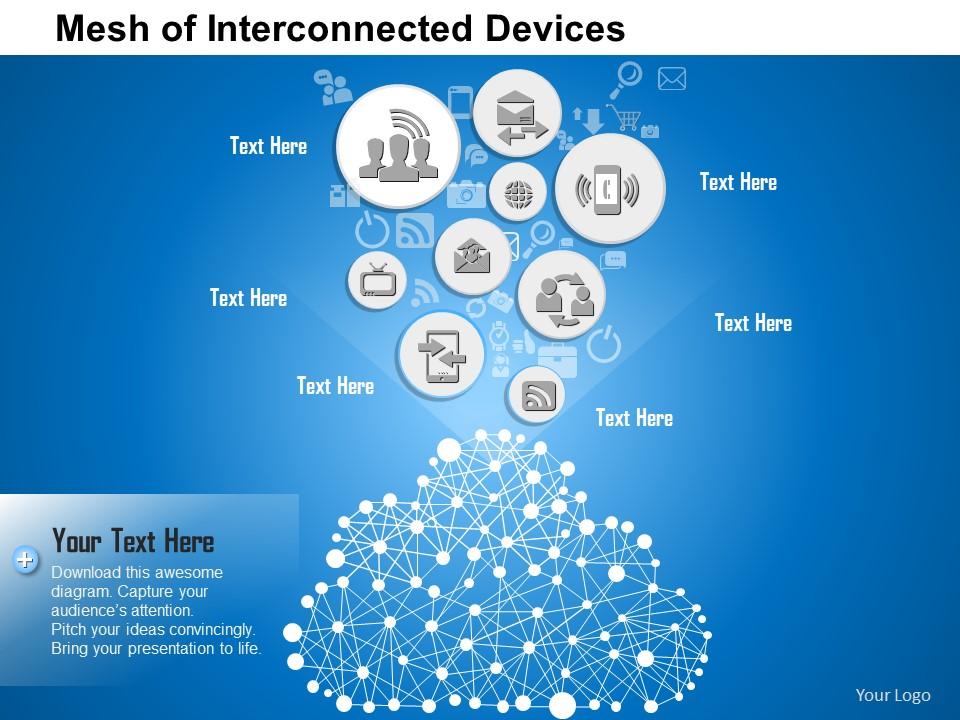
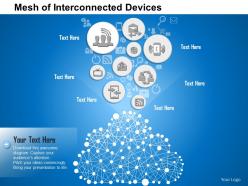
When you need to create memorable presentations then our beautifully designed mesh of interconnected devices representing cloud computing Ppt slides with mobile devices are there to help. Feel the invisible hand of the professional designer. This image slide displays mesh of interconnected devices representing cloud computing it has been designed with the 3d graphic of mesh cloud and social media icons. This image slide depicts cloud computing. Use this PowerPoint template to express views on cloud computing and social media in your presentations. What sets this presentation template apart is the perfect amalgamation of graphics and contextualized text based notes that you can add and it can help your hard work stand out. The engine of ideas and computer technology is a booster for any kind of business these days. Here at SlideTeam, we are continuously working on better ideas for creating superior results and walking a step to step with the technology. This PPT image slide will enhance the quality of your presentations. Business circles expand with our 0814 Mesh Of Interconnected Devices Representing Cloud Computing With Mobile Devices Ppt Slides. More customers get drawn into your fold.
67049942 style technology 1 cloud 1 piece powerpoint presentation diagram infographic slide with all 6 slides:
Abilities burst forth with our 0814 Mesh Of Interconnected Devices Representing Cloud Computing With Mobile Devices Ppt Slides. You will emerge in a forceful fashion.
FAQs for 67049942 style technology 1 cloud 1 piece powerpoint presentation
Cloud computing benefits include enhanced scalability, reduced operational costs, improved accessibility, automatic software updates, and robust disaster recovery capabilities. These technologies streamline business operations by eliminating infrastructure maintenance, enabling remote workforce flexibility, and delivering faster deployment cycles, with many organizations finding that cloud adoption ultimately provides significant competitive advantages and resource optimization.
Cloud computing enhances remote team collaboration by providing centralized data access, real-time document sharing, unified communication platforms, and seamless integration across devices and locations. Through cloud-based solutions, organizations streamline project management, enable simultaneous editing capabilities, and maintain consistent workflows, with many companies finding that these technologies significantly reduce coordination delays while delivering improved productivity and stronger team connectivity.
Organizations should implement multi-factor authentication, data encryption both in transit and at rest, regular security audits, access controls, and backup protocols when utilizing cloud services. These measures work together to create layered protection, with many financial institutions and healthcare organizations finding that combining robust identity management with continuous monitoring ultimately delivers enhanced data security and regulatory compliance.
Cloud computing revolutionizes IT scalability by enabling instant resource provisioning, elastic capacity adjustment, and on-demand infrastructure expansion without physical hardware constraints. Organizations across sectors like healthcare, financial services, and retail can seamlessly scale computing power, storage, and applications during peak demands, ultimately reducing costs while maintaining performance and competitive responsiveness.
IaaS provides virtualized infrastructure like servers and storage, PaaS offers development platforms with built-in tools, and SaaS delivers complete applications ready for immediate use. These service models enable organizations to scale efficiently by choosing appropriate levels of control and management responsibility, with many enterprises finding that strategic combinations across all three models ultimately deliver greater operational flexibility and cost optimization.
Organizations ensure data compliance and governance in the cloud through robust encryption protocols, automated monitoring systems, access controls, regular audits, and comprehensive policy frameworks. These strategic measures enable seamless regulatory adherence across industries, with financial institutions and healthcare providers finding that cloud-native governance tools significantly streamline compliance processes while enhancing data security and operational transparency.
Cloud migration challenges include data security concerns, integration complexities with existing systems, potential downtime during transitions, staff training requirements, and ongoing cost management. While these obstacles require careful planning, many organizations find that strategic phased approaches, comprehensive security protocols, and proper change management ultimately deliver enhanced scalability, operational efficiency, and competitive advantage in an increasingly digital landscape.
Different cloud deployment models significantly influence business strategy through varying levels of control, cost structure, and scalability options. Public clouds offer cost-effective scalability for startups and growth companies, private clouds provide enhanced security for financial services and healthcare organizations, while hybrid models enable strategic flexibility, allowing businesses to optimize workloads across environments while maintaining regulatory compliance and competitive advantage.
Cloud computing provides the essential infrastructure for IoT applications by offering scalable storage, real-time data processing, advanced analytics capabilities, and seamless device connectivity across distributed networks. Through cloud platforms, organizations in manufacturing, healthcare, and smart cities can efficiently manage millions of connected devices, analyze vast data streams, and deliver automated responses, ultimately enabling faster decision-making and enhanced operational efficiency.
Cloud cost optimization practices include right-sizing instances, implementing auto-scaling, leveraging reserved instances, monitoring unused resources, and adopting multi-cloud strategies. These approaches streamline expenses by eliminating waste, maximizing utilization, and enhancing operational efficiency, with many organizations finding that strategic resource allocation ultimately delivers significant cost reductions while maintaining performance standards.
Cloud computing enhances business continuity by providing automated data backups, geographically distributed storage, and rapid recovery capabilities that minimize downtime during disruptions. Through cloud infrastructure, organizations can maintain operations remotely, restore systems within hours rather than days, and scale resources dynamically during crises, with many financial institutions and healthcare providers finding that cloud-based disaster recovery delivers significantly lower costs and faster restoration times.
Emerging cloud computing trends include multi-cloud strategies, edge computing, serverless architectures, AI-powered cloud services, and enhanced security frameworks. These technologies streamline operations by reducing latency, optimizing costs, and enabling real-time data processing, with many organizations finding that strategic cloud adoption delivers improved scalability and competitive advantage.
Cloud-native architectures enable businesses to achieve greater agility by streamlining application development, automating scaling processes, and accelerating deployment cycles through containerization and microservices. These approaches enhance operational efficiency by reducing infrastructure overhead, improving resource allocation, and enabling faster innovation, with many organizations finding that cloud-native strategies ultimately deliver competitive advantage and reduced time-to-market.
Vendor lock-in creates dependency risks by limiting flexibility, increasing costs, and reducing negotiating power when switching cloud providers becomes necessary. Organizations avoid this through multi-cloud strategies, standardized APIs, portable data formats, and contract clauses ensuring data portability, while many enterprises find that hybrid approaches ultimately deliver greater operational flexibility and competitive positioning.
AI and machine learning integration in cloud services enhances functionality by enabling automated resource optimization, predictive analytics, and intelligent data processing capabilities. These technologies streamline operations by reducing manual oversight, accelerating decision-making, and delivering personalized user experiences, with many organizations finding that this strategic combination ultimately provides significant competitive advantages and operational efficiency.
-
Great experience, I would definitely use your services further.
-
Excellent work done on template design and graphics.