Care chart for employee engagement flat powerpoint design
Try Before you Buy Download Free Sample Product
Audience
Editable
of Time
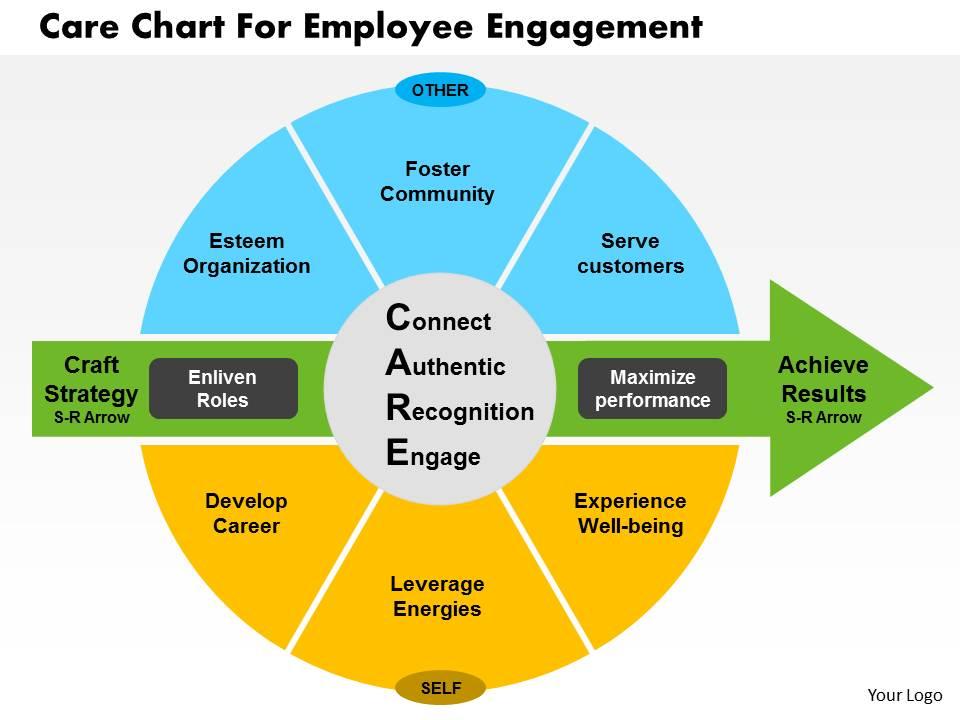
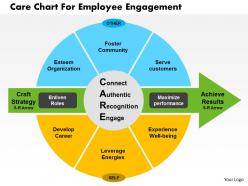
To ensure good levels of productivity, engaging employees is a prerequisite for every organisation. With our care chart for employee engagement flat PowerPoint design, this task has become really achievable. Even though the PPT template contains various aspects but the graphics are easy to understand and have presented the entire care chart in a very lucid manner. This makes it easier for the audience to understand which is the USP of this PPT diagram. The inner circle of the PowerPoint presentation spells four significant parameters which help in employee engagement. Whereas the outer or the bigger circle of the PowerPoint template contains add-on points and its details which help in explaining the situation better. This PowerPoint diagram is comprehensive in its approach as it accommodates myriad of points listed together in a synergy. For any employer, this is one of the PPT layout to bring harmony amongst its team members as well. Download it and create that necessary impression. Our Care Chart For Employee Engagement Flat Powerpoint Design are good for channelizing grey cells. They get brains to focus clearly.
People who downloaded this PowerPoint presentation also viewed the following :
Care chart for employee engagement flat powerpoint design with all 5 slides:
Assure them an attractive deal with our Care Chart For Employee Engagement Flat Powerpoint Design. Engage them in a beneficial dialogue.
FAQs for Care chart for employee engagement
**INPUT**: What are the key components of an effective care chart for enhancing employee engagement? **OUTPUT**: Effective care charts for employee engagement include regular check-ins, personalized development plans, recognition tracking, wellness monitoring, and feedback documentation systems. These components work together by streamlining communication between managers and employees, identifying growth opportunities early, and creating transparency in career progression, with many organizations finding that structured care approaches ultimately deliver higher retention rates and improved workplace satisfaction. [Word count: 60 words]
Organizations can measure care chart impact through employee satisfaction surveys, retention rates, productivity metrics, absenteeism tracking, and engagement scores collected quarterly. These measurement approaches enable companies to assess program effectiveness by comparing pre-and-post implementation data, with many finding that comprehensive tracking ultimately delivers actionable insights for continuous improvement and enhanced workplace culture.
Regular feedback serves as the foundation of an effective employee engagement care chart by enabling continuous assessment, personalized development planning, targeted skill building, and proactive issue resolution. Through structured feedback systems, organizations streamline communication between managers and employees, enhance performance tracking, and accelerate professional growth initiatives, with many companies finding that consistent feedback loops ultimately deliver higher retention rates and stronger workplace satisfaction.
Employers can tailor care charts by incorporating flexible communication preferences, varied recognition methods, diverse learning formats, and generational-specific career development pathways that resonate with different age groups. Through strategic customization, organizations in sectors like healthcare, retail, and financial services enhance employee satisfaction, reduce turnover, and boost productivity, with many finding that personalized engagement approaches ultimately deliver stronger retention and competitive advantage.
Remote care charts should prioritize frequent check-ins, flexible communication channels, digital wellness resources, clear performance metrics, and virtual team-building activities. These approaches streamline engagement by addressing isolation challenges, maintaining accountability standards, and fostering connection across distributed teams, with many organizations finding that structured remote care frameworks ultimately deliver higher retention rates and enhanced productivity levels.
Visual elements in care charts enhance understanding by simplifying complex information through icons, color coding, flowcharts, and infographics that make procedures immediately recognizable and actionable. These design features streamline implementation across diverse teams, with healthcare facilities and corporate wellness programs finding that visual clarity reduces training time, minimizes errors, and ultimately delivers more consistent employee engagement outcomes.
Organizations should avoid creating overly complex charts, neglecting regular updates, focusing solely on metrics without actionable insights, and failing to customize approaches for different departments or employee segments. These pitfalls often result in disengaged teams and wasted resources, with many companies finding that streamlined, personalized engagement strategies deliver significantly better retention rates and workplace satisfaction.
Technology integration streamlines care chart engagement through automated survey distribution, real-time analytics dashboards, mobile accessibility, and AI-powered sentiment analysis of employee feedback. These digital solutions enhance HR efficiency by reducing manual data collection, enabling instant pulse checks, and providing predictive insights, ultimately delivering faster response times to engagement issues and more personalized employee experiences across organizations.
Organizations should track metrics including employee satisfaction scores, retention rates, absenteeism levels, productivity measurements, and internal promotion rates. These indicators work together by revealing engagement patterns across departments, identifying areas needing attention, and demonstrating ROI, with many companies finding that comprehensive tracking ultimately delivers improved workplace culture and competitive talent advantages.
Employee engagement care charts should be reviewed quarterly and updated based on engagement survey results, performance metrics, turnover data, and organizational changes. This regular cadence enables HR teams to identify emerging disengagement patterns, adjust intervention strategies, and respond to evolving workplace dynamics, with many organizations finding that quarterly reviews deliver optimal balance between responsiveness and strategic consistency.
Managers serve as primary catalysts for care chart success, facilitating regular one-on-one discussions, tracking engagement metrics, identifying development opportunities, and connecting individual goals to organizational objectives. Through consistent feedback sessions and strategic coaching, managers transform these charts from static documents into dynamic engagement tools, ultimately strengthening team performance and retention across departments.
Organizations ensure inclusive care charts by conducting comprehensive employee surveys, forming diverse focus groups, analyzing demographic data, and implementing regular feedback mechanisms across all departments and employee levels. These approaches enable companies to identify varying needs across different backgrounds, generations, and roles, while establishing continuous improvement processes that adapt to evolving workforce expectations, ultimately delivering equitable engagement strategies and stronger organizational culture.
External factors to consider include economic conditions, industry competition, regulatory changes, technological disruptions, and cultural shifts within your market landscape. These environmental elements significantly impact employee expectations, career concerns, and workplace priorities, with many organizations finding that aligning engagement strategies with external realities enhances retention and delivers sustainable competitive advantage.
Companies align care charts with business objectives by integrating core values into engagement metrics, connecting employee wellbeing initiatives to performance outcomes, and establishing clear links between care activities and strategic goals like retention, productivity, and customer satisfaction. This strategic alignment ensures that employee engagement investments directly support business growth, with organizations finding that values-driven care initiatives enhance both workforce loyalty and operational efficiency.
Employee recognition can be effectively incorporated through milestone tracking, peer nomination systems, achievement badges, performance celebrations, and feedback loops that highlight specific contributions. These recognition elements enhance engagement by providing visible acknowledgment, fostering positive workplace culture, and creating transparent pathways for advancement, with many organizations finding that structured recognition significantly improves retention rates and productivity.
-
Easily Editable.
-
It saves your time and decrease your efforts in half.