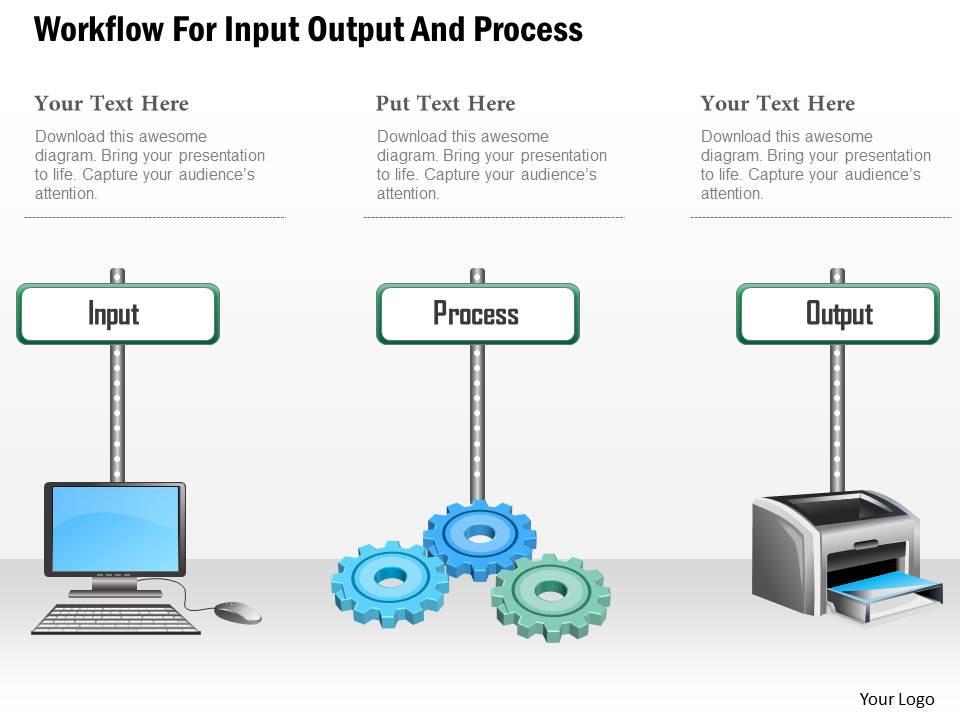
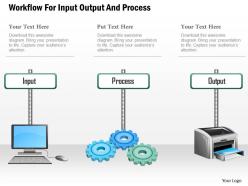
Ce workflow for input output and process powerpoint template
Try Before you Buy Download Free Sample Product
Audience
Editable
of Time
Create a global footprint with our Ce Workflow For Input Output And Process Powerpoint Template. Generate awareness across Earth.
People who downloaded this PowerPoint presentation also viewed the following :
Ce workflow for input output and process powerpoint template with all 5 slides:
Our Ce Workflow For Input Output And Process Powerpoint Template always come forward with an answer. All you have to do is ask.
FAQs for Ce workflow for input output and
Key components of an effective project management workflow include task sequencing, resource allocation, milestone tracking, communication protocols, and quality checkpoints. These elements streamline project delivery by establishing clear responsibilities, minimizing bottlenecks, and ensuring consistent progress monitoring, with many organizations finding that structured workflows reduce project timelines by 20-30% while enhancing team collaboration.
Ce workflow templates enhance productivity by standardizing processes, reducing setup time, ensuring consistency across projects, and enabling faster task completion through predefined structures. These templates streamline collaboration by providing clear frameworks for teams in marketing, project management, and operations, ultimately delivering improved efficiency and reduced time-to-market while minimizing errors.
Healthcare, finance, manufacturing, legal services, and retail benefit most from specialized workflow templates, as these industries require strict compliance, standardized processes, and consistent quality control. Through industry-specific templates, organizations streamline regulatory adherence, minimize errors, and accelerate project timelines, with many finding that specialized workflows deliver enhanced operational efficiency and reduced training costs.
Visual elements in workflow presentations aid understanding by simplifying complex processes through flowcharts, diagrams, color coding, icons, and step-by-step illustrations that break down intricate procedures into digestible components. These visual tools enhance comprehension by enabling teams to quickly identify bottlenecks, dependencies, and decision points, with many organizations finding that visual workflows reduce training time and improve process adherence across departments.
Common workflow template mistakes include overcomplicating processes, failing to define clear roles and responsibilities, neglecting stakeholder input, and creating rigid structures without flexibility for exceptions. These design flaws often result in user resistance, bottlenecks, and reduced efficiency, with many organizations finding that successful templates balance standardization with adaptability, ultimately delivering streamlined operations and improved compliance.
Workflows can be tailored for remote collaboration through cloud-based platforms, real-time communication tools, automated progress tracking, shared digital workspaces, and flexible task assignment systems. These technologies streamline coordination by enabling instant updates, centralized document access, and seamless handoffs between team members, with many organizations finding that strategic workflow automation ultimately delivers enhanced productivity and improved project visibility across distributed teams.
Feedback plays a crucial role in workflow optimization by identifying bottlenecks, inefficiencies, and improvement opportunities through employee insights, performance metrics, and stakeholder input. This continuous feedback loop enables organizations to refine processes, reduce cycle times, and enhance productivity, with many companies finding that regular feedback collection ultimately delivers measurable operational improvements and competitive advantage.
Technology integrates with CE workflow through automation platforms, cloud-based management systems, real-time analytics tools, and AI-powered process optimization. These solutions streamline operations by eliminating manual tasks, providing instant visibility across departments, and enabling predictive maintenance scheduling, with manufacturing and healthcare organizations finding that integrated CE workflows reduce operational costs by up to 30% while enhancing compliance.
Key metrics include cycle time, error rates, resource utilization, completion rates, and customer satisfaction scores. These measurements enable organizations to identify bottlenecks, optimize resource allocation, and enhance operational efficiency, with many businesses finding that tracking throughput and quality metrics simultaneously delivers improved performance and competitive advantage.
Standardized workflows deliver consistency, efficiency, reduced training time, better resource allocation, and improved quality control across projects. These frameworks streamline operations by eliminating redundant processes, accelerating project timelines, and enabling seamless team collaboration, with many organizations finding that standardization ultimately reduces costs while enhancing scalability and competitive advantage.
Color psychology in workflow presentations significantly enhances audience engagement by triggering emotional responses, improving information retention, and guiding visual attention through strategic color choices. Through thoughtful color application, organizations streamline communication processes, reduce cognitive load, and accelerate decision-making, with many consulting firms and training departments finding that strategic color usage ultimately delivers higher participation rates and improved comprehension outcomes.
**INPUT**: What techniques can be employed to simplify complex workflows for better clarity? **OUTPUT**: Workflow simplification techniques include process mapping, task consolidation, automation integration, bottleneck elimination, and standardized documentation protocols. These approaches streamline operations by reducing redundant steps, clarifying role responsibilities, and enhancing visibility across departments, with many organizations finding that simplified workflows deliver faster project completion and improved team collaboration. **Word count: 52 words**
Workflow templates support agile methodologies by providing standardized sprint structures, backlog management processes, and iterative review cycles that maintain consistency while enabling flexibility. These templates streamline stand-up meetings, retrospectives, and deployment phases across development teams, with many software companies finding that predefined agile workflows reduce project setup time and enhance collaboration, ultimately delivering faster product iterations.
PowerPoint, Keynote, Google Slides, Canva, and Lucidchart are recommended for creating custom workflow presentations, each offering unique strengths in design flexibility and collaboration features. These platforms streamline presentation development through templates, drag-and-drop functionality, and real-time editing capabilities, with many organizations finding that combining visual design tools with cloud-based collaboration ultimately enhances team productivity and stakeholder engagement.
Storytelling enhances workflow presentations by creating narrative arcs around user journeys, highlighting pain points and resolutions, and using real-world scenarios that audiences can connect with emotionally. Through character-driven examples, such as customer service teams resolving complaints or sales departments closing deals, organizations transform abstract processes into compelling narratives, ultimately improving stakeholder engagement and comprehension.
-
Excellent template with unique design.
-
Informative design.