


Change management in businesses powerpoint presentation slides





Try Before you Buy Download Free Sample Product
 Impress Your
 Audience
 100%
100% Editable
 Save Hours
 of Time


Business world across the globe is changing swiftly. This is the prime reason behind occurrence of frequent transitional processes in corporate houses. Well to help you out in demonstrating this revolutionizing process, here present you change management ppt of identifying change, forces for change, barriers to change, vision of change etc. support presenter to underline change management process so that employees can easily embrace new business environment. Going further, this change management in business PPT sample comprises of graphs, change curves and adoption curves etc. for better comprehension of the topic. Additionally, with help of this change management in business PowerPoint slide deck, manager can introduce various change management models or tools to higher management so that the better planning can be done for impending transitional phase. So, without any further delay, download our change management in business PPT sample file on change management and let management see your proactive approach of managing the change
People who downloaded this PowerPoint presentation also viewed the following :
Content of this Powerpoint Presentation
Slide 1: This slide introduces Change Management. State Your Company Name and get ready for change.
Slide 2: This is an Agenda slide. State your agendas here.
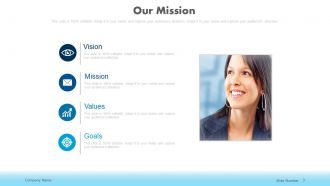
Slide 3: This is Our Mission slide with Mission, Values, Goals, Vision. State them here.
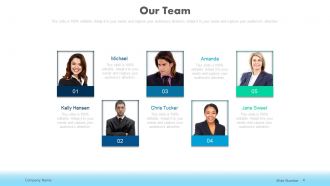
Slide 4: This slide presents Our Team with name and designation.
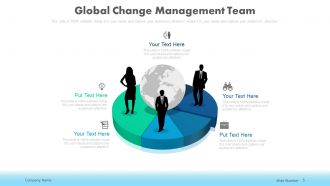
Slide 5: This slide presents Global Change Management Team with globe image and pie chart boxes.
Slide 6: This is an About Us slide. State company team specifications here.
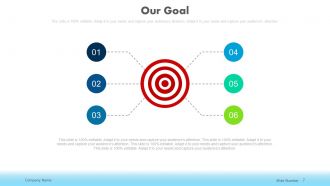
Slide 7: This slide shows Our Goal. State your goals/aspirations here.
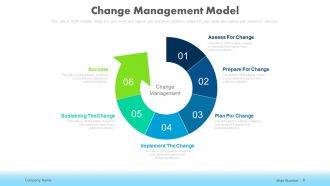
Slide 8: This slide presents a Change Management Model with the following subheadings- Assess For Change, Prepare For Change, Plan For Change, Sustaining The Change, Success, Implement The Change.
Slide 9: This slide showcases areas of Continuous Improvement- People, Tools, Process, Change, Evaluate, Design, Implement, Manage Change, Assets.
Slide 10: This slide displays Identifying Change with imagery and text boxes.
Slide 11: This slide showcases the Forces For Change- Mergers & Acquisitions, Electronic Commerce, Digital Convergence, Virtual Organization, Privatizations, Knowledge Economy.
Slide 12: This slide presents Barriers To Change in change management.
Slide 13: This slide displays Ideating Change Management consisting of following sub points- Vision, Model, Value, Success, Execution, Strategy.
Slide 14: This slide presents A Systematic Thinking Application For Change Management with- Central Point, Sub point, Main Point.
Slide 15: This slide presents Vision Of Change with- Review The Values That Are Central To The Change. Captures What You “See” As The Future Of Your Organization. Create A Strategy To Execute That Vision. Ensure Team Know The Vision. Practice Your “Vision Speech” Often.
Slide 16: This is another variation slide on Vision of Change.
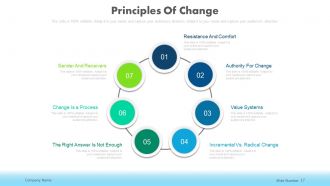
Slide 17: This slide shows Principles Of Change with the following sub points- Resistance And Comfort, Incremental Vs. Radical Change, The Right Answer Is Not Enough, Value Systems, Change Is a Process, Authority For Change, Sender And Receivers.
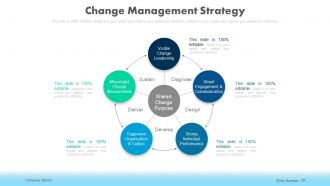
Slide 18: This slide showcases Change Management Strategy with the following sub points- Visible Change Leadership, Smart Engagement & Communication, Supportive Organization & Culture, Strong Individual Performance, Meaningful Change Measurement, Shared Change Purpose.
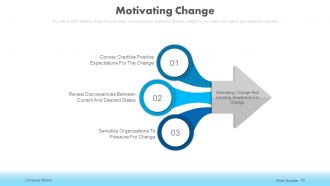
Slide 19: This slide presents Motivating Change with - Convey Credible Positive Expectations For The Change, Reveal Discrepancies Between Current And Desired States, Sensitize Organizations To Pressure For Change towards Motivating Change And Creating Readiness For Change.
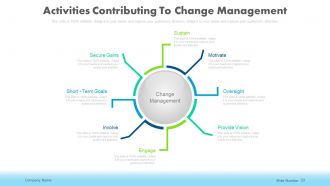
Slide 20: This slide shows Activities Contributing To Change Management with the following sub headings- Motivate, Oversight, Provide Vision, Engage, Involve, Short - Term Goals, Secure Gains, Sustain.
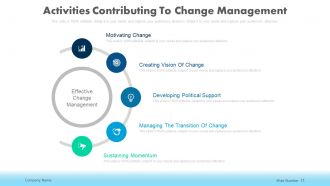
Slide 21: This is another slide on Activities Contributing To Change Management with the following sub headings- Motivating Change, Creating Vision Of Change, Developing Political Support, Managing The Transition Of Change, Sustaining Momentum, Effective Change Management.
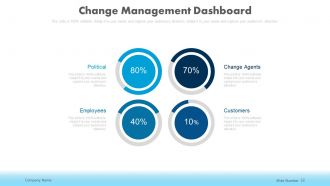
Slide 22: This slide showcases Change Management Dashboard with the following points- Political, Employees, Change Agents, Customers.
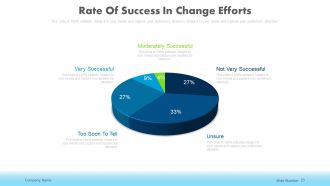
Slide 23: This slide presents Rate Of Success In Change Efforts with the following factors- Unsure, Too Soon To Tell, Moderately Successful, Very Successful, Not Very Successful.
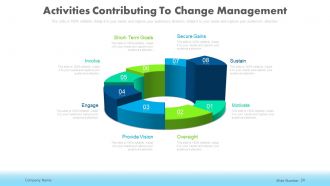
Slide 24: This slide showcases Activities Contributing To Change Management with the folowing sub headings- Motivate, Engage, Sustain, Involve, Oversight, Provide Vision, Short- Term Goals, Secure Gains.
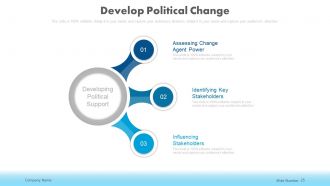
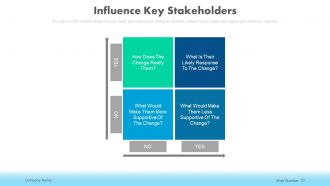
Slide 25: This slide shows Develop Political Change with the following sub headings- Assessing Change Agent Power, Identifying Key Stakeholders, Influencing Stakeholders.
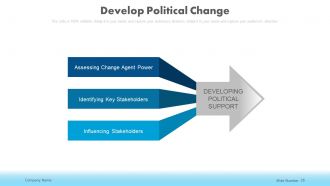
Slide 26: This slide is another variation design of Develop Political Change.
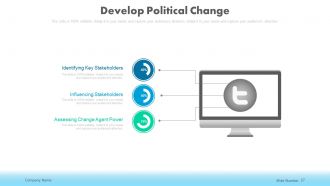
Slide 27: This slide also shows Develop Political Change with percentages.
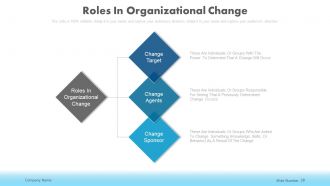
Slide 28: This slide presents Roles In Organizational Change with the following sub headings- 1: Change Sponsor (These Are Individuals Or Groups Who Are Asked To Change Something (Knowledge, Skills, Or Behavior) As A Result Of The Change) 2: Change Agents (These Are Individuals Or Groups Responsible For Seeing That A Previously Determined Change Occurs) 3: Change Target (These Are Individuals Or Groups With The Power To Determine That A Change Will Occur).
Slide 29: This slide presents Change Management Team And Roles with Project Leaders (Take Responsibility For Key Initiatives, Coordinate Project Team, Report To Business Unit GM And Change Office On Project Progress). Leadership Advisory Role (Develop Leadership Change Management Capability, Provide Ongoing Change Advice To Leaders). Process Co-ordination Role (Coordinate Project Infrastructure & Integration, Prioritize And Plan Overall Project Timeframes), Performance Management Role (Establish Clear Project Performance Measures And Reporting Systems, Manage Ongoing Project Performance, Report To Executive On Overall Progress).
Slide 30: This slide presents Change Management Team And Roles divided as- Project Leaders (Corporate Management, Key Project Accountability And Ownership, Report To CEO On Project Outcomes/Success), Leadership Advisory Role (Coordinate Overall Change Program, Develop Clear Change Strategies For Change, Responsible And Accountable For Overall Success, Develop Individual And Team Change Capability), Process Co-ordination Role (Provide Clear Communication To All Key Stakeholders On Change Related Issues, Develop 2-way Communication Channels To Foster Ongoing Organizational Change), Performance Management Role (Provide Expert HR Advice On Personal Transitions And Support, Provide Change Office & Project Based HR Infrastructure).
Slide 31: This slide shows Critical Skills Of Change Agent- Enthusiastic Passionate And Inspiring, Comities To The Lifelong Learning Of Themselves And Others, Understanding Of Environment, Social And Economic Connection, Ability To Act As A Responsible Citizen, Capable Of Engaging In Self Assessment, Self Reflection And Analysis, Critical And Systems Thinker With The Ability To Solve Problems Creatively, Effective Networker And Facilitator, Works In Corporation With Others, Strong Engaging And Dynamic Communicator, Proactive Not Reactive.
Slide 32: This is another slide on Critical Skills Of Change Agent with the following points- Understands Power And Influence, Manages Multiple Tasks, Understands Change Dynamics, Has High Credibility, Anticipates And Managers Resistance, Appreciates, Diversity.
Slide 33: This slide presents a matrix on Influence Key Stakeholders. The key parameters are- What Is Their Likely Response To The Change? What Would Make Them Less Supportive Of The Change? How Does The Change Really Them? What Would Make Them More Supportive Of The Change?
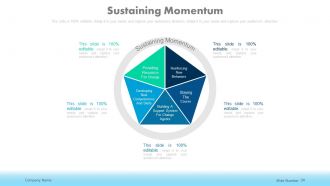
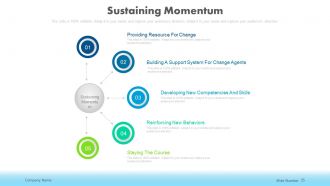
Slide 34: This slide showcases Sustaining Momentum with the following sub headings- Providing Resource For Change, Building A Support System For Change Agents, Developing New Competencies And Skills, Reinforcing New Behaviors, Staying The Course.
Slide 35: This is another design variation slide on Sustaining Momentum.
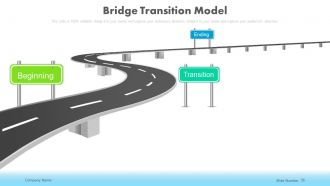
Slide 36: This slide shows Bridge Transition Model with- Beginning, Transition, Ending.
Slide 37: This slide shows a Bridge Transition Model graph with- Ending , Transition, New Beginnings, Uncertainty, Skepticism, Exploration, Commitment.
Slide 38: This slide shows Force Field Analysis with the following points- Obtain Customers In Another Market Segment, Generate Economies, Of Scale For Production, Increase Revenue, Increase Market Share, Damage Corporate Image, Driving Sales From Current, Upset Business Partners, Cost Risks.
Slide 39: This slide presents a Force Field Analysis graph with the following parameter- Present Productivity, Restraining Forces (Estimated Strength), Equilibrium, Driving Forces (Estimated Strength).
Slide 40: This slide presents a Change Curve with Satisfaction, Denial, Resistance, Commitment, Hope, Exploration, Commitment, Resistance.
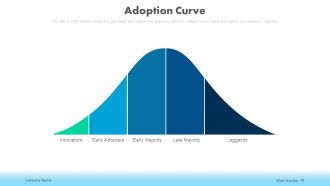
Slide 41: This slide shows Adoption Curve with - Laggards, Late Majority, Early Majority, Early Adopters, Innovators.
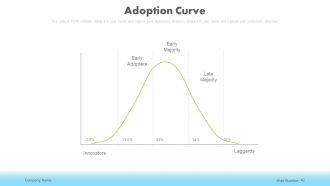
Slide 42: This slide also shows Adoption Curve with - Laggards, Late Majority, Early Majority, Early Adopters, Innovators.
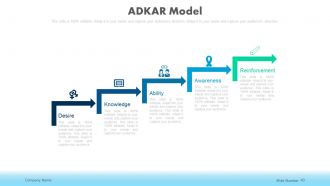
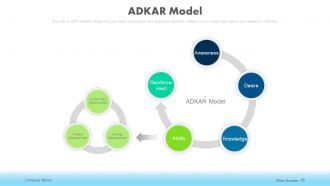
Slide 43: This slide shows an ADKAR model with Desire, Knowledge, Ability, Awareness, Reinforcement.
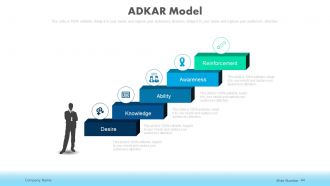
Slide 44: This is another variation slide of ADKAR model.
Slide 45: This slide shows ADKAR model with Leadership /Sponsorship, ChangeManagement, ProjectManagement.
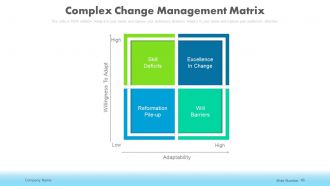
Slide 46: This slide shows Complex Change Management Matrix with High-Low Willingness To Adapt, Adaptability parameters along with Skill Deficits, Excellence In Change, Will Barriers, Reformation Pile-up.
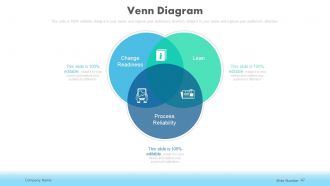
Slide 47: This is a Venn diagram slide with Change Readiness, Lean, Process Reliability.
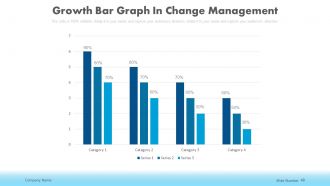
Slide 48: This slide shows Growth Bar Graph In Change Management.
Slide 49: This slide displays Compare Theories Of Change with relative imagery and text boxes.
Slide 50: This slide shows Change Management Timeline with Discipline, Formalization, On The Radar, Foundations.
Slide 51: This is a Post It slide with the sub headings- Relevant, Time-bound, Attainable, Specific, Measurable.
Slide 52: This is a Target Slide. State your targets, goals here.
Slide 53: This is a Circular image slide with Stakeholder Involvement as central heading.
Slide 54: This is a Hierarchy slide with Departments, Suppliers, Employee, Projects and Company.
Slide 55: This slide shows a globe with text boxes to show global positioning, share, location etc.
Slide 56: This is a Funnel slide to show information, data in funnel form.
Slide 57: This is Newspaper slide to highlight event, specification, news etc.
Slide 58: This is a Business Quote slide to show business value/policy/belief.
Slide 59: This is a Thanks slide with Contact, mail address and social media icons.
Change management in businesses powerpoint presentation slides with all 59 slides:
Embrace belief with our Change Management In Businesses Powerpoint Complete Deck. Faith will develop around you.
-
Change Management
-
Agenda
-
Our Mission
-
Our Team
-
Global Change Management Team
-

About Us
-
Our Goal
-
Change Management Model
-
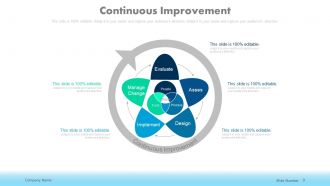
Continuous Improvement
-
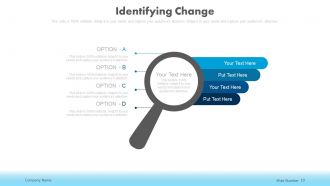
Identifying Change
-
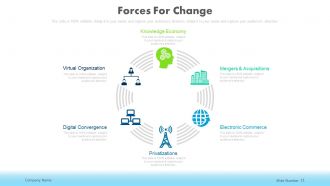
Forces For Change
-
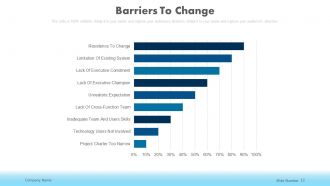
Barriers To Change
-
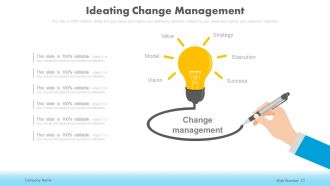
Ideating Change Management
-
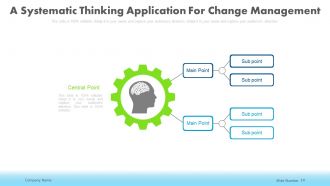
A Systematic Thinking Application for Change Management
-
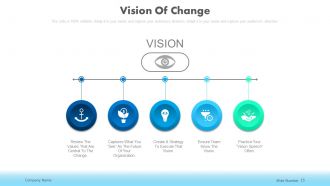
Vision Of Change
-
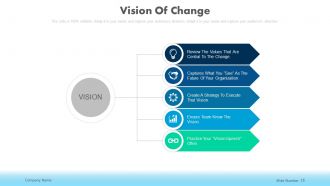
Vision Of Change
-
Principles Of Change
-
Change Management Strategy
-
Motivating Change
-
Activities Contributing To Change Management
-
Activities Contributing To Change Management
-
Change Management Dashboard
-
Rate Of Success In Change Efforts
-
Activities Contributing To Change Management
-
Develop Political Change
-
Develop Political Change
-
Develop Political Change
-
Roles In Organizational Change
-
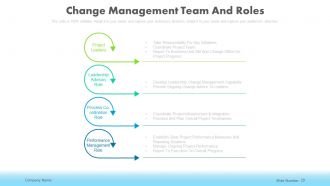
Change Management Team And Roles
-
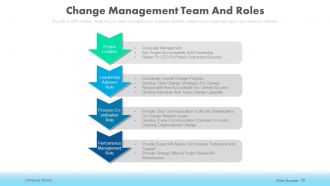
Change Management Team And Roles
-
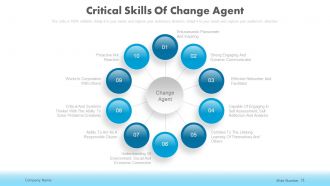
Critical Skills Of Change Agent
-
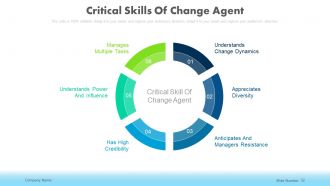
Critical Skills Of Change Agent
-
Influence Key Stakeholders
-
Sustaining Momentum
-
Sustaining Momentum
-
Bridge Transition Model
-
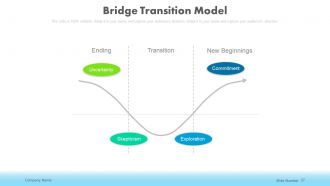
Bridge Transition Model
-
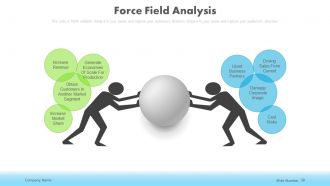
Force Field Analysis
-
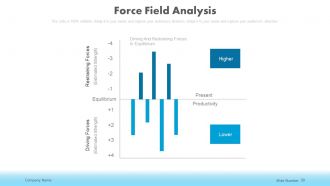
Force Field Analysis
-
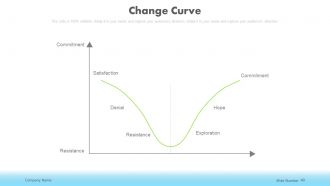
Change Curve
-
Adoption Curve
-
Adoption Curve
-
ADKAR Model
-
ADKAR Model
-
ADKAR Model
-
Complex Change Management Matrix
-
Venn Diagram
-
Growth Bar Graph In Change Management
-
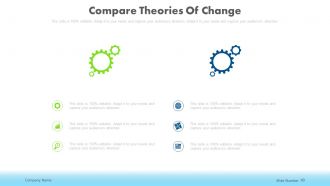
Compare Theories Of Change
-
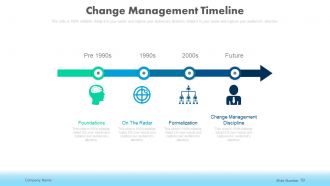
Change Management Timeline
-
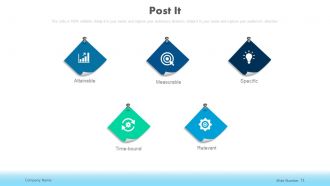
Post It
-
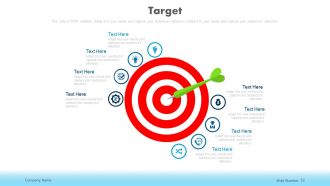
Target
-
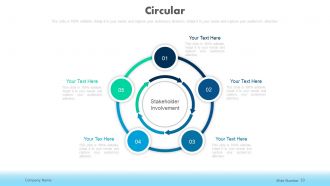
Circular
-
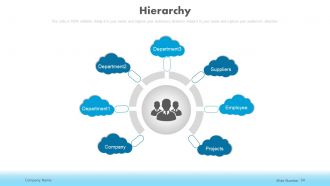
Hierarchy
-
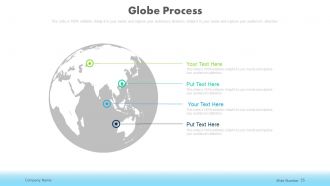
Globe Process
-
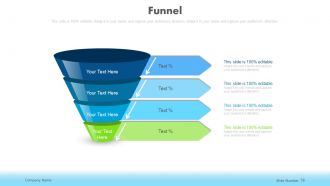
Funnel
-
News Paper
-

Business Quotes
-
Thanks Slide
FAQs for Change management in businesses
Honestly, communication is everything here. Don't just dump news on people and expect them to be cool with it - that never works. Get your leadership fully on board first, then loop everyone else in from the start. Be real about why you're making changes and what's in it for them. Quick wins are clutch for building momentum early on. When people push back (and they will), deal with it directly instead of pretending it'll magically disappear. Oh, and find those natural influencers on your team who can help sell the vision to others. Biggest thing though? Don't rush it. I've seen so many changes fail just because they tried cramming everything into an impossible timeline.
Ok so here's the thing - you gotta explain WHY things are changing or people will just dig in their heels. Share the big picture stuff, like how it connects to company goals or whatever's happening in the market. I swear, half the managers I know skip this part then act shocked when nobody's buying in. Mix up how you communicate too - some people need emails, others want face-to-face conversations. And definitely make time for Q&A sessions where they can actually voice their concerns. Oh, and repeat yourself more than you think you need to. When people feel heard instead of just talked at, they're way more willing to go along with changes.
Honestly, culture can totally make or break your change efforts. When people are used to "that's how we've always done it," good luck getting buy-in. Flexible cultures? Change happens way easier. It's all about how your team sees change - like is it scary or exciting? That mindset affects everything from initial reactions to whether new habits actually stick around. Oh, and definitely figure out your cultural vibe before launching anything big. I learned that one the hard way! You'll save yourself so much headache if you work with your culture instead of against it.
Honestly, start by figuring out who's gonna freak out the most - usually people worried about losing their jobs or getting swamped with extra work. Map out the key players before you announce anything. Communication is everything here. Nobody likes surprises, especially ones that mess with their routine. Be upfront about why you're making changes and get the influential people involved in planning if you can. Don't brush off their concerns - that just pisses people off more. Look for some easy wins early on to prove it's actually working. Oh, and give them time to adjust. Rushing people into change never works.
Track adoption rates and time-to-proficiency first - those are your baseline numbers. But here's what matters more: how people actually feel about it. Survey employees regularly and watch retention during the transition. Productivity will dip initially (that's normal), so measure how long recovery takes. I'd start tracking everything from day one, not when you think it's over. Oh, and pay attention to weird resistance that comes out of nowhere - that stuff reveals the real issues. Budget and timeline tracking is obvious but honestly, if your people hate the change, none of that other stuff matters anyway.
Dude, get stakeholders involved from the very beginning - don't wait until you're announcing stuff. Figure out who's getting affected and set up regular check-ins with them. People absolutely hate surprises more than actual change, I swear. Let them help decide the timeline and really listen to their concerns. It's about making them feel heard, not just keeping them in the loop. Oh, and start with your most influential people first. Once they're bought in, they'll do half the work convincing everyone else for you.
Honestly, most change efforts tank because of bad communication. People freak out when they don't get the "why" behind what's happening. Leadership that's not actually visible makes it worse too. The human stuff matters way more than people think - I've watched so many projects crash because everyone obsessed over processes but totally ignored how stressed out people were. My advice? Talk to people early, get your leadership actually showing up (not just saying "sounds good" in meetings), and create space where people can voice concerns without getting shut down. Quick wins help keep things moving forward too. Start by figuring out who this affects and what they're probably worried about.
Honestly, tech makes change management so much easier. Slack or Teams keeps everyone updated without endless email chains. Project tools like Asana let you actually see what's happening and when. Those digital surveys? Total game-changer for getting real feedback - people are way more honest online than in those cringe town halls where it's just crickets. You can spot pushback early with analytics dashboards and pivot before things go sideways. Just don't pick something super complicated that'll confuse everyone. That's like... the opposite of helpful, right?
Communication is everything here - seriously can't stress that enough. Be upfront about why things are changing and what's actually in it for each person on your team. Let them help with the planning when you can, because honestly people are way more likely to buy into stuff they helped create. Don't pretend change isn't hard (because it totally is). Celebrate the small victories and make sure your managers are doing regular check-ins to address concerns. Oh, and you've gotta walk the walk - show them that adapting actually opens up new opportunities for growth.
Dude, training makes or breaks everything. Seriously, I can't tell you how many times I've watched projects totally tank because leadership just assumed people would magically know what to do. Makes no sense to me. Your team will fight changes they don't get, so you've gotta help them build real skills first. Start planning this stuff way earlier than you think - like, yesterday early. Make it hands-on, not some boring PowerPoint marathon. Connect it to what they actually do every day. And don't just do it once and call it done. That's not how people learn.
Ugh, change fatigue is brutal - your team's productivity tanks and people start mentally checking out because they're just done with constant shifts. Space things out when you can, that's huge. Also explain WHY you're making changes instead of just dropping them randomly. People need downtime between big initiatives or they'll burn out completely. Here's what really helps though - get employees involved in planning stuff so they actually feel like they have some control. Oh and definitely celebrate small wins along the way. Honestly, most managers skip that part but it makes a difference.
Don't wait till the end to ask how things are going - that's where most changes crash and burn. Build feedback into every step instead. Weekly check-ins during the crazy phases work well. Mix it up with pulse surveys, focus groups, maybe some one-on-ones so people can actually speak up. Anonymous options help too since nobody wants to be the squeaky wheel. Here's the thing though - you've gotta actually DO something with what they tell you, not just collect it. Then loop back and tell them what you're changing based on their input.
Dude, you gotta blast info everywhere - email, Slack, video calls, whatever it takes. Remote people miss all that random chatter where news usually spreads. Do way more check-ins than normal, and actually ask how they're feeling about changes, not just "do you get it?" For big announcements, video beats email every time since they can see your face. Oh and set up virtual office hours for questions. I always send written follow-ups after important calls too - honestly saves me from repeating myself constantly. People forget stuff otherwise.
Look, it really depends on what industry you're in. Healthcare moves super slowly because people's lives are literally on the line - they test everything forever before rolling it out. Meanwhile tech companies change direction like every other week (which honestly gets exhausting). Manufacturing has to think about shutting down production lines and replacing expensive equipment. Banks? Good luck getting anything past all those regulations. I learned this the hard way at my last job. You've got to figure out what makes people in your field push back against change, then plan your timeline around that. What industry are you dealing with?
Dude, leadership style can totally make or break change stuff. Be too controlling and everyone pushes back because they're left out. But go too hands-off? People get lost and nothing happens. You want that middle ground - get them involved in planning but still be the one making calls. I've honestly watched amazing changes crash just because the leader couldn't read the room. Oh, and always explain WHY you're changing things. Listen when people complain too. If they trust you, they'll follow you pretty much anywhere.
-
thanks
-
good
-
Top Quality presentations that are easily editable.
-
Much better than the original! Thanks for the quick turnaround.